Maui Snorkel Fish Guide: What Fish Will You See While Snorkeling on Maui?
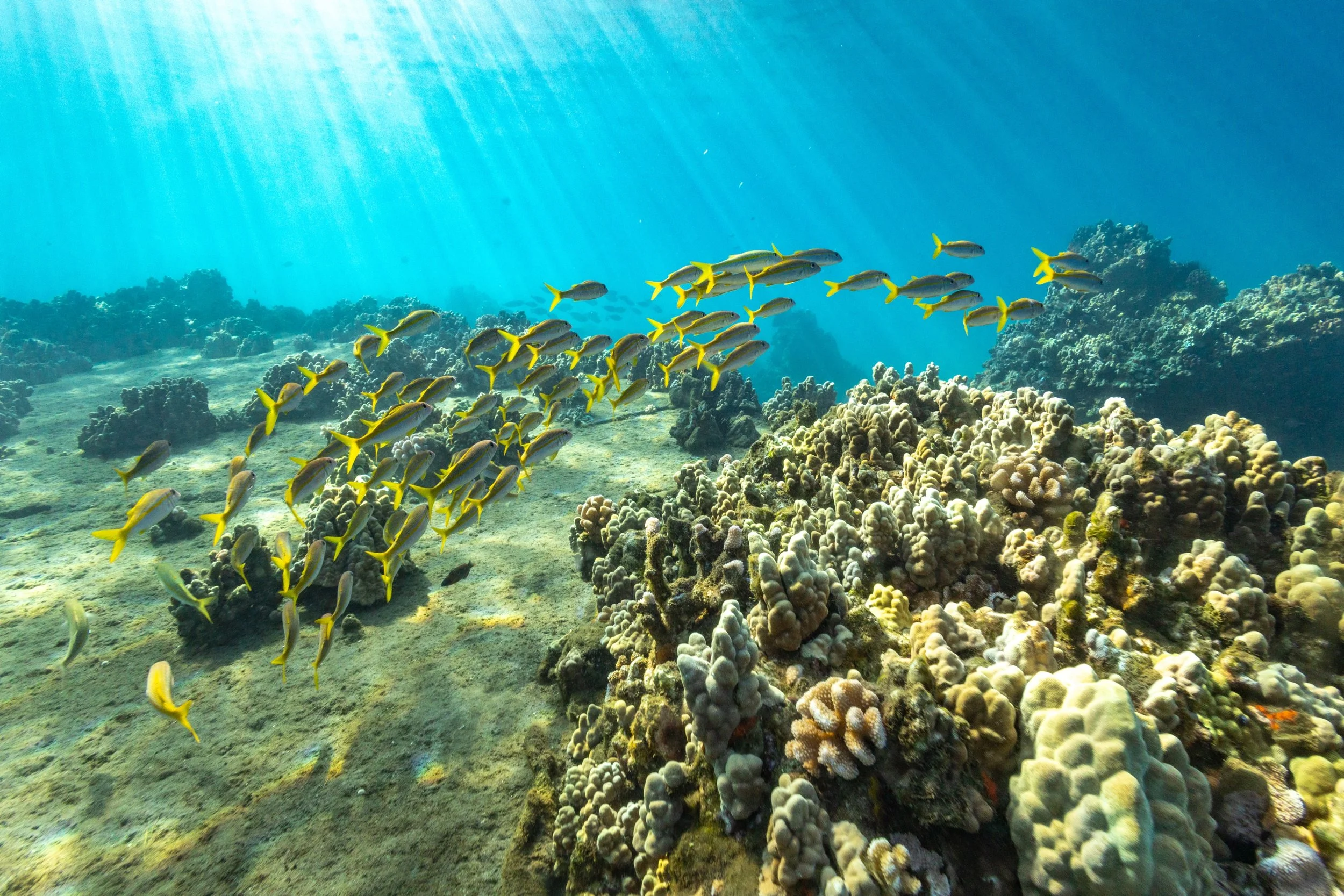
School of Weke (Goatfish); All images in this blog are courtesy of Island Dream Productions and taken on a Trilogy Excursions Snorkeling Tour
During the first few minutes of snorkeling on Maui, it can feel as though every fish is moving too quickly to identify. Give your eyes time to adjust, though, and the reef begins to settle into recognizable shapes and behaviors.
The University of Hawaiʻi Sea Grant documents at least 612 species found from the shoreline to a depth of 200 meters. A snorkeler will encounter only a portion of that diversity, but even a single reef may hold surgeonfish, butterflyfish, wrasses, uhu, goatfish, damselfish, triggerfish, and other residents.
The good news is that you do not need to be a marine biologist to start recognizing Hawaiian reef fish. Most have a few clear clues that make them much easier to identify once you know where to look.
This guide will introduce you to fish commonly seen while snorkeling on Maui and around Maui Nui. You will learn their familiar English names alongside their Hawaiian names, how to tell similar fish apart, and a few details that make each one worth slowing down to watch.
You may not remember every name on your first snorkel. That is completely fine. Start by noticing the fish’s shape and one standout marking. Once your eyes settle into the reef, what first looked like a blur of color starts to feel much more familiar.
And remember: these are wild fish moving through their own home. Sightings can never be guaranteed, but knowing what to watch for makes every few minutes in the water more rewarding.
How to Identify a Fish Without Overthinking It
When a fish swims by, do not try to memorize every color at once.
Start with its shape. Is it flat and round, or long and narrow?
Next, watch how it moves. Some fish spend most of their time grazing close to the reef. Others hover above it or search along the sandy bottom.
Then choose one marking you can remember. It might be a dark stripe through the eye or a bright patch near the tail.
That is usually enough to get you close.
For example, instead of thinking, “I saw a medium-sized yellow fish with several tiny markings,” you want to be able to think, “Yellow body, dark eye mask. I know which section of the guide to check.”
A crew tip
Pick one fish to learn before you get in the water.
Remember its overall shape and its clearest marking. Once you spot it, choose another. By the end of your snorkel, you may be surprised by how many familiar faces begin to appear.
skip ahead
Have a particular fish in mind you are trying to identify? Skip ahead here.
𓆝 𓆟 𓆞
𓆝 𓆟 𓆞
Most common fish to see on maui
surgeon fish & tangs
YELLOW TANG — LAUʻĪPALA
You'll know this one immediately. Lauʻīpala look like one solid, bright-yellow shape gliding over the reef.
It has a flat, oval body with a small pointed snout and no dark mask or bold stripes to break up the yellow. Lauʻīpala are often seen in groups, grazing close to the reef on limu. That grazing helps keep algae in check, leaving more room for coral to grow. The Hawaiian name lauʻīpala is commonly translated as “yellowed ti leaf.”
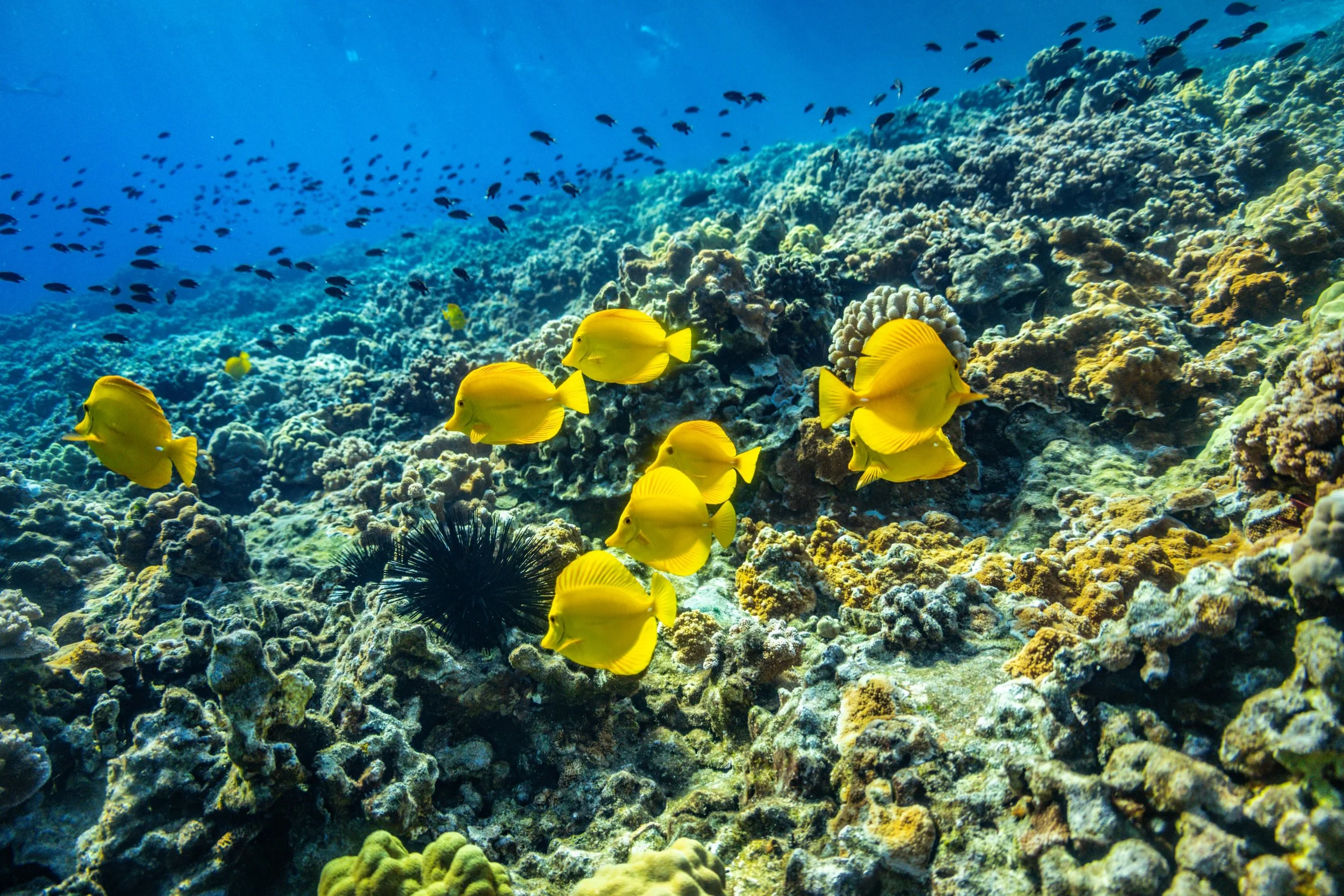
Yellow Tang — Lauʻīpala
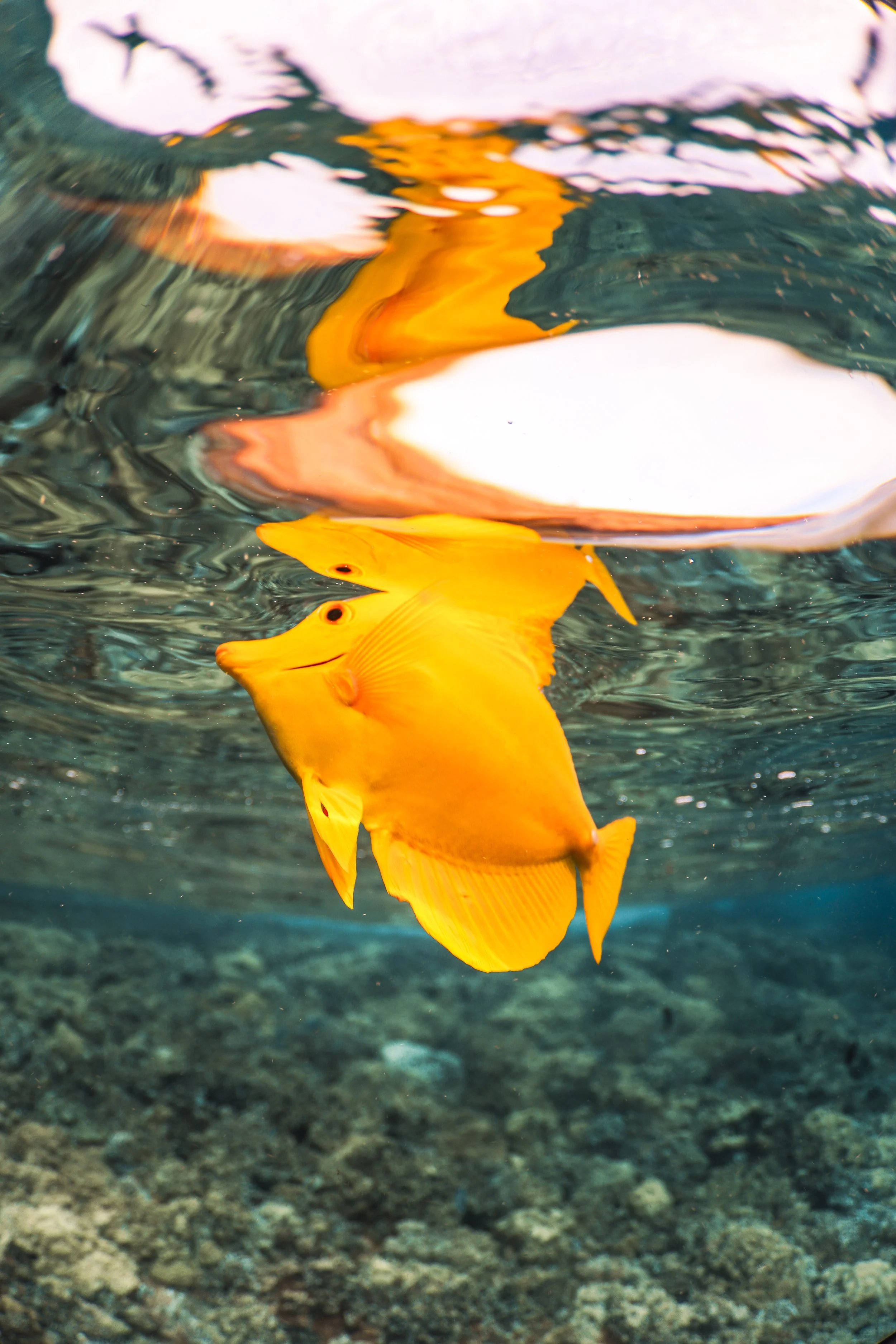
Yellow Tang — Lauʻīpala
Yellow Tang — Lauʻīpala
convict tang — Manini
If you see dozens of faded yellow and black striped fish moving together over the reef, you've probably found a school of manini.
Manini have the flat, oval shape of a tang, with a small mouth angled toward the reef. Their pale bodies are crossed by bold black bars, giving them the "convict" look that inspired their English name. They spend much of the day grazing limu from rocks and coral, often moving together as if the whole school is choreographed.
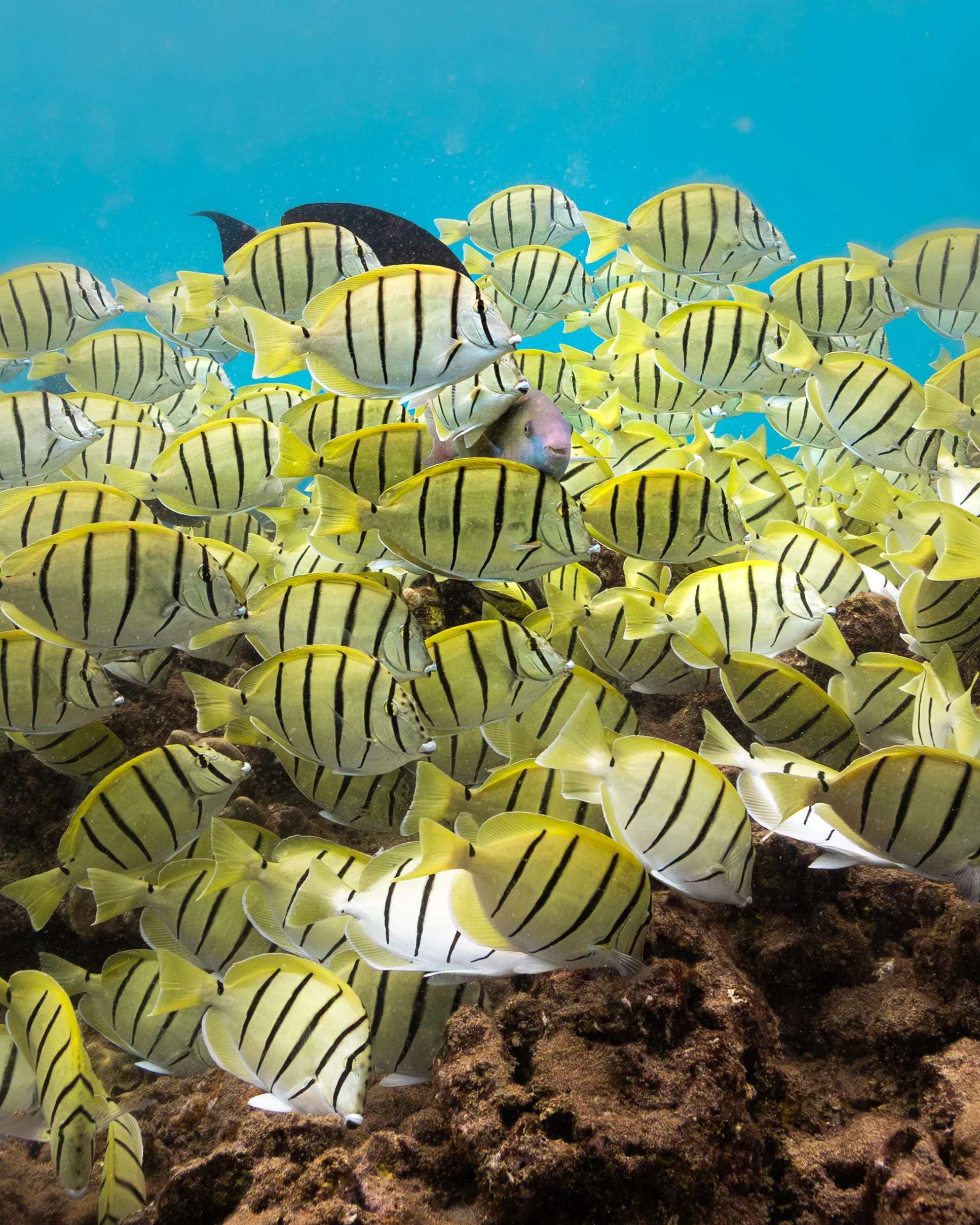
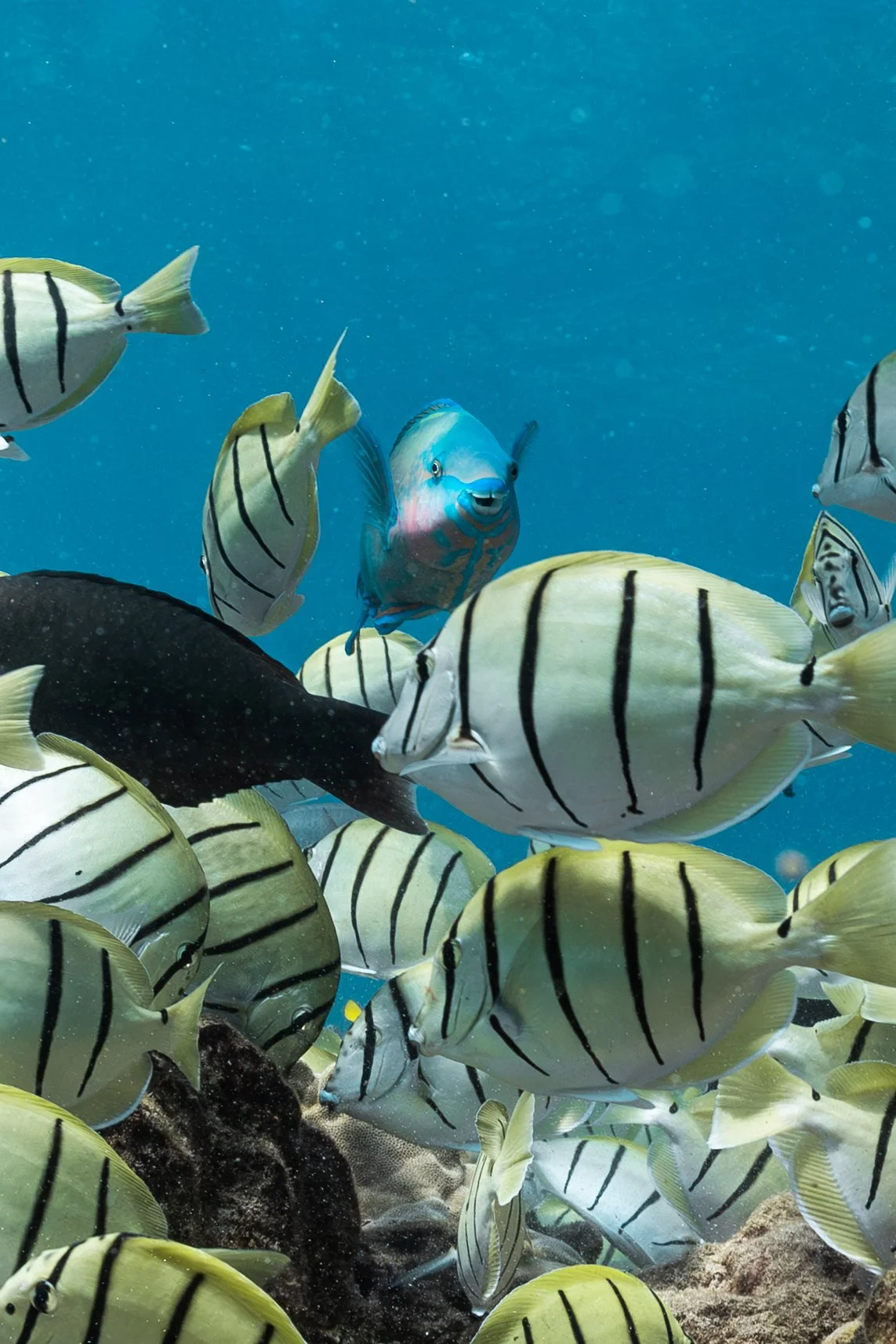
Convict Tang — Manini — with a Parrotfish (Uhu)
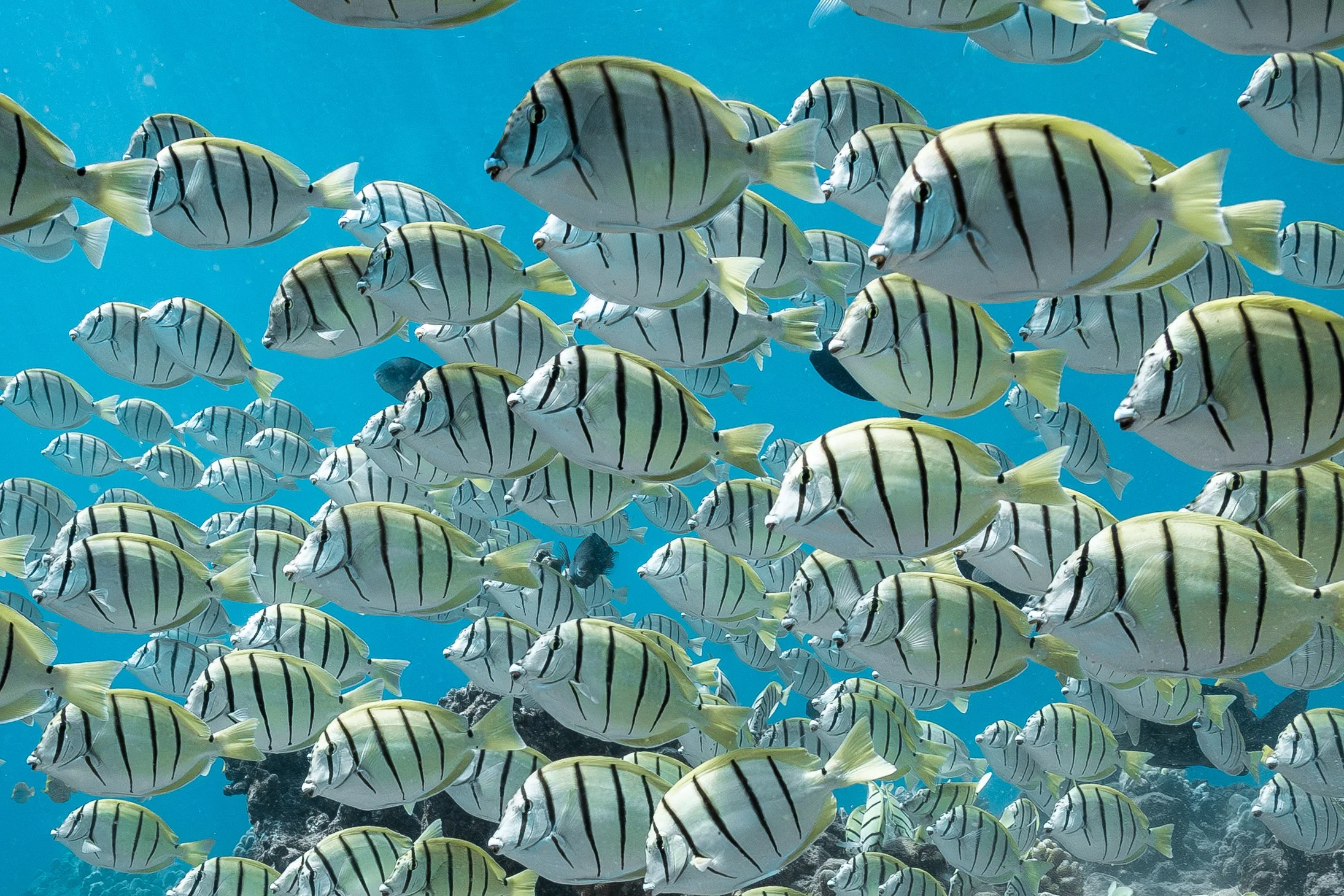
Convict Tang — Manini
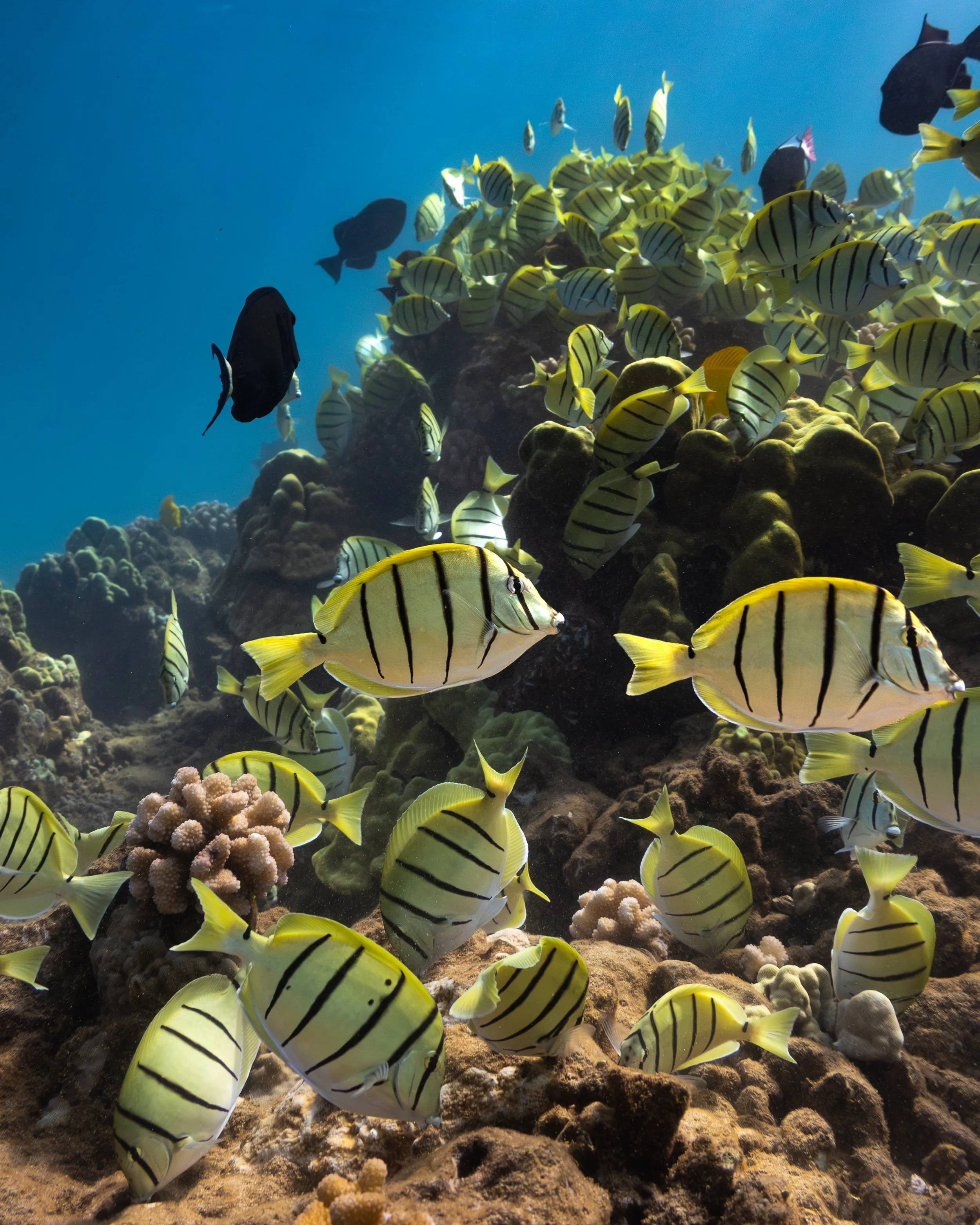
Convict Tang — Manini
Unicornfish — Kala
If you spot a large, gray fish cruising confidently over the reef, there's a good chance it's a kala. Adults have a sleek, oval body with a gently sloping forehead and can grow much larger than most reef fish you'll see while snorkeling on Maui. Despite their name, the unicornfish commonly seen on Maui don't always have a prominent "horn." There are several different species and many either lack a noticeable horn or only develop one as they mature. That's why body shape and size are much more reliable clues than looking for a "unicorn." Instead, look for its smooth forehead, blunt snout, and calm, steady swimming style as it grazes algae over the reef or cruises above sandy channels. They're often seen alone or in small groups and are among the biggest plant-eating fish on the reef.
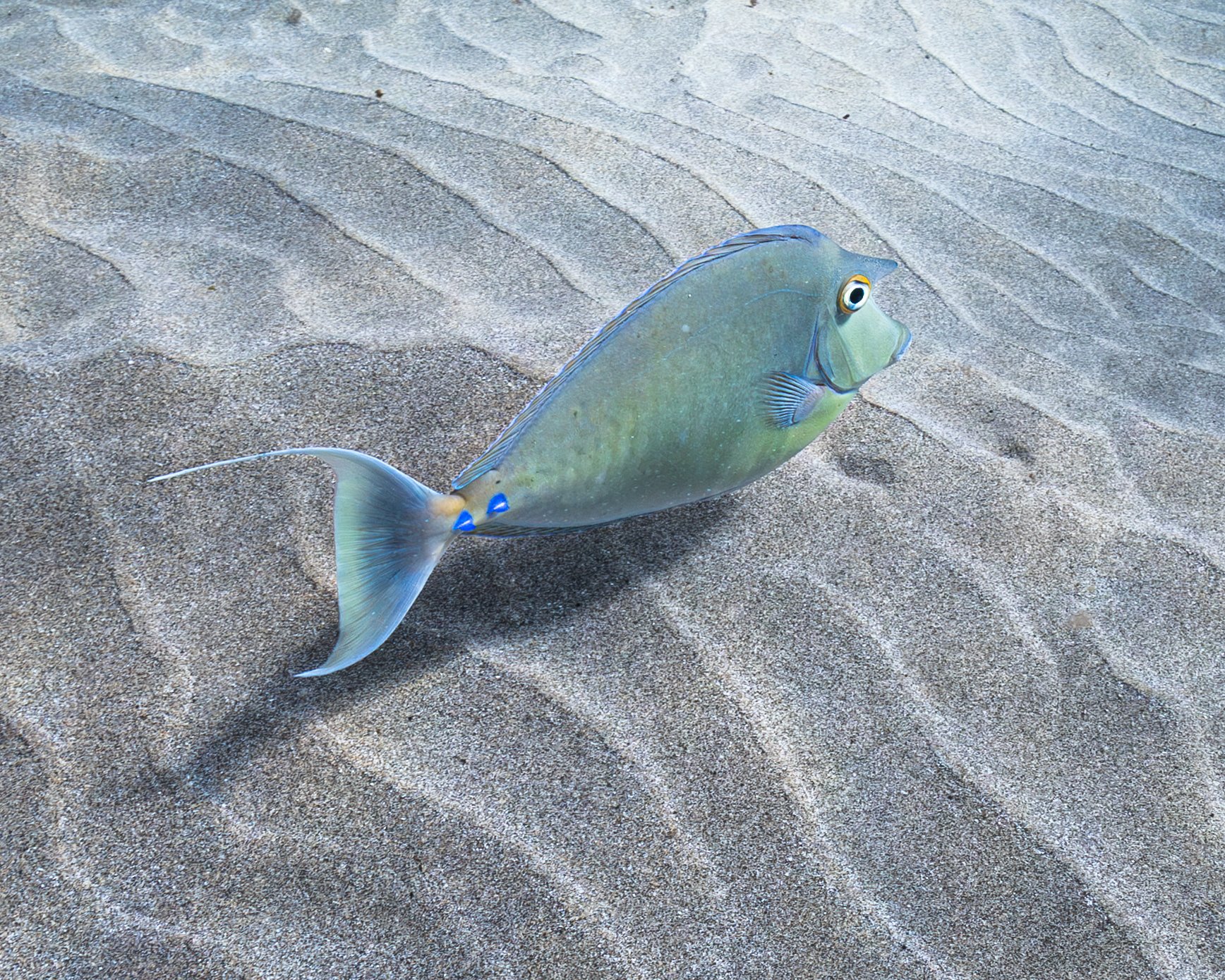
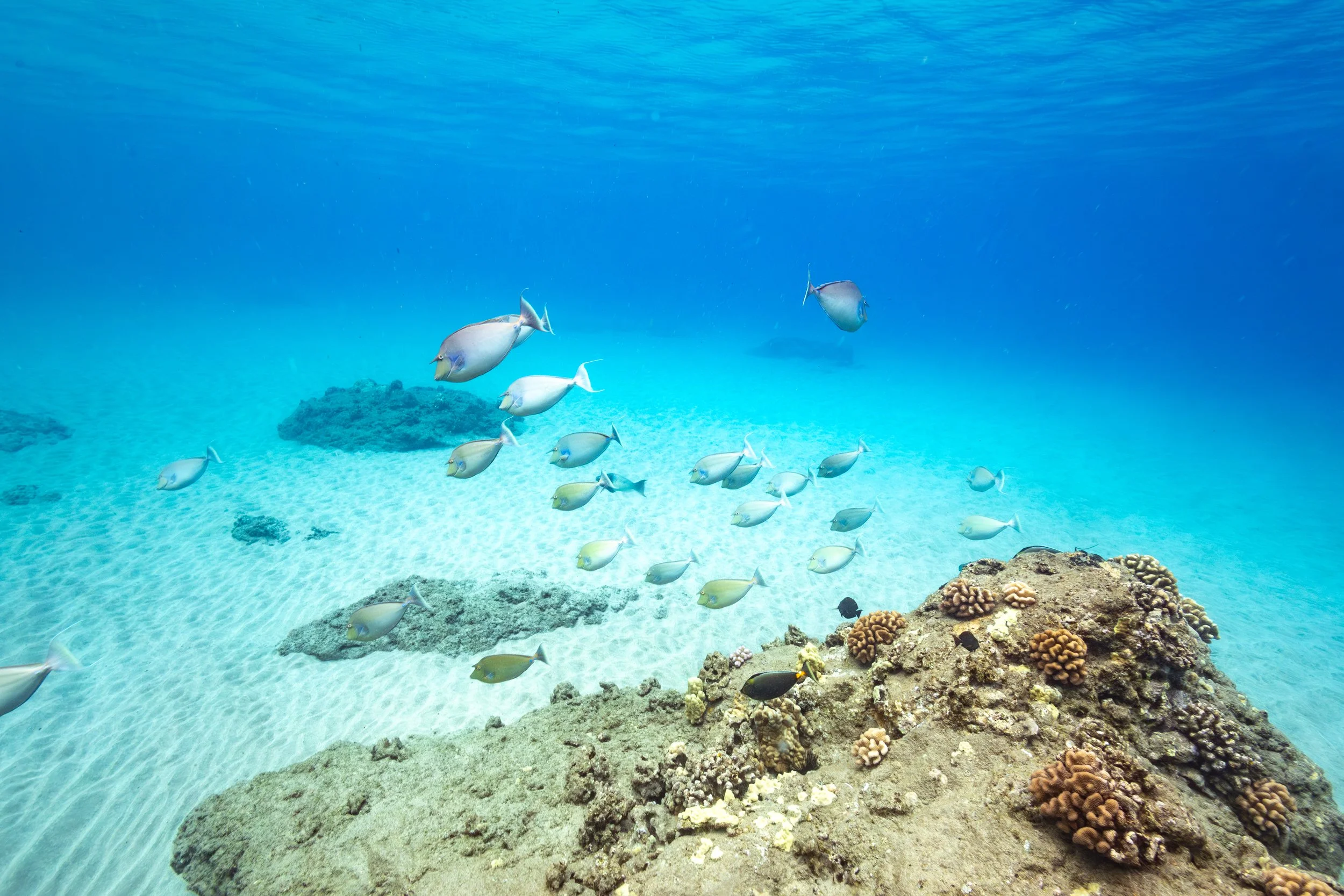
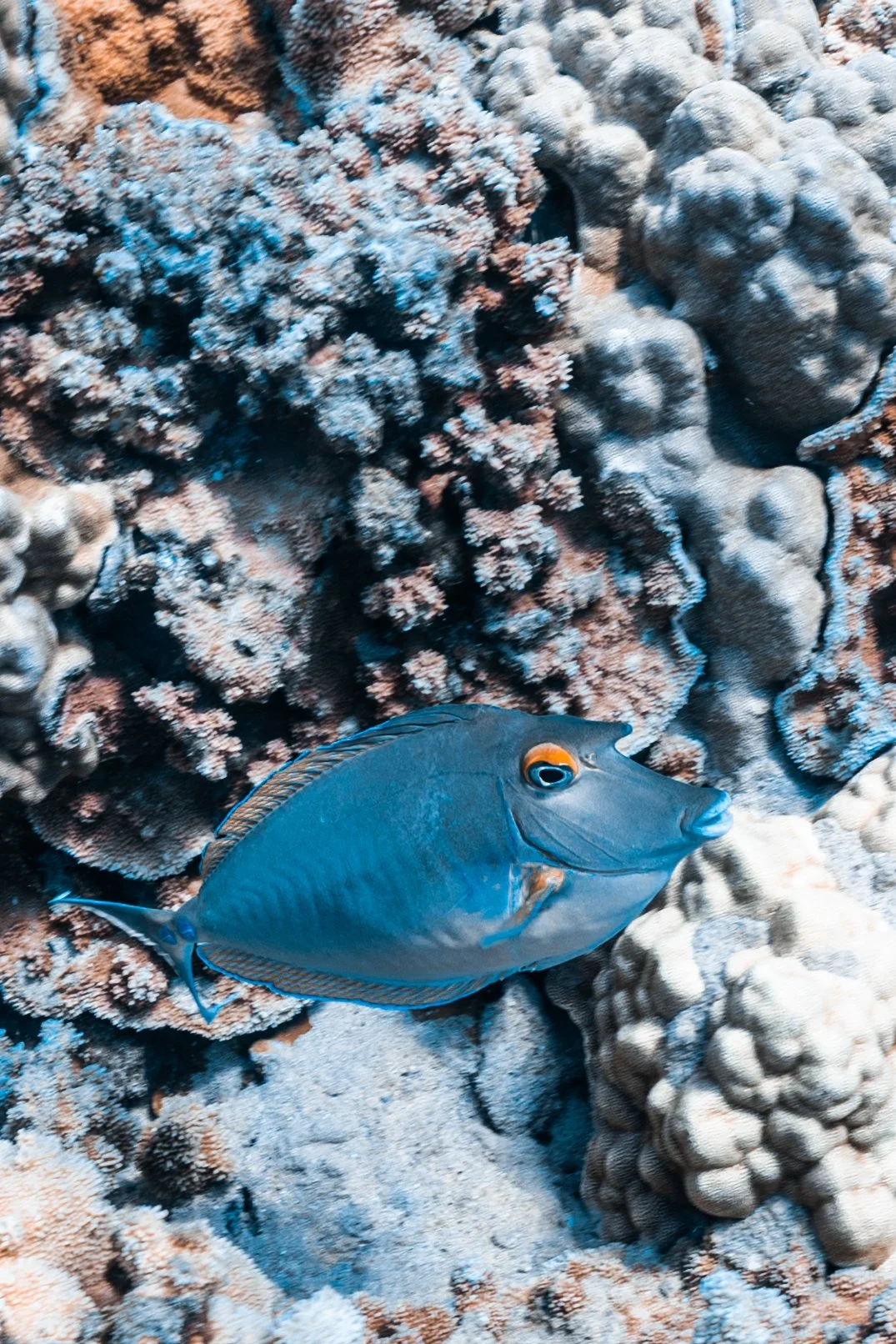
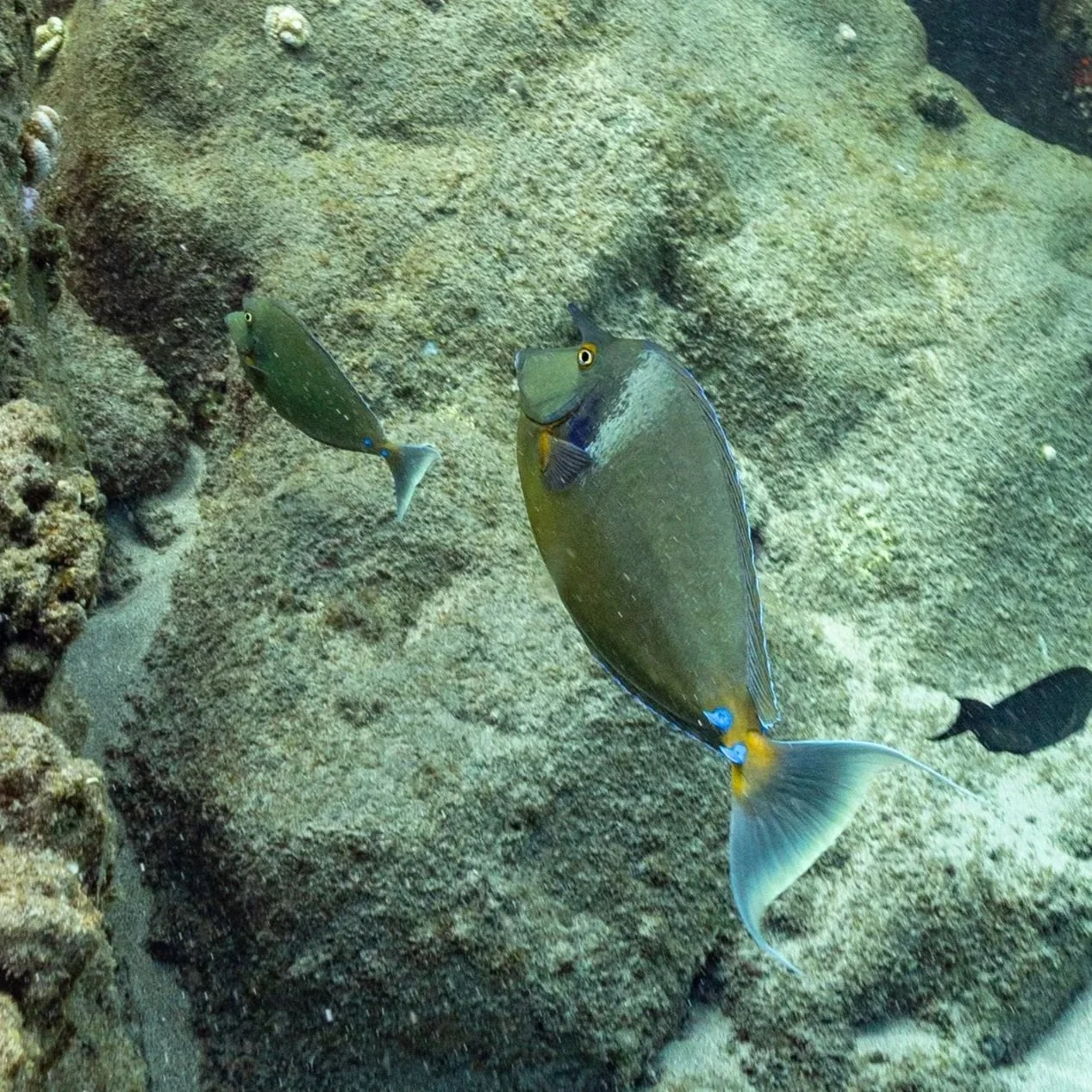
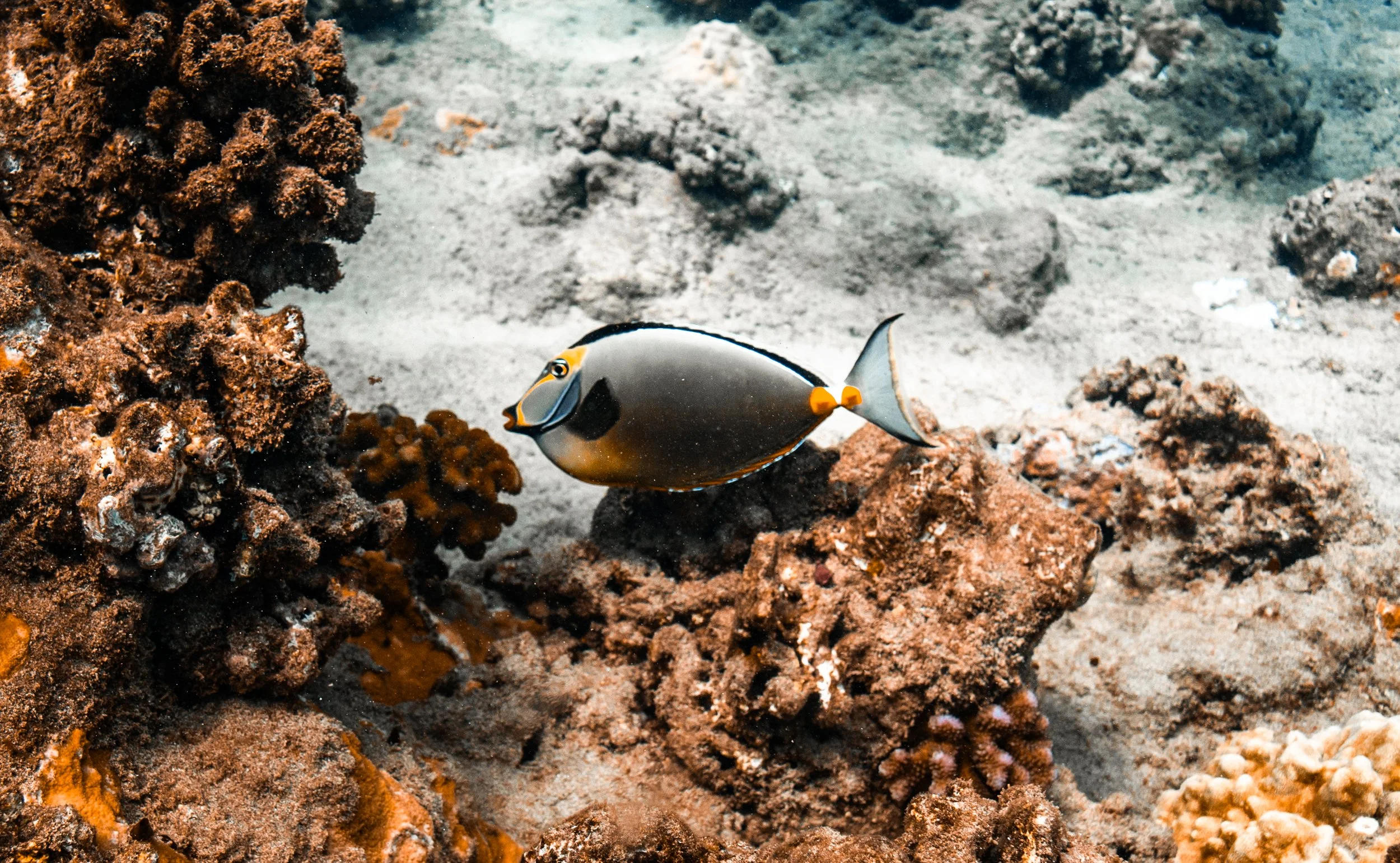
Orange-spine unicornfish - umauma lei
Orange-spine unicornfish - umauma lei
One of the most common species you'll see around Maui, other than a kala, is the orangespine unicornfish (umauma lei), which doesn't have a horn at all. Instead, look for its black body, bright orange patch at the base of its tail, orange lips, and black dorsal fin edged with pale blue. Once you know those markings, it's easy to recognize—and you'll understand why not every unicornfish looks like a unicorn.
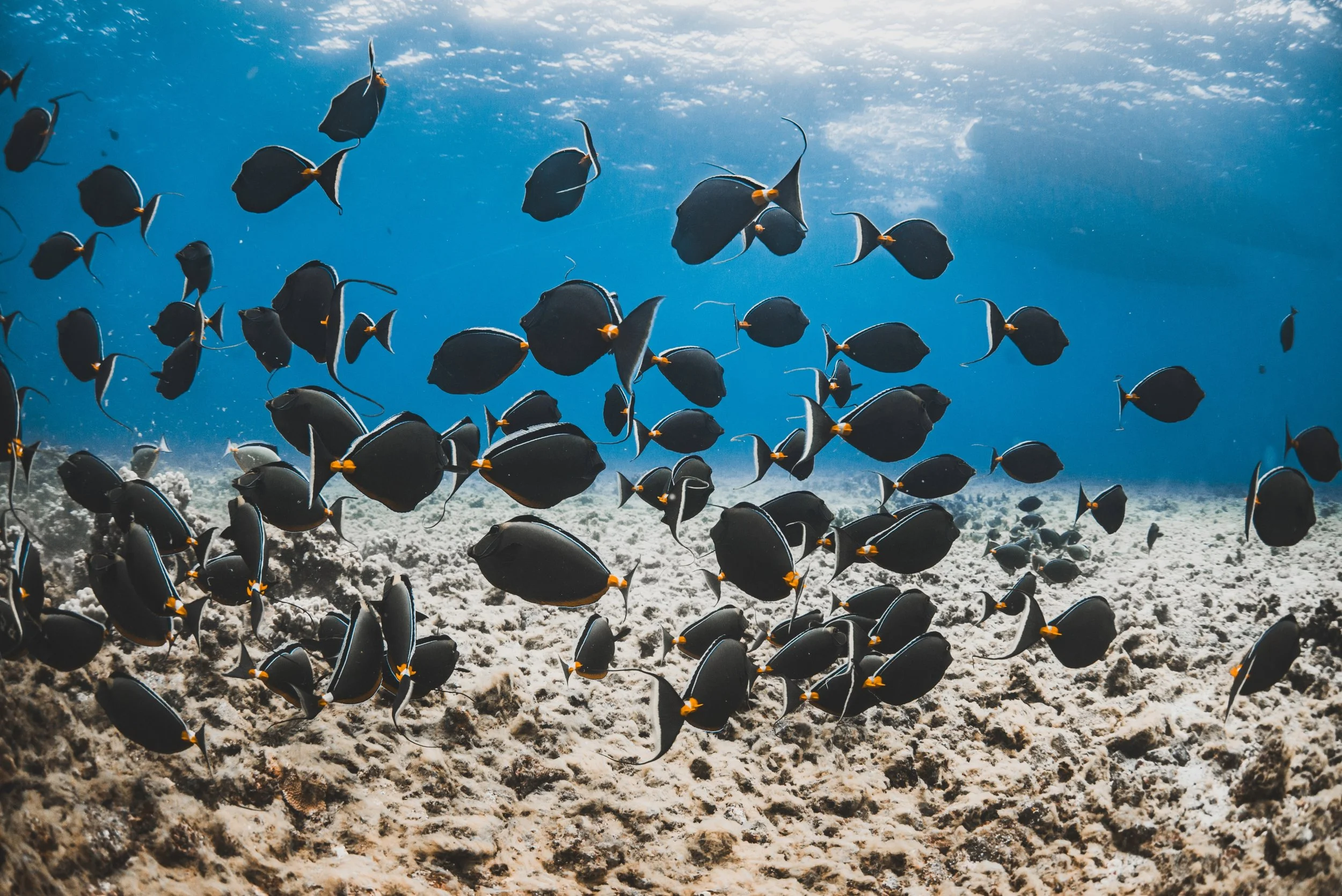
Orangespine unicornfish - umauma lei
Sergeant Major Damselfish — Mamo
At first glance, this striped fish looks a lot like a manini. Look a little closer and you'll notice a rounder body, a shorter snout, and often a hint of yellow along the back of its silver body. While manini spend much of their day grazing limu from the reef, mamo are more likely to hover just above it, picking food from the water. During nesting season, males become surprisingly territorial, defending patches of eggs against anything that gets too close.
How to tell it from a manini: If you see dozens of striped fish moving together and pecking at the reef, they're almost certainly manini. If you notice a striped fish hovering over one spot and darting at anything that comes near, you've probably found a Sergeant Major.
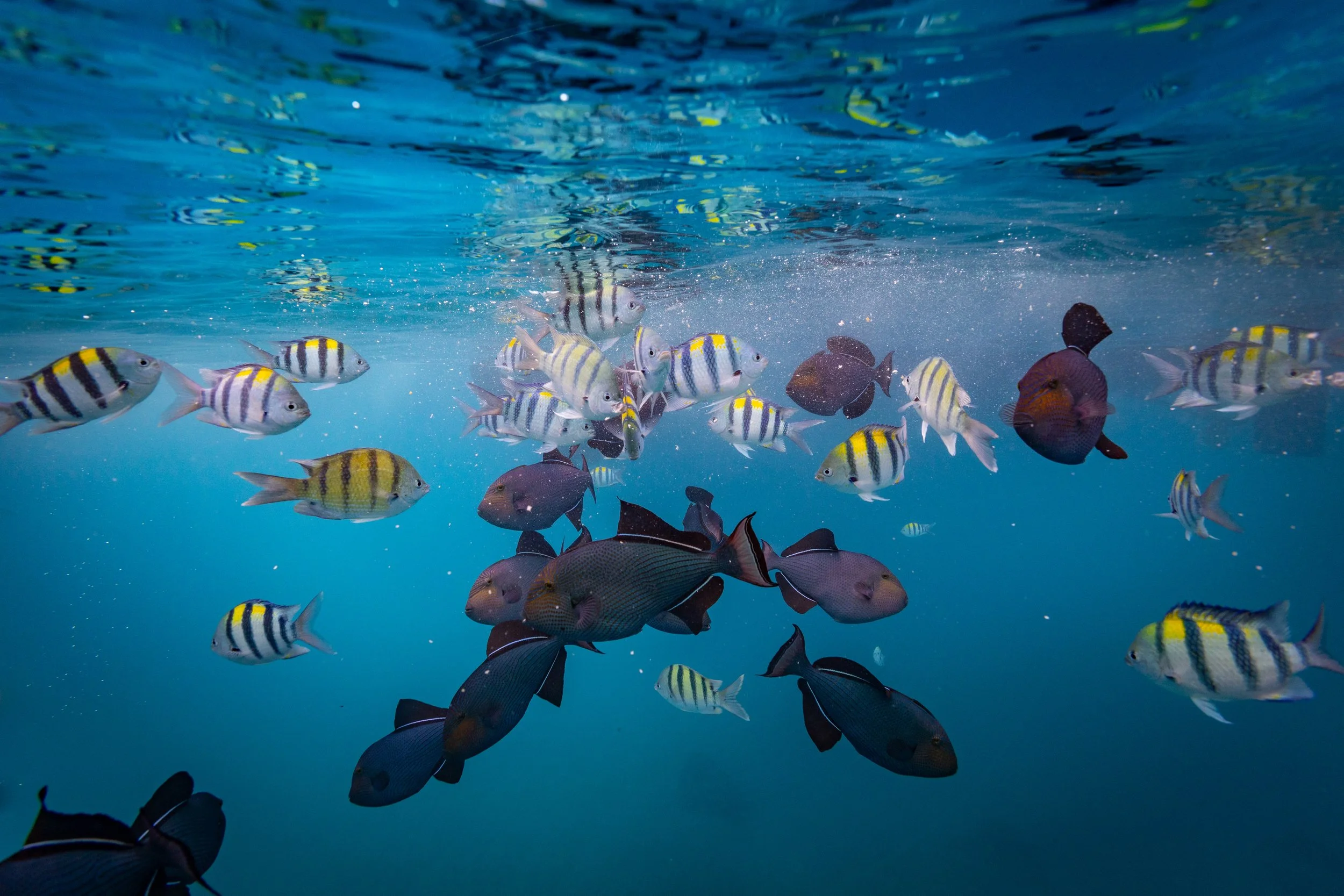
Sergeant Major — Mamo — with Black Triggerfish
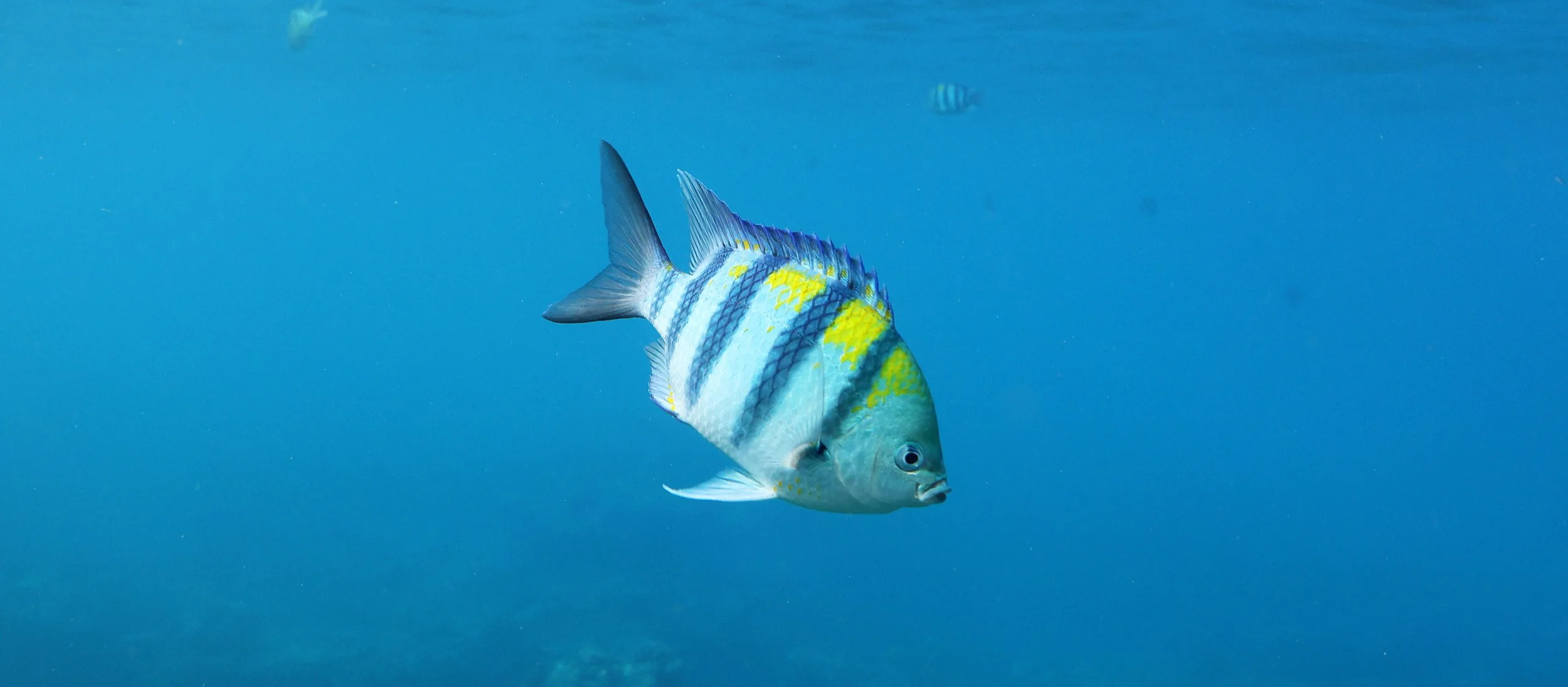
Sergeant Major — Mamo
@sailtrilogy POV: you made eye contact with a sergeant major damselfish 🐠 📍Video taken on the NEW turtle reef snorkel 🤿 #manini #fish #snorkeling #tropicalfish #coralreef ♬ Island Home - Sean Rii & Sharzkii & Jenieo
Parrotfish & Wrasses
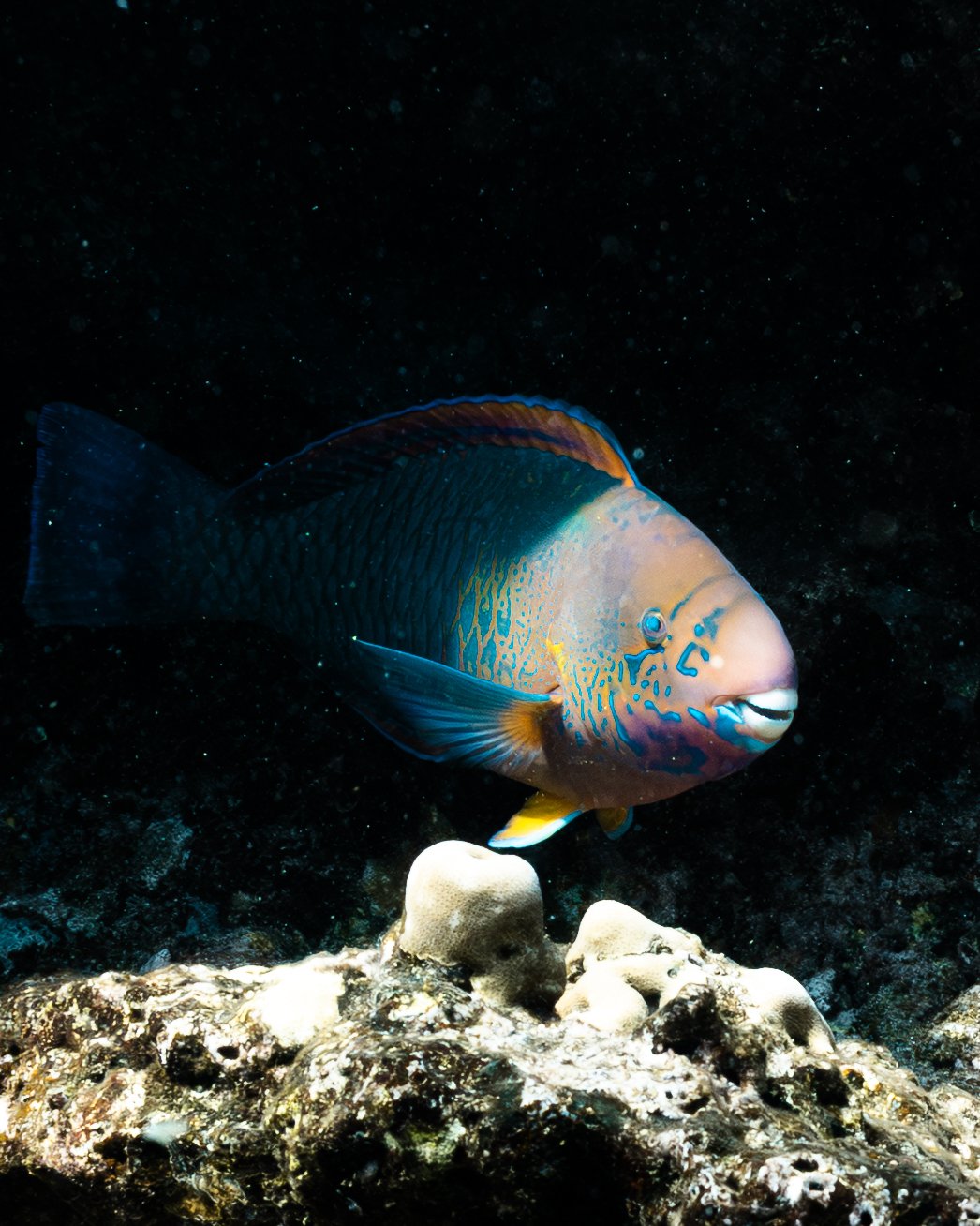
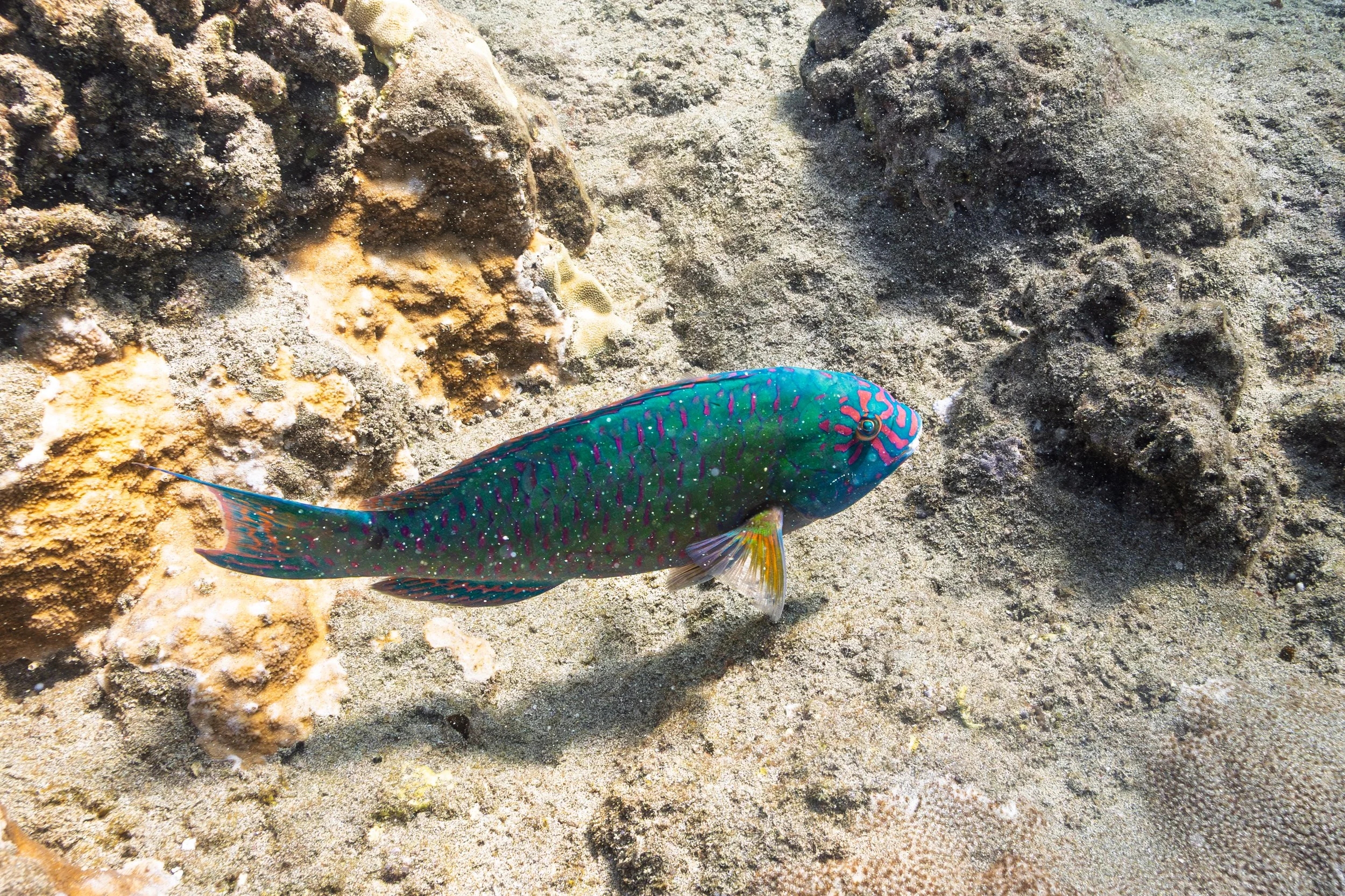
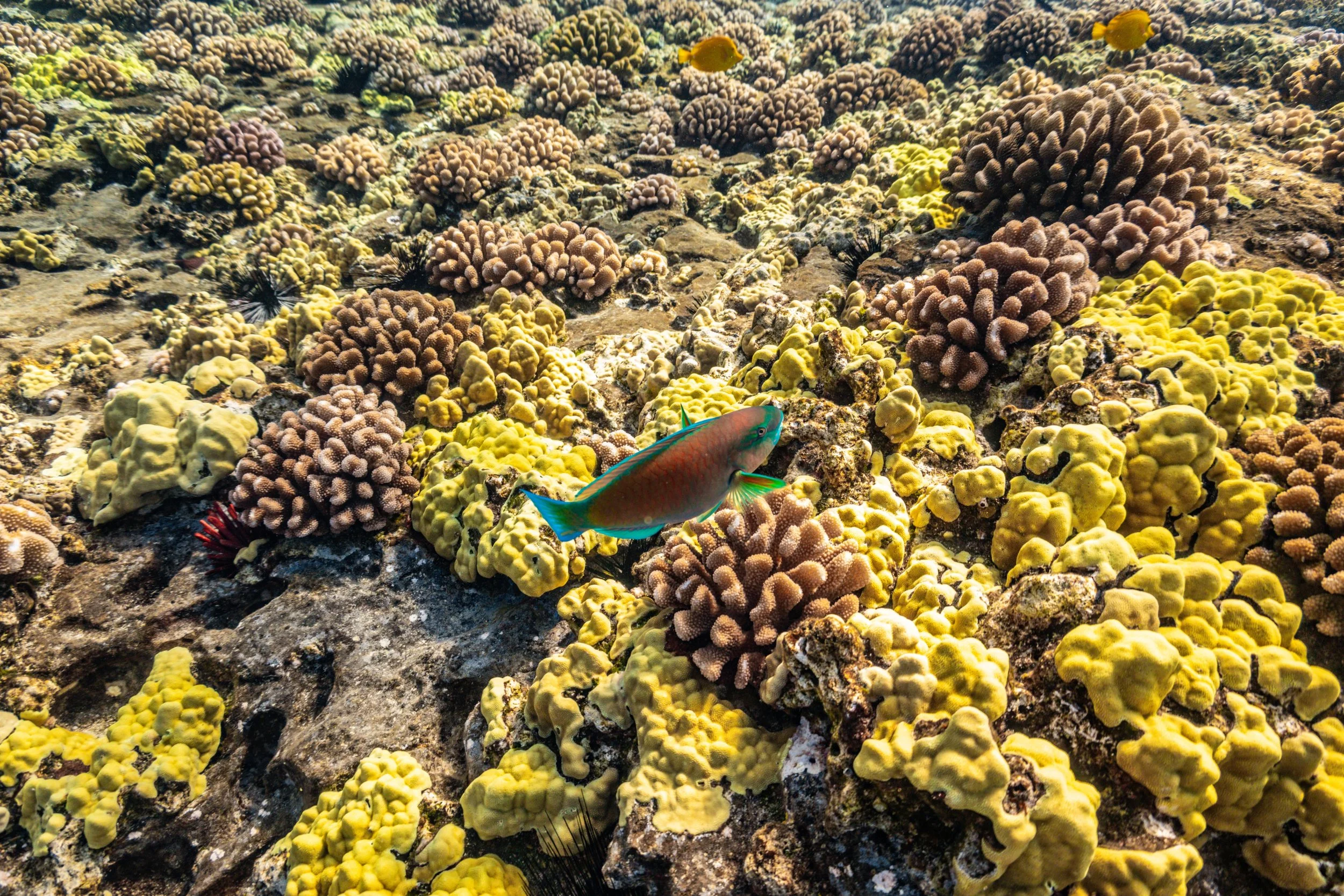
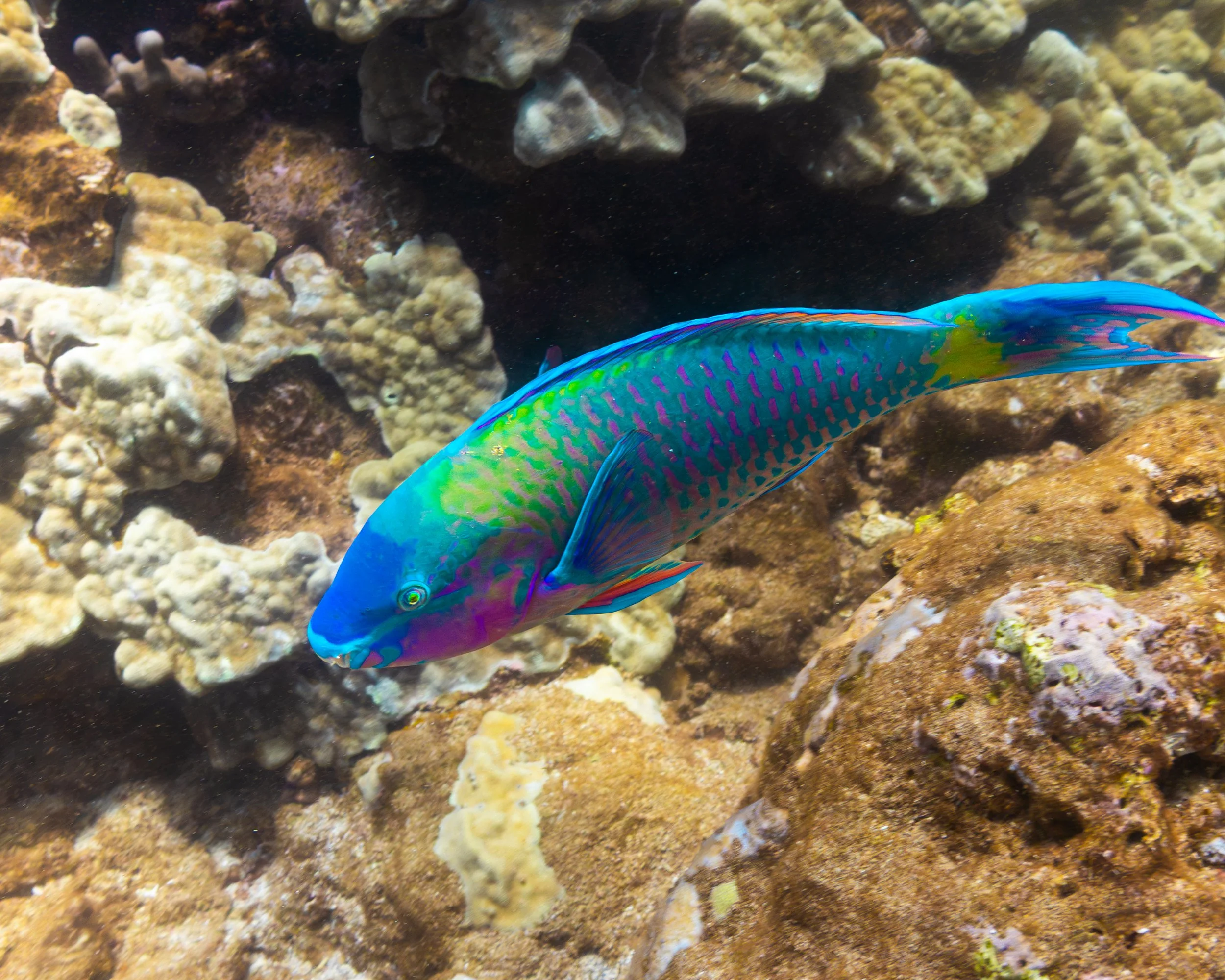
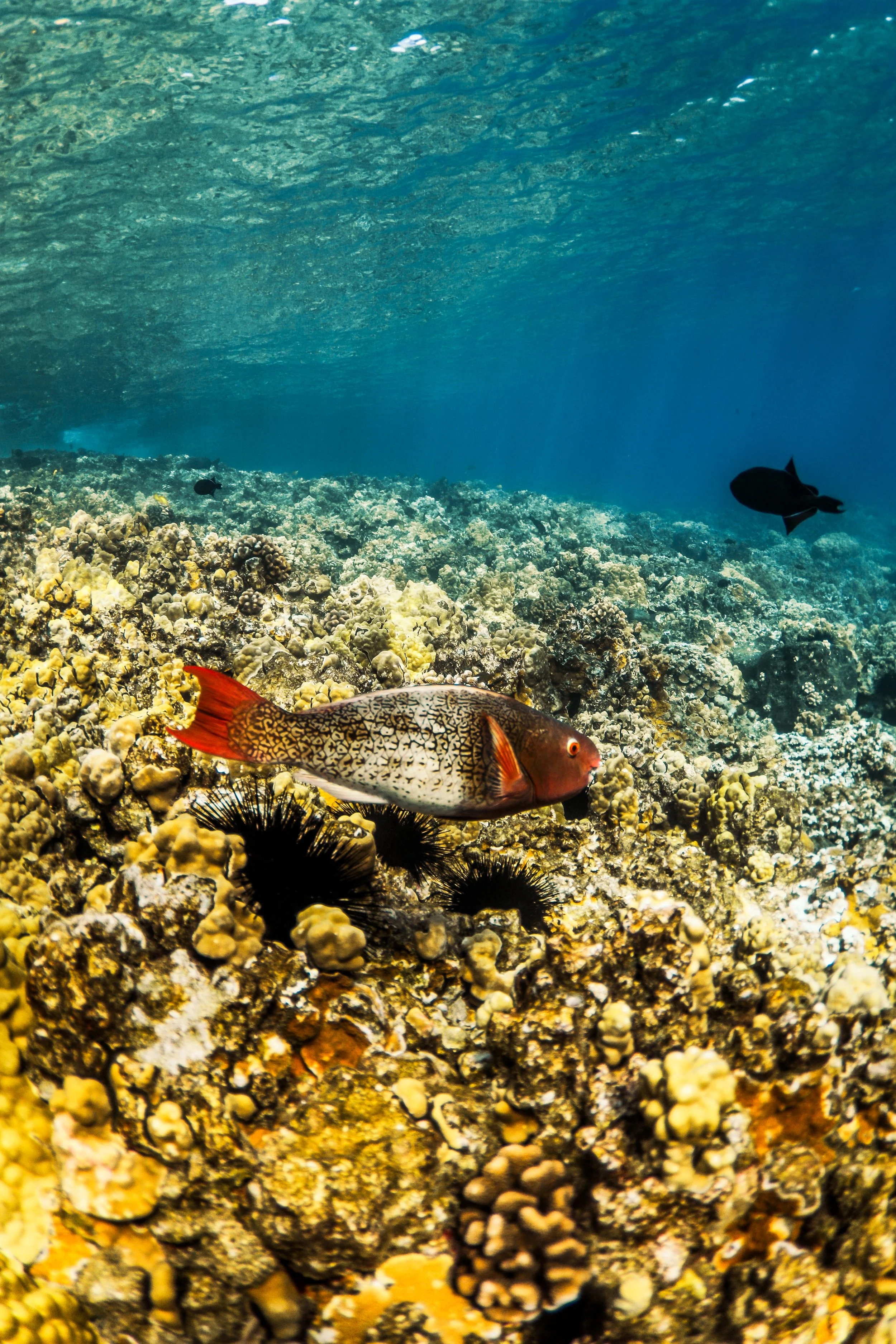
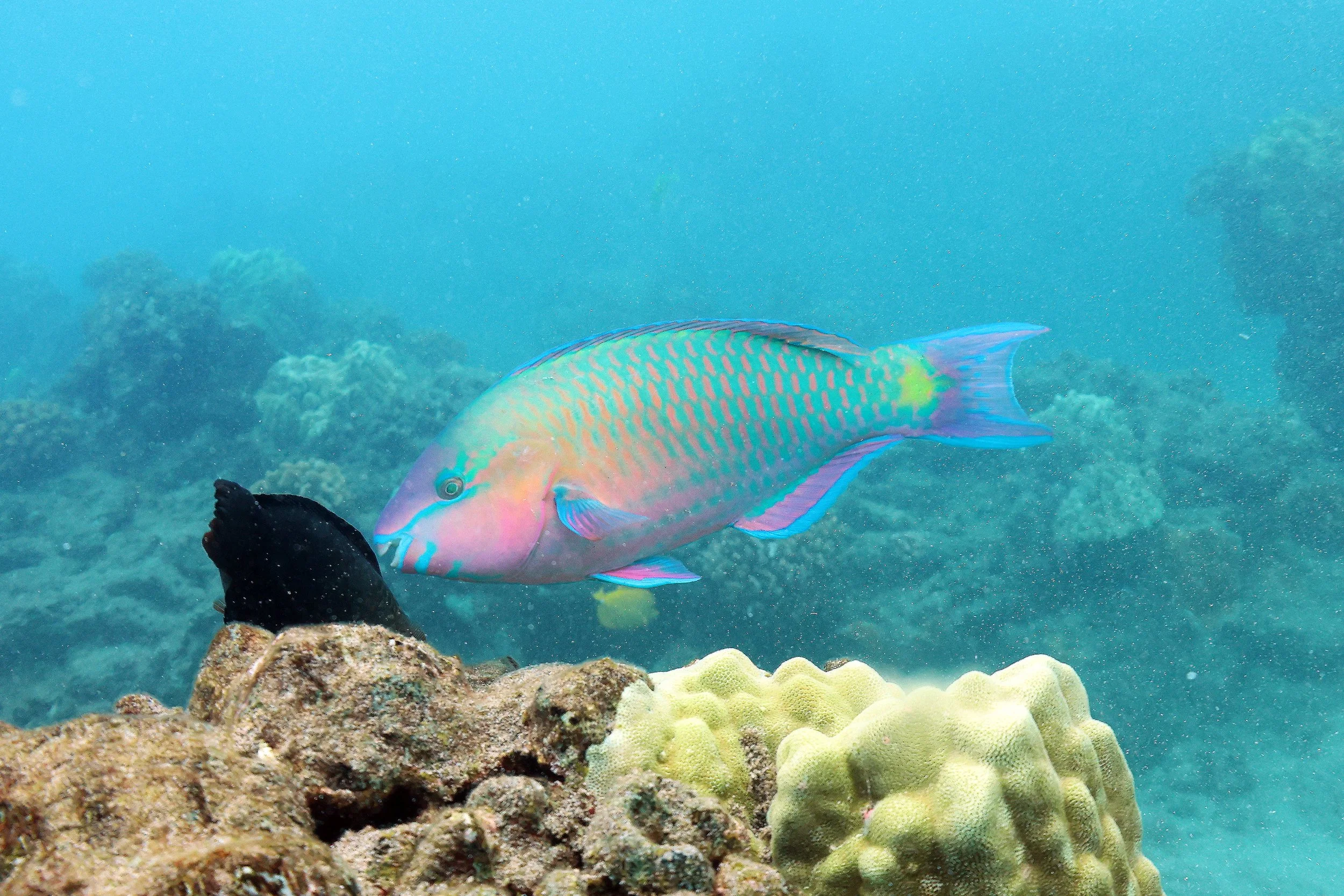
Parrotfish — Uhu
If it looks like it's chewing on the reef, you're probably watching an uhu. Their thick lips and beak-like mouth make them easy to recognize, and they come in an incredible range of colors, from mottled browns and reds to brilliant blues, purples, pinks, and greens. On Trilogy snorkel tours, it's common to spot vibrant blue, pink, and purple uhu gliding over the reef. Instead of nibbling seaweed, uhu use their powerful beaks to scrape algae from coral and rocks. In the process, they accidentally grind up tiny bits of coral, creating much of the white sand that eventually washes onto Hawaiʻi's beaches. As they graze, they also help keep algae from taking over the reef, giving young corals more room to grow.
Don't be surprised if two uhu look nothing alike. Unlike many reef fish, uhu can change color as they grow, and males and females of the same species often look completely different. That's one reason they're among the most colorful—and sometimes the most confusing—fish you'll see while snorkeling on Maui.
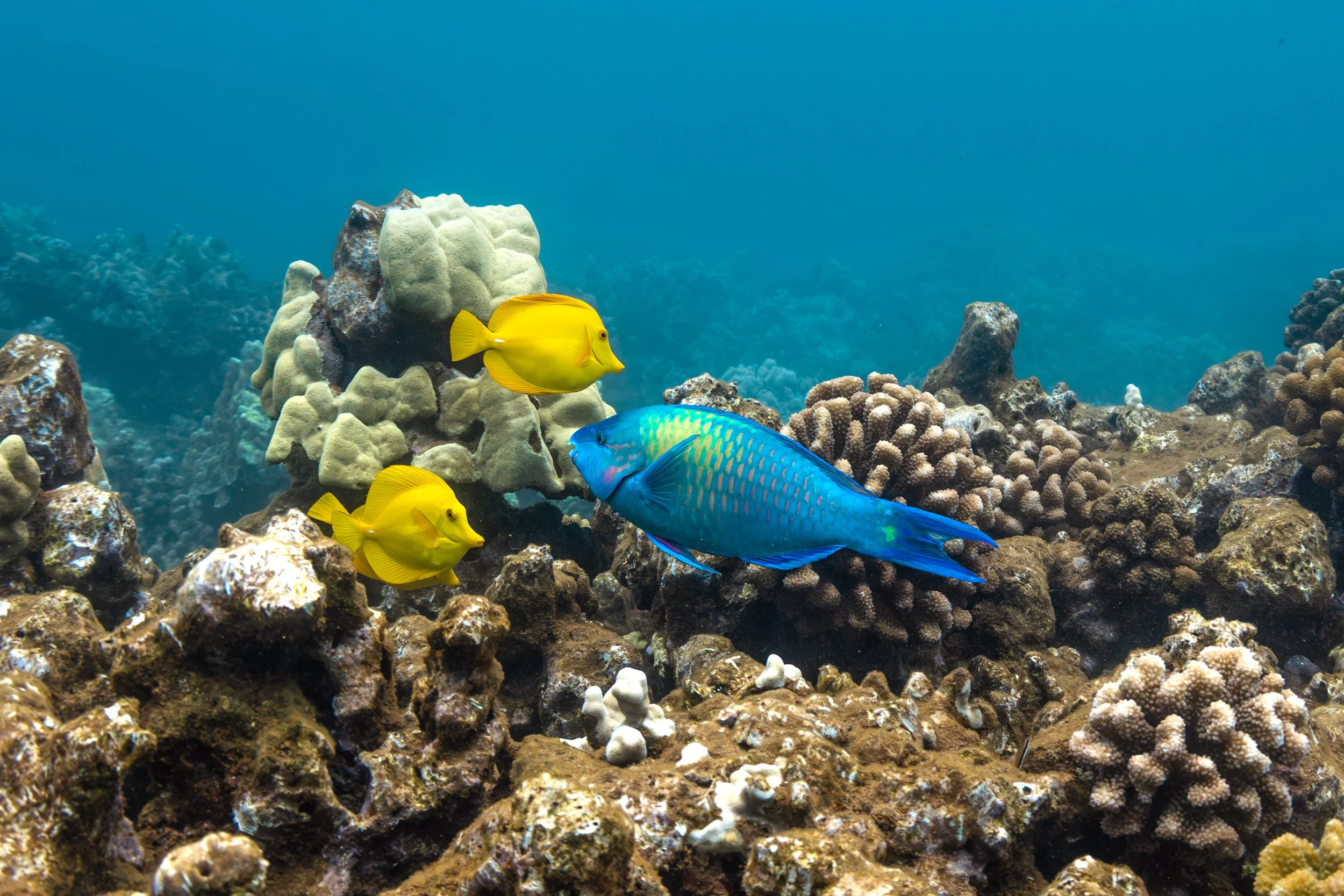
Christmas Wrasse — ʻĀwela
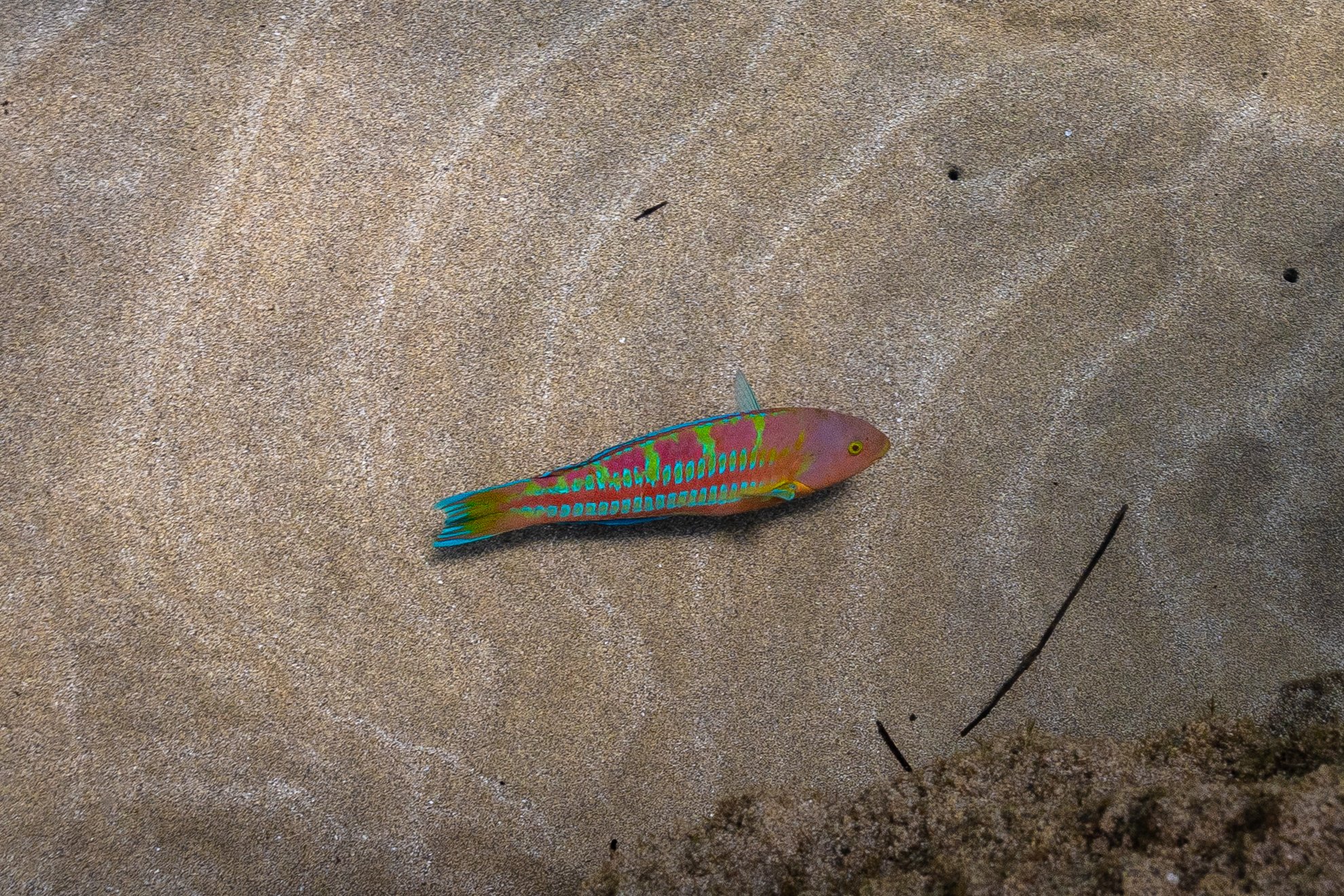
Not every brightly colored fish is an uhu. ʻĀwela are among the most colorful fish you'll see while snorkeling on Maui, with vibrant shades of green, blue, pink, and orange that almost look hand-painted. Unlike the stockier uhu, they have a long, slender body and a pointed face with a small mouth instead of a parrot-like beak. You'll often see them darting quickly over the reef, weaving between coral heads as they search for small crabs, snails, and other tiny invertebrates. The largest males usually display the brightest colors, making them one of the most eye-catching fish on the reef.
Christmas Wrasse — ʻĀwela
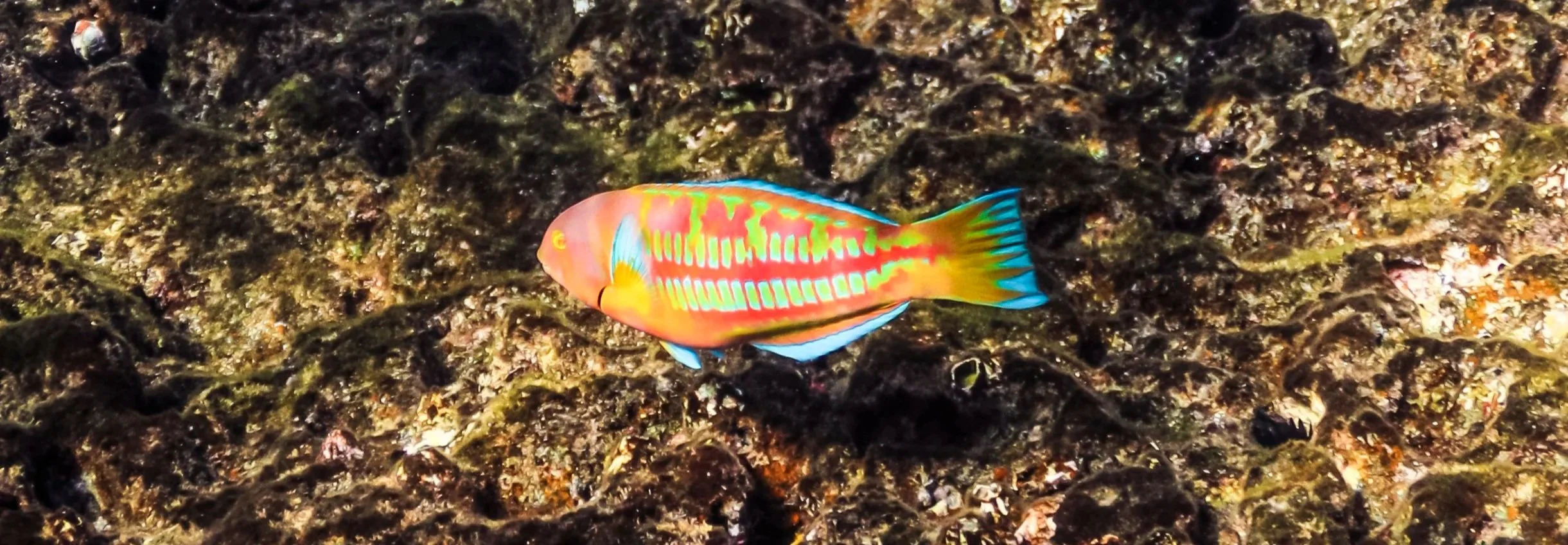
Christmas Wrasse — ʻĀwela
Good to know: Hawaiʻi's reefs are home to several colorful wrasses, including the Sunset Wrasse (hinalea ʻakilolo) and Ornate Wrasse (hinalea lau-wili). Like the Christmas Wrasse, they can be brilliantly colored and are sometimes mistaken for young uhu. The easiest way to tell them apart is to look at the mouth. Wrasses have a small, pointed mouth and a streamlined body built for quick bursts of speed, while uhu have a rounded head with a distinctive beak that's designed for scraping algae from the reef.
Triggerfish
Humuhumunukunukuāpuaʻa — Reef Triggerfish
If a fish looks like it was painted by hand, you've probably found a humuhumunukunukuāpuaʻa.
Its body is a patchwork of tan, yellow, blue, black, and white, with bright blue lines around the face and an angular, almost diamond-shaped profile that's unlike any other reef fish. Instead of swimming by waving its tail, the humuhumu glides through the water by fluttering its dorsal and anal fins, giving it a smooth, almost hovering motion.
When startled, it can raise a strong spine on top of its head and lock itself inside a crack in the reef, making it nearly impossible for predators to pull it out. It's also Hawaiʻi's official state fish, and its name means "triggerfish with a snout like a pig," a nod to its pointed face and habit of rooting around the reef for food.
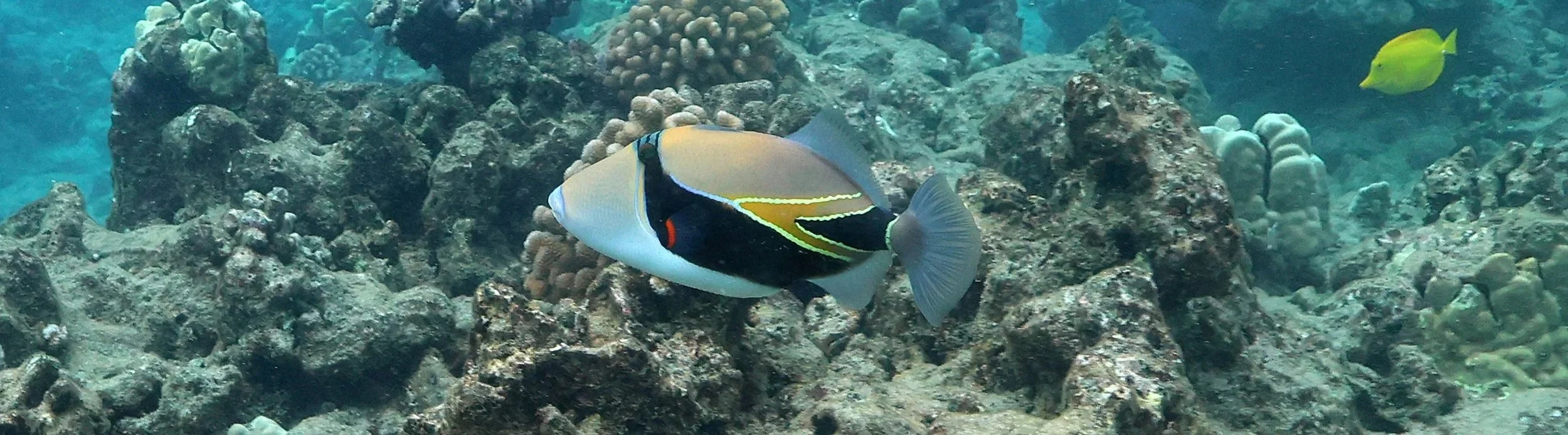
Humuhumunukunukuāpuaʻa — Reef Triggerfish
Black Triggerfish — ʻEleʻele
Not every triggerfish is a humuhumunukunukuāpuaʻa. If you spot a sturdy, oval-shaped fish that's charcoal gray or nearly black, you're probably looking at an ʻeleʻele, or black triggerfish. At first glance they may seem plain, but when the sunlight catches them, their scales often shimmer with hints of blue or green. They're confident swimmers that cruise just above the reef, using their small dorsal and anal fins to glide with surprising precision as they search for algae and small invertebrates.
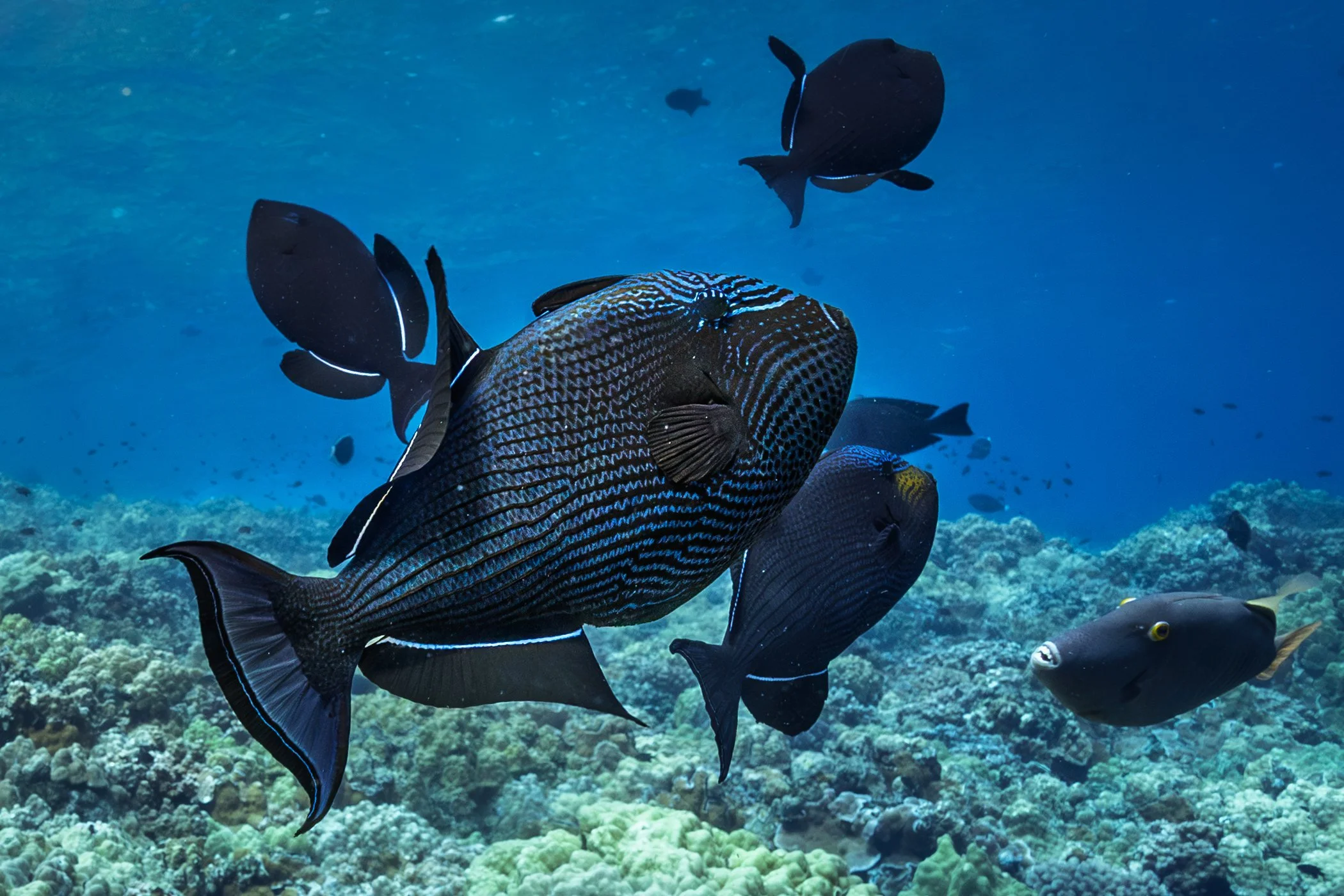
Multiple Black Triggerfish with One Pinktail Triggerfish (Bottom Right)
Butterflyfish
Raccoon Butterflyfish — Kīkākapu
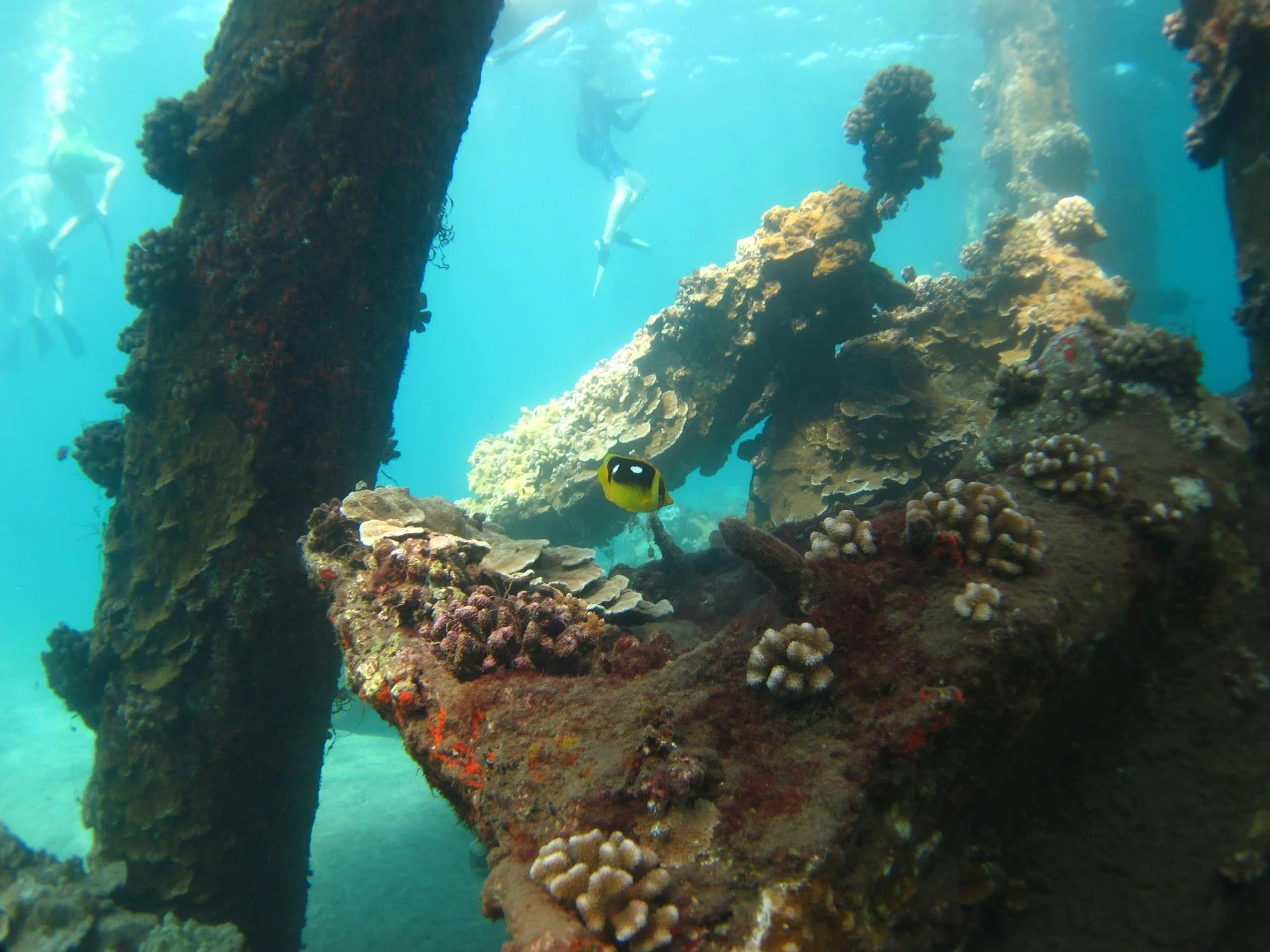
If you spot a bright yellow fish wearing what looks like a black bandit's mask, you've found a kīkākapu. The dark patch across its eyes, outlined in white, makes it one of the easiest reef fish to recognize. You'll often see them swimming alone or in pairs as they weave through coral heads, stopping to inspect every nook and cranny for small invertebrates. Unlike the fast-moving wrasses, kīkākapu tend to cruise the reef at an unhurried pace, making them a favorite fish for first-time snorkelers to follow with their eyes. The dark mask may also help disguise the fish's eye, making it harder for predators to tell which direction it's facing.
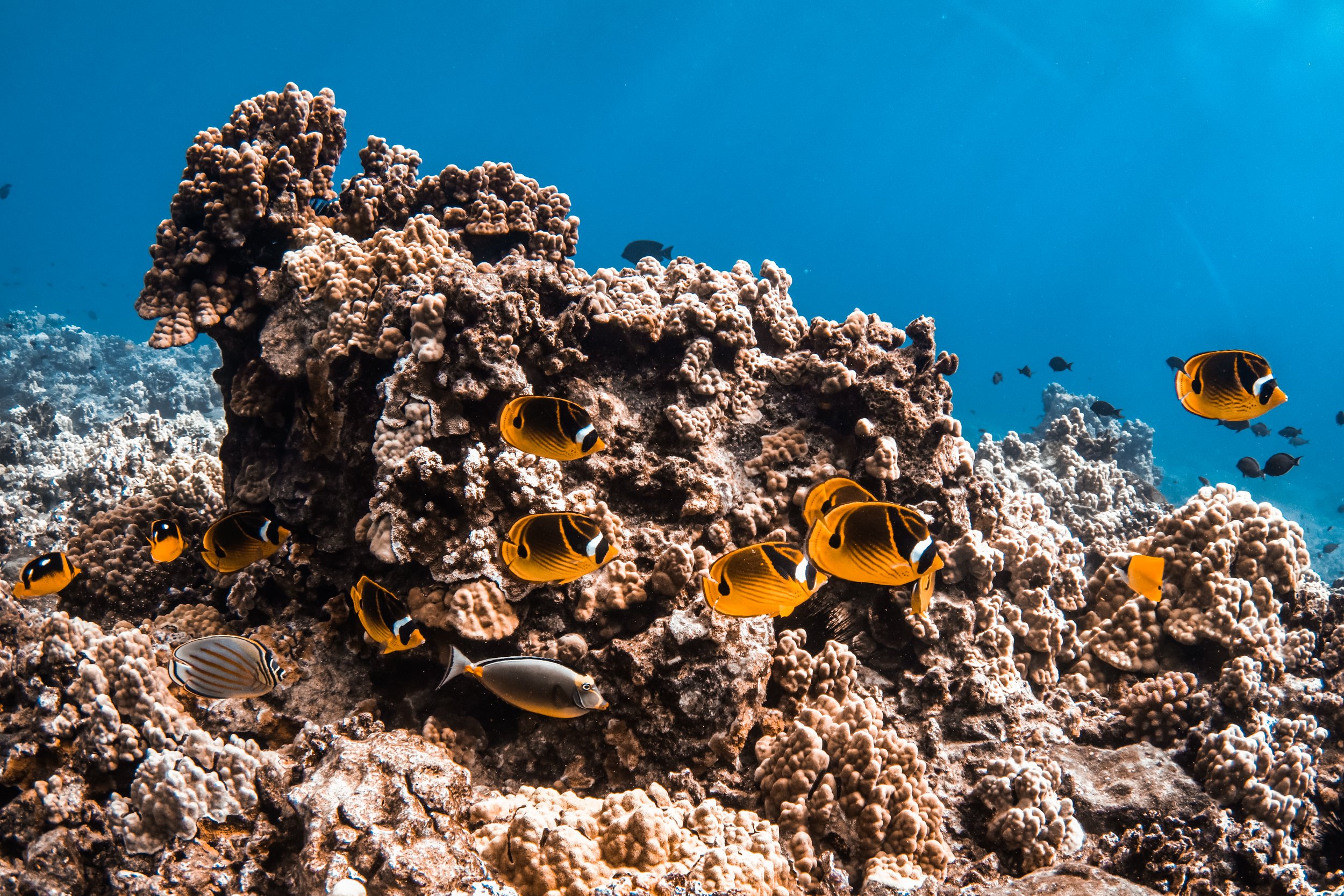
Raccoon Butterfly Fish
The Fourspot Butterflyfish - lauhau
Easily confused with the raccoon butterlfyfish, the fourspot butterflyfish also has a yellow body and dark markings, but instead of the raccoon's bold black mask, look for the pair of dark spots near the back half of its body. Or look for the pair of bright white spots (one on each side of the black saddle). These are usually much more obvious than the dark spots that gave the species its common name. Both fish are common on Maui's reefs, so don't worry if you mix them up at first—even experienced snorkelers sometimes need a second look.
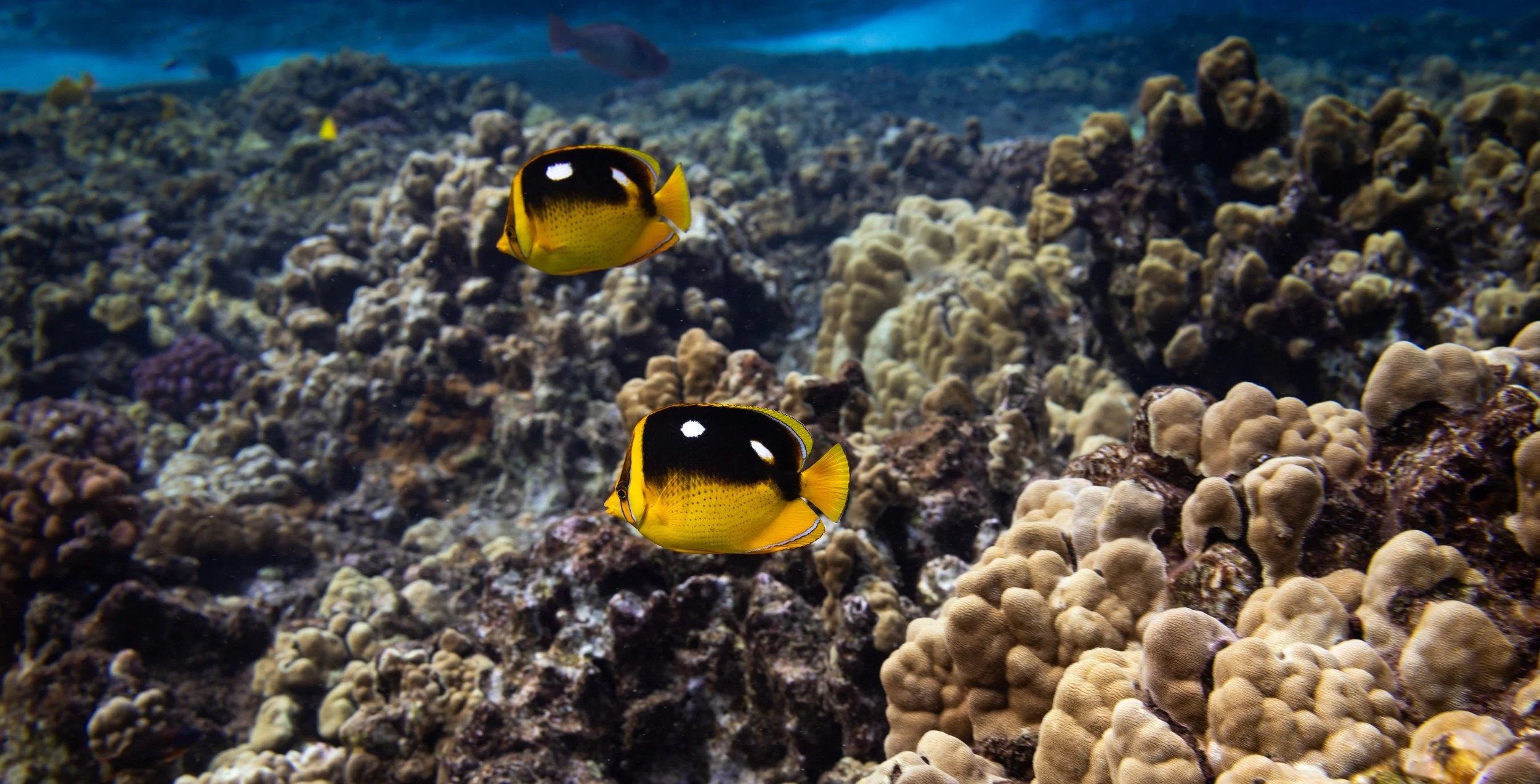
Fourspot Butterflyfish (Kikakapu liʻiliʻi)
threadfin butterflyfish - Kīkākapu
This butterflyfish has a bright white front half crossed by fine diagonal dark lines, with yellow covering the rear body and fins. A black band passes through the eye, and adults may have a dark eyespot near the upper rear body. The feature behind its name is a thin filament extending from the back of the dorsal fin, though that trailing thread can be difficult to notice when the fish is moving.
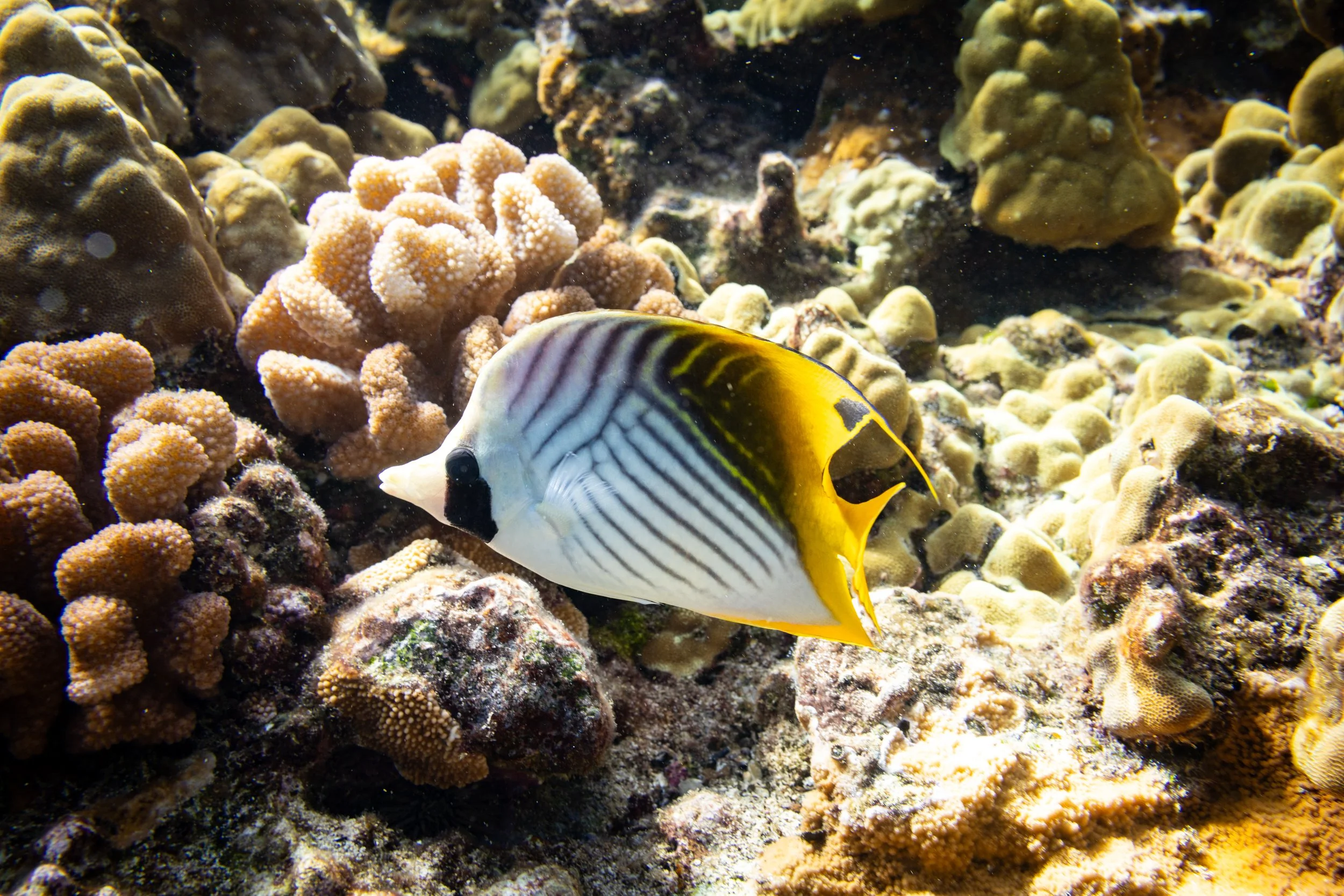
Threadfin Butterflyfish - kīkākapu
ornate butterflyfish - Kīkākapu
The ornate butterflyfish is covered in bold diagonal orange bands bordered by dark lines. Those stripes sweep backward across a pale body, creating a pattern that looks much more structured than the markings on most other butterflyfish. A black band runs through the eye, while the tail area is yellow-orange. Hawaiʻi DLNR identifies this species as a strict coral feeder.
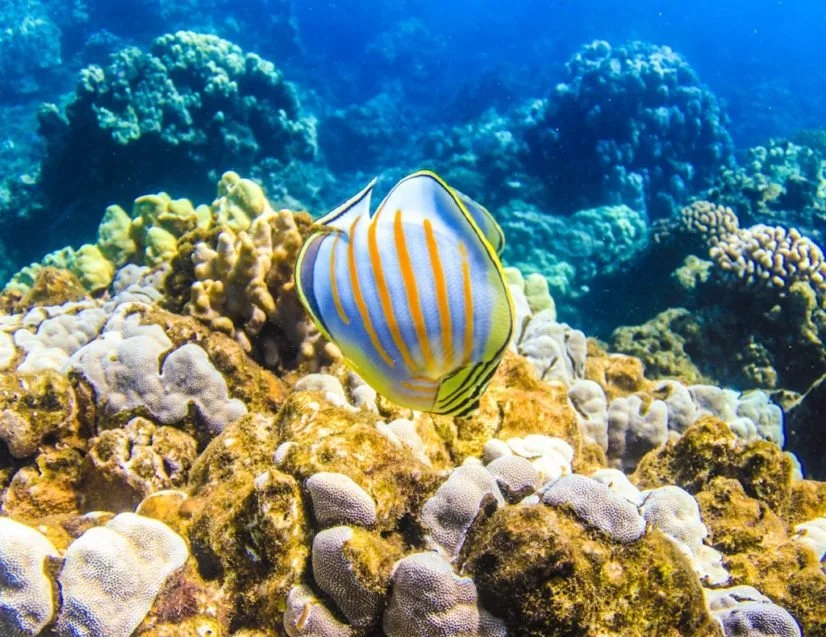
Ornate Butterflyfish - Kīkākapu
Oval Butterflyfish — Kīkākapu
The oval butterflyfish has a yellow body filled with narrow diagonal purplish lines. A dark stripe crosses the eye, and another dark marking appears near the base of the tail. From a distance, its pattern can look softly shaded, but closer inspection reveals the fine lines running across nearly the entire body. Hawaiʻi DLNR also identifies this species as a strict coral feeder.
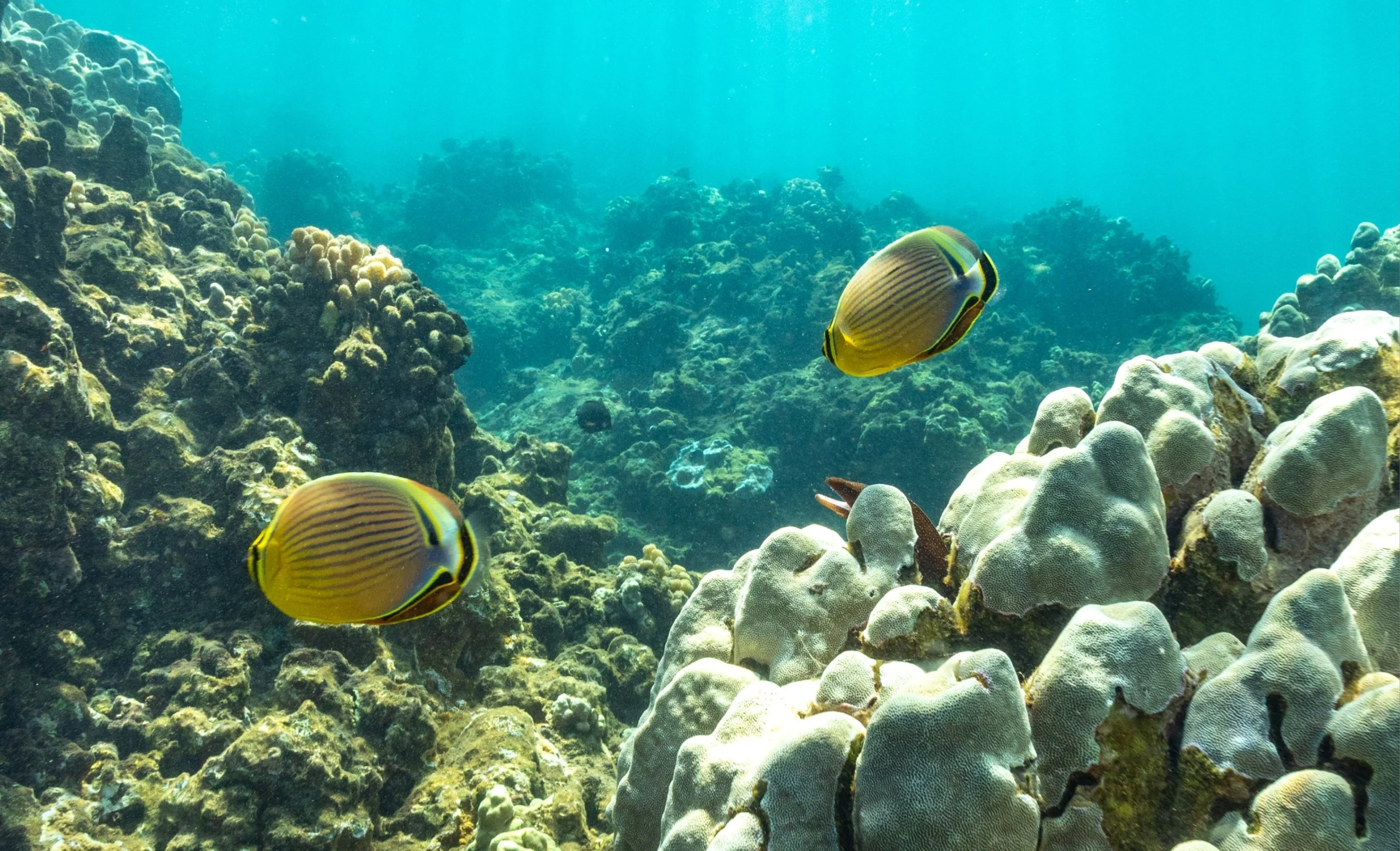
Oval Butterflyfish — Kīkākapu
Saddleback Butterflyfish — Kīkākapu
The saddleback butterflyfish is named for the large dark patch that spreads across the upper rear portion of its body. Below that “saddle,” the fish is pale with yellow-orange coloring along the lower body and fins. A dark stripe runs through the eye, and a narrow pale line often separates parts of the black patch from the surrounding color.
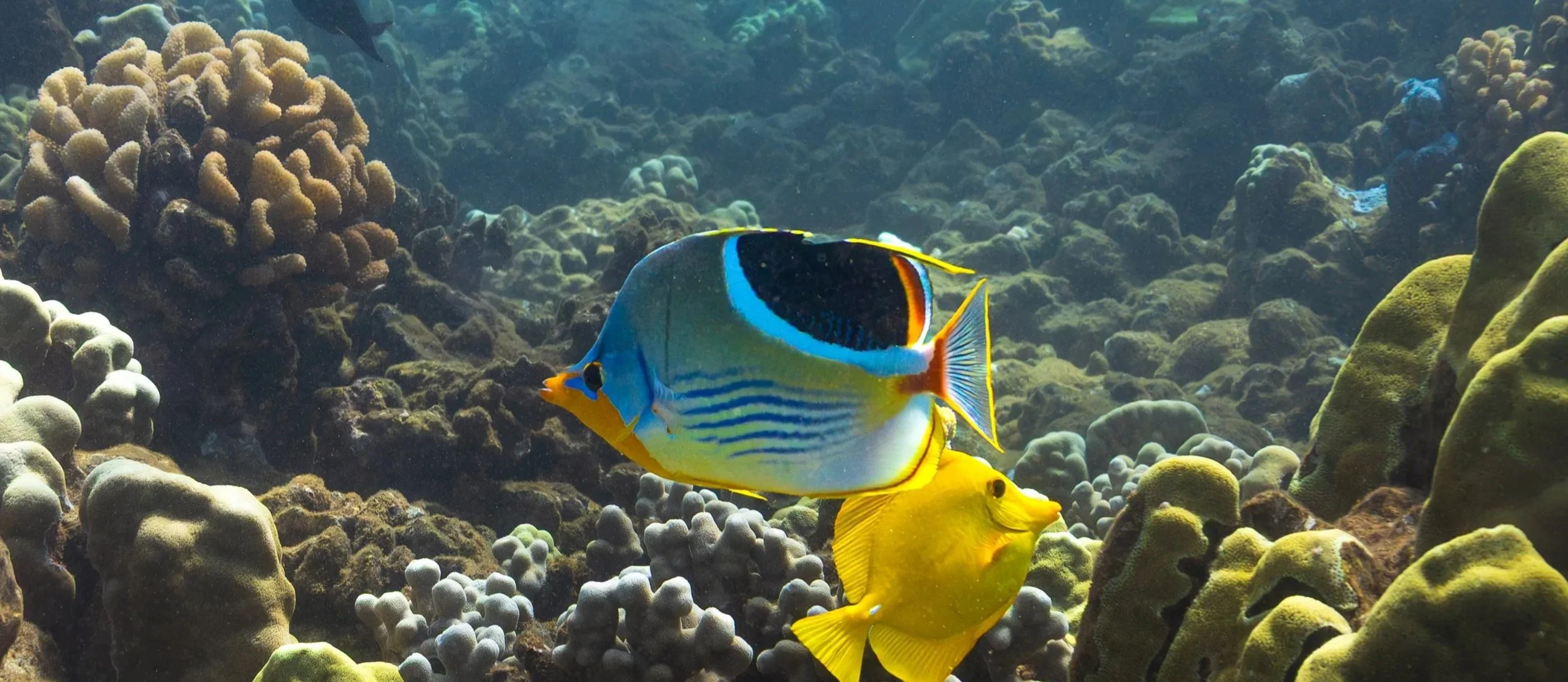
Saddleback Butterflyfish — Kīkākapu - with a yellow tang behind it
Milletseed Butterflyfish — Kīkākapu
If you see a bright yellow butterflyfish sprinkled with tiny black dots, you've found one of Hawaiʻi's signature reef fish. Those pepper-like speckles give the milletseed butterflyfish its name, while a black mask across the eye and a small dark spot near the tail make it easy to recognize up close. Unlike some butterflyfish that spend most of their time picking at coral, you'll often see milletseed butterflyfish swimming a little higher above the reef, sometimes in pairs or small groups. They're especially common on Trilogy's Lānaʻi Adventure Snorkel and Discover Lānaʻi snorkel sites, so don't be surprised if this becomes one of the first butterflyfish you learn to recognize. The milletseed butterflyfish is found only in the Hawaiian Islands, making every sighting a little more special.
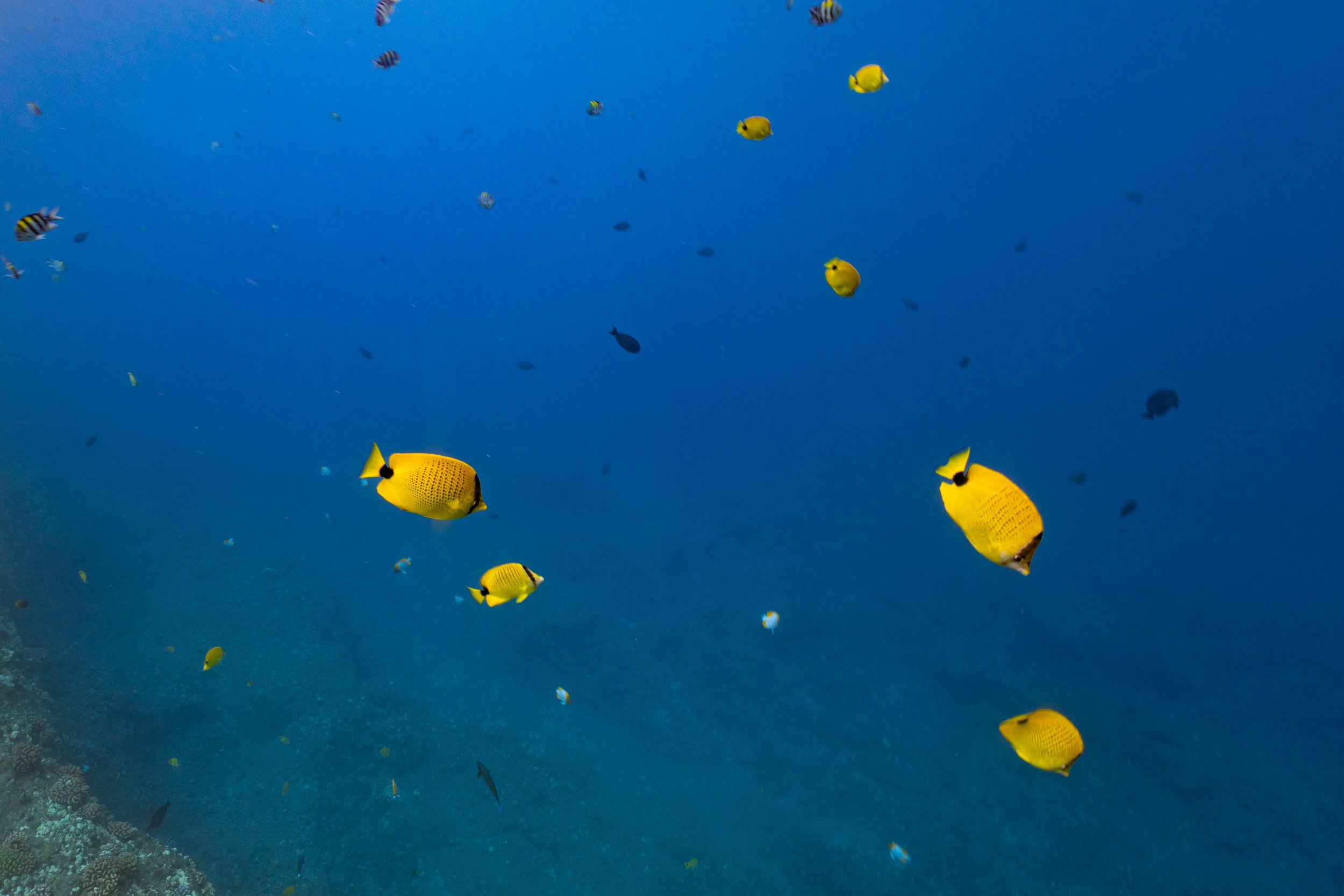
Milletseed Butterflyfish — Kīkākapu
Moorish Idol — Kihikihi
If you see a black, white, and yellow fish trailing a long white ribbon from its back, you've spotted a kihikihi. Commonly recongized from the Finding Nemo film, its bold stripes and graceful dorsal streamer make it one of the most elegant fish on the reef. You'll usually find them swimming calmly over the reef in pairs or small groups, picking tiny invertebrates from coral and rocks. Their distinctive shape makes them one of the easiest fish to recognize once you know what to look for.
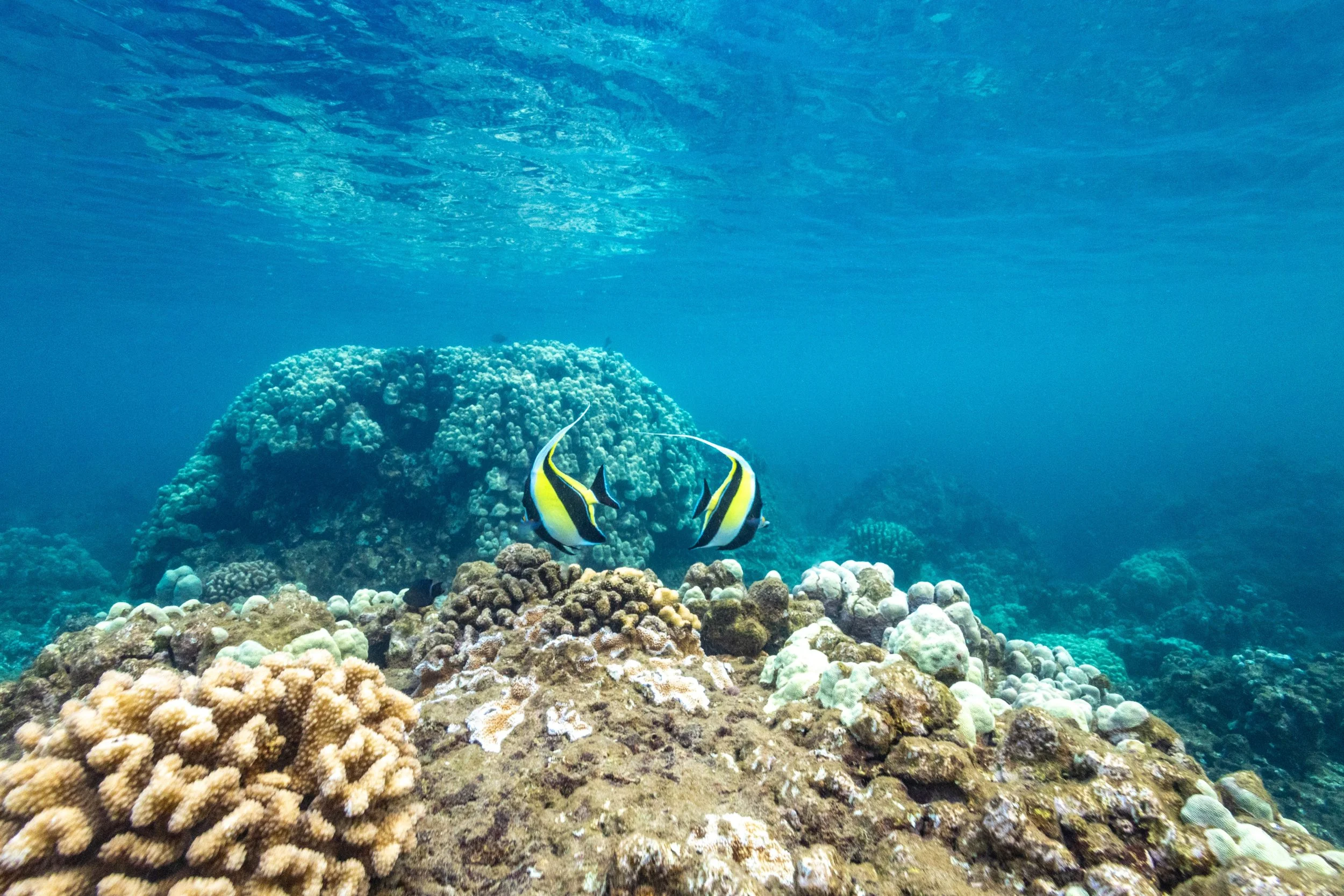
Moorish Idols — Kihikhi
long and unusual fish
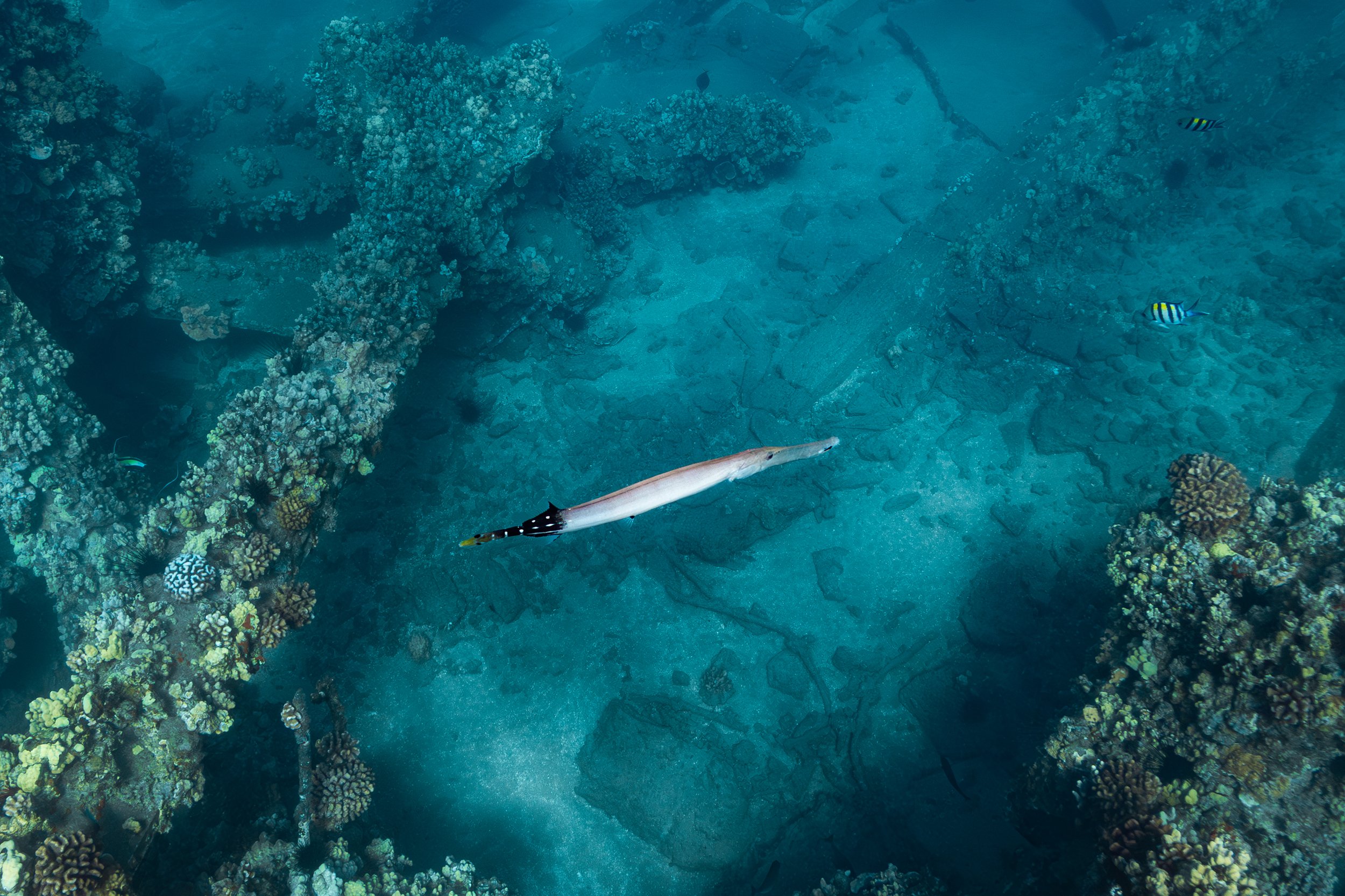
Trumpetfish (Nūnū) & Cornetfish — What's the Difference?
If you see what looks like a floating stick with fins, you've probably found a trumpetfish or a cornetfish. Both have an incredibly long, slender body and a tube-shaped snout that works like a straw for sucking up small fish and crustaceans. They're masters of camouflage, changing color to blend into the reef as they hunt, often hovering motionless beside coral heads, sea fans, or even drifting vertically among sea urchin spines to avoid being noticed.
The easiest way to tell them apart is the tail.
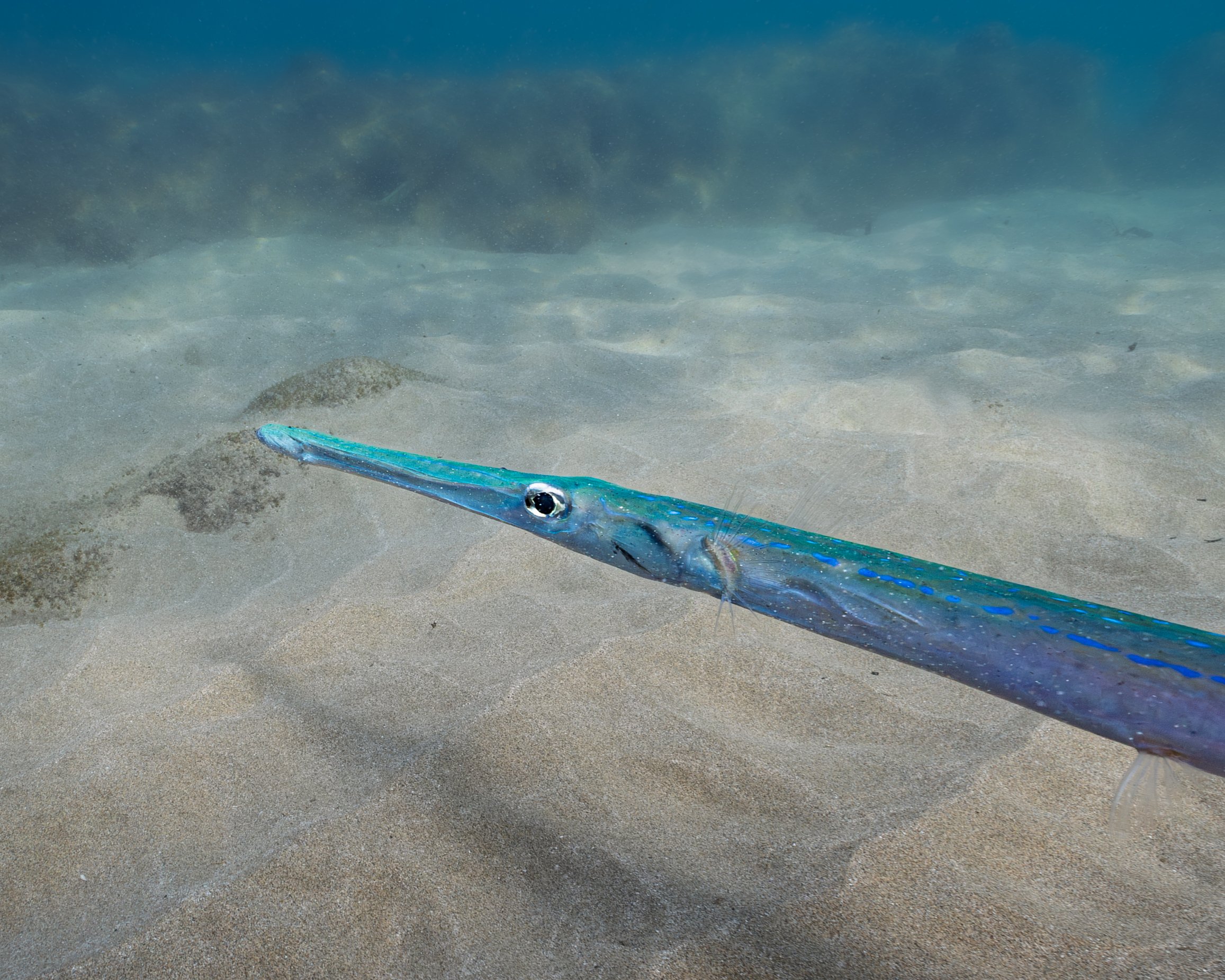
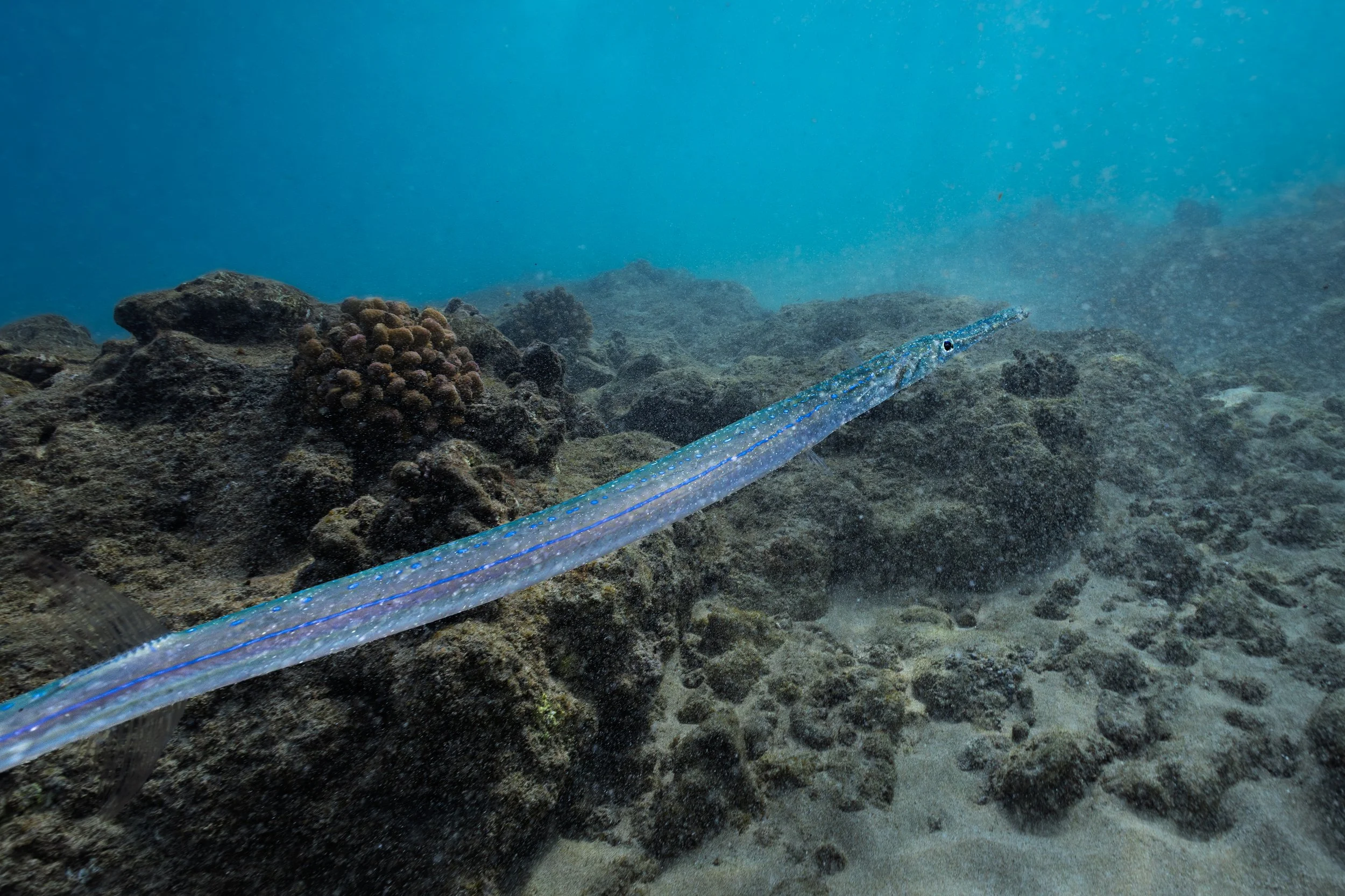
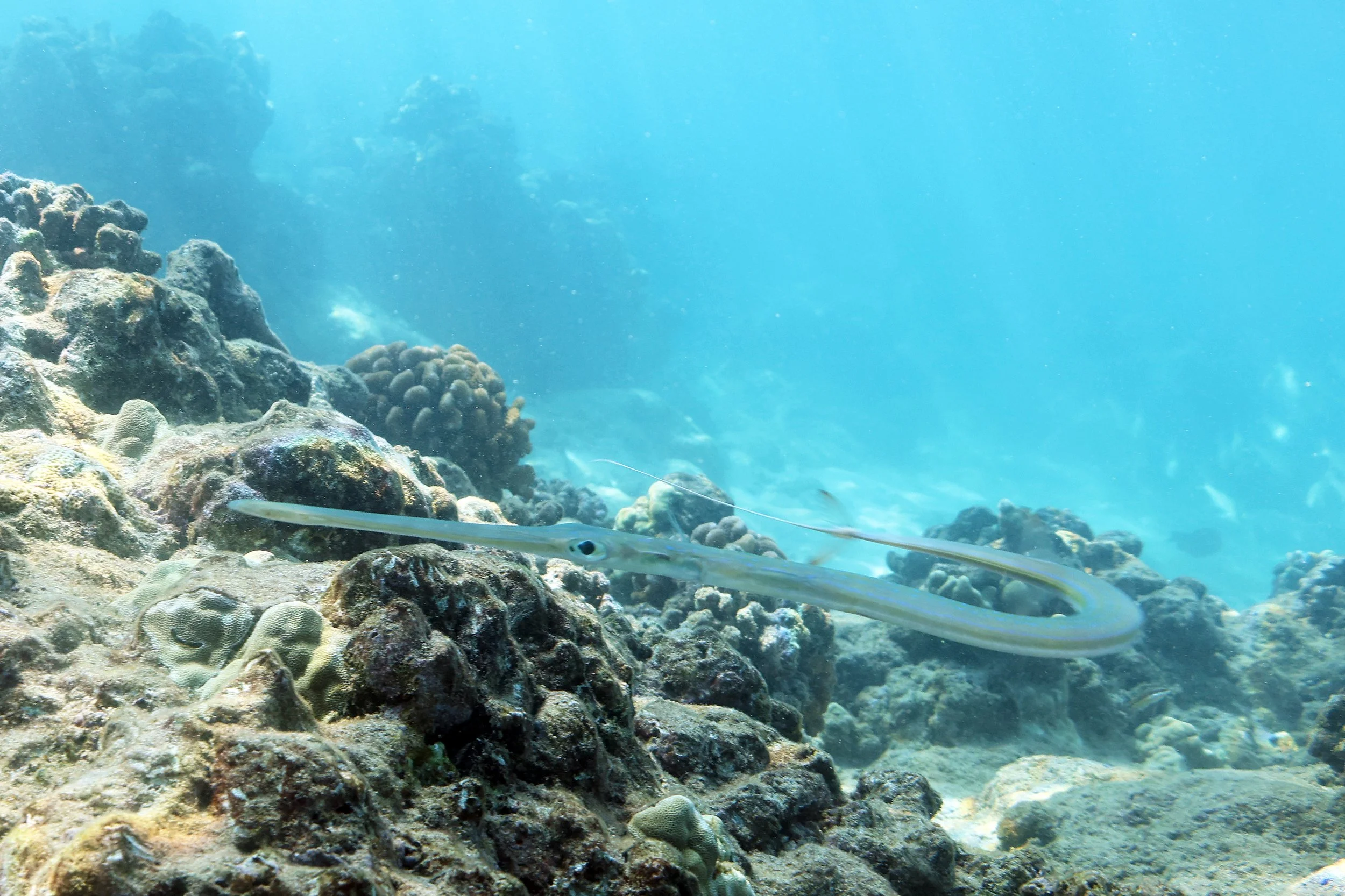
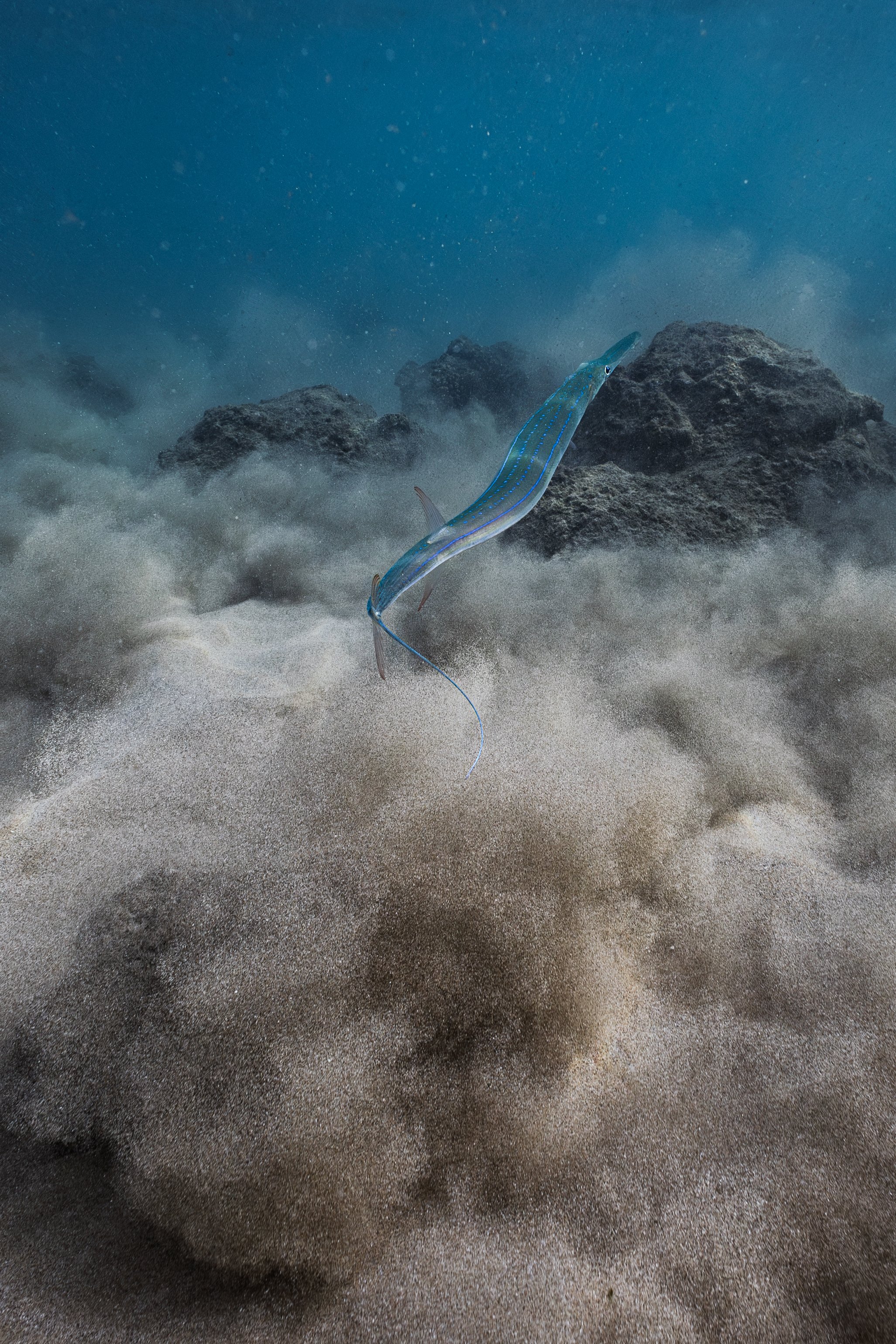
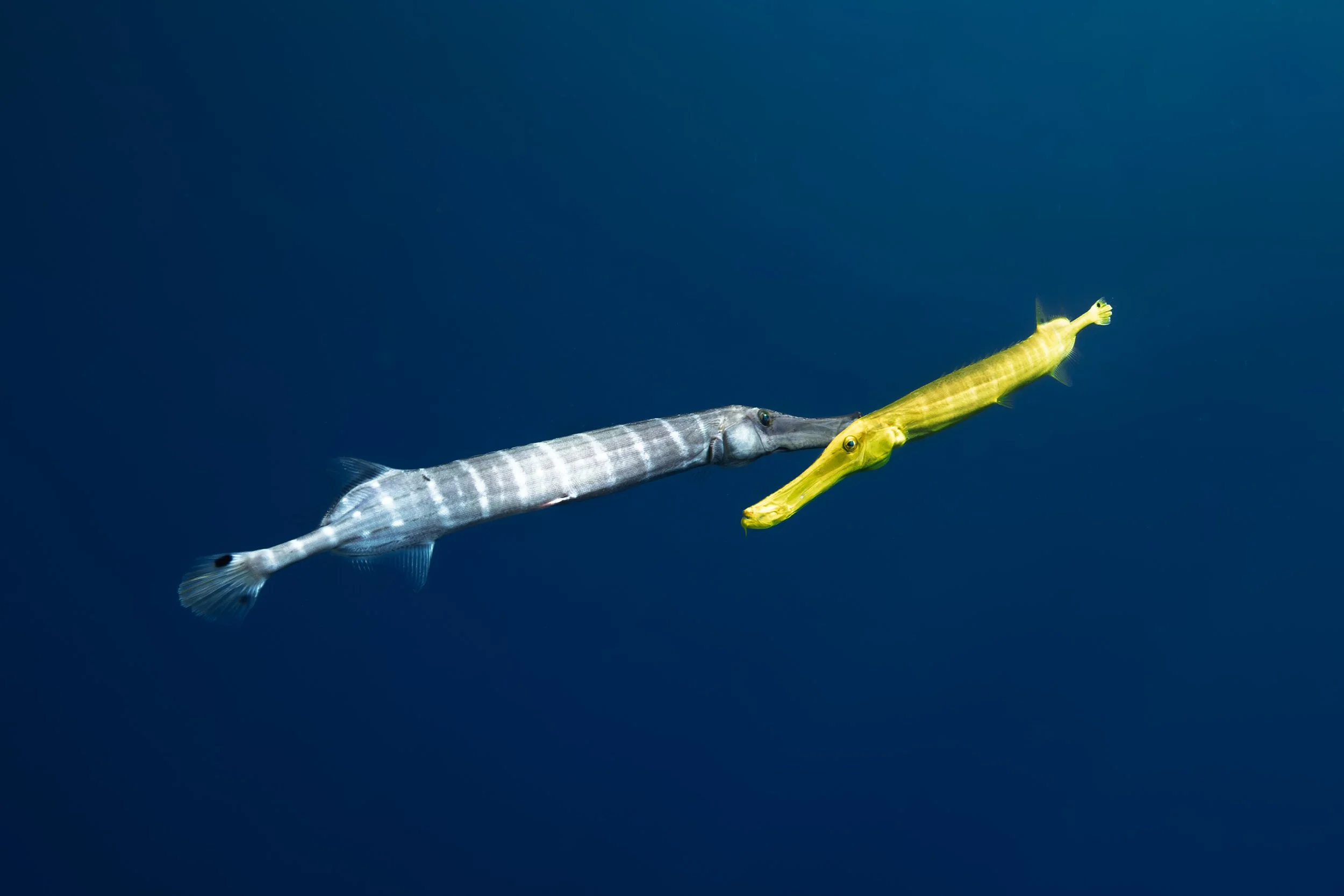
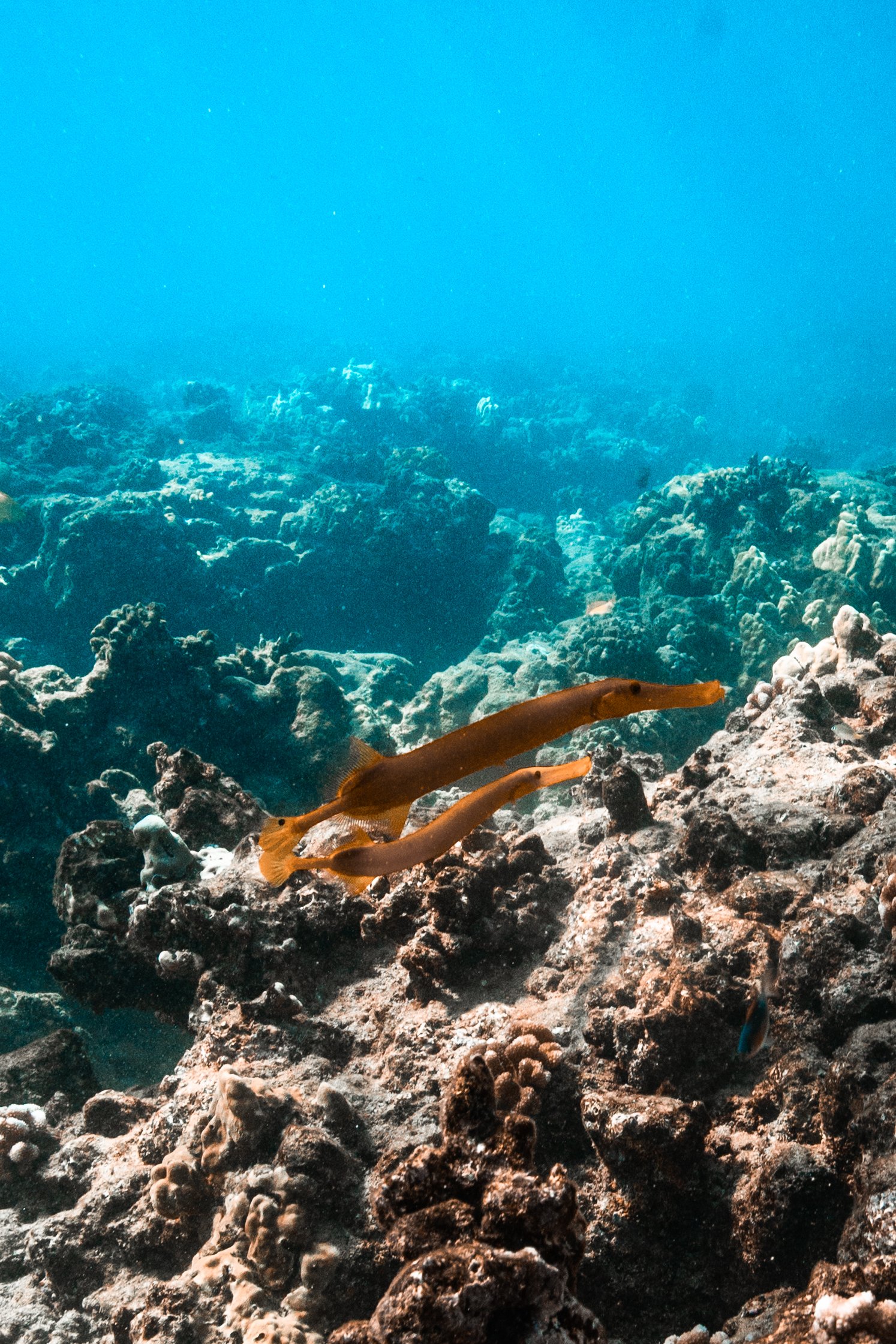
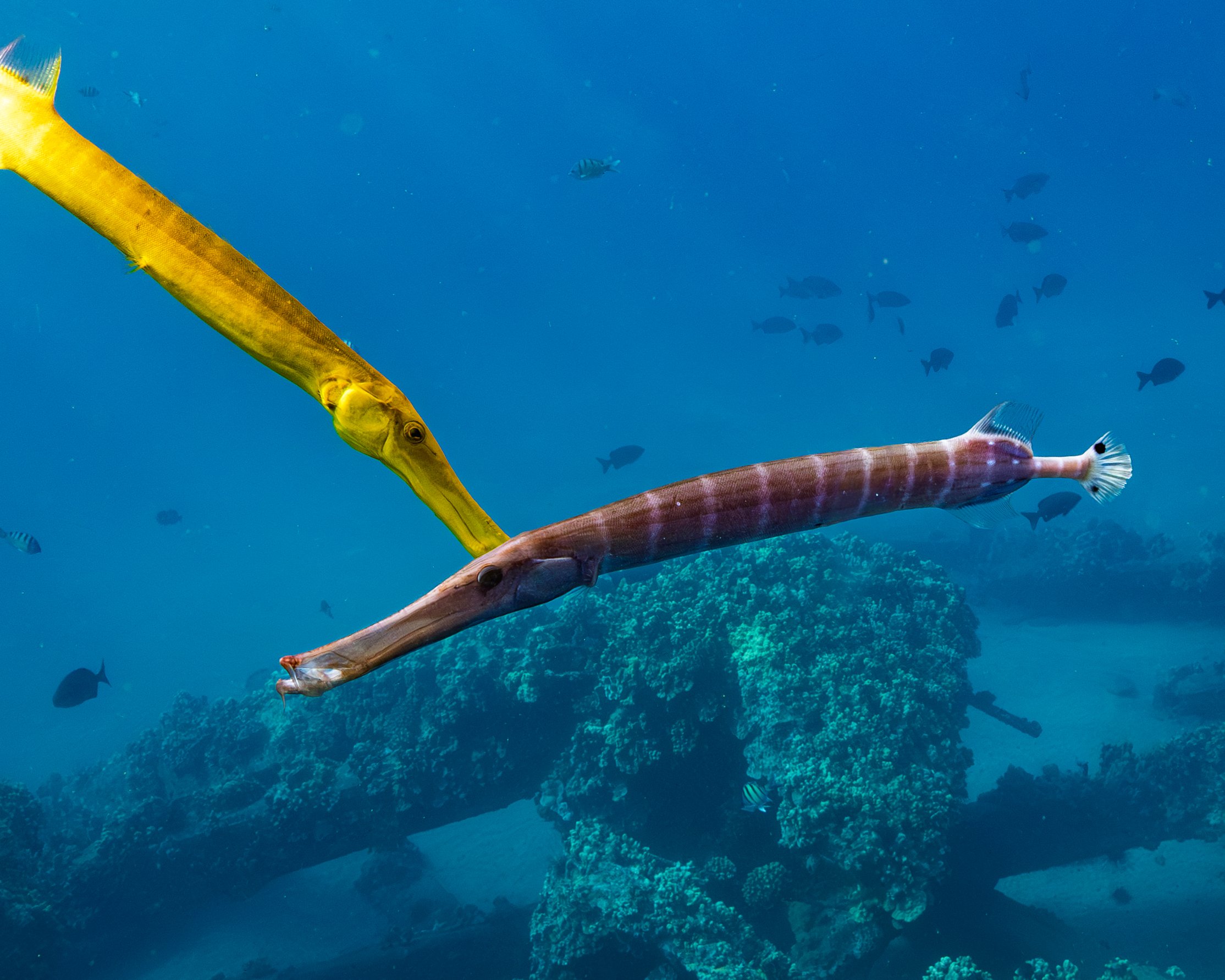
Trumpetfish (Nūnū) have a broad, rounded tail that looks like a small fan. They're often yellow, green, brown, or nearly black, and they'll sometimes shadow larger fish to sneak closer to unsuspecting prey before striking with lightning speed. They're one of the most common long-bodied fish you'll see while snorkeling on Maui.
Cornetfish, on the other hand, have a much narrower body and an unmistakable long, thread-like filament extending from the center of their tail. Once you notice that trailing "whip," you'll never mistake one for a trumpetfish again. Cornetfish also tend to spend more time cruising through open water above the reef than hugging the coral.
From a distance, trumpetfish and cornetfish look almost identical. If you only remember one thing, remember the tail:
fan-shaped tail = trumpetfish;
long trailing filament = cornetfish.
It's the quickest way to tell them apart underwater.
Needlefish (ʻAha)
If you see what looks like a floating silver spear just beneath the surface, you've found a needlefish. Unlike trumpetfish and cornetfish, which spend most of their time close to the reef, needlefish usually cruise through calm, shallow water near the surface. Their long, pencil-thin bodies and unmistakable beak-like jaws make them easy to recognize, and you'll often spot them gliding almost motionlessly until they dart away with surprising speed. They're curious to watch but rarely pay much attention to snorkelers, making them one of the more unusual fish to spot overhead rather than down on the reef.
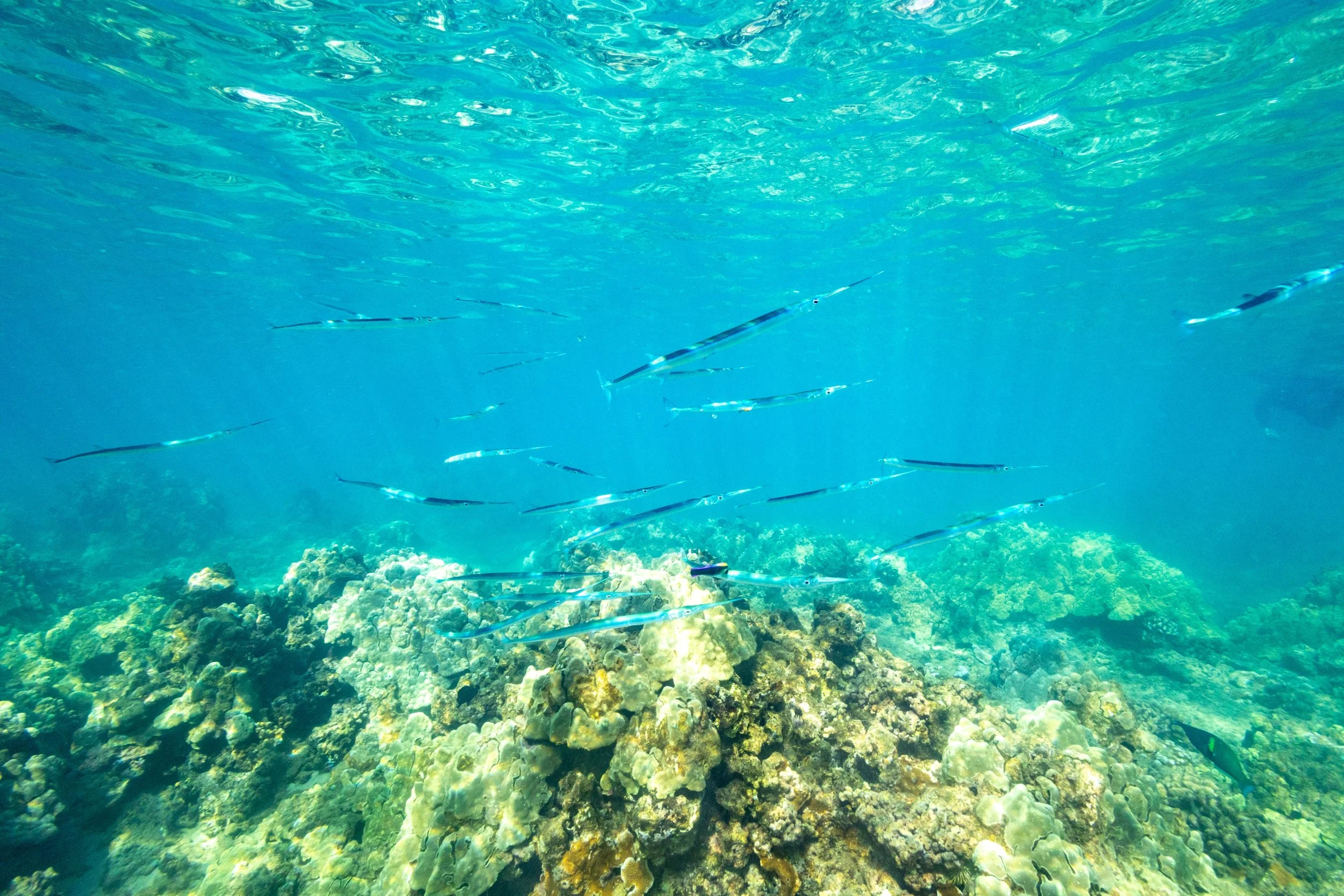
Needlefish (ʻAha)
Halfbeak (ʻIheihe)
At first glance, a halfbeak looks like a tiny needlefish—but take a closer look at its mouth. Its lower jaw is much longer than its upper jaw, giving it the "half beak" that inspired its common name. You'll usually spot these slender, silvery fish gliding just beneath the surface in calm water, sometimes alone and sometimes in loose schools. Unlike needlefish, which have both jaws stretched into a long beak, the halfbeak's uneven jaw is an easy way to tell the two apart. Once you notice that quirky feature, you'll start recognizing them almost every time you look toward the surface.
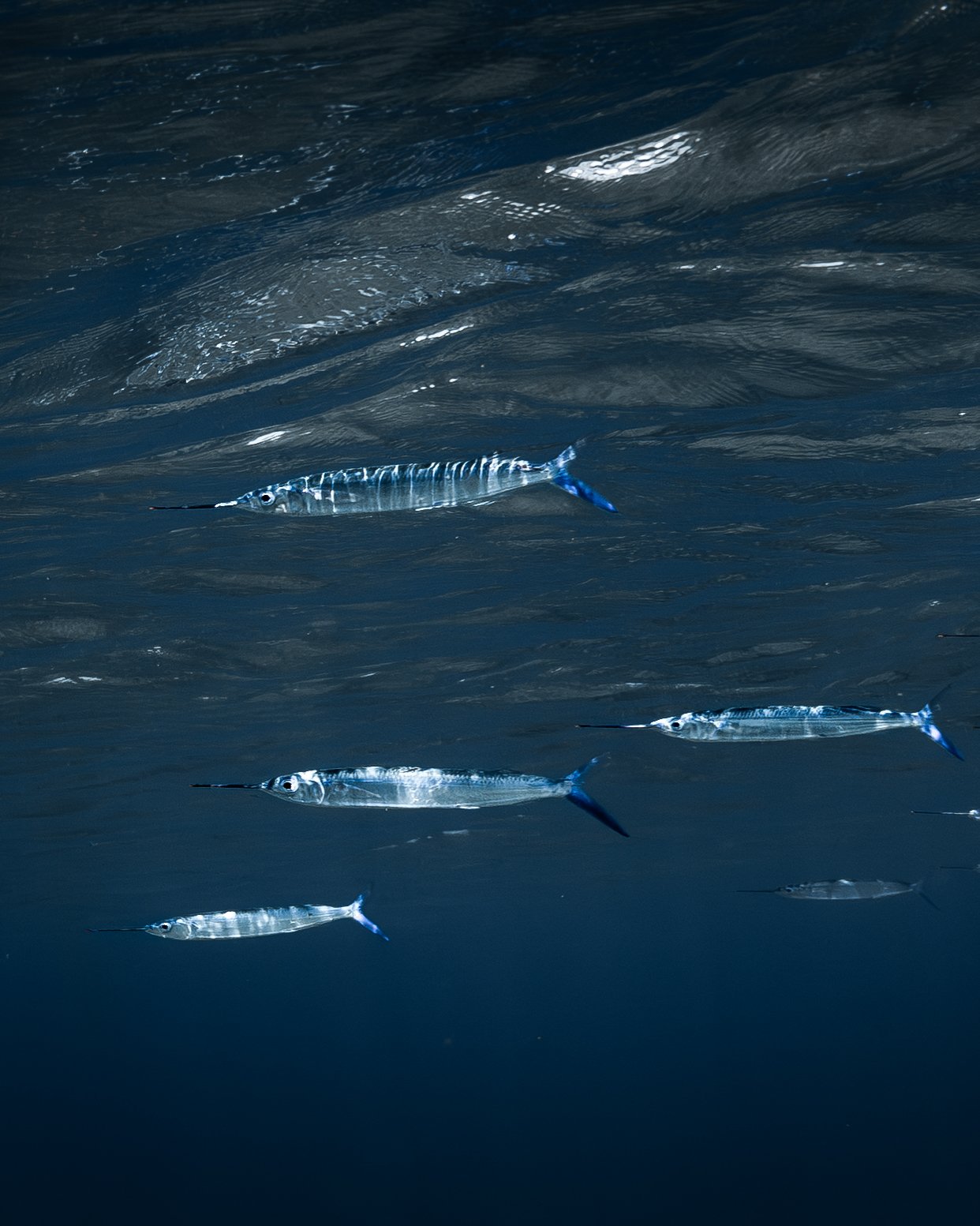
Halfbeak (ʻIheihe)
goatfish, hawkfish, and grouper
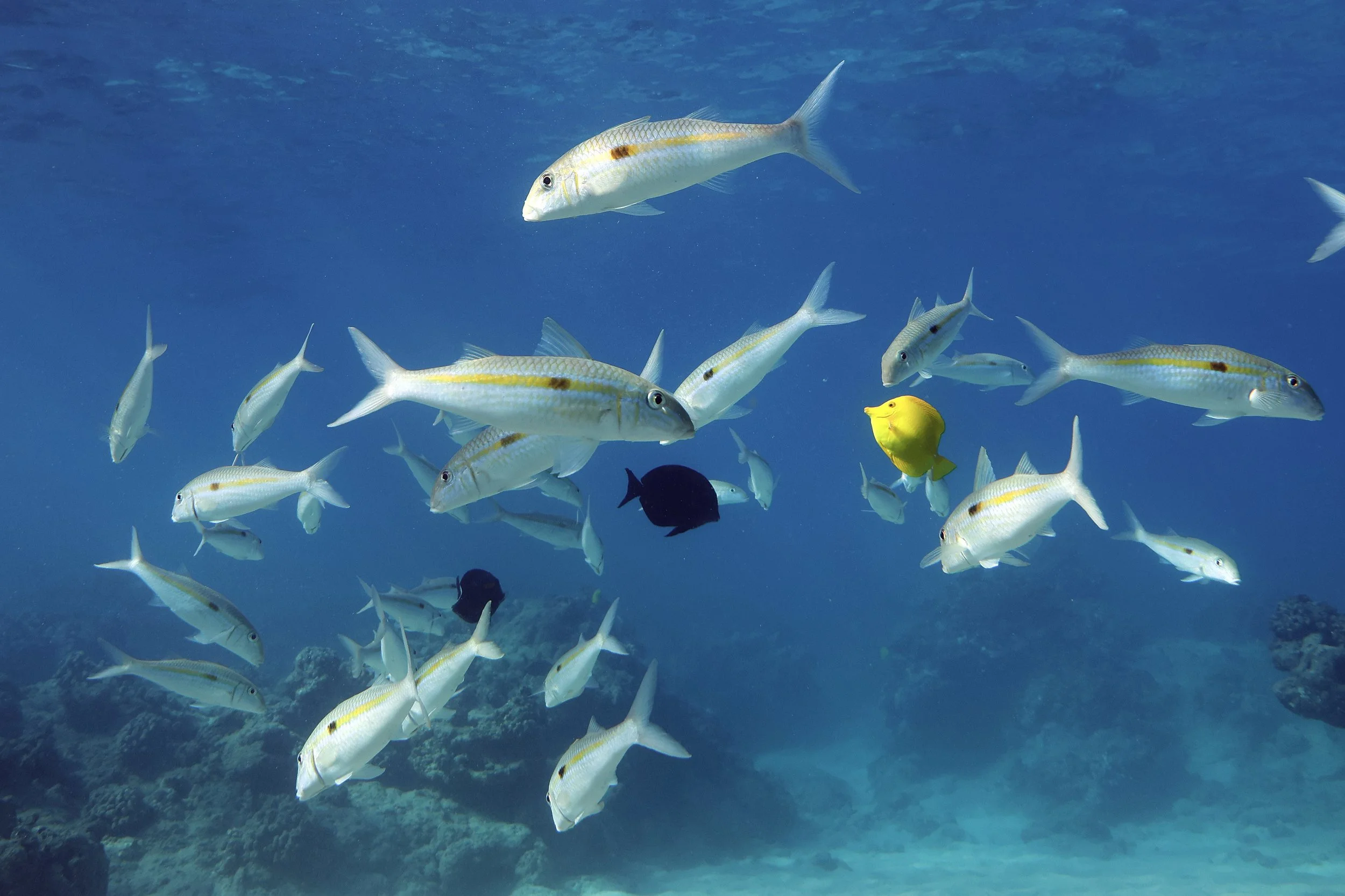
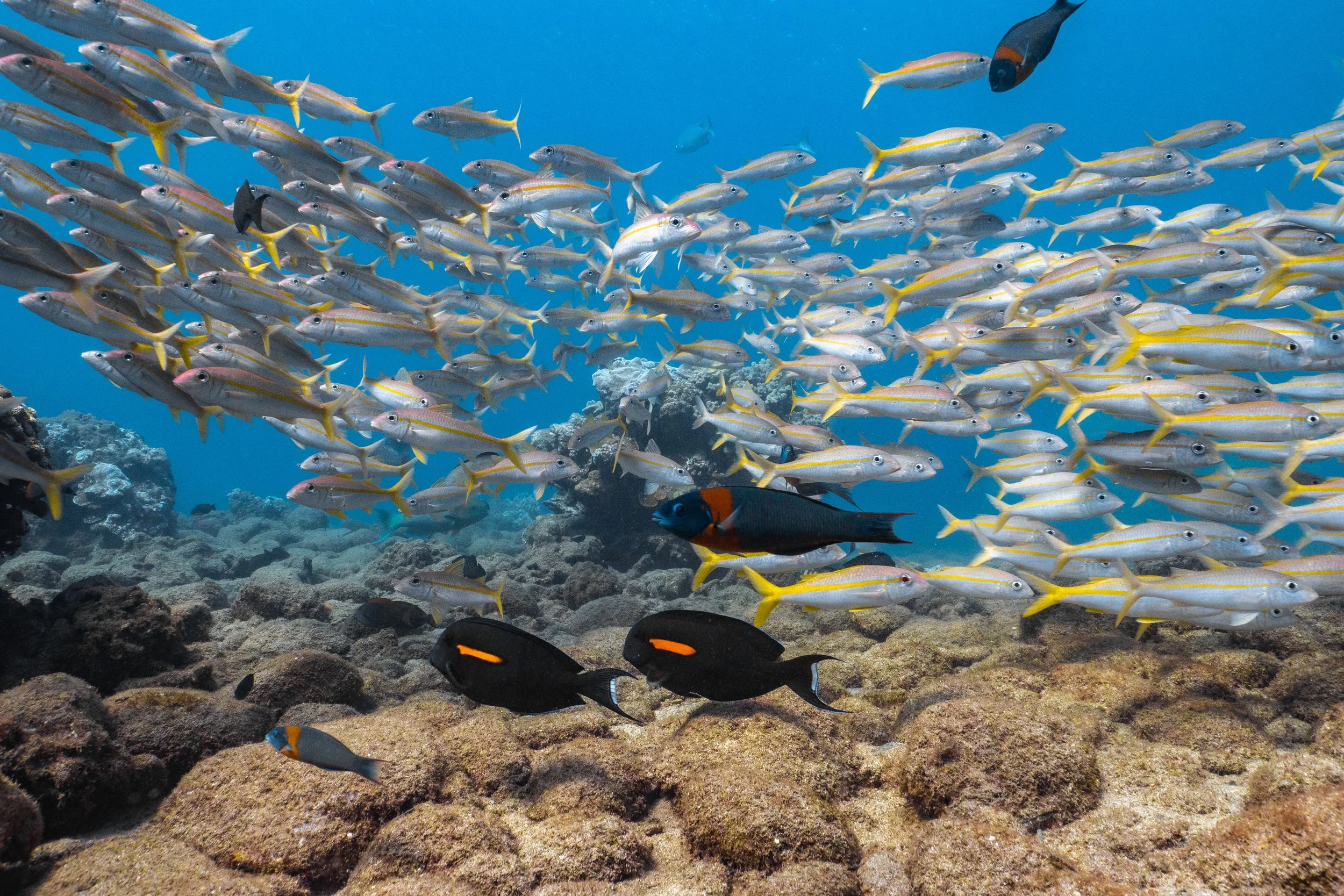
Goatfish — Weke
If you see a fish with what looks like a mustache, you've found a weke. Goatfish are easy to recognize by the pair of whisker-like barbels hanging beneath their chin. They use these sensitive feelers to search through sand and rubble for small crabs, worms, and other hidden prey, often leaving little puffs of sand behind as they feed. Depending on the species, they can be white, yellow, pink, or reddish, but those unmistakable whiskers are what give them away. Those "whiskers" are actually sensory barbels packed with taste and touch receptors, allowing goatfish to detect food buried beneath the sand even when they can't see it. If you spot a small cloud of sand moving across the seafloor, look closely—you may find a weke hard at work.
Arc-eye Hawkfish - Pilikoʻa
If you notice a small fish perched on a coral head instead of swimming, take a closer look—you've probably found an arc-eye hawkfish. Unlike most reef fish, hawkfish don't have a swim bladder, so they spend much of their time resting on the reef, using their thick pectoral fins like little props. The arc-eye hawkfish is named for the curved marking behind its eye, which looks like a colorful half-circle. Keep an eye on one for a minute, and you'll see it suddenly dart out to snatch a passing shrimp or small fish before returning to the very same lookout. It's the most common hawkfish in the Hawaiian Islands.
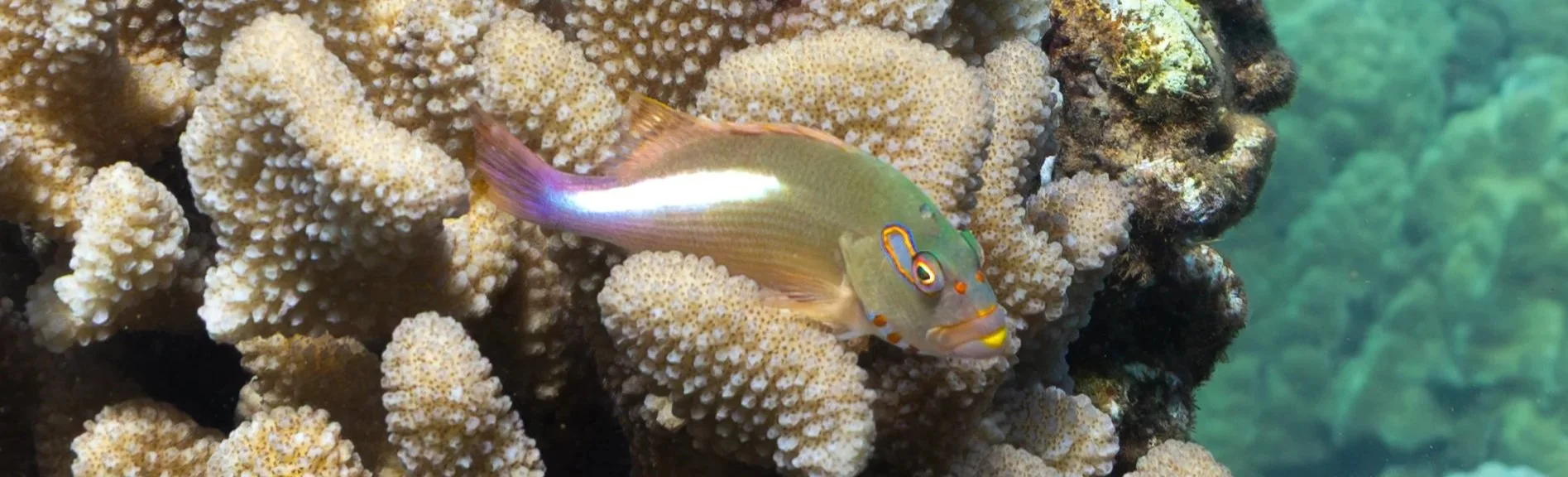
Arc-eye Hawkfish (Pilikoʻa)
Blackside Hawkfish (Hilu Pilikoʻa)
The blackside hawkfish is another patient hunter, but its markings are much bolder. Look for a dark stripe running along the upper side of its body, bordered by a lighter band that stands out against the reef. Like other hawkfish, it prefers to perch on coral or lava rock, waiting for the right moment to make a quick dash after an unsuspecting meal. Once you start looking for fish that "sit" instead of constantly swimming, you'll be surprised how many hawkfish you begin to notice.
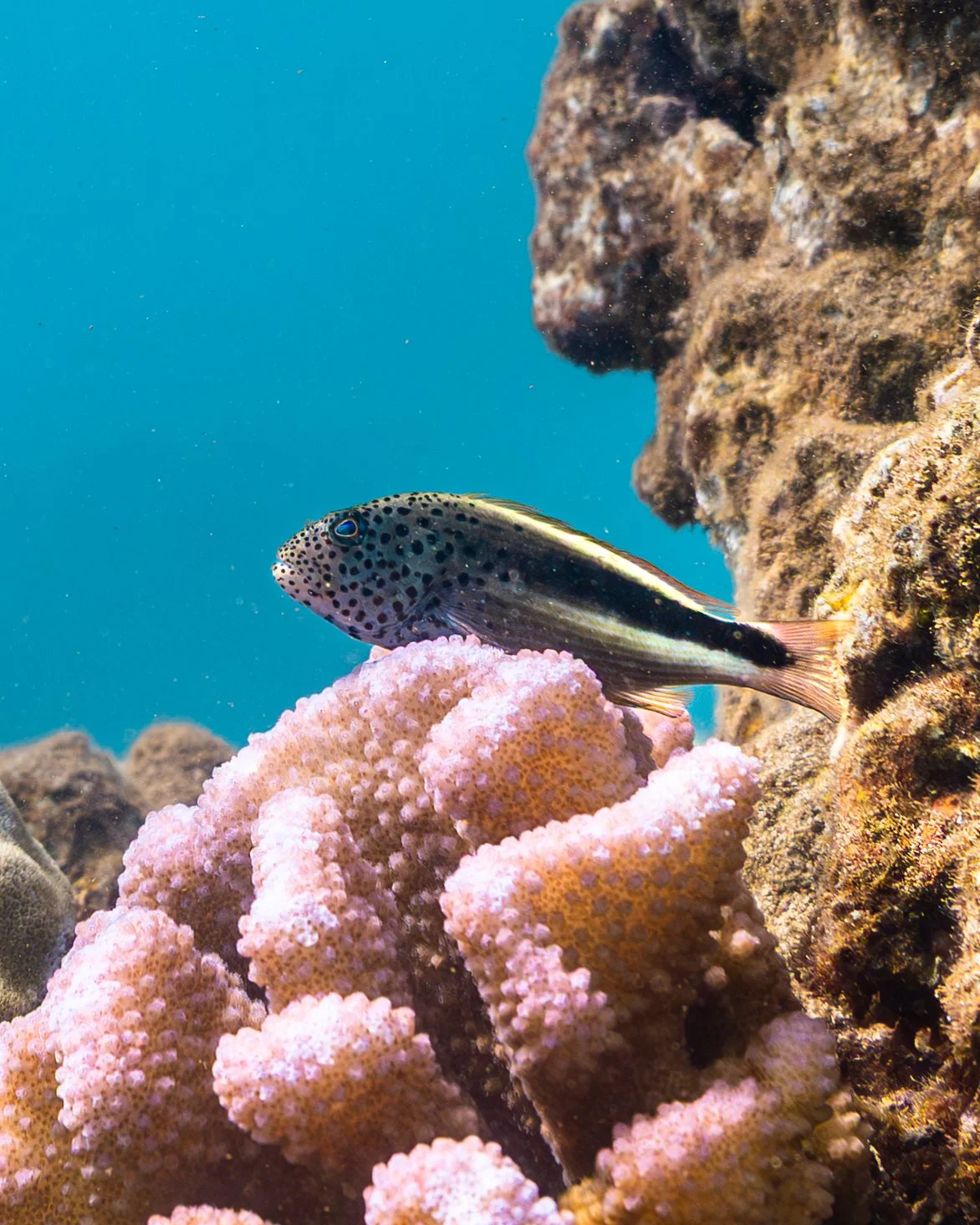
Blackside Hawkfish (Hilu Pilikoʻa)
Stocky Hawkfish (Poʻopaʻa)
The stocky hawkfish looks exactly like its name suggests—short, sturdy, and built to hug the reef. Its mottled brown, gray, and reddish colors help it blend into volcanic rock and coral, making it easy to overlook until it moves. Instead of cruising around the reef, it spends much of its day perched in one spot, watching everything that passes by. If you're snorkeling over rocky areas, don't just look for fish that are swimming—look for the ones quietly keeping watch.
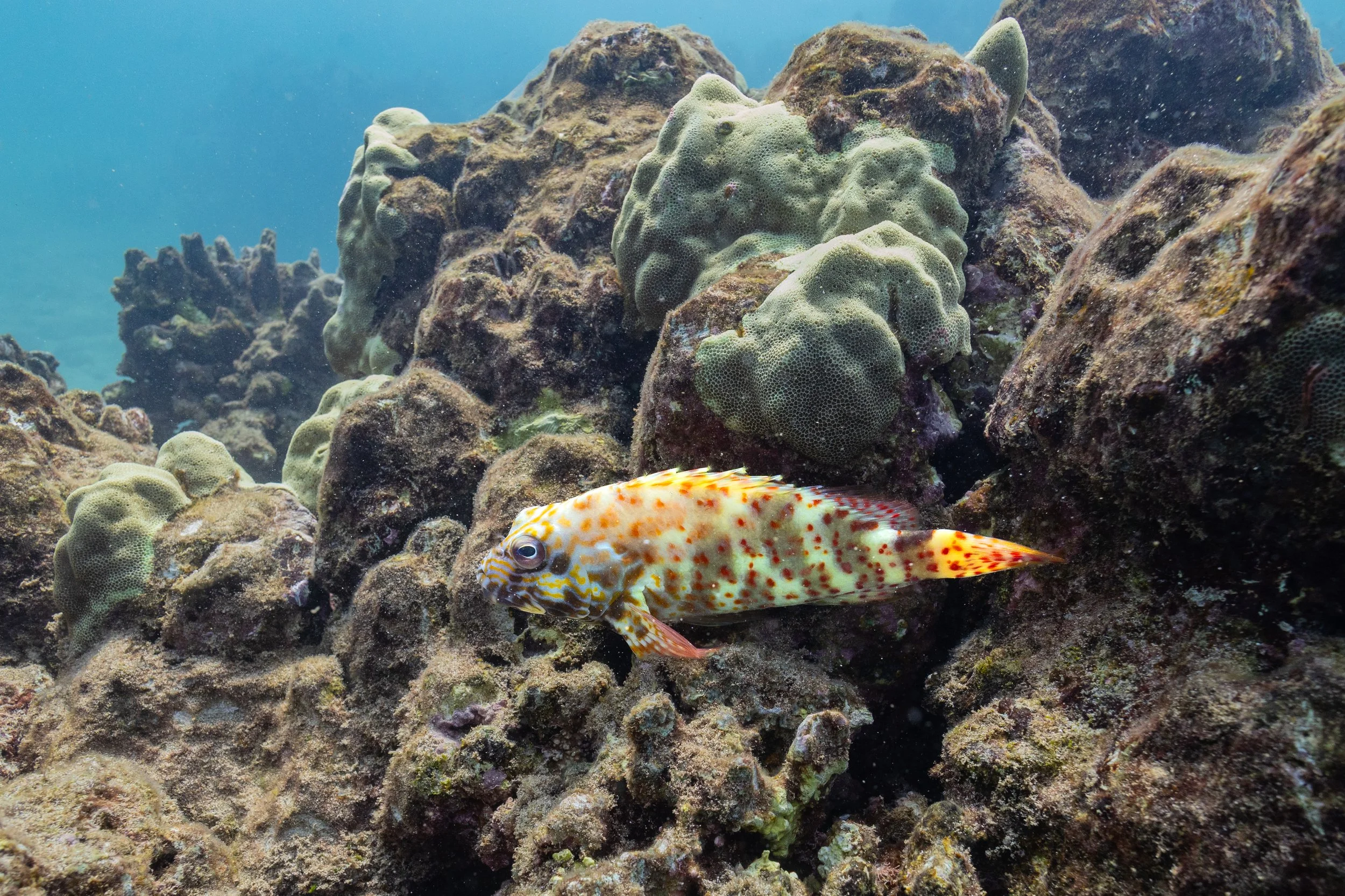
Stocky Hawkfish (Poʻopaʻa)
Peacock Grouper - Roi
If a large fish covered in bright blue spots seems completely unfazed by your presence, you've probably spotted a roi. Its rusty brown body is sprinkled with electric-blue spots, making it one of the easiest fish on the reef to recognize. Roi often hover near ledges, coral heads, or lava outcrops before making a sudden burst to catch smaller fish. Although beautiful, roi are not native to Hawaiʻi—they were introduced in the 1950s and are now considered an invasive species because they prey on native reef fish. Seeing one is common, especially around healthy reef structure, but it's also a reminder of how reef ecosystems can change over time.
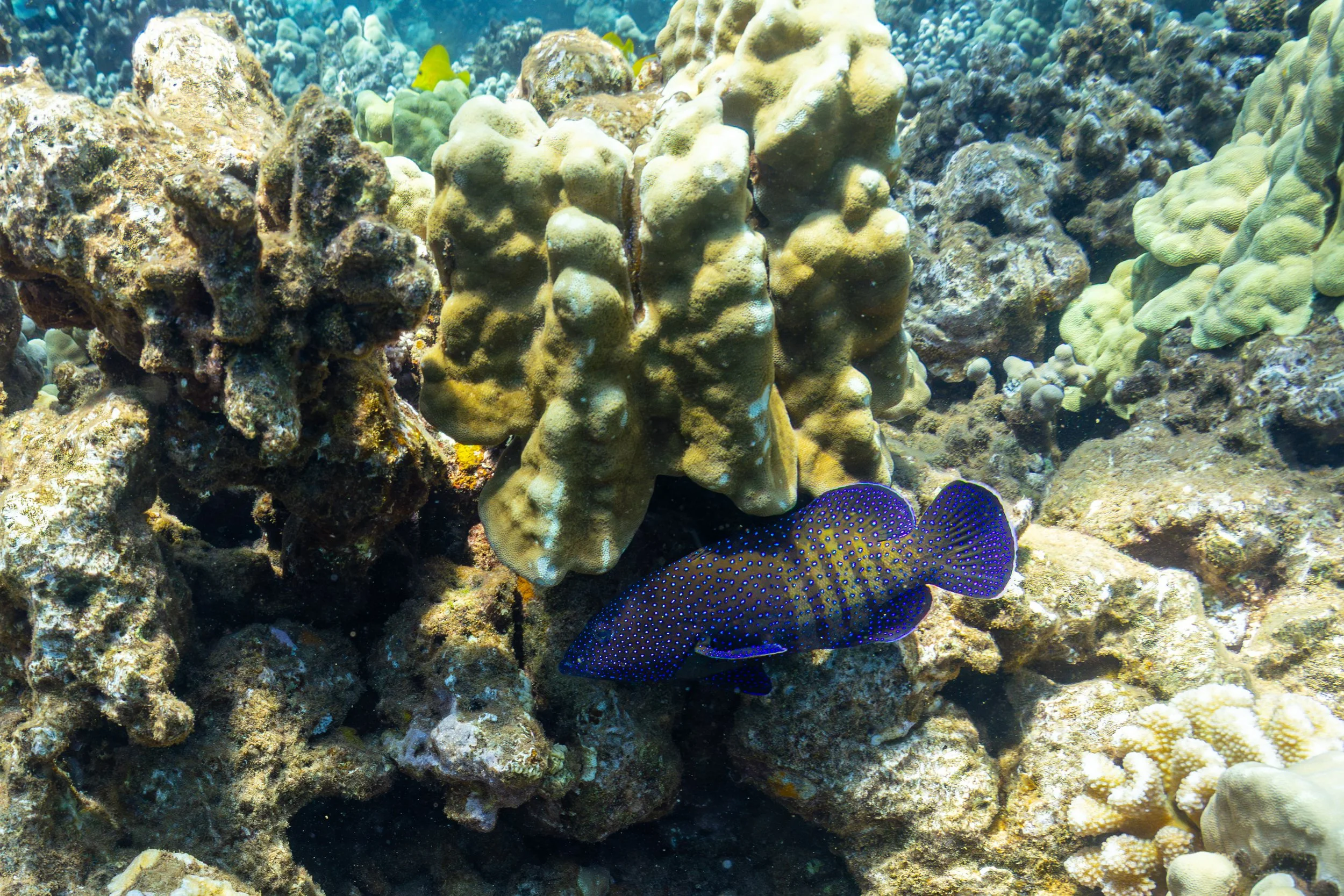
Peacock Grouper (Roi)
fast swimmers & schooling fish
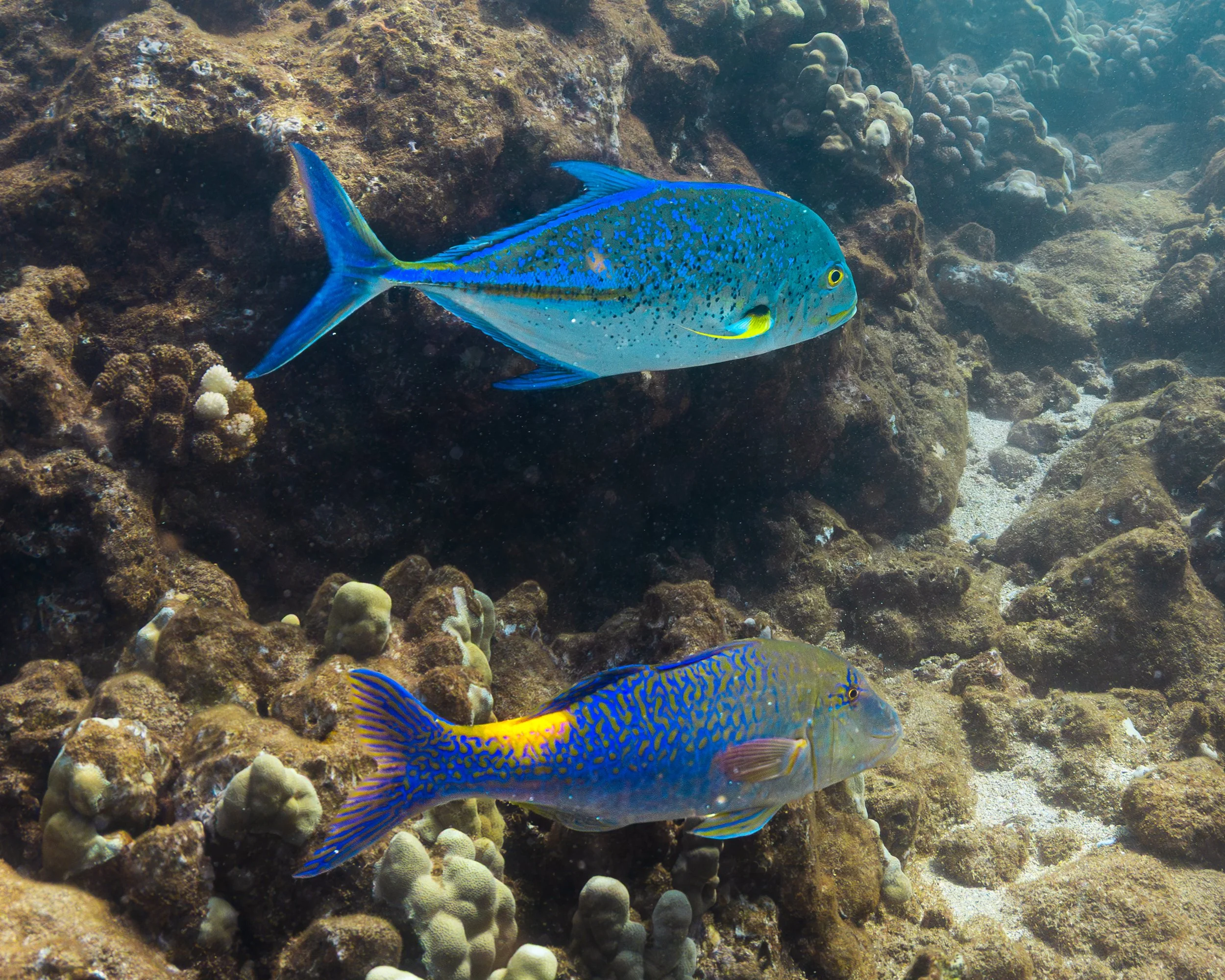
Bluefin Trevally — ʻOmilu
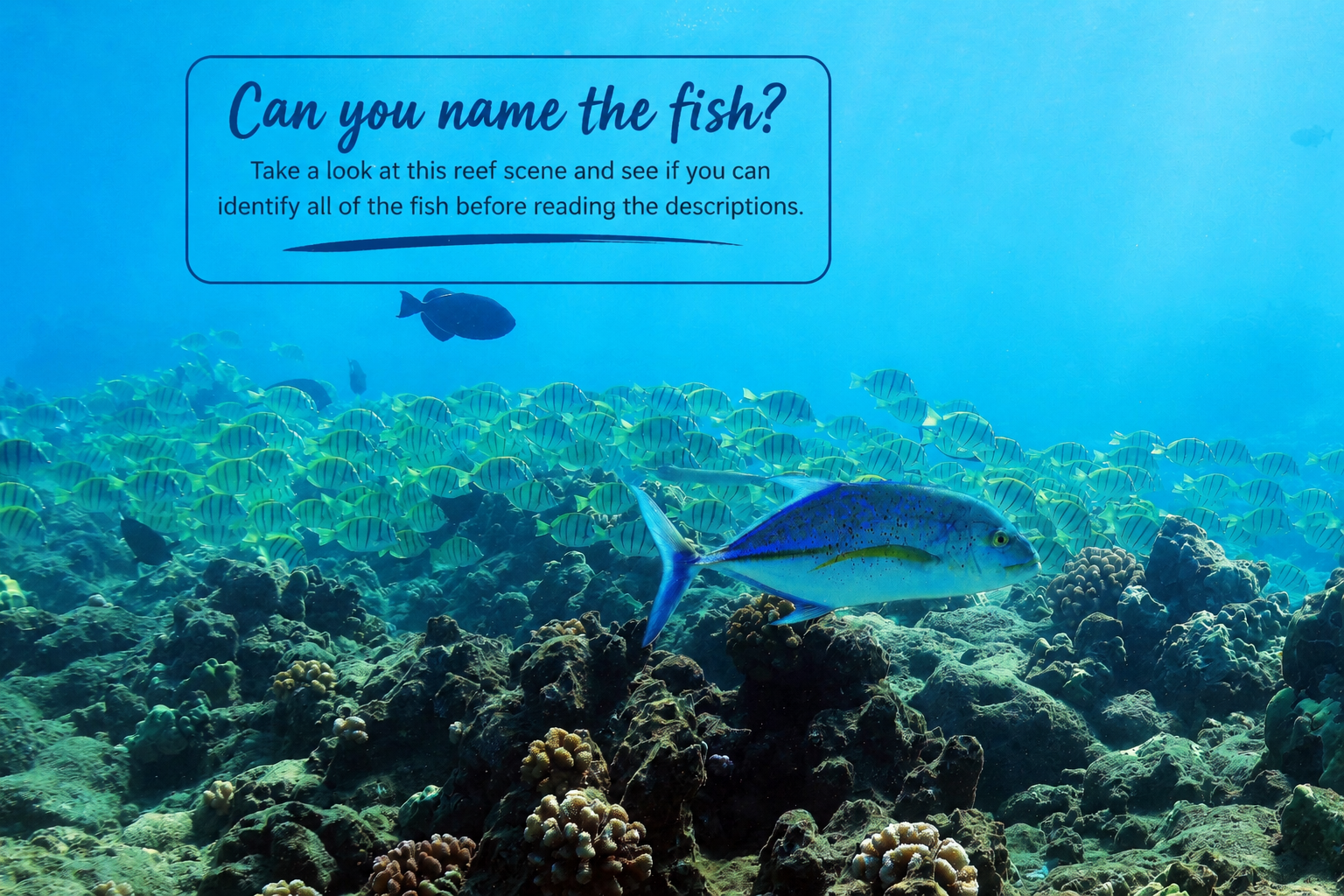
Bluefin Trevally, ʻomilu, in front of a school of convict tang with a black triggerfish swimming above.
If you spot a sleek, silver fish with brilliant blue fins cruising over the reef, you've probably found an ʻomilu. Its streamlined body and deeply forked tail make it one of the fastest swimmers on the reef, and you'll often see it gliding effortlessly through the water before disappearing into the blue. Juveniles are commonly found around shallow reefs, while larger adults tend to patrol reef edges and deeper water.
Although ʻomilu feed on smaller fish and crustaceans, they're harmless to people and play an important role in keeping the reef ecosystem in balance. If one swims by while you're snorkeling, take a moment to watch how gracefully it moves—it's a reminder that healthy reefs are home to both grazers and hunters, each with an important role to play.
Bigeye Scad - Akule
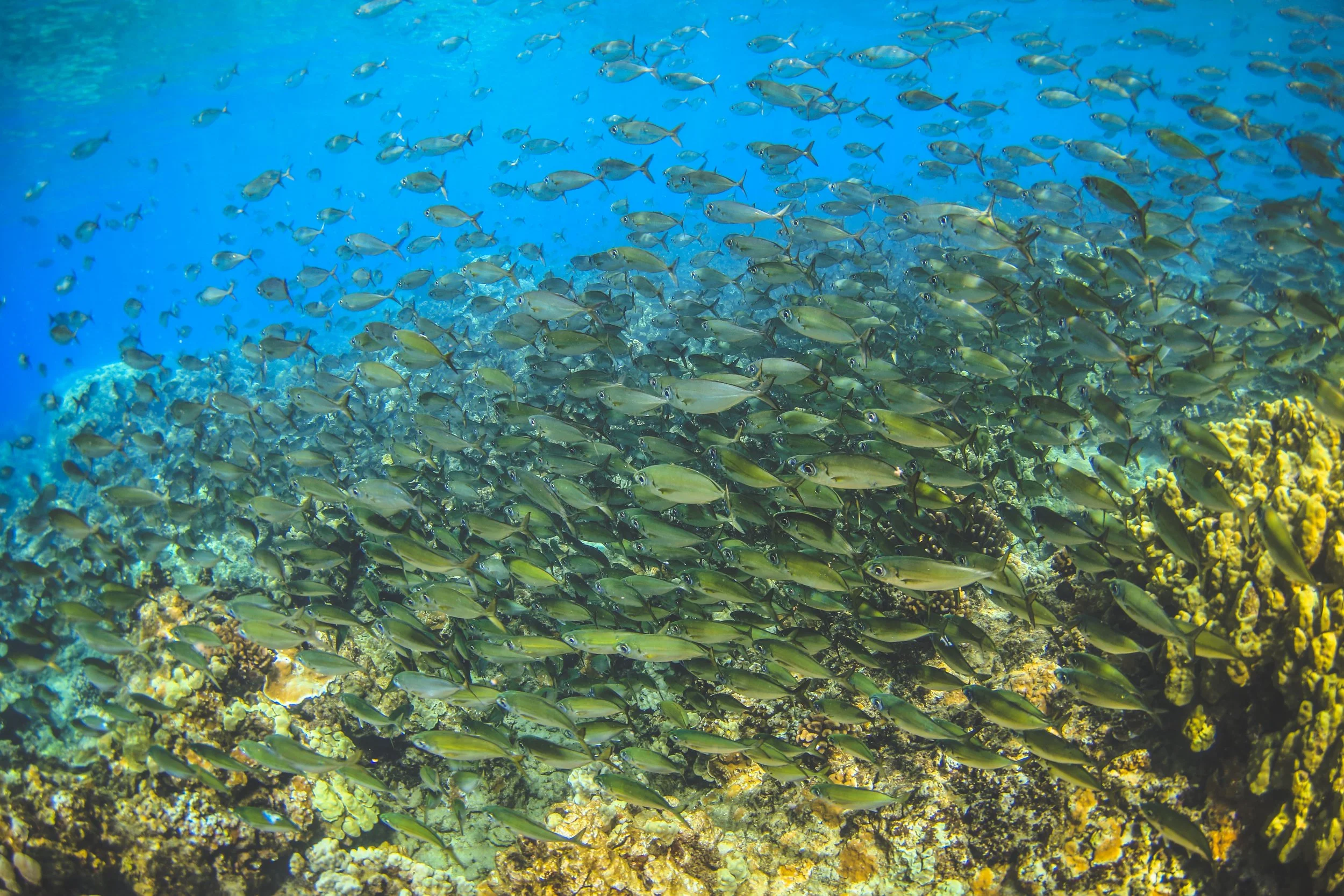
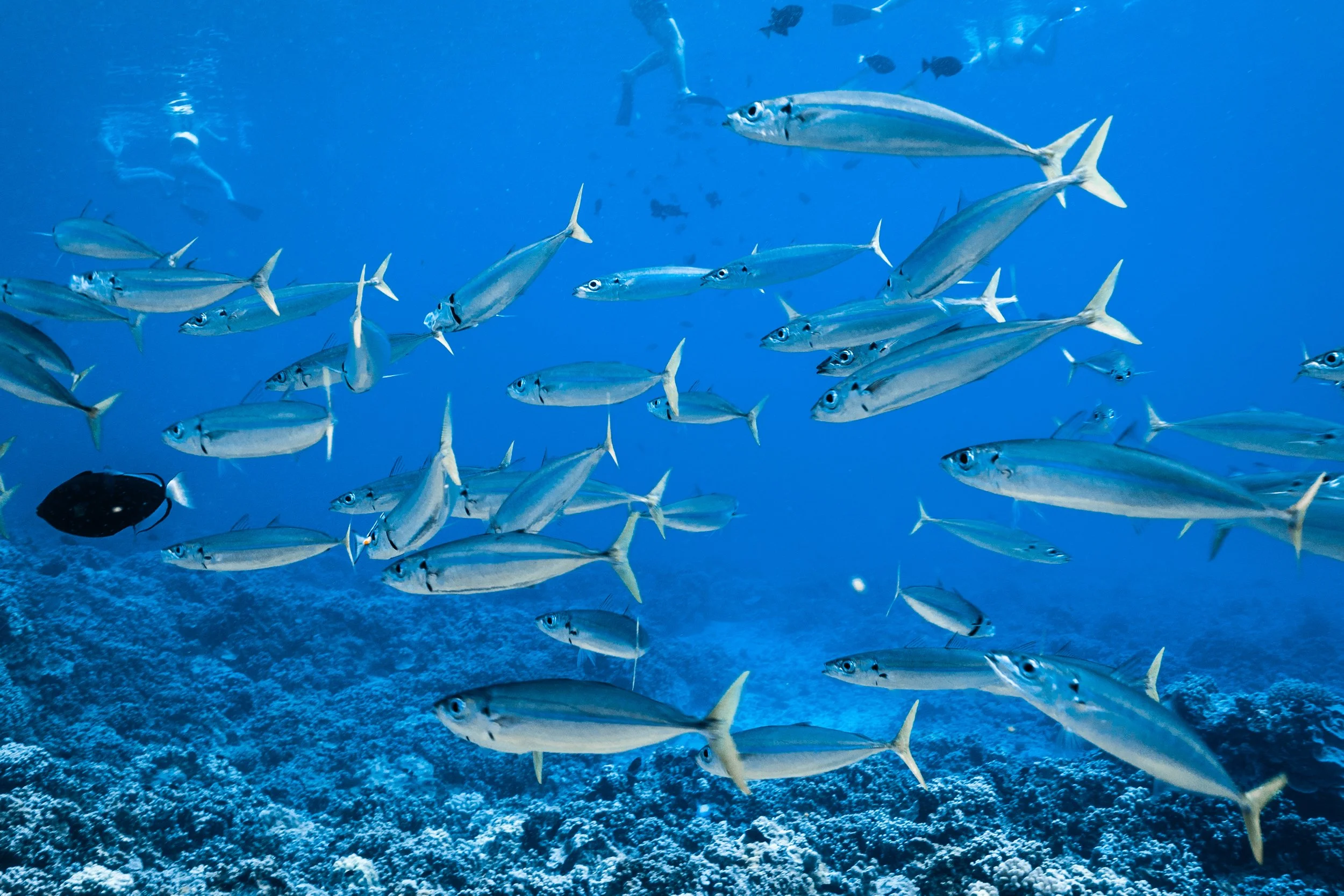
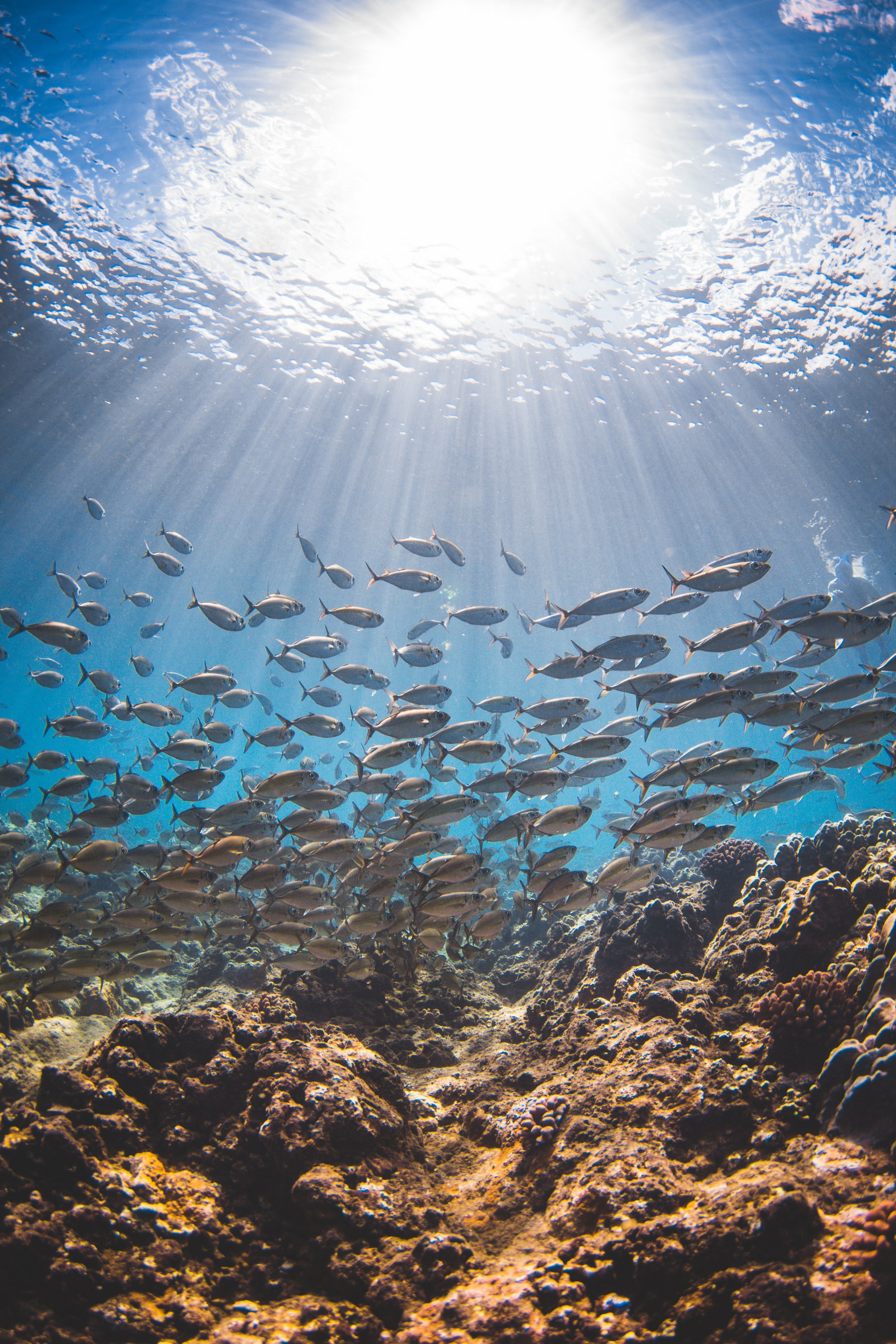
If you suddenly find yourself surrounded by dozens—or even hundreds—of shimmering silver fish, you've probably found a school of akule. Their sleek bodies flash like mirrors as the entire school turns at once, creating a wave of silver that seems to ripple through the water. Akule stay together for protection, relying on safety in numbers as they cruise above the reef or gather in bays. Watching a school move as one is one of the most mesmerizing sights while snorkeling.
Brassy Chub - Nenue
Nenue aren't the flashiest fish on the reef, but they're easy to recognize once you know what to look for. Their chunky, oval bodies, thick lips, and silvery-bronze coloring make them stand out as they cruise together in loose schools. Instead of darting around like smaller reef fish, nenue move at an unhurried pace, grazing on algae as they make their way across rocky reefs. They're one of those fish you'll start noticing everywhere once you've learned their shape.
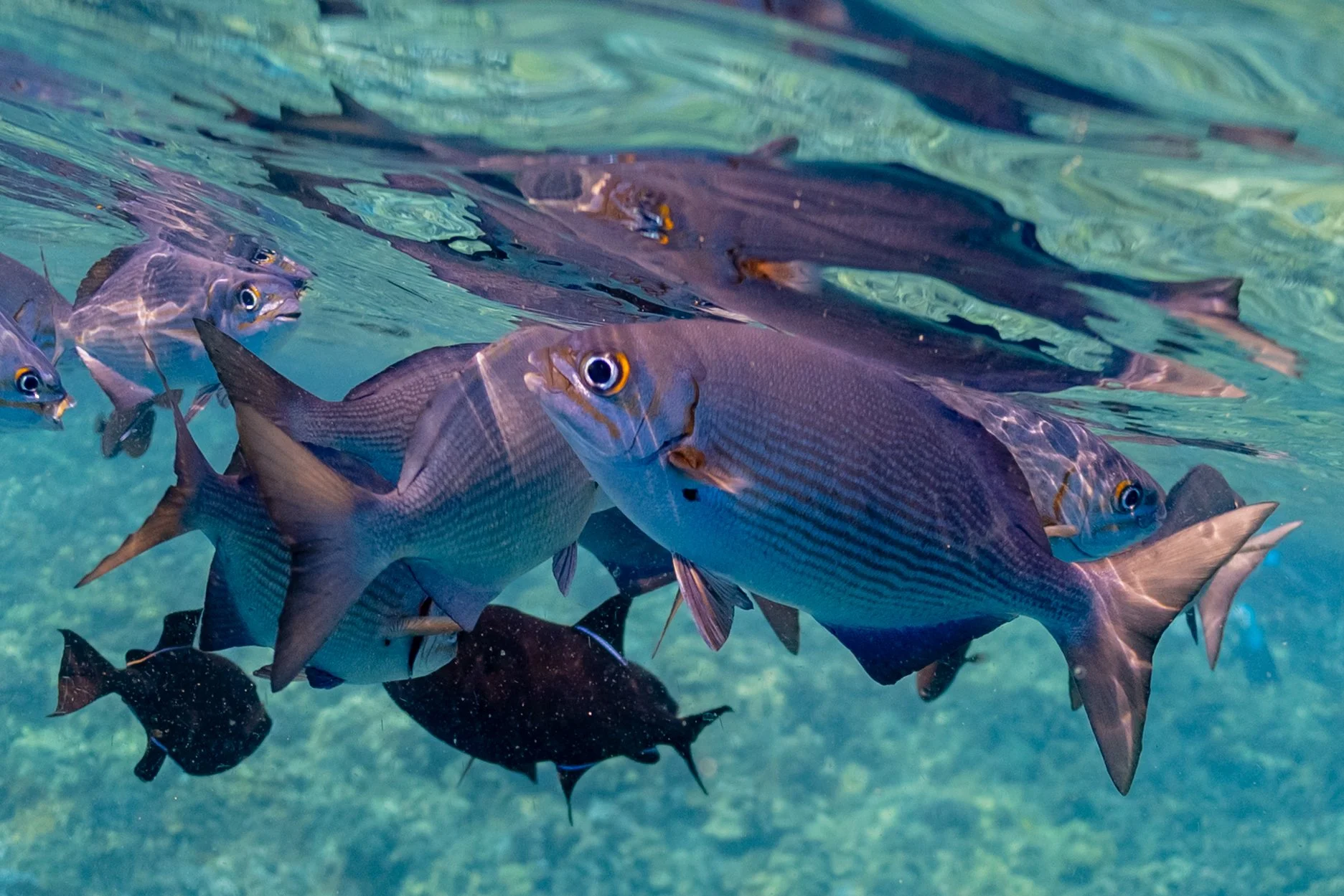
Brassy Chub (Nenue)
Bluestripe Snapper - Taʻape
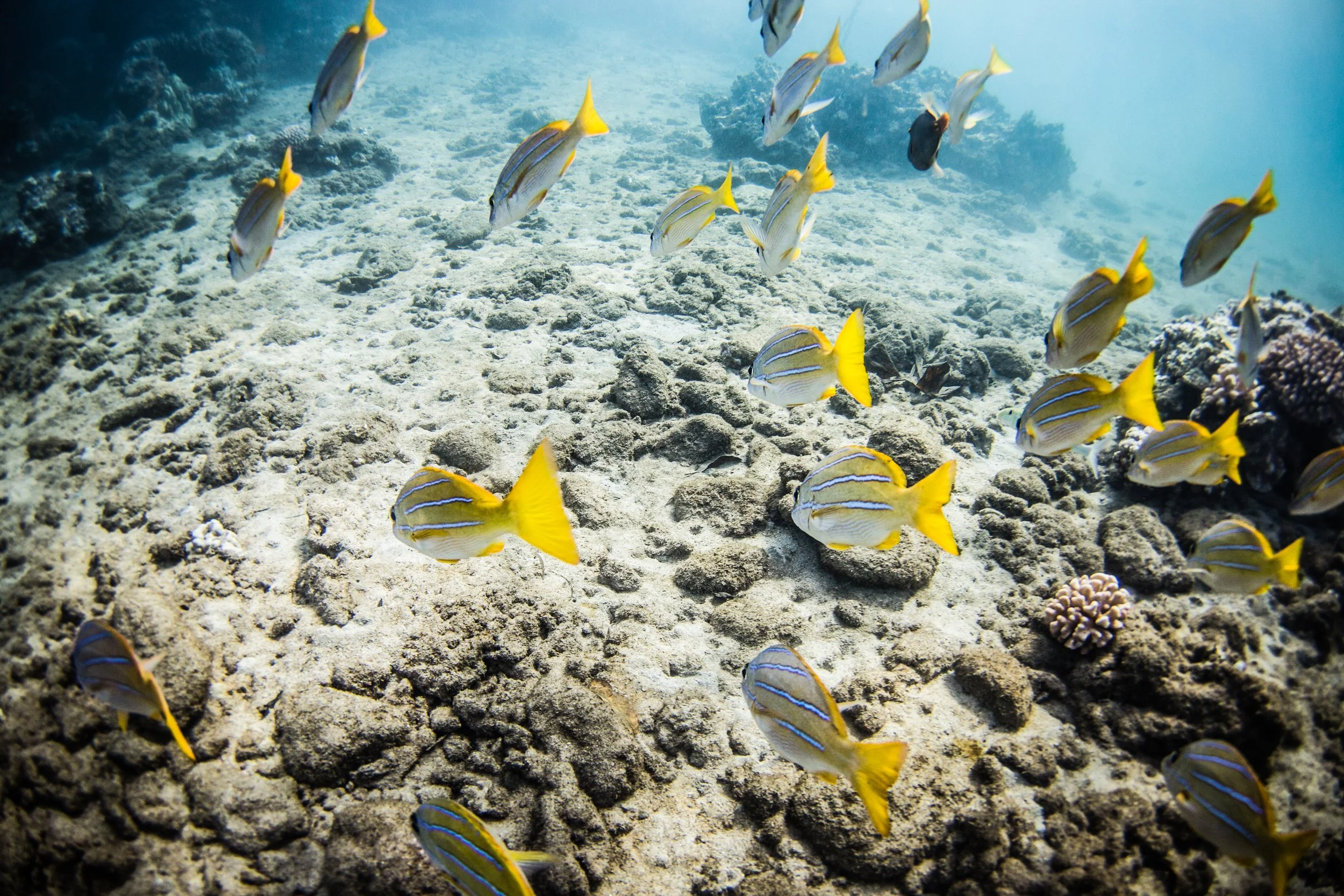
Bluestripe Snapper - Taʻape
Four bright blue stripes running across a golden-yellow body make the taʻape one of the easiest fish on the reef to recognize. You'll often see them hovering in schools above coral heads or gathering along reef ledges, where they seem to hang effortlessly in the current before turning together as one. Their bright yellow fins and silver-white belly catch the light, making the whole school shimmer as it moves. Although they're now a common sight on reefs throughout Hawaiʻi, taʻape are an introduced species that arrived in the 1950s and have since become established across the islands.
Filefish & Boxfish
Barred Filefish - ʻŌʻili
If a fish looks like it was folded from a piece of paper, you've probably found a filefish. The barred filefish has a tall, flattened body, a pointed nose, and small fins that flutter almost constantly as it glides through the reef. Depending on its mood and surroundings, it can change from pale tan to dark brown, with faint bars or mottled markings helping it blend into coral and lava rock. Once you notice its slow, almost hovering style of swimming, you'll begin spotting filefish where other snorkelers swim right past. The Hawaiian name ʻōʻili is used for several filefish species.
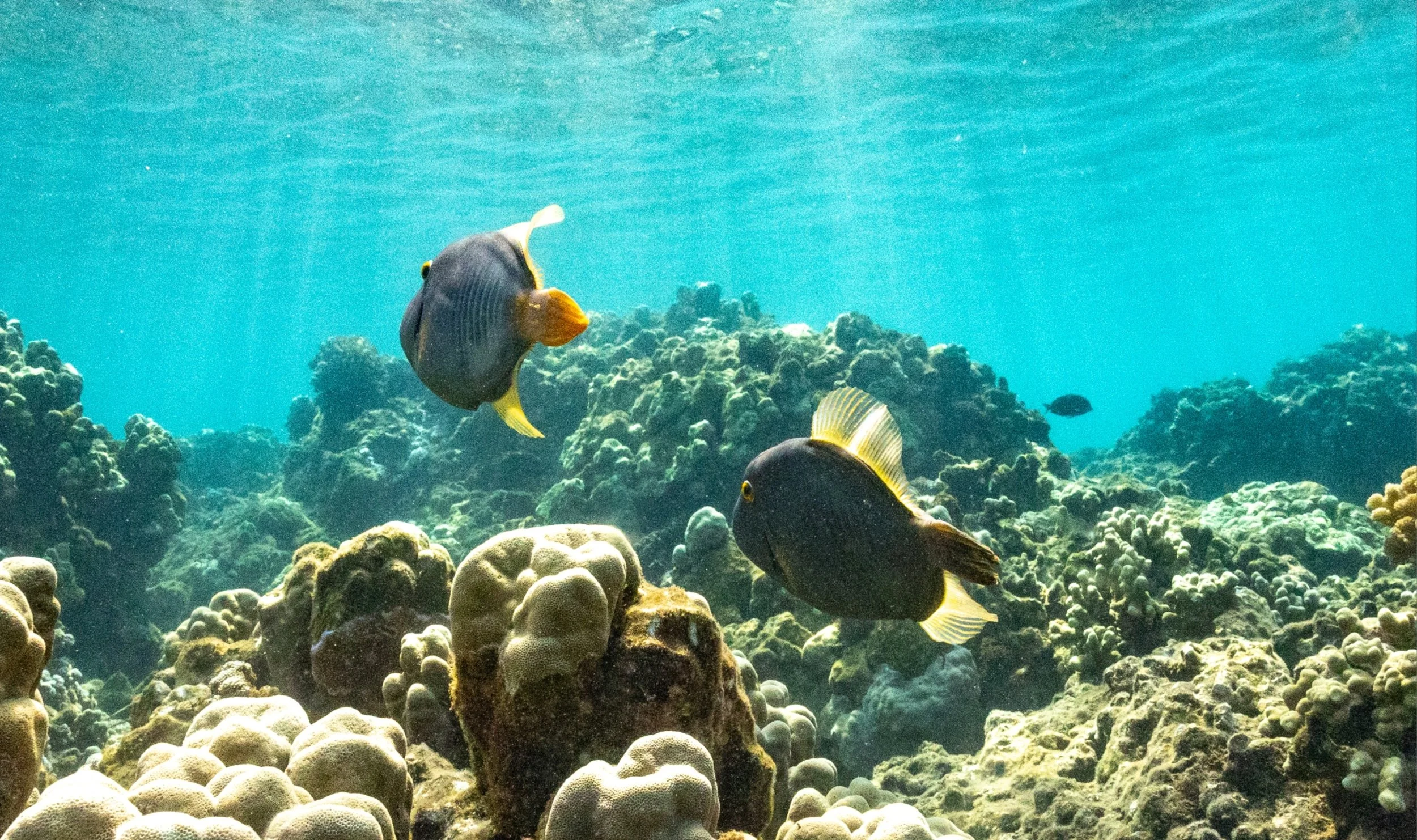
Barred Filefish (ʻŌʻili)
Scrawled Filefish - Loulu
The scrawled filefish looks like someone covered it in blue marker doodles. Thin, wavy blue lines wind across its body, creating a pattern unlike any other fish on the reef. It's also much larger than most filefish, sometimes growing nearly as long as an adult's arm. Despite its size, the scrawled filefish is surprisingly gentle, drifting slowly through the water with graceful movements. If you're lucky enough to spot one, it's usually a fish you'll remember long after your snorkel ends.
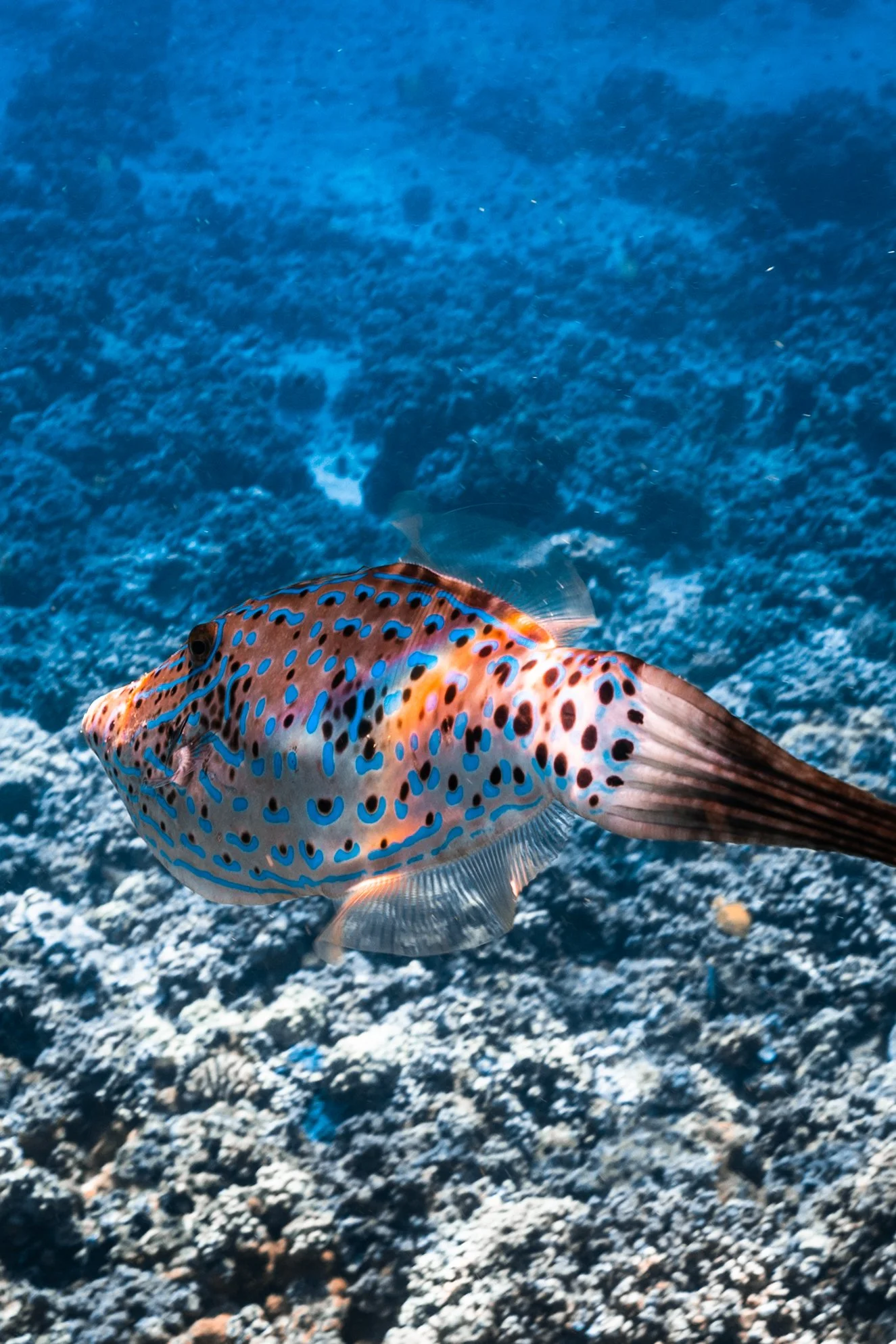
Scrawled Filefish (Loulu)
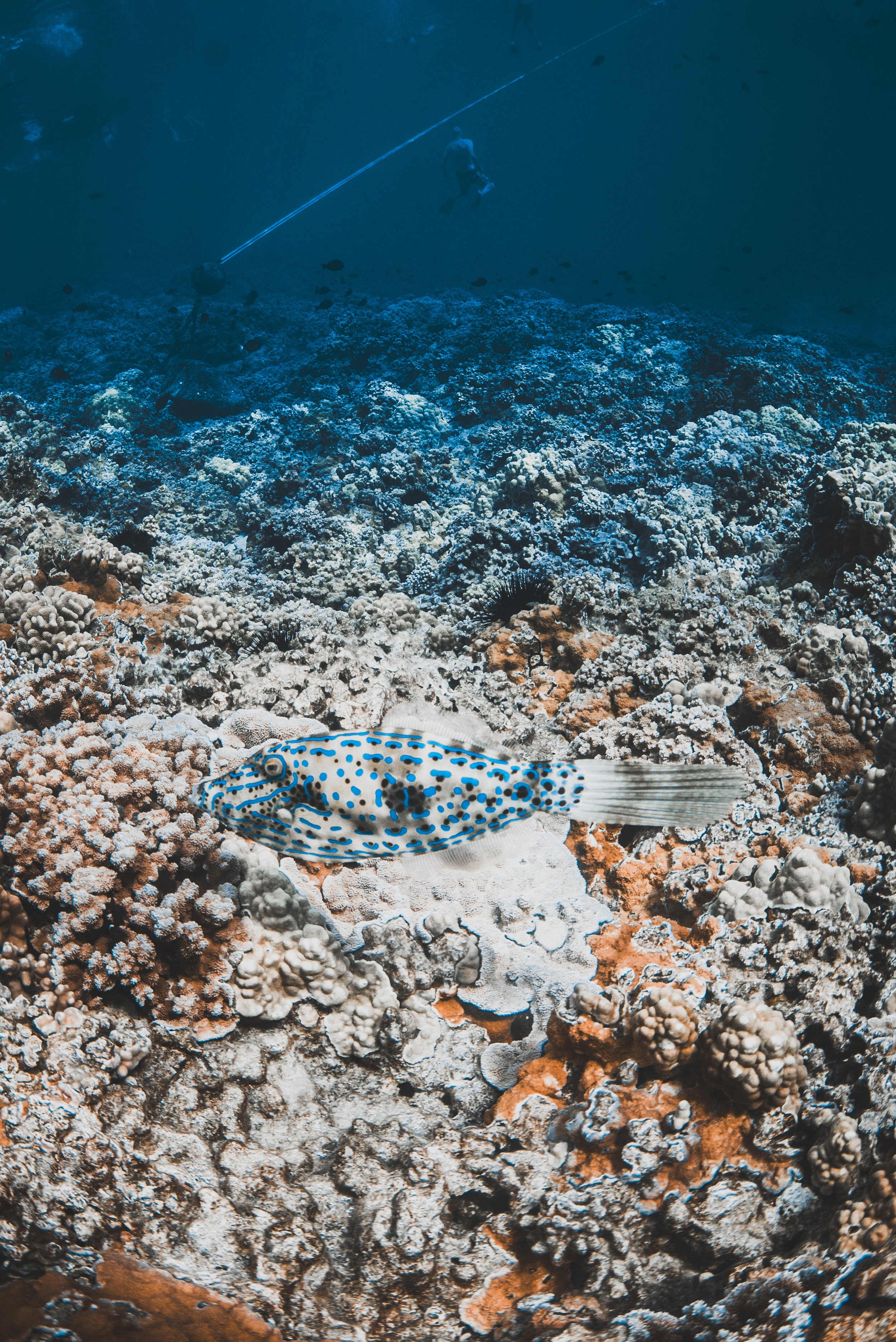
Scrawled Filefish (Loulu)
Whitespotted Boxfish - Moa
Imagine a fish that looks like it swallowed a tiny box—that's the moa. Instead of flexible scales, boxfish are covered in a hard, box-like shell made of fused bony plates, giving them a stiff, almost toy-like appearance. They swim with tiny fins that flutter so quickly they seem to hover through the water. Males are deep blue-black covered with bright white spots, while females are warm brown with white spots, making them look like completely different fish. Once you recognize their boxy shape, they're impossible to mistake for anything else.
Whitespotted Boxfish (Moa)
Pufferfish & porcupinefish
Stripebelly Puffer - ʻOʻopu Hue
If you see a chunky fish covered in tiny white spots with bright yellow fins, you've probably found a stripebelly puffer. Their curious eyes and slow, deliberate swimming often make them seem just as interested in you as you are in them. Unlike porcupinefish, their skin looks mostly smooth, even though it's covered in tiny prickles. They spend much of their day cruising the reef in search of crabs, snails, and other hard-shelled prey, using their powerful beak-like teeth to crush their meals.
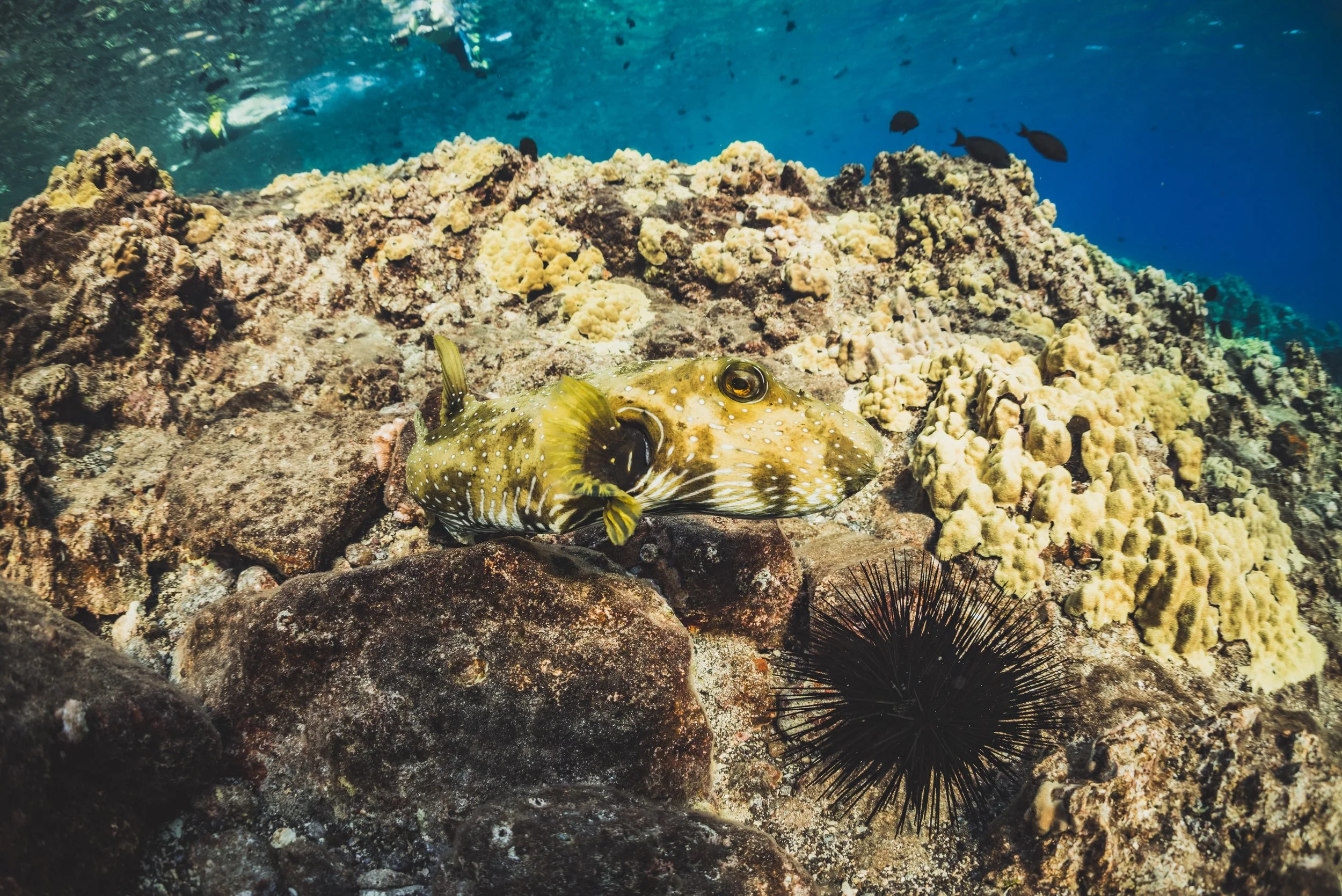
Stripebelly Puffer - ʻOʻopu Hue
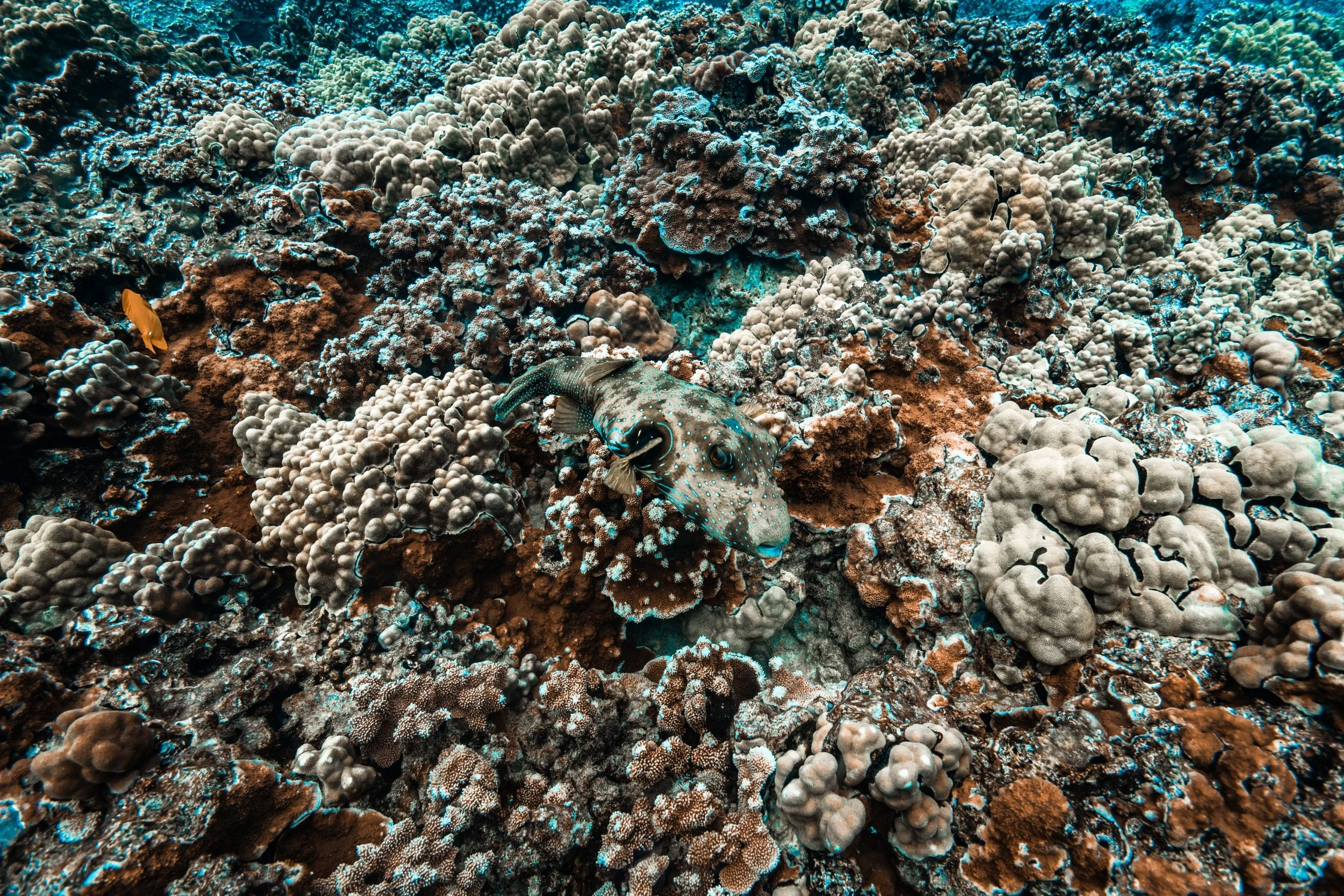
Stripebelly Puffer - ʻOʻopu Hue
Spotted Puffer - ʻOʻopu Hue
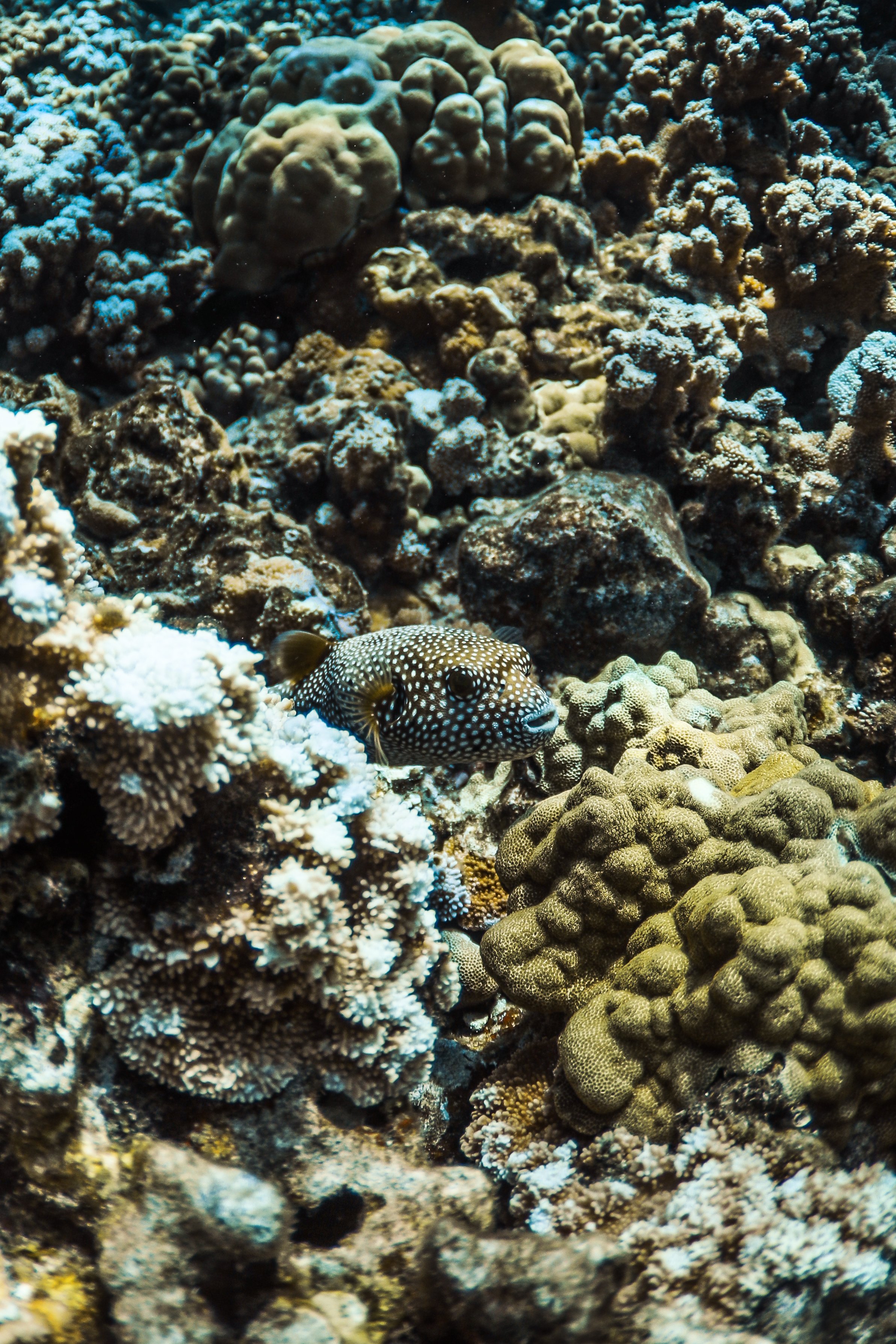
If you see a large, dark puffer covered from nose to tail in tiny white spots, you’ve found a spotted puffer. Its rounded body, blunt face, and dense polka-dot pattern make it easy to recognize, especially when it moves slowly over the reef using its small fins. Most are dark brown or nearly black with white spots, though this species can also appear in a much rarer golden-yellow color form. In Hawaiʻi, this fish is also called the guineafowl puffer.
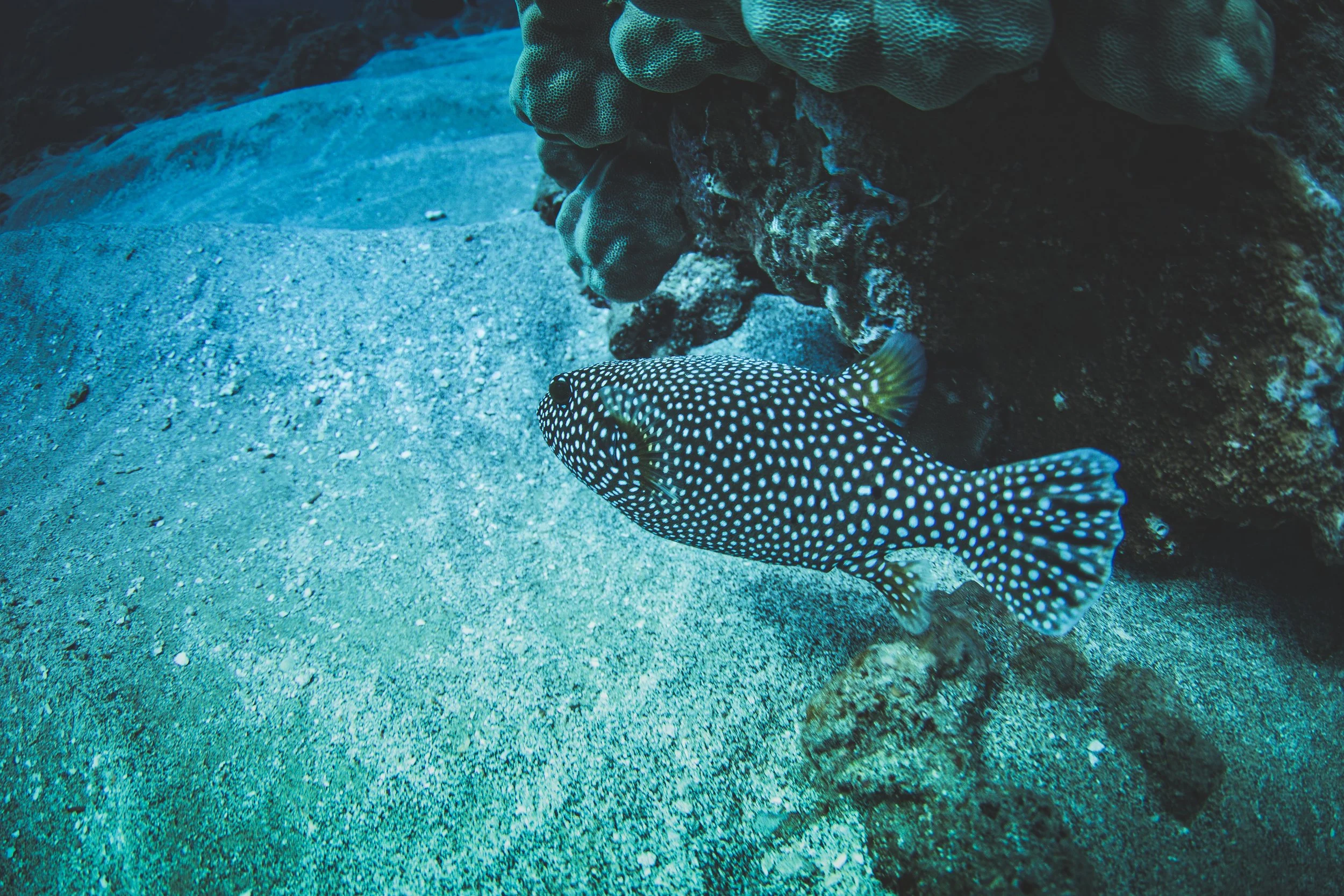
Spotted Puffer - ʻOʻopu Hue
Hawaiian Whitespotted Toby
Not every puffer is large and round. The Hawaiian whitespotted toby is a much smaller relative with a narrow body, pointed snout, and tiny white spots scattered across a dark background. At only about three inches long, it can be easy to overlook as it slips between coral and rocky cover. This little fish is common on Hawaiian reefs and found nowhere else in the world, making it a special one to recognize while snorkeling on Maui or Lānaʻi
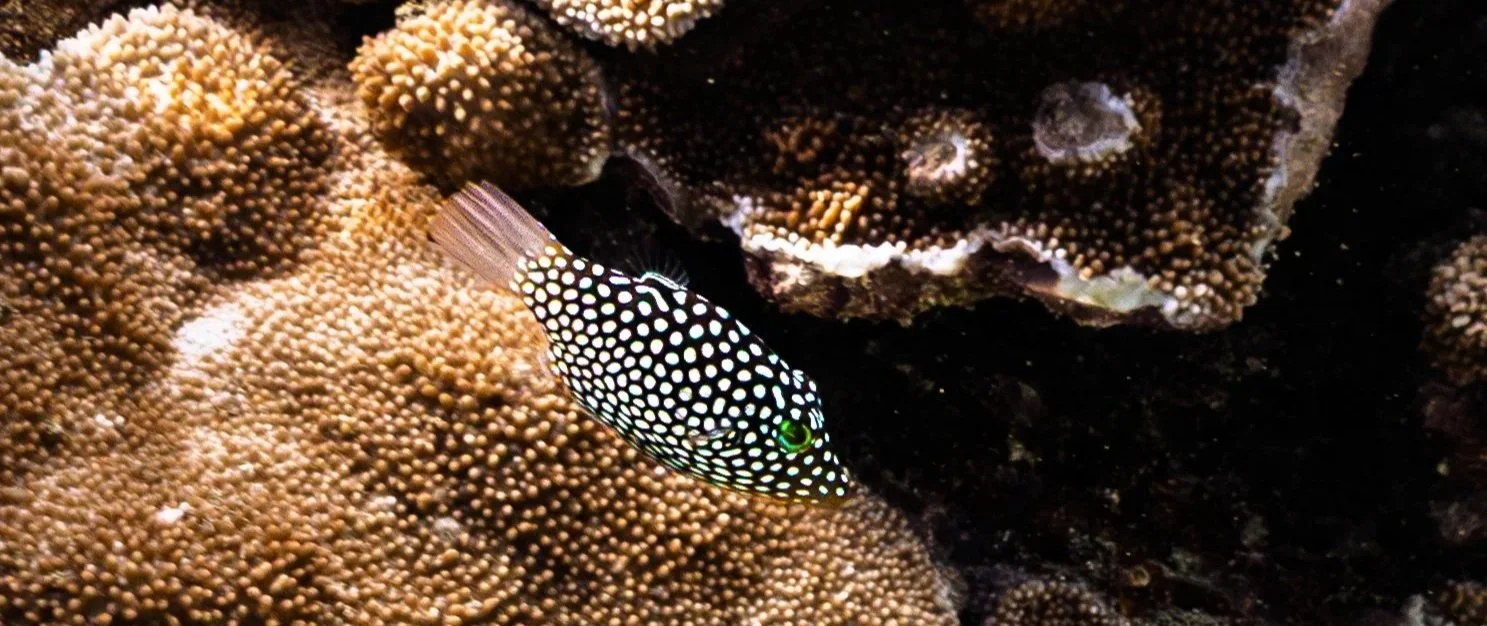
Hawaiian Whitespotted Toby
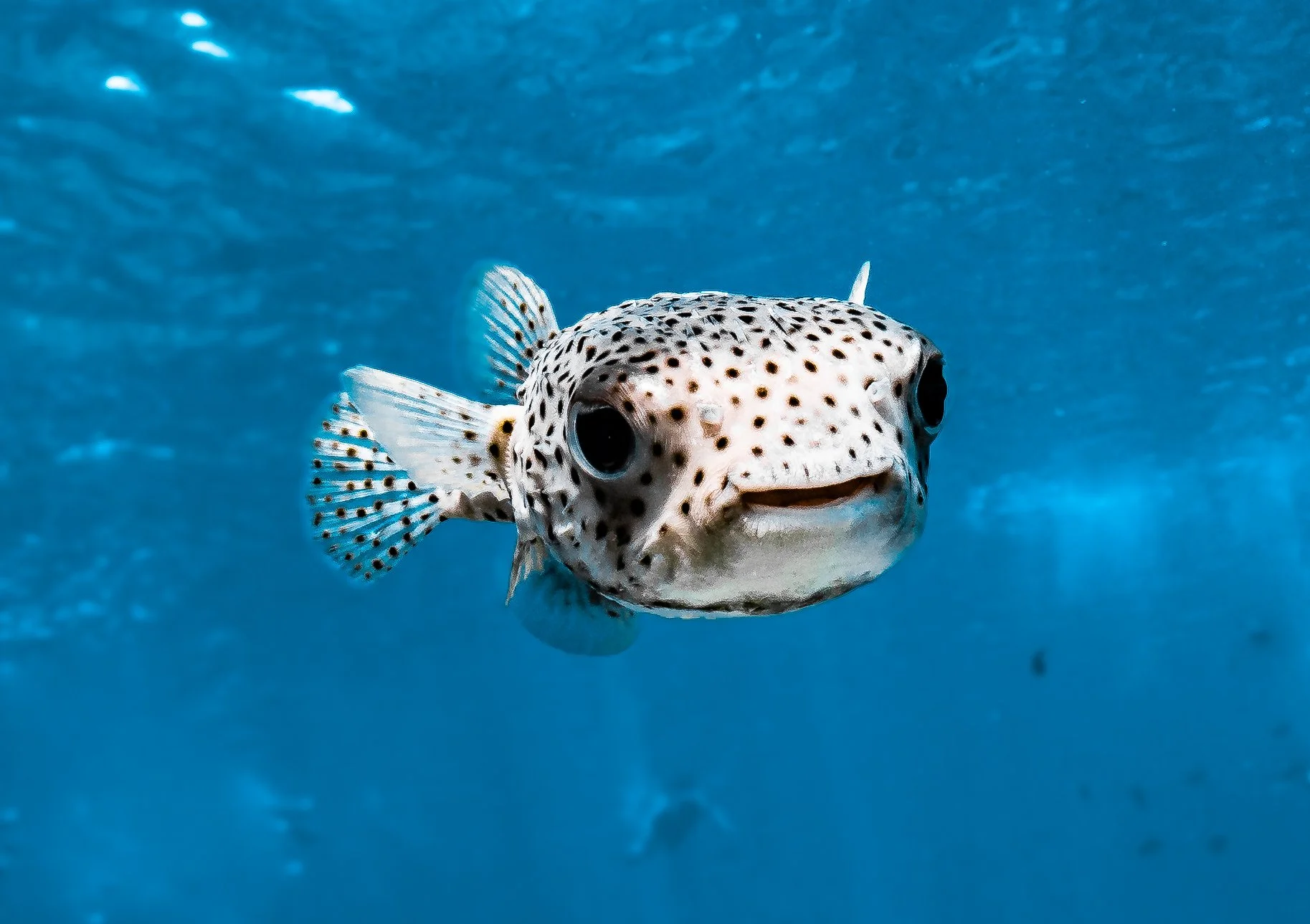
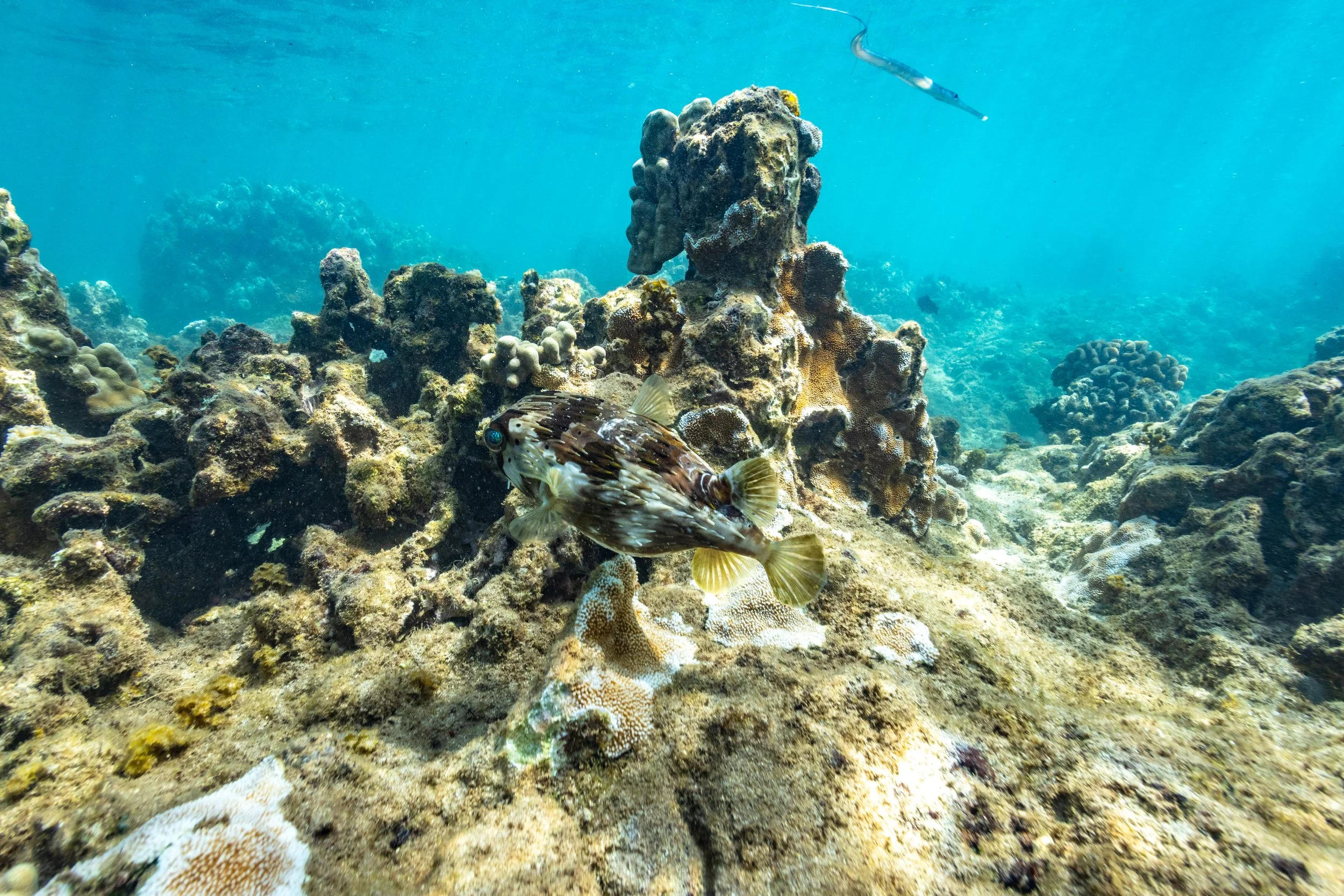
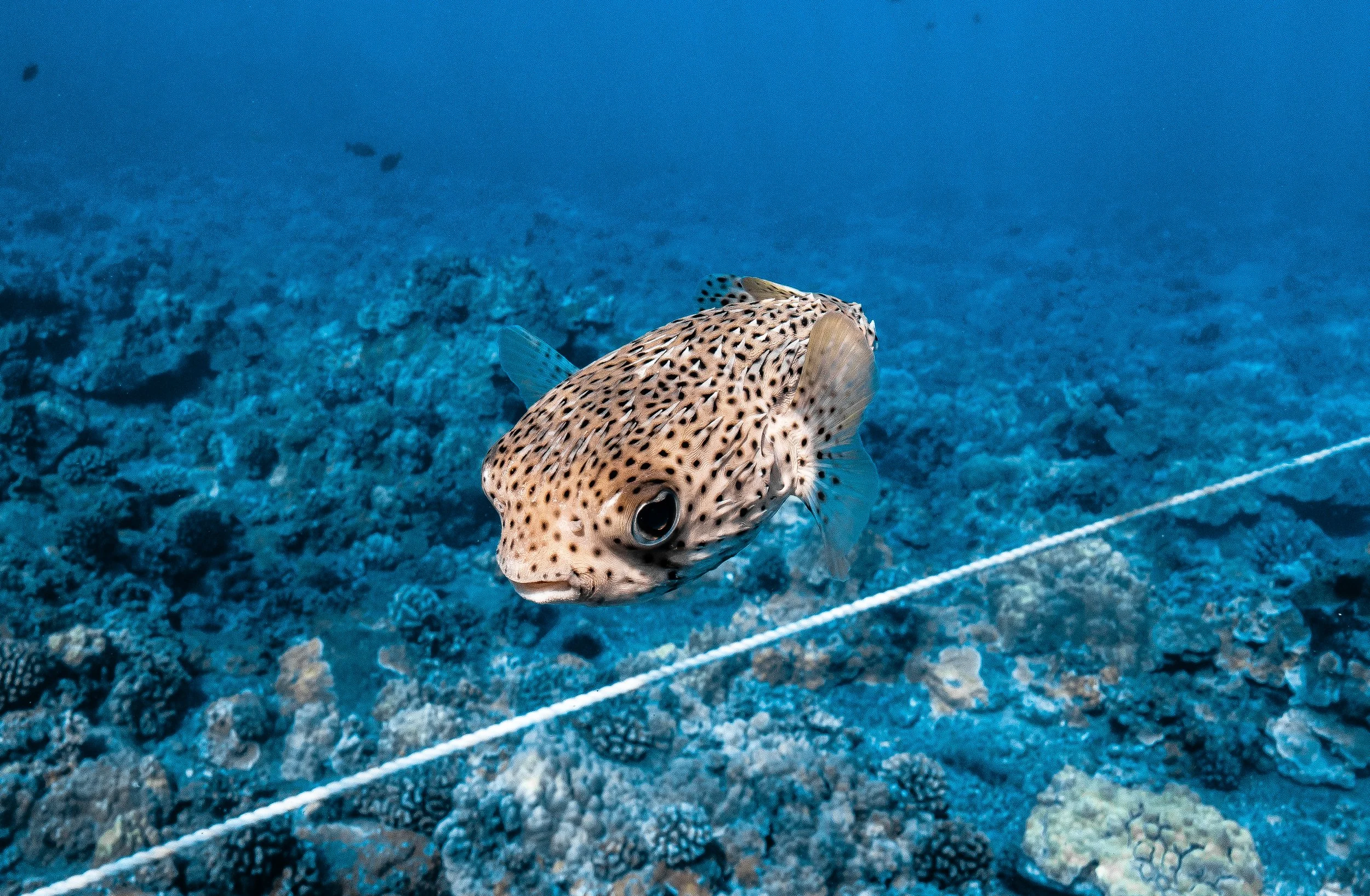
Porcupinefish - Kōkala
This is the fish everyone hopes they don't accidentally surprise—but not because it's dangerous. A porcupinefish is easy to recognize by its oversized eyes, rounded body, and long spines that stick out even when it's relaxed. They're often tucked beneath ledges or resting in sheltered spots during the day, becoming much more active after sunset. If threatened, they can inflate into a spiky ball, making those impressive spines stand straight out. Fortunately for snorkelers, they're calm, gentle fish that usually prefer to drift away rather than confront anything larger than themselves.
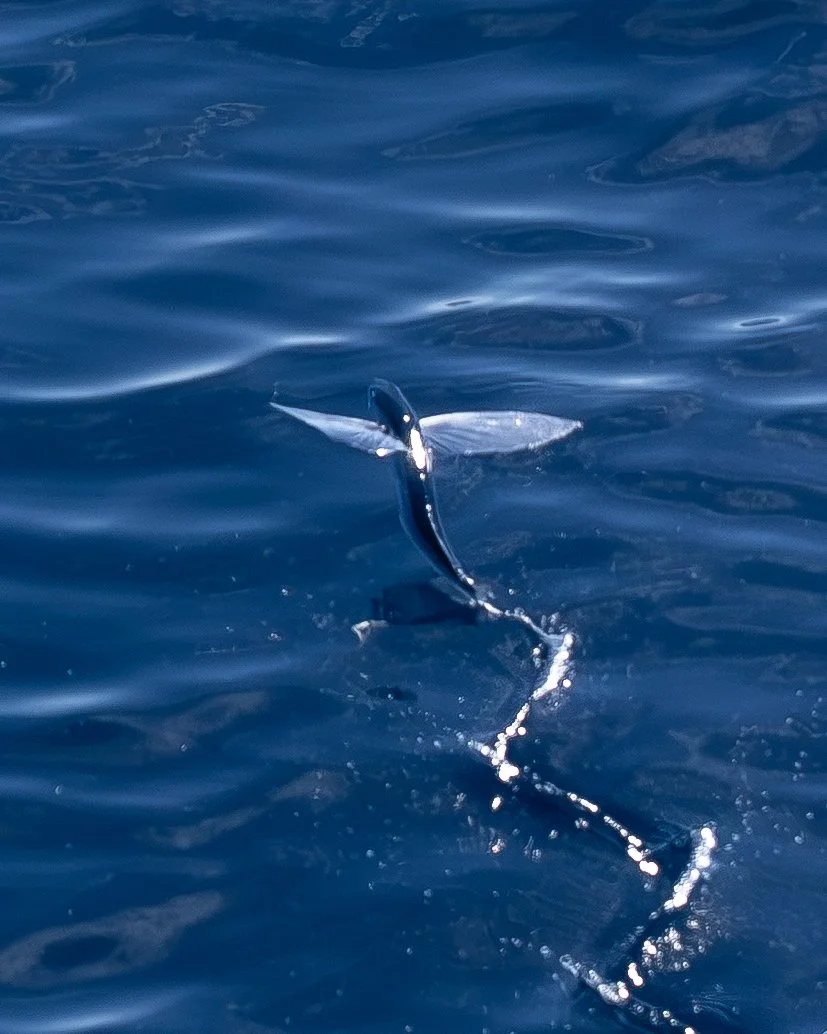
flying fish - Mālolo
If you see a fish burst from the water and seem to fly across the surface, you've just witnessed one of the ocean's most remarkable escapes. Flying fish don't actually fly—they use powerful strokes of their tail to launch out of the water, then spread their long, wing-like pectoral fins to glide through the air before slipping back beneath the surface. This spectacular escape helps them evade fast-swimming predators like mahi mahi, ono, and tuna. While it's uncommon to see them while snorkeling, Trilogy guests typically spot schools skimming across the water during the ride to and from the reef, especially in calmer conditions.
flying fish - Mālolo
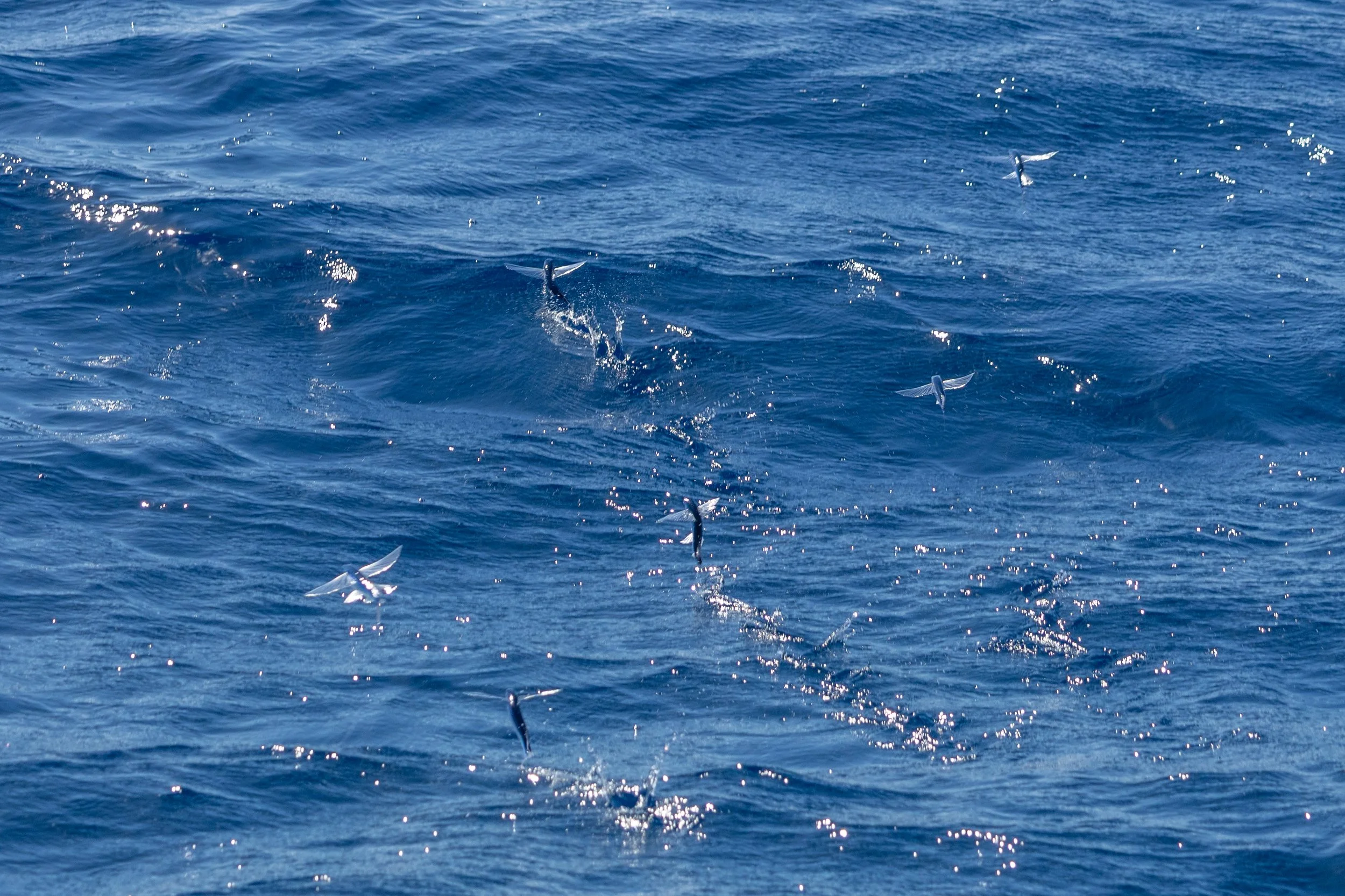
flying fish - Mālolo
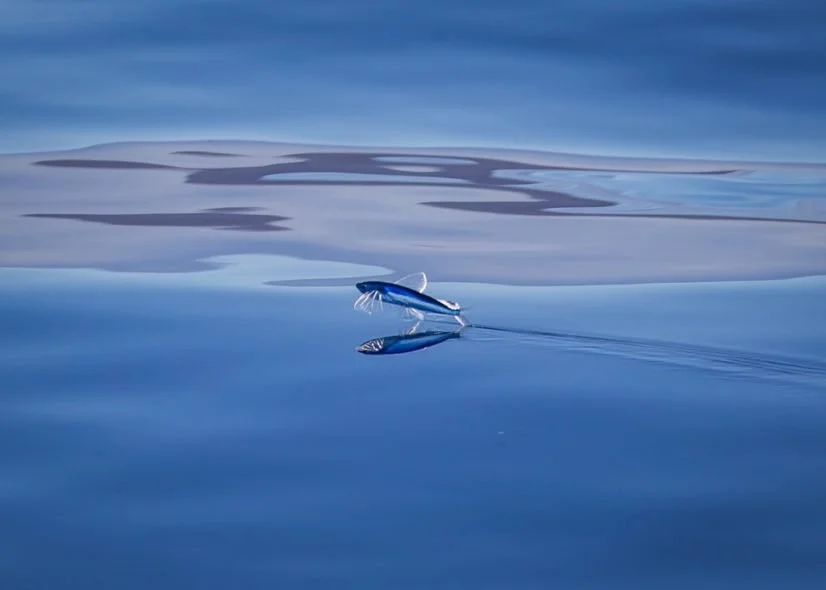
flying fish - Mālolo
rare & lucky finds
Peacock Flounder (Pāʻao)
At first, all you'll see is sand—then suddenly you'll realize it's staring back at you. The peacock flounder (or flowery flounder) is a master of camouflage, changing its color and pattern to match the seafloor almost perfectly. Both of its eyes sit on the same side of its flattened body, allowing it to lie motionless while keeping watch for passing prey. If it decides you've gotten too close, it will explode from the sand in a cloud of sediment before settling back down a few yards away. Once you've seen one, you'll start scanning the sandy bottom a little more carefully for the rest of your snorkel.
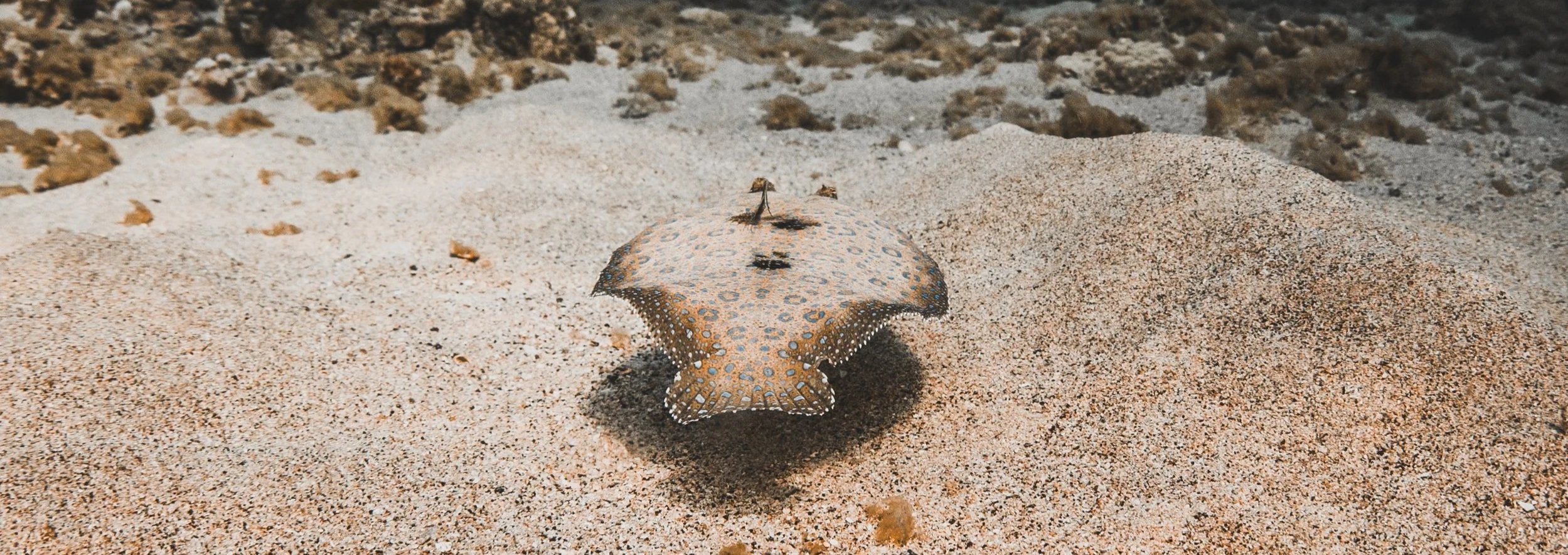
Peacock Flounder (Pāʻao)
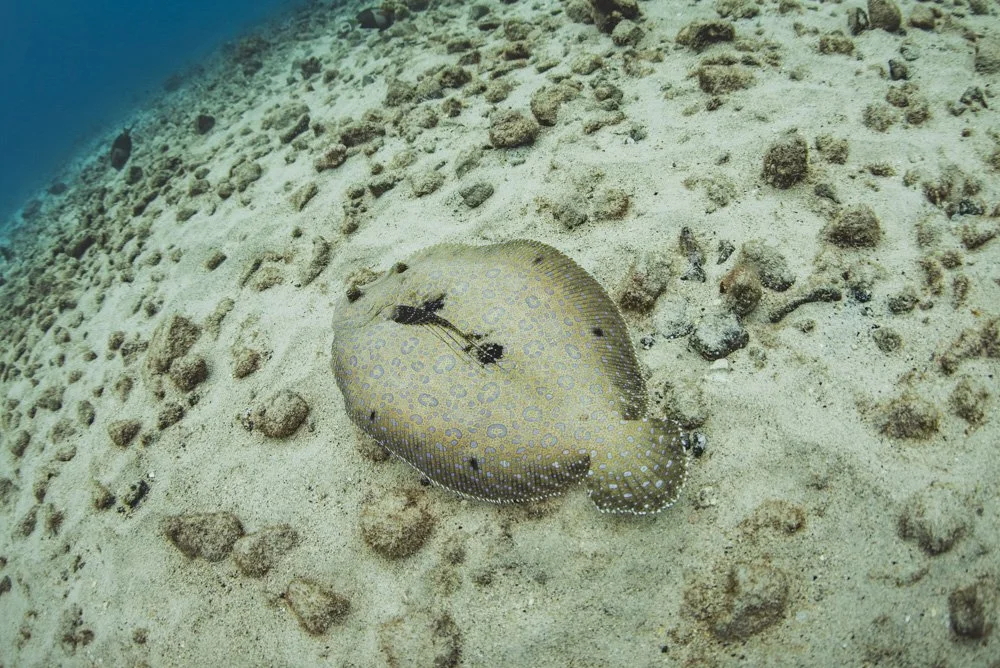
Peacock Flounder (Pāʻao)
commerson’s Frogfish
If someone points out a frogfish, consider yourself lucky. These bizarre-looking fish are among the reef's greatest masters of disguise, often resembling a sponge, clump of algae, or piece of coral more than a fish. Instead of swimming much, they "walk" across the reef using their modified fins and rely on camouflage to avoid being seen. They're ambush predators, waiting patiently for an unsuspecting fish to wander close before inhaling it in the blink of an eye. Even knowing one is there doesn't always make it easy to find.
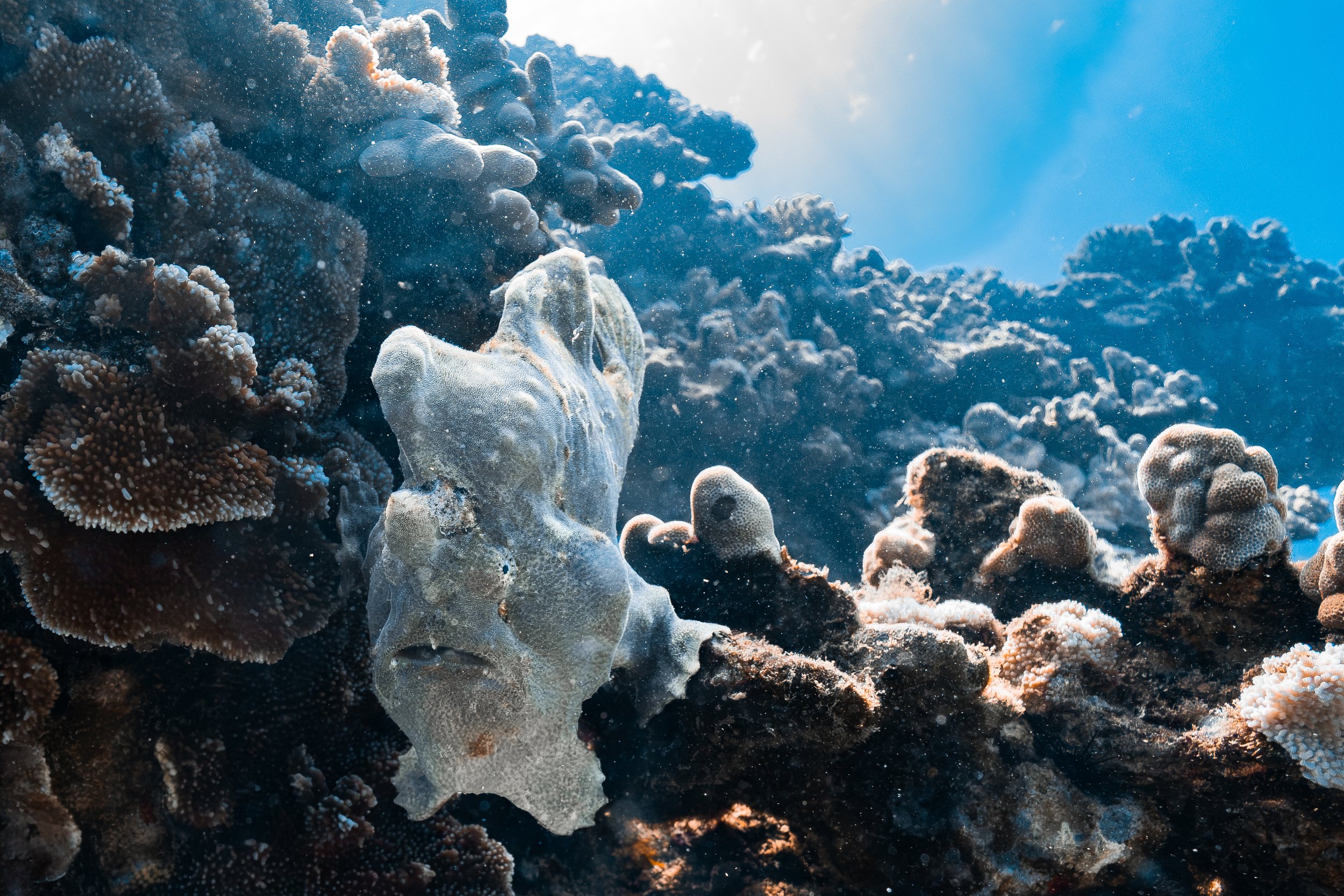
Commerson’s Frogfish
Longjaw Squirrelfish (ʻAlaʻihi)
During the day, the longjaw squirrelfish prefers to stay out of the spotlight. Look beneath ledges, inside small caves, or in shaded cracks, and you may spot its brilliant red body staring back at you with oversized eyes adapted for life in dim light. Its long lower jaw gives the fish its common name, while its reflective eyes seem to glow when light reaches them. Most squirrelfish become active after sunset, so seeing one out in the open during a daytime snorkel is always a treat.
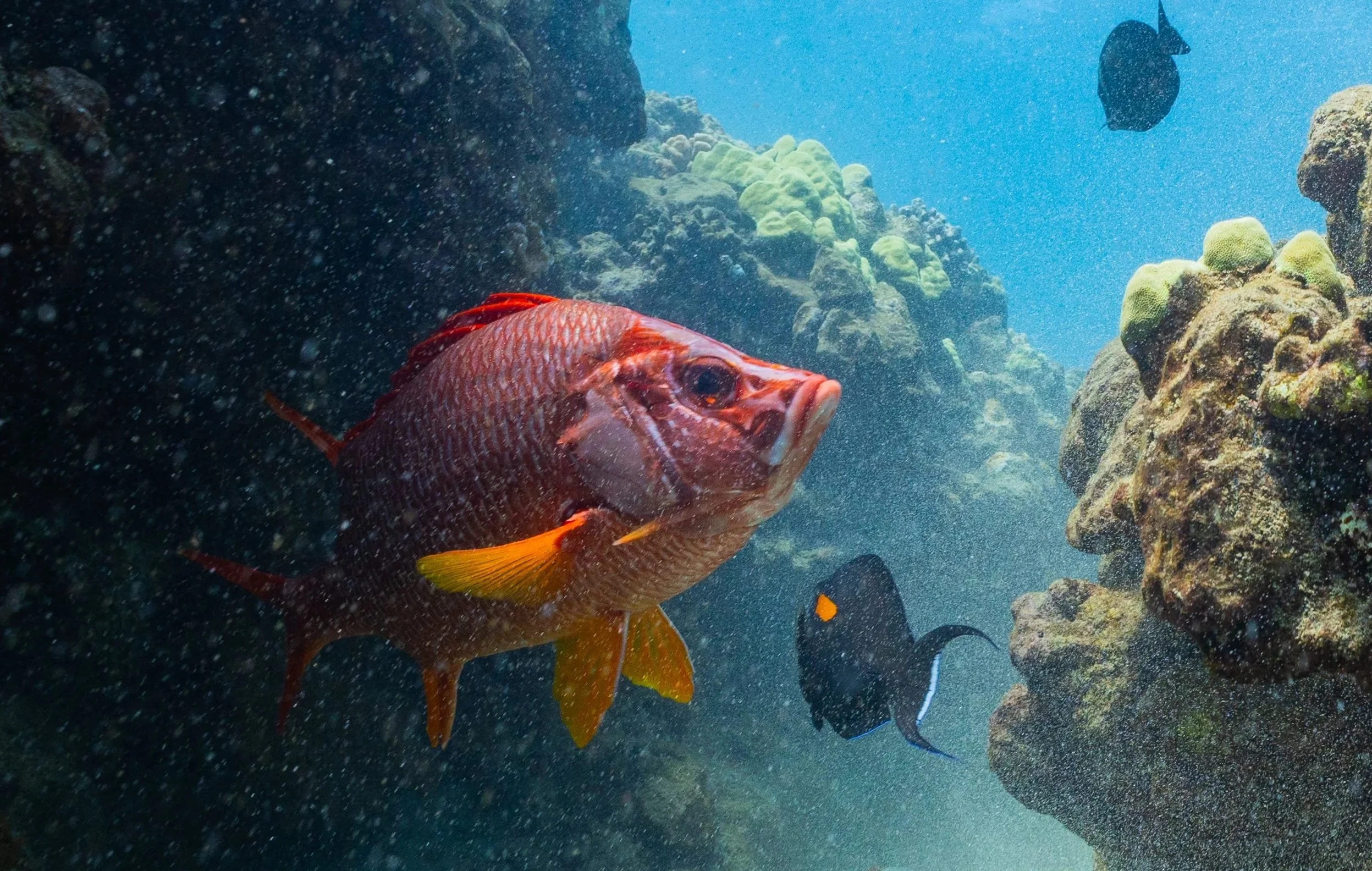
Longjaw Squirrelfish (ʻAlaʻihi)
where to snorkel with these fish on maui
One of the best things about snorkeling on Maui is that you don't have to search very hard to find incredible marine life. Every reef has its own personality, and different fish prefer different habitats. Once you know what to look for, you'll start recognizing why certain species appear in certain places.
Looking for the Greatest Variety of Reef Fish?
If your goal is to check as many fish off this guide as possible, Discover Lānaʻi is hard to beat. The protected waters of Hulopoʻe Bay are home to vibrant coral reefs where it's common to spot tangs, butterflyfish, triggerfish, wrasses, parrotfish, goatfish, and many of the other colorful reef residents featured in this guide. It's one of the best places to spend time slowly exploring and seeing just how diverse Hawaiʻi's reefs can be.
Hoping to See Healthy Coral and Reef Life Closer to Maui?
Our Discover West Maui Snorkel visits some of West Maui's healthiest reef systems, with destinations selected by your Captain based on the day's conditions. Depending on where you snorkel, you may find schools of reef fish weaving through coral heads, larger fish cruising the reef edge, and plenty of opportunities to put your new fish-identification skills to the test.
Looking for Rare or Unusual Fish?
Some fish don't announce themselves with bright colors or large schools. Frogfish disguise themselves as sponges or algae, peacock flounders disappear into the sand, and longjaw squirrelfish spend their days tucked beneath ledges and overhangs. Finding these species takes patience, a careful eye, and a little luck—but that's part of what makes spotting them so rewarding.
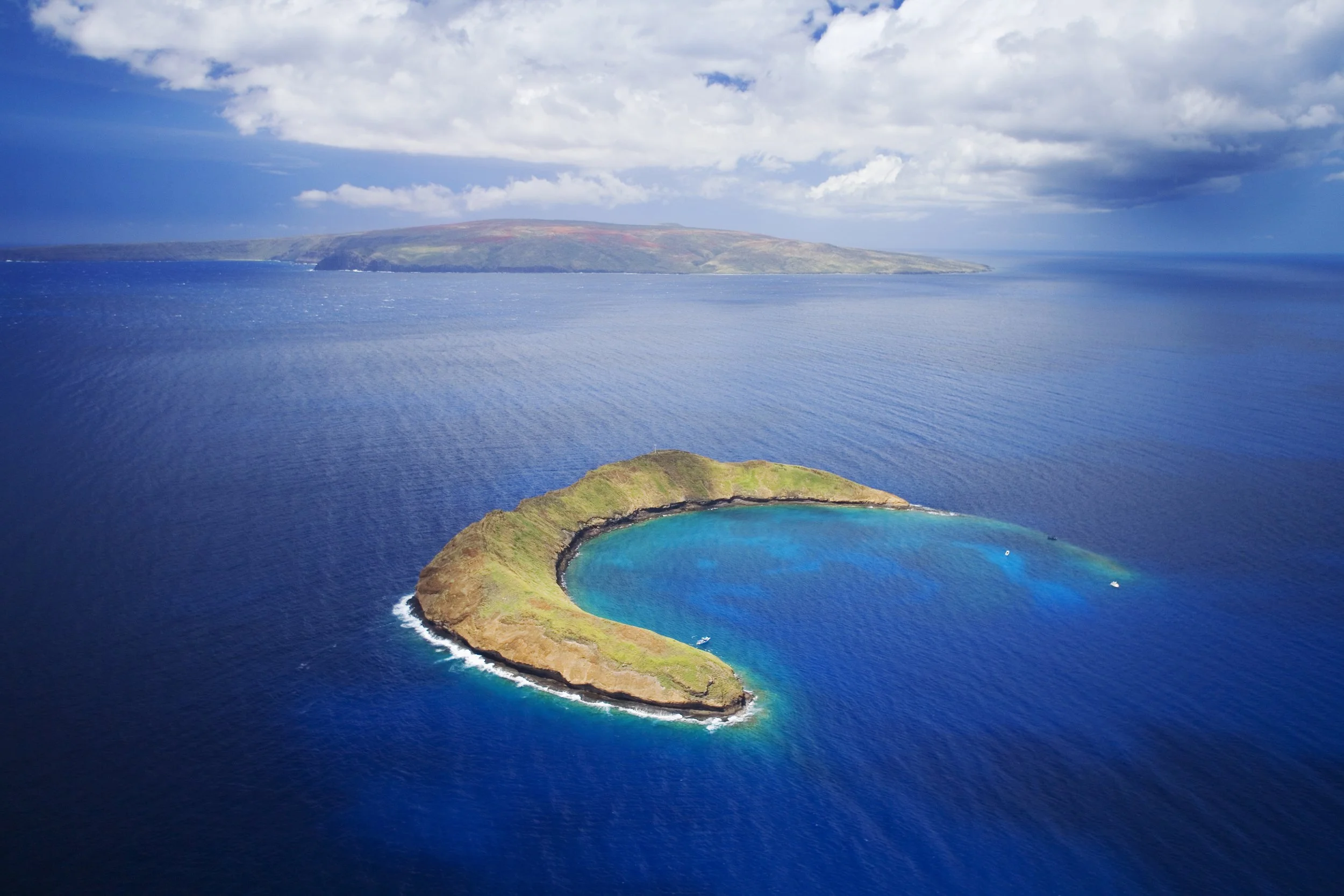
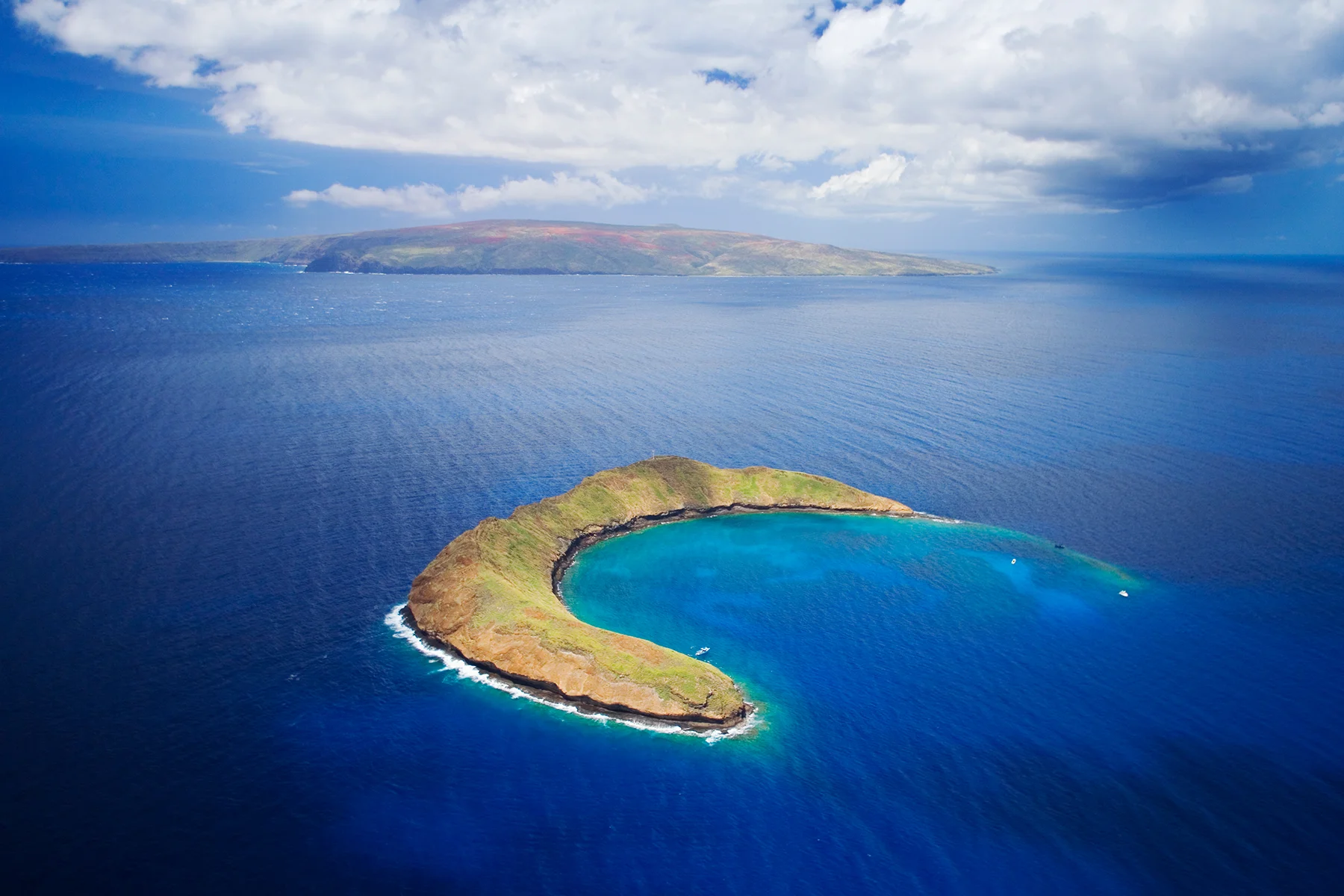
If you're the kind of snorkeler who enjoys slowing down and looking closely, Discover Molokini is an excellent choice. Molokini's famously clear water makes it easier to search reef ledges, coral heads, and sandy pockets where some of the reef's most elusive residents like to hide. While sightings are never guaranteed, it's the kind of place where paying attention often pays off.
Want Help Finding Them?
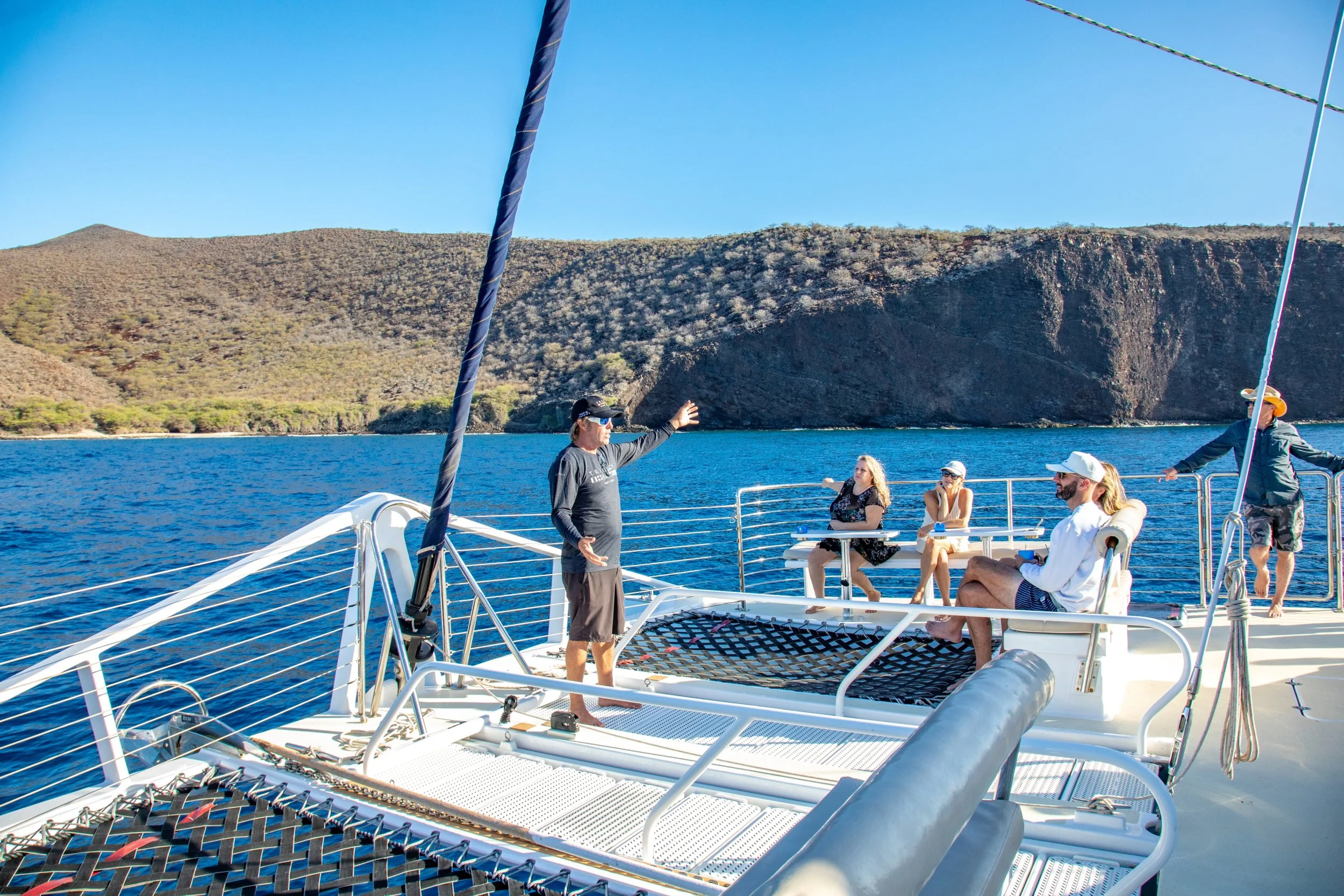
One of the biggest advantages of snorkeling with Trilogy isn't just getting to beautiful reefs—it's snorkeling alongside a crew that spends hundreds of days on the water each year. Our Captains and Crew know where to look, love sharing what they see, and are always happy to point out fish you might have swum right past. By the end of your snorkel, there's a good chance you'll be recognizing fish by name instead of simply calling them "the yellow one."
Snorkel Like a Local
One of the best ways to experience Maui's reefs is to slow down and let the ocean come to you. The more relaxed you are in the water, the more you'll notice—and the more comfortable the fish will be going about their day.
Give Wildlife Plenty of Space
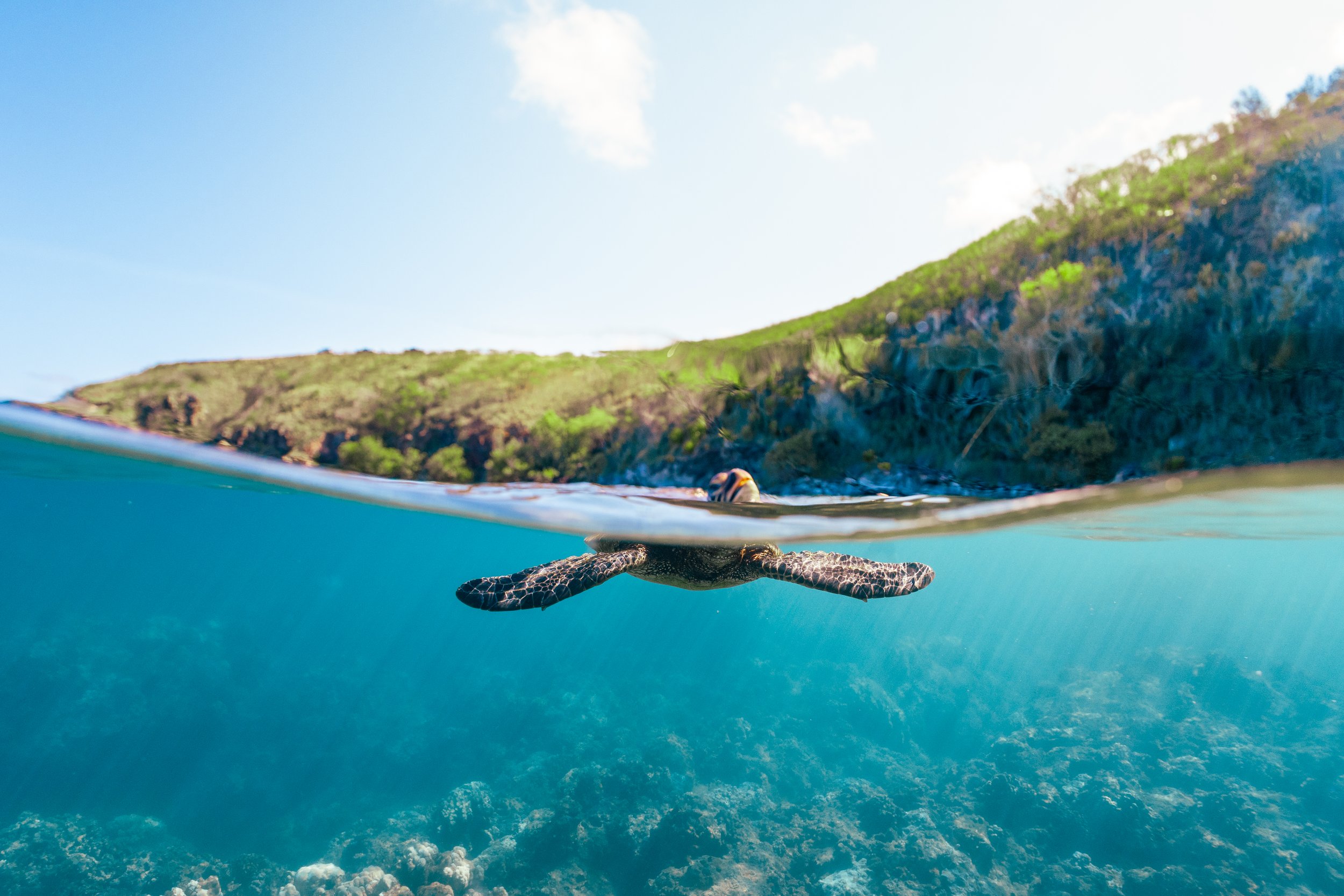
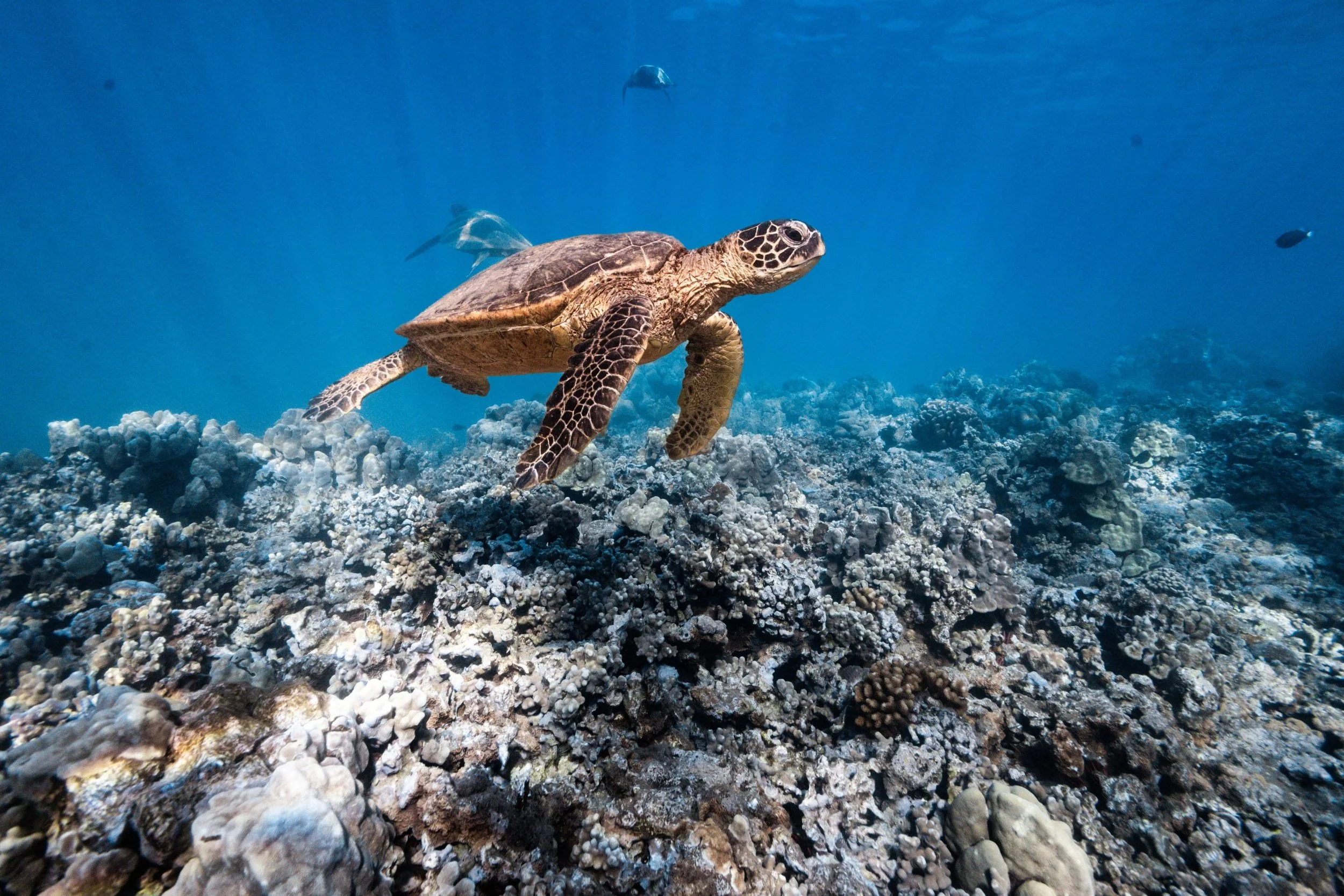
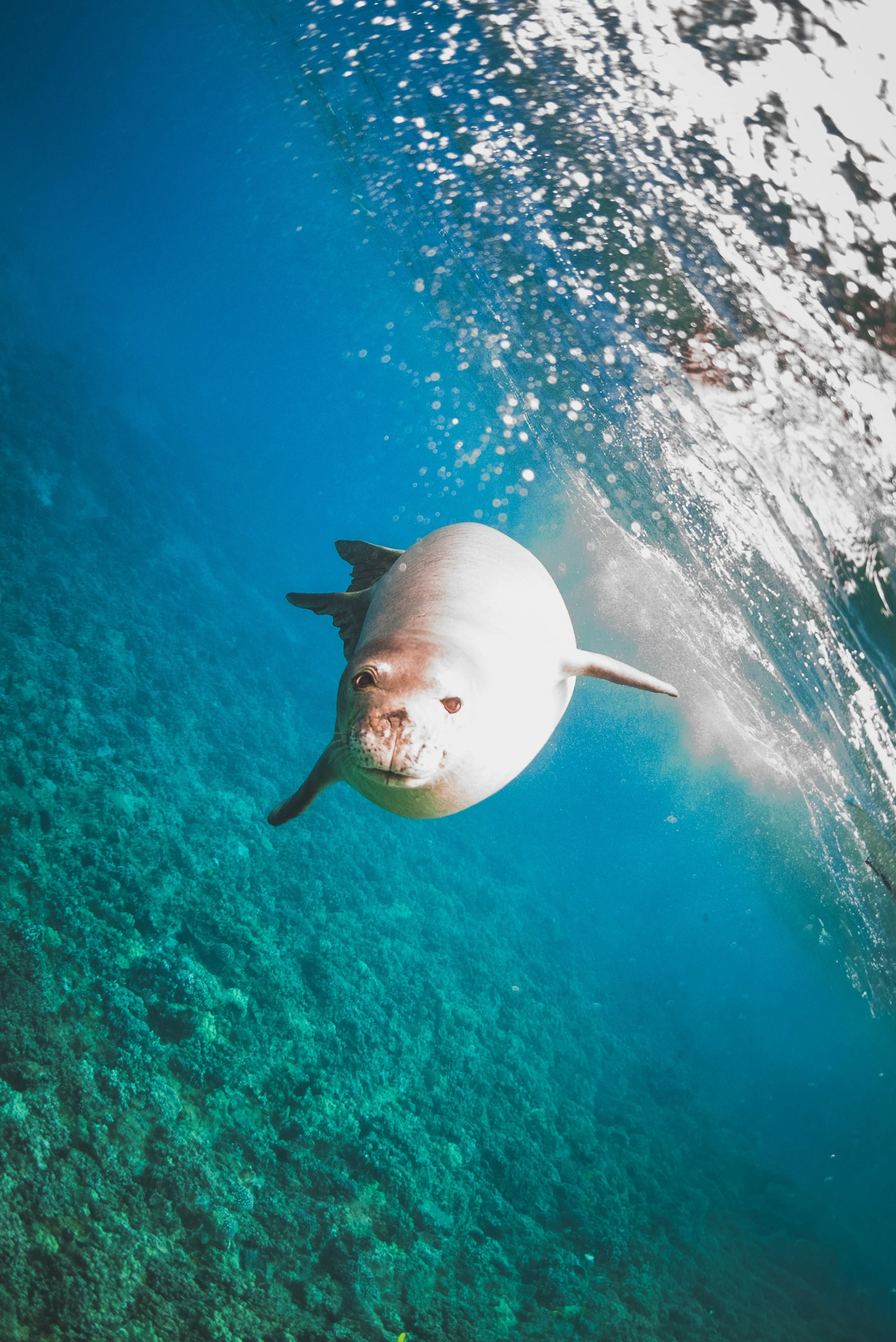
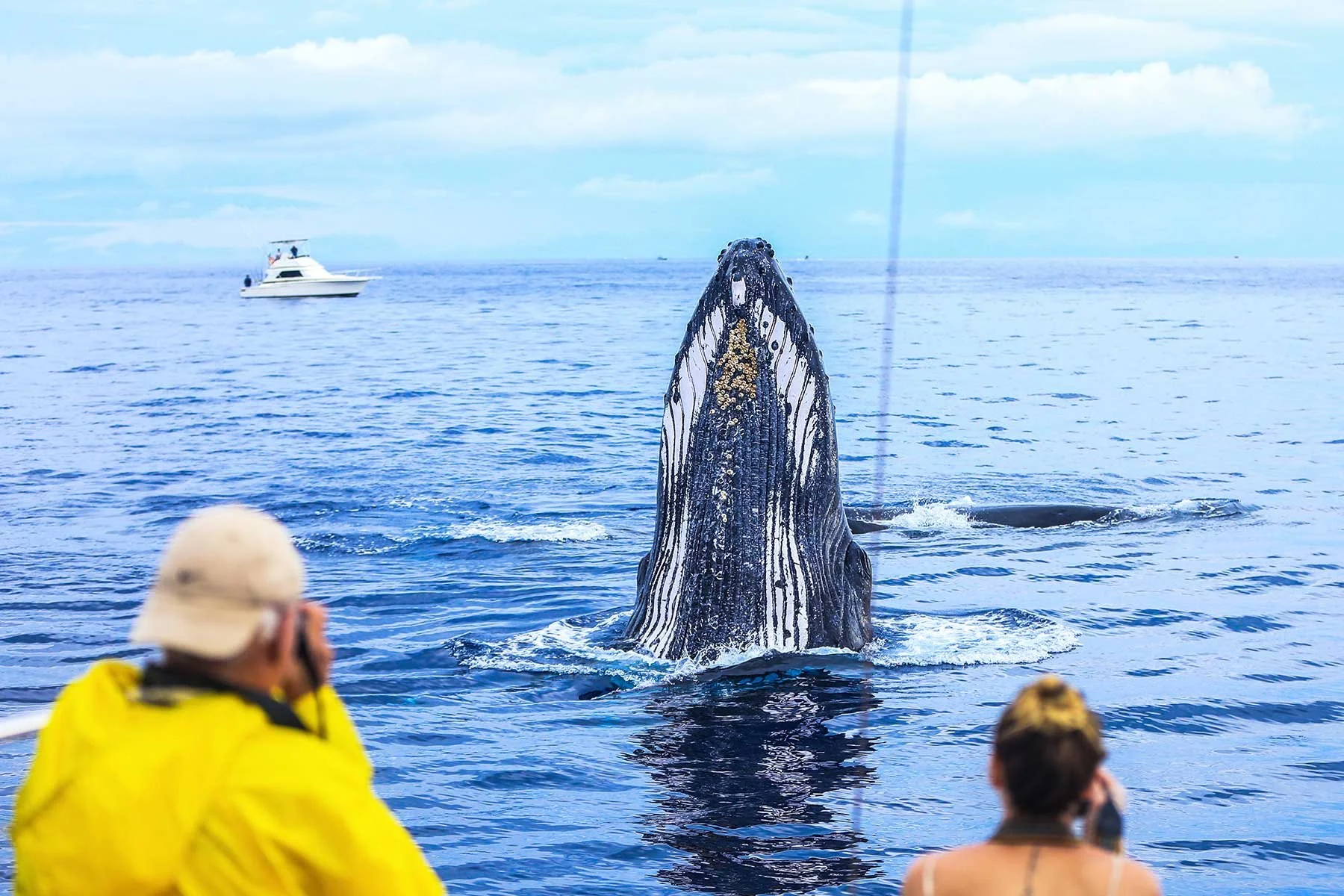
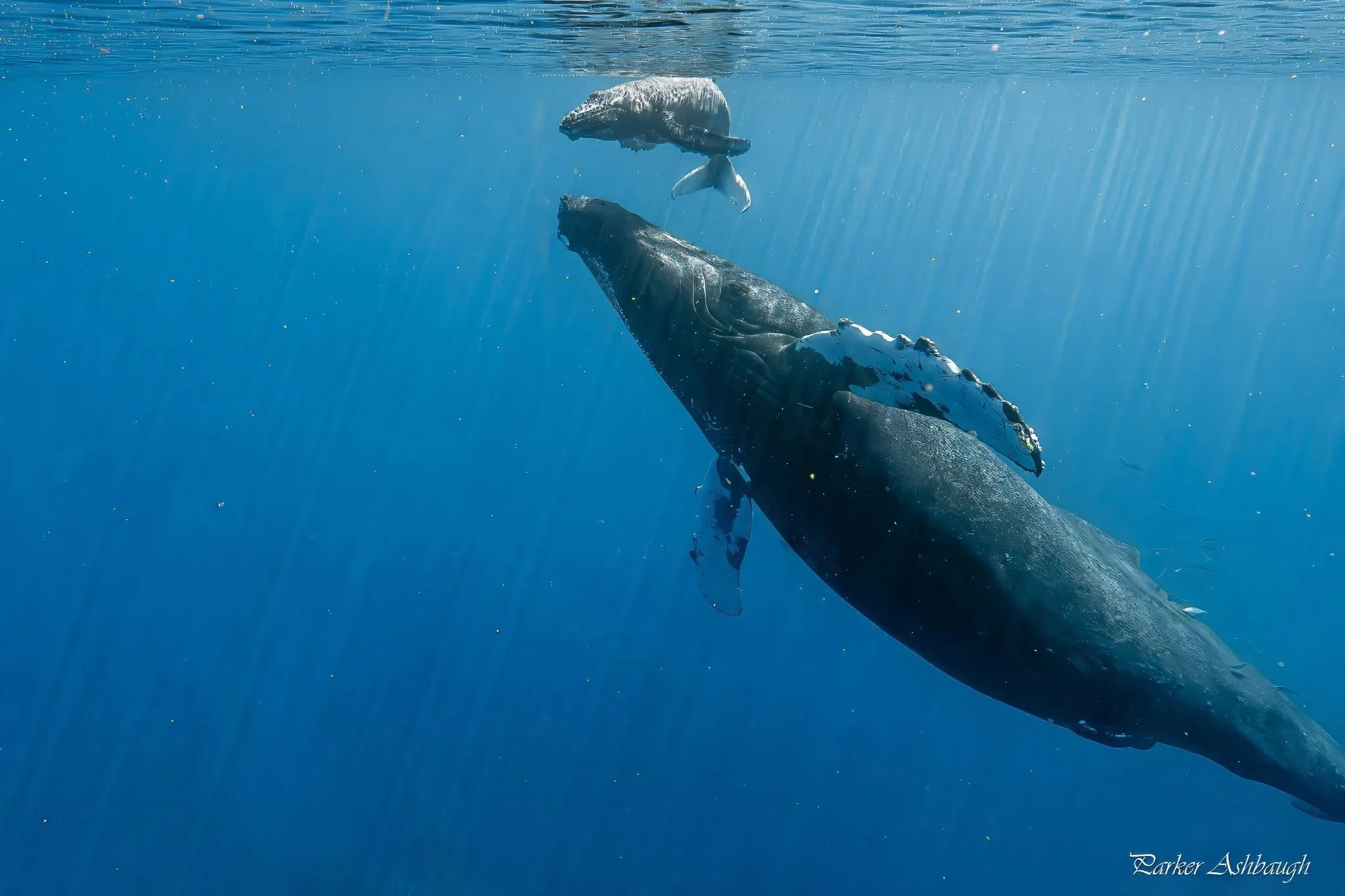
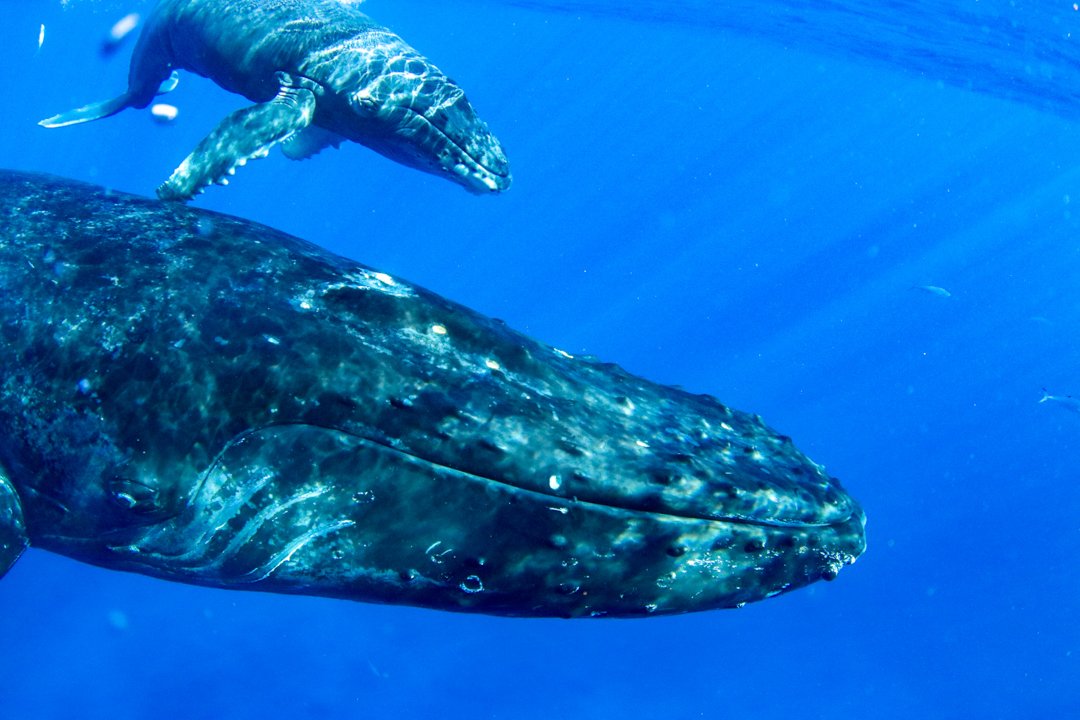
Watching fish behave naturally is far more rewarding than trying to get close. Avoid chasing or cornering marine life, and let curious fish decide whether they want to swim nearby. If you happen to encounter sea turtles or other protected wildlife, admire them from a respectful distance and enjoy the moment without interrupting their natural behavior. NOAA recommends staying at least 10 feet (3 meters) from sea turtles and 50 yards (46 meters) from dolphins and whales.
Keep Your Fins Off the Reef
Coral may look like rock, but it's made up of tiny living animals that can take decades to grow. Even an accidental kick from a fin can damage fragile coral colonies. If you're new to snorkeling, practice floating horizontally and be mindful of where your fins are at all times.
Take Only Photos, Leave Only Bubbles
The reef is healthiest when everything stays where it belongs. Leave shells, coral, and marine life exactly as you found them so the next visitor—and the reef itself—can enjoy them too.
Listen to Your Crew
Every snorkel site is different, and ocean conditions can change throughout the day. Your Trilogy Captains and Crew choose snorkel locations based on the safest and best conditions, and they'll always share tips on where to look for marine life while helping you snorkel confidently and respectfully.
A Healthy Reef Is a Living Reef
The fish in this guide are only part of the story. Healthy coral, clean water, and respectful visitors all work together to keep Maui's reefs thriving. By giving wildlife space and treating the reef with care, you're helping ensure these underwater ecosystems remain just as vibrant for future generations as they are today.











Learn to identify different reef fish you may see while snorkeling on Maui, with verified Hawaiian names, visual cues, lookalike comparisons, reef etiquette, and Trilogy tour notes.