Hawaiian Monk Seals: Hawaiʻi’s Rare and Remarkable Ocean Neighbor
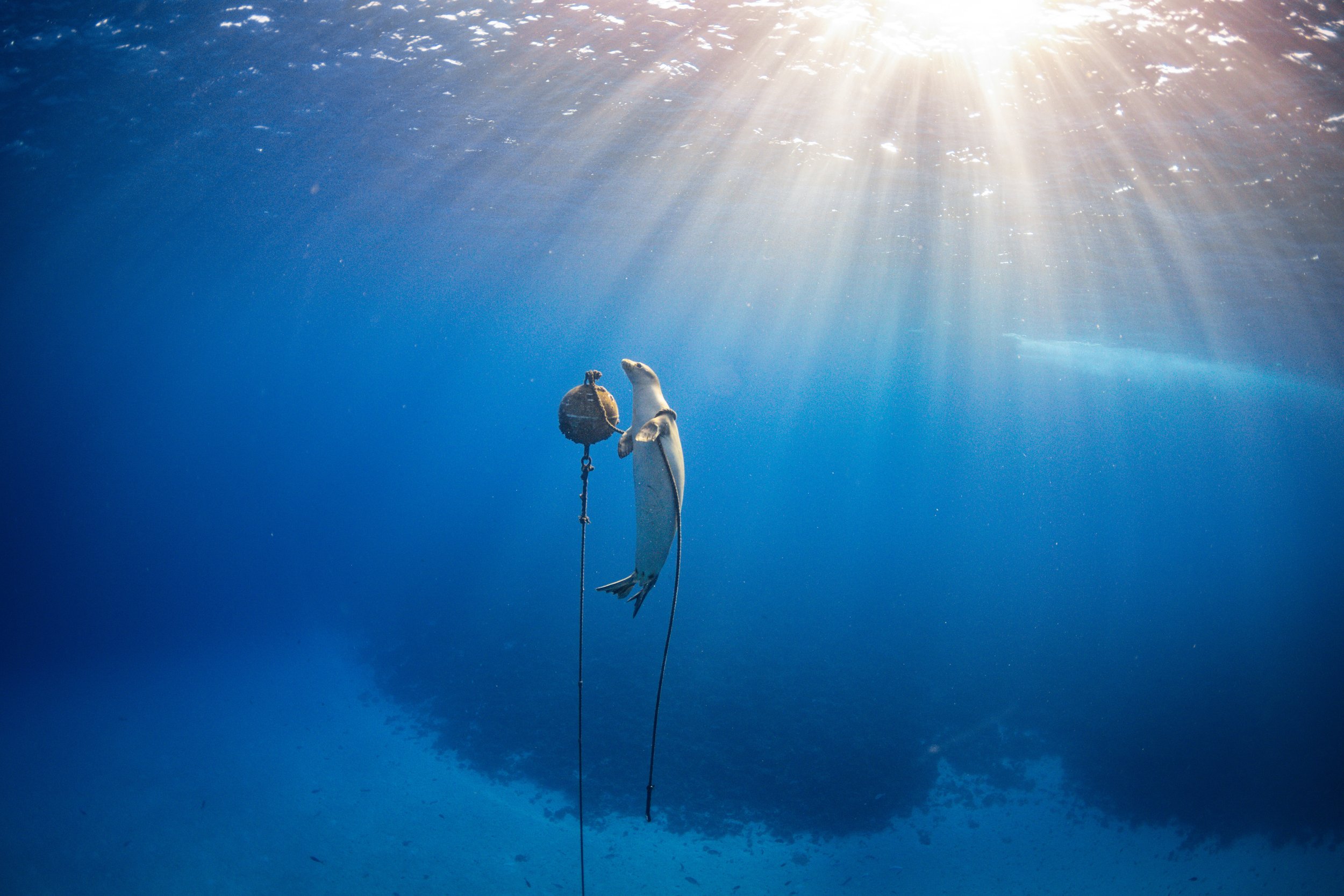
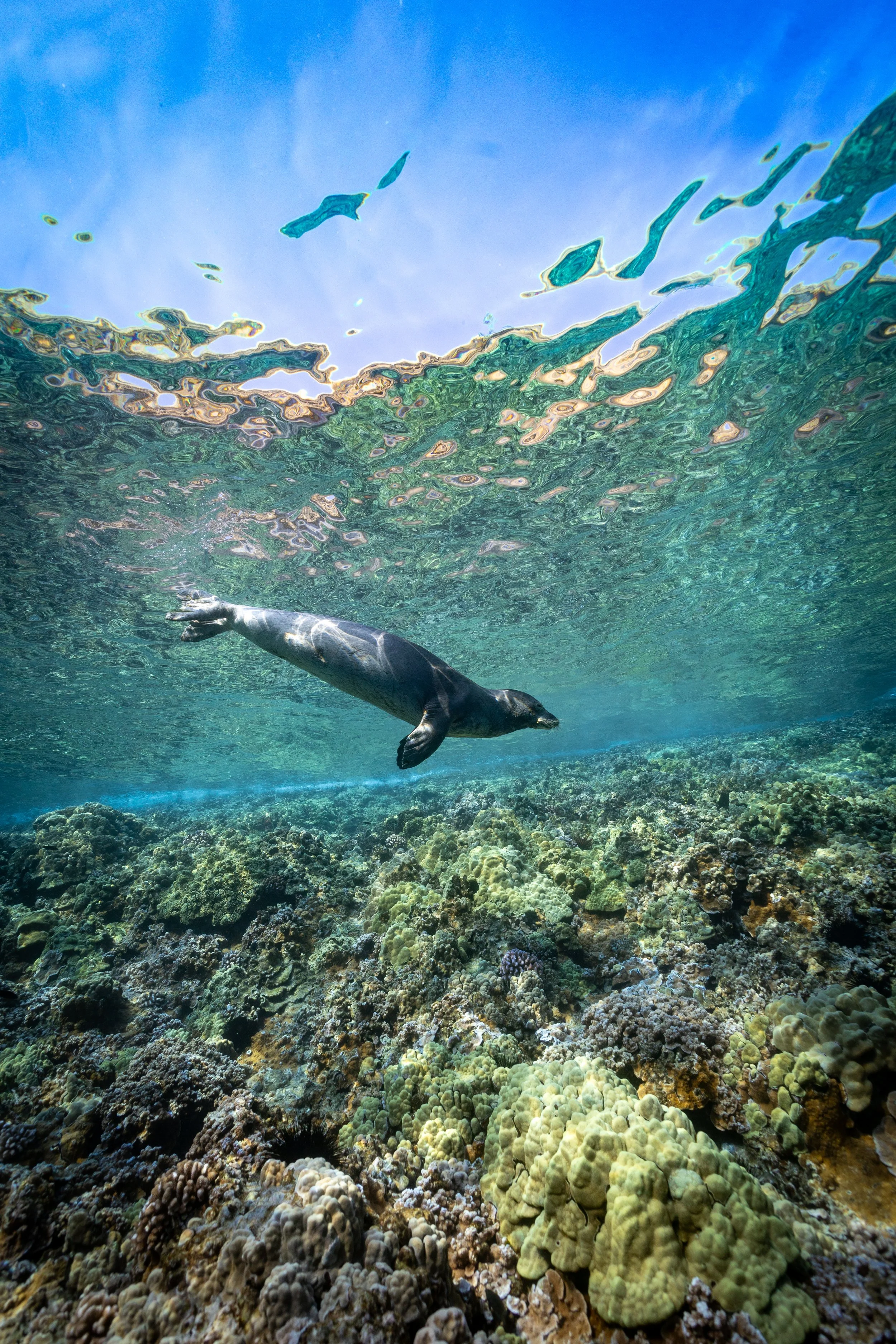
Trilogy follows NOAA marine wildlife viewing guidelines. All photos shown here were taken from a responsible distance. The Hawaiian monk seals in these images approached the photographer naturally — we did not chase, pursue, or disturb any monk seals. The monk seal in this photograph was “playing” with this mooring line and easily swam out of it shortly after the picture was taken.
Out on the beaches and reefs across the Hawaiian Islands, you may occasionally spot a quiet visitor resting on the sand or slipping through the nearshore water. This is the Hawaiian monk seal, known in Hawaiian as ʻīlioholoikauaua, which translates roughly to “the dog that runs in rough water.”
Seeing one is always special. Not just because they’re beautiful animals, but because they’re one of the rarest marine mammals on Earth and found nowhere else in the world except the Hawaiian archipelago.
For those lucky enough to encounter one on Maui or elsewhere on the islands, it’s a reminder that these waters still hold extraordinary life worth protecting.
A Species Found Only in Hawaiʻi
The Hawaiian monk seal (Neomonachus schauinslandi) is endemic to the Hawaiian Islands, meaning its entire natural range exists here and nowhere else on the planet.
Most of the population lives in the remote Papahānaumokuākea Marine National Monument in the Northwestern Hawaiian Islands. A smaller but growing number now lives around the main Hawaiian Islands, including sightings on Oʻahu, Kauaʻi, and occasionally on Maui.
Because their habitat is limited to this island chain, the health of Hawaiʻi’s ocean ecosystems is directly tied to the survival of this species.

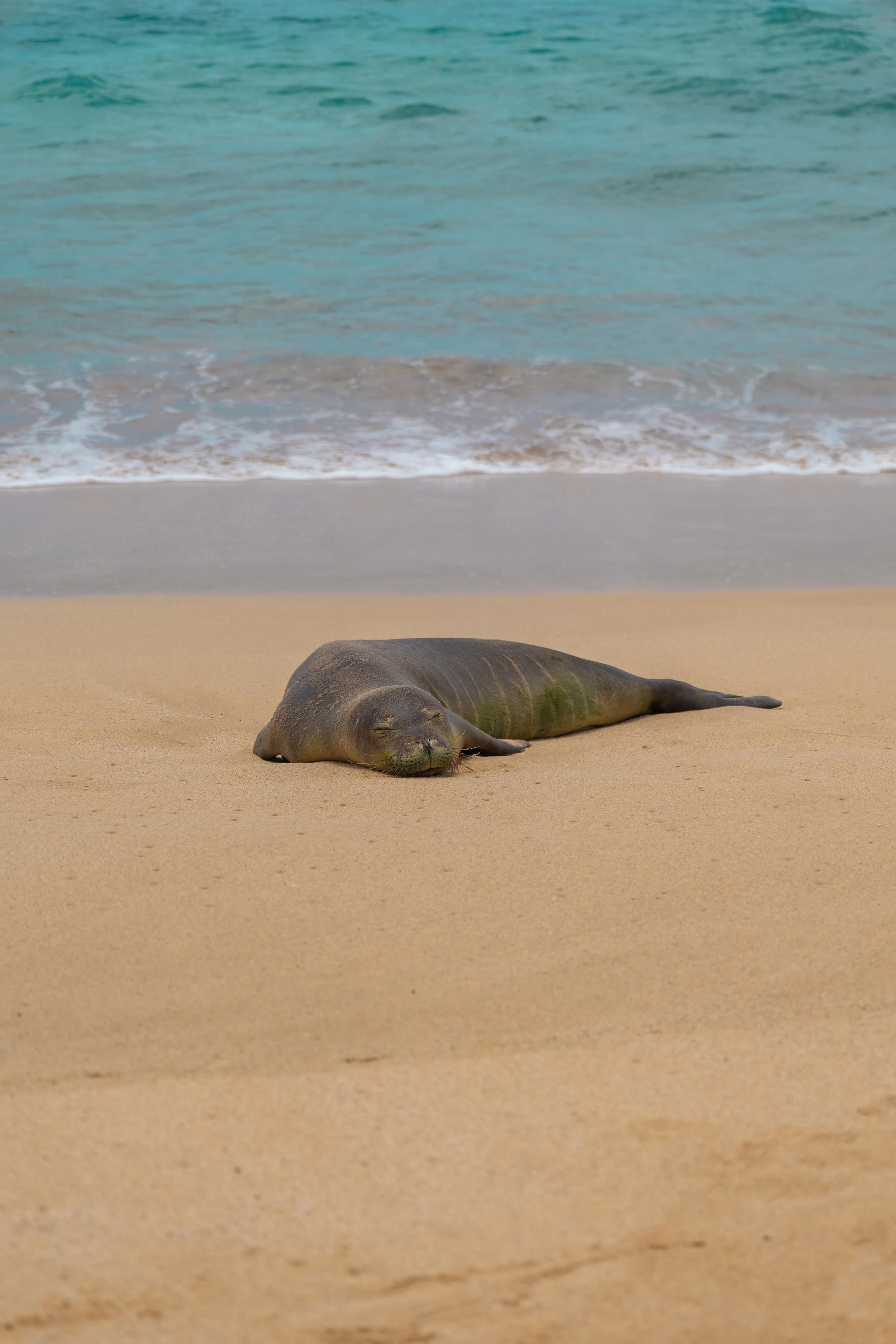
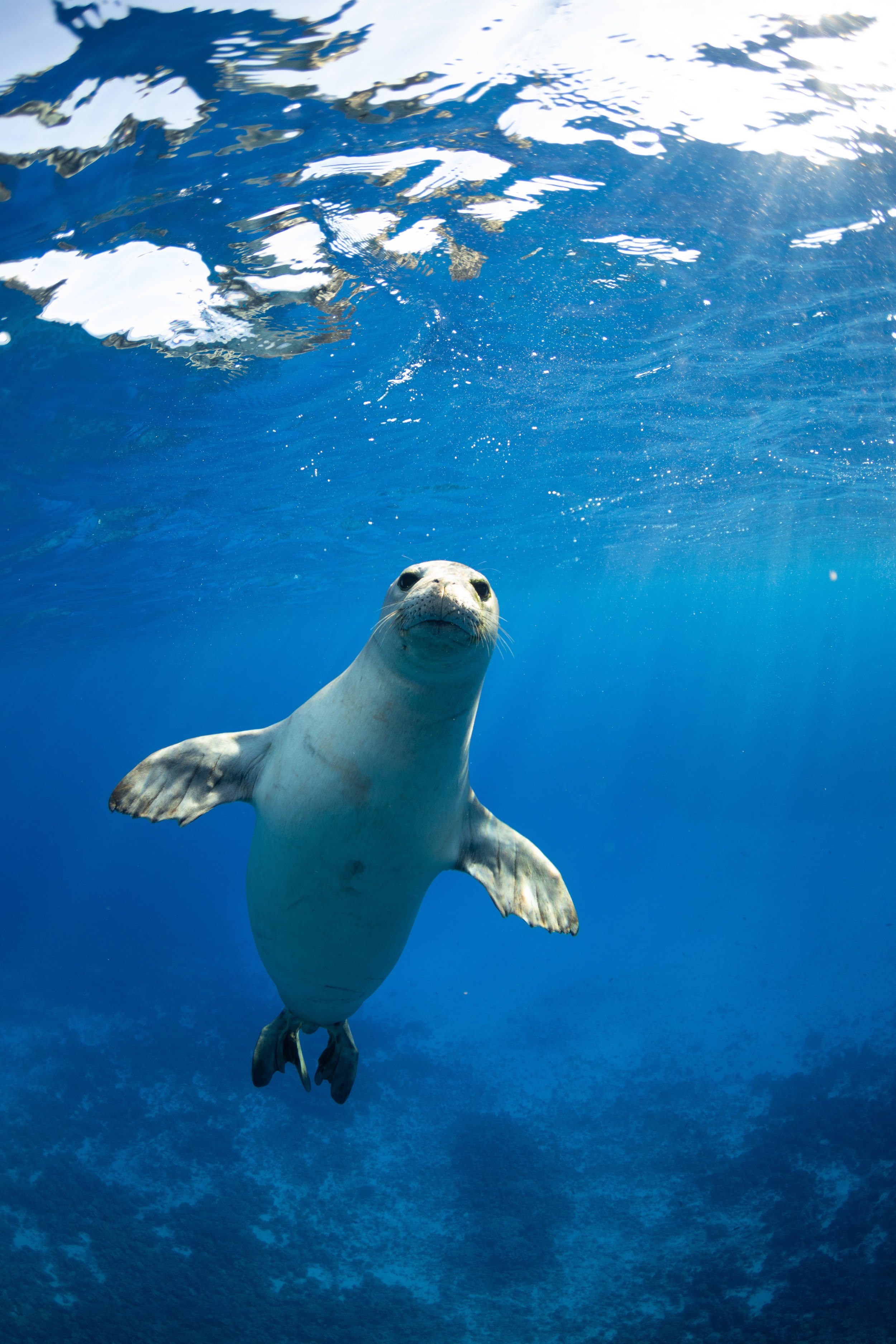
Trilogy follows NOAA marine wildlife viewing guidelines. All photos shown here were taken from a responsible distance. The Hawaiian monk seals in these images approached the photographer naturally — we did not chase, pursue, or disturb any monk seals.
Just How Rare Are Hawaiian Monk Seals?
Hawaiian monk seals are considered one of the most endangered seal species in the world and the most endangered marine mammal in U.S. waters.
Today the total population is estimated at around 1,600 individuals, which is only about one-third of the species’ historic population size.
The species was driven close to extinction in the 19th century when seals were hunted for their meat and skins. Modern conservation efforts by scientists, volunteers, and local communities are helping the population slowly recover, though they remain federally protected under the Endangered Species Act and the Marine Mammal Protection Act.
The Hawaiian monk seal (ʻīlioholoikauaua) is so closely tied to the islands that it has been recognized as Hawaiʻi’s official state mammal. Found nowhere else on Earth, this rare seal reflects the unique ecosystems that exist across the Hawaiian archipelago.
In short: every monk seal matters.
How Monk Seals Live
Unlike some marine mammals that travel long distances seasonally, Hawaiian monk seals generally stay within the Hawaiian archipelago their entire lives. Individual seals may roam hundreds of miles across the island chain, but they often return to familiar beaches to rest and haul out.
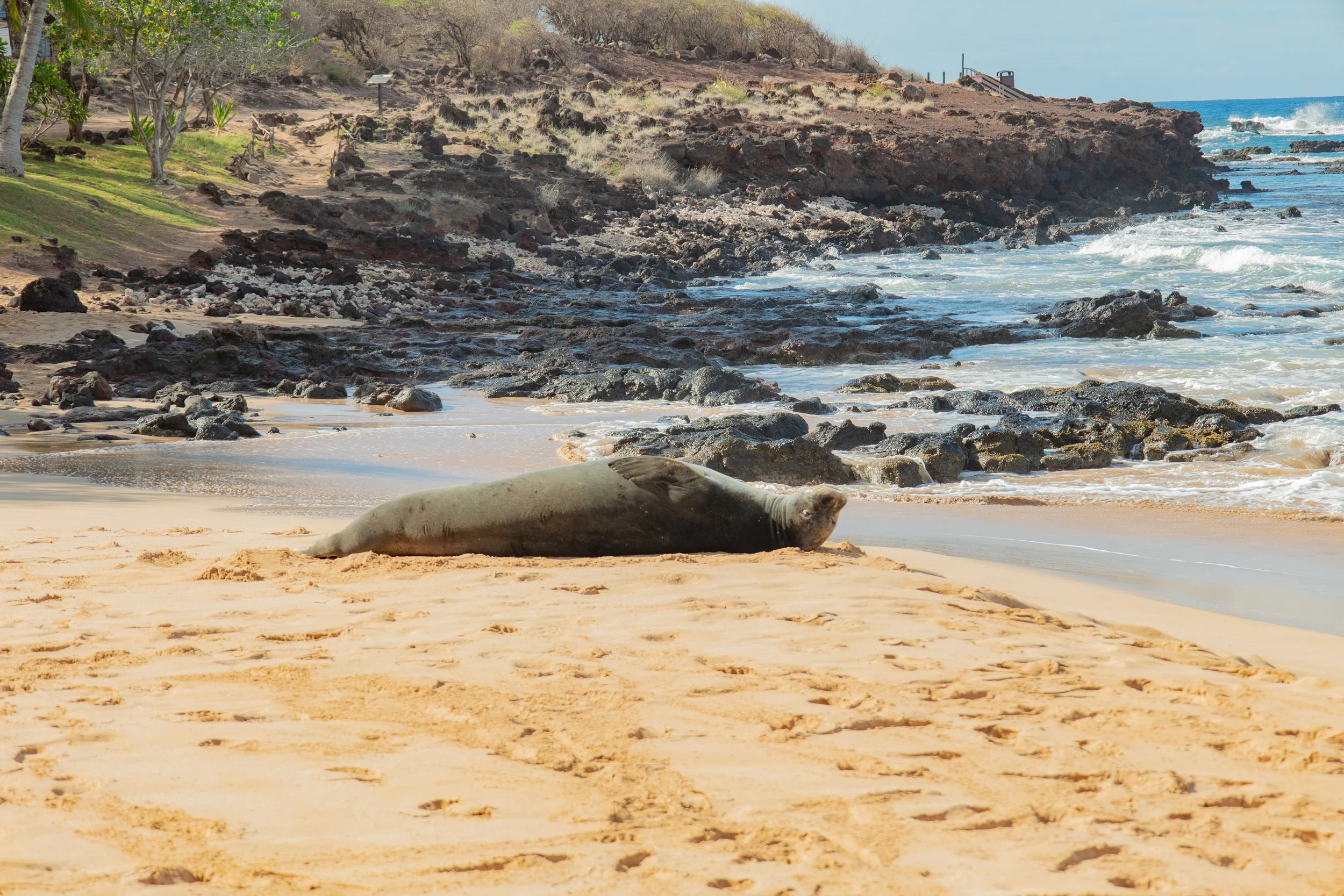
Trilogy follows NOAA marine wildlife viewing guidelines. All photos shown here were taken from a responsible distance. The Hawaiian monk seals in these images approached the photographer naturally — we did not chase, pursue, or disturb any monk seals.
These animals spend about two-thirds of their time at sea, diving and foraging along reefs and the seafloor.
Their diet includes:
Reef fish
Octopus and squid
Eels
Crabs, shrimp, and lobster
Most hunting happens near the seafloor where prey hide under sand or rock.
Despite their size and strength in the water, monk seals are known for being solitary and quiet animals, often traveling alone or resting independently on beaches.

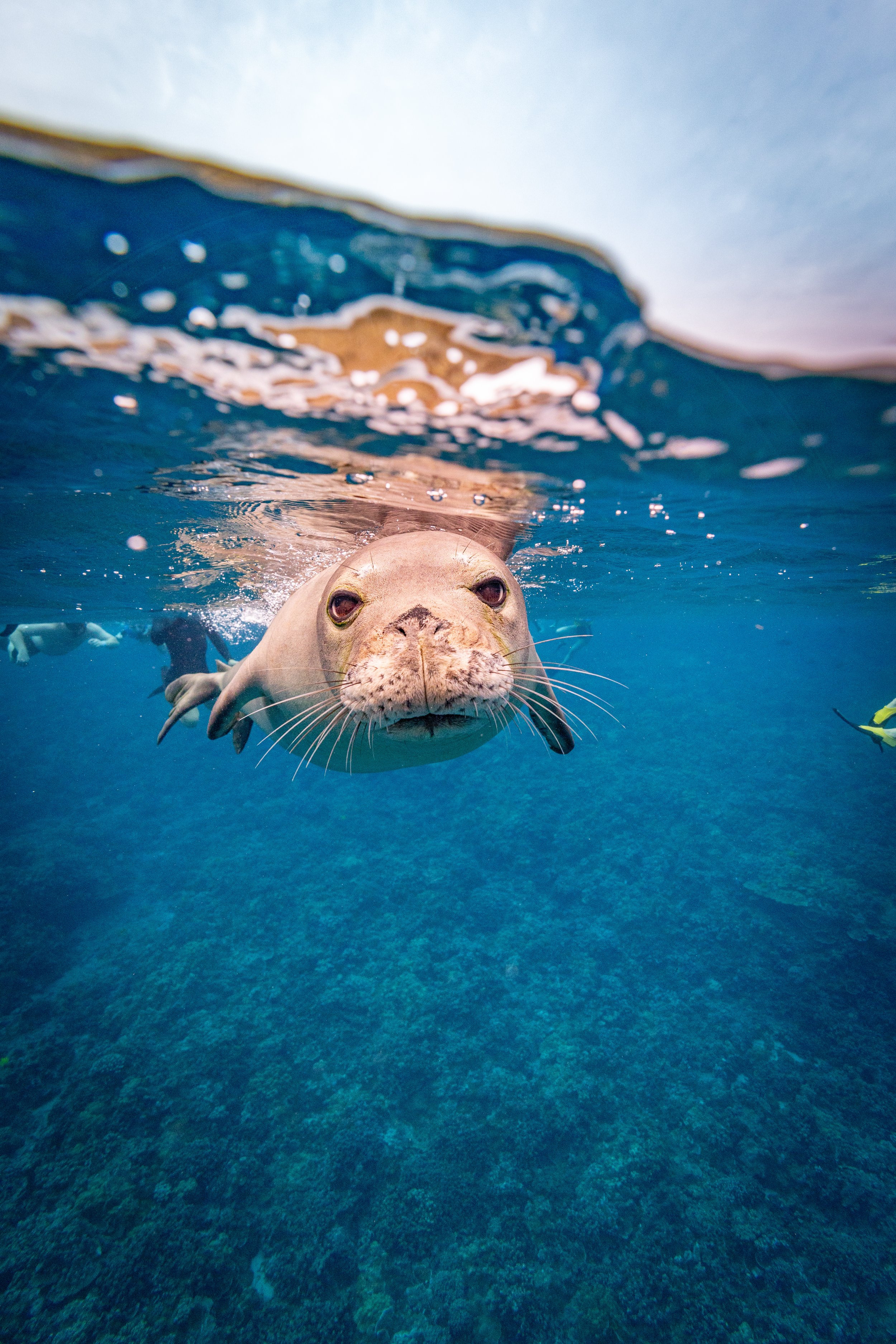
Trilogy follows NOAA marine wildlife viewing guidelines. All photos shown here were taken from a responsible distance. The Hawaiian monk seals in these images approached the photographer naturally — we did not chase, pursue, or disturb any monk seals.
Life Cycle: From Pup to Ocean Explorer
Each year, female monk seals give birth to a single pup on sandy beaches across the islands.
A few remarkable details about monk seal pups:
Newborn pups are covered in soft black fur.
Mothers nurse them for about five to six weeks while remaining on shore.
During that time, mothers fast and lose a significant amount of body weight.
Once the pup is weaned, the mother returns to sea and the young seal begins learning how to hunt and survive on its own.
Monk seals can live more than 30 years, though many do not reach that age due to environmental pressures.
Threats Facing Monk Seals
Several challenges continue to affect monk seal survival.
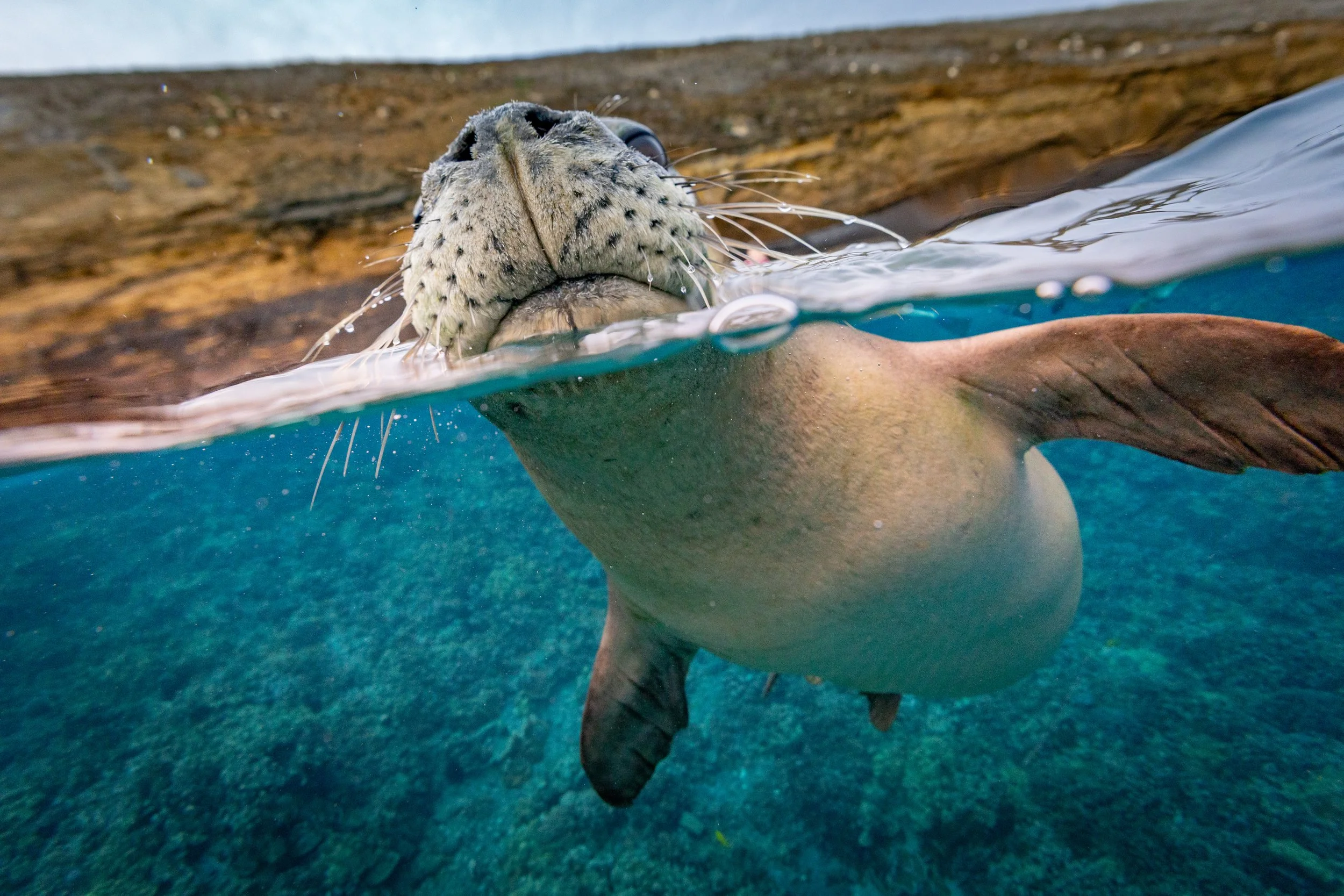
Trilogy follows NOAA marine wildlife viewing guidelines. All photos shown here were taken from a responsible distance. The Hawaiian monk seals in these images approached the photographer naturally — we did not chase, pursue, or disturb any monk seals.
Key threats include:
Marine debris and fishing gear
Monk seals have some of the highest rates of entanglement among seals worldwide.
Limited food availability
Young seals sometimes struggle to find enough prey in certain areas.
Human disturbance on beaches
Repeated disturbance can cause seals to abandon resting or pupping sites.
Disease and pollution
Runoff and introduced pathogens can affect monk seal health.
The good news: conservation efforts are helping. Careful monitoring, medical care for injured seals, debris removal, and public education are all part of the recovery strategy.
If You See a Monk Seal on Maui
@sailtrilogy This Hawaiian monk seal is one of the most endangered seal species in the world, and only found in Hawaii. Although they come ashore to rest and warm up, underwater is where they feel most at home🌊 seeing one in the wild is rare, and always on their terms🦭 #sailtrilogy #seals #monkseal #hawaiianmonkseal #maui ♬ Flowers - SoundAudio
Seeing a monk seal resting on a beach or cruising through the water is an unforgettable moment. The most important thing we can do is give them space.
Responsible viewing guidelines include:
Stay at least 50 feet (15 meters) away
Never touch, feed, or approach a seal
Keep dogs leashed and well away from the animal
Avoid loud noise or crowding
Allowing monk seals to rest without disturbance is one of the simplest ways we can practice mālama kai — caring for the ocean.
Hawaiian monk seals are naturally curious, and in the water they may occasionally swim over to check you out. If that happens, enjoy the moment from a respectful distance and never attempt to touch or interact with the seal. On Maui, monk seals may also haul out on sandy beaches to rest, warm themselves in the sun, or care for a pup. While they may appear to be sleeping, this quiet time on shore helps them recover after long foraging dives.
A Living Part of Hawaiʻi’s Ocean Story
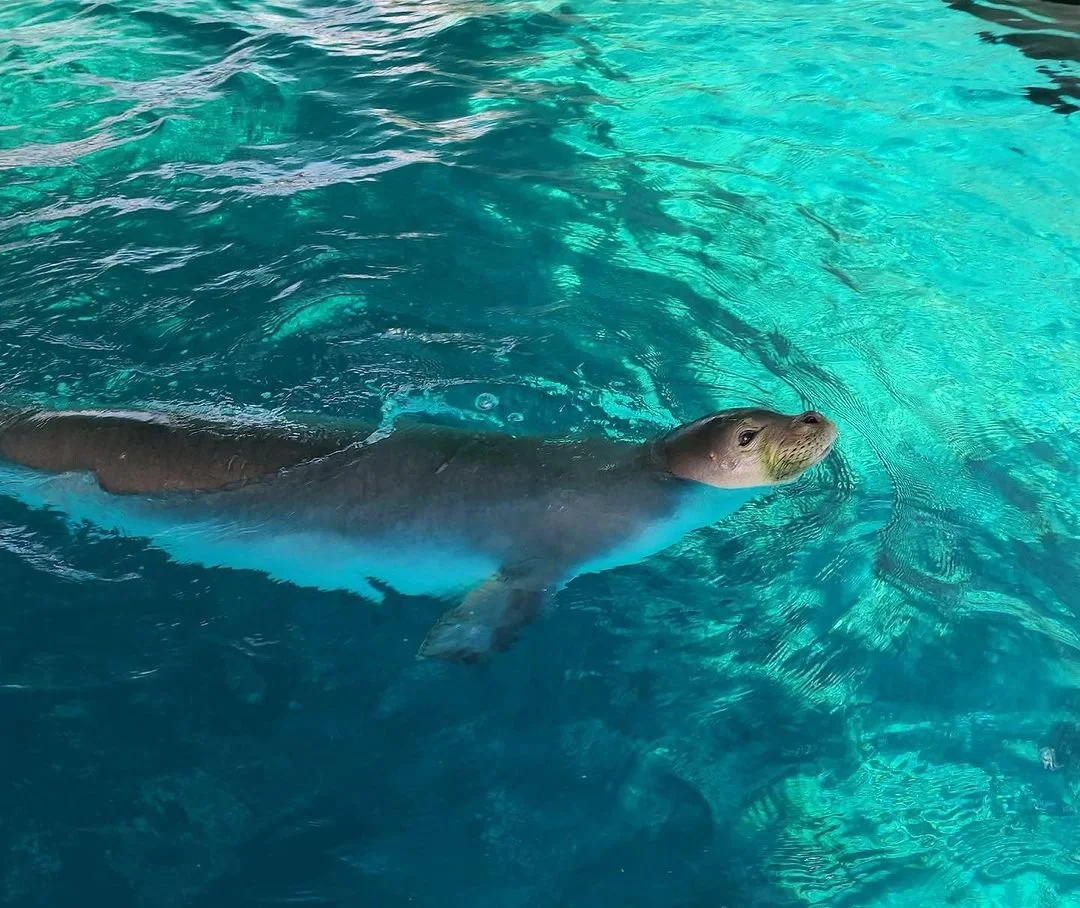
Trilogy follows NOAA marine wildlife viewing guidelines. All photos shown here were taken from a responsible distance. The Hawaiian monk seals in these images approached the photographer naturally — we did not chase, pursue, or disturb any monk seals.
The Hawaiian monk seal is more than a rare animal. It’s a reminder that the ocean around the islands is still alive with species found nowhere else.
Every time a monk seal pup is born, every time one returns to a beach on Maui, it signals that conservation and community stewardship are making a difference.
Out here on the water, we’re reminded daily that the ocean connects everything — people, wildlife, and place.
And when a monk seal surfaces nearby, it’s one of those quiet moments that stays with you long after the sails come down.