A Closer Look at Maui’s Whale Nursery: Why Humpbacks Raise Their Young Here
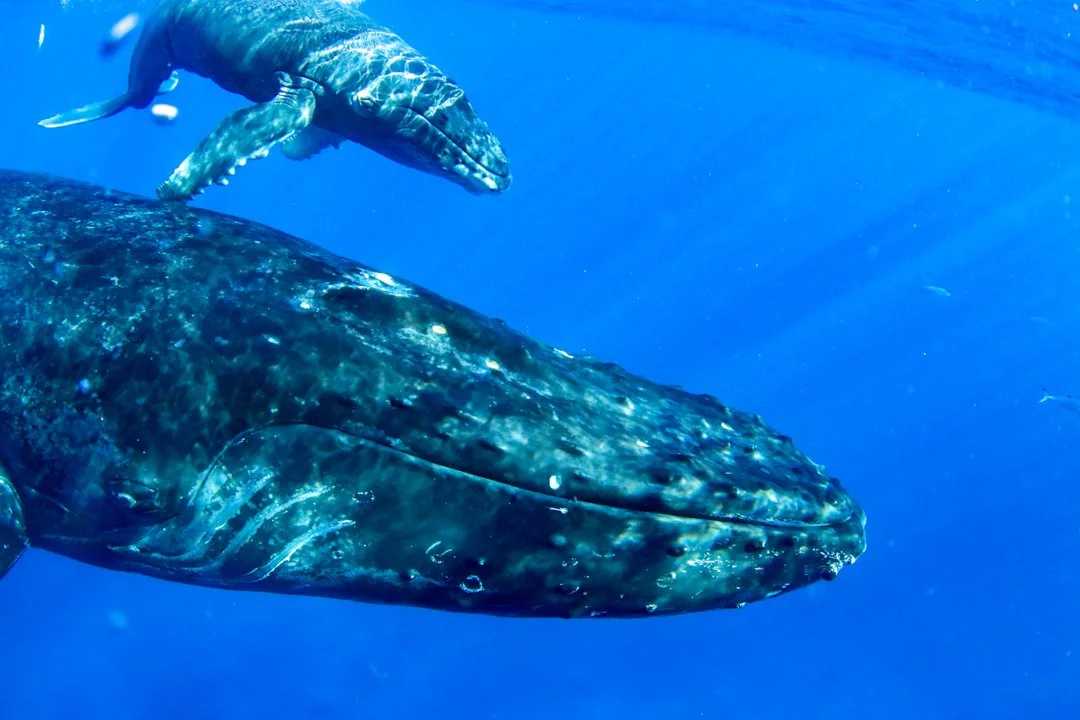
Every winter, humpback whales travel thousands of miles from the cold, food-rich waters of Alaska to the warm channels surrounding Maui. They arrive tired, lean, and focused — not on feeding, but on something far more important: raising the next generation.
So why here? What is it about Maui that makes it one of the most important humpback whale nurseries in the world?
The answer lies in a rare combination of geography, water temperature, and protection — conditions that Maui offers better than almost anywhere else in the Pacific.
warm water matters: especially for newborn calves
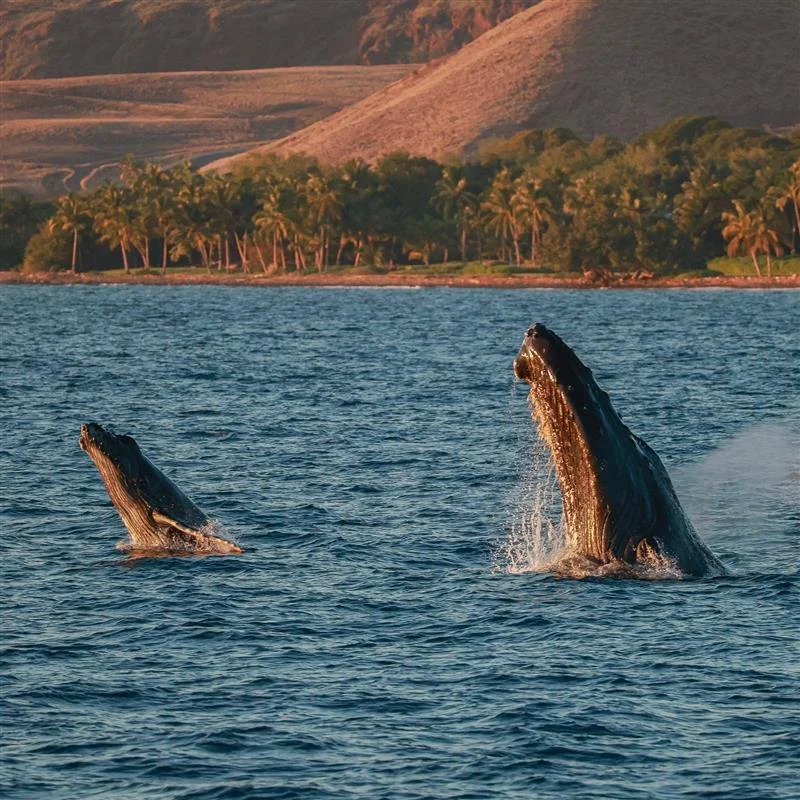
Humpback whale calves are born without the thick layers of blubber adults rely on to stay warm. In colder waters, a newborn would lose body heat quickly and struggle to survive.
Maui’s winter ocean temperatures — typically in the mid-70s Fahrenheit — provide a gentle environment where calves can conserve energy and focus on growth. Warm water also allows mothers to spend less time regulating their own body temperature and more time nursing and protecting their young.
For whales that have just completed one of the longest migrations of any mammal on Earth, that energy savings matters.
why the ‘au’au channel is so important
When we talk about Maui’s whale nursery, we’re really talking about one remarkable stretch of ocean: the ʻAuʻau Channel. This 8–9-mile-wide ribbon of water between Maui and Lānaʻi—sheltered to the north by Molokaʻi and to the south by Kahoʻolawe—isn’t just a corridor; it’s a habitat shaped by land and sea in a way that’s perfect for humpbacks in winter.
In Hawaiian, ʻAuʻau means “to take a bath” — an apt name for water that feels warmer, calmer, and more protected than much of the open ocean.
Here’s what makes this channel so well-suited to raising young whales:
• Moderate Depths Keep Conditions Gentler
Unlike deep open ocean channels, the ʻAuʻau sits relatively shallow — generally around 100–250 feet deep, depending on location within the channel.
Shallow waters matter because they limit powerful open-sea swells and currents, creating a more predictable, less turbulent environment for calves learning to surface, dive, and navigate.
• Shelter from Surrounding Islands
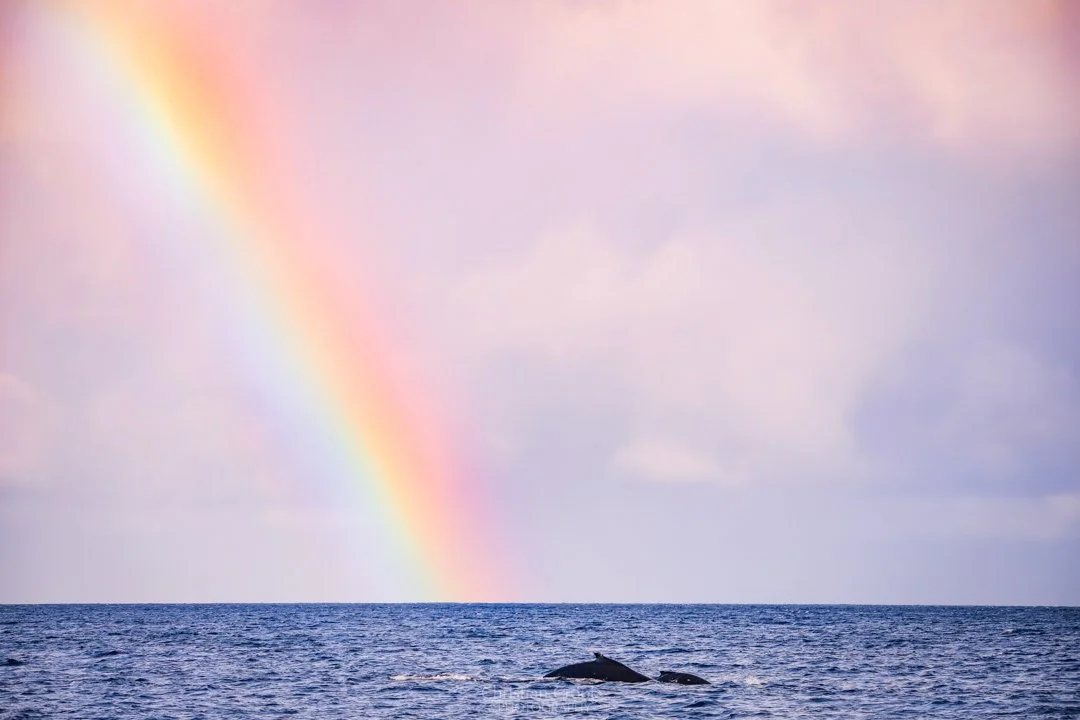
The channel is cradled between four islands — Maui, Molokaʻi, Lānaʻi, and Kahoʻolawe — providing a natural buffer against large Pacific swells and strong winds.
This protective geography helps keep tenders (mothers) and calves closer to the surface with fewer disruptive waves, making it easier for calves to breathe and rest.
• Calm, “Bath-Like” Conditions
That sheltering effect is part of why ʻauʻau translates to “to take a bath.” The waters here genuinely feel calmer than much of the surrounding Pacific, and that matters when a newborn whale — still mastering its first breaths and the rhythm of dives — is trying to grow strong.
• Warm Water for Energy Conservation
The relatively warm winter temperatures in the ʻAuʻau Channel help calves conserve energy. Newborn humpbacks rely entirely on their mothers’ milk for fuel, so wasting energy fighting rough seas or cold water isn’t an option. Condition here favors steady growth and stable rest.
• A Gathering Place Within the Sanctuary
This channel falls within the Hawaiian Islands Humpback Whale National Marine Sanctuary, which protects critical breeding and calving habitat extending from shallow nearshore areas to deeper offshore waters.
That protection — both regulatory and natural — makes the ʻAuʻau Channel a dependable winter home where mother whales can focus on their calves without as many external threats.
a place designed for learning
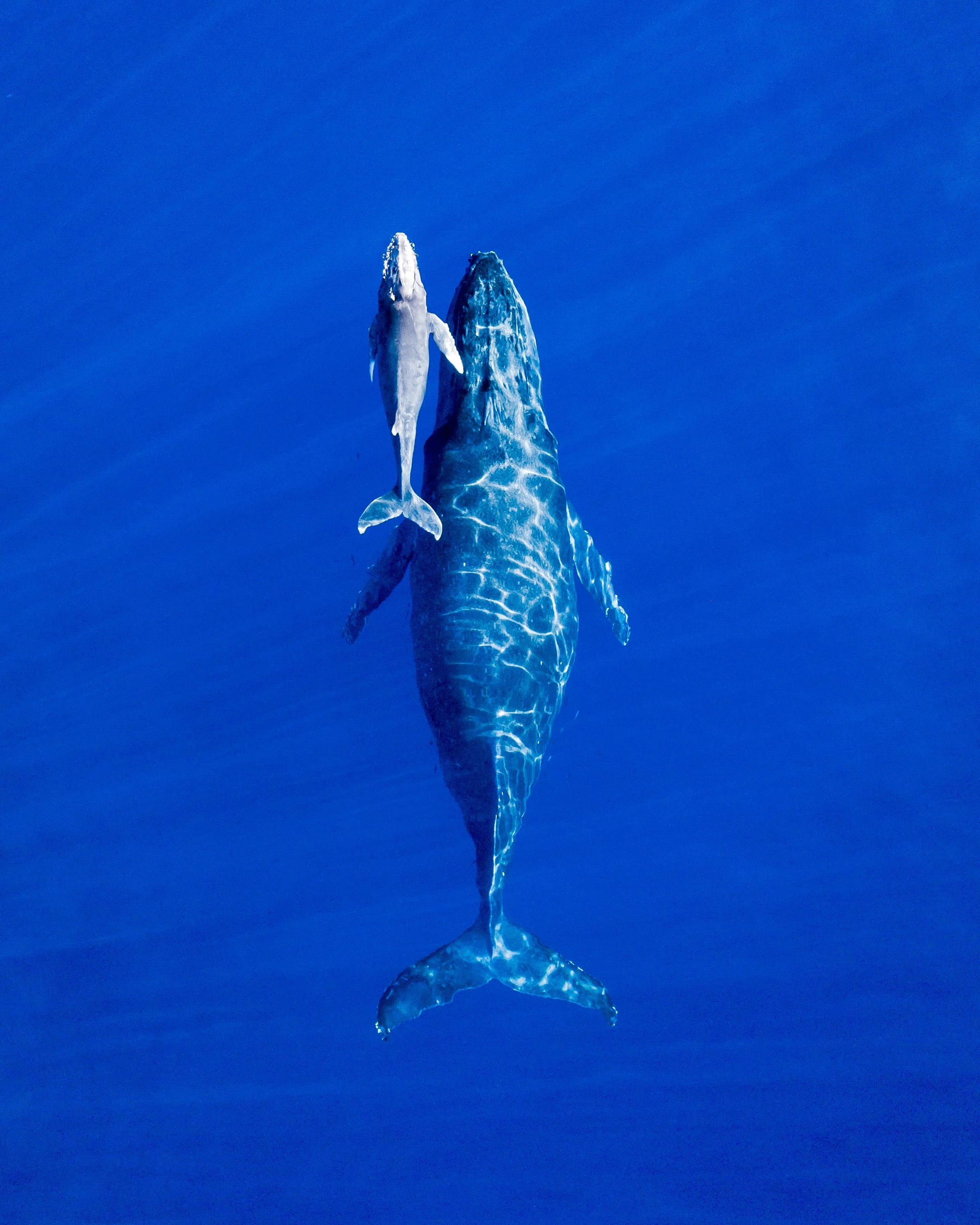
Once calves are born in the ʻAuʻau Channel, the work of growing begins immediately. These calm waters become a classroom — one without urgency, where mistakes are survivable and learning happens gradually.
Here, calves practice the basics:
Surfacing and timing their breaths
Making short, shallow dives before attempting deeper ones
Staying close to their mothers while navigating currents and swell
You’ll often see this learning unfold at the surface. A calf might roll clumsily, lift a pectoral fin, or attempt a small dive while its mother waits nearby, steady and watchful. These moments aren’t play for play’s sake — they’re part of a developmental phase that depends on patience, protection, and space.
The ʻAuʻau Channel provides all three, making it a fantastic place for moms to raise their young and for us to watch the whales in action!
why mothers choose rest over feeding
One of the most surprising truths about whale season in Maui is that humpback whales don’t come here to eat. The warm, clear waters that make the ʻAuʻau Channel ideal for calves don’t support the dense krill and small fish humpbacks rely on during summer months in Alaska.
Instead, mothers fast while they’re here, living off energy stored during months of feeding in colder waters. That choice only makes sense if the environment offers something more valuable than food.
For humpbacks, that value is survival.
By giving birth and raising calves in protected waters like the ʻAuʻau Channel, mothers increase the odds that their calves will grow strong enough to make the long migration north. The return of humpbacks to Maui year after year tells us this strategy works.
a nursery shared— and a responsiBILITY carried
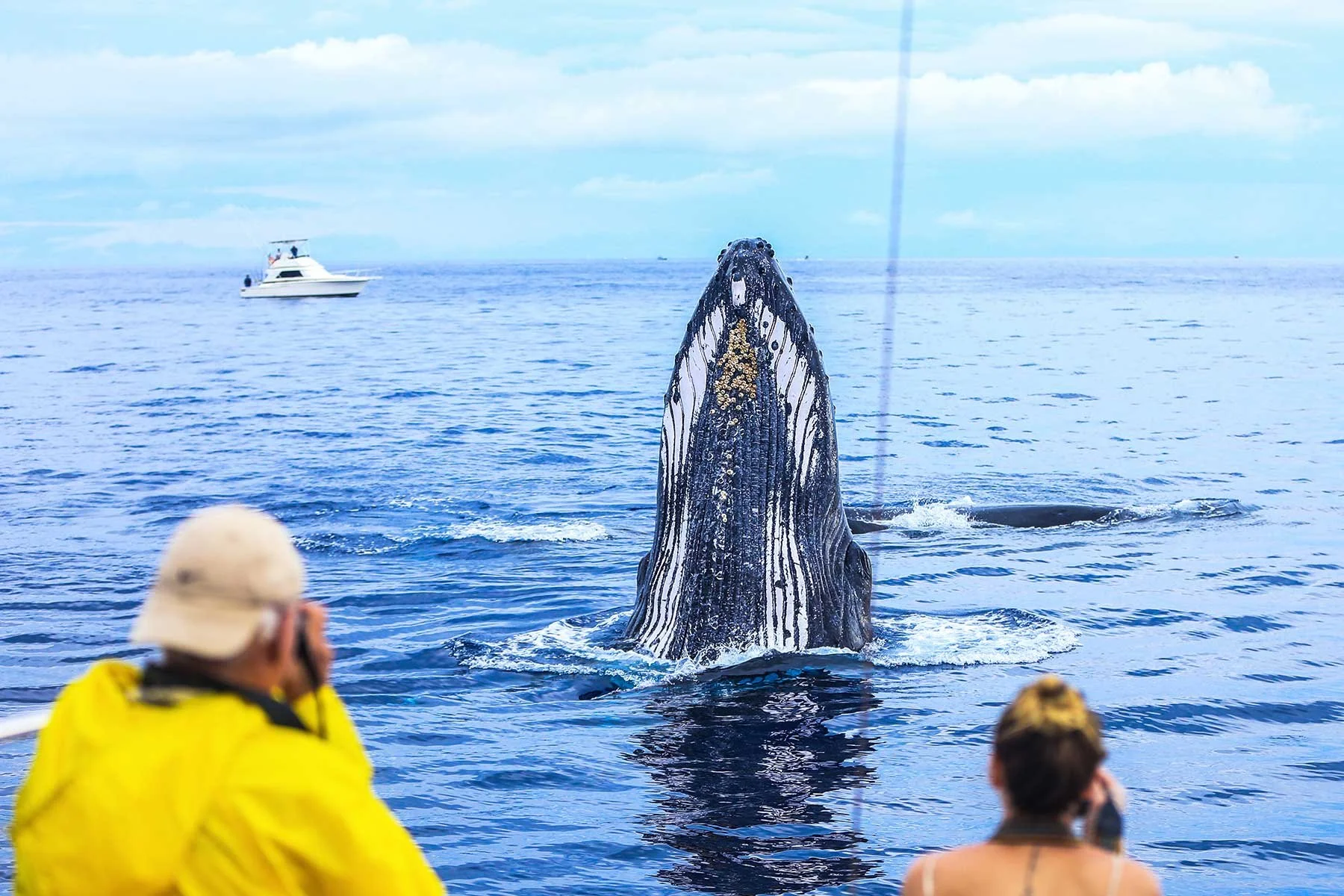
A humpback whale coming up to one of our boats.
Because the ʻAuʻau Channel is such an important nursery, it’s also a place that requires care. These waters are not a stage — they are a home during one of the most vulnerable chapters of a whale’s life.
Responsible whale watching here means:
Allowing whales to choose how close they come
Avoiding pressure on mothers and calves
Moving with patience rather than urgency
At Trilogy, we see our role clearly. We’re not here to chase moments — we’re here to witness them. Sailing when conditions allow, keeping respectful distances, and reading the behavior of whales before making decisions on the water are all part of honoring the nursery we’re fortunate to visit.
why whale watching feels different here
There are many places in the world where you can see whales. But seeing them in a nursery carries a different weight.
In the ʻAuʻau Channel, every slow surface, every quiet breath, every calf tucked close to its mother reflects a choice made across thousands of miles of ocean. These waters represent rest after migration, safety after risk, and preparation for a journey still to come.
Whether you’re sailing with us in the soft light of morning or as the sun settles low over the channel, you’re sharing space with whales at a pivotal moment in their lives. That understanding changes the way you watch — and often, the way you remember it long after you’ve returned to shore.