The Story Behind Molokini Crater and Why Itʻs one of Hawaiʻiʻs Most Unique Snorkel Spots
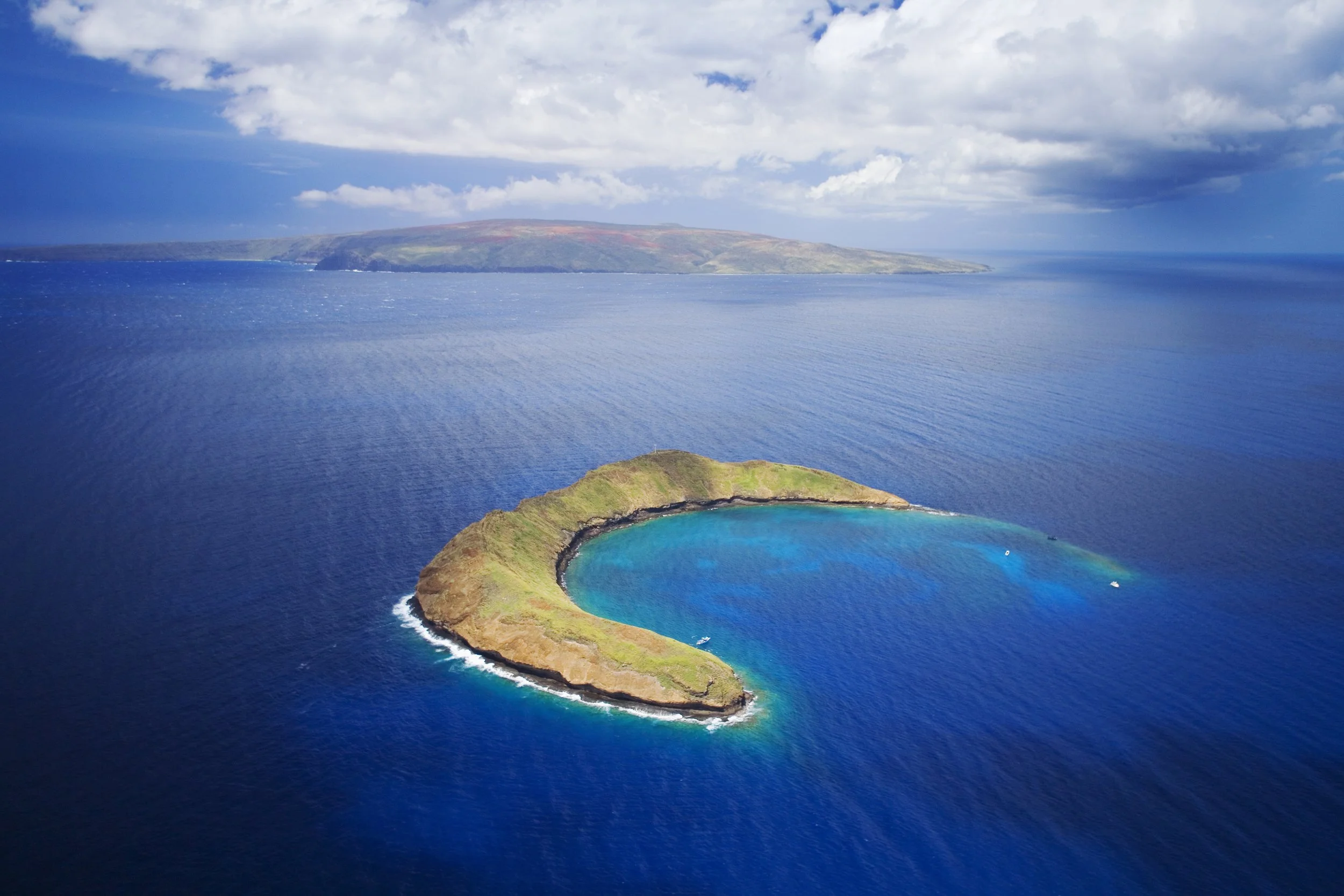
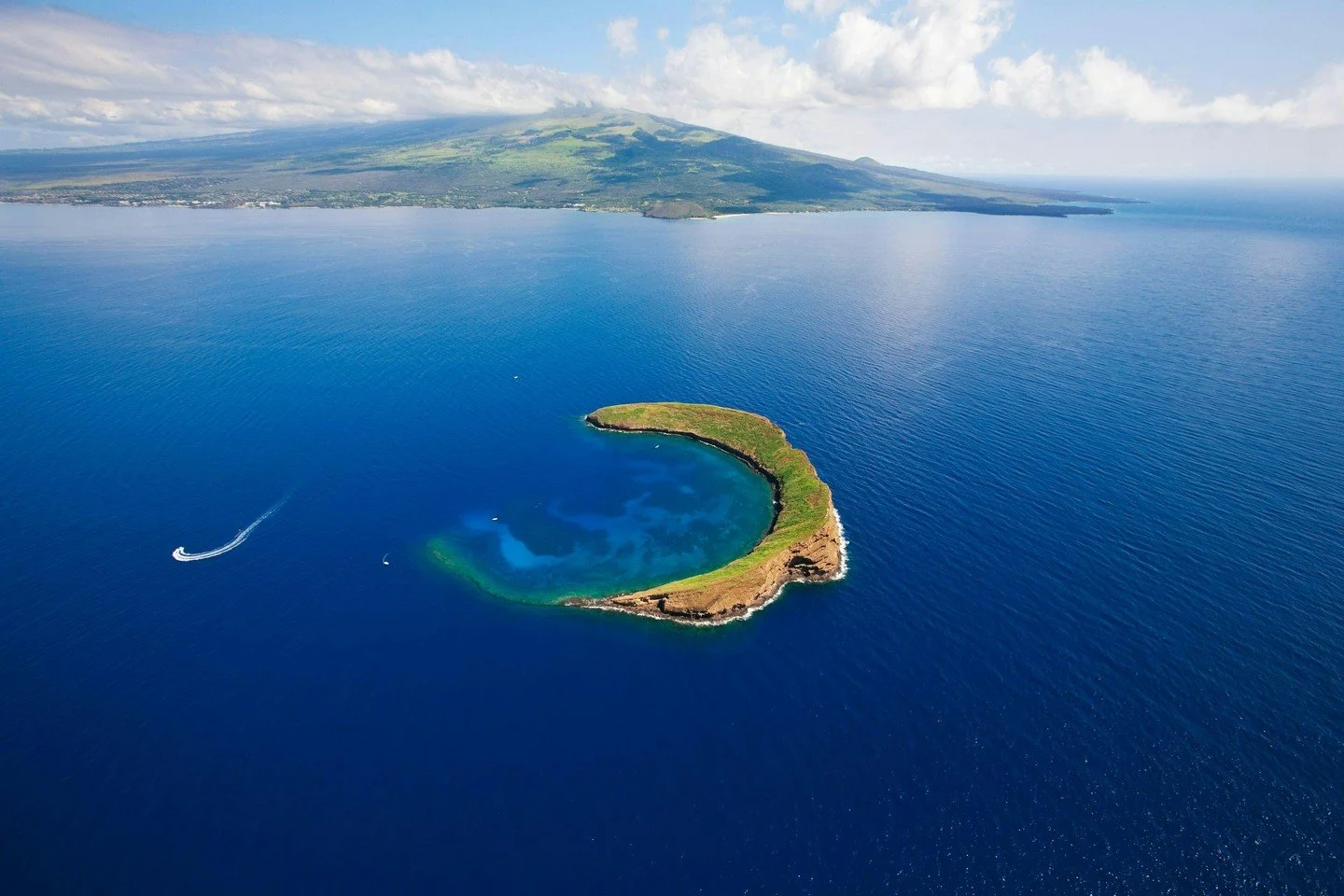
A few miles offshore from the southern coastline of Maui sits a crescent of rock rising from the sea. At first glance it looks almost sculpted — a half-moon rim of volcanic stone holding a calm basin of clear blue water.
That place is Molokini Crater, and its story begins long before anyone ever slipped on a snorkel mask.
Understanding how Molokini formed helps explain why the snorkeling there feels different from almost anywhere else in Hawaiʻi.
﹌﹌﹌﹌
🌋
﹌﹌﹌﹌ 🌋
A Volcano Beneath the Ocean
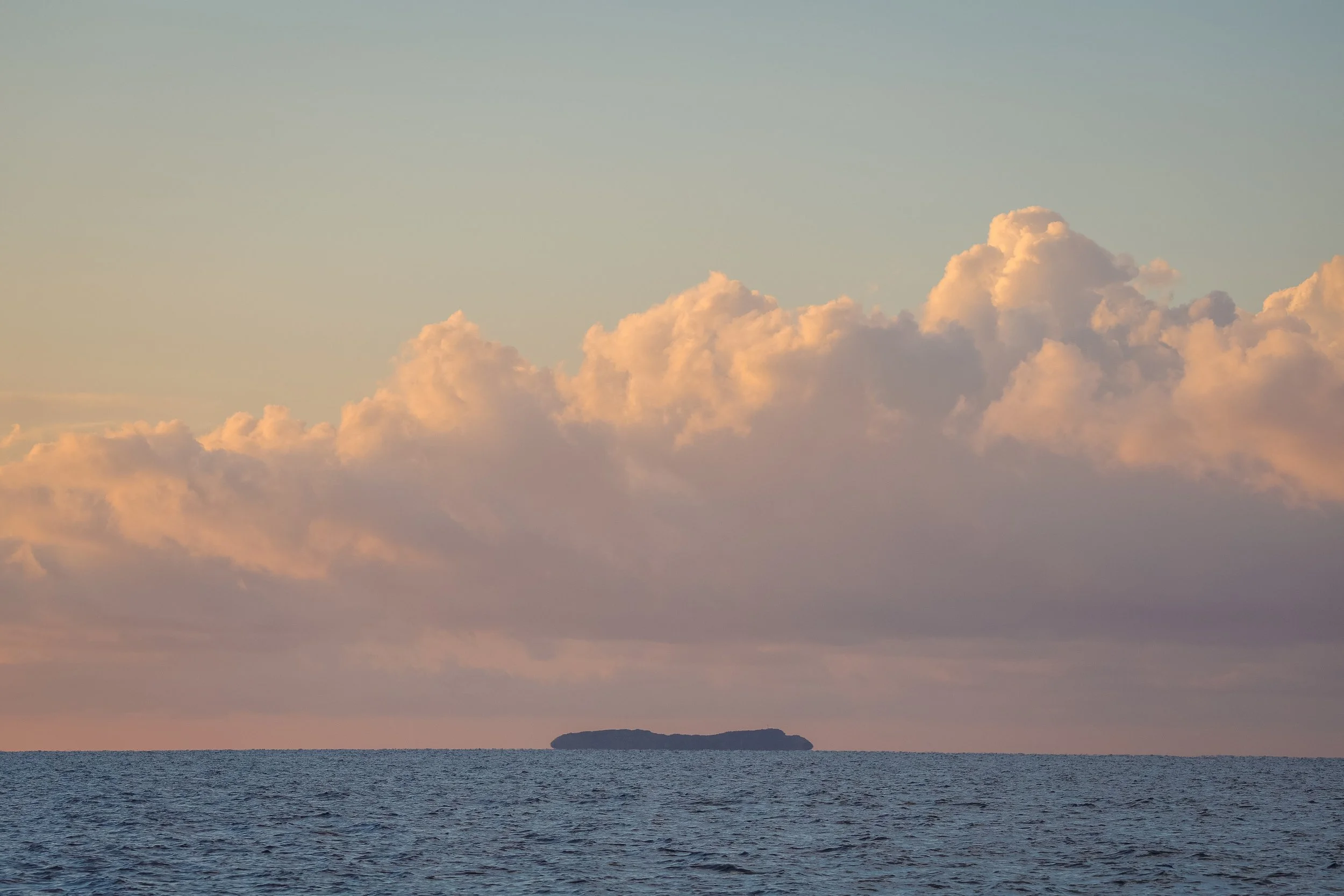
Molokini began with the same forces that created the Hawaiian Islands themselves — volcanic activity from the Hawaiian hotspot deep beneath the Pacific Ocean.
About 230,000 years ago, magma rising through the Earth’s crust erupted in shallow ocean water along the volcanic system connected to Haleakalā.
When extremely hot magma meets cold seawater, the water flashes instantly to steam. The rapid expansion creates explosive eruptions that blast ash, rock fragments, and volcanic glass into the air. Over time, those materials pile up to form a tuff cone — a steep-sided volcanic crater made from compacted ash and debris.
Originally, Molokini would have looked like a complete circular cone rising above the ocean. But the ocean had other plans.
Why Molokini Is Crescent-Shaped
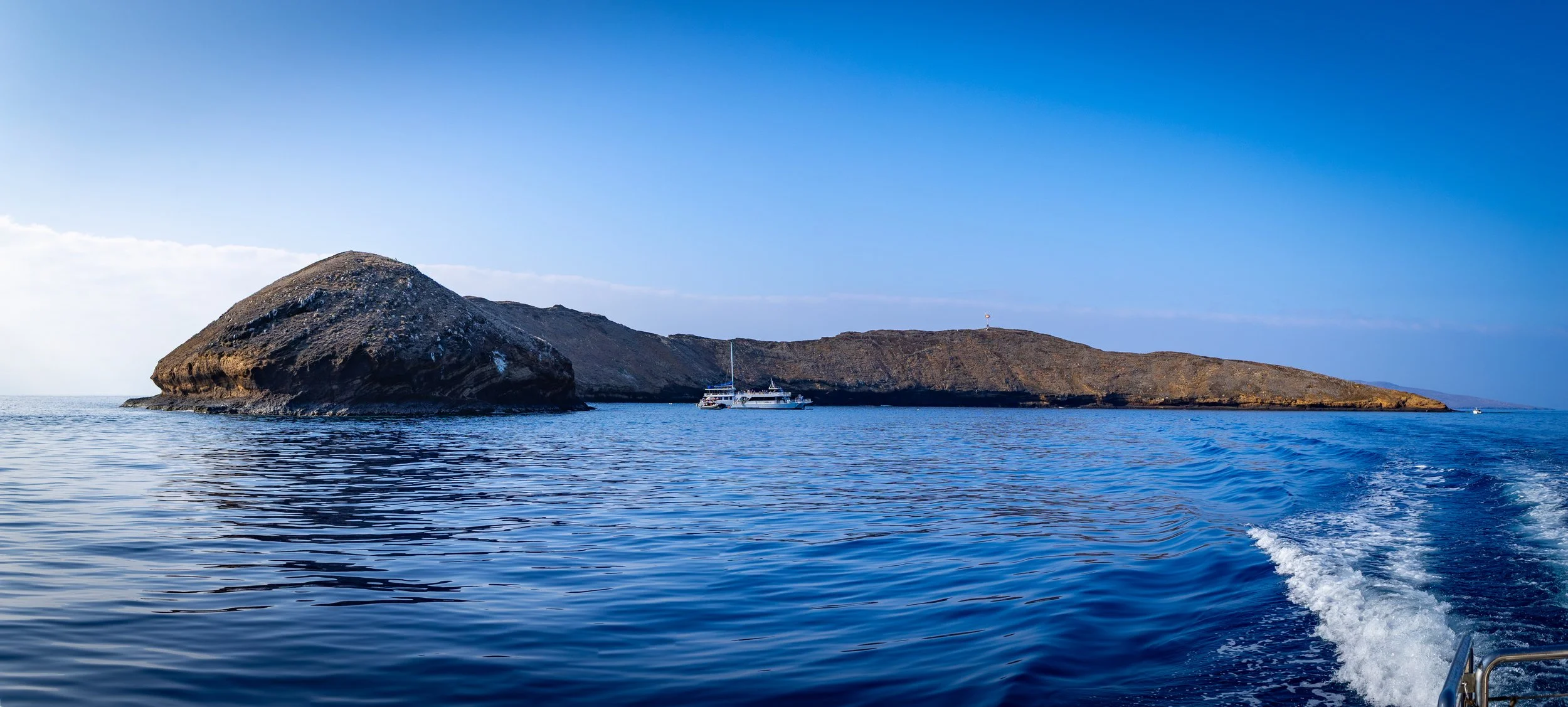
Over thousands of years, powerful waves and currents slowly eroded one side of the crater. The exposed outer wall facing the open ocean gradually collapsed and wore away, leaving the dramatic crescent shape we see today.
What remains is essentially half of a volcanic crater, with the curved rim forming a natural barrier around the inner basin.
That simple geological accident created something rare: A partially submerged crater that naturally shelters the water inside
The debate on what to call it…
After learning how Molokini formed and why it now appears crescent-shaped, another question sometimes comes up: Is Molokini actually a volcanic crater?
The short answer is yes — but the exact wording depends on how precise you want to be.
Molokini formed when magma rising through the seafloor interacted with shallow ocean water. When hot magma met cold seawater, the water rapidly turned to steam, creating powerful explosions that shattered the magma into ash and rock fragments. These fragments settled around the eruption site, gradually building a circular ring of volcanic material above the ocean surface.
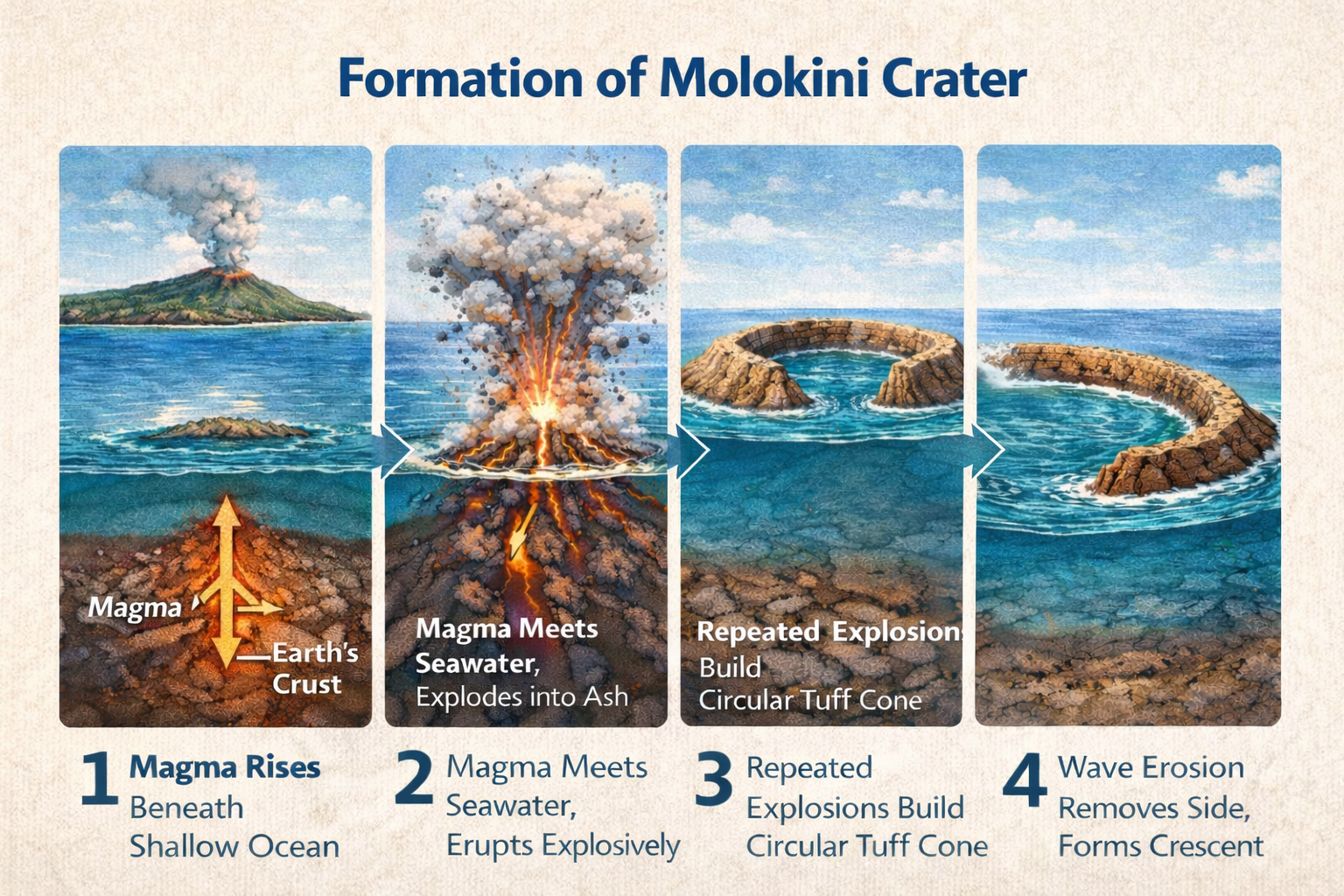
Geologists call this type of structure a tuff cone. Tuff cones form during explosive eruptions in shallow water, where magma and seawater interact to produce layers of volcanic ash and debris.
The explosions also excavated a crater inside the ring, which means Molokini contains both features: a tuff cone and a volcanic crater within it.
Because of this, some scientists prefer the more specific term “tuff cone” rather than simply “volcanic crater.” The formation process is different from what many people imagine when they think of a volcano. Instead of lava flows building a tall mountain, Molokini formed from repeated steam-driven explosions in shallow water.
In everyday conversation, though, calling Molokini a volcanic crater is still understandable. The more precise geological terms simply describe the unique way this remarkable island formed.
A Naturally Protected Marine World
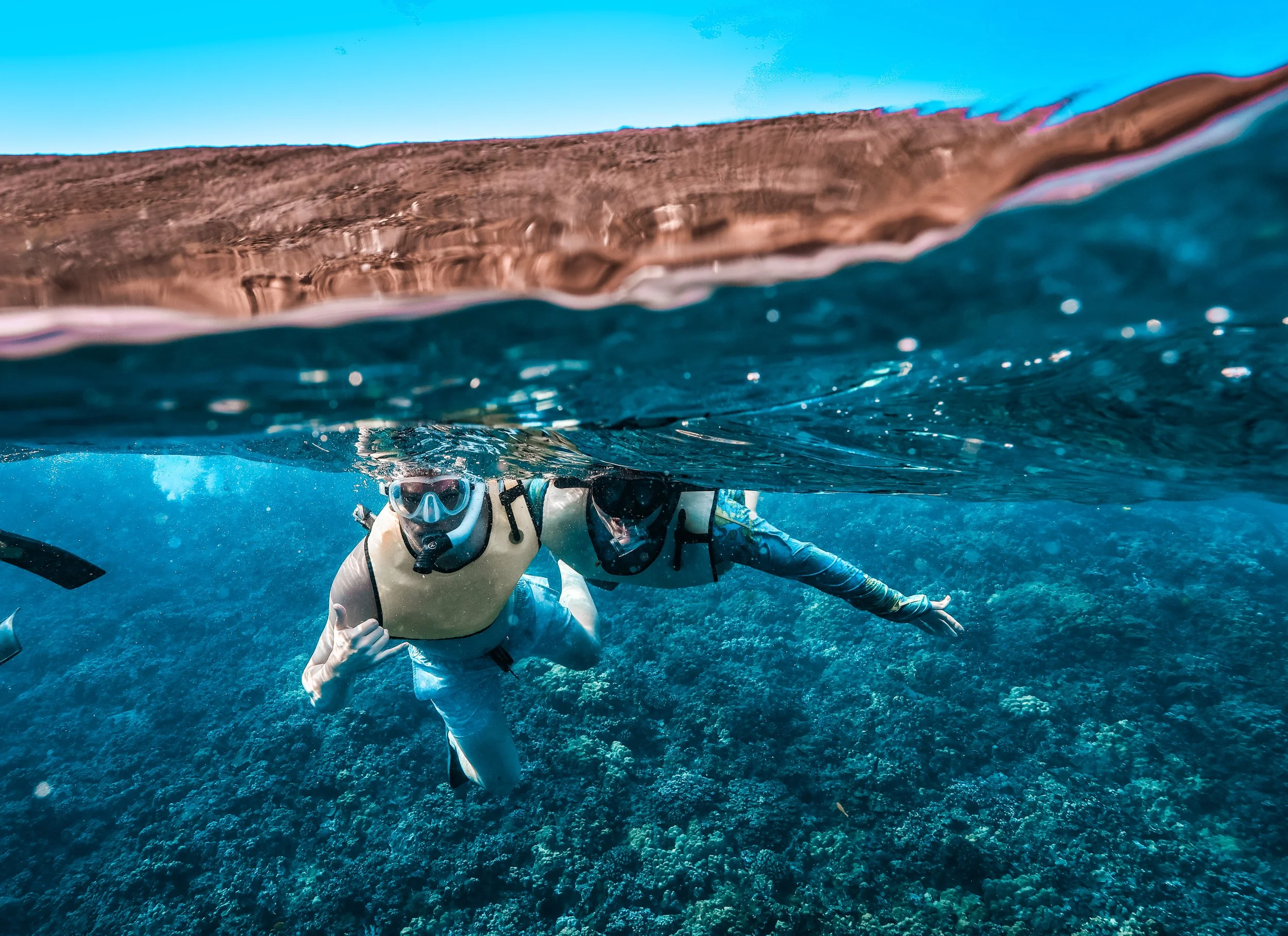
Guests snorkeling at Molokini Crater
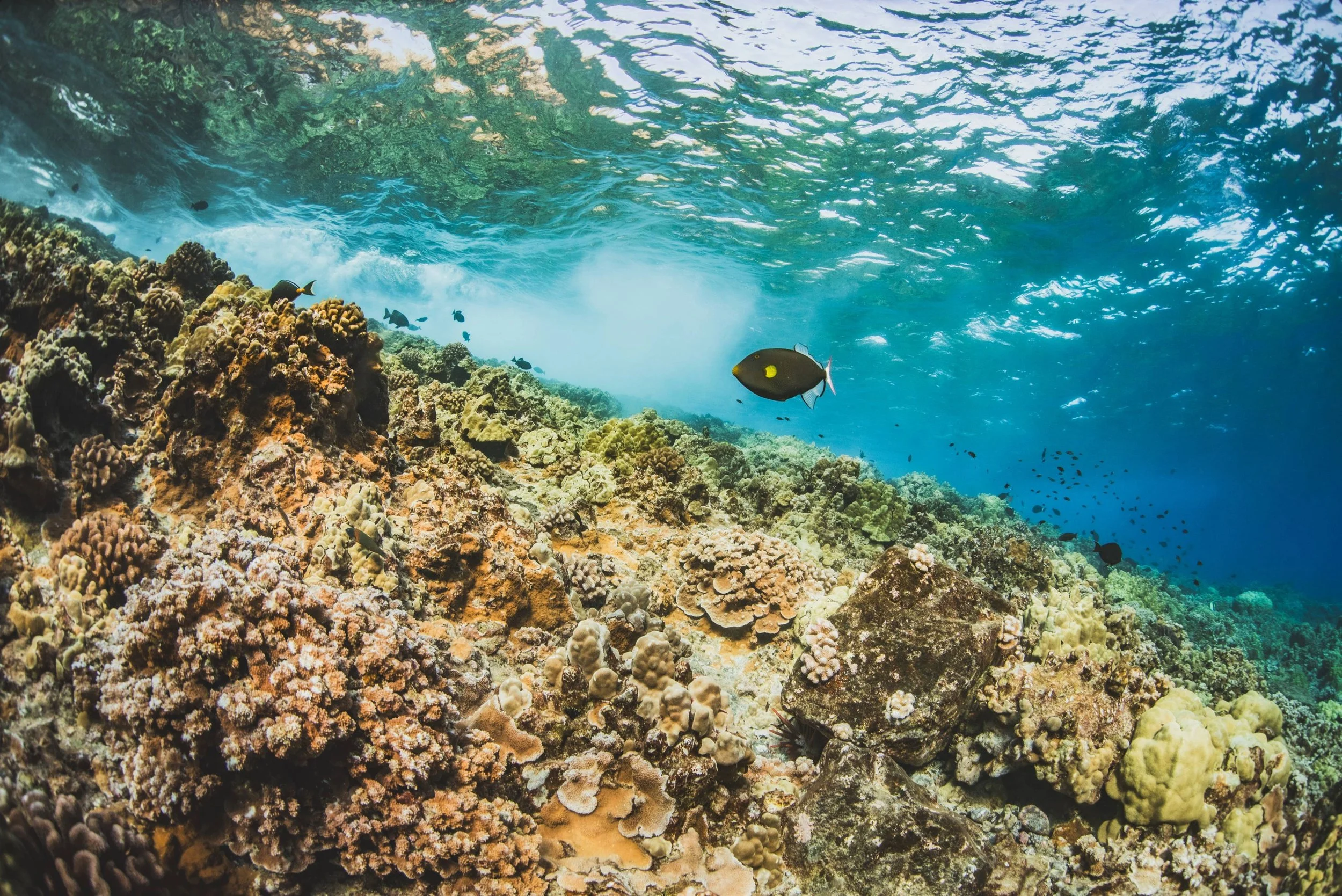
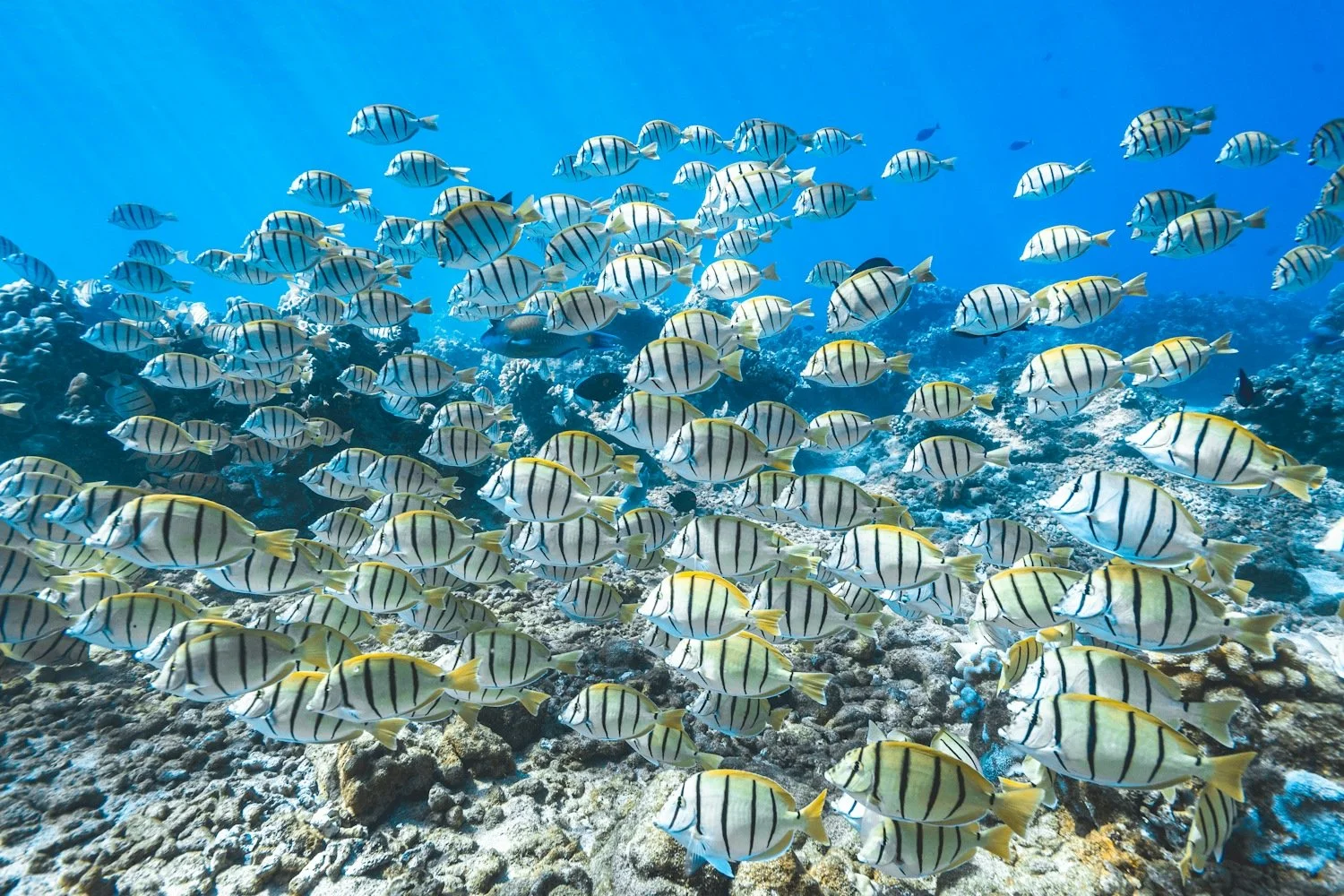
Fishes and Coral Reef at Molokiniʻs Crater
The unique shape of Molokini is the reason snorkeling there feels so special.
The curved crater wall blocks much of the ocean swell and wind, which often makes the inner basin calmer than surrounding waters.
Because the crater sits offshore in relatively deep water and away from sediment runoff from land, the water is also exceptionally clear. On many days, underwater visibility can reach 100–150 feet, allowing snorkelers to see coral structures and marine life with remarkable clarity.
These conditions create a place where the underwater landscape is easy to observe even from the surface.
A Living Reef Community
Molokini’s protected basin supports one of the most vibrant reef ecosystems on Maui. More than 250 species of reef fish have been recorded here, including many species found only in Hawaiian waters.
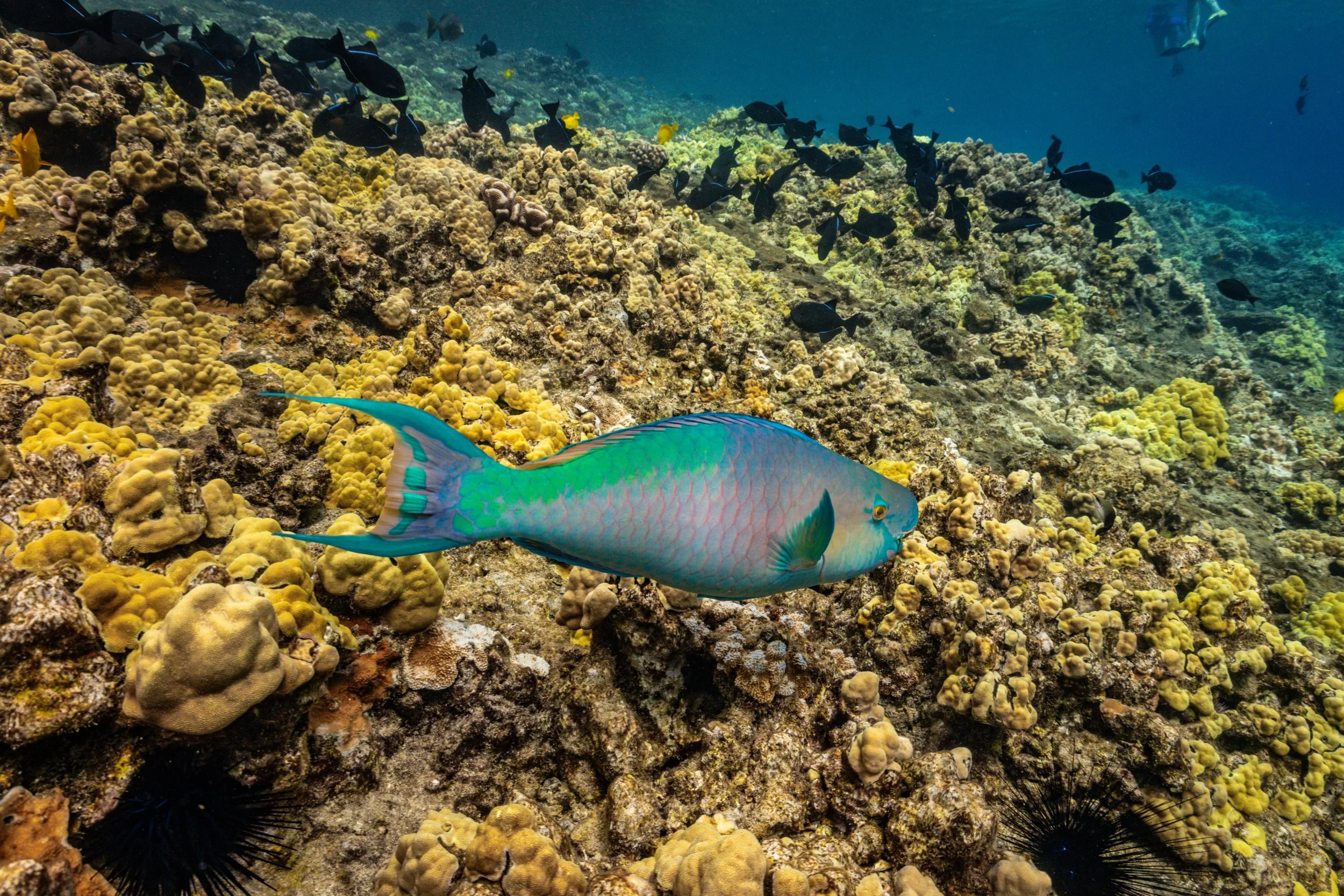
Parrotfish ('uhu)
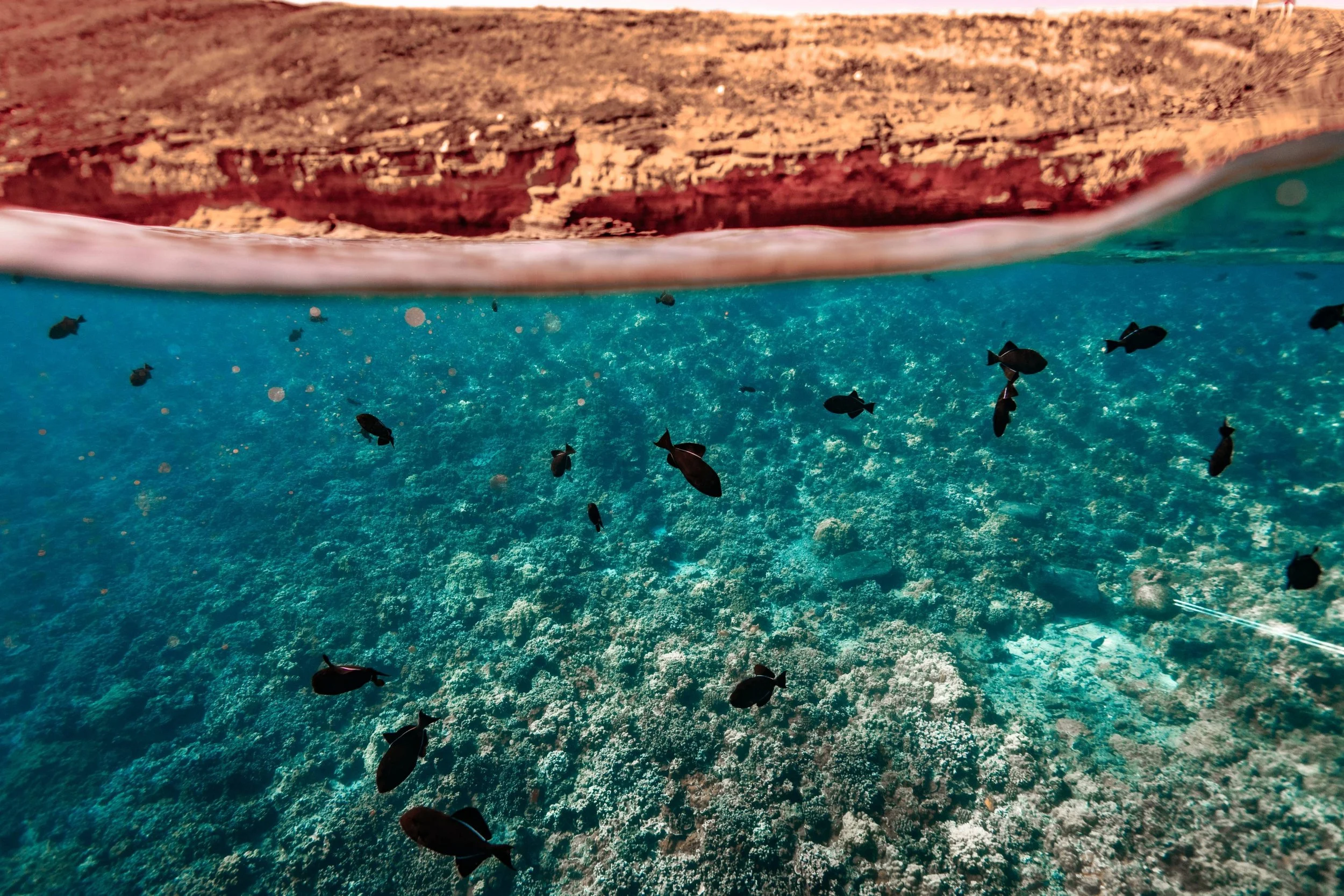
Black Triggerfish at Molokini Crater
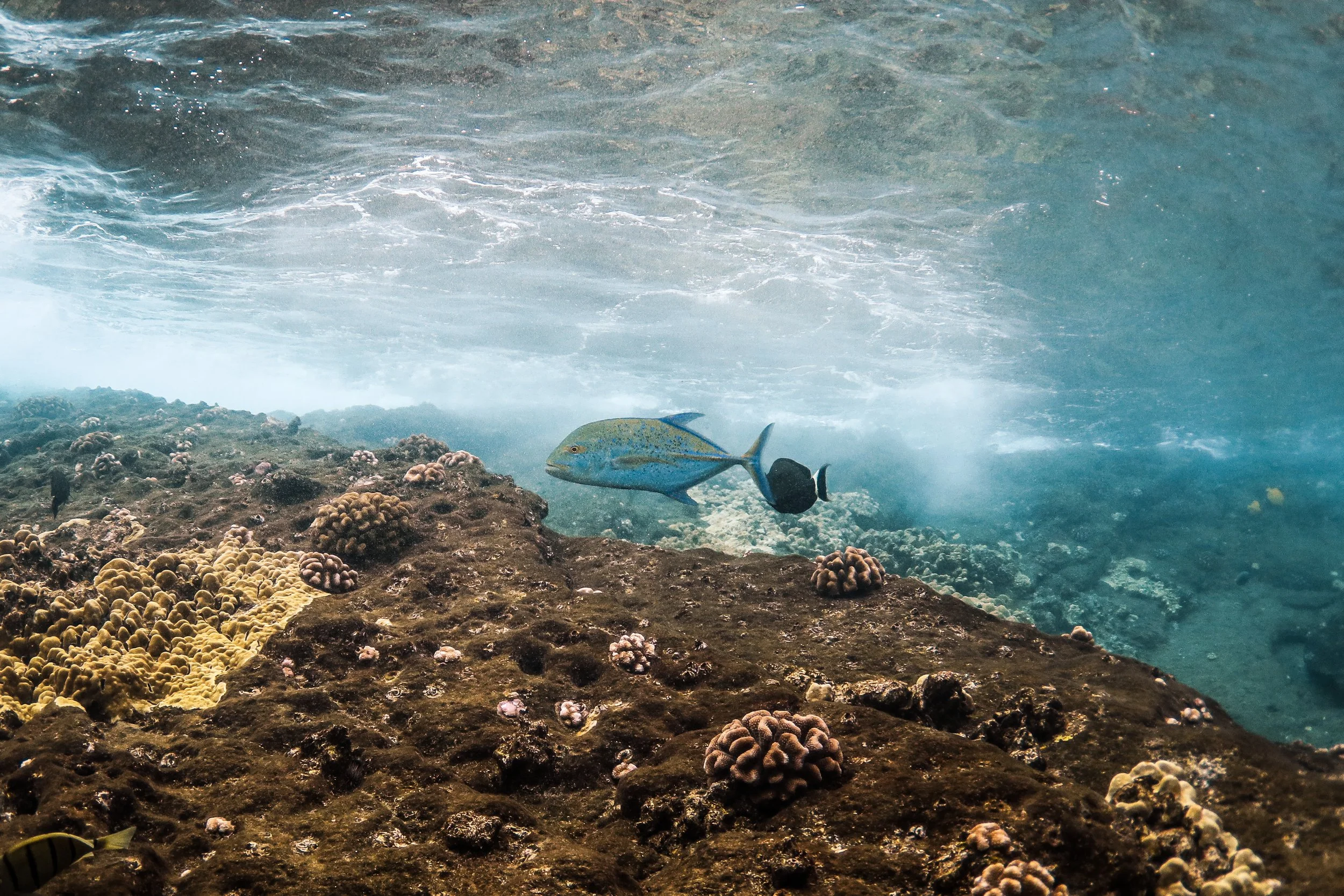
Bluefin Trevally (Omilu)
Inside the crescent, the reef slopes gradually through clear water where schools of reef fish move along coral heads and lava rock ledges. Snorkelers commonly see species like Yellow Tang, Parrotfish, Butterflyfish, and Moorish idols, along with groups of Surgeonfish, Goatfish, and different types of Trigger Fish weaving through the reef structure. Because the crater is protected as part of the Molokini Marine Life Conservation District, fishing and collecting marine life are restricted, which helps the reef community remain healthy and diverse.
But Molokini’s ecosystem isn’t shaped only by the shallow reef inside the crater.
Just beyond the rim lies a dramatic drop-off known locally as the Molokini backside, where the seafloor plunges thousands of feet into the deep Pacific. That deep water occasionally brings unexpected visitors close to the crater.
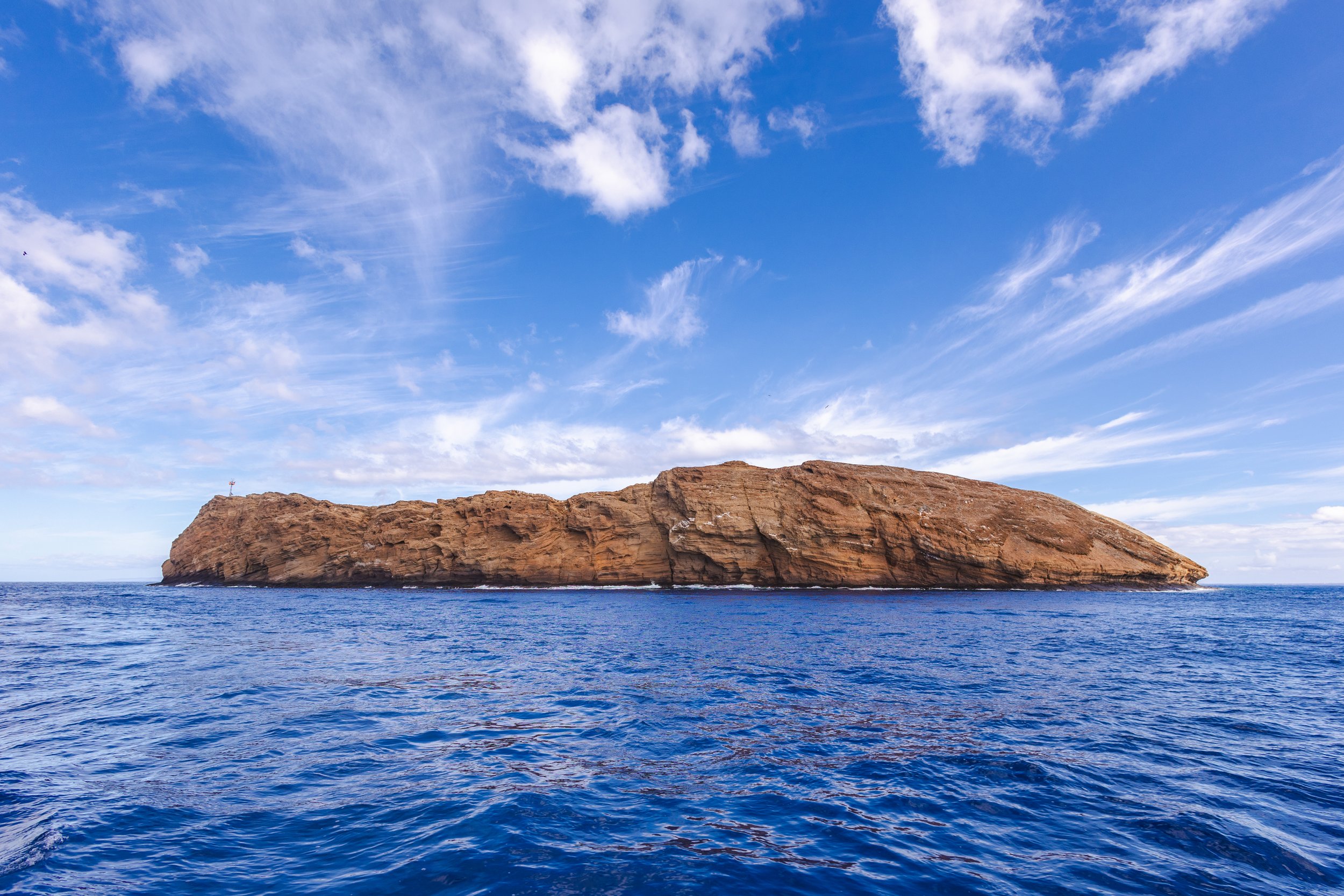
Backside of Molokini
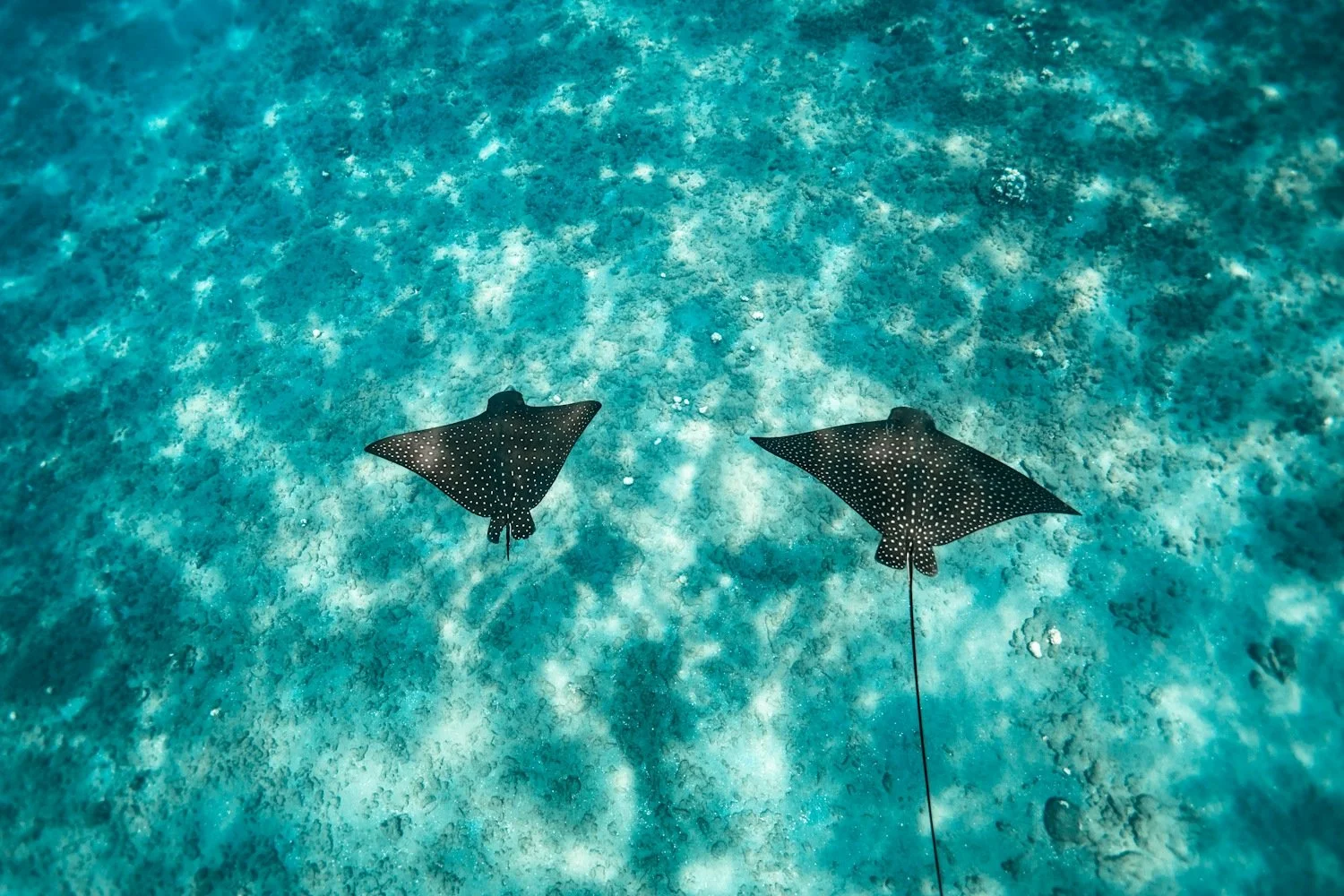
Most days the reef is filled with its resident fish species. Every once in a while, though, something remarkable appears along the outer wall or near the crater. Rare sightings have included animals such as Manta Rays, Eagle-Spotted Rays, Whale Sharks, and Hawaiian Monk Seals.
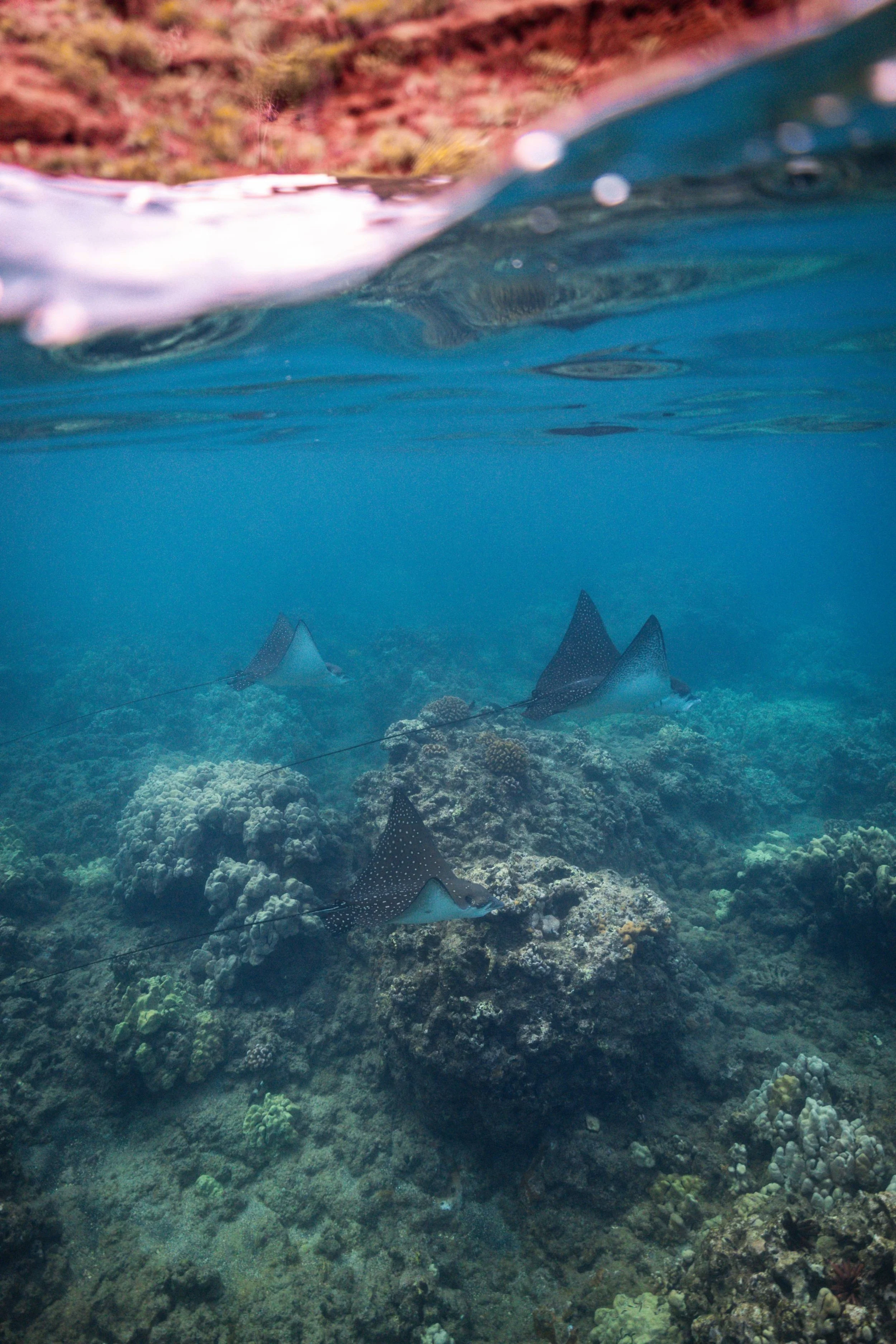
Eagle Spotted Rays swimming at Molokini
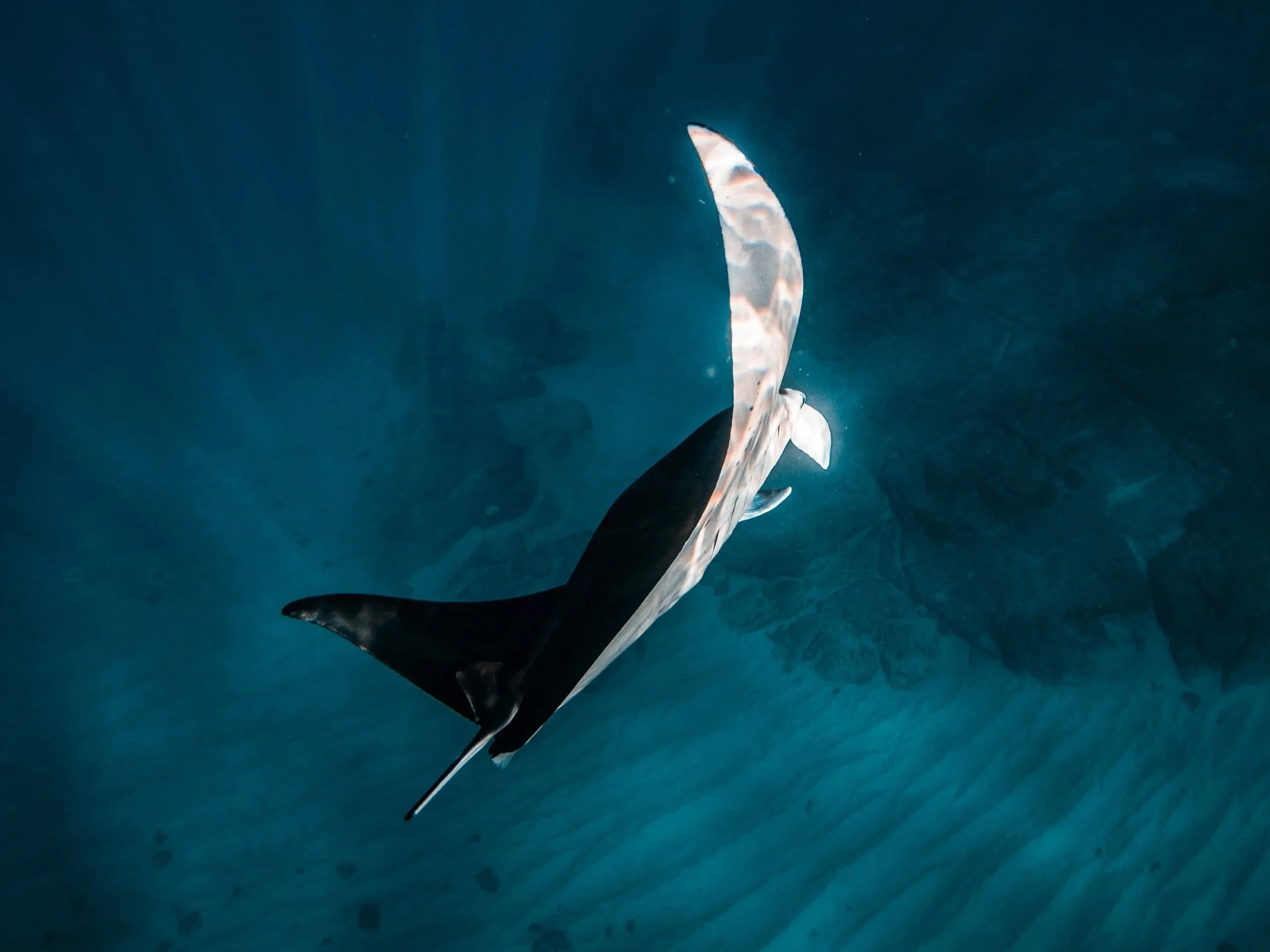
Manta Ray
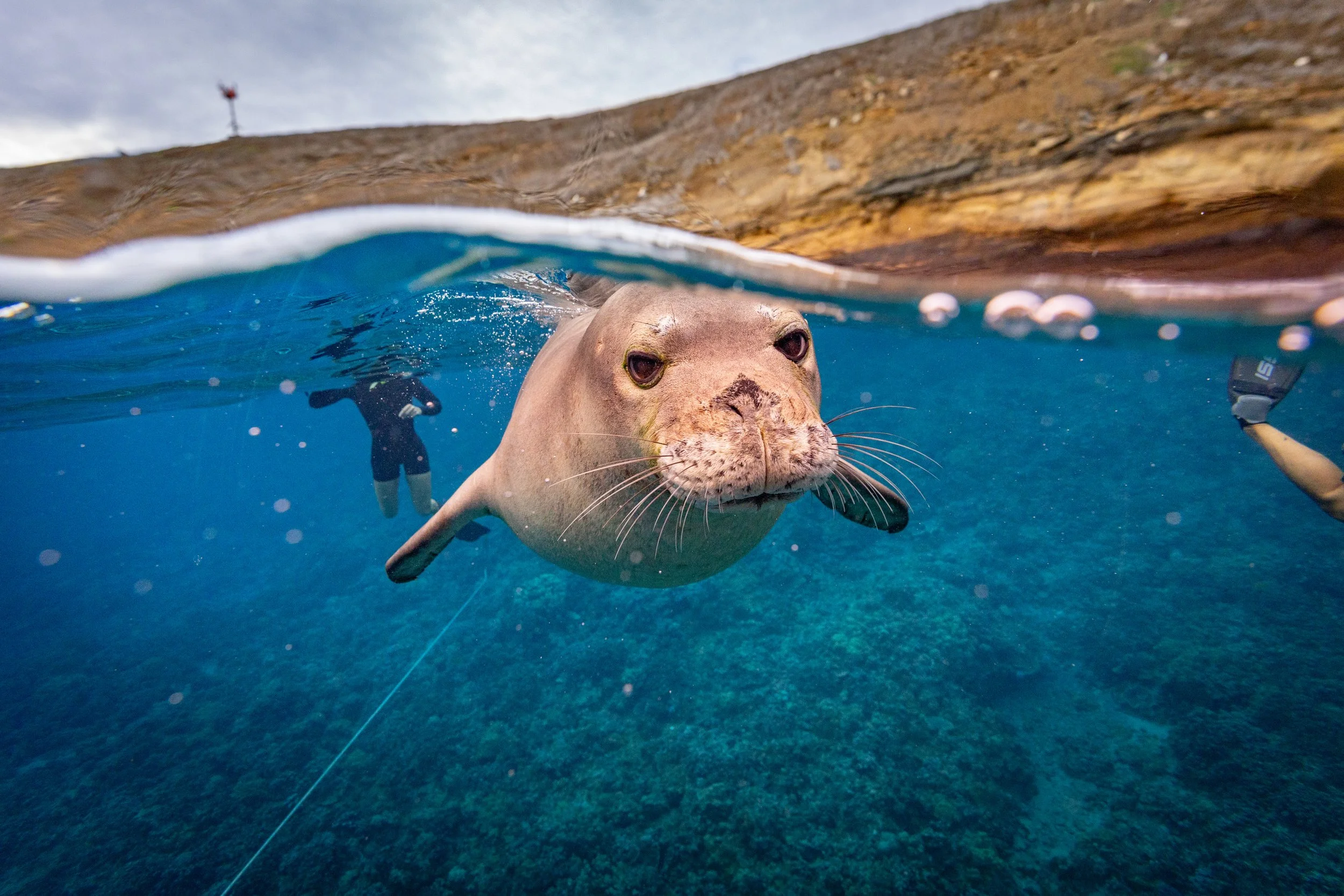
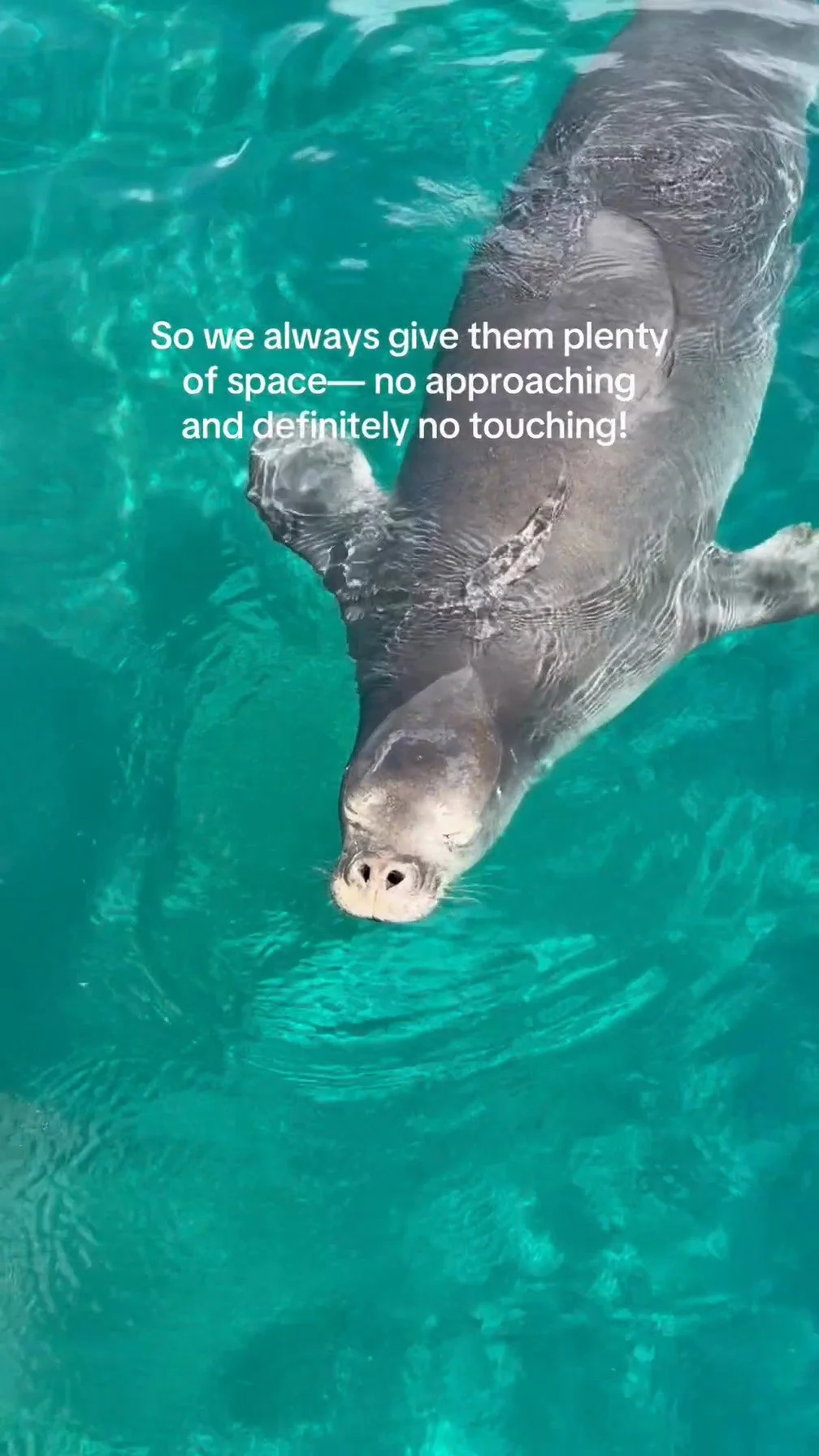
Hawaiian Monk Seal at Molokini Crater. Trilogy follows NOAA marine wildlife viewing guidelines. All photos shown here were taken from a responsible distance. The Hawaiian monk seals in these images approached the photographer naturally — we did not chase, pursue, or disturb any monk seals.
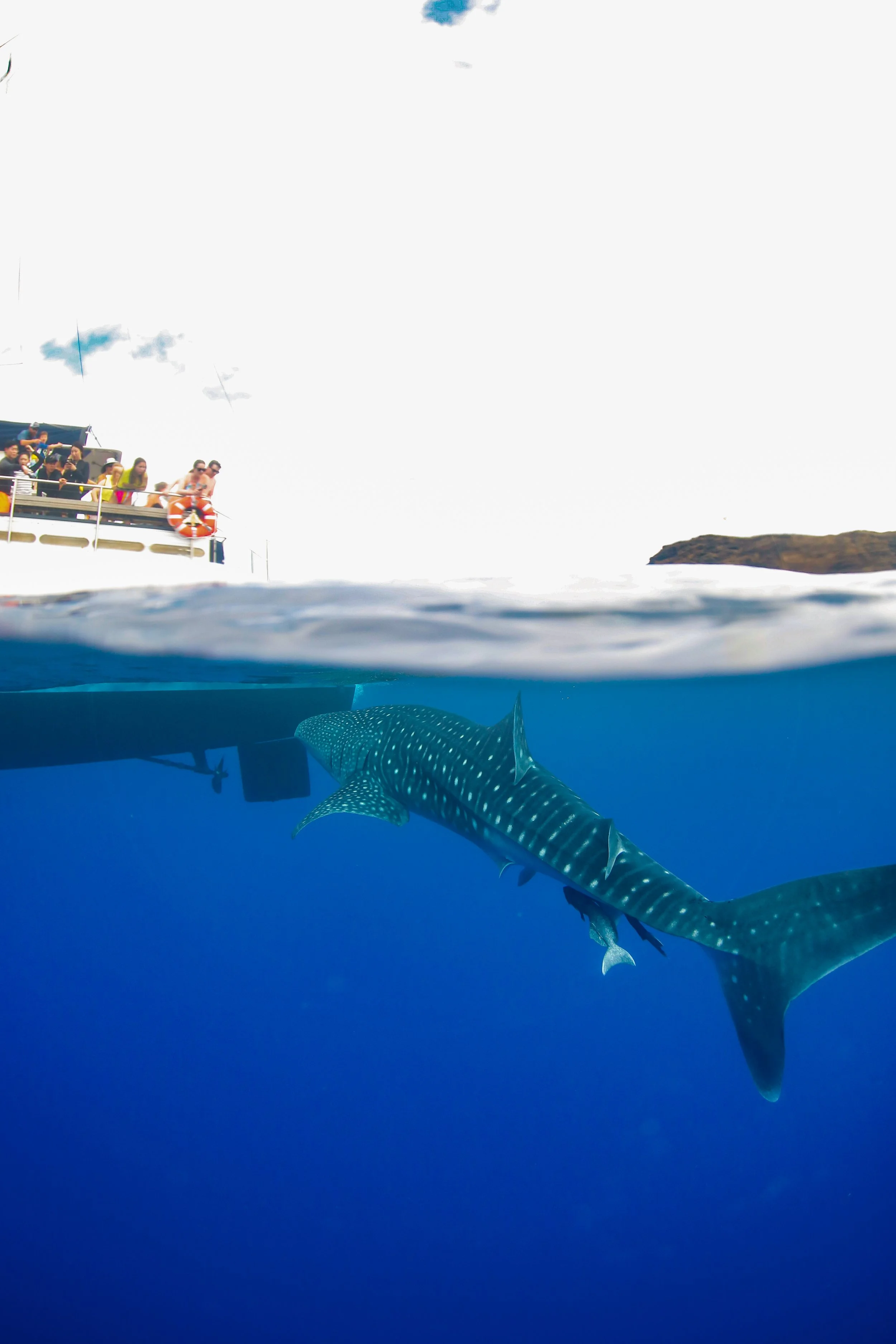
Whale Shark at Molokini
These encounters are uncommon, but they’re part of what makes Molokini such a dynamic place in the ocean. The meeting of shallow reef habitat and deep offshore water means you never quite know what might pass through.
For snorkelers floating above the reef, that connection between the calm inner basin and the vast ocean beyond the crater is part of what makes Molokini feel so alive.
A Place with Deep History
Long before snorkel boats arrived, Molokini was already part of life on Maui.
Archaeological evidence shows that early Hawaiians traveled here to fish and gather seabird resources.
Molokini also appears in Hawaiian moʻolelo (traditional stories). One well-known legend describes Molokini as a woman turned to stone by Pele, leaving the island split in two — a poetic explanation for its crescent shape.
While geology tells one story and tradition tells another, both speak to how long this place has held meaning in Hawaiian waters.
Experiencing Molokini with Care
Today, snorkeling at Molokini is often a highlight for visitors traveling on Maui. Many guided tours visit the crater because the protected basin offers excellent conditions for both beginners and experienced snorkelers.
But places like this stay special only when visitors treat them with care.
When entering the water:
Use reef-safe sunscreen
Never stand on or touch coral
Keep a respectful distance from marine animals
Follow all Marine Life Conservation District rules
These simple choices help protect the reef so future generations can experience the same clear water and thriving marine life.