Octopus: The Aliens of Our World
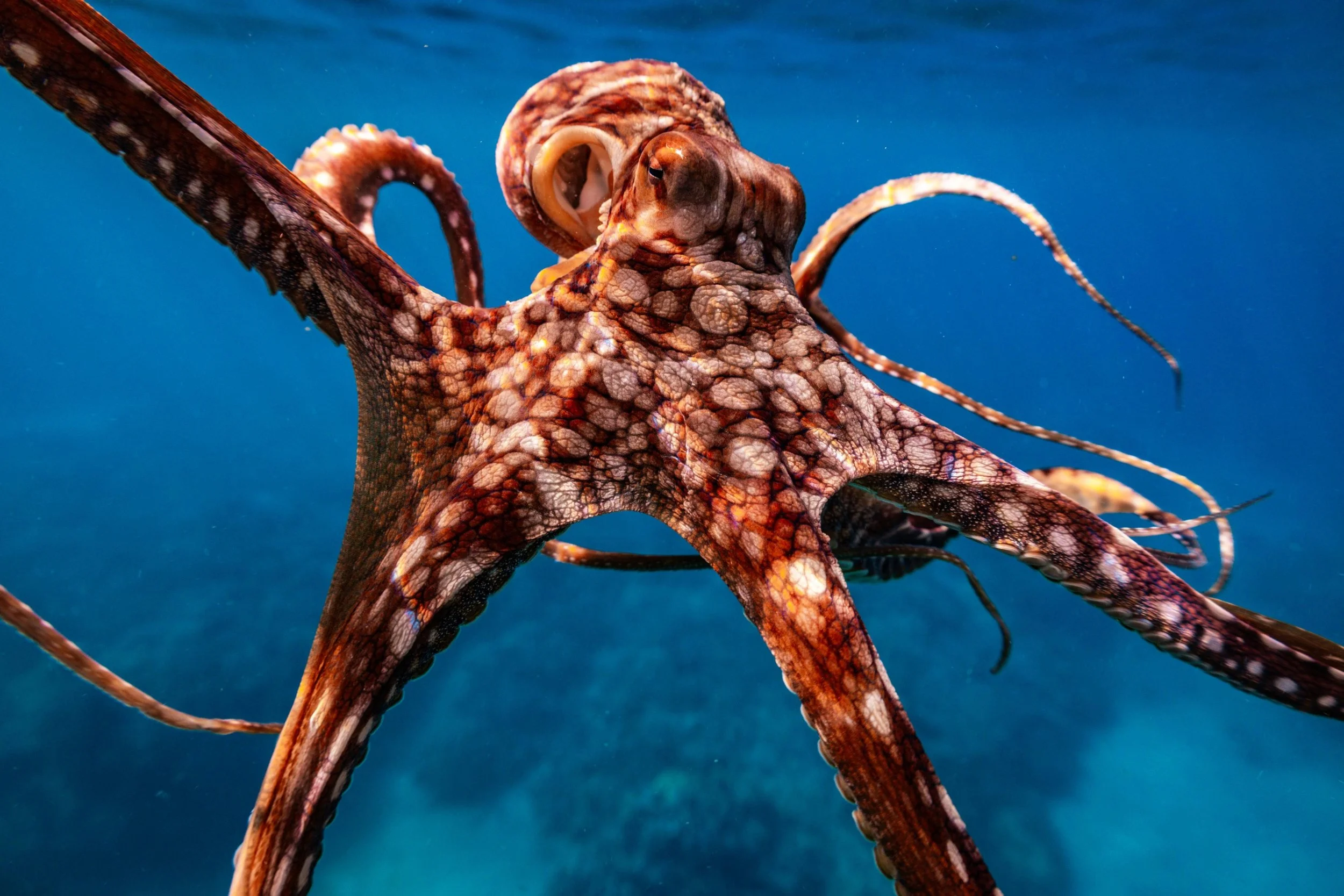
Out here on the water on Maui, most things begin to make sense the longer you watch.
You start to recognize patterns. The way honu rise for air. The rhythm of a reef waking up in the morning. Even the way light moves across the seafloor starts to feel familiar after enough time.
But an octopus never fully fits into that understanding.
You can be looking directly at one—eyes focused, completely aware of where it is—and still lose it in an instant. Not because it swam away, but because it changed. The texture of its skin shifts. Its color dissolves into the reef. Its body reshapes itself into something unrecognizable.
And just like that, it’s gone. That moment is usually when people realize they’re not just looking at another marine animal. And that’s when the questions start.
What is that?
The honest answer: something closer to an alien than anything else we share this world with.
⋅˚₊‧ ଳ ‧₊˚ ⋅
⋅˚₊‧ ଳ ‧₊˚ ⋅
Why octopus feel so… different
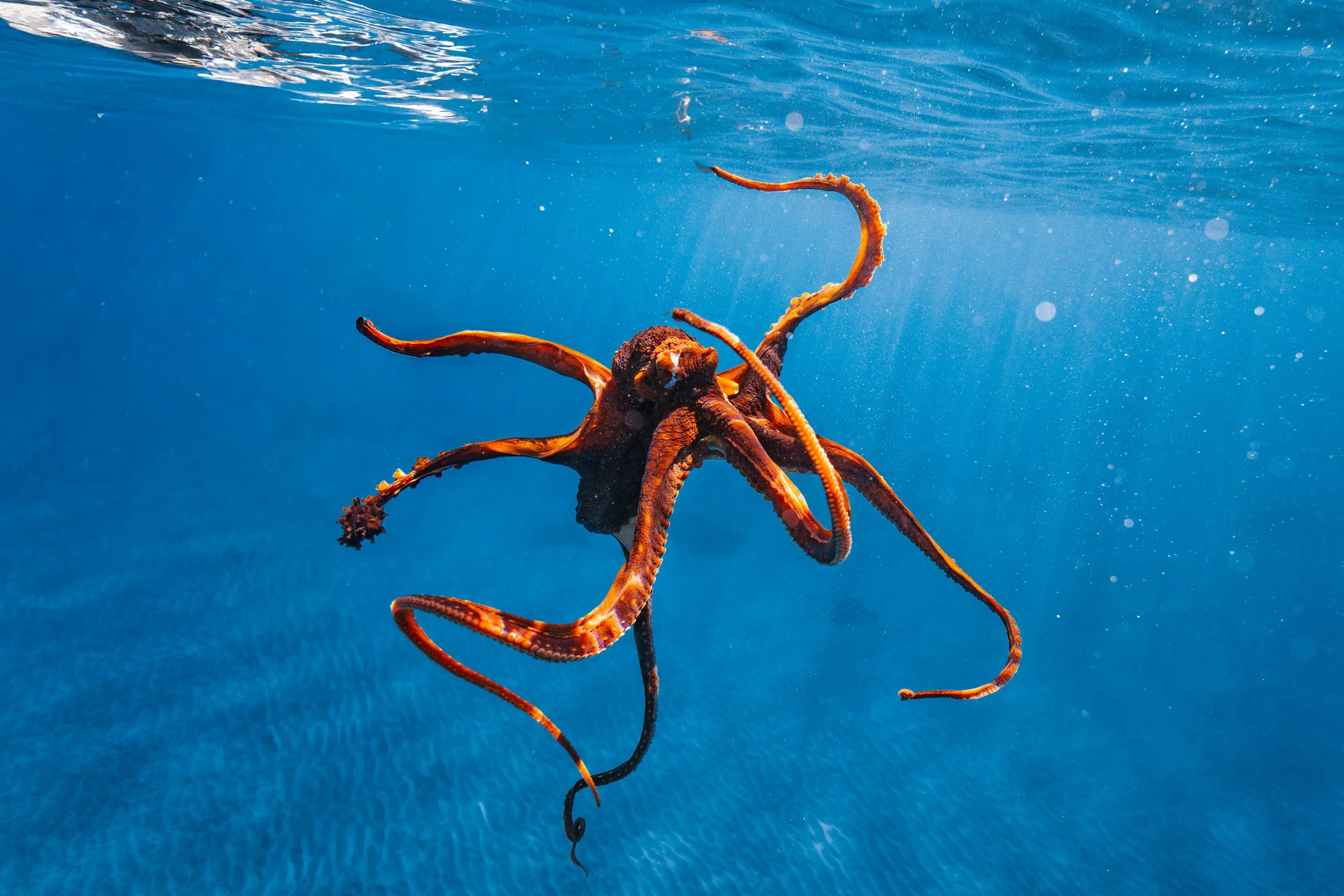
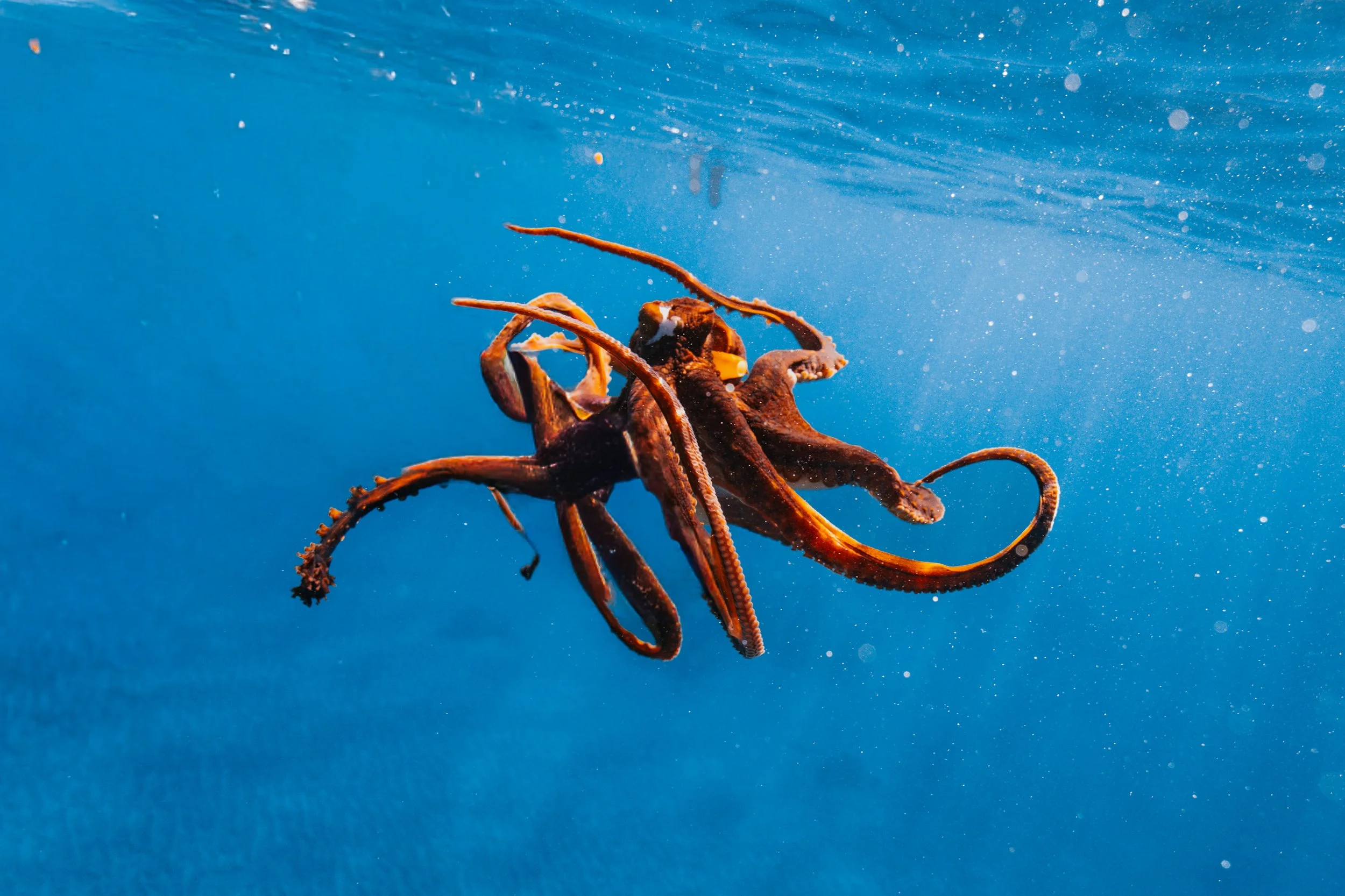
When we say octopus are unique, it’s easy to treat that like a casual observation. But their difference runs deeper than most people realize.
Octopus did not evolve alongside us in any meaningful sense. Our last common ancestor existed more than 500 million years ago, long before fish dominated the oceans or plants covered land. From that point forward, evolution took two completely separate paths. One eventually led to mammals, birds, and humans. The other led to cephalopods—octopus, squid, and cuttlefish.
That separation matters. It means the intelligence we see in an octopus was not built from the same foundations as our own. It did not come from social groups, spoken communication, or long generational learning. It emerged independently, shaped by an entirely different set of pressures in the ocean.
So when we look at an octopus, we are not seeing a familiar kind of mind in an unfamiliar body.
We are seeing a completely different answer to the question of what intelligence can be.
A body with no blueprint we recognize
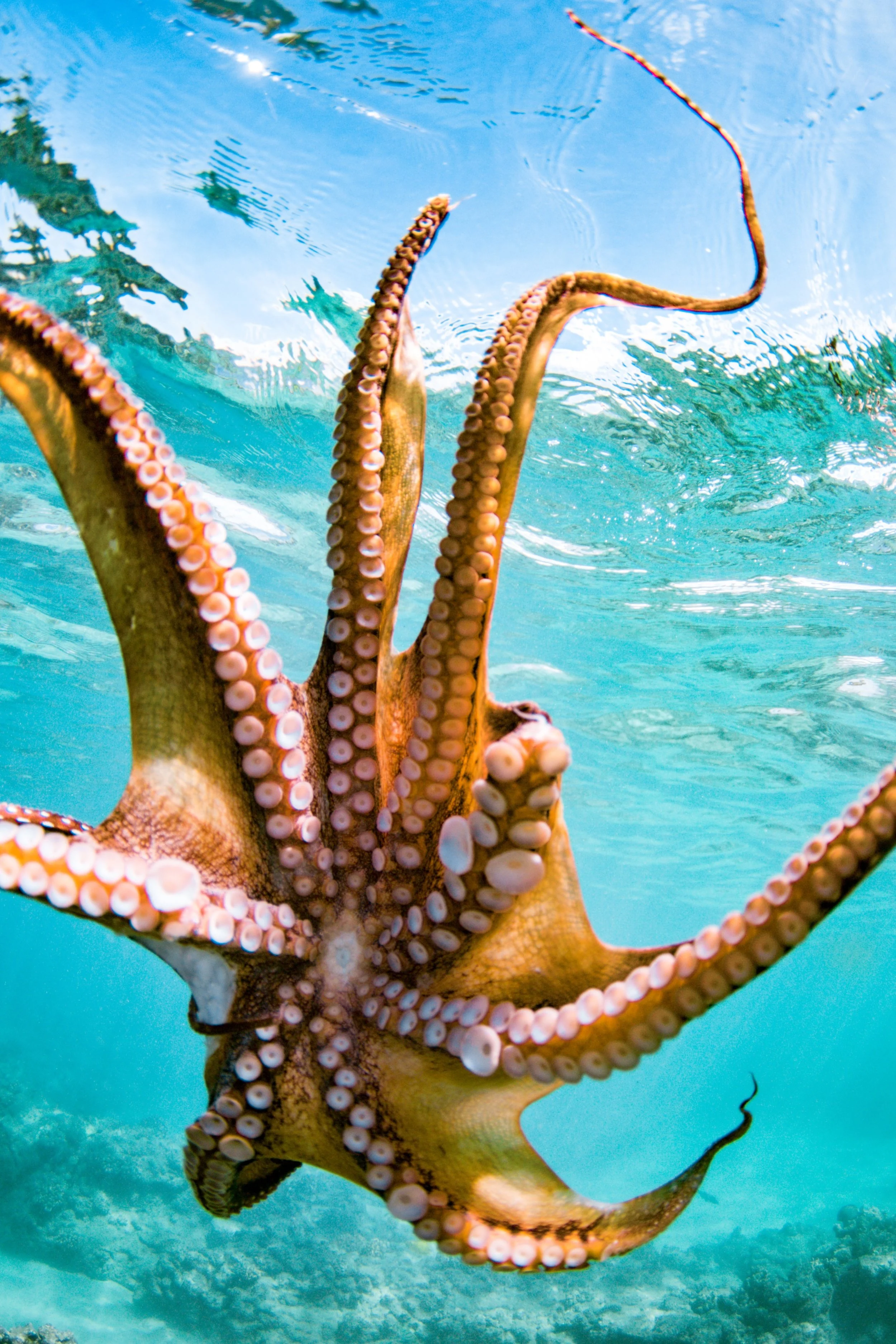
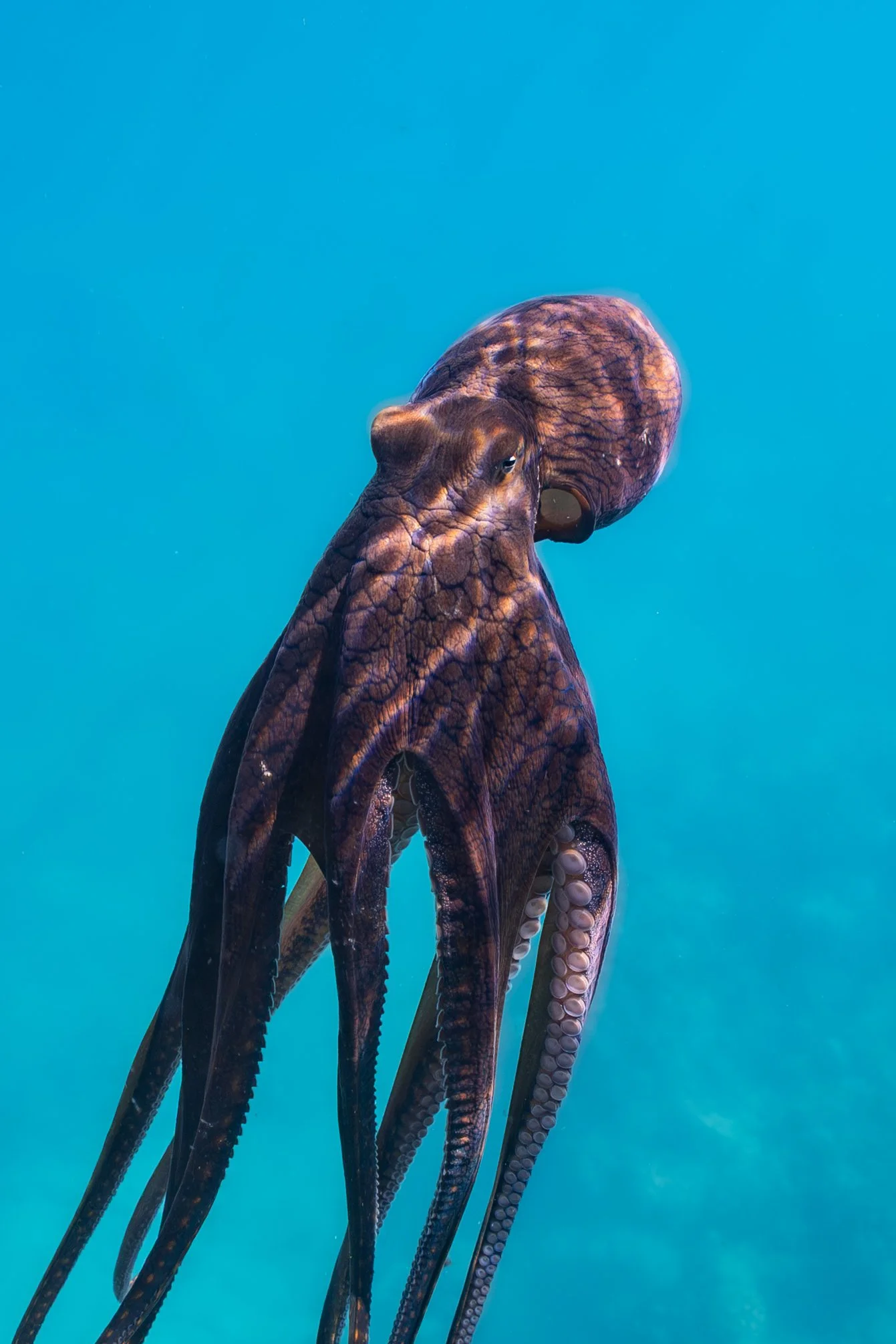
Part of what makes octopus feel so unfamiliar is not just that they are flexible or soft-bodied.
It’s that their entire body plan is organized in a way that doesn’t match anything we intuitively understand.
If you think about the way a human body is structured, it follows a clear hierarchy. The brain sits at the top, protected inside the skull. Below that, the body extends downward along a spine. Limbs branch off, but everything is oriented around that central axis. There is a clear “up” and “down,” a front and a back, a head that leads and a body that follows.
An octopus is not built like that.
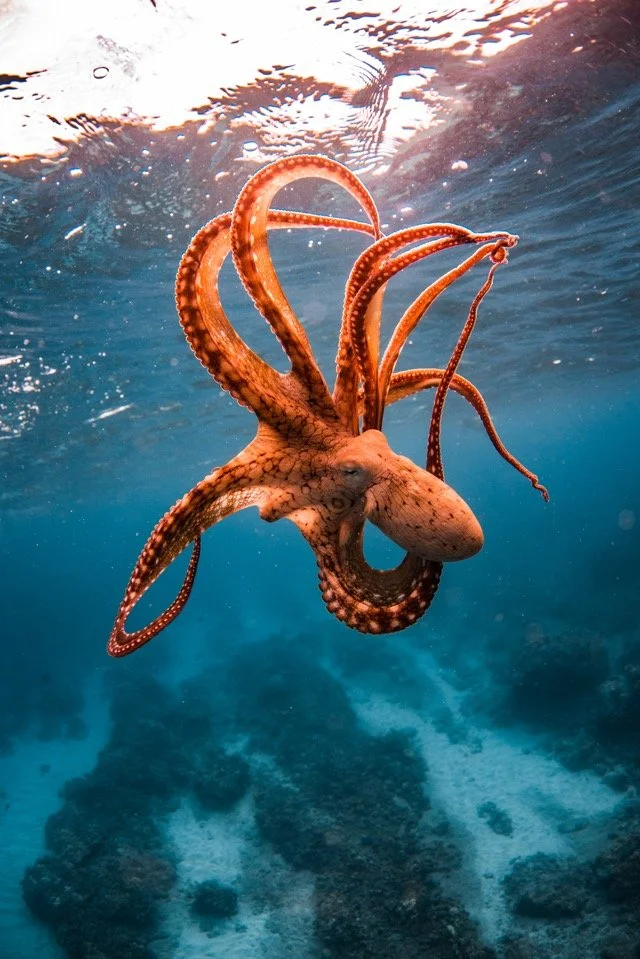
Instead of a long, directional body, it has a central core with eight arms extending outward in all directions. There is no spine, no fixed front or back in the way we experience it. Any arm can lead. Any direction can become “forward” depending on the moment.
Because of that, movement is not constrained to a single orientation. An octopus can crawl, glide, or turn without needing to realign its entire body first. It doesn’t have to face a direction to move through it. It simply goes.
The brain of an octopus
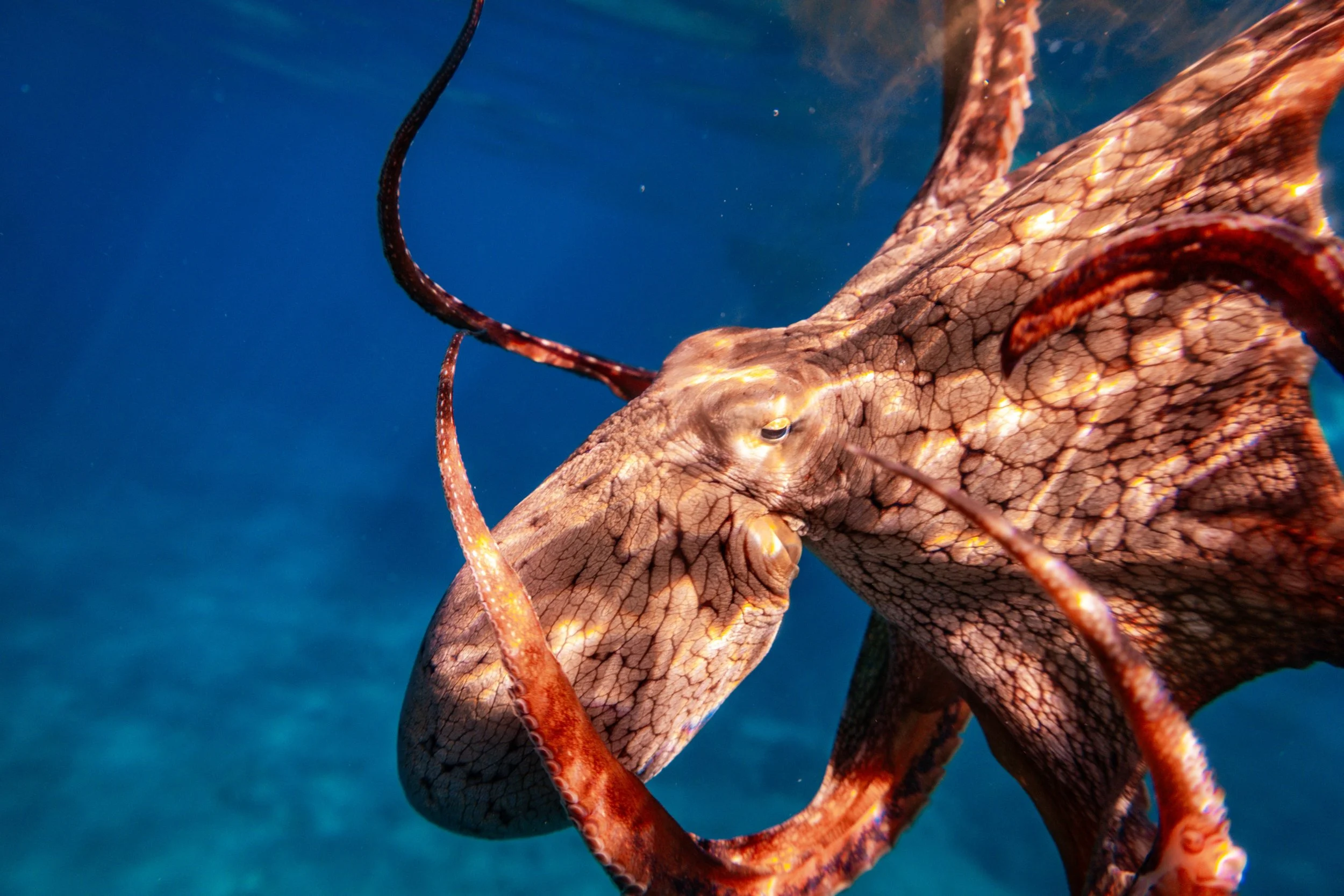
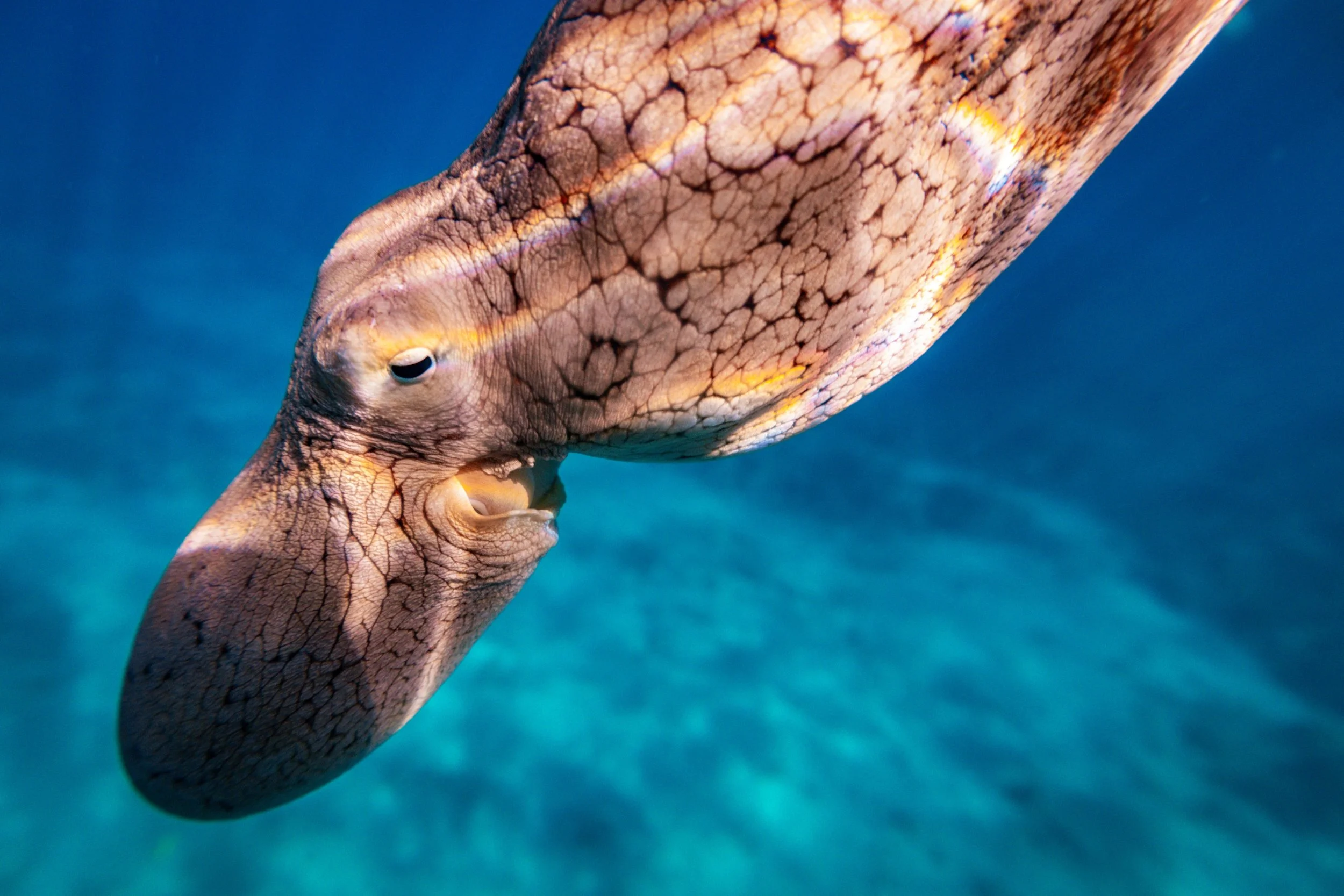
Instead of being isolated and protected in a skull, an octopus’s brain is wrapped around its esophagus.
When it eats, food passes directly through the center of its brain. This is not a small anatomical detail—it changes how the entire organism is organized. The brain is not a distant command center. It is physically embedded within the act of living.
Marine biologist Peter Godfrey-Smith, who has spent years studying cephalopods, describes this difference in a way that captures just how far removed it is from our own experience:
““An octopus is not a head with arms attached. It is a being whose body is its mind.””
That idea becomes even clearer when you consider what happens next. Because the brain is only part of the system.
As we move out into the arms, the structure becomes even more unfamiliar. Each arm contains dense networks of neurons, allowing it to sense and respond independently. The suckers can taste what they touch. The arms can explore without waiting for instructions. They can even continue coordinated movement with minimal input from the central brain.
Sy Montgomery reflects on this in The Soul of an Octopus after interacting with octopus up close:
““They have a brain, but it is not like ours. Much of their thinking seems to happen in their arms.””
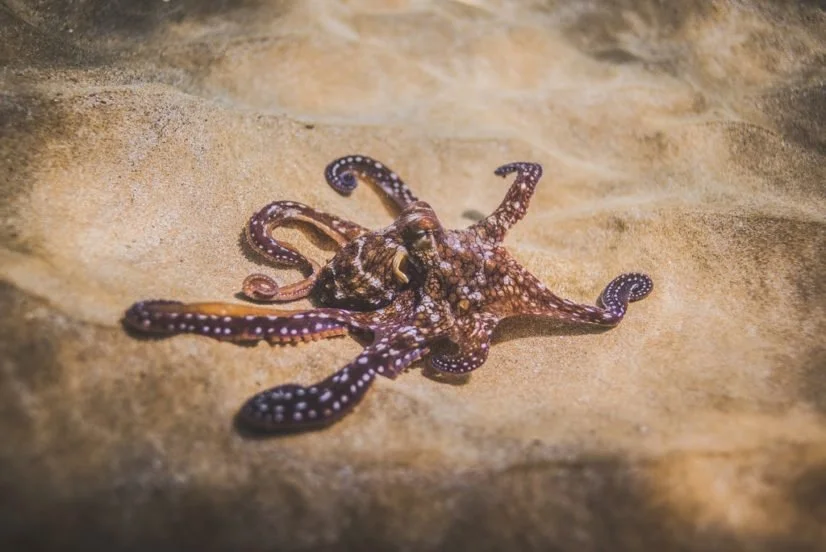
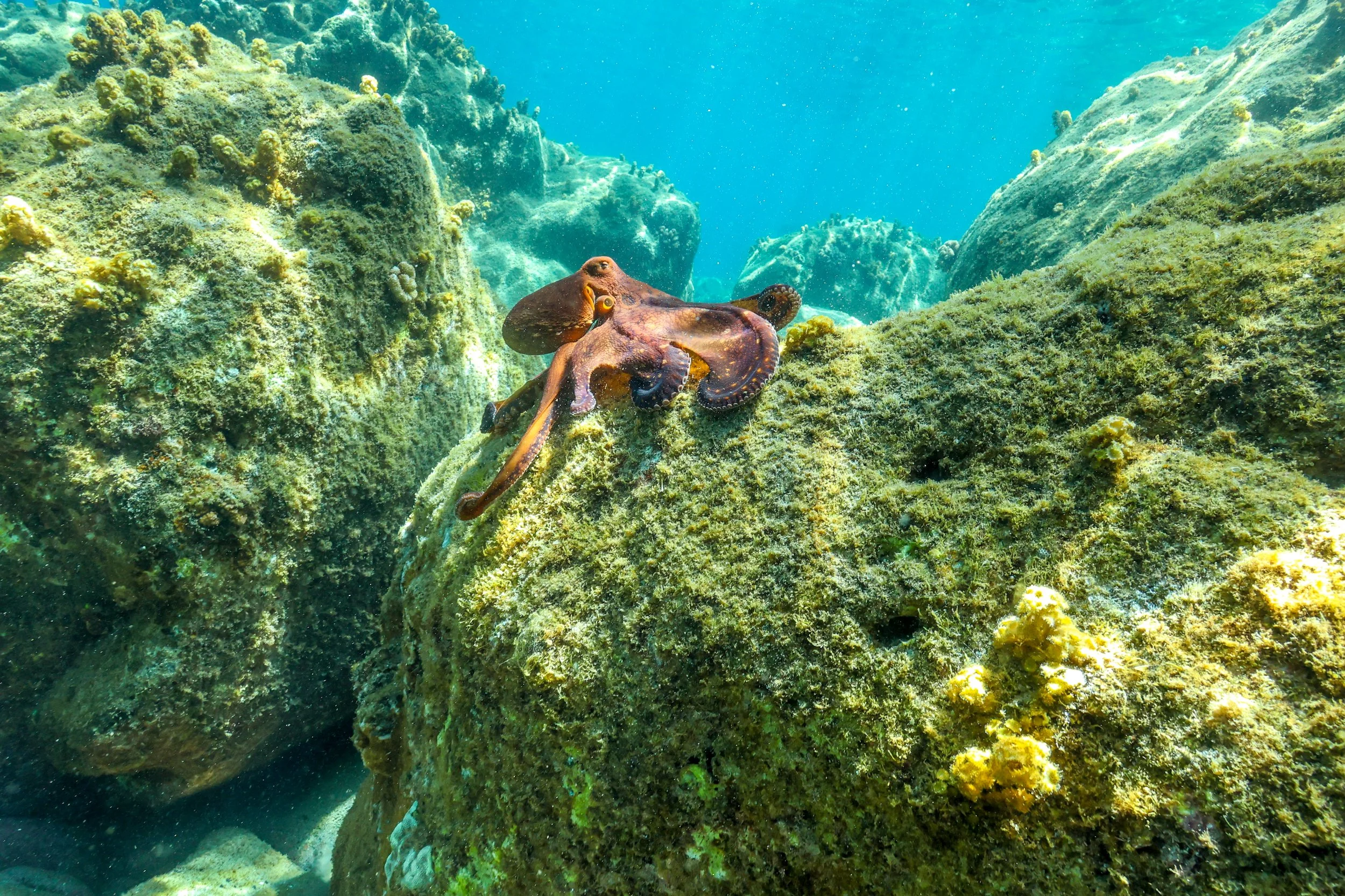
When an octopus investigates something, it does not simply look at it. It surrounds it, feels it, tastes it, and manipulates it all at once. Its entire body is involved in perception.
It is difficult to compare this to human experience, because we do not have anything like it. Our thoughts feel unified and contained. An octopus operates more like a network—multiple streams of awareness working at once, coordinated but not strictly controlled from a single point.
That alone is enough to make scientists pause. Because it suggests that consciousness itself may not be limited to the structures we’re familiar with. And that leads to a deeper realization:
This is not just an animal with an unusual shape. It is an animal whose entire way of experiencing the world is built differently from the ground up.
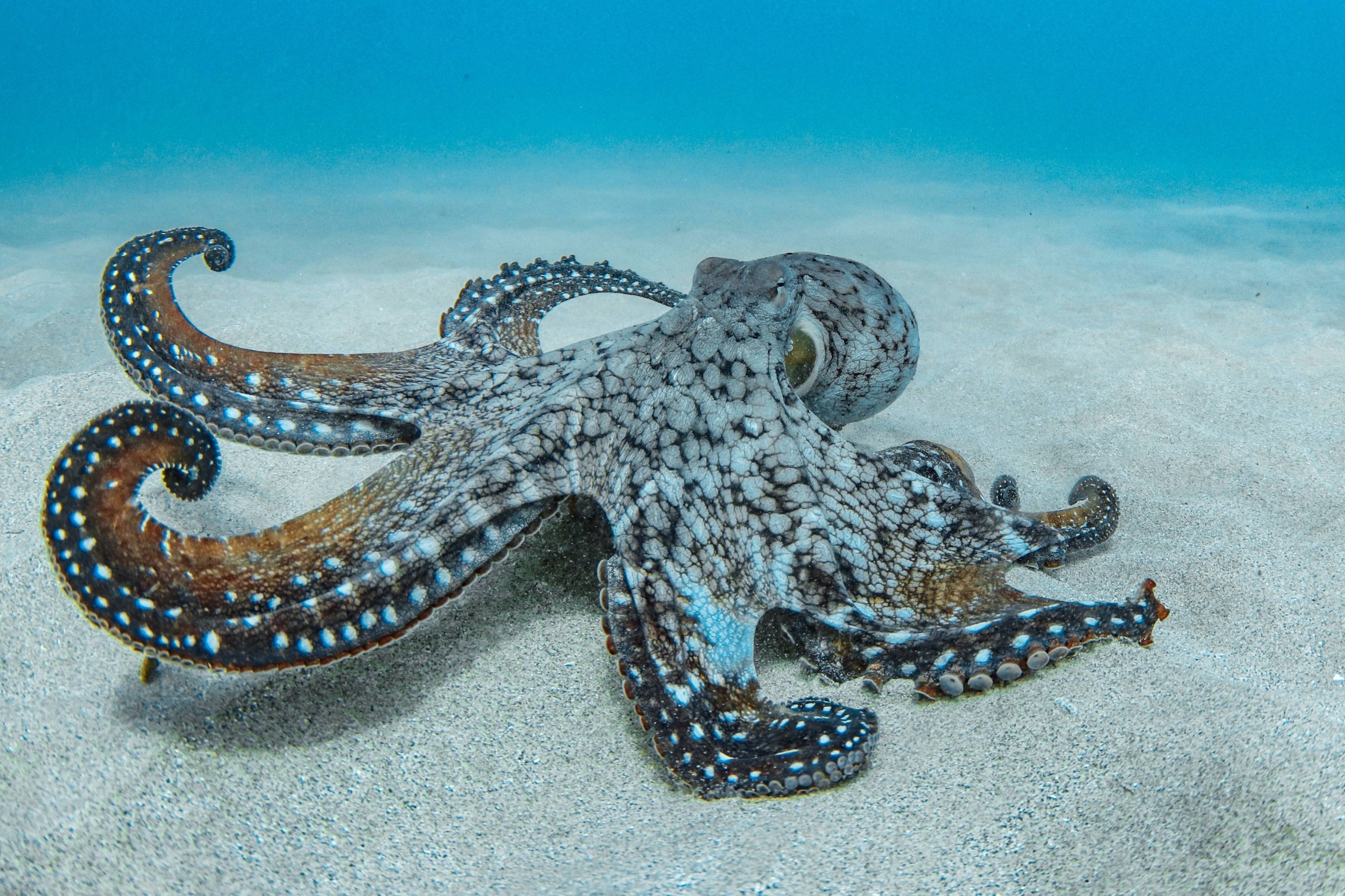
Limb regeneration
If an octopus loses an arm—and this happens in the wild, whether from predators or conflict—it doesn’t simply adapt to the loss. It regrows it.
Over time, a completely new arm will form, restoring not just the structure, but the function. That includes the complex network of nerves, the suckers that can taste and grip, and the ability to move and respond independently.
This is not a simple repair. It is full regeneration of a thinking, sensing limb.
A body with “alien” biology
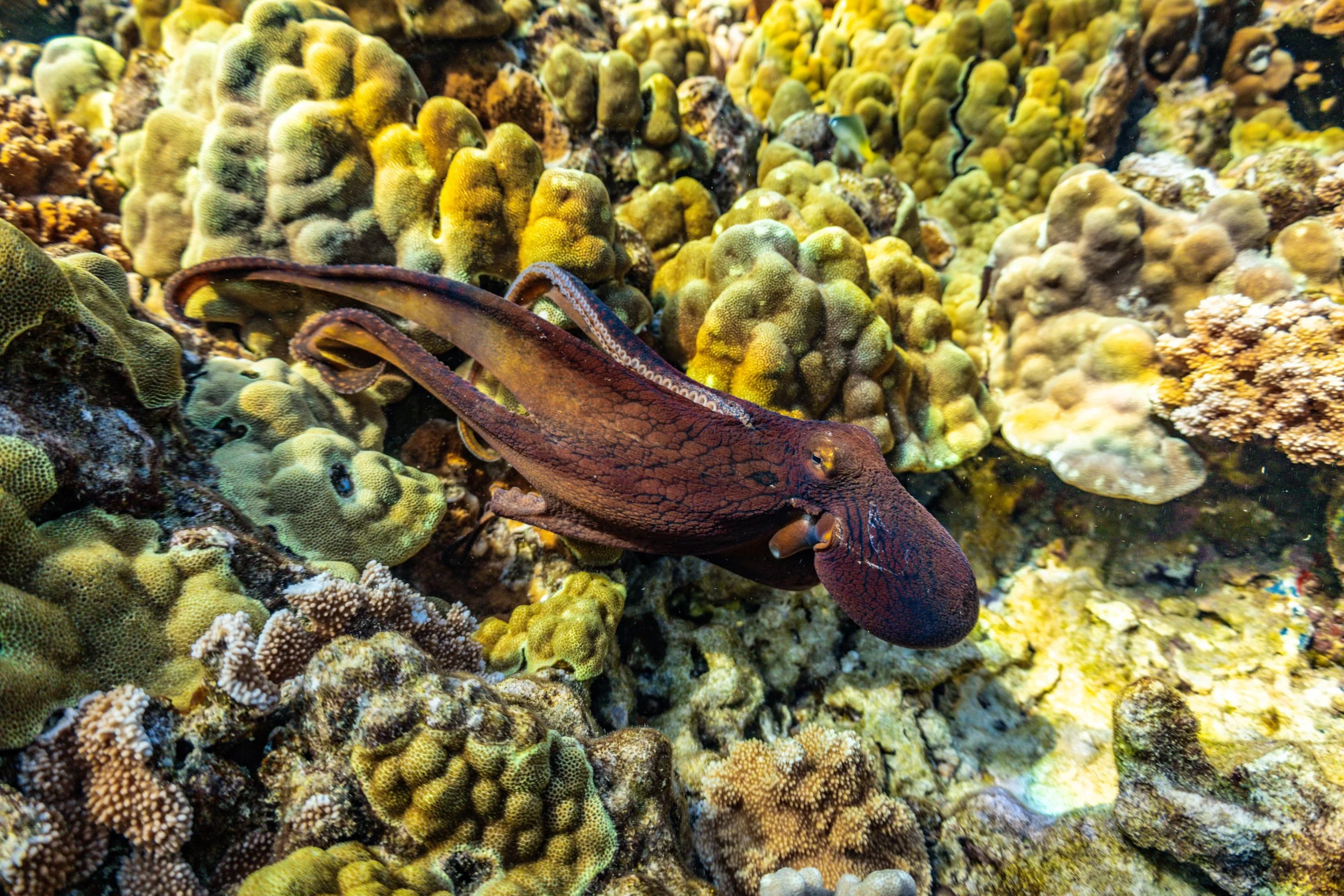
Even beyond regeneration, the way an octopus stays alive operates on a completely different biological system than our own.
An octopus has three hearts. Two are dedicated to moving blood through the gills, where oxygen is absorbed. The third pumps that oxygen-rich blood through the rest of the body. This alone is unusual—but what flows through those hearts is just as different.
Instead of iron-based blood like ours, octopus use a copper-based protein called hemocyanin. This makes their blood blue, and it functions more efficiently in cold, low-oxygen environments like the ocean. It allows them to survive and hunt in conditions that would challenge many other animals.
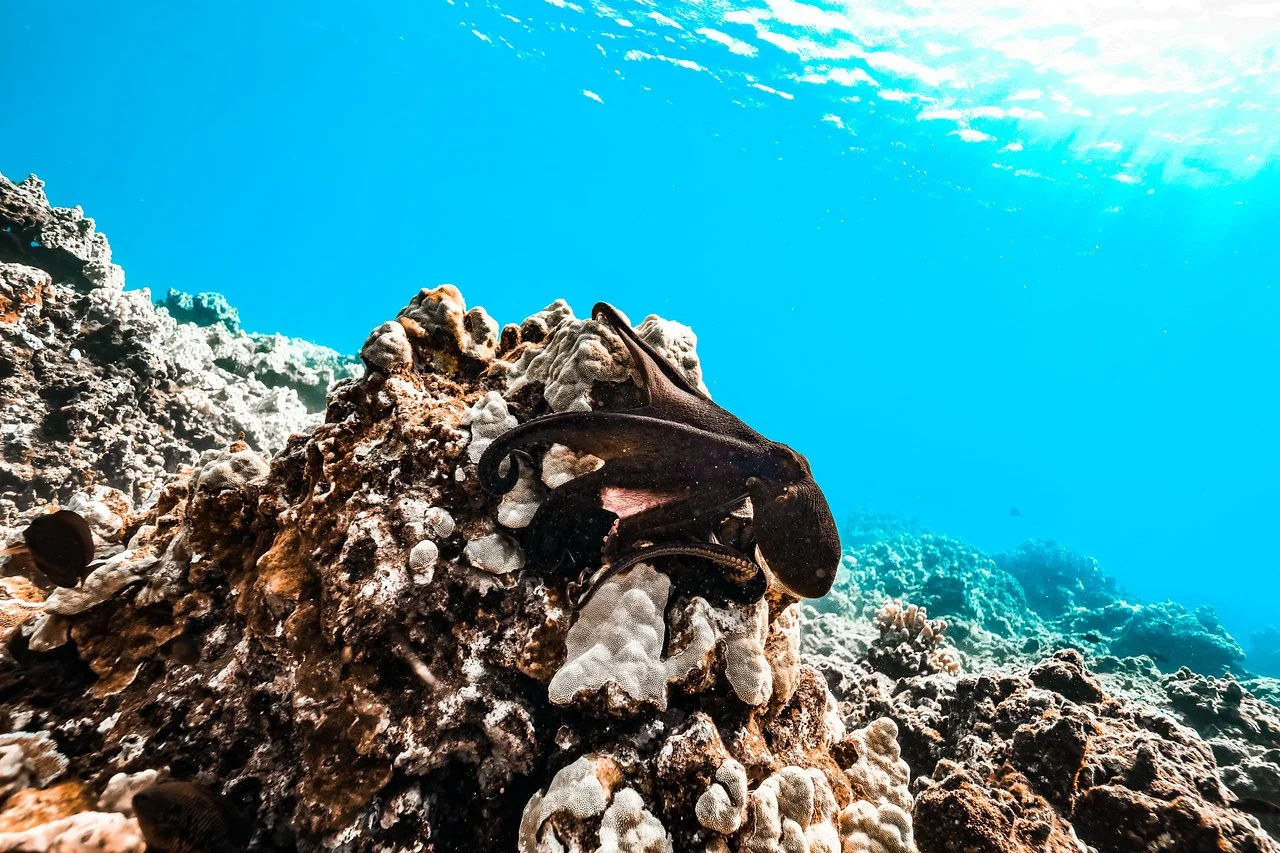
But this system comes with tradeoffs. Circulating that kind of blood is energetically expensive, and when an octopus swims, the heart responsible for delivering oxygen to the body can actually pause. That’s part of why octopus often prefer to crawl along the reef rather than swim for long distances.
Their defenses follow a similar pattern—familiar in purpose, but completely different in design.
At the center of their body is a sharp, parrot-like beak capable of breaking through shells and crustaceans. Paired with that, most octopus produce venom used to subdue prey. In Hawaiʻi, the species you’ll encounter are not considered dangerous to humans, but the presence of venom is still part of their everyday biology—another reminder that they are active hunters, not passive creatures of the reef.
Octopus dreams
Octopus appear to have distinct sleep states, including periods where their skin rapidly shifts color and pattern while their bodies remain still. Researchers have observed cycles that resemble active and quiet sleep, similar in some ways to REM sleep in humans.
During these active phases, an octopus may flicker through patterns it would normally use while hunting or camouflaging—almost as if it is replaying experiences.
All of this insuinates that octopus have active dreams, just like our own.
they can rewrite their own biology
Most life on Earth follows a basic rule: your DNA is the blueprint, and your body reads from it. That information flows in one direction. DNA → RNA → proteins. It’s a system that is remarkably stable, and for most animals, it doesn’t change much moment to moment.
Octopus don’t fully follow that rule.
They have the ability to edit their own RNA—the molecules that carry instructions from DNA to the rest of the body. This process is called RNA editing, and while it exists in small amounts in other animals, octopus use it extensively.
Instead of relying only on the fixed instructions written in their DNA, they can adjust those instructions on the fly.
That means their bodies are not just responding to the environment. They are actively rewriting how they function within it.
Scientists believe this plays a role in how octopus adapt their nervous systems, particularly in changing ocean temperatures. By editing RNA in their neurons, they may be able to fine-tune how those cells behave without waiting for slow evolutionary changes over generations.
In other words, while most animals adapt over thousands of years…
@sailtrilogy Octopus aren’t just fascinating— they’re some of the smartest animals in the world. 🐙 with 9 brains total, one central brain and one for each arm, they can solve puzzles, open jars, and have even escaped aquariums on multiple different occasions. Not to mention their 8 arms which allow them to multitask like a pro. My favorite fact about them is that in some parts of the world, octopus have formed communities where they live close together, octopus neighborhoods, scientists call them “octopus cities.” Not only do they have their own communities, they also decorate their homes. They create a garden by arranging shells and rocks in their front-yard— just like we plant flowers. Not to mention one of their coolest features (captured above) is their ability to change colors, texture, and even mimic other sea creatures to hide from predators. Divers often swim right by them since they camouflage so well. These incredible animals remind us how much intelligence lives beneath the waves. Next time you’re snorkeling or sailing with Trilogy— keep an eye out, you just might spot one of these ocean geniuses! 🌊
♬ The Lost World of Atlantis - Michael Richard Plowman
An octopus can begin adapting within its own lifetime.
Peter Godfrey-Smith, who has spent years studying cephalopods, frames this kind of difference as a completely separate evolutionary strategy—one that prioritizes flexibility over stability. That flexibility comes at a cost, because relying heavily on RNA editing may limit how much their DNA itself evolves over time. It’s as if octopus traded long-term genetic change for short-term adaptability.
That tradeoff is unlike anything we see in ourselves.
they can disappear— and not just visually
We often talk about octopus camouflage, but it’s worth slowing down here. Because they don’t just blend in. They control their visibility.
Their skin contains chromatophores (pigment cells), iridophores (reflective cells), and specialized muscles that allow them to change both color and texture almost instantly. But what’s more remarkable is how they decide what to become.
They don’t just match the background. They interpret it.
An octopus can move across a patch of reef and continuously adjust its appearance—darkening, lightening, shifting patterns—based on what it senses around it. This is happening faster than conscious thought as we understand it.
And here’s the part that still puzzles scientists: Octopus are believed to be colorblind.
Which means they are matching colors they may not “see” in the way we do. Some researchers suspect their skin itself may be involved in sensing light, allowing them to “read” their surroundings through their body. So the act of disappearing is not just visual. It’s sensory.
Intelligence without a familiar path
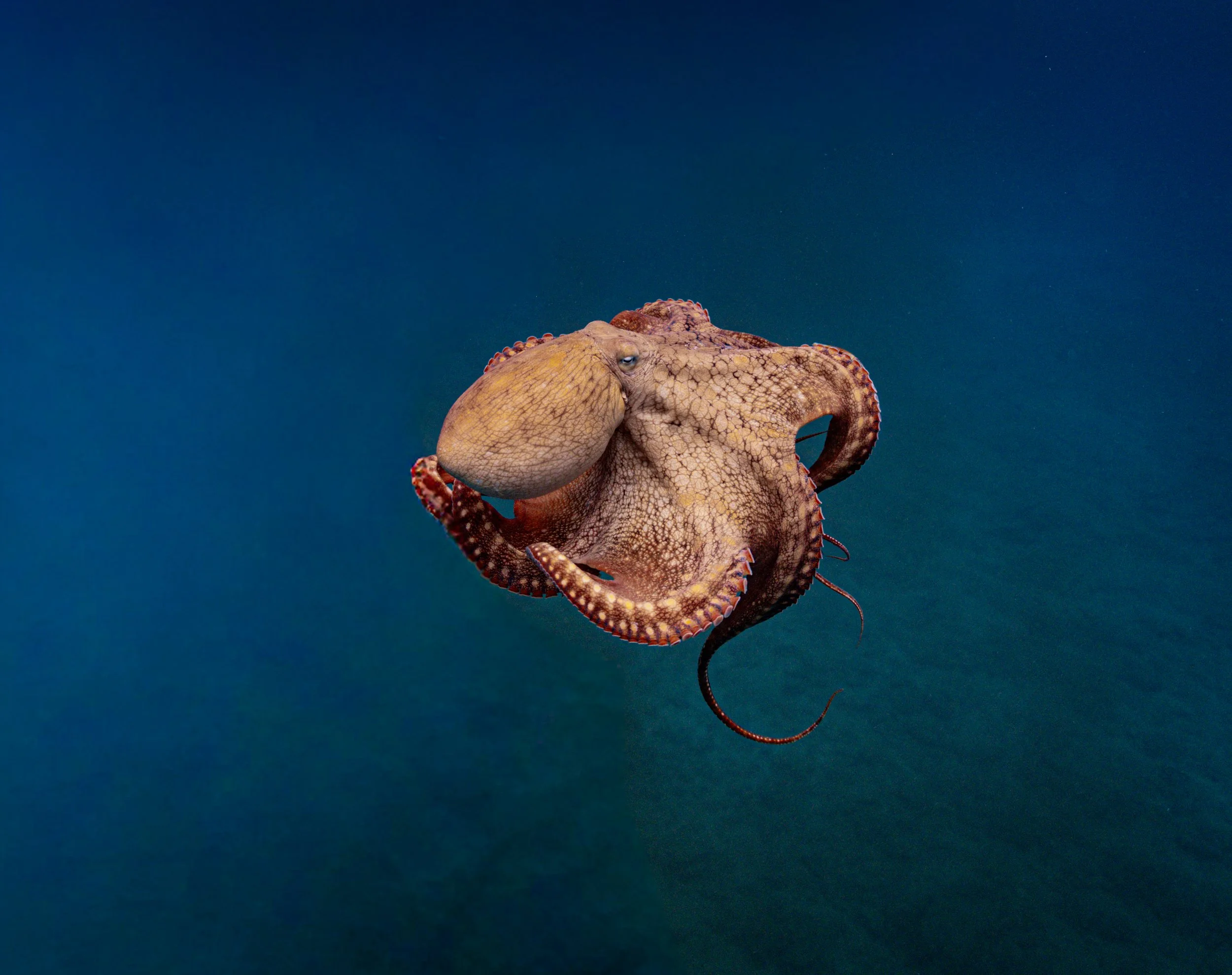
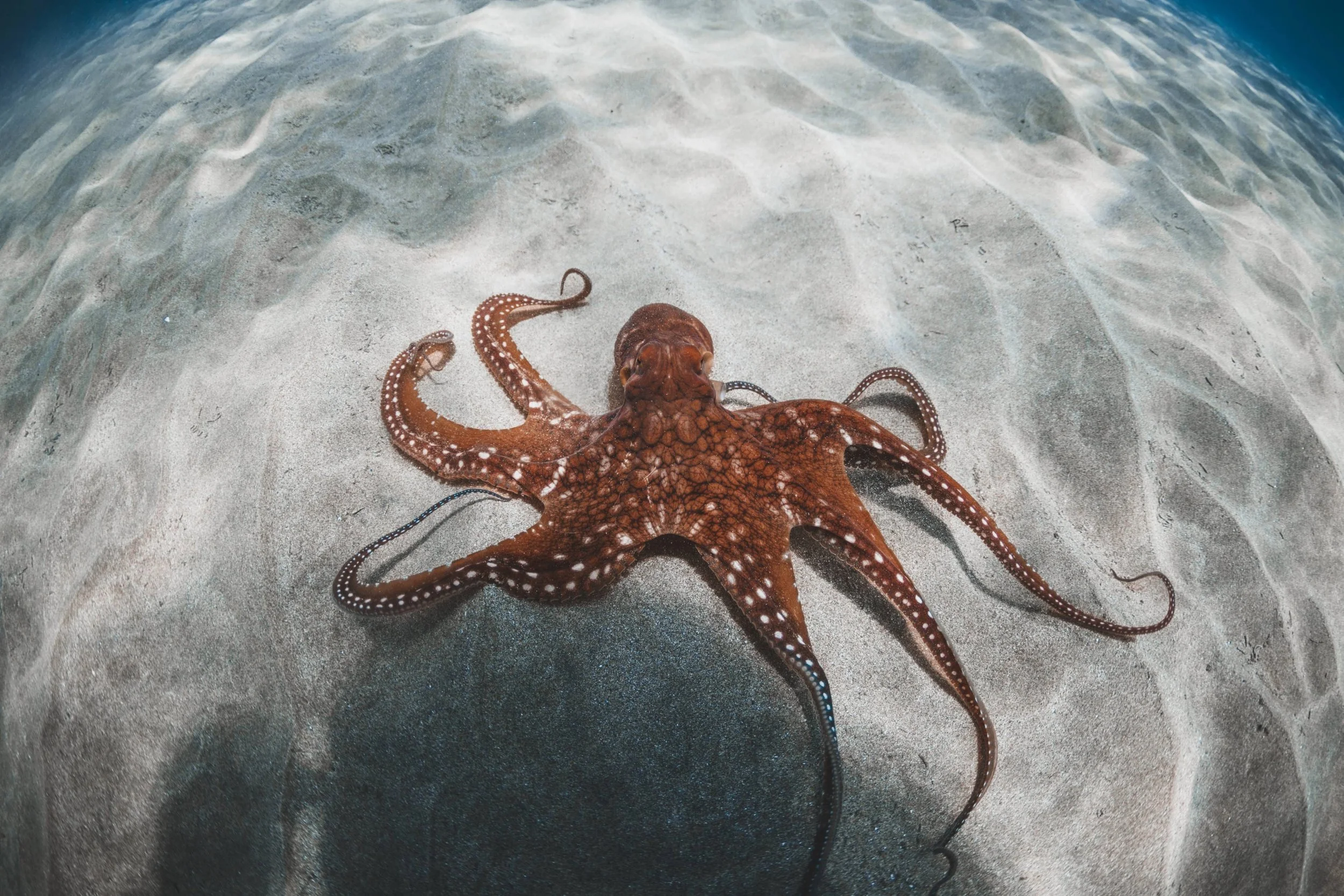
Octopus are widely recognized as the most intelligent invertebrates in the ocean, but that statement doesn’t fully capture what makes them remarkable.
They do not live long lives. Many species only survive for one to two years. They do not grow up in family groups or learn from parents over time. There is no culture in the way we typically define it.
And yet, within that short lifespan, they demonstrate clear problem-solving ability.
In controlled settings, octopus have been observed opening jars from the inside, navigating mazes, and remembering solutions long after they first encounter them. They can distinguish between shapes and patterns, and they are capable of learning through experience rather than simple instinct.
What stands out is not just that they solve problems—it’s that they approach them with flexibility. If one method fails, they try something else. They explore.
That kind of behavior suggests curiosity.
And curiosity is something we don’t usually expect from an animal that lives alone and disappears after such a short time.
“When you meet an octopus, you meet a mind.”
The Stories that make scientists pause
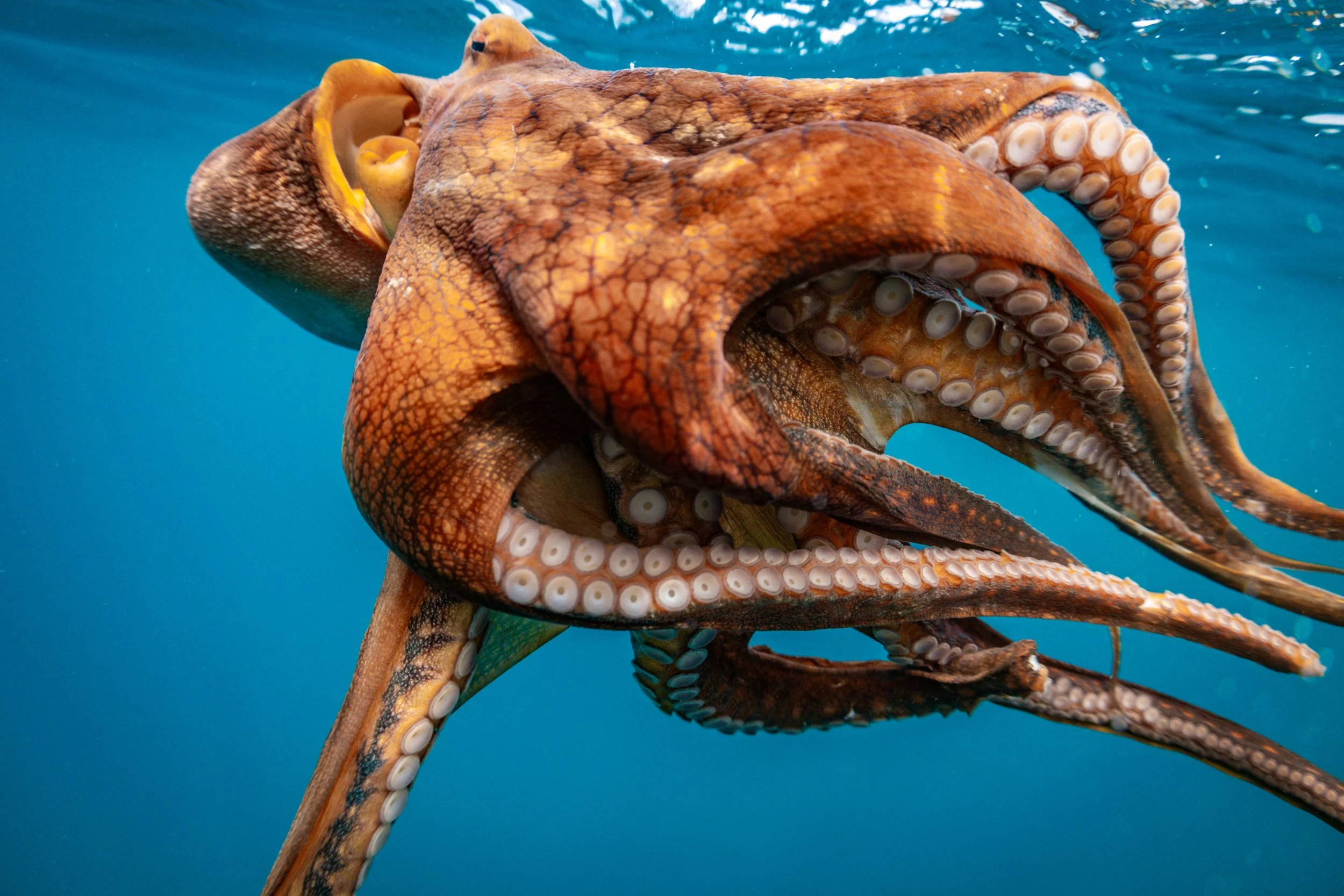
It’s one thing to read that octopus are intelligent. It’s another to watch them behave in ways that feel intentional.
Over time, the stories start to stack up. Not as isolated incidents, but as patterns that are difficult to explain away. Scientific studies tell part of the story, but some of the most revealing insights come from direct human interaction.
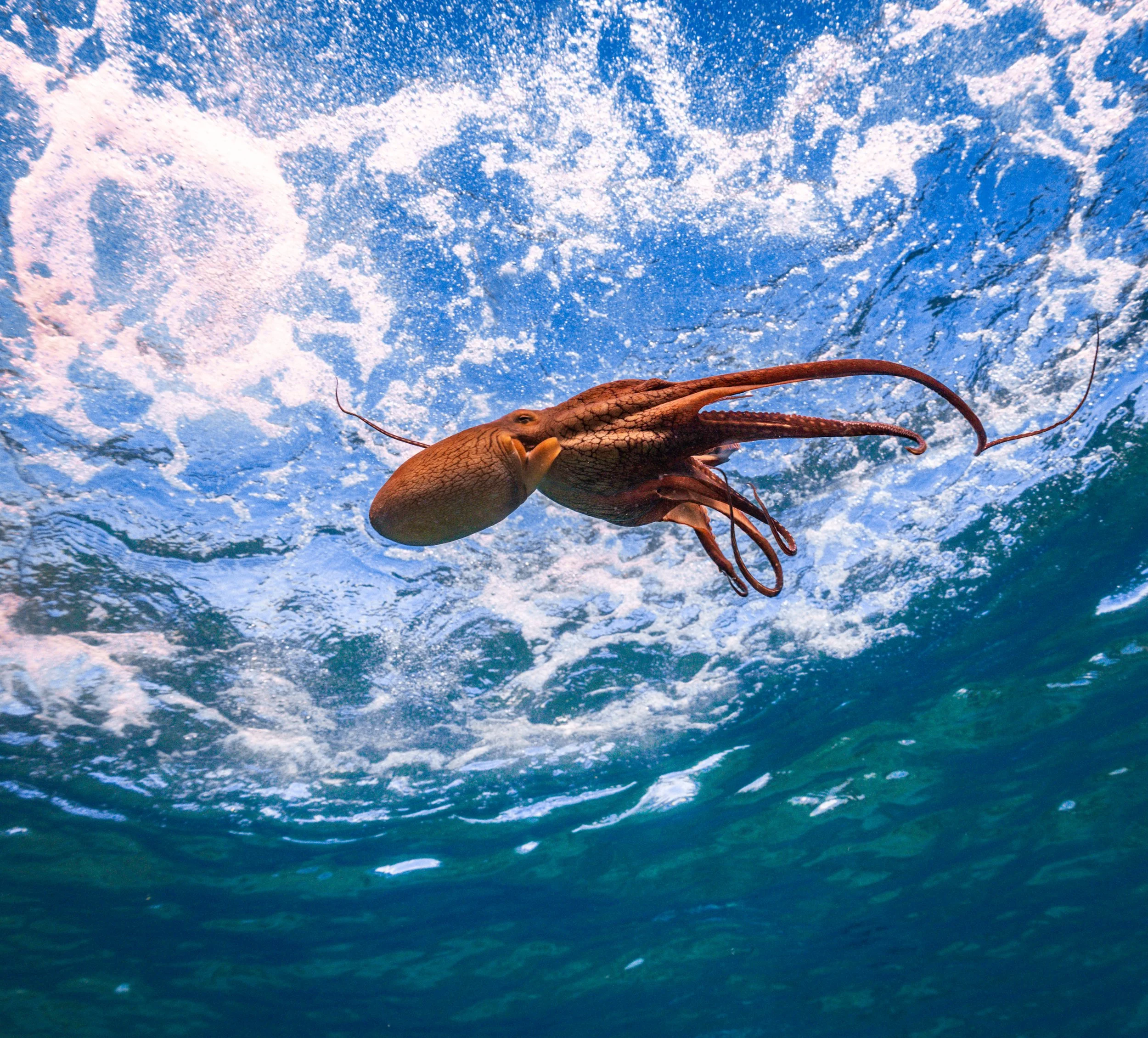
In The Soul of an Octopus, Sy Montgomery describes her encounters with octopus in aquarium settings. What stands out in those stories is not just intelligence, but personality. Each octopus behaved differently. Some were more curious, reaching out to explore. Others were reserved, choosing when and how to engage.
There are accounts of octopus recognizing specific people and responding to them in consistent ways. Certain caretakers were approached and interacted with regularly, while others were ignored or even actively avoided.
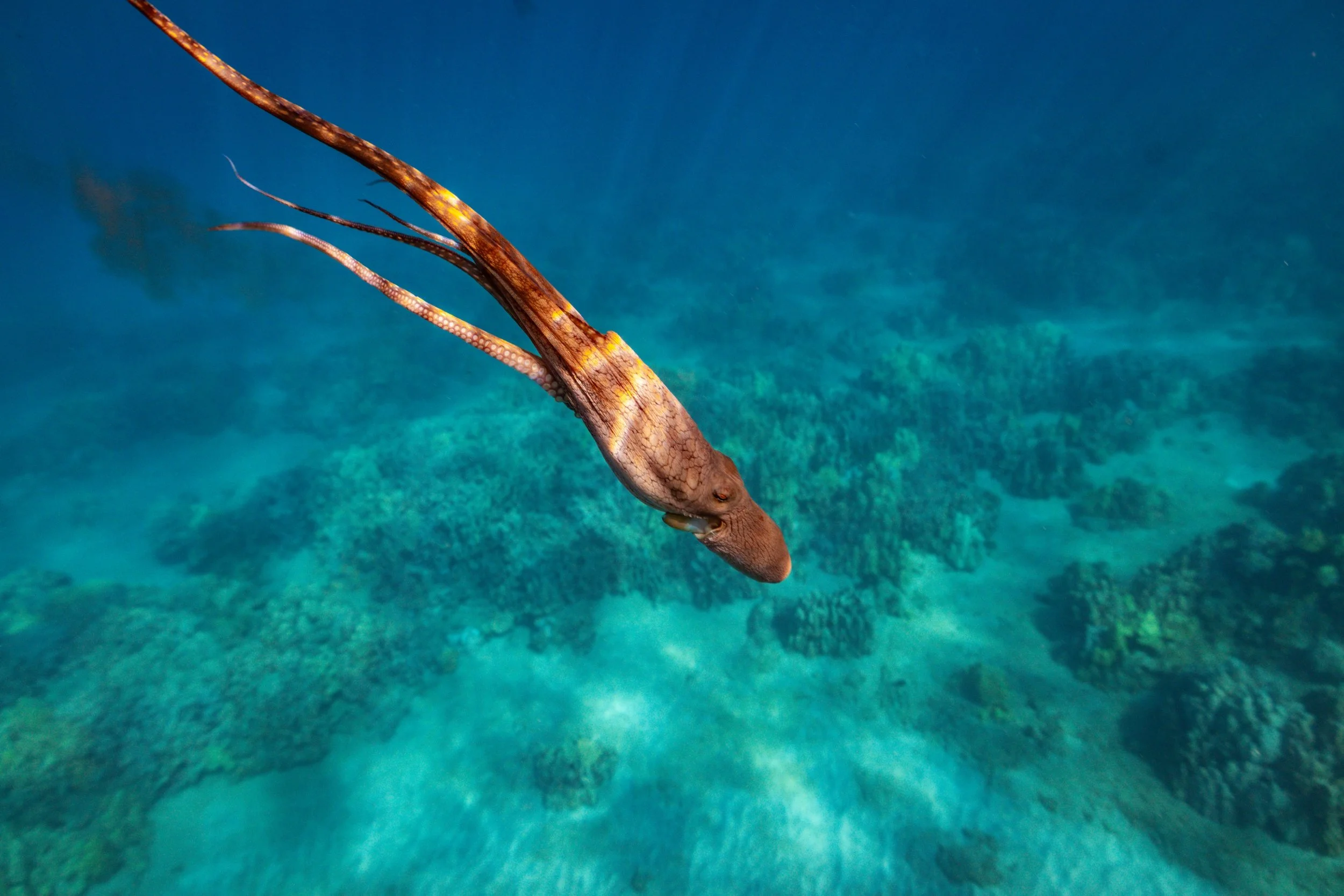
In some facilities, octopus have learned to anticipate feeding times and recognize the individuals responsible for bringing food. In others, they have displayed clear preferences, choosing to engage with certain people over others.
These are not random reactions. They suggest memory, recognition, and the ability to assign meaning to experience.
That realization shifts the relationship. You are no longer observing something purely instinct-driven. You are interacting with something aware.
Escape, problem-solving, and intention
There is a reason so many stories about octopus involve escape.
Their bodies allow them to slip through incredibly small spaces, but that alone does not explain what happens next. In multiple documented cases, octopus have left their enclosures, navigated unfamiliar environments, and found their way to other tanks or even drains leading back to the ocean.
One well-known example involved an octopus leaving its tank at night, crossing the floor, entering another tank to feed, and then returning before morning.
That kind of behavior requires more than flexibility. It requires planning. It requires memory of the environment, understanding of timing, and the ability to execute a sequence of actions toward a goal.
These are not reflexes. They are decisions.
octopus using their intelligence in real-time
At aquariums, octopus have learned how to open childproof pill bottles from the inside. They don’t do it once by accident—they improve. They twist, adjust, and repeat the motion until it becomes reliable. When researchers change the container, they don’t give up. They test it again, as if asking: what’s different this time?
In one study, octopus were presented with jars containing food. At first, they struggled. But over repeated trials, they became faster and more precise, remembering the exact motion required to open them. Days later, they could still perform the task without relearning it.
But then there are the stories that go further.
At the Seattle Aquarium, a giant Pacific octopus named Otto became known for what staff could only describe as mischief. At night, when the building was quiet, Otto would shoot jets of water at the overhead lights, short-circuiting them and plunging the room into darkness.
This wasn’t random. It happened repeatedly, and only under specific conditions. Staff eventually had to redirect the lights to stop the behavior.
Shaping their environment
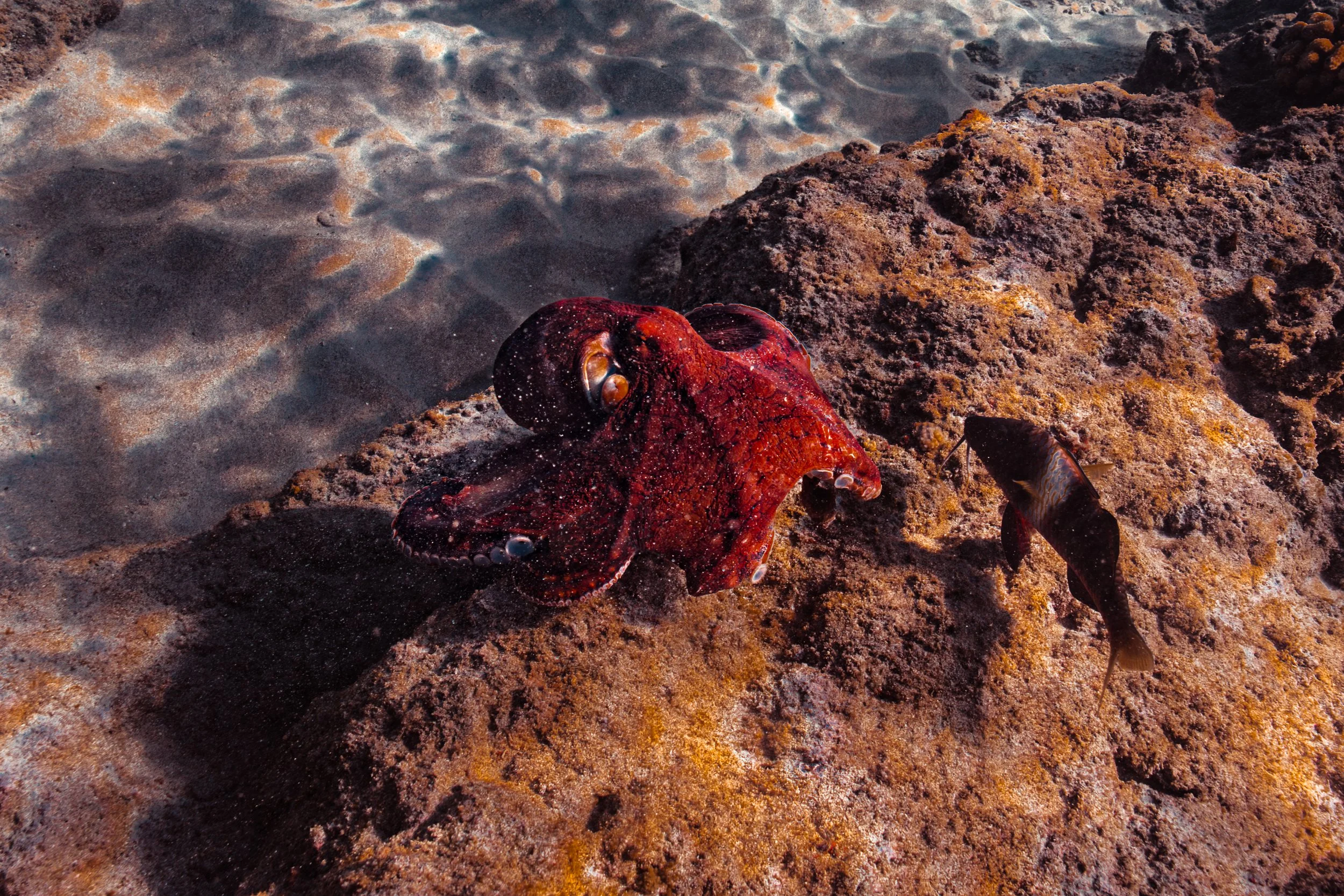
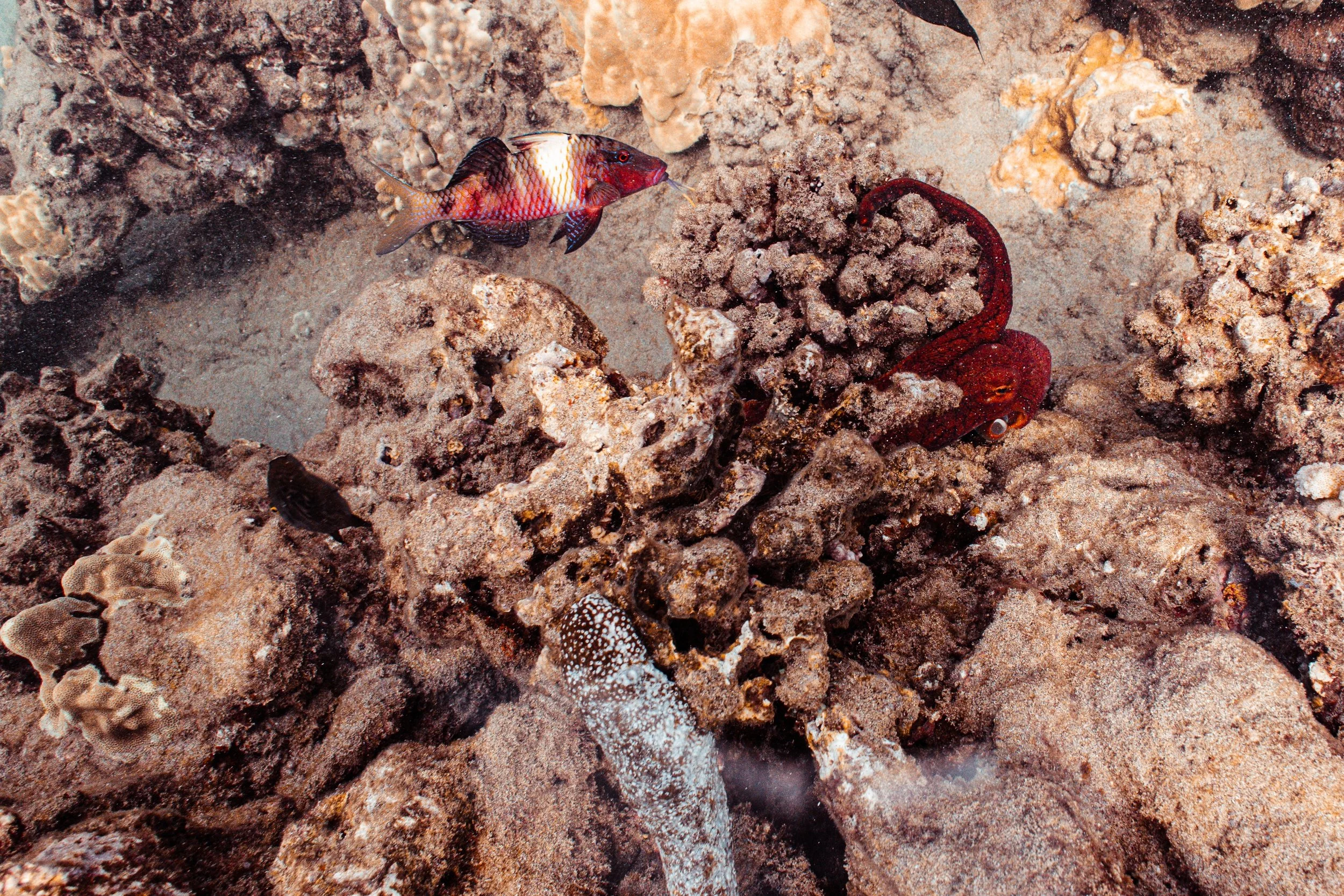
Octopus hiding in coral
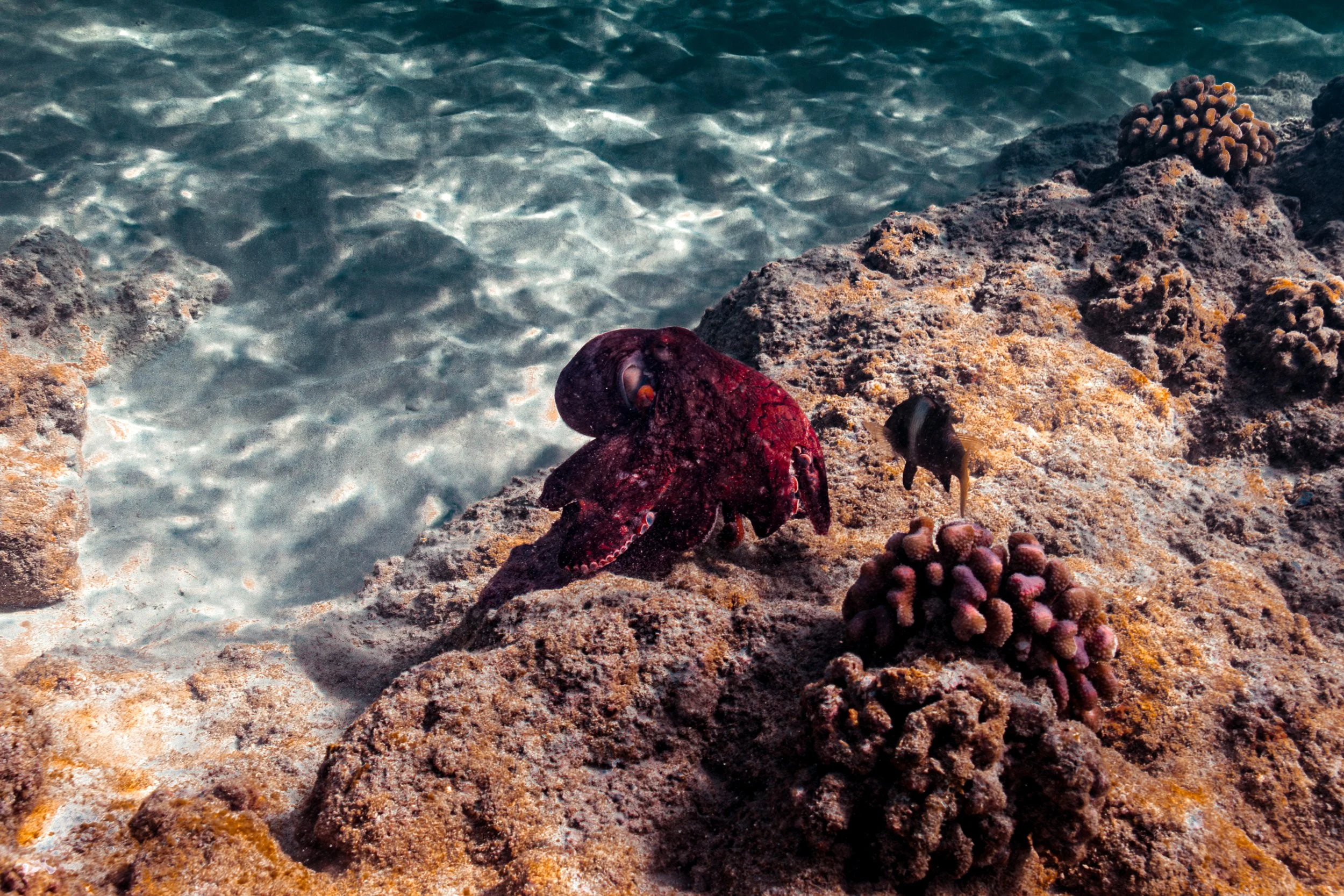
Octopus do not build structures in the way humans do, but they are not passive occupants of their environment.
On reefs, they create dens within crevices and surround those spaces with carefully arranged materials. Shells, rocks, and debris are gathered and positioned around the entrance, creating an “octopus garden”. Over time, this creates a visible boundary—a kind of constructed space that separates the octopus from the outside world.
These accumulations, often called middens, are not random piles. They are the result of repeated choices.
Some species go even further, carrying objects such as coconut shells across the seafloor and assembling them later into shelter. This behavior requires foresight. The octopus collects something it cannot use immediately, transports it, and saves it for a future need.
That simple act—preparing for a future scenario—is something we tend to associate with higher-level cognition. And yet, it exists here, on the reef.
Are they truly solitary?
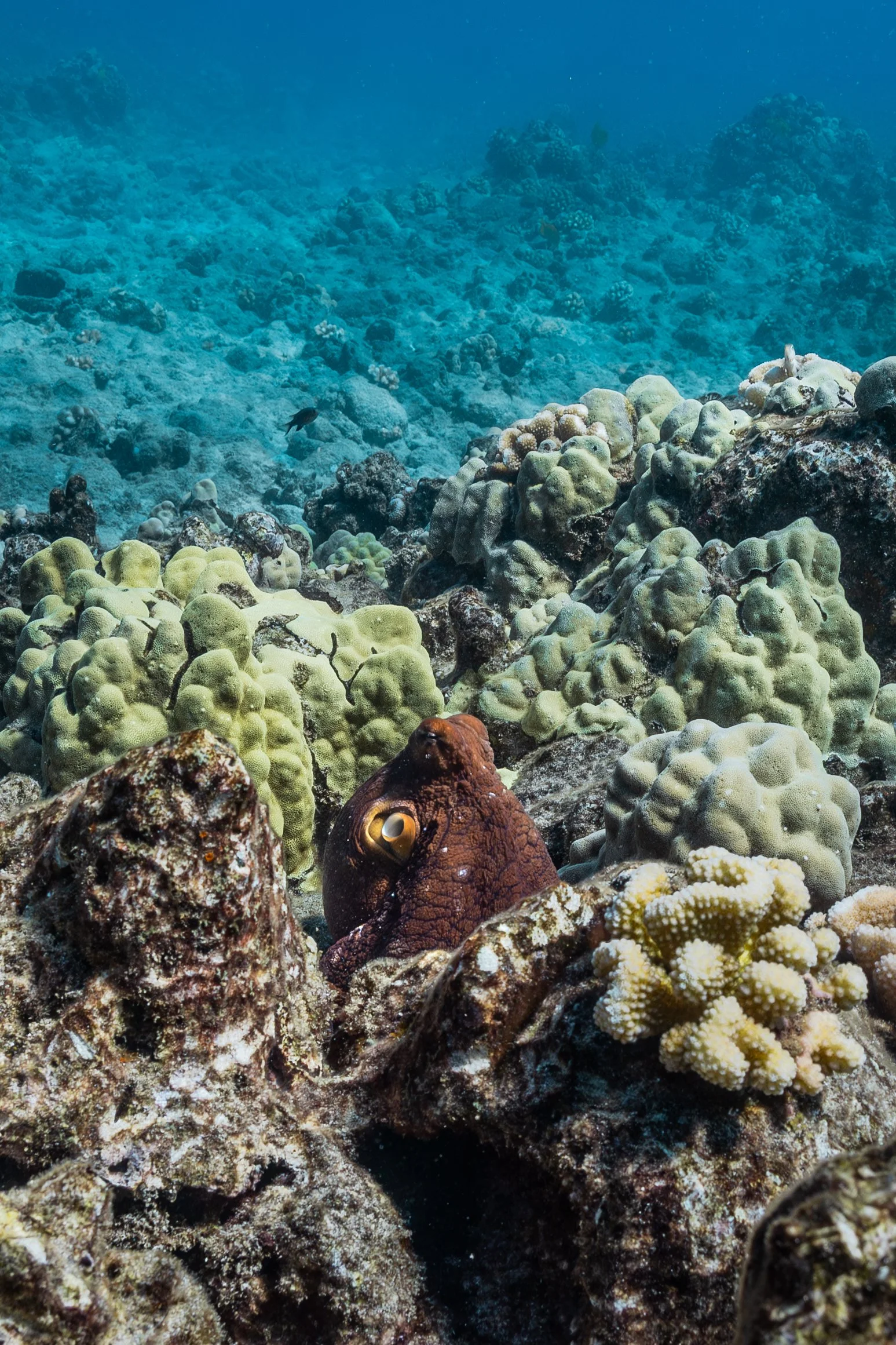
For a long time, octopus were described as completely solitary animals.
They hunt alone. They shelter alone. They don’t raise their young or form long-term bonds. Most of their lives are spent moving quietly across the reef, interacting with others only when absolutely necessary.
And in many ways, that’s still true. But the full picture is more complicated. It becomes especially clear when you look at how they reproduce.
how octopuses reproduce
Octopus reproduction is not just brief—it is final.
A male uses a specialized arm to transfer sperm to the female, often keeping a cautious distance. In some species, that arm can even detach and continue the process on its own. After mating, the male typically dies within a short period.
The female’s path is even more intense.
She lays thousands of eggs and then dedicates herself completely to them. For weeks or even months, she stays with the clutch, carefully tending and cleaning the eggs, protecting them from predators, and ensuring they receive enough oxygenated water.
During this entire time, she does not leave to hunt. She does not eat. She slowly weakens as she continues to guard the eggs, until they finally hatch. Not long after that, she dies.
There is no overlap of generations. No teaching. No passing of knowledge from parent to offspring. Each octopus begins life alone. And yet, despite this deeply solitary cycle, scientists have started to observe something unexpected.
octopus communities
In recent years, researchers discovered sites now known as Octopolis and Octlantis off the coast of Australia—areas where multiple octopus live in close proximity. These are not random gatherings. Individuals occupy dens near one another, interact, display territorial behavior, and occasionally engage in what appears to be communication through body posture and movement.
This was surprising. Because it suggests that, under the right environmental conditions—such as limited shelter or abundant resources—octopus can tolerate, and even adapt to, living near one another.
In deeper parts of the ocean, another phenomenon has been observed: large groups of octopus gathering around warm hydrothermal springs to reproduce. These gatherings can contain thousands of individuals, all drawn to a specific environment that increases the survival chances of their eggs.
So while octopus are not social in the way we typically define it, they are not entirely isolated either. They exist somewhere in between. Capable of solitude, shaped by it—and yet, when conditions shift, able to share space in ways we are only beginning to understand.
octopus on maui
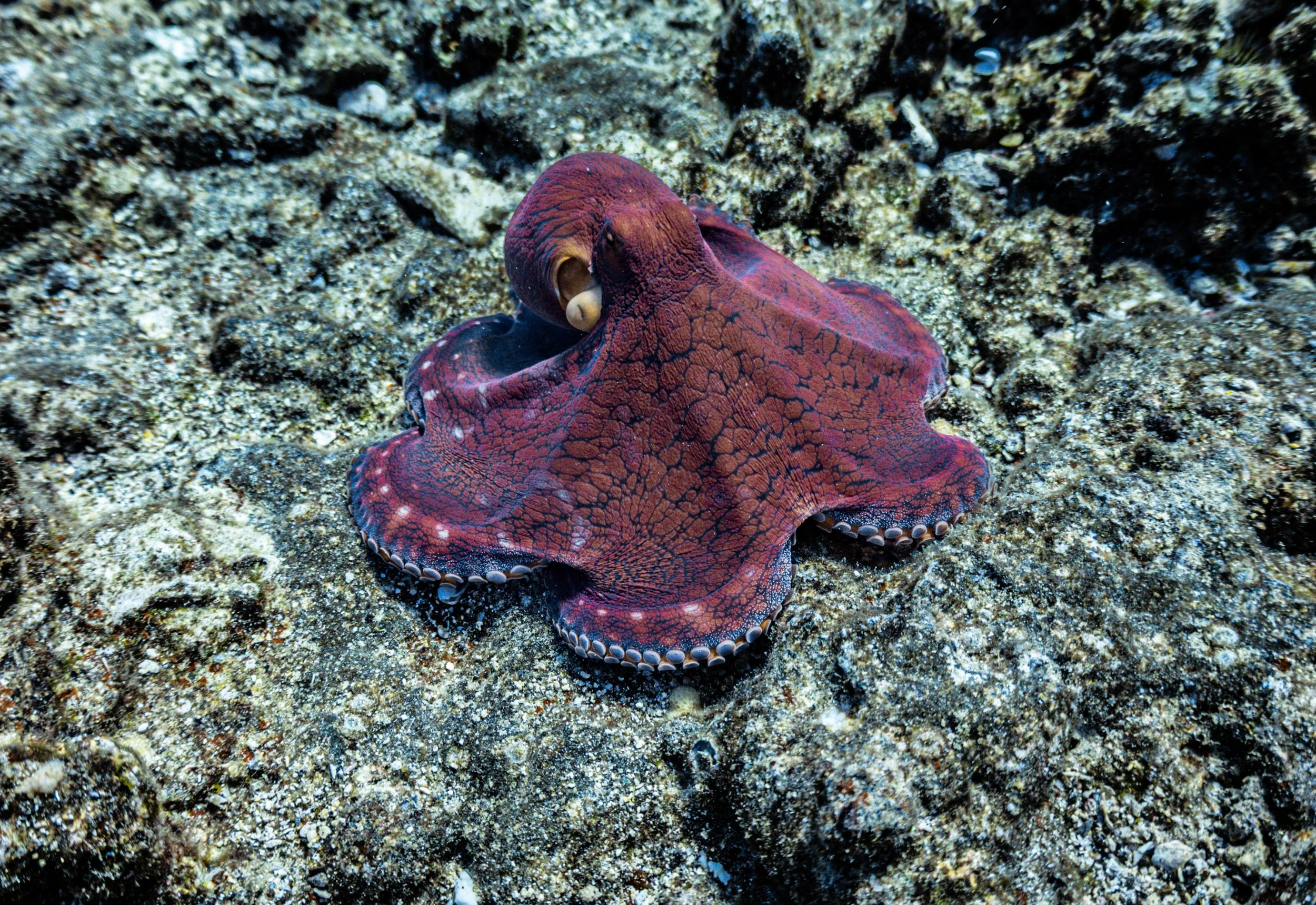
If you’re snorkeling on Maui, there’s a good chance an octopus has already seen you. You just didn’t see it.
How many species are here?
The waters around Hawaiʻi are home to a wide range of cephalopods—about 76 recorded species, including octopus, squid, and cuttlefish.
When it comes specifically to octopus, there are several species present, but only a few that most people will realistically encounter nearshore.
The one you’re most likely to see on Maui is the day octopus (heʻe mauli, Octopus cyanea). It’s active during daylight hours, which already makes it unusual—many octopus species prefer the cover of night.
There are also:
the night octopus (heʻe mākoko / ornate octopus), which is more reclusive and active after dark
smaller or less-studied species, including some that are endemic to Hawaiʻi or still being researched
So while you might hear “the octopus” talked about as one thing, the reality is more layered. Different species. Different behaviors. Different rhythms of the reef.
How many octopus call maui home?
This is where it gets interesting—and a little humbling. There isn’t a clear number.
Octopus are incredibly difficult to count. They are masters of camouflage, they live in dens, and they spend much of their time hidden within the reef structure. Even experienced marine researchers don’t talk about them in terms of population totals.
Instead, we understand them through patterns. Seasonally, there are times when they are more visible. There’s even a Hawaiian proverb that reflects this awareness:
“Pua ke kō, kū mai ka heʻe.” When the sugarcane flowers, the octopus appears.
This aligns with seasonal cycles when octopus are more active or more frequently seen on the reef.
So rather than thinking in numbers, it’s more accurate to think in presence. They are here. Hidden in lava rock crevices, tucked into coral heads, watching the reef the same way we try to.
What Hawaiian knowledge says about the heʻe
In Hawaiian culture, the octopus—heʻe—is not just another animal on the reef. It carries meaning.
Heʻe is often associated with intelligence, adaptability, and transformation. Its ability to change form and disappear into its surroundings connects it to ideas of ʻike (knowledge) and ʻike huna—hidden understanding.
In some traditions, heʻe is linked to the ocean as a realm of depth and mystery, a place where not everything is immediately visible or understood.
That perspective matters. Because it aligns closely with what modern science is still discovering—that octopus are not just reactive animals, but aware, responsive, and capable of complex behavior.
Long before studies and lab experiments, there was already recognition that this animal was different.
How to observe without disturbing
Because octopus are so aware of their surroundings, the way we interact with them matters.
If you’re fortunate enough to see one:
give it space and avoid moving directly toward it. Stay calm in the water and let your presence be neutral. Do not attempt to touch it or block its path.
When stressed, an octopus may release ink or flee rapidly, both of which cost valuable energy. Respectful distance allows the animal to continue its natural behavior, which is also when you’re most likely to witness something meaningful.
The best encounters happen when the octopus chooses not to leave.
Why they matter
Octopus challenge something fundamental in the way we think about life.
They show us that intelligence is not a single path. It does not require long lifespans, social structures, or anything that looks like human experience.
It can emerge in a body without bones. It can exist in a mind spread across eight arms. It can appear, fully formed, in a life that lasts only a year or two.
Sometimes, the ones that feel the most unfamiliar are the ones that can teach us the most.
What else are we missing?
Even now, with everything we’ve learned, octopus still don’t fit cleanly into our understanding.
They can regrow arms—fully restoring not just structure, but function and sensation.
They distribute their intelligence across their bodies, rather than centralizing it.
They can edit their own RNA, adjusting how their cells behave within their lifetime.
And they do all of this in a life that is brief, solitary, and largely hidden from view.
It’s not just that they are unusual. It’s that every time we think we understand them, something else breaks the model.
If you’re hoping to see one
There are no guarantees when it comes to wildlife, and that’s part of what keeps it real.
But when we’re out along the reefs of West Maui or places like Honolua Bay, we’re always watching for the subtle signs—movement that doesn’t match the current, color that shifts just slightly too fast.
If you’re curious, our crew will point out what most people would never notice.
Sometimes, it’s right in front of you.
Written by Curran Jones, Trilogy Excursions