Dolphins on Maui: The Ocean Minds That Keep Surprising Us
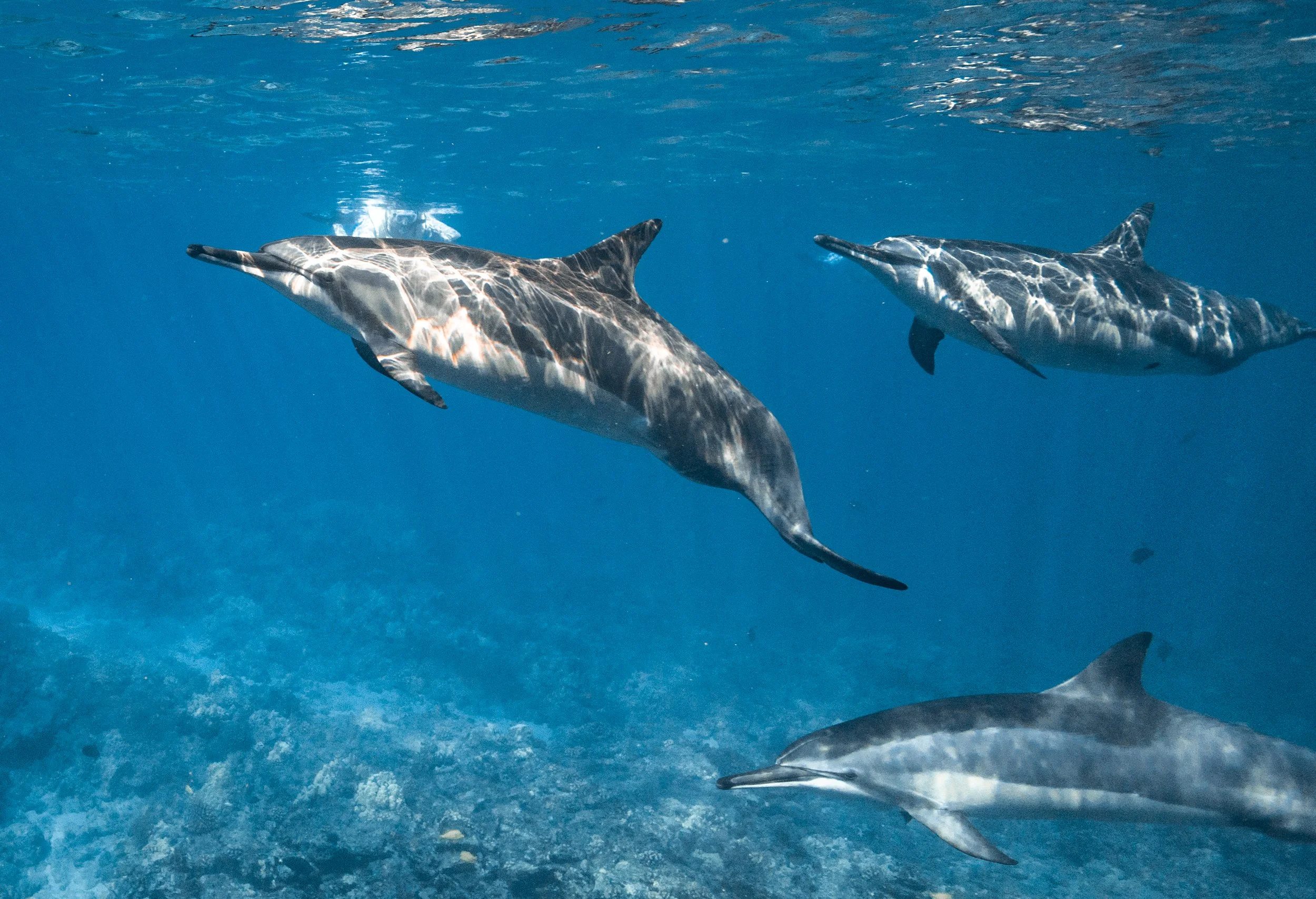
Once in a while, there’s a moment that happens out on the water when a pod of dolphins appear beside the boat. Usually, while sailing across the ʻAuʻau Channel toward Lānaʻi.
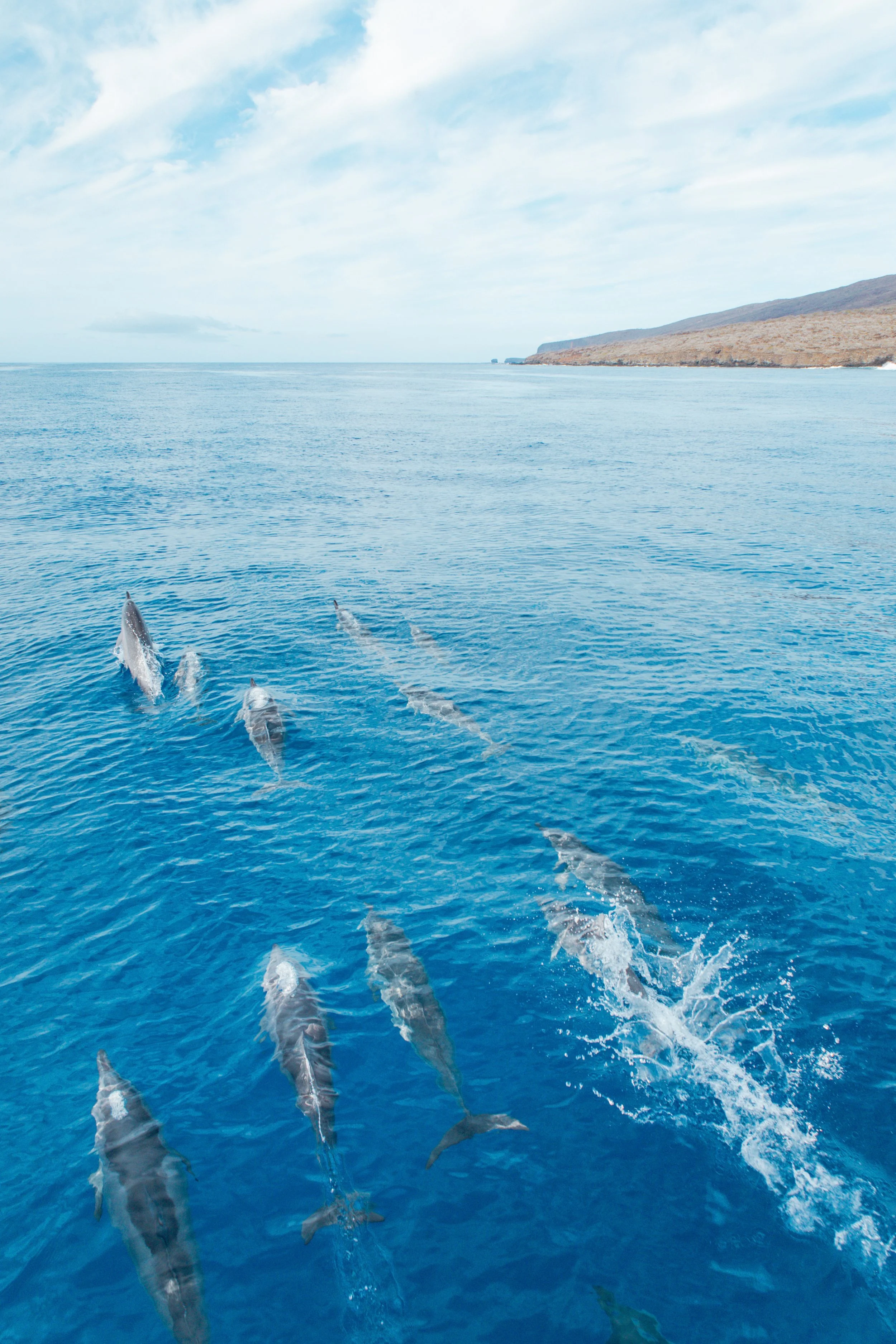
One second it’s smooth sailing. The next, someone spots movement off the bow and yells, “Dolphins!” Suddenly a pod is racing alongside the catamaran, weaving through the wake and surfing the pressure wave at the front of the boat.
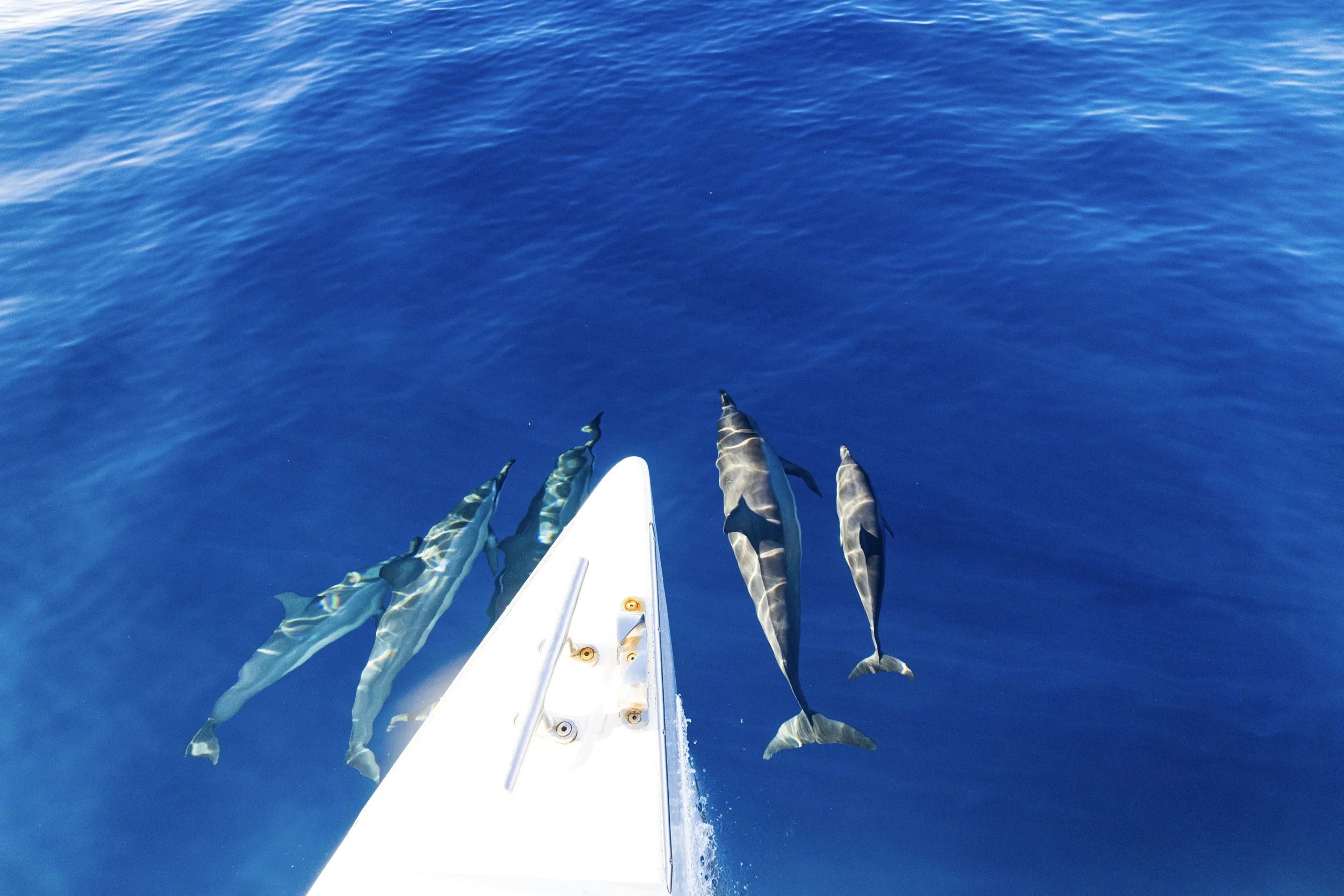
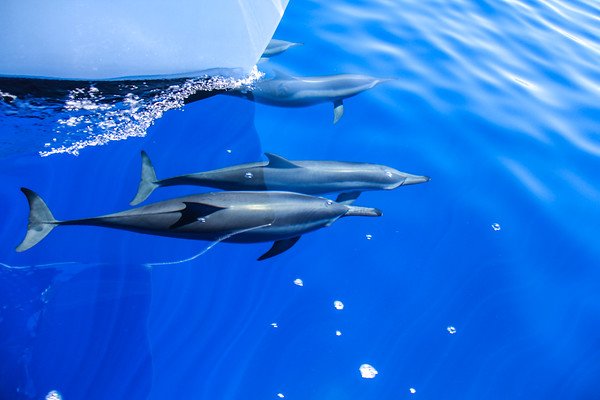
Spinner Dolphins Riding the Bow
Some of us like to call it “dolphin surfing.”
The dolphins use the wave created by the catamaran to glide effortlessly through the water, conserving energy while matching pace beside the hull. Scientists have observed this behavior in multiple dolphin species around the world, and while researchers still debate exactly why dolphins enjoy bow-riding so much, play is believed to be part of it.
And dolphins really do seem to enjoy play.
They surf breaking waves. They create bubble rings. They chase each other through the water for no obvious survival purpose at all.
The more time you spend around dolphins, the harder it becomes to see them as simple creatures operating on instinct alone.
The waters surrounding Maui are home to several species of dolphins, along with a few rare visitors that continue challenging what we think we know about intelligence, communication, and social connection in the animal world.
And the more scientists study dolphins, the harder it becomes to think of them as “just animals.”
This is a closer look at the dolphins found on and around Maui, how they communicate, why they’re protected, and what makes them some of the most socially complex beings in the ocean.
⋆。𖦹 🌊˚ . 🐬𓇼 ˚。⋆
⋆。𖦹 🌊˚ . 🐬𓇼 ˚。⋆
The Dolphins Most Commonly Seen on Maui
Spinner Dolphins
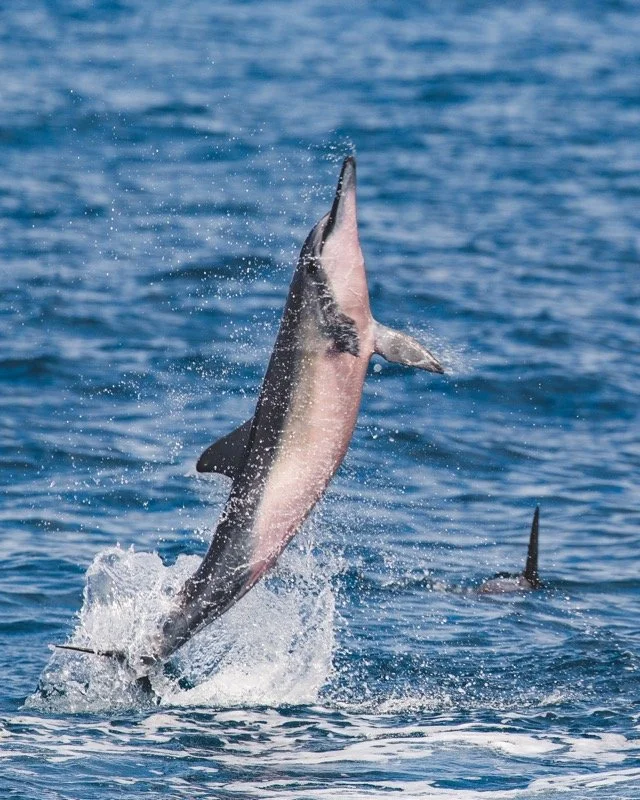
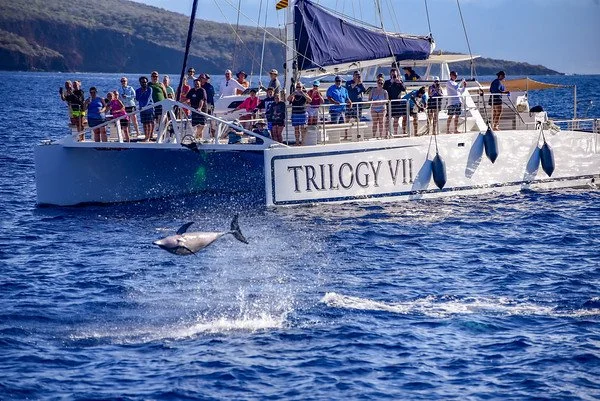
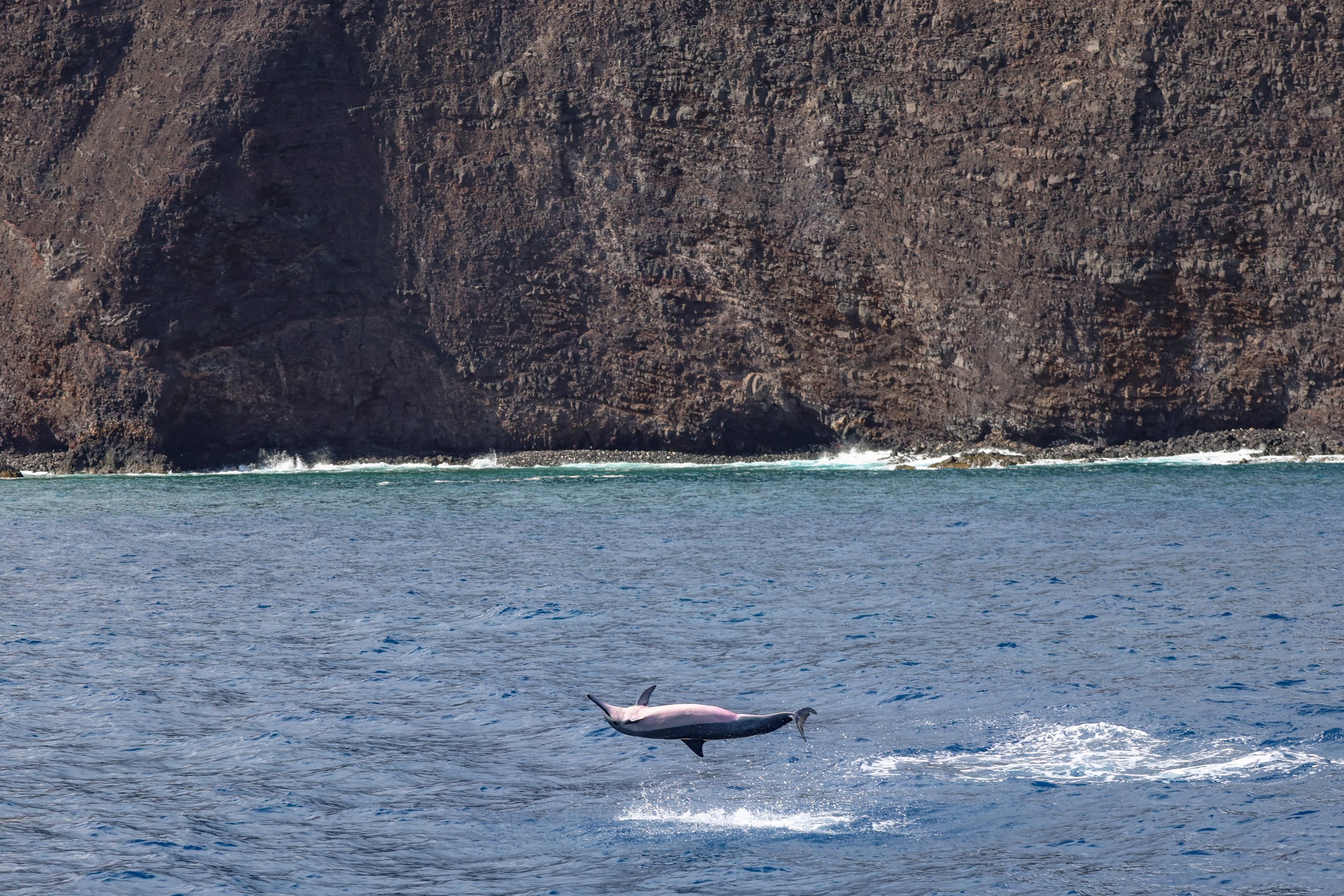
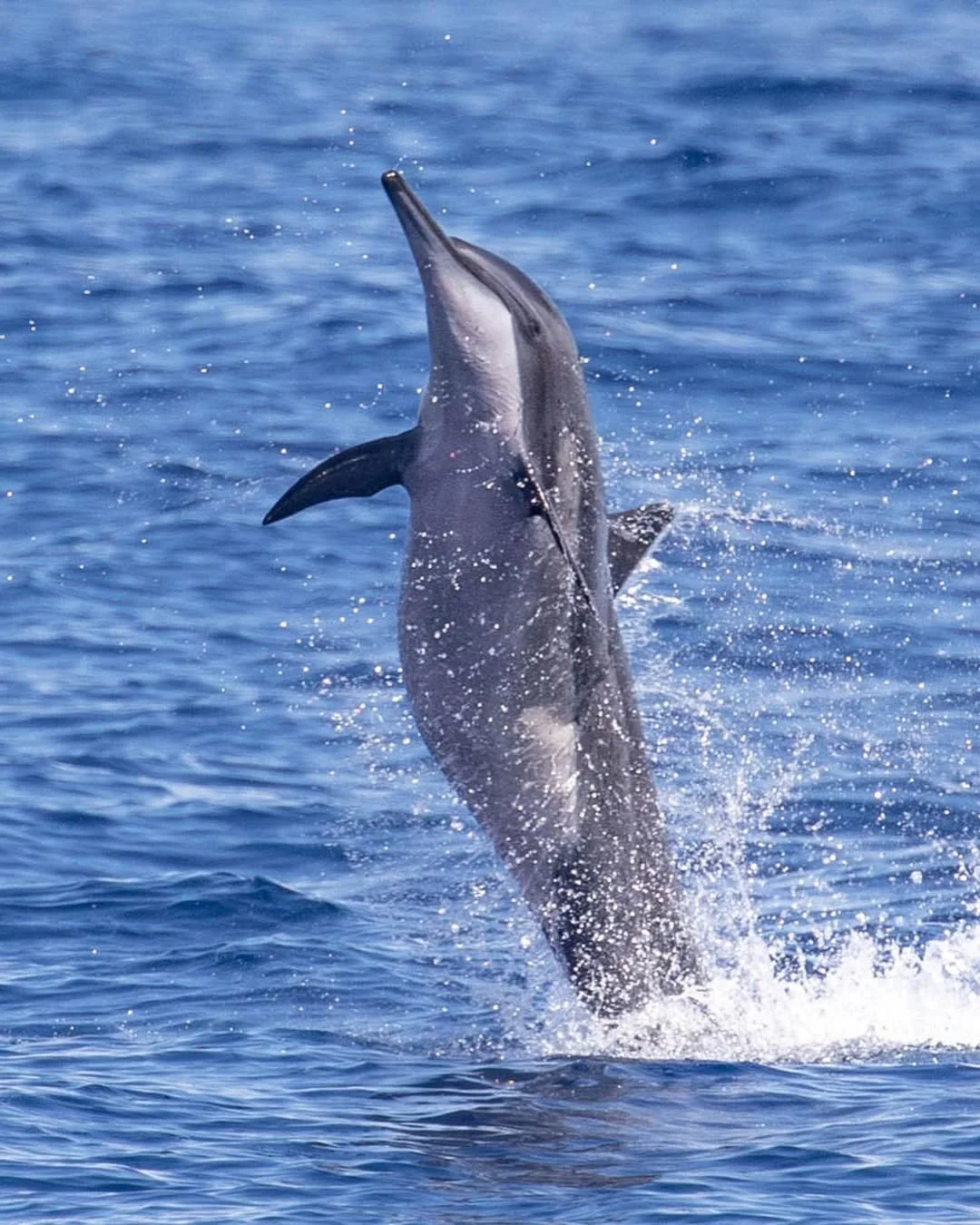
If you’ve spent time on the water on Maui, chances are you’ve seen Hawaiian spinner dolphins.
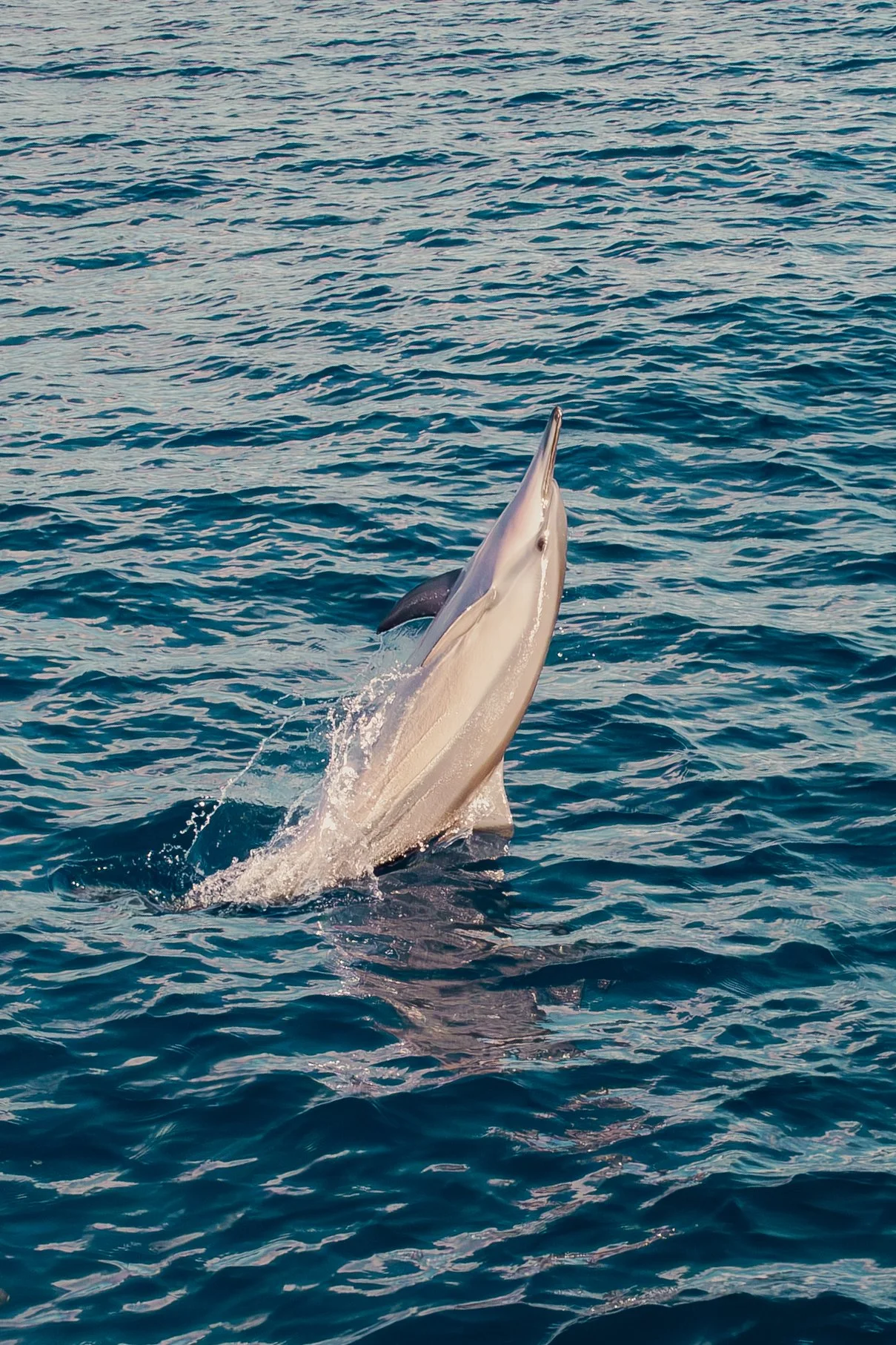
These are the dolphins most people recognize immediately — sleek bodies, long beaks, and acrobatic leaps that can include multiple spins in a single jump.
Spinner dolphins feed offshore at night, hunting small fish and squid in deep water. During the day, they return to calmer coastal areas to rest.
That daytime rest is essential. Research from NOAA found that repeated human disturbance can interrupt resting behaviors and impact the dolphins’ long-term health. Because of this, Hawaiʻi now has strict federal protections in place.
As of 2021, it is illegal to swim with, approach, or remain within 50 yards of Hawaiian spinner dolphins in nearshore waters surrounding the main Hawaiian Islands. The law exists because dolphins need uninterrupted rest to survive.
But there’s an important distinction here. Responsible operators do not chase dolphins or force interactions.
At the same time, dolphins do not always want distance. Spinner dolphins are naturally social, curious, and playful animals. Sometimes they choose to approach the boat themselves — surfing the bow wave, swimming alongside the hull, or briefly popping up as if to say hello. That’s what makes these encounters so meaningful.
The interaction always happens on their terms.
Bottlenose Dolphins
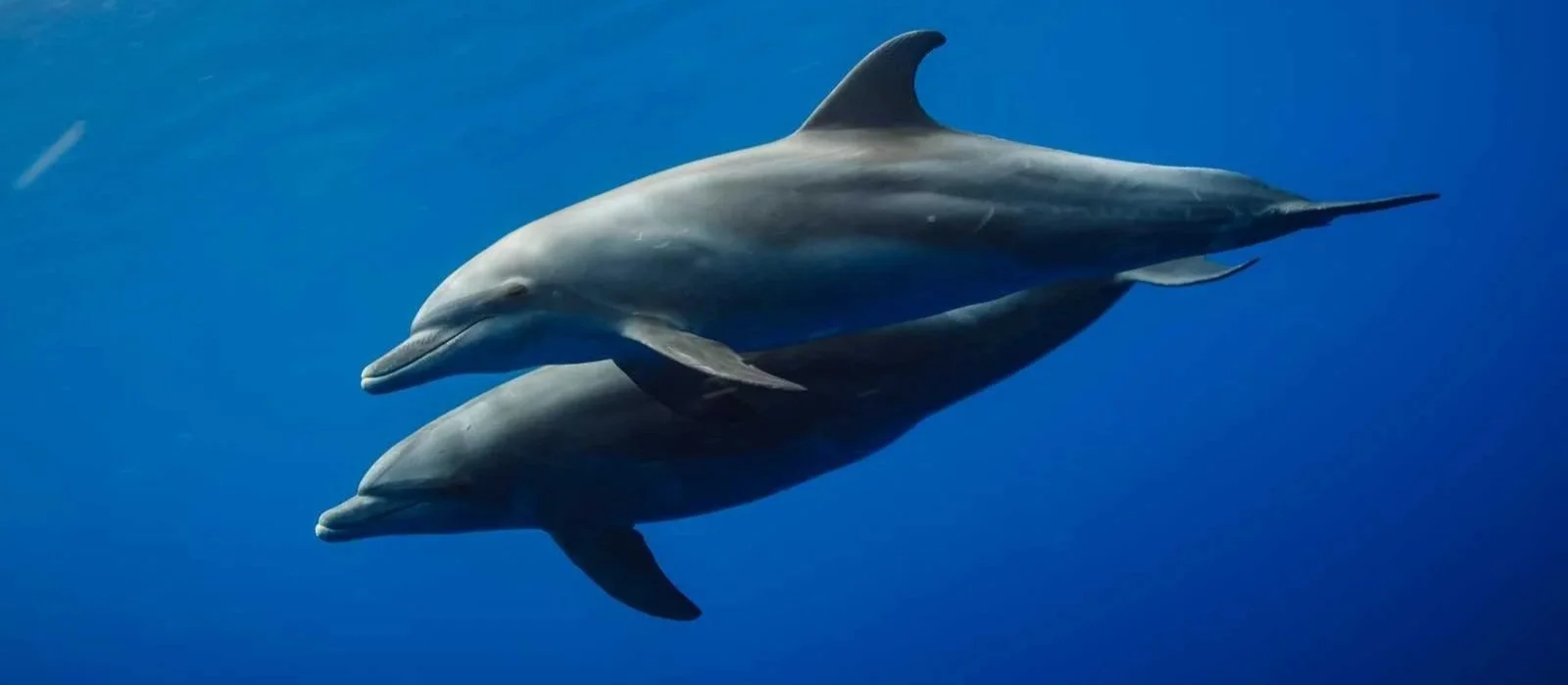
Photo From the Marine Mammal Center
Bottlenose dolphins are larger, more powerful, and often more curious around boats.
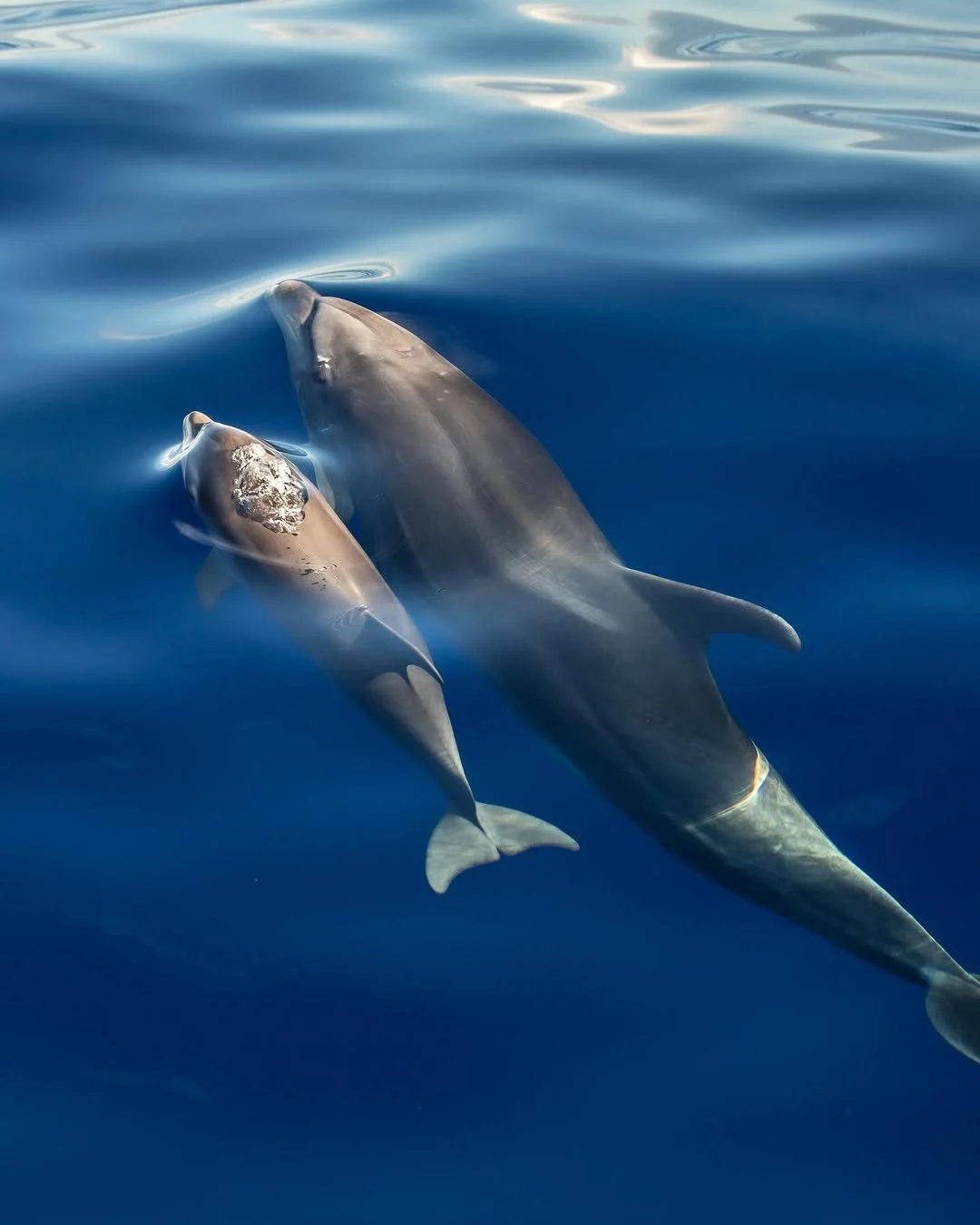
They’re also among the most studied animals on Earth.
Scientists have documented:
Individual “signature whistles” that function similarly to names
Long-term memory lasting decades
Cooperative hunting strategies
Tool use in some populations
Complex social alliances
Research suggests dolphins can recognize themselves in mirrors, a trait associated with self-awareness and seen in very few species.
Some dolphins have also been observed teaching hunting techniques to their young, passing knowledge between generations in ways that resemble culture.
That observation changes things. It means that culture is not limited to just humans, but shared among other animals as well.
Spotted Dolphins & Rough-Toothed Dolphins
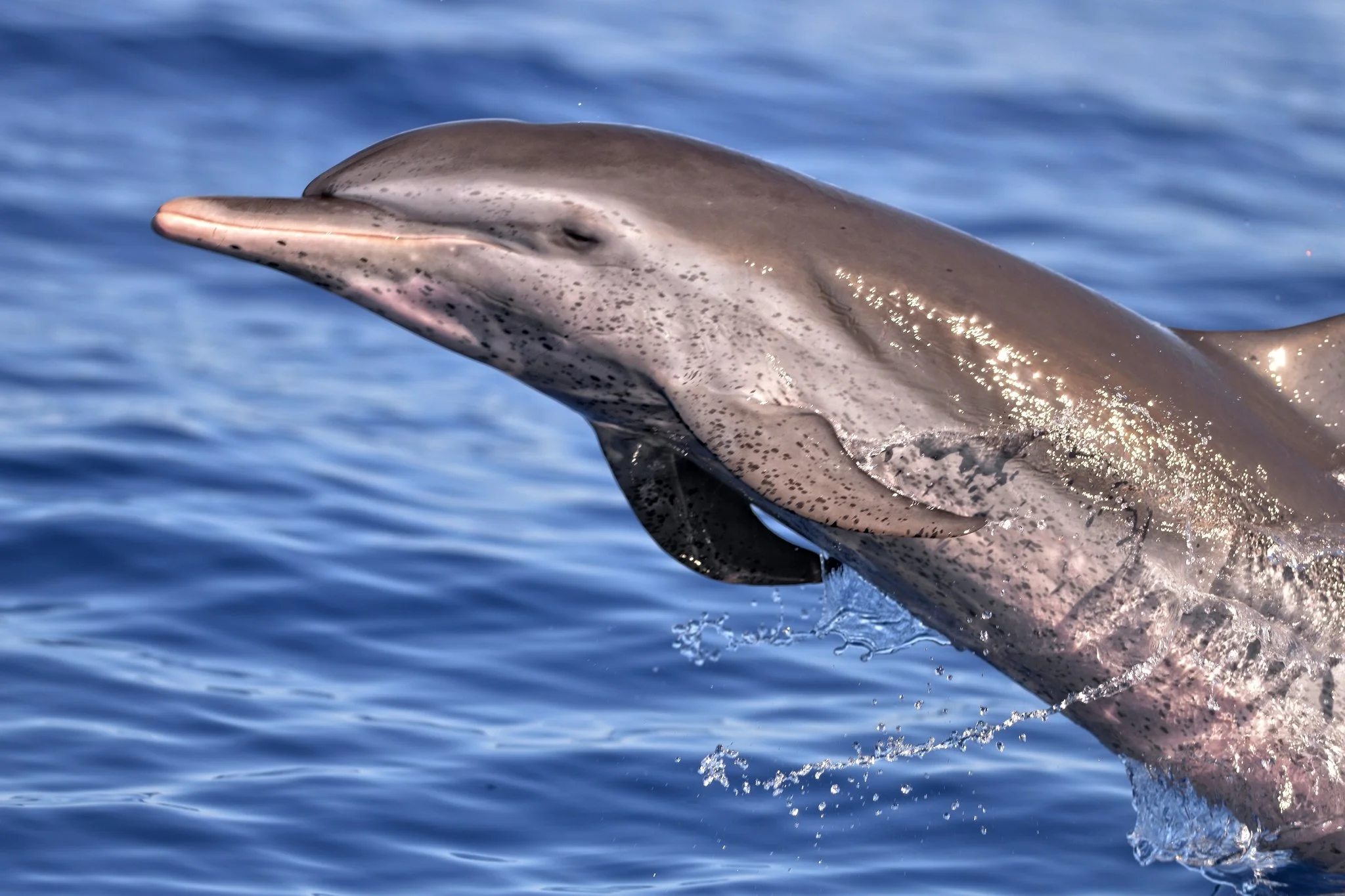
Pantropical Spotted Dolphin | Photo from iNaturalist
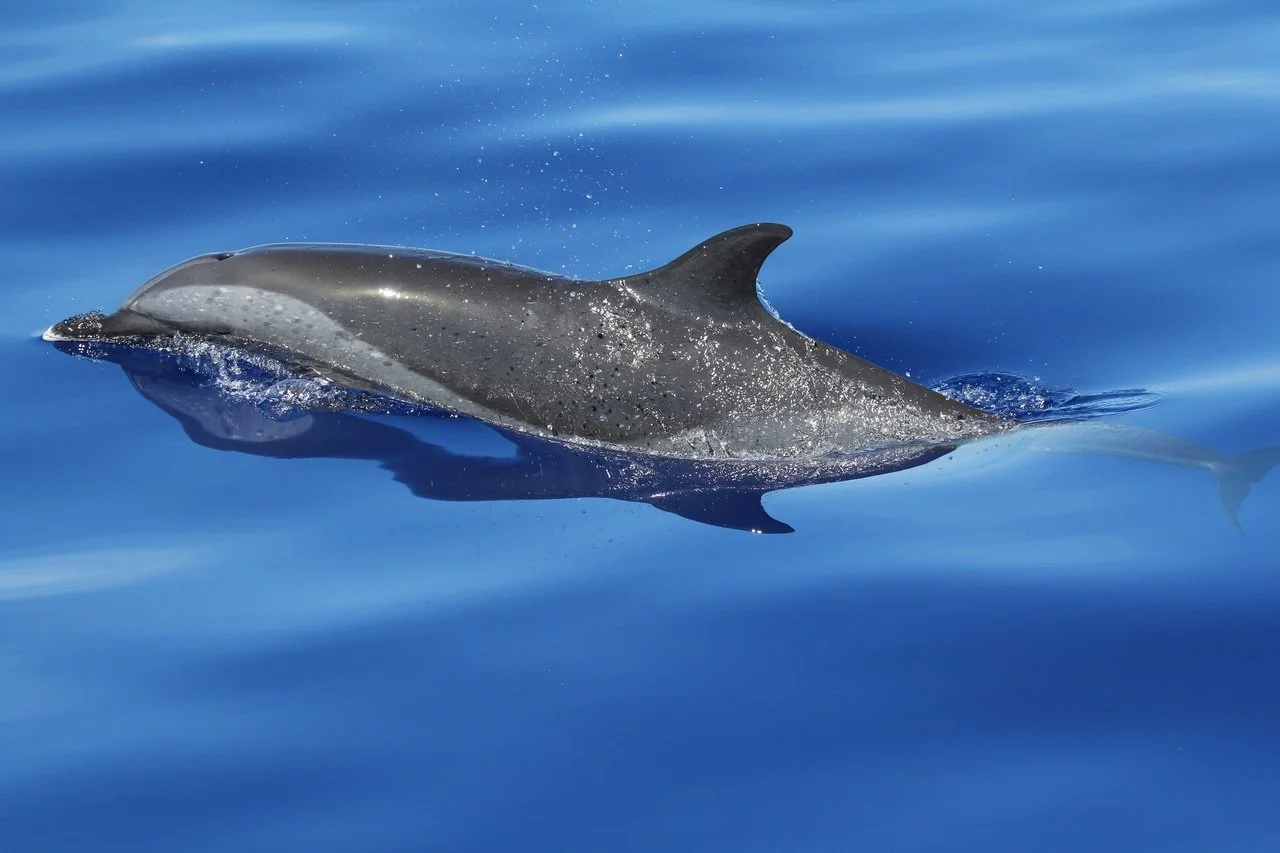
Pantropical Spotted Dolphin | Photo from NOAA Fisheries
Not every dolphin encounter on Maui involves the species most visitors recognize immediately.
Some of the most memorable sightings come from the less commonly discussed dolphins that move through deeper offshore waters.
Pantropical spotted dolphins are fast-moving, social, and highly interactive within pods. Young dolphins are born without spots, gradually developing their markings over time until older individuals appear almost painted by the ocean.
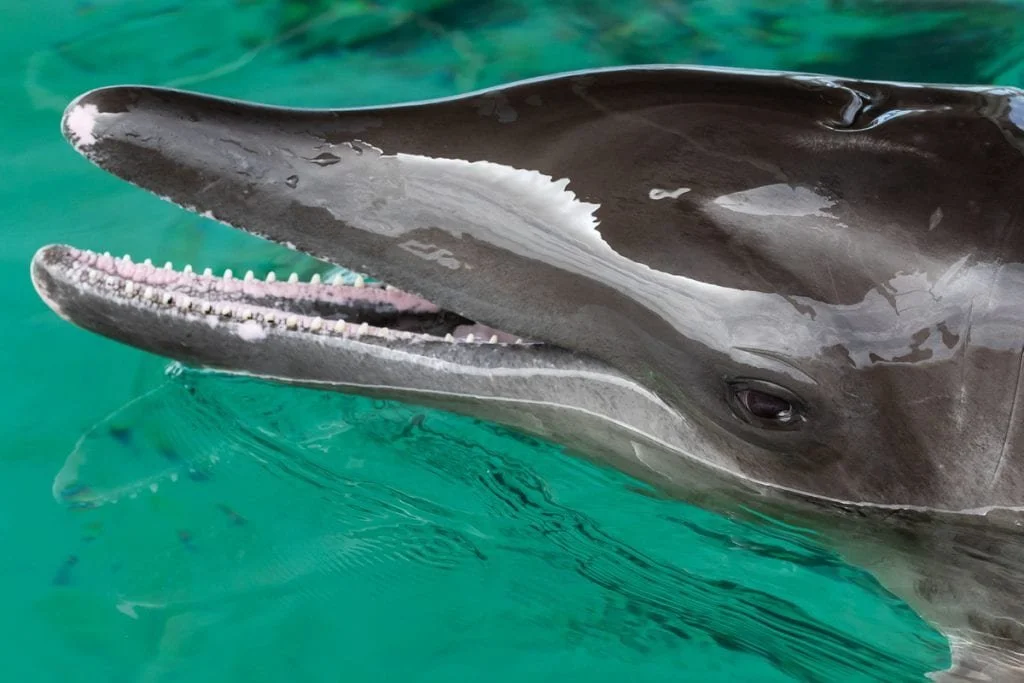
Rough Toothed Dolphin | Photo from Clearwater Aquarium
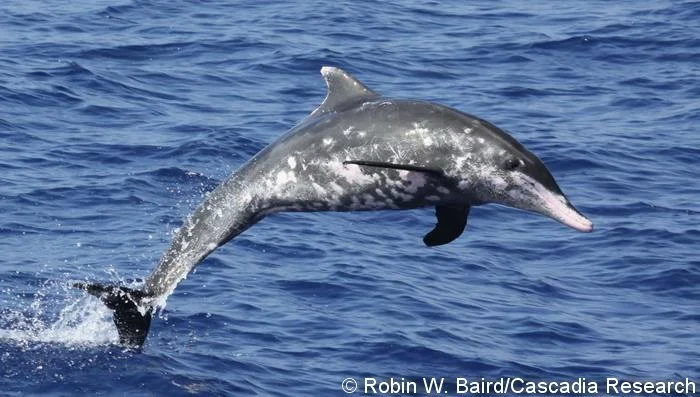
Rough Toothed Dolphins in Hawaiʻi | Photo from Cascadia Research
Rough-toothed dolphins are among the more mysterious species found in Hawaiian waters.
Unlike spinner dolphins, they tend to move more slowly and surface with less dramatic behavior. They travel in close-knit groups and are known for strong social bonds.
Researchers have documented cooperative care of calves within rough-toothed dolphin pods, where multiple adults help protect younger dolphins.
Both species are typically seen farther offshore in deeper channels between islands, making every sighting feel a little more unexpected.
The Rare Visitors: Melon-Headed Whales
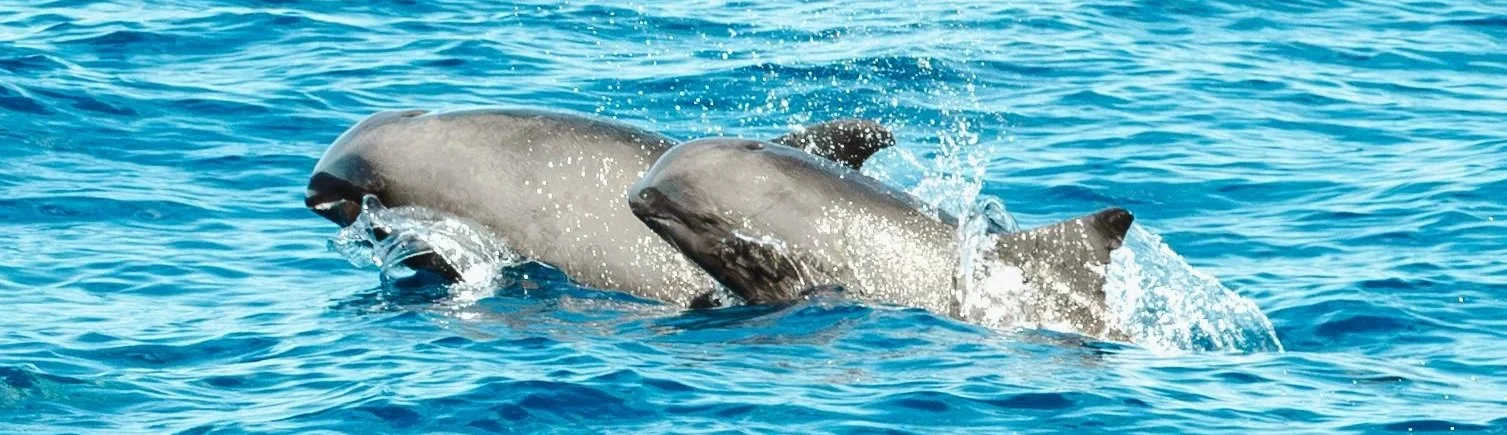

Despite the name, melon-headed whales are actually part of the oceanic dolphin family.
And seeing them on Maui is special.
These deep-water animals typically travel in large groups and are only infrequently encountered near shore. In Hawaiian waters, researchers have identified both offshore populations and smaller island-associated groups.
Melon-headed whales are closely related to false killer whales and pilot whales.
When they surface together, hundreds at a time, the ocean can suddenly feel ancient.
Like something older than language moving beneath the boat.
One of the wildest discoveries involving melon-headed whales happened near Kauaʻi, where researchers identified a rare hybrid between a melon-headed whale and a rough-toothed dolphin.
Nature is still full of surprises.
Dolphin Intelligence Is More Complex Than Most People Realize
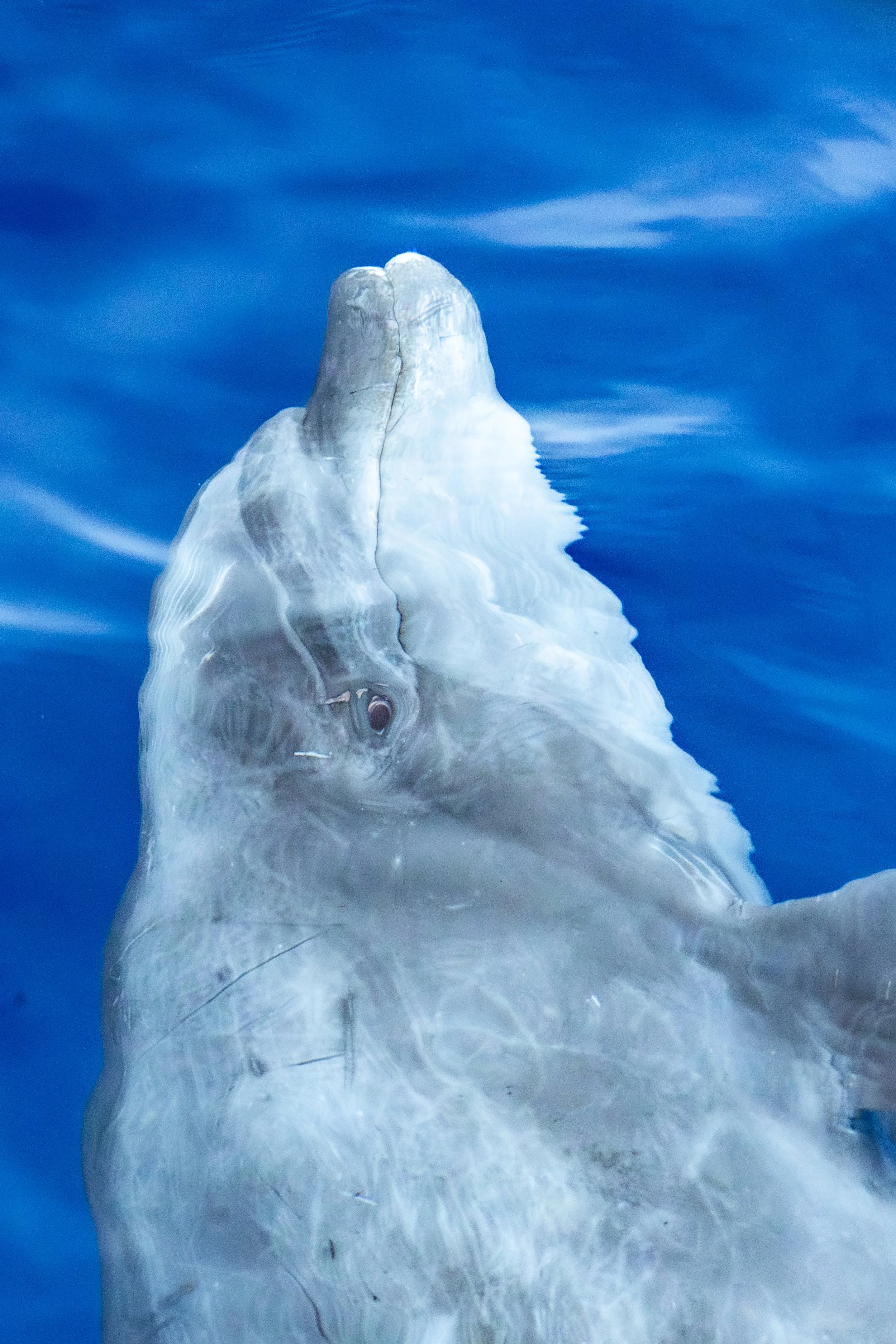
For decades, scientists have studied dolphin cognition, communication, and social behavior. The findings continue to challenge assumptions about intelligence itself.
Dolphins have some of the largest brain-to-body ratios in the animal kingdom. Their brains contain highly developed regions associated with emotional processing, problem-solving, and social interaction.
Researchers have documented behaviors including:
Cooperation between unrelated individuals
Recognition of specific whistles from dolphins they haven’t seen in decades
Coordinated hunting strategies
Learning through observation
Play behavior without obvious survival purpose
Dolphins also appear to experience individuality.
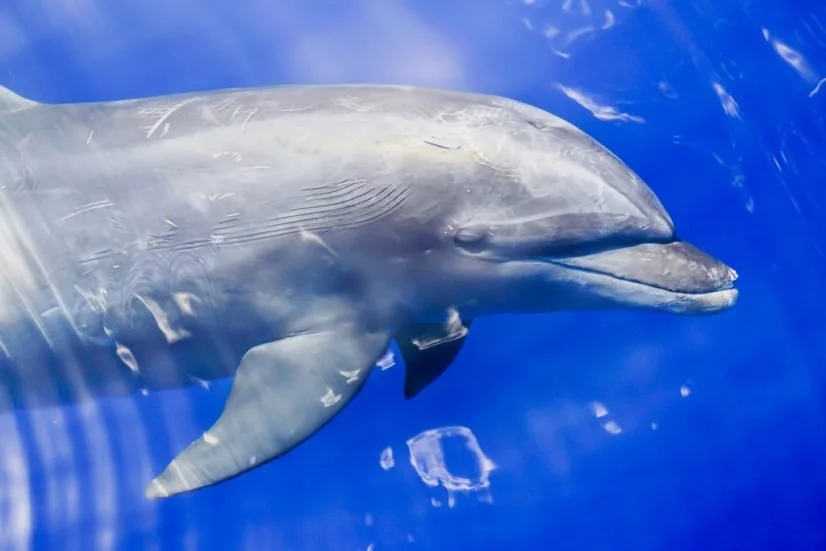
Each bottlenose dolphin develops a unique signature whistle that scientists believe functions similarly to a personal identifier. Other dolphins can imitate those whistles to call out to specific individuals.
In simple terms: Dolphins may literally “name” each other.
Recent research teams studying dolphin vocalizations are even attempting to decode shared whistle patterns that may communicate alarm, surprise, or social coordination.
We are still at the beginning of understanding what dolphins are saying. The deeper scientists look into dolphin intelligence, the stranger the line between “human” and “animal” begins to feel.
Dolphins Communicate Through Sound in Ways Humans Can Barely Perceive
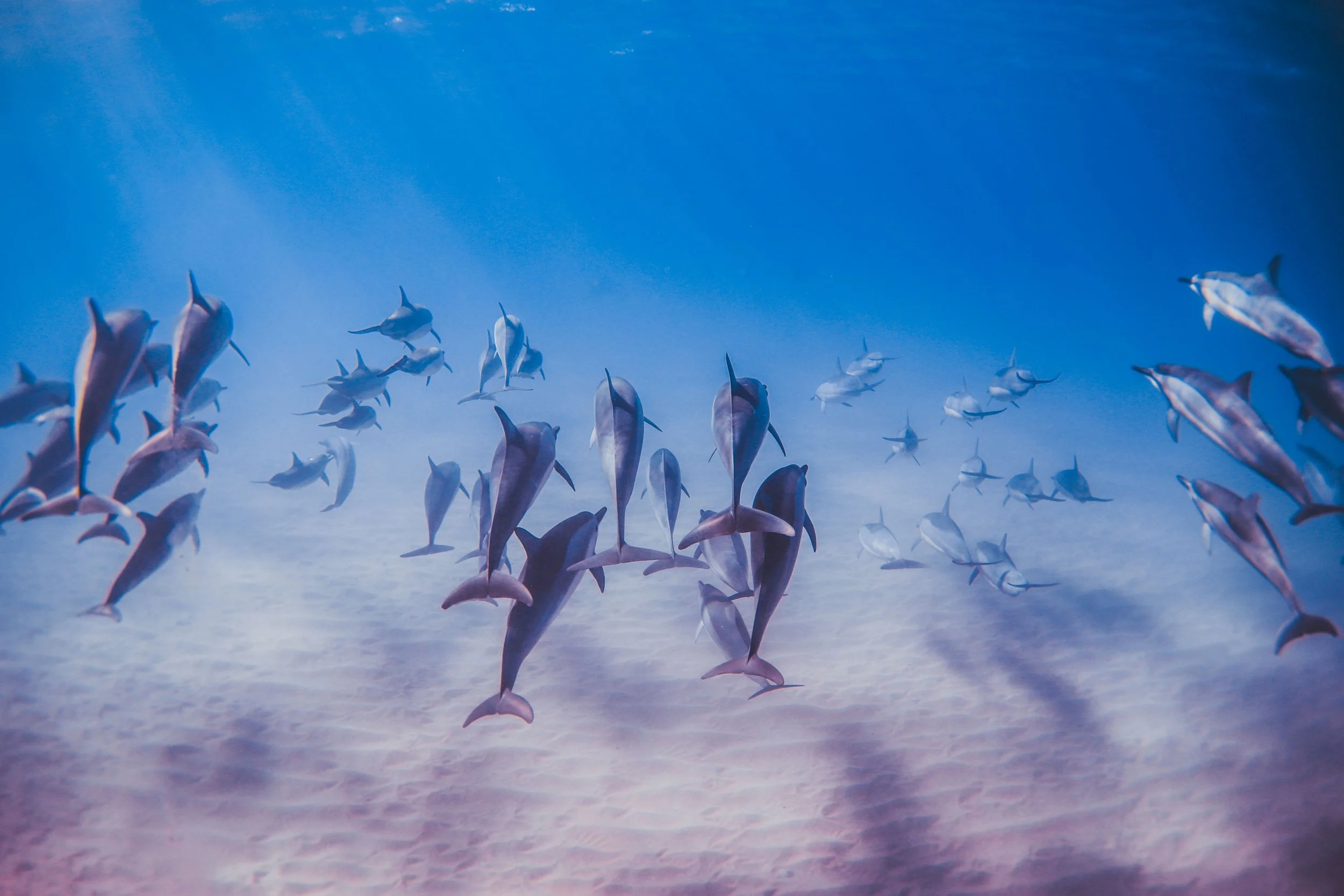
The ocean is a world built around sound. Light disappears quickly underwater. Sound travels farther and faster.
Dolphins rely on whistles, clicks, burst-pulse sounds, and echolocation to navigate, hunt, socialize, and identify one another.
Echolocation works by sending out focused sound pulses and interpreting the returning echoes. To dolphins, sound creates a living map. Researchers believe dolphins can determine:
Distance
Shape
Density
Movement
…through sound alone.
That level of sensory awareness is difficult for humans to fully imagine because our experience of the world is primarily visual.
Dolphins experience the ocean differently. Not less. Differently.
Real Stories That Continue To Fascinate Scientists
Sometimes the most powerful evidence of dolphin intelligence comes from direct encounters. Not theories. Not internet mythology. But true documented events.
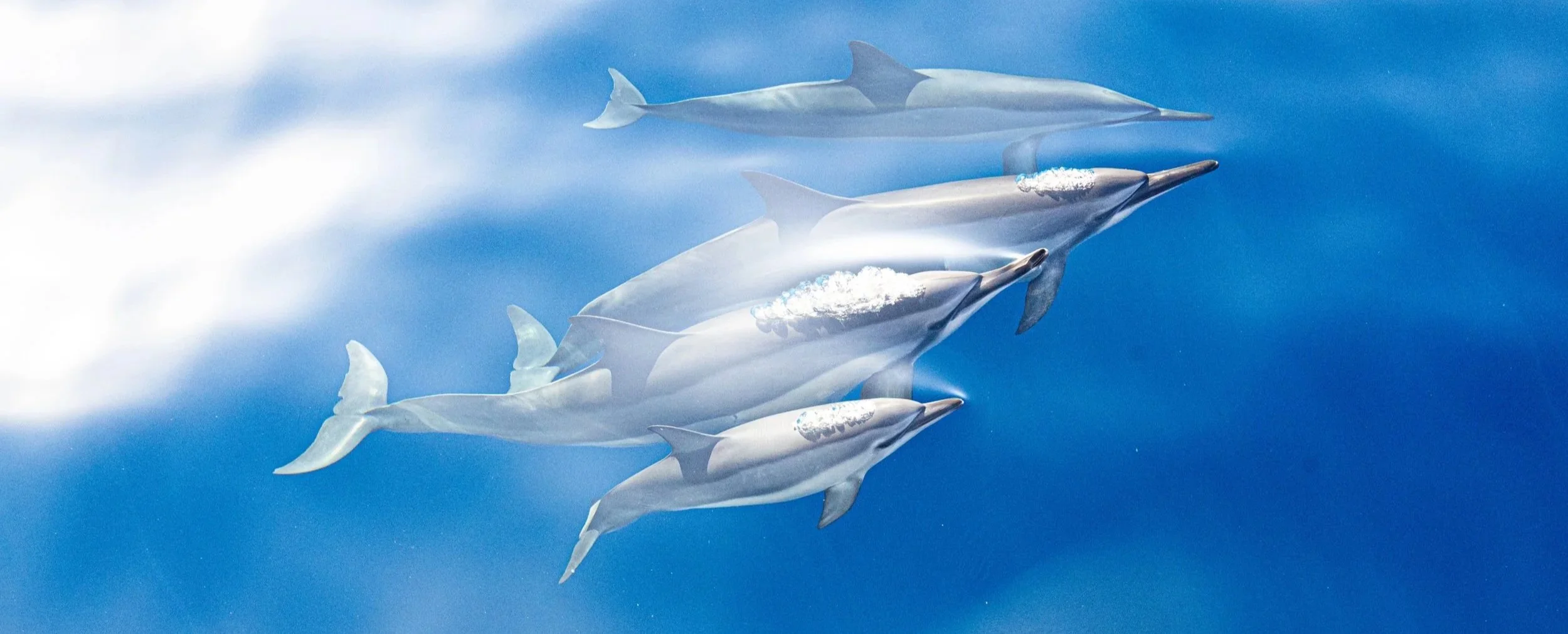
The New Zealand Shark Encounter
In 2004, a group of lifeguards swimming near Whangārei, New Zealand, reported that a pod of bottlenose dolphins suddenly surrounded them in tight circles for roughly 40 minutes.
Only later did the swimmers realize a great white shark had been nearby. The dolphins repeatedly herded the swimmers together while positioning themselves outward toward the shark.
Scientists still debate whether the dolphins were intentionally protecting the humans or instinctively responding to the shark itself. But either way, the outcome was extraordinary. The swimmers survived inside a living circle of dolphins.
The Dolphins That Returned With Gifts During COVID
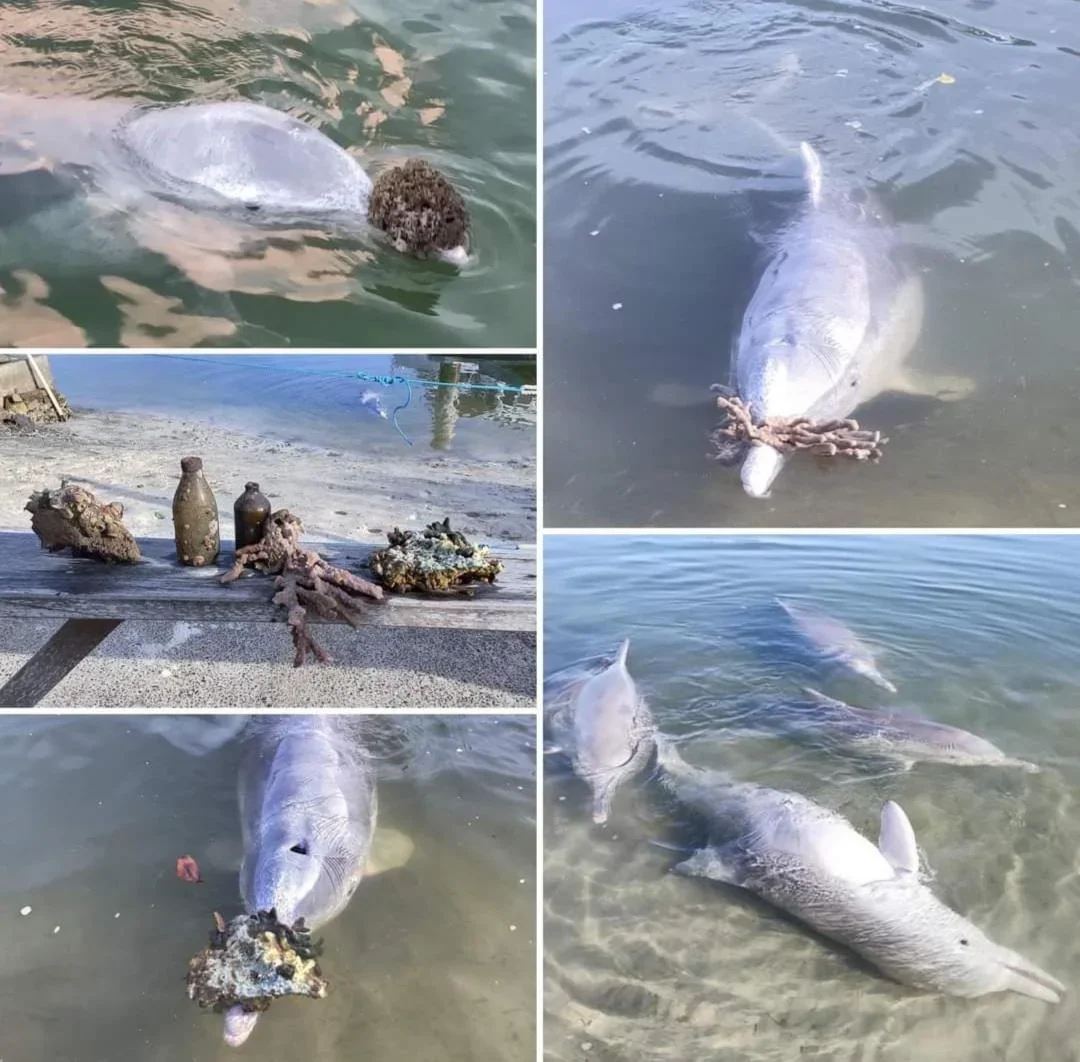
Photo From Reddit
During the COVID lockdowns in Queensland, Australia, dolphins at Barnacles Dolphin Centre began arriving with unusual objects balanced on their rostrums.
Sea sponges. Coral. Shells. Pieces of driftwood.
Staff documented the behavior after regular human interaction along the shoreline suddenly disappeared. Researchers cannot say exactly why the dolphins began bringing these objects ashore.
Curiosity? Play? Social behavior?
No one knows for certain. But the timing was difficult to ignore. And it seems to most they were bringing “gifts” ashore, trying to get the humans back out.
The U.S. Navy Dolphin Program is Real
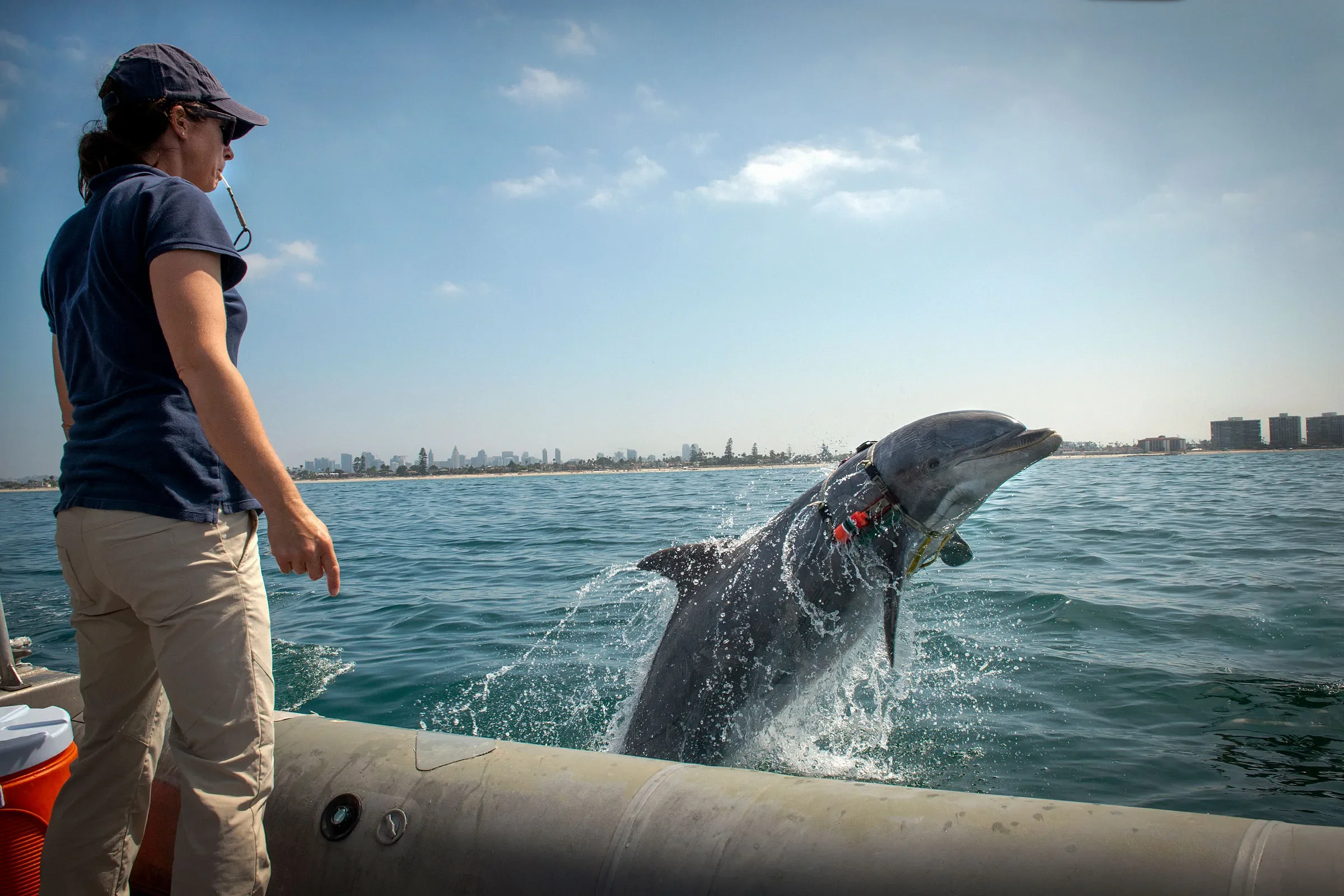
Photo from MIT Technology Review
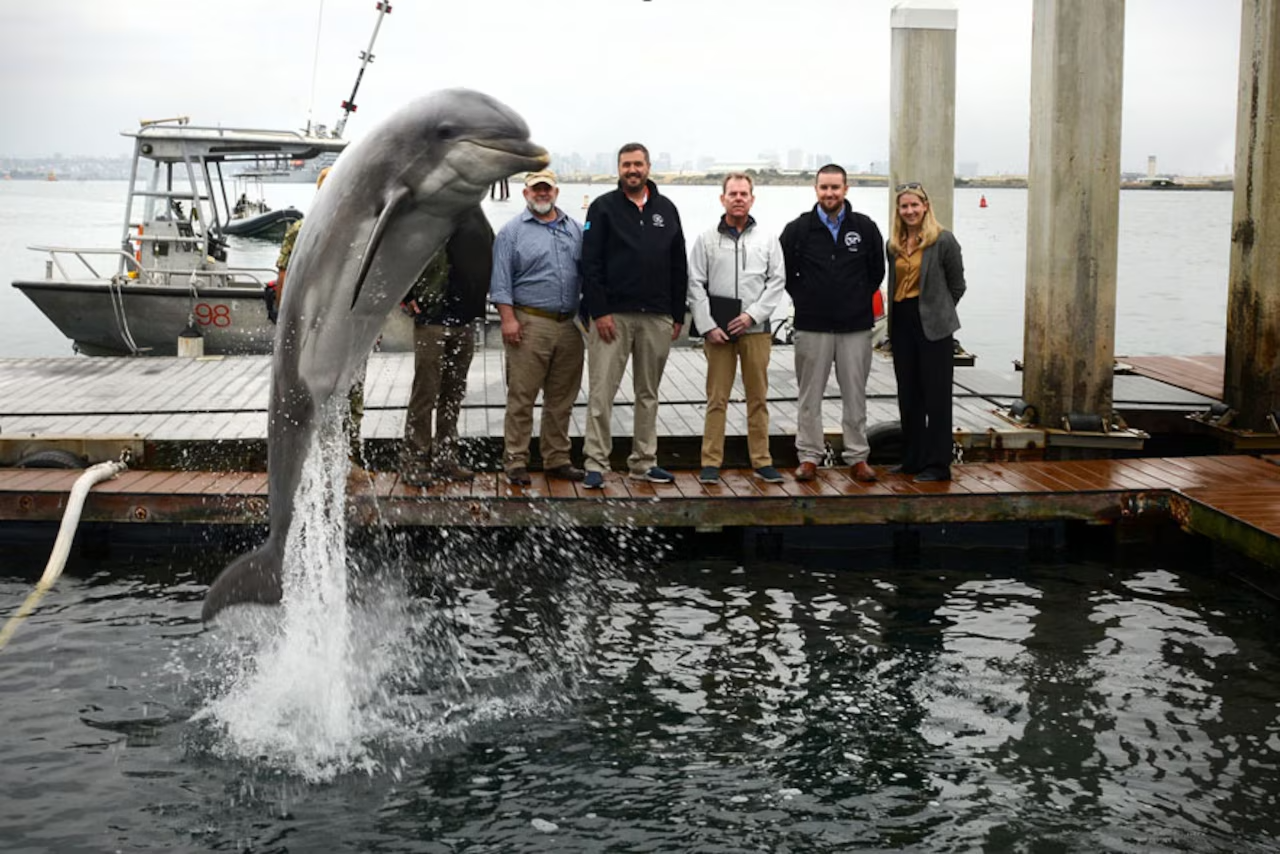
Photo from U.S Department of War
This surprises many people, but it’s true. The U.S. Navy has operated a Marine Mammal Program for decades using dolphins and sea lions for underwater detection work.
According to the Navy, trained dolphins have been used to help locate underwater mines and recover equipment because of their extraordinary echolocation abilities.
The program still exists today.
That reality often sparks uncomfortable questions. If humans trusted dolphins with military operations underwater, what does that say about their intelligence? And what responsibilities come with knowing that?
Dolphins And Other Animals
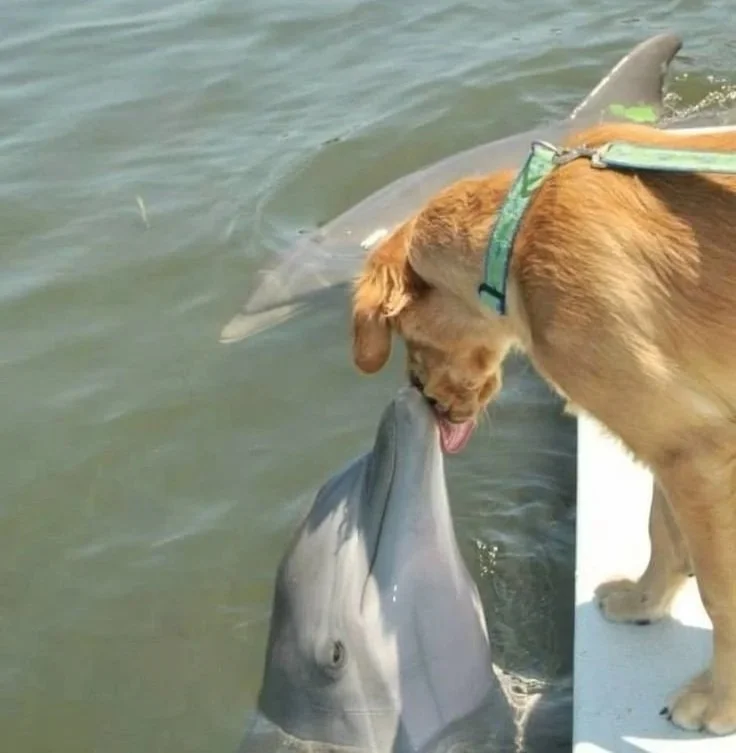
Dolphins have also been repeatedly observed interacting playfully with other species. Including dogs.
Along coastlines around the world, there are documented cases of dolphins returning repeatedly to docks and shorelines to interact with the same animals. Scientists are cautious about calling these relationships “friendships” in human terms, however that is how the relationships seems to a normal eye.
Still, the repeated interactions suggest dolphins possess an unusual level of curiosity and social awareness toward beings outside their own species.
Play Matters More Than We Think
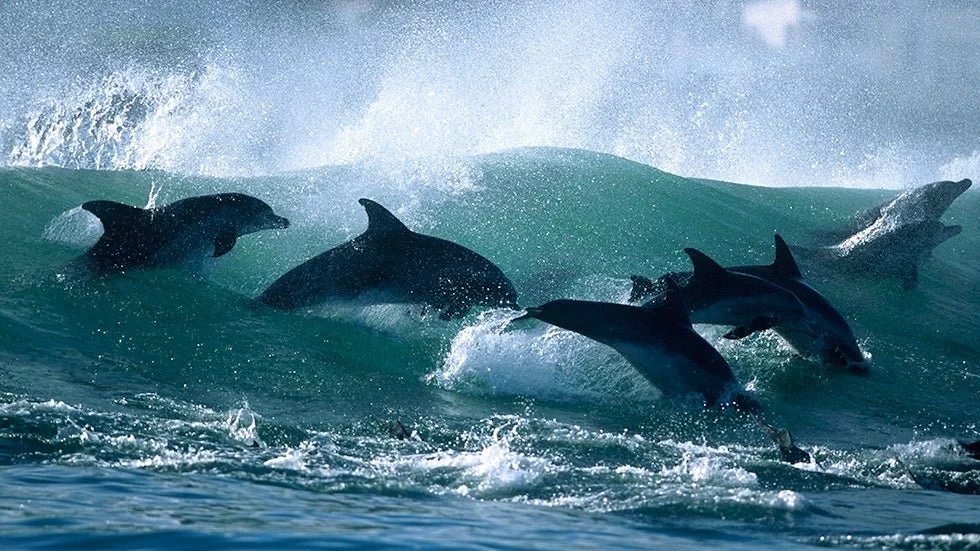
Dolphins Surfing | Photo from Greg Huglin
Dolphins are famous for surfing waves and riding boat wakes. But scientists believe play behavior serves important social and cognitive functions.
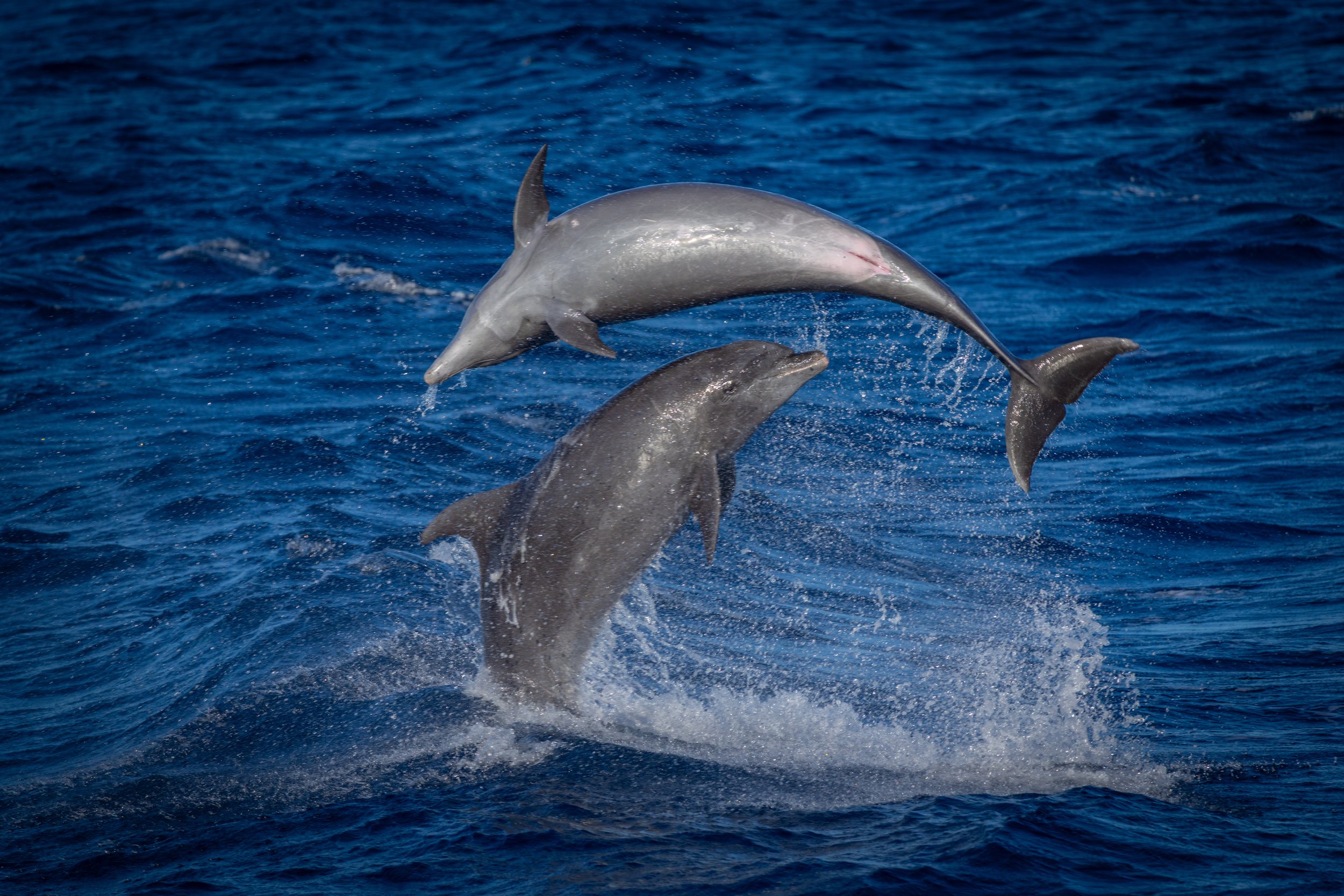
Dolphins have been observed:
Tossing seaweed back and forth
Creating bubble rings
Surfing simply for enjoyment
Engaging in social games with other pod members
Play requires intelligence. It also requires safety. Animals struggling only to survive rarely spend energy on play. That’s part of what makes dolphins so fascinating. They appear capable of joy.
Dolphin Society Is Built Around Relationships
Dolphin pods are not random groups. They are structured social communities.
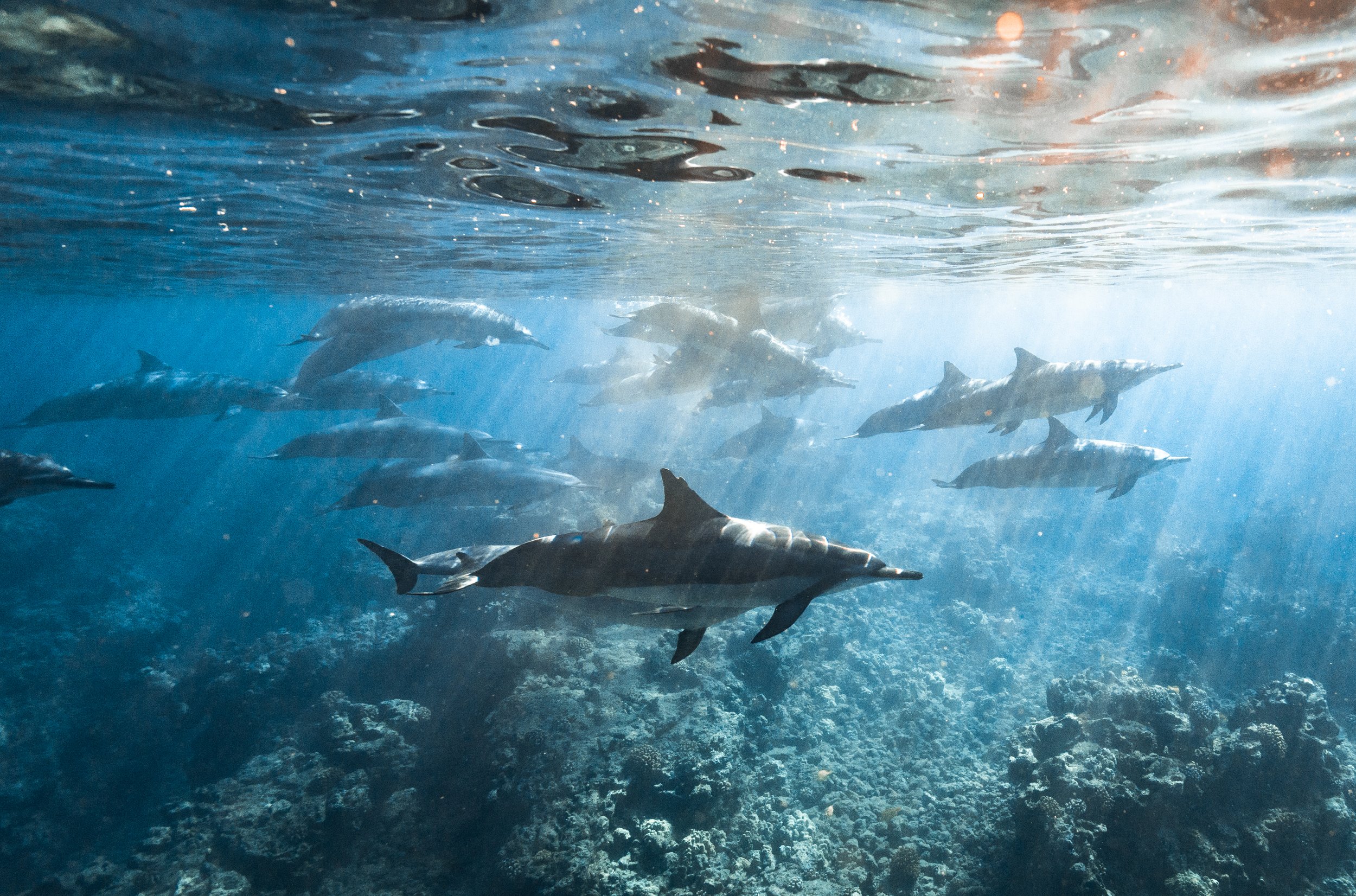
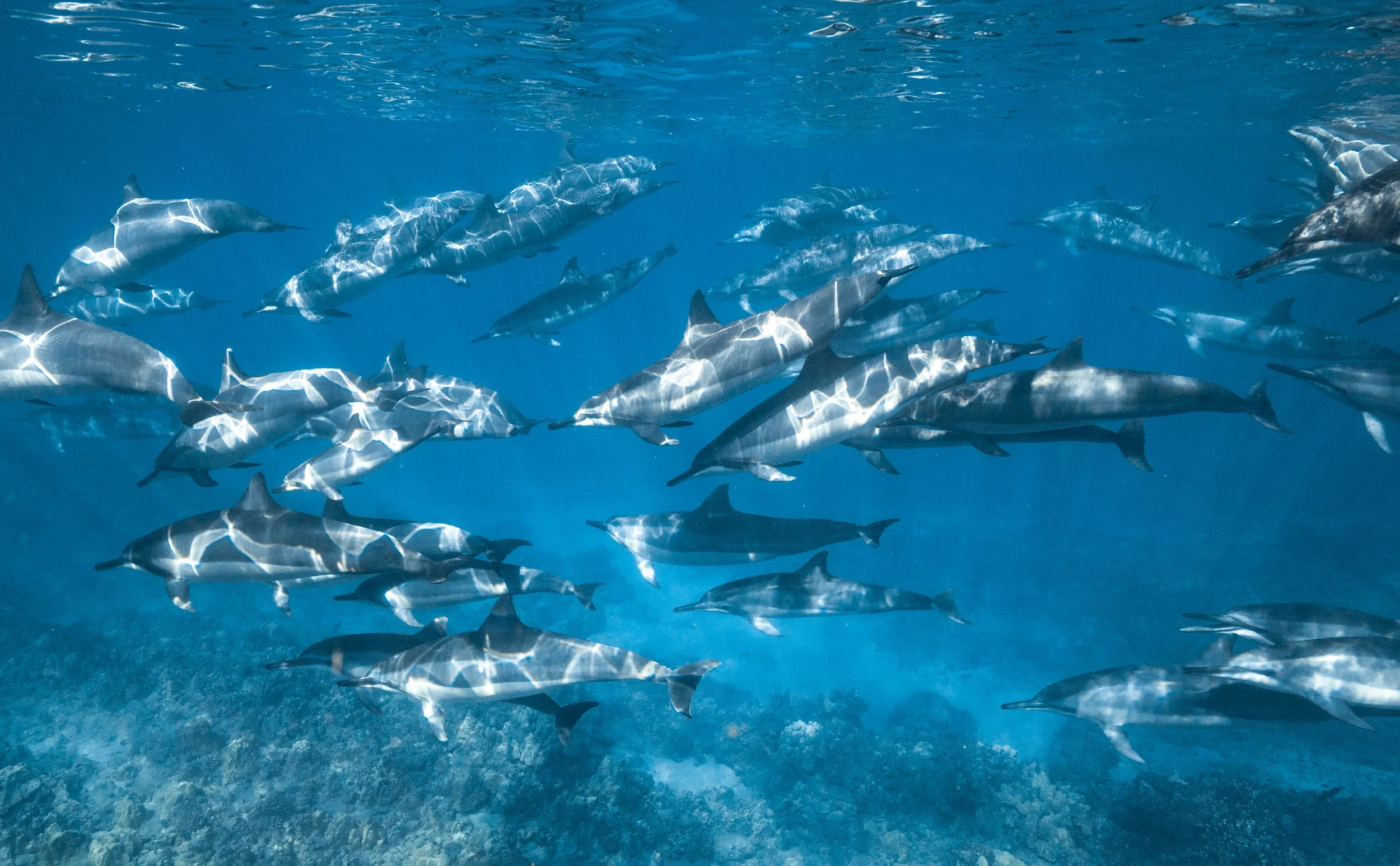
Some dolphins maintain lifelong relationships. Others form temporary alliances that shift over time. Researchers studying bottlenose dolphins have documented:
Cooperative parenting
Long-term friendships
Group defense behaviors
Social learning passed between generations
Dolphins also appear capable of grief. Scientists and marine observers have repeatedly documented mothers supporting deceased calves at the surface for extended periods.
While we should be cautious about projecting human emotions onto wildlife, many researchers agree dolphins possess rich emotional lives. That emotional complexity is part of why dolphin conservation matters so deeply.
Where Science Ends And Speculation Begins
Very few marine animals inspire as many stories, conspiracy theories, and spiritual beliefs as dolphins.
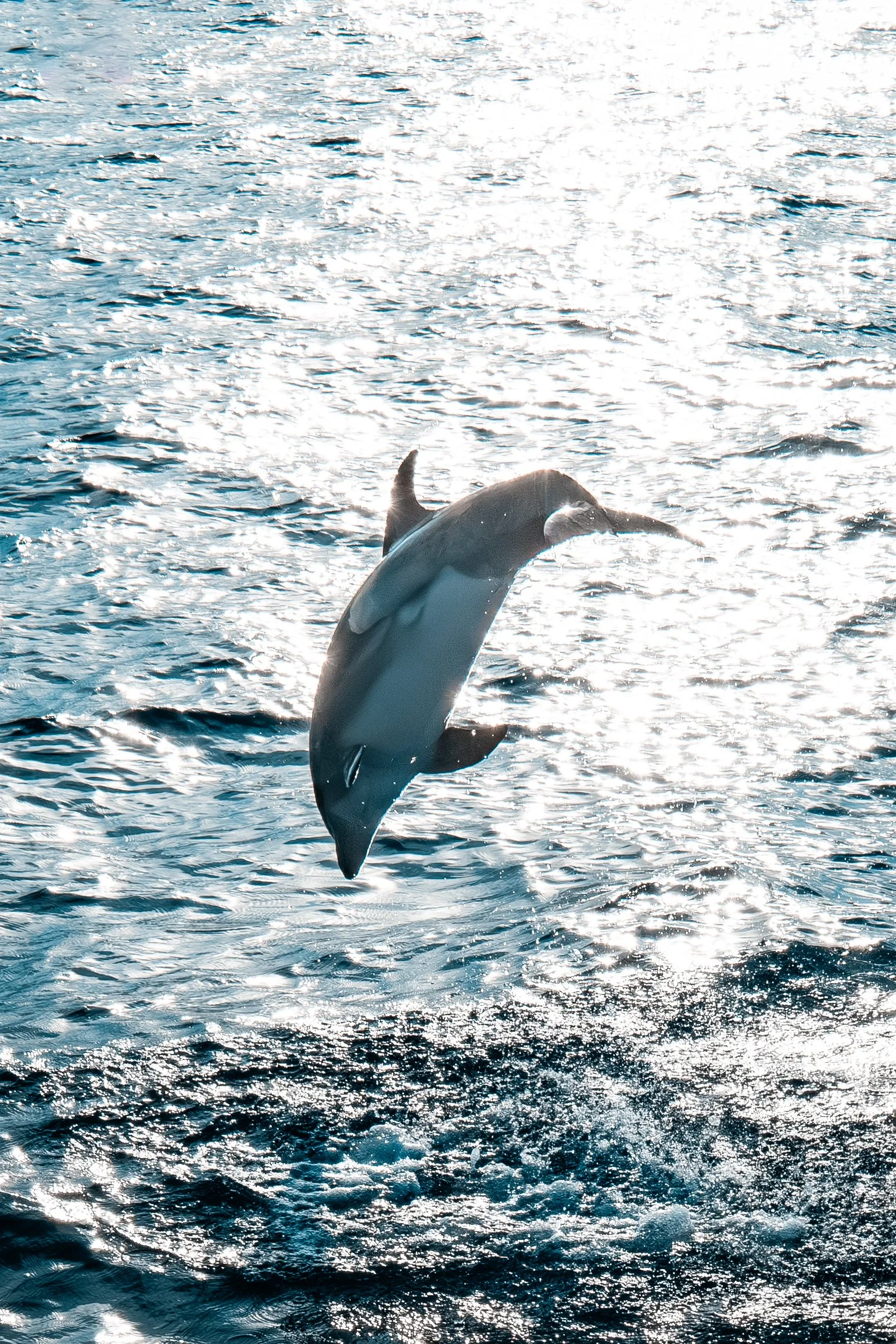
Some of those stories are grounded in documented science. Others remain speculation. And some belong entirely to internet mythology.
Confirmed Facts
Dolphins possess advanced echolocation abilities.
Dolphins use unique signature whistles that function similarly to identifiers or names.
Dolphins demonstrate complex social structures and long-term memory.
Dolphins have been used in the U.S. Navy Marine Mammal Program.
Dolphins have demonstrated mirror self-recognition, suggesting self-awareness.
These are all scientifically documented.
Stories That Remain Unproven Or Speculative
Over the years, there have been anecdotal stories involving dolphins and pregnant women.
Some mothers have described unusually calm dolphin encounters while pregnant. Others have claimed dolphins behaved protectively or attentively during water births.

Scientists remain cautious about these stories. At the same time, dolphin echolocation abilities are extraordinary.
As mentioned earlier, some studies suggest dolphin perception can distinguish internal structures within objects, leading some researchers and marine observers to speculate that dolphins may be capable of detecting pregnancy in ways humans do not fully understand yet.
At this time, there is no strong scientific evidence proving dolphins intentionally assist human childbirth or possess supernatural awareness of pregnancy. Still, the stories persist and personal accounts continue to add up… The question becomes:
How many interactions need to occur before speculation becomes fact?
The Internet Mythology
Then there are the stranger corners of dolphin lore. Stories like "Gerald the Dolphin," theories suggesting dolphins possess psychic abilities, secret communication with humans, hidden underwater civilizations, or intelligence far beyond what science currently understands. None of these claims are scientifically supported.
Most myths begin when people encounter something they struggle to explain. And dolphins have been creating that feeling for thousands of years— all myths derive from some kind of truth after all.
Why Laws Protect Dolphins on Maui
Wild dolphins are not interactive attractions. They are protected marine mammals.
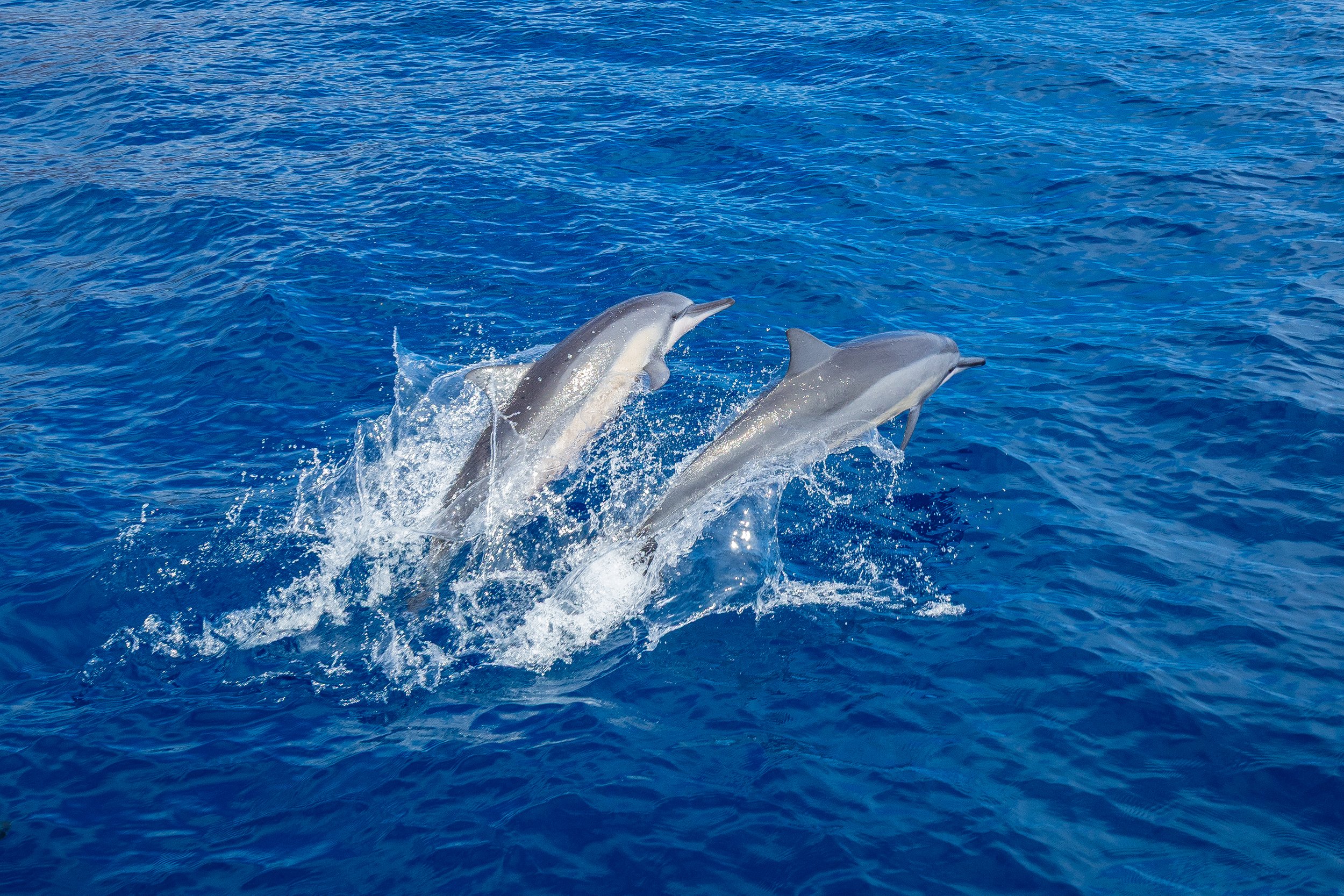
Under the Marine Mammal Protection Act and NOAA regulations, it is illegal to harass dolphins in U.S. waters.
That includes behaviors such as:
Chasing pods
Attempting to touch dolphins
Swimming directly toward resting animals
Separating mothers from calves
Surrounding dolphins with boats or swimmers
On Maui, responsible operators follow strict wildlife viewing practices designed to reduce stress and disturbance. The goal is simple: Allow dolphins to remain wild.
Because the most meaningful encounters happen when animals choose the interaction — not when humans force it.
Maybe Intelligence Doesn’t Have To Look Like Us
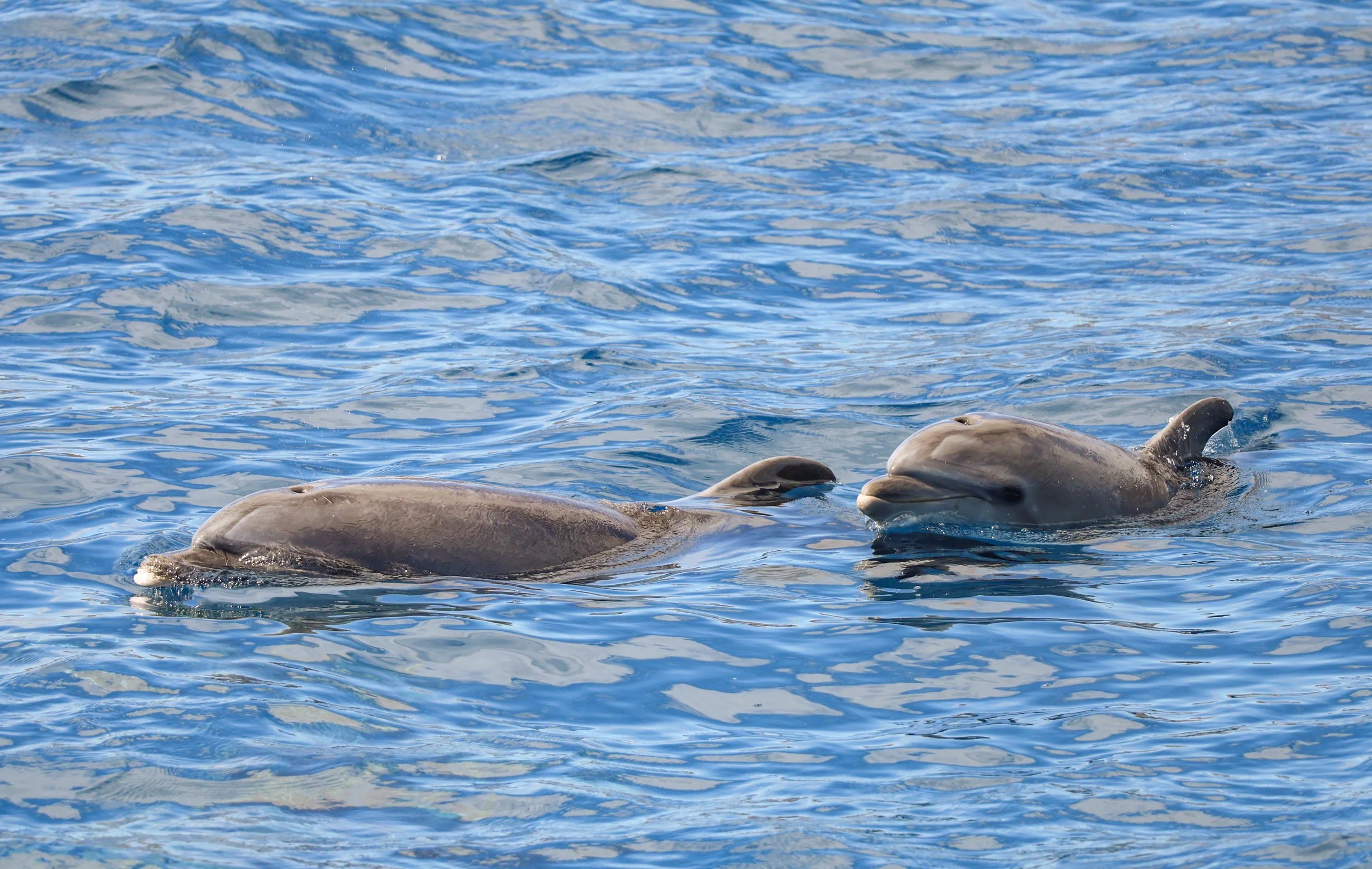
Humans tend to measure intelligence through human behavior. Language. Technology. Architecture.
But dolphins evolved in an entirely different world. A world without fire. Without hands. Without cities.
And yet they developed:
Complex social systems
Individual identity
Cooperative behaviors
Advanced communication
Cultural learning
Emotional bonds
One could infer that intelligence in the ocean was never meant to resemble intelligence on land. Which means we need to stop approaching it like it is.
Seeing Dolphins Responsibly on Maui
@sailtrilogy Mornings like these are what make sailing so amazing🩵🐬 #dolphins #naia #beautiful #ocean #sailing ♬ Beautiful Boy (Darling Boy) - Ultimate Mix - John Lennon
If you’re lucky enough to encounter dolphins on Maui, the best thing you can do is give them space. Let the moment happen naturally. Responsible wildlife viewing protects resting behaviors, supports healthy populations, and allows future generations to experience the same wonder.
Sometimes the most respectful thing we can do is simply observe. And listen.
One of the best chances to encounter dolphins on Maui happens while crossing the ʻAuʻau Channel toward Lānaʻi.
The channel is home to deep blue water, strong currents, abundant marine life, and frequent dolphin activity. While wildlife sightings are never guaranteed, it’s common to see spinner dolphins surfing the bow, traveling alongside the catamaran, or appearing unexpectedly in the distance during the crossing.
If you’d like the chance to experience dolphins responsibly while you’re on Maui, join us aboard our Discover Lānaʻi or Lānaʻi Adventue Snorkel Sails.
Both excursions combine snorkeling, sailing, and wildlife viewing while following respectful NOAA viewing practices designed to protect the animals that make these encounters possible. Because the best dolphin encounters are always the ones the dolphins choose too.
Sources
NOAA Fisheries — Hawaiian Spinner Dolphin Regulations
NOAA Fisheries — Marine Mammal Protection Act Guidelines
Hawaiʻi Department of Land and Natural Resources (DLNR)
Hawaiian Islands Humpback Whale National Marine Sanctuary
Woods Hole Oceanographic Institution — Dolphin Cognition & Communication Research
Wild Dolphin Project — Signature Whistles & Dolphin Communication Studies
Cascadia Research Collective — Melon-Headed Whale Research in Hawaiʻi
U.S. Navy Marine Mammal Program
ABC News Australia — 2004 New Zealand Dolphin/Great White Shark Incident
Barnacles Dolphin Centre, Queensland Australia — COVID Lockdown Dolphin “Gift” Behavior Documentation
National Geographic — Dolphin Intelligence & Social Structure Research
Smithsonian Ocean — Dolphin Echolocation & Communication
NOAA Ocean Service — Dolphin Echolocation & Marine Mammal Behavior
University of Hawaiʻi Marine Biology Research Programs
Peer-reviewed studies on mirror self-recognition in bottlenose dolphins (Reiss & Marino, 2001)
Peer-reviewed studies on dolphin signature whistles functioning as identifiers/names (Janik & Sayigh)
Peer-reviewed research on cultural transmission and learned hunting behaviors in dolphins
Marine Mammal Science Journal — Dolphin Social Structures & Emotional Behavior
Scientific observations documented by marine biologists regarding interspecies dolphin interactions with dogs and humans