Sharks on Maui: Everything You Need to Know
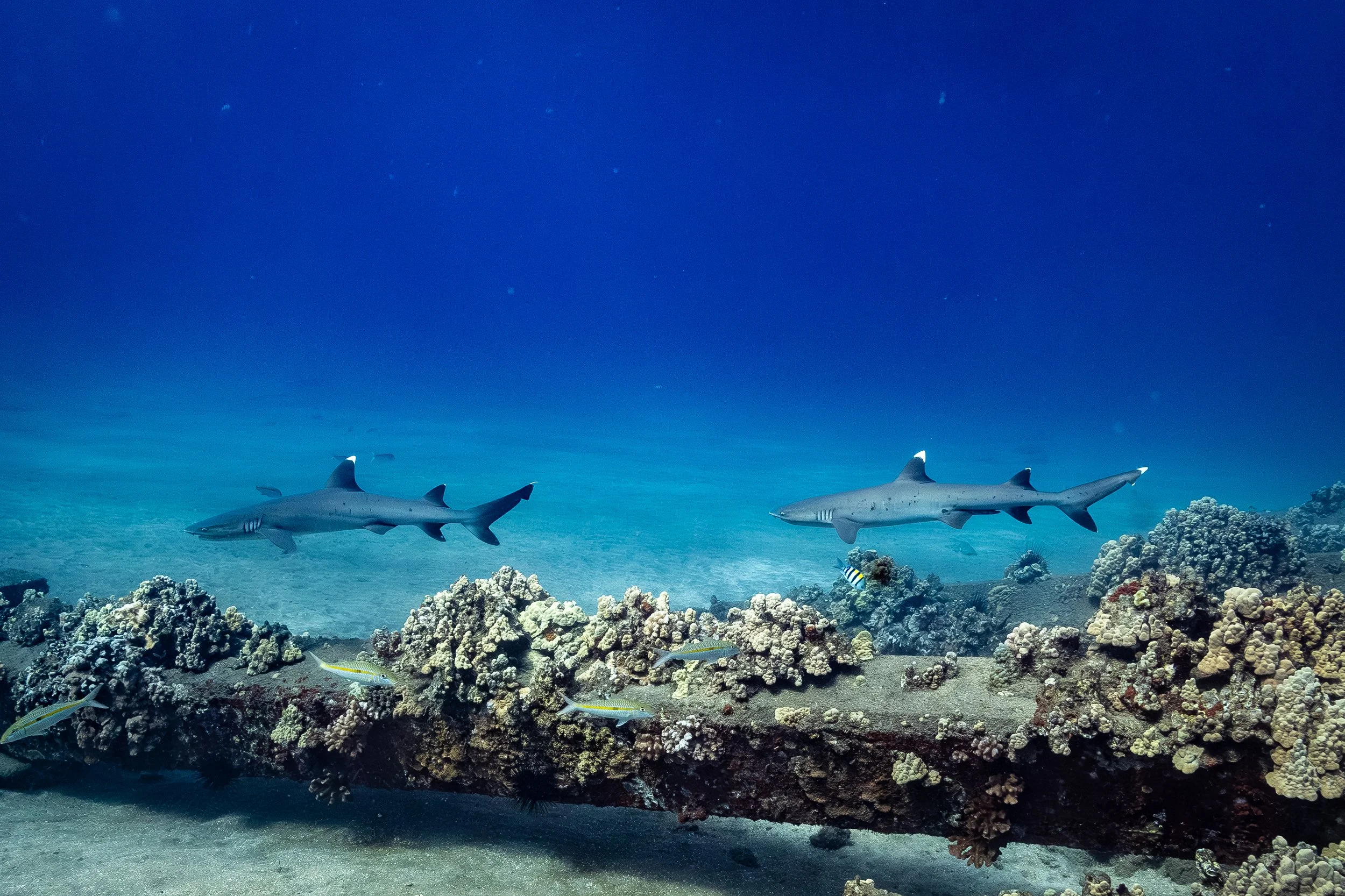
Whitetip Reef Sharks
If there’s salt in the water… there are sharks too.
That’s not a warning. It’s just the truth of the ocean. And here’s the part most people don’t hear enough: that’s a good thing.
Sharks are a natural part of healthy reef ecosystems on Maui. They’ve been here long before us, and when you’re snorkeling, you’re stepping into their world—not the other way around. The reality is much calmer than the reputation: most sharks you’ll encounter on Maui’s reefs are quiet, curious, and far more interested in fish than people.
Let’s talk about the sharks we actually see out here—and what that really means for you in the water.
𓂃𓂁𓂃
𓂃𓂁𓂃
Are Sharks Dangerous to Snorkelers on Maui?
Short answer: the risk is extremely low.
Across all of Hawaiʻi, shark incidents average only about 3–4 per year, despite millions of ocean entries annually.
Even more important:
Most incidents involve specific activities like spearfishing
Many are considered “provoked” interactions
Fatalities are extremely rare
And when it comes to reef sharks specifically—the ones you’re most likely to see while snorkeling—they are not considered a threat to humans in normal conditions.
Most sharks in Hawaiian waters are described as shy and avoidant of people.
That lines up with what we see every day on the water.
We’ve been sailing these waters for over 50 years, guiding guests through Maui’s reefs day after day—and we’ve never had a negative shark encounter of any species. That doesn’t mean the ocean comes with guarantees. It means the real-world pattern, over decades, is consistent: respectful coexistence works.
Meet the Reef Sharks: The Ones You’re Most Likely to See
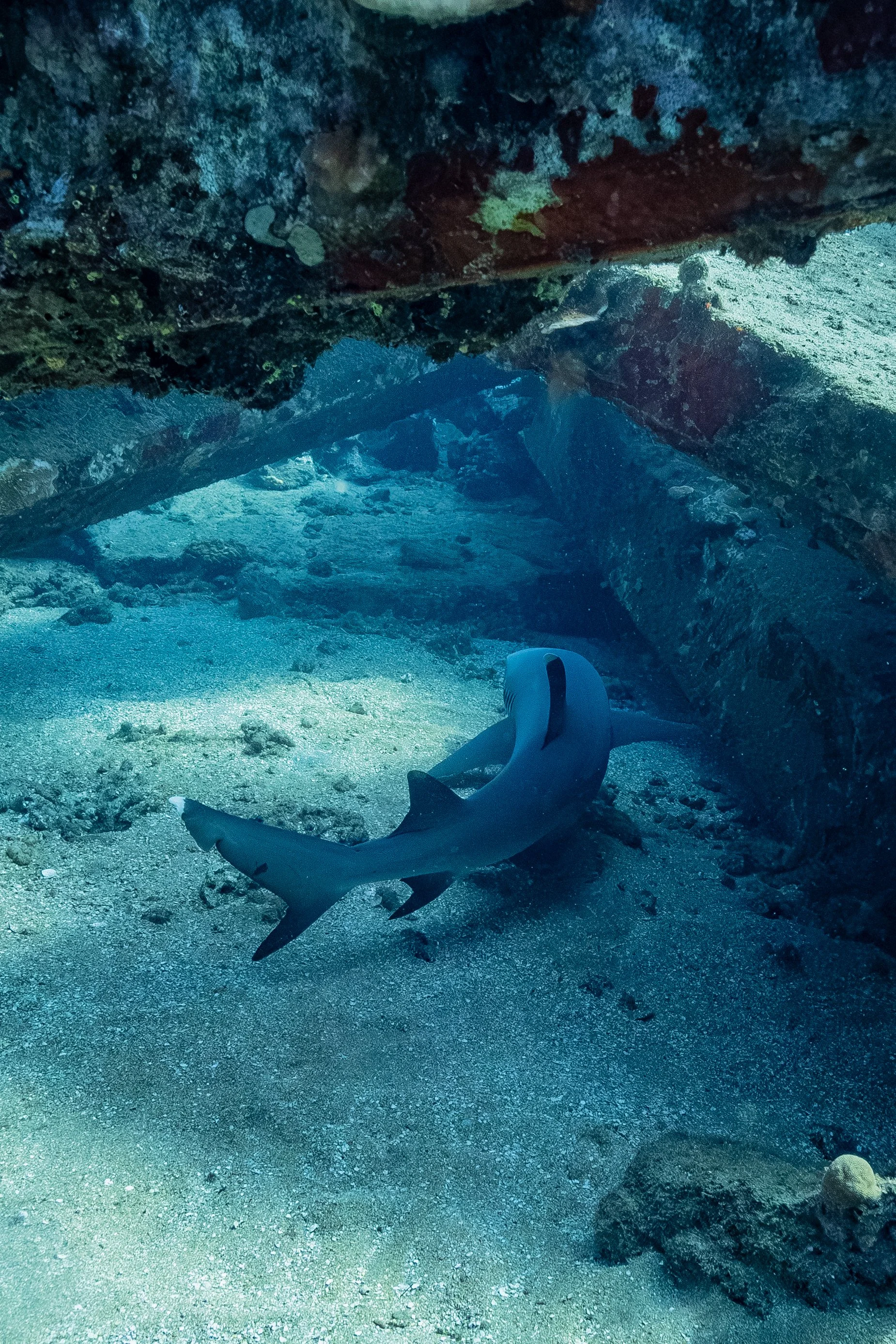
Whitetip Reef Shark
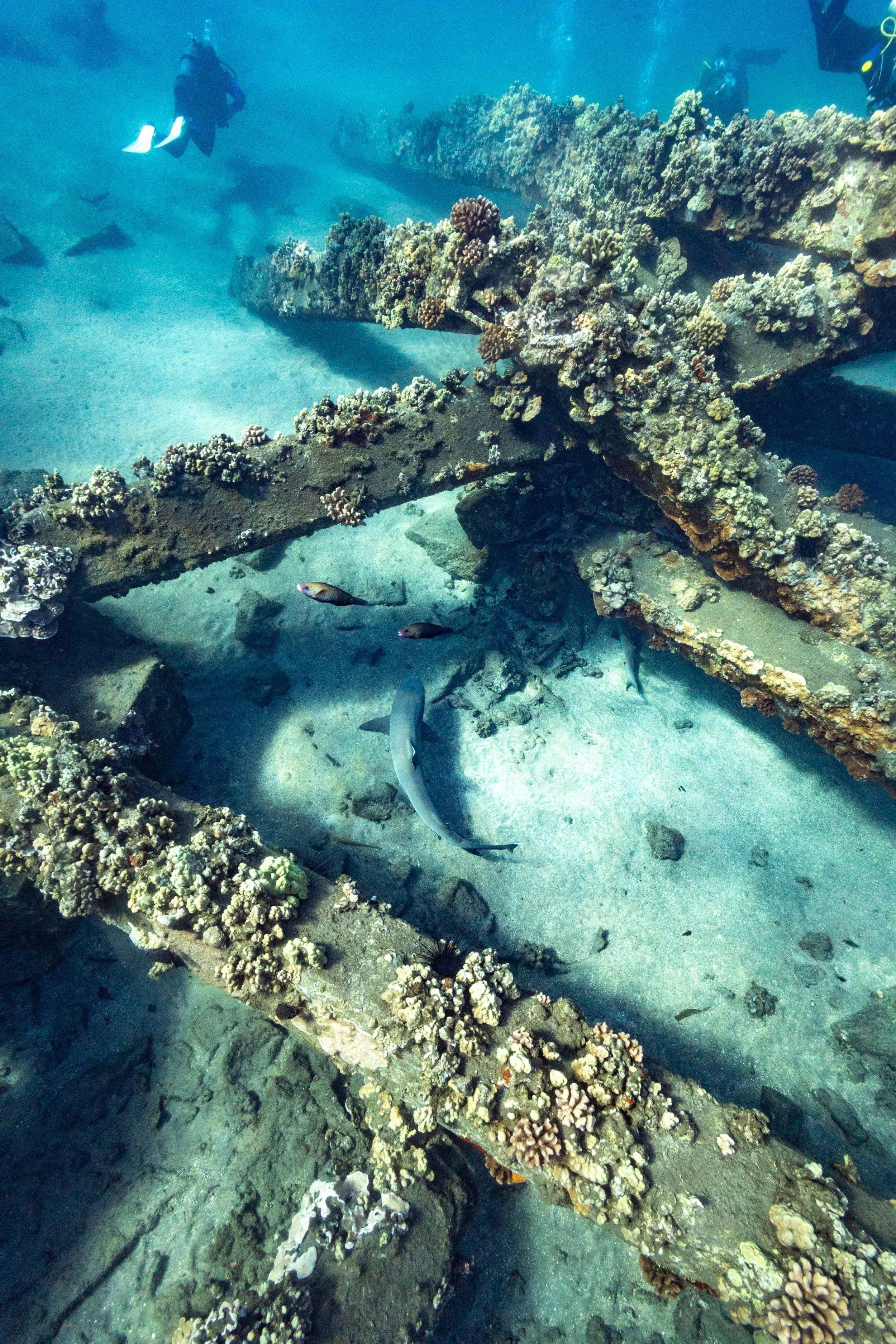
Whitetip Reef Shark
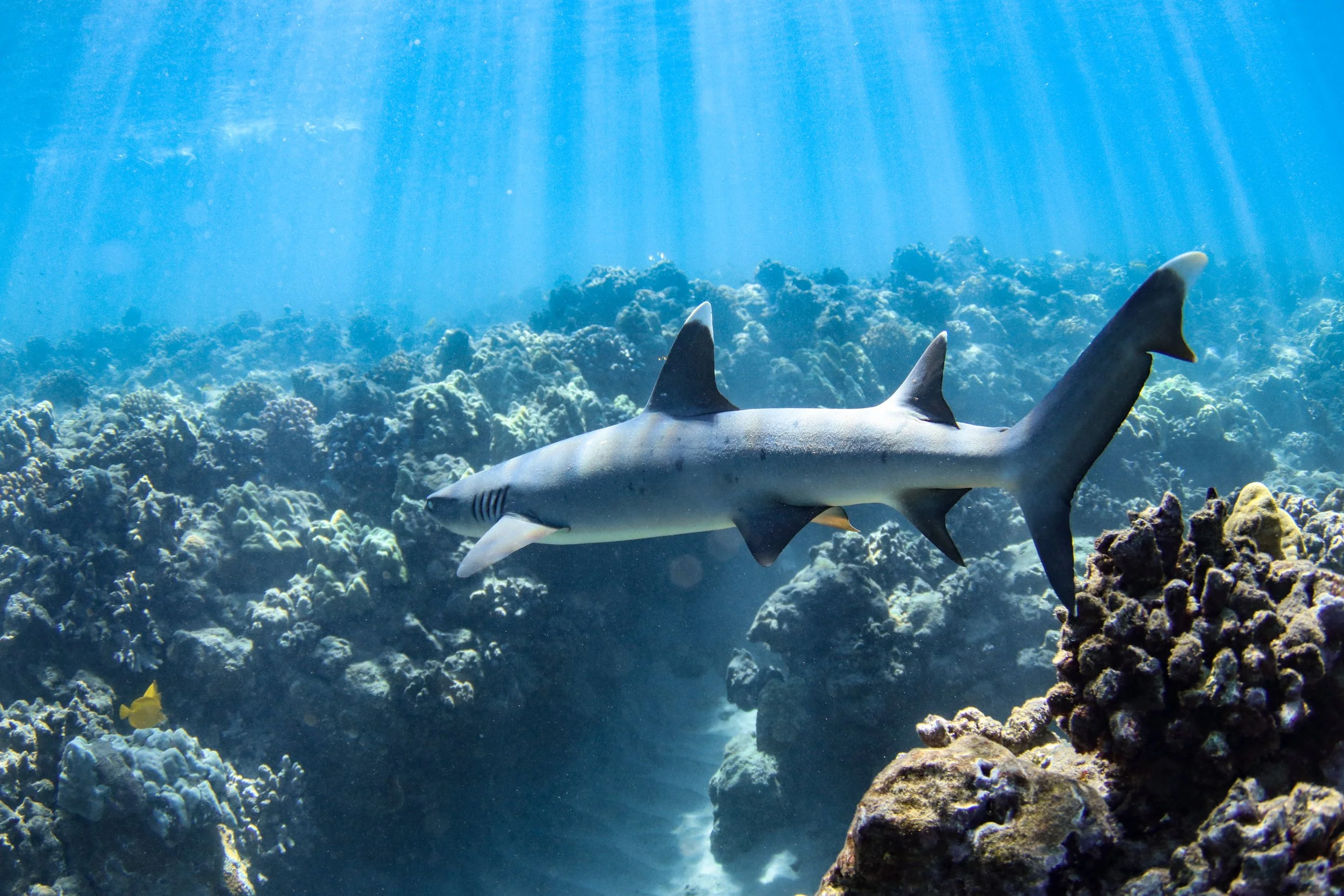
Whitetip Reef Sharks (mano lālākea)
Whitetip Reef Shark
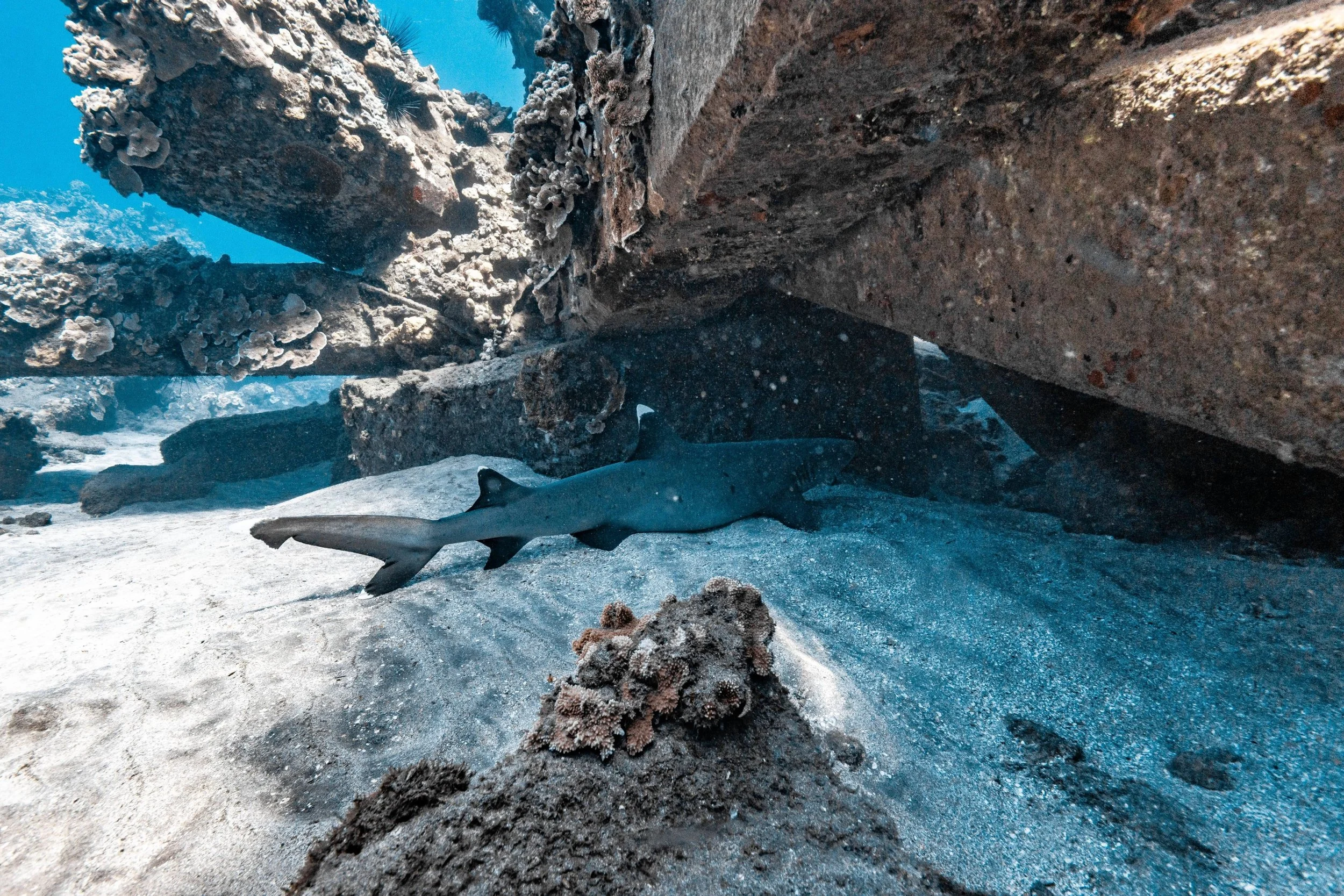
If you’ve ever heard someone say, “I saw a shark just resting on the bottom,” this is probably the one.
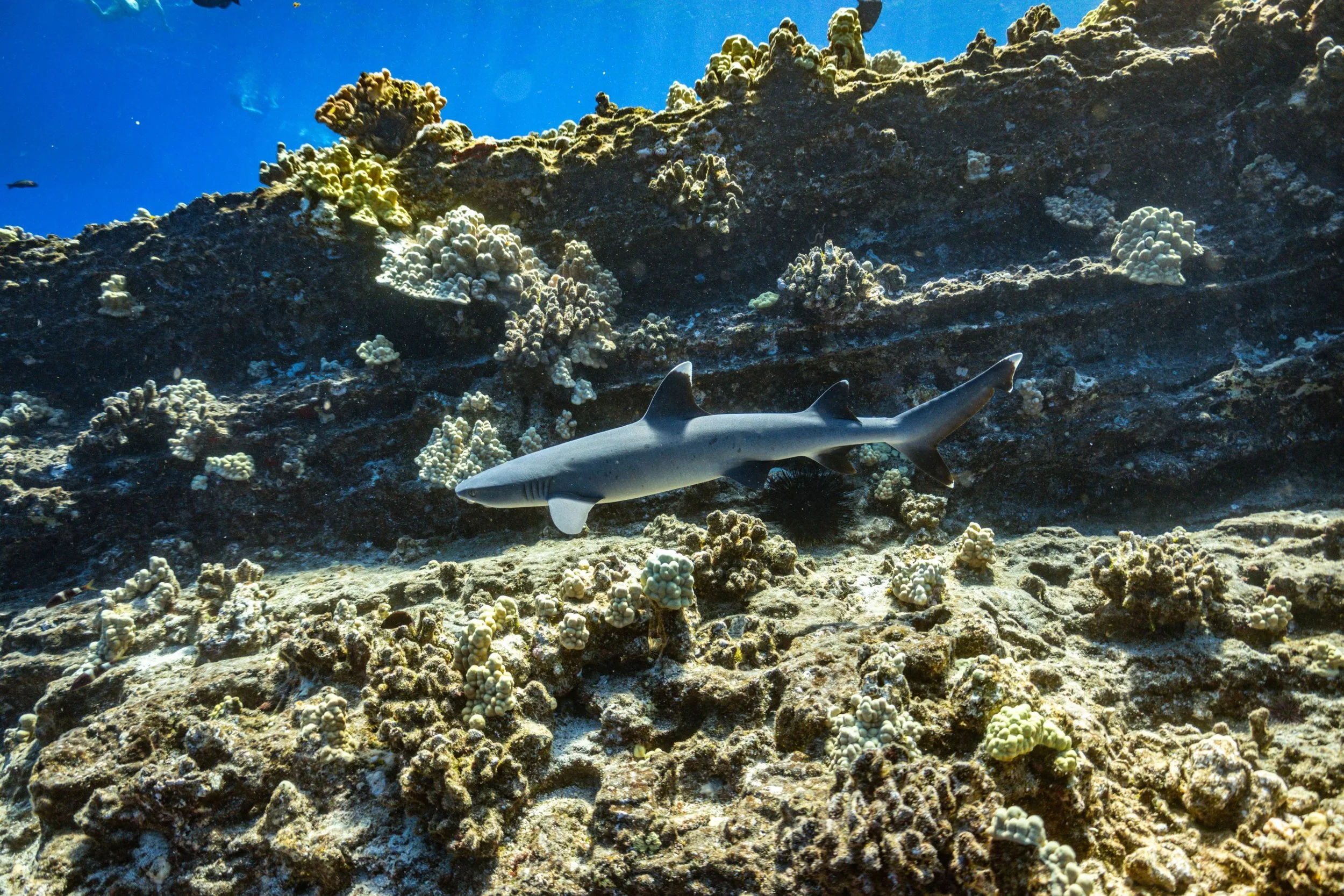
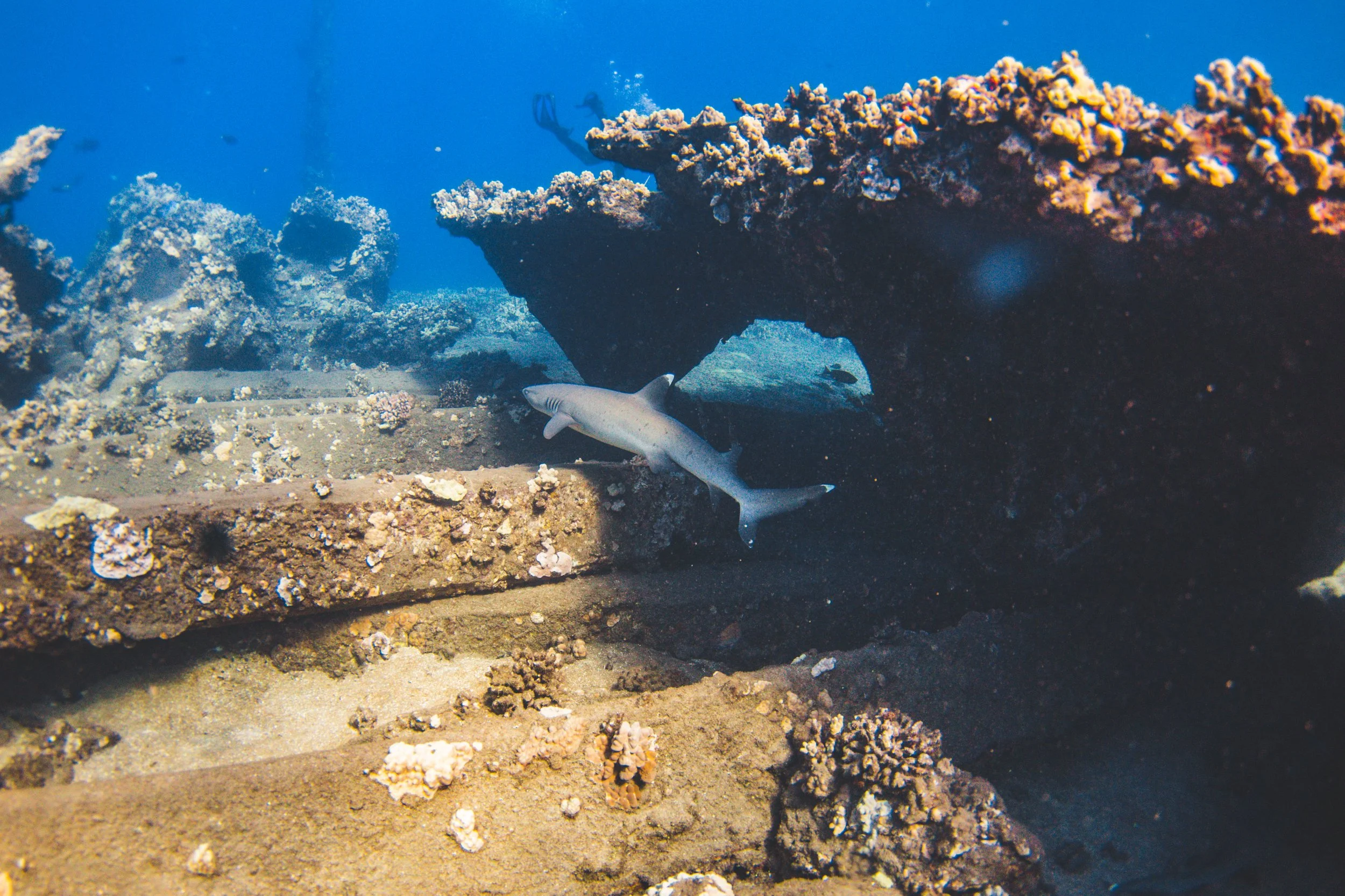
Whitetip reef sharks are one of the most common reef sharks on Maui. They’re usually under 5–7 feet long and spend much of their daytime resting on the ocean floor, often tucked into caves or under ledges.
Here’s what makes them unique:
They can lie completely still and breathe without swimming
They are mostly nocturnal hunters, becoming active at night
They tend to stay within a very small home range on the reef
Whitetip Reef Sharks Resting Together
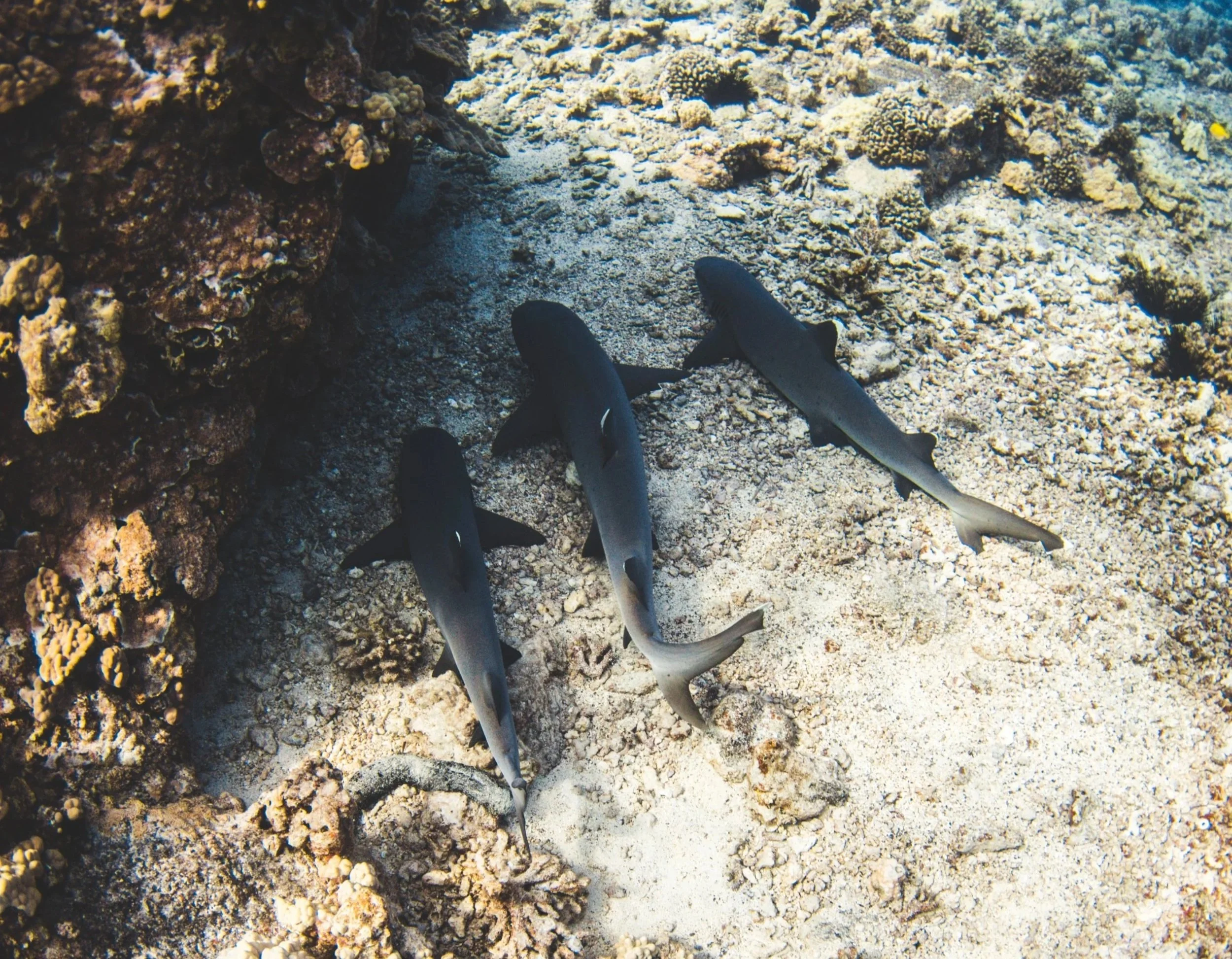
One of the more surprising things about whitetip reef sharks is that they don’t always keep to themselves. Unlike many shark species that are more solitary, whitetips are often seen resting together—sometimes sharing the same ledges, caves, or sandy patches on the ocean floor. Researchers have observed them forming loose groups during the day while they rest, especially in areas with good shelter.
It’s a quiet kind of coexistence—no competition, no urgency—just multiple sharks settled into the same space, conserving energy until they become active again at night.
In terms of behavior toward people:
They are not considered aggressive toward humans and typically remain resting on the ocean floor during the day. Encounters with people are calm and uneventful, and incidents are extremely uncommon, most often associated with fishing activity rather than snorkeling.
In other words: what might look dramatic at first glance is actually very calm. Most of the time, they’re simply resting.
Blacktip Reef Sharks
Blacktip Reef Shark
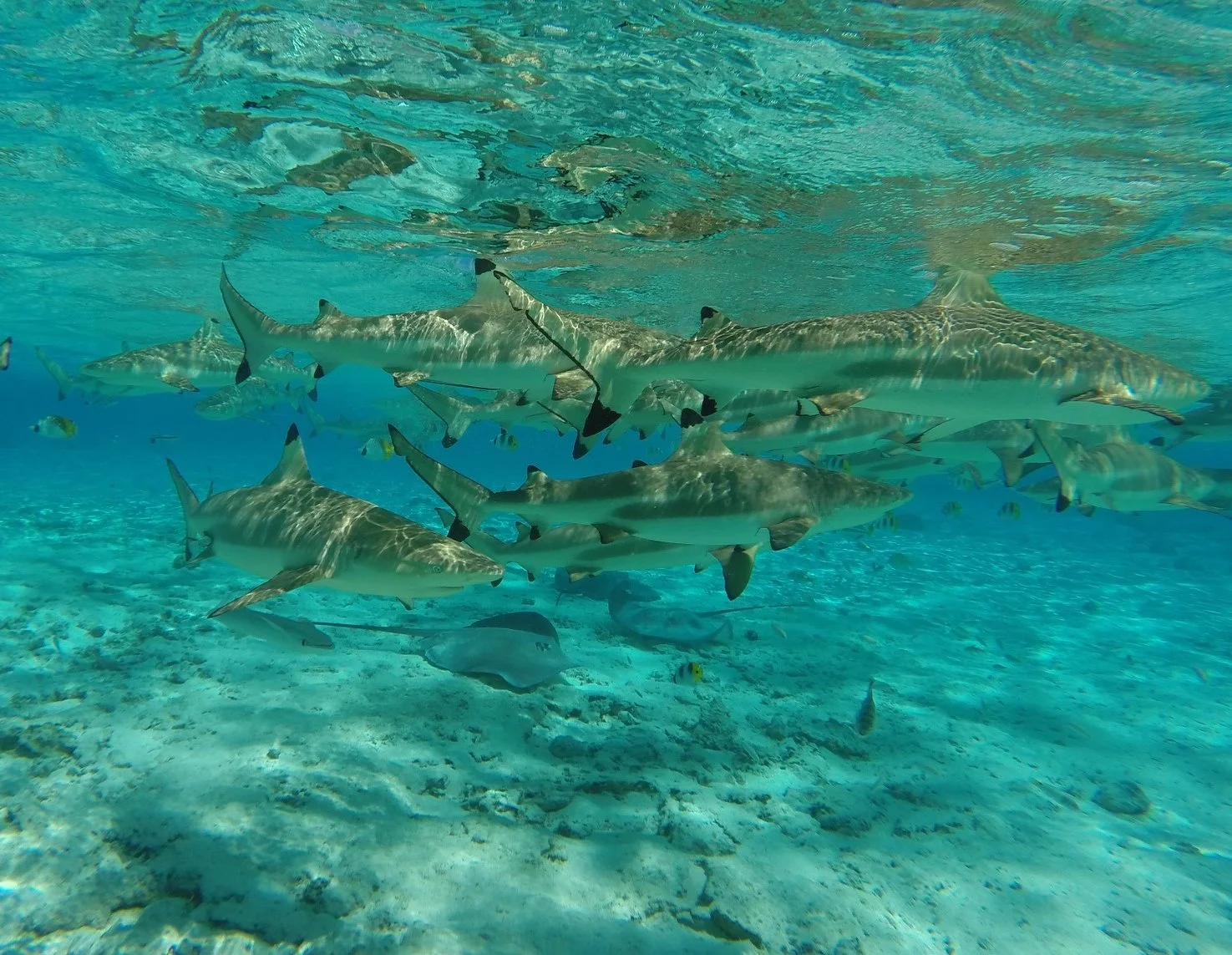
These are the sleek ones you might see cruising the reef edge or shallows, often identified by the black tips on their fins.
Blacktip reef sharks:
Prefer shallow reef environments
Feed on fish, squid, and crustaceans
Are typically timid and quick to move away from swimmers
Despite their visibility in shallow water, very few incidents have ever involved blacktip reef sharks, and none have been fatal.
They’re a great example of how perception and reality don’t always match. They look like what people imagine a “shark” to be—but behavior-wise, they’re one of the least concerning species you’ll encounter.
Where to see them?
Mala Wharf: A Place Where Sharks Just… Rest
Mala Wharf is one of those special spots on Maui where the ecosystem has settled into its own rhythm. Originally a working pier, Mala Wharf was heavily damaged by a hurricane in the early 90’s, and what remains has evolved into an artificial reef.
Over time, coral growth has taken hold along the structure, creating habitat for reef fish, turtles, and sharks. Today, it’s one of the most active marine environments along West Maui.
It’s also one of the most reliable places to see honu (Hawaiian green sea turtles). Beneath the pier is a known honu cleaning station, where turtles pause while small reef fish remove algae and parasites from their shells and skin—a natural behavior that supports their health and is commonly observed across reef ecosystems.
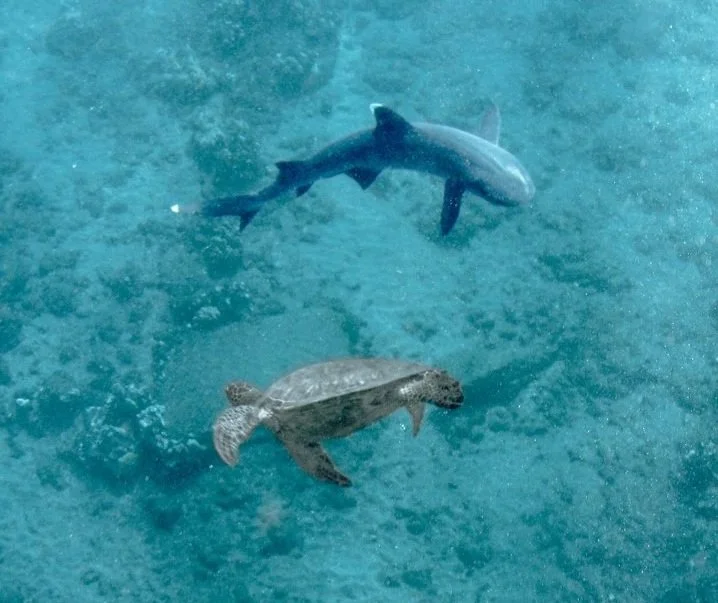
You’ll often see honu moving calmly through the same areas where reef sharks are resting—continuing on their way without concern. It’s a quiet reminder of how these animals naturally share space on the reef. The honu aren’t scared of these guys, and neither should you.
When conditions line up, it can become an alternate snorkel site on our Discover West Maui, Discover Kaʻanapali, or Turtle Reef Snorkel sails. And if you’ve been there, you might already know:
There are often whitetip reef sharks resting on the ocean floor beneath the pier.
Not circling. Not hunting. Just resting.
This behavior is completely natural. Whitetip reef sharks commonly spend daylight hours on the bottom, conserving energy until nighttime feeding.
From above, snorkelers might see them lying still in the sand or under structure. It can feel surreal the first time you notice one—but it’s actually one of the calmest shark encounters you can have.
They stay low, keep to themselves, and continue on with their day.
Other Sharks We See (and Rarely See)
While reef sharks are the most common, Maui’s waters are home to around 40 species of sharks.
Here are a few others you might hear about:

Swimming with a Whale Shark
Whale Sharks
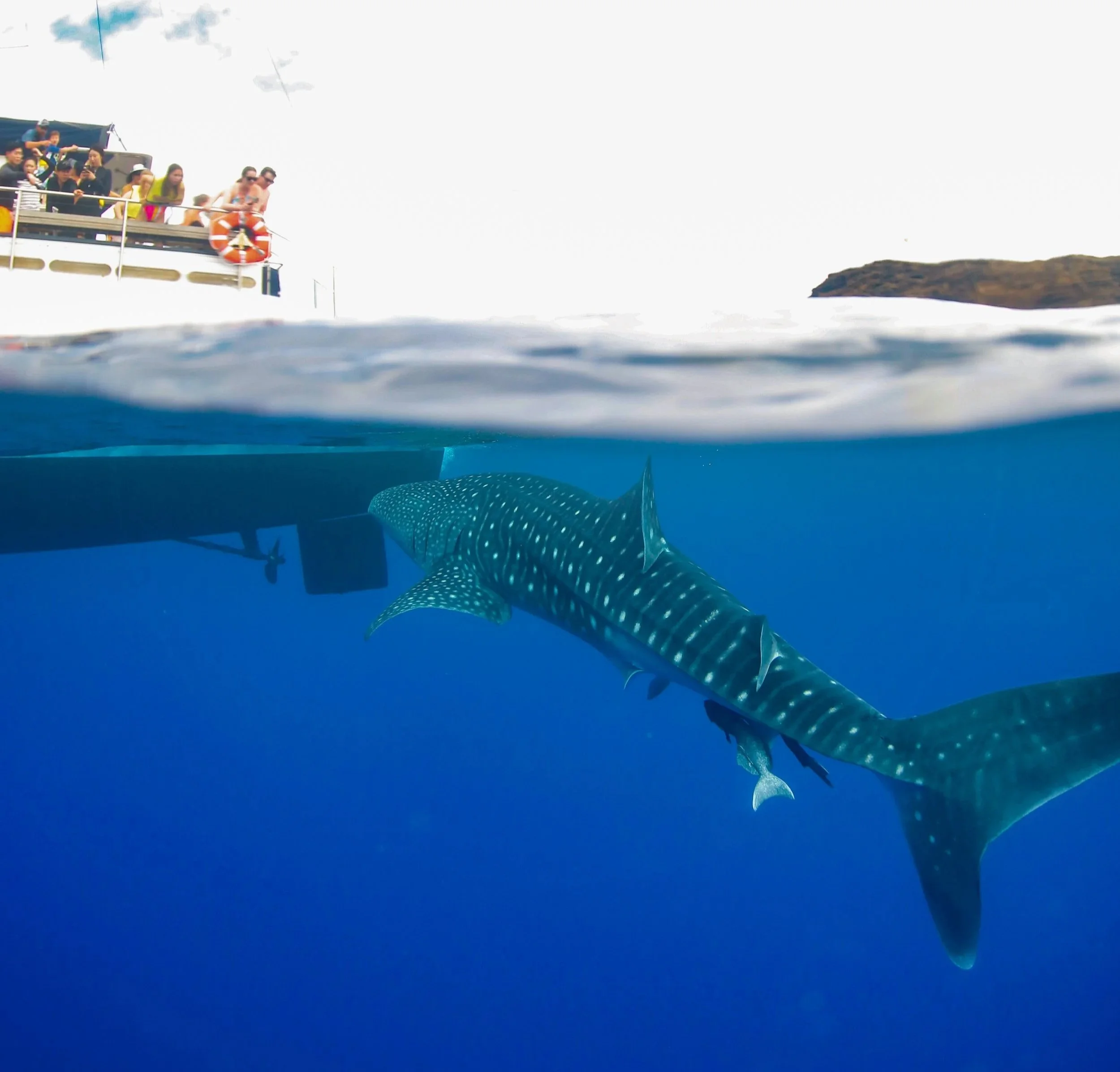
Whale Shark Sighting at Molokini
Every now and then, the ocean gives us something truly unexpected.
Whale sharks—the largest fish in the ocean—occasionally pass through Hawaiian waters, including Maui. These animals can grow up to 40 feet or more in length, but despite their size, they are completely harmless to humans. They’re filter feeders, meaning they eat tiny organisms like plankton, small fish, and fish eggs—not large prey. (NOAA Fisheries)
A few things that make whale sharks especially unique:
Each whale shark has a distinct pattern of spots, like a fingerprint
They often swim slowly near the surface, sometimes vertically while feeding
They are known for their calm, non-aggressive behavior toward swimmers
Sightings on Maui are uncommon—which is part of what makes them so special.
When we do see one on a tour, it’s not just exciting for guests—it genuinely makes our crew’s day. These are the kinds of encounters you can spend years on the water waiting for. There’s a quiet pause that happens on the boat when one appears—everyone just taking it in.
And for all their size, what stands out most is how gentle they are.
They move slowly, deliberately, completely uninterested in anything but feeding. It’s a powerful reminder that not everything big in the ocean is something to fear.
Tiger Sharks and olowalu
You may have heard that tiger sharks are known to spend time in the waters off Olowalu—and that’s true.
Tiger sharks are part of the natural ecosystem on Maui, and over the years, local knowledge has identified individuals that frequent certain areas, including Olowalu. But context matters here.
Olowalu is often called Maui’s “mother reef” for a reason. It’s one of the largest and healthiest reef systems in Hawaiʻi, spanning over 1,000 acres and supporting an incredible diversity of marine life. That scale is important—it’s a vast, open ecosystem, not a single small reef or confined space.
Because of that, the presence of tiger sharks somewhere in this general area does not mean they are commonly seen while snorkeling.
In fact, despite snorkeling and guiding guests in Olowalu for over 50 years, we have never had a shark-related incident of any kind on our tours.
What we do see out here, day after day, is a thriving reef—coral structures, schools of fish, honu moving through the shallows, and clear, calm conditions that make it one of the most special places to snorkel on Maui.
Our crew is trained to read ocean conditions, understand marine life behavior, and guide guests safely in and out of the water. That awareness, combined with decades of experience, is what allows us to share places like Olowalu with confidence and care.
You may also notice this is the only section without a photograph. That’s simply because tiger shark sightings are so rare on our tours that we don’t even have our own images of them.
It’s also why we’d gently say this:
Olowalu is not something to miss.
It’s a rare kind of reef—expansive, living, and deeply connected to the health of Maui’s coastline. The kind of place where you begin to understand how everything fits together, from the smallest reef fish to the largest predators in the system.
Nurse Sharks: Calm and Often Misunderstood
Nurse Sharks
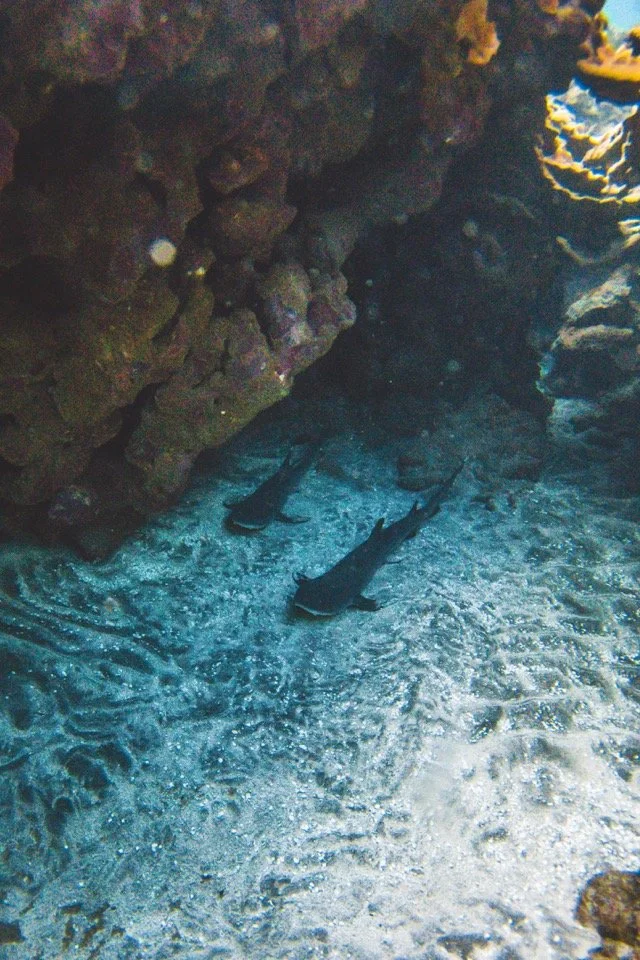
Nurse sharks are another species occasionally found in Hawaiian waters, though they’re less commonly seen on Maui’s reefs compared to whitetip reef sharks.
They’re easy to recognize by their broad, rounded heads and slower, bottom-dwelling movement. Like whitetip reef sharks, nurse sharks tend to spend much of their time resting along the ocean floor or tucked under ledges during the day, becoming more active at night.
Despite their size, nurse sharks are known for being calm and non-aggressive toward humans. They feed primarily on small fish, crustaceans, and invertebrates, using suction to pull prey from the reef rather than chasing it down.
Encounters with snorkelers are rare, and when they do happen, they are typically quiet and uneventful—similar to what you might observe with other reef-dwelling species.
They’re another example of a shark that doesn’t match the reputation. Slow-moving, bottom-oriented, and generally uninterested in people, they’re simply part of the reef’s natural balance.
Hammerheads and Others
Maui’s waters are home to over 40 species of sharks, each playing a role in the broader ocean ecosystem. Many people are surprised to learn just how diverse that population is.
Species like scalloped hammerheads, sandbar sharks, and others do exist here—but they live in very different environments than the shallow reefs where we snorkel.
These sharks are typically found in deeper, offshore waters, often far from the protected reef systems along Maui’s coastline. Some species, like scalloped hammerheads, are even known to spend time in deeper channels and open ocean environments, only occasionally moving closer to shore under specific conditions.
Because of that, they are almost never encountered on snorkeling tours.
When we’re snorkeling, we’re in shallow reef habitats—places like Olowalu or Honolua Bay—where the ecosystem is made up of coral, reef fish, honu, and the occasional reef shark resting along the bottom. The sharks that prefer the open ocean simply aren’t part of that environment.
It’s another example of how the ocean is made up of many different habitats, each with its own residents.
And the one we visit while snorkeling is one of the calmest.
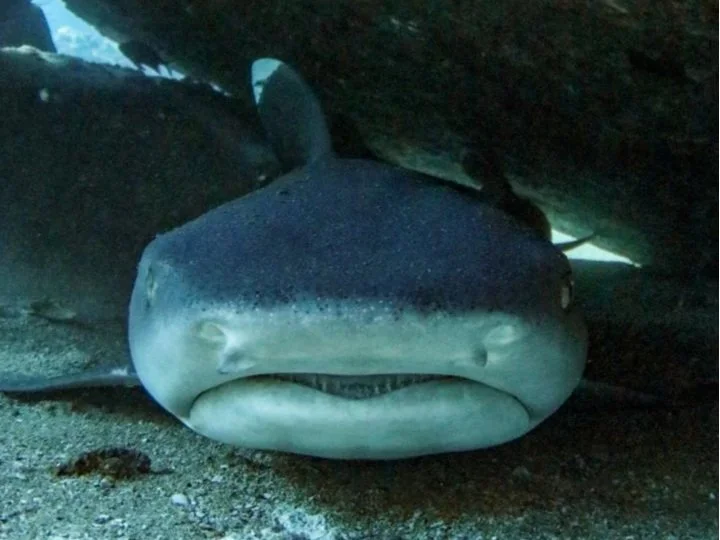
Whitetip Reef Shark Up Close
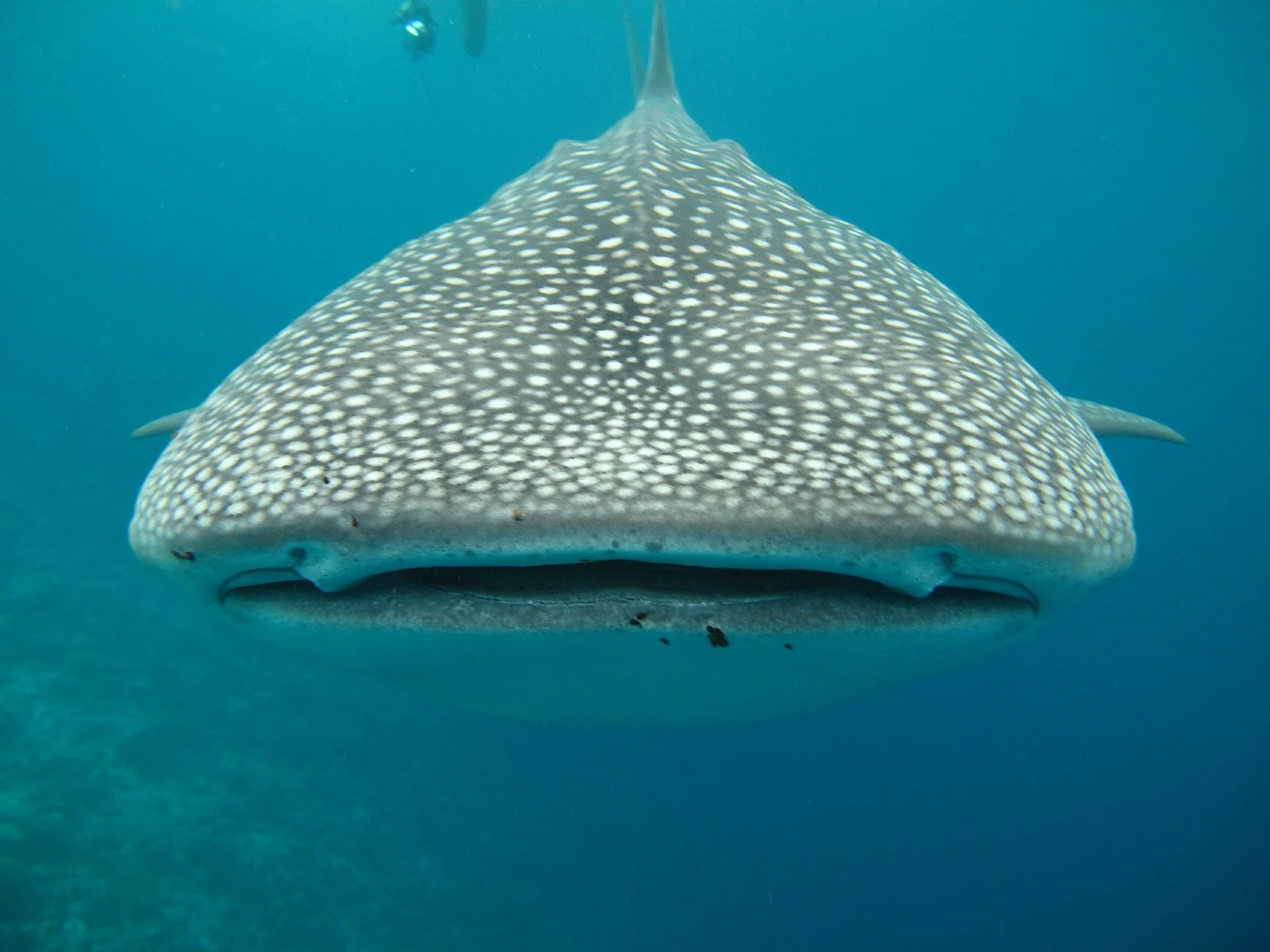
Whale Shark Up Close
Why Sharks Matter (More Than People Realize)
Reef sharks aren’t just part of the scenery—they’re part of what keeps the reef healthy.
As predators, they help maintain balance by regulating fish populations. Without them, reef ecosystems can shift in ways that damage coral health over time.
So when you see a shark on the reef, it’s actually a sign that the ecosystem is functioning the way it should.
How to Share the Water, Respectfully
We approach every snorkel as a shared space—with mālama (care) for the ocean and everything in it.
If you do see a shark:
Stay calm and relaxed in the water
Give space and avoid pursuing
Keep movements smooth and predictable
This aligns with Hawaiʻi DLNR guidance: the ocean is a “wilderness experience,” and we are visitors in it.
A Different Way to Think About Sharks
Sharks have carried a heavy reputation for a long time.
But when you spend enough days on the water, you start to see something else entirely:
They’re not malicious.
They’re not hunting people.
They’re just living their lives on the reef.
And most of the time, they’re doing it quietly—resting on the bottom, cruising the reef edge, or passing through without a second glance.
Sharks in Hawaiian Culture: More Than What They Seem
In Hawaiian culture, sharks—known as mano—are not viewed simply as predators.
For some families, sharks are considered ʻaumākua, or ancestral guardians. ʻAumākua are believed to be family ancestors that take the form of animals, offering guidance and protection to their descendants. Sharks are one of several animals that may serve this role, alongside others like turtles (honu) or owls (pueo). (Bishop Museum; University of Hawaiʻi)
In these cases, sharks are not feared—they are respected.
There are many stories passed down through generations of specific sharks recognized and cared for as ʻaumākua, sometimes even identified by markings or behavior. These relationships are deeply personal and tied to family lineage, not something generalized across all of Hawaiʻi.
It’s important to understand that this perspective is rooted in connection and stewardship, not danger.
While modern perceptions of sharks often focus on fear, traditional Hawaiian understanding recognizes them as part of a balanced ecosystem—beings that deserve respect, not harm.
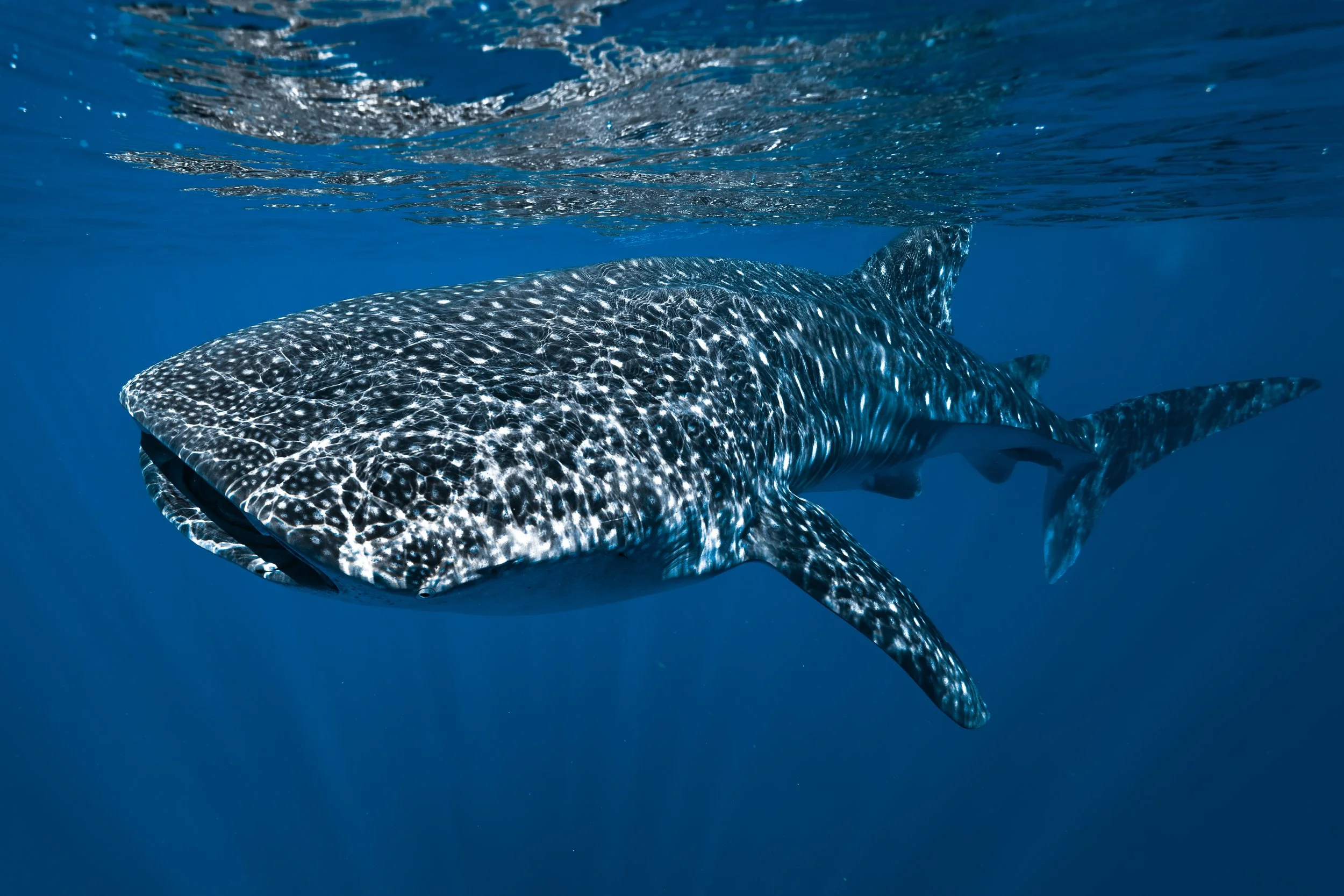
Join Us on the Water
If you’ve made it this far and still feel a little unsure about sharks—but know you don’t want to miss the reefs and underwater world on Maui—you’re not alone.
And this is where a guided snorkel experience can make all the difference.
Snorkeling from a boat means you’re not out there on your own. You’re in the water alongside other guests, with a vessel nearby at all times and a trained, experienced crew watching over the group. Our team is there to guide you, answer questions, and help you feel comfortable every step of the way—from your first time putting your face in the water to your last look at the reef.
After more than 50 years on these waters, we’ve learned that confidence in the ocean doesn’t come from avoiding it—it comes from understanding it, and experiencing it in the right environment.
For many guests, joining a snorkel tour like this ends up being one of the most comfortable and supported ways to explore Maui’s reefs—especially if there’s any hesitation going in.
We’ll be right there with you.
For a deeper look at shark behavior, statistics, and safety on Maui: click here.