Honu and the Sea Turtles of the World
A Guide to Hawaiʻi's Beloved Sea Turtles, Their Ocean Relatives, and the Lessons They Carry Across the Sea
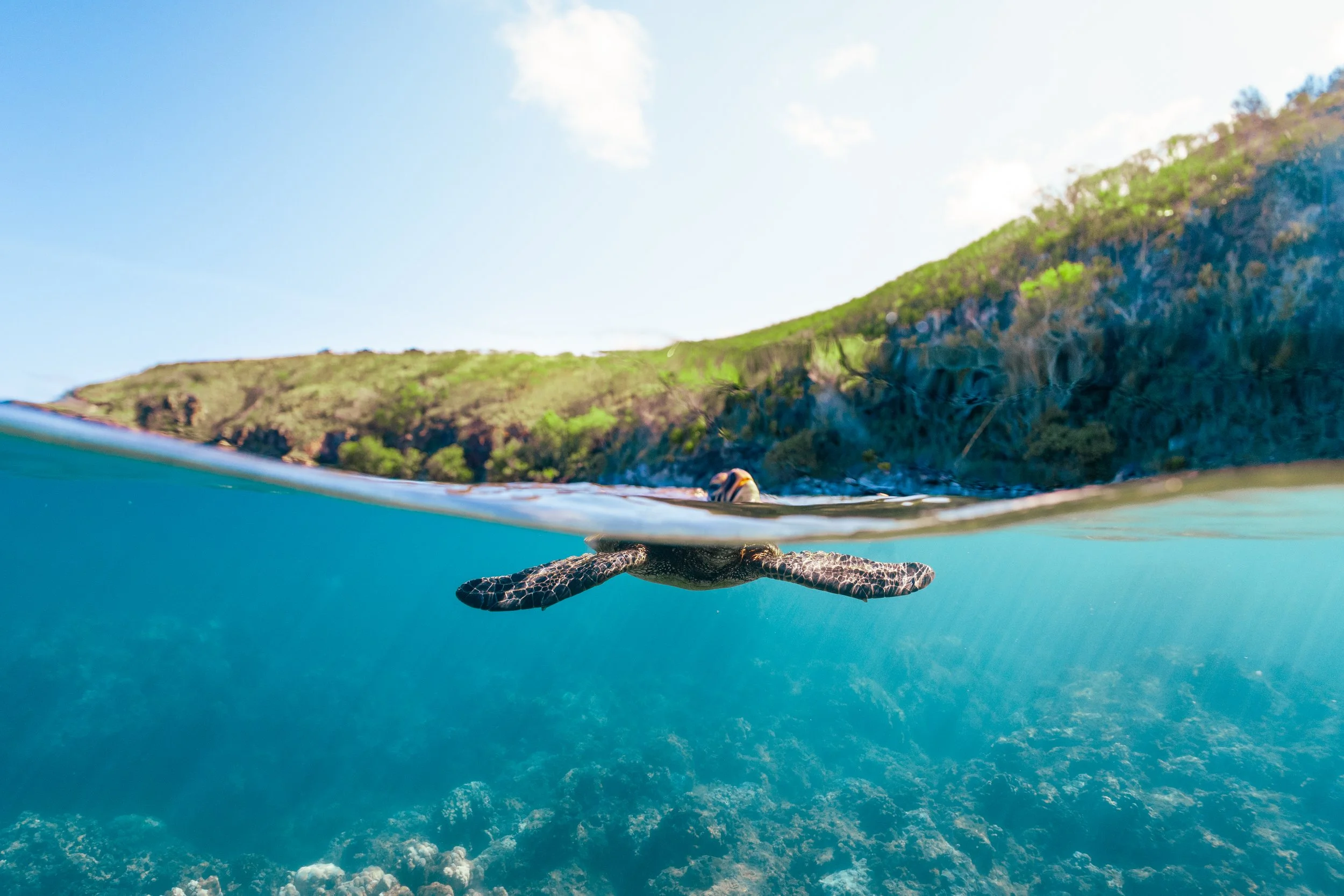
Photo from Trilogy Excursions | Taken by Island Dream Productions
Every year on June 16, National Sea Turtle Day encourages us to celebrate one of the ocean's most beloved animals. Yet sea turtles deserve far more than a single day of recognition.
Here on Maui, they hold a special place in our hearts.
Whether you're snorkeling over a coral reef, watching one rest peacefully along the shoreline, or seeing your first honu glide effortlessly through clear Hawaiian waters, sea turtles have a way of slowing us down. They invite us to pay attention. To observe rather than rush. To appreciate the ocean not just as a playground, but as a living ecosystem filled with stories.
While Hawaiʻi's beloved honu are the sea turtles most visitors encounter, they are only one member of a remarkable family. Across the world's oceans, seven species of sea turtles navigate coral reefs, open oceans, seagrass meadows, and nesting beaches. Each has its own story, challenges, and adaptations.
This guide explores them all—from the giant leatherback that dives deeper than most marine mammals to the Hawaiian green sea turtle that has become an animal admired for its resilience, longevity, and remarkable journeys across the sea.
Meet the Seven Sea Turtle Species
Sea turtles can be found in tropical and temperate oceans around the world, but there are only seven living species.
From coral reefs in Hawaiʻi to nesting beaches in Australia, Africa, Central America, and beyond, each species occupies its own ecological niche and plays a unique role in maintaining healthy marine ecosystems.
Green Sea Turtles
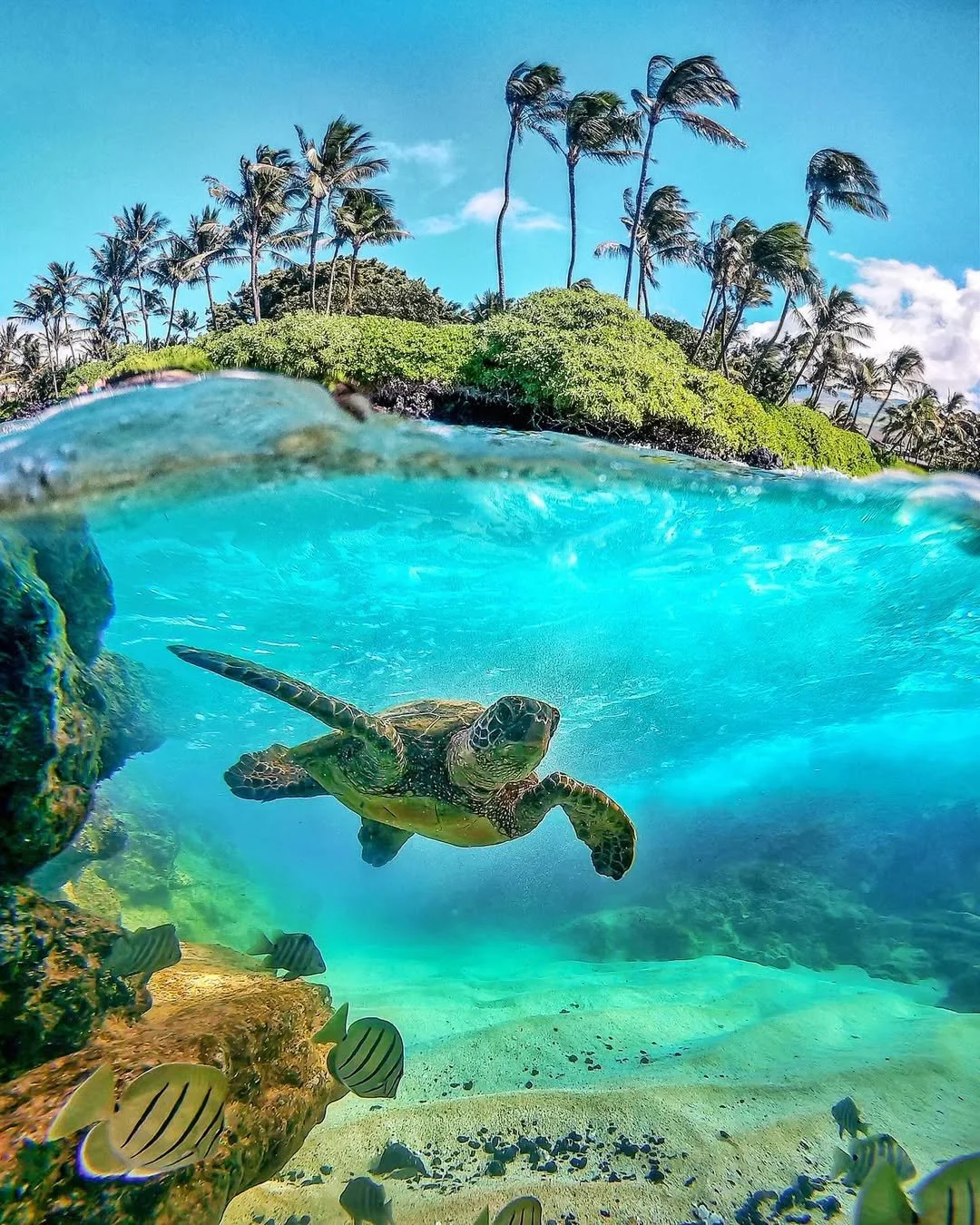
Photo from Trilogy Excursions | Taken by Island Dream Productions
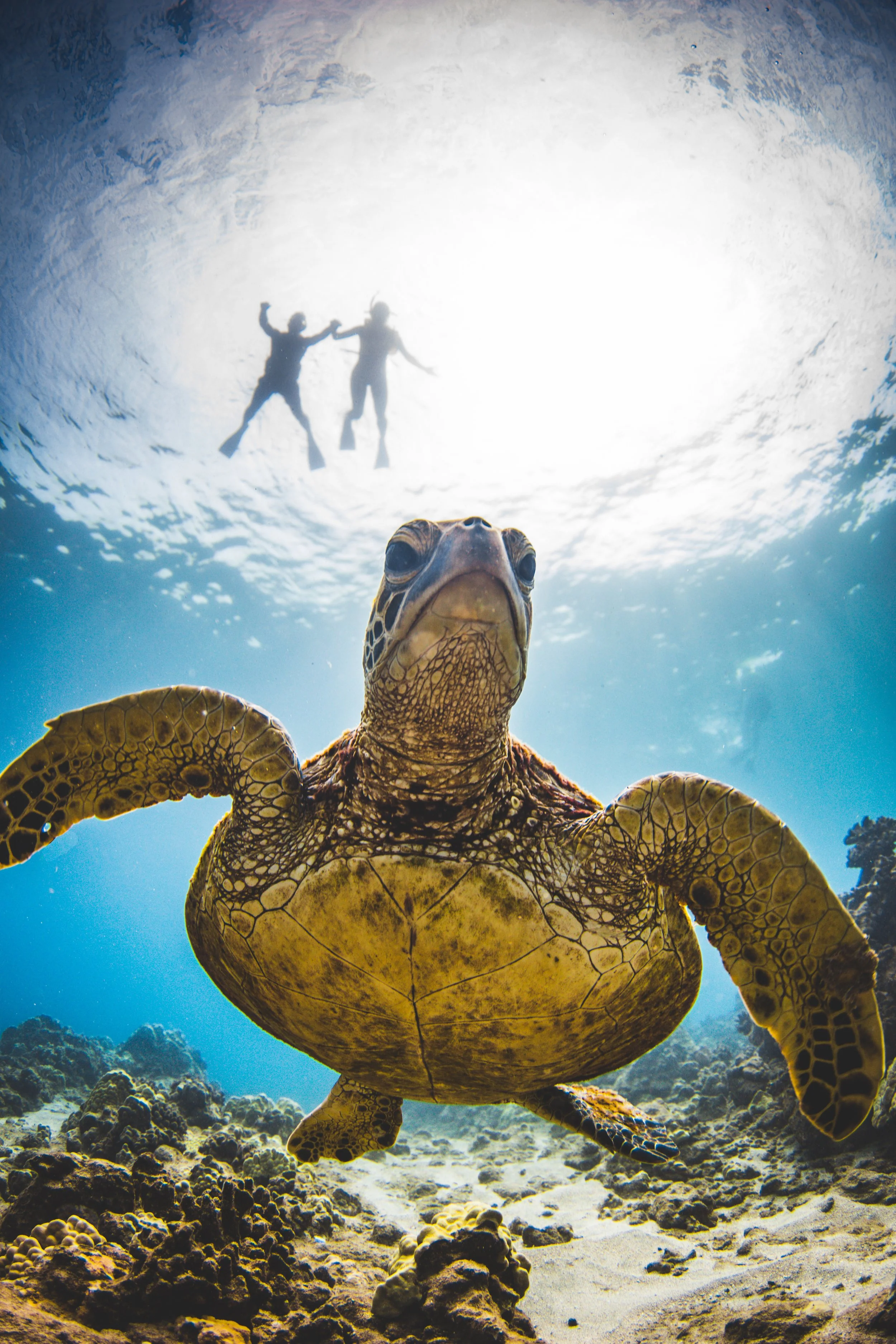
Photo from Trilogy Excursions | Taken by Island Dream Productions
Known in Hawaiʻi as honu, the green sea turtle is the species most people encounter while snorkeling on Maui.
At first glance, you might assume that honu are simply the Hawaiian name for green sea turtles—and that's true. Scientifically, honu belong to the species Chelonia mydas, the same species found in tropical and subtropical waters around the world.
However, Hawaiʻi's honu are also unique.
the difference between a green sea turtle and honu
Research has shown that Hawaiian green sea turtles belong to a genetically distinct population that is isolated from other green sea turtle populations worldwide. Known as the Central North Pacific population, these turtles have their own nesting grounds, migration patterns, and conservation story. In fact, the vast majority of Hawaiian green sea turtles’ nest in the remote Northwestern Hawaiian Islands, particularly within Papahānaumokuākea Marine National Monument.
So while honu are green sea turtles, not all green sea turtles are honu.
This distinction makes Hawaiʻi's sea turtles especially remarkable. They are part of a population found nowhere else on Earth.
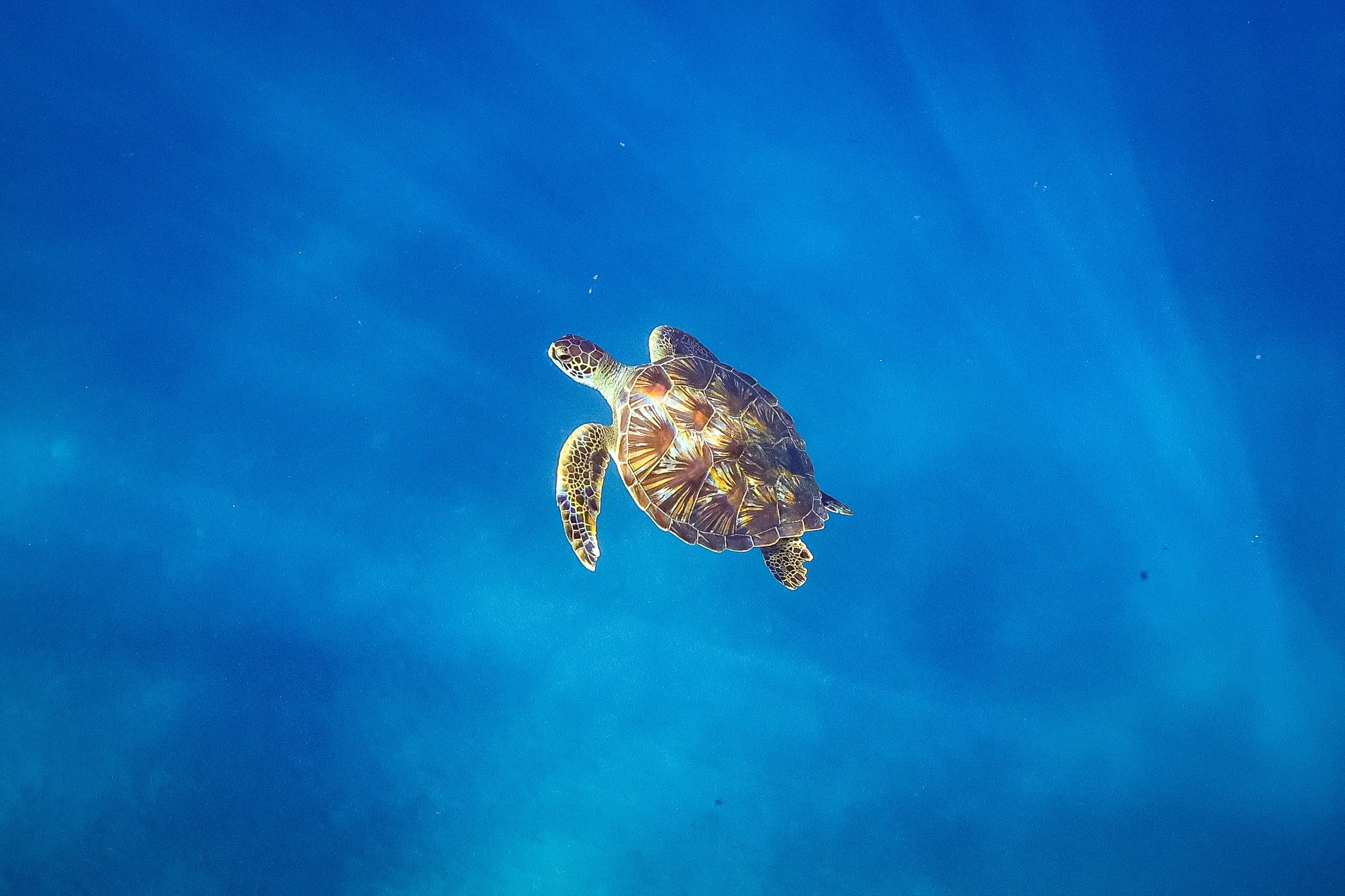
Photo from Trilogy Excursions | Taken by Island Dream Productions
about green sea turtles
Green sea turtles are unique among other sea turtles because adults feed primarily on algae and seagrasses. This grazing behavior helps prevent algae from overwhelming reefs and seagrass beds, making them important caretakers of healthy marine ecosystems.
They can grow to more than four feet in length and weigh over 300 pounds, though some individuals exceed those measurements. They are also remarkably long-lived animals. While determining the exact age of wild sea turtles is difficult, scientists estimate that green sea turtles can live for 60 to 80 years or more, with some individuals potentially surpassing that.
Like many long-lived species, they mature slowly. A young honu may spend decades growing before reaching breeding age and beginning the cycle of migration and nesting that has sustained the species for millions of years.
For many people on Maui, a close encounter with a honu becomes far more than a wildlife sighting. It becomes a connection to an animal that has been part of Hawaiʻi's marine ecosystem, culture, and identity for countless generations.
Hawksbill Sea Turtle
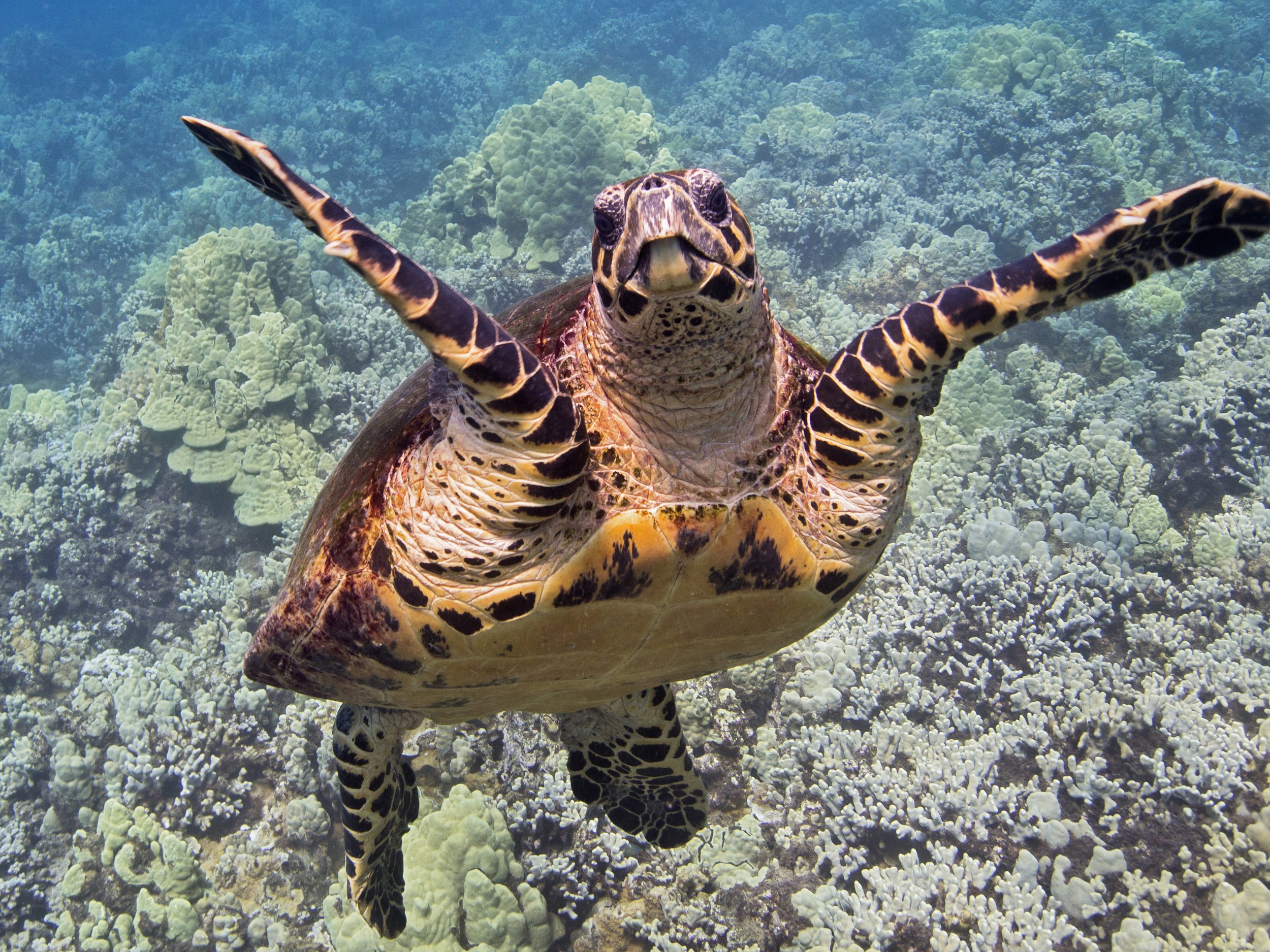
Photo from NOAA Fisheries
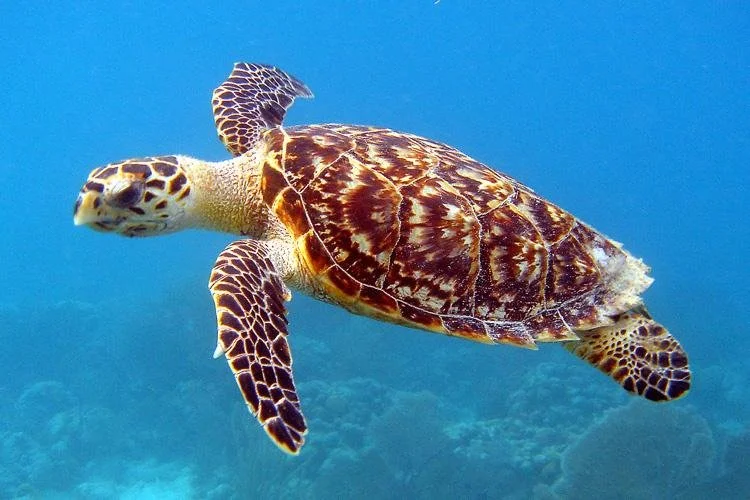
Photo from NOAA Fisheries
If honu are the gardeners of the reef, hawksbill sea turtles are among its protectors.
Recognizable by their narrow, pointed beak, hawksbills look noticeably different from other sea turtles. That specialized mouth allows them to reach into cracks and crevices within coral reefs to feed on sponges and other invertebrates.

At first, that might not sound particularly important. In reality, it is.
Many sponge species grow rapidly and compete directly with corals for space. By feeding on sponges, hawksbills help maintain the balance of reef ecosystems and create more room for corals to grow. Scientists consider them one of the most important sea turtles for maintaining healthy coral reefs.
Hawksbills are found throughout tropical oceans around the world, including parts of the Atlantic, Pacific, and Indian Oceans. They spend much of their lives around coral reef habitats, where their specialized diet gives them access to food sources that many other animals cannot utilize.
Adult hawksbills typically reach about three feet in length and can weigh between 100 and 200 pounds. They are also long-lived animals, with scientists estimating lifespans of 50 years or more in the wild.
Their beautifully patterned shells, with overlapping scales that resemble roof shingles, make them one of the most recognizable sea turtles.
Unfortunately, those same shells contributed to their decline.
For centuries, hawksbills were hunted for their ornate shell, often sold as "tortoiseshell" jewelry, combs, eyeglass frames, and decorative items. Combined with habitat loss, reef degradation, and accidental capture in fishing gear, this pressure caused populations to decline dramatically.
Today, hawksbill sea turtles are considered Critically Endangered and remain among the rarest sea turtles on Earth.
While green sea turtles are the species most commonly encountered on Maui, hawksbills can occasionally be found in Hawaiian waters as well. Their numbers are small, making every sighting a special one.
In many ways, hawksbills remind us that healthy reefs depend on balance. By feeding on sponges, they help create space for corals to thrive, demonstrating how even a single species can influence an entire ecosystem.
Loggerhead Sea Turtle
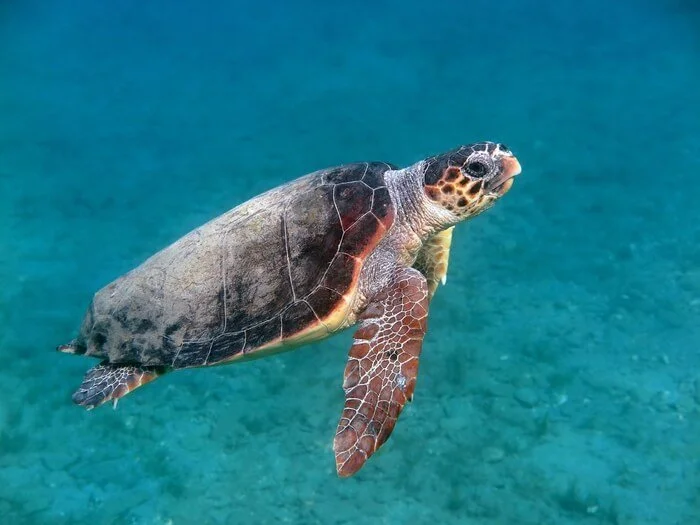
Photo from Scuba Turtles
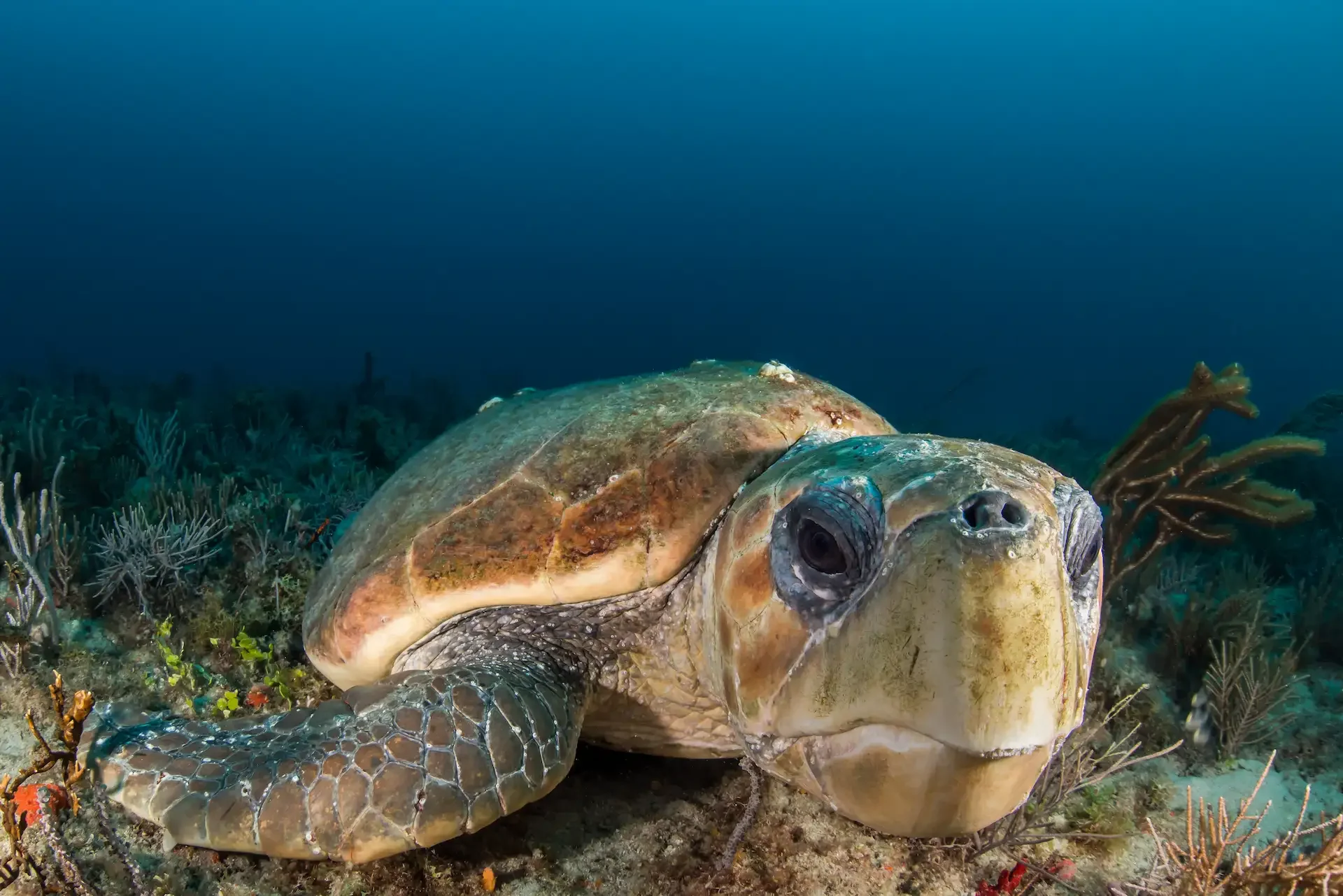
Photo from Ocean Conservancy
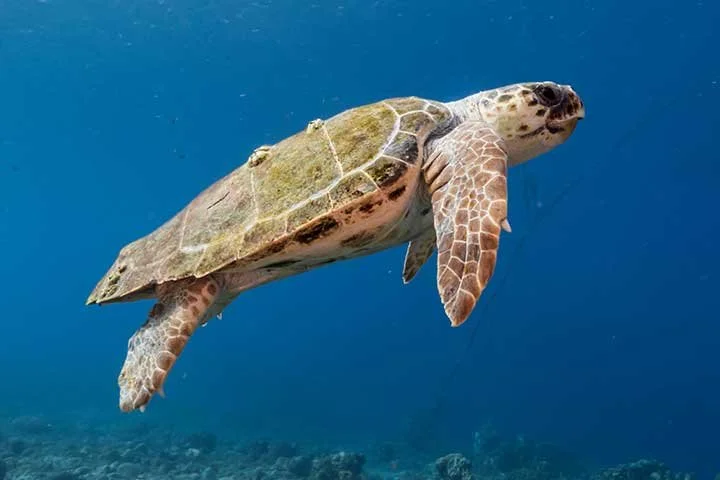
Photo from Animal Encyclopedia for Kids
Loggerheads are easy to recognize by their large heads and powerful jaws. Unlike green sea turtles, which primarily graze on seagrass and algae, loggerheads are built to crush hard-shelled prey like crabs, clams, and sea urchins. Their strong jaws allow them to feed on animals many other sea turtles cannot.
Found throughout the Atlantic, Pacific, Indian, and Mediterranean, loggerheads are among the most widespread sea turtles in the world. Some populations nest on the beaches of Florida, while others nest in places as far away as Japan, Australia, Greece, and Oman.
Loggerheads can grow to more than 3 feet in length and may live for 50 years or more. They are also remarkable travelers. Young loggerheads born on beaches in Japan have been tracked crossing the Pacific Ocean, traveling thousands of miles before reaching feeding grounds near North America.
While loggerheads are occasionally seen in Hawaiian waters, they are far less common than honu. Their incredible migrations remind us that oceans connect distant coastlines in ways we are only beginning to understand.
Leatherback Sea Turtle
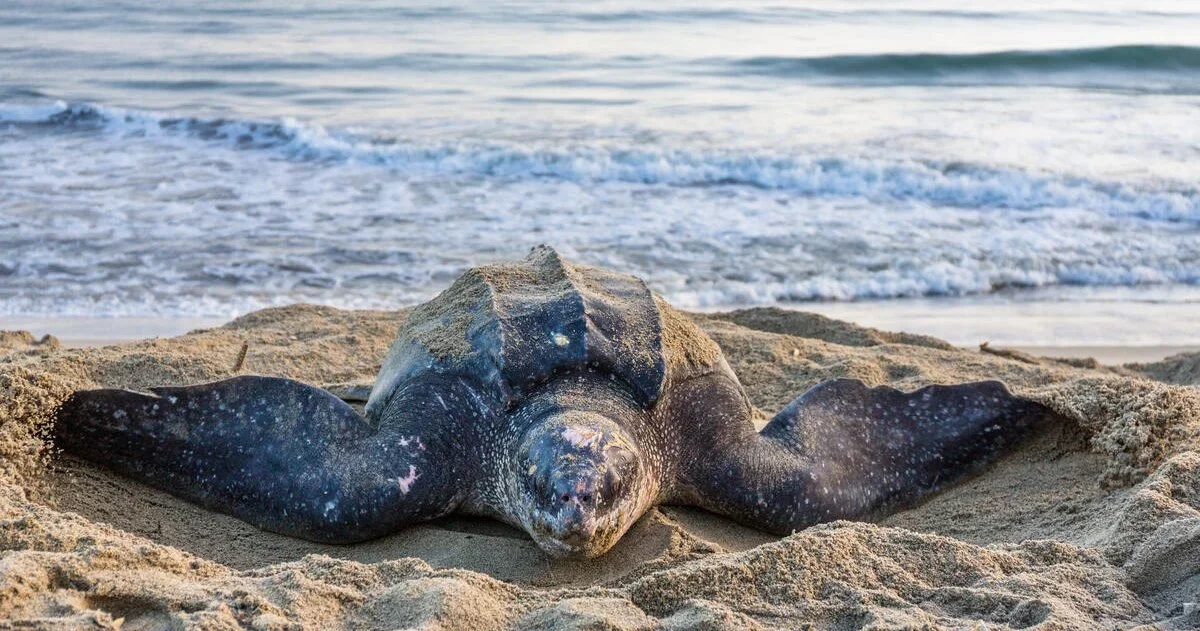
Photo From World Wildlife Fund
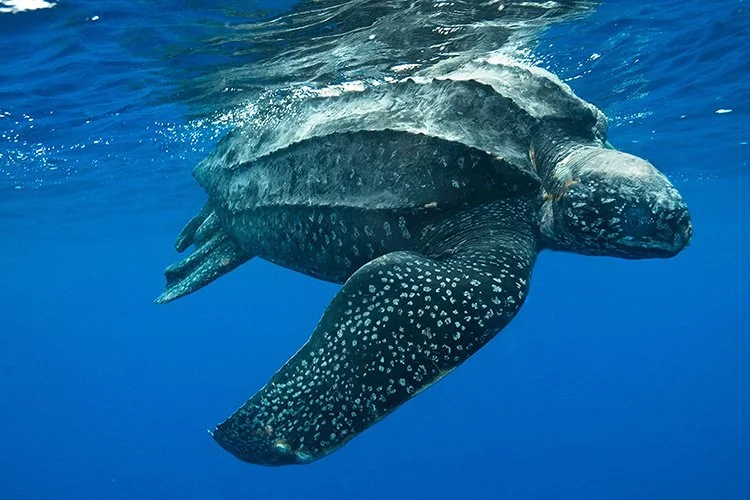
Photo from NOAA Fisheries
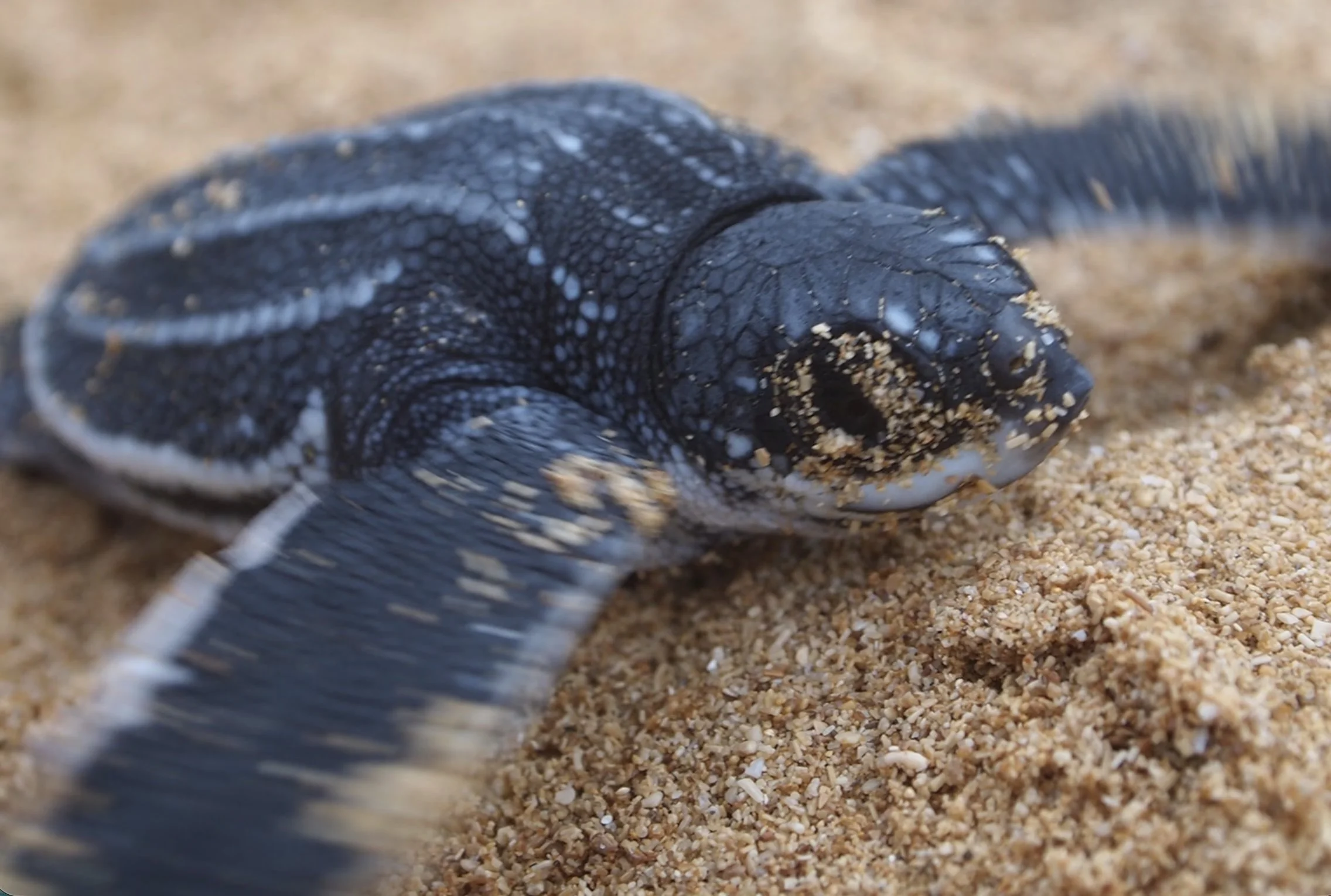
Photo from National Geographic Kids
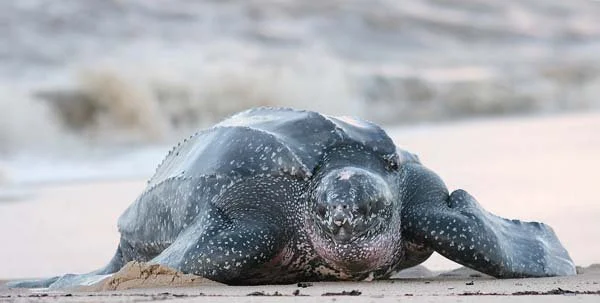
Photo from Maui News
If most sea turtles are built like armored tanks, the leatherback is built like a submarine.
Leatherbacks are the largest sea turtles on Earth, growing up to 7 feet in length and weighing as much as 2,000 pounds. Unlike other sea turtles, they do not have a hard shell covered in scales. Instead, their backs are made of a thick, leathery skin stretched over a flexible skeleton—giving them their name.
They are also among the most wide-ranging reptiles on the planet. Leatherbacks can be found in every ocean except Antarctica and regularly travel between tropical nesting beaches and cold northern feeding grounds.
Despite being reptiles, leatherbacks routinely dive deeper than many marine mammals. Scientists have recorded dives of more than 3,000 feet as they search for one of their favorite foods: jellyfish.
Leatherbacks can live for several decades and play an important role in controlling jellyfish populations. Unfortunately, they often mistake floating plastic bags for jellyfish, making marine debris one of their greatest threats.
While encounters with leatherbacks in Hawaiʻi are rare, they occasionally pass through Hawaiian waters during their long migrations. Seeing one would be like spotting a living dinosaur—a reminder of a lineage that has survived for more than 100 million years.
Olive Ridley Sea Turtle
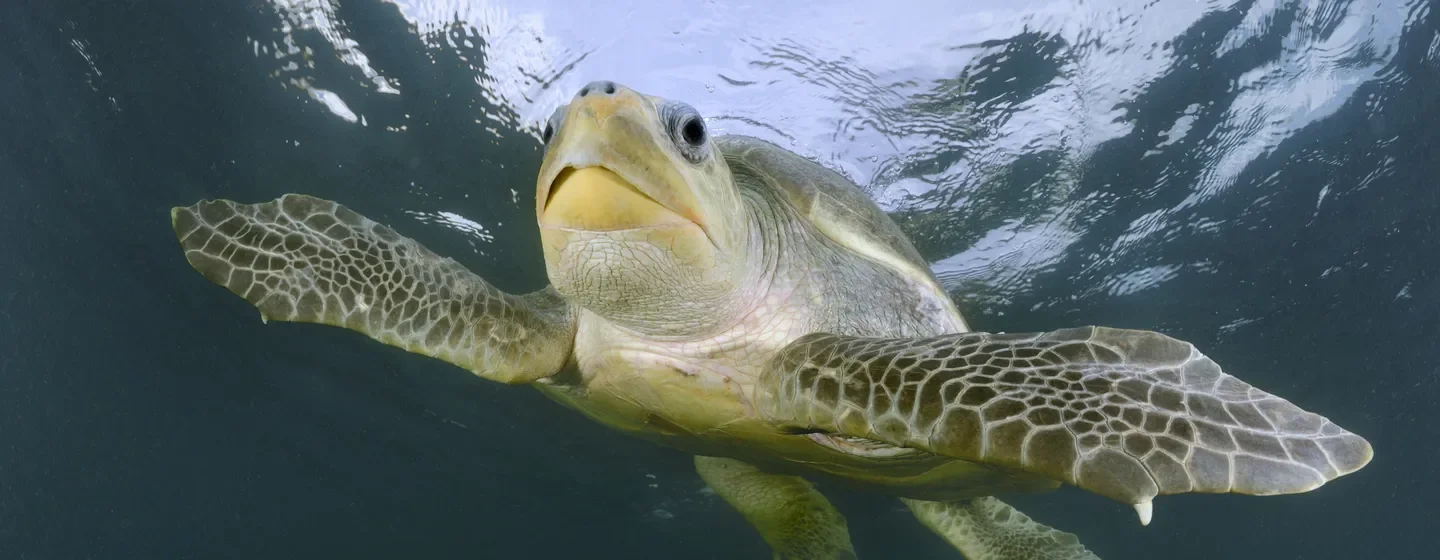
Photo From World Wildlife
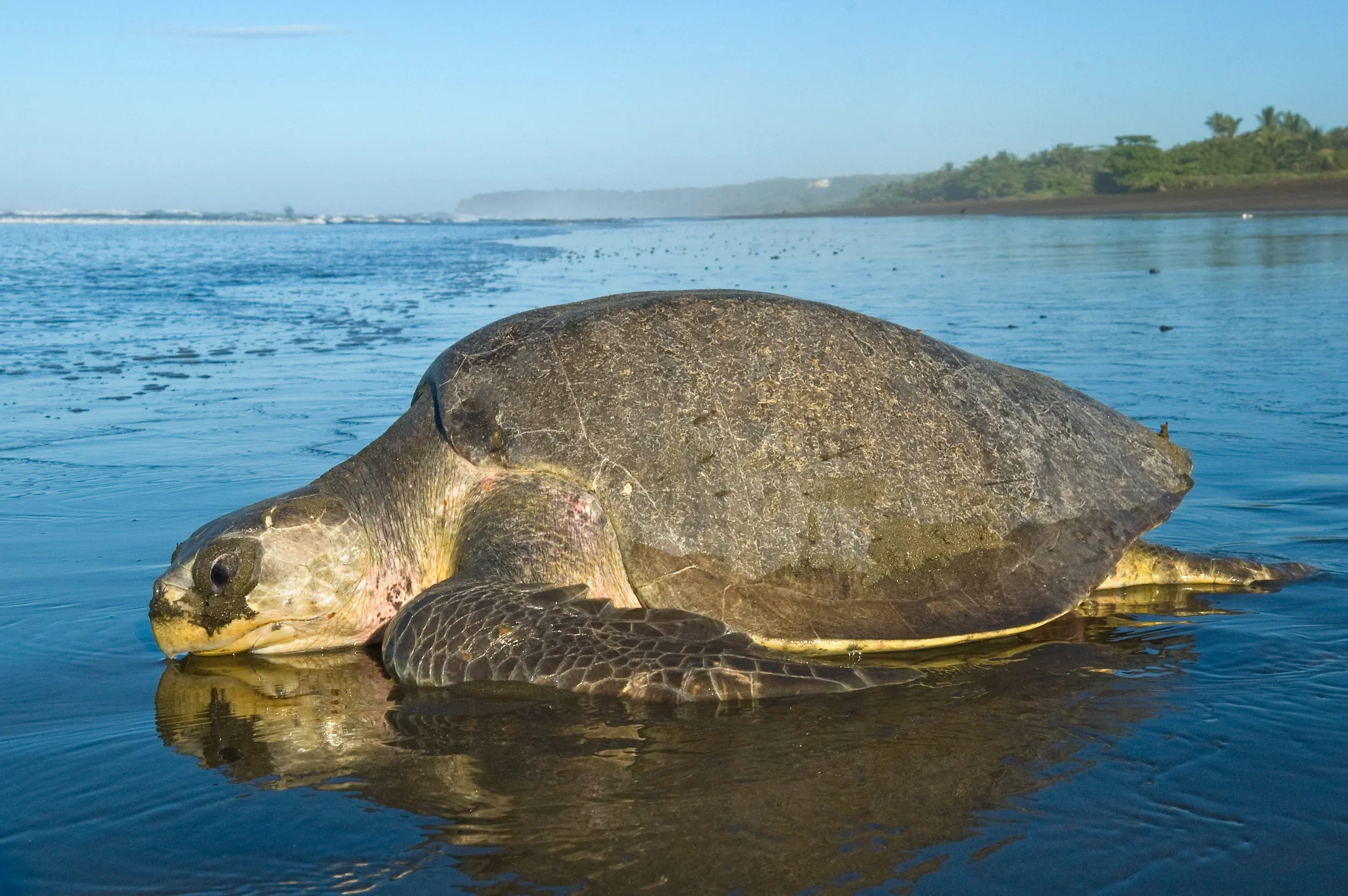
Photo from The State of the World’s Sea Turtles
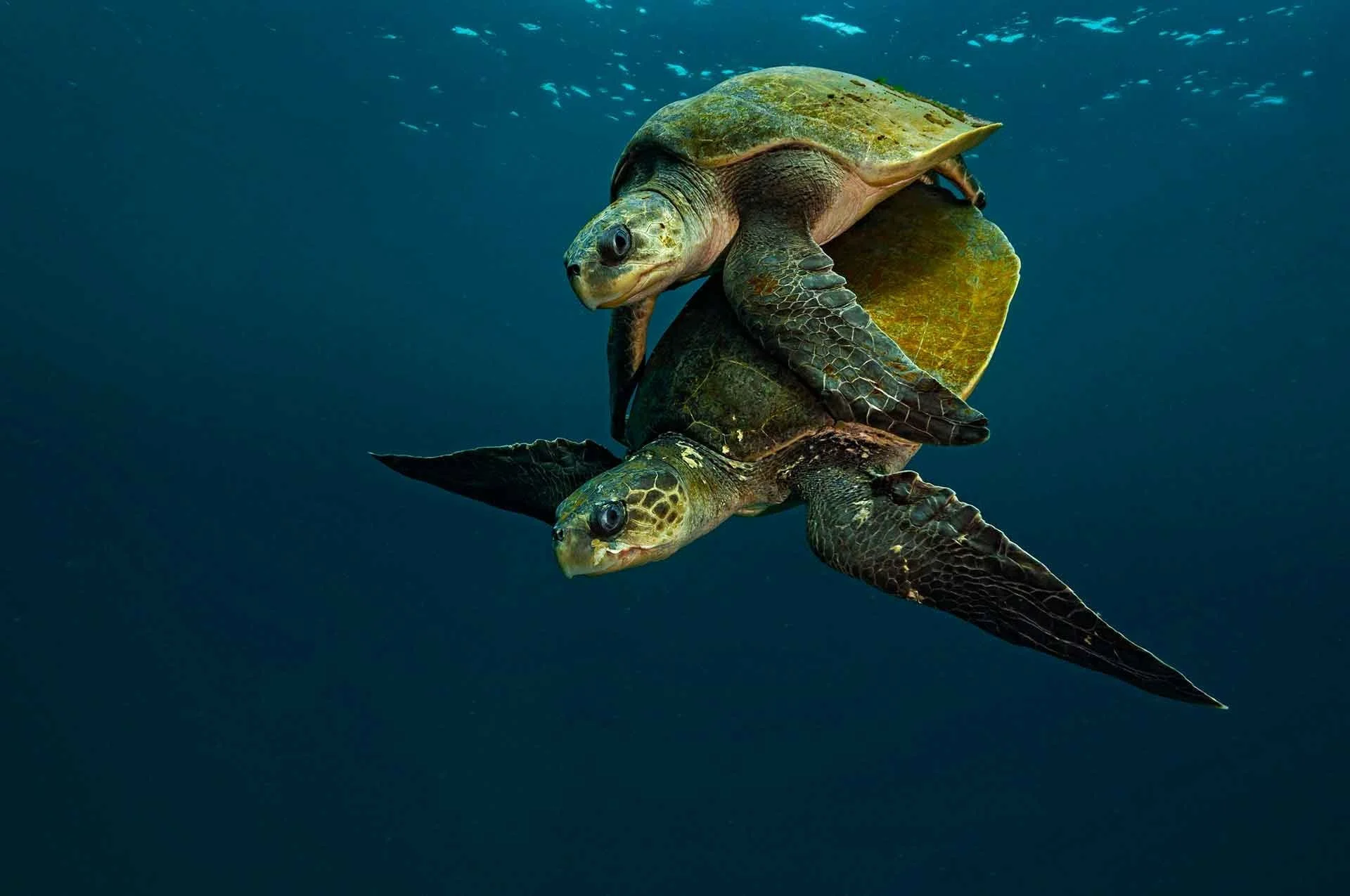
Photo from Roundglass Sustain
The Olive Ridley may not be the largest or rarest sea turtle, but it is responsible for one of nature's most extraordinary spectacles.
Named for its olive-colored shell, the Olive Ridley is found throughout tropical waters of the Pacific, Atlantic, and Indian Oceans. Adults typically reach about 2 feet in length and can live for 50 years or more.
What makes this species truly remarkable is a nesting behavior known as an arribada, Spanish for "arrival."
During an arribada, thousands—and sometimes hundreds of thousands—of female Olive Ridleys come ashore at the same beach over the course of just a few days to lay their eggs. These mass nesting events are among the largest wildlife gatherings on Earth and can transform an otherwise quiet beach into a sea of turtles.
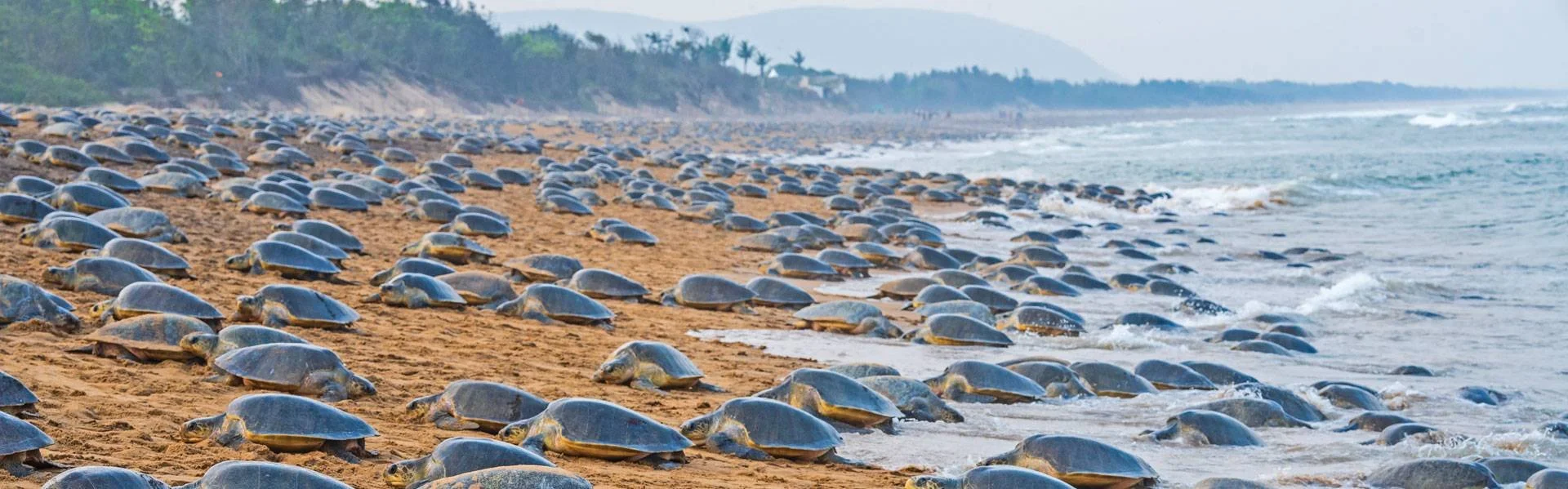
Pictured: Arribada - Photo from Sanctuary Nature Foundation
Scientists are still studying exactly how the turtles coordinate these synchronized arrivals, but lunar cycles, ocean conditions, and environmental cues are all thought to play a role.
Like all sea turtles, Olive Ridleys face threats from fishing gear, coastal development, and marine debris. Even so, witnessing an arribada remains one of the most awe-inspiring reminders of how deeply connected these animals are to the rhythms of the ocean.
Kemp's Ridley Sea Turtle
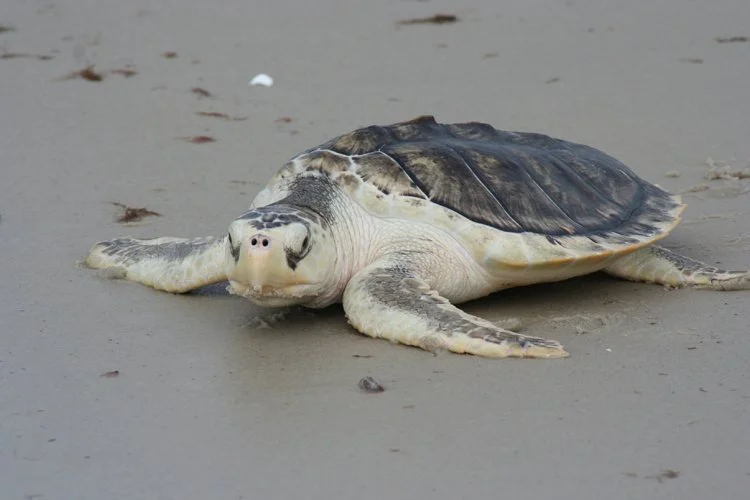
Photo from NOAA Fisheries
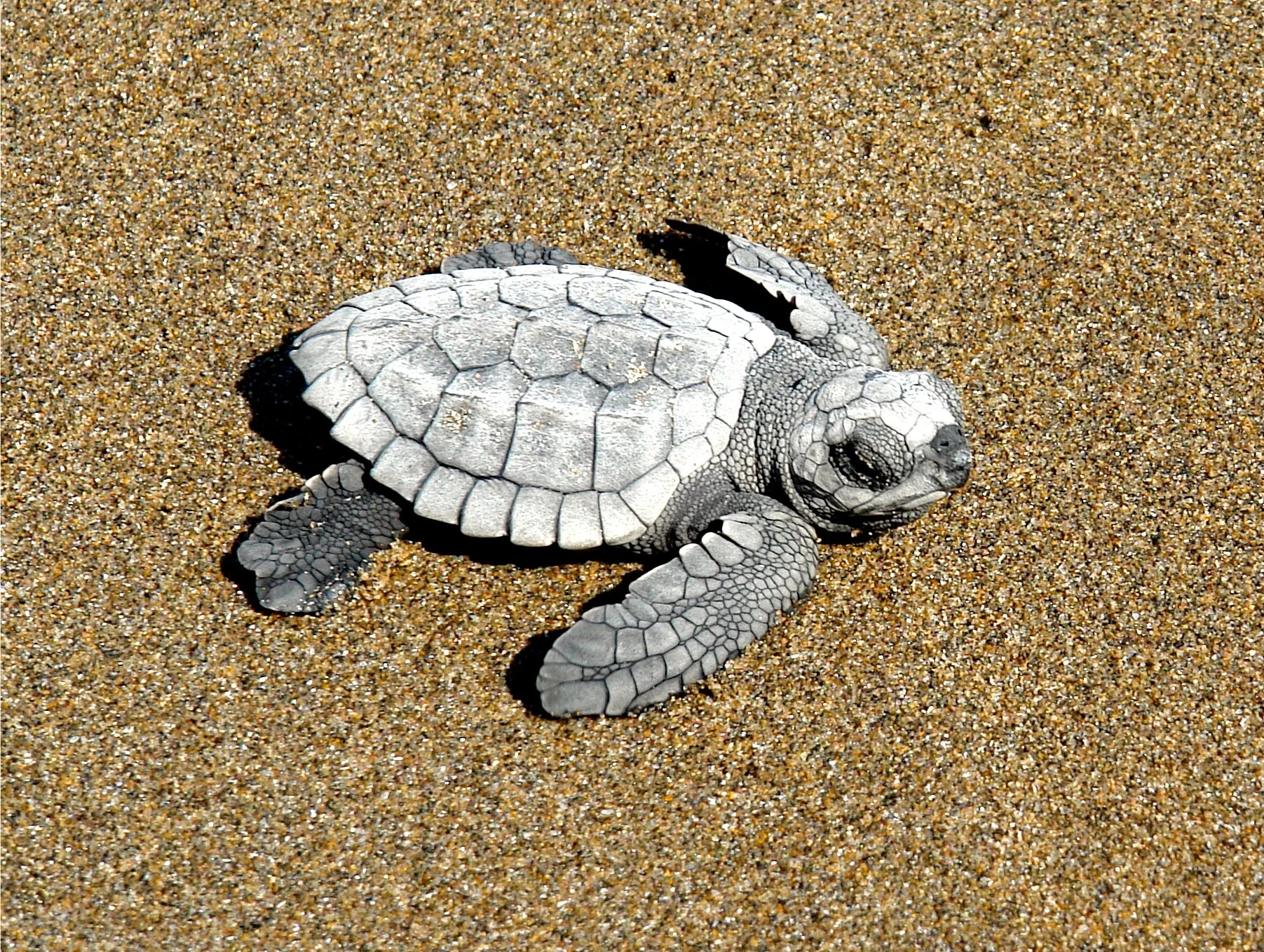
Photo from The State of the World’s Sea Turtles
The Kemp's Ridley is the smallest sea turtle in the world, but it has one of the biggest comeback stories.
Found primarily in the Gulf of Mexico and along the Atlantic coast of North America, Kemp's Ridleys typically grow to about 2 feet in length and can live for several decades.
Like their close relative, the Olive Ridley, Kemp's Ridleys are also known arribadas. However, unlike most sea turtles, the vast majority of their nesting occurs on a relatively small stretch of coastline in Mexico.
This dependence on a limited number of nesting beaches made the species especially vulnerable.
By the 1980s, Kemp's Ridley populations had declined dramatically due to egg harvesting, accidental capture in fishing gear, and habitat loss. At one point, scientists feared the species might disappear altogether.
Fortunately, decades of international conservation efforts helped reverse the trend. Nest protection programs, fishing regulations, and habitat conservation have allowed populations to recover significantly, making the Kemp's Ridley one of the most encouraging examples of what can happen when conservation is given time to work.
While the species remains critically important to protect, its story offers something increasingly rare in conservation: hope.
Flatback Sea Turtle
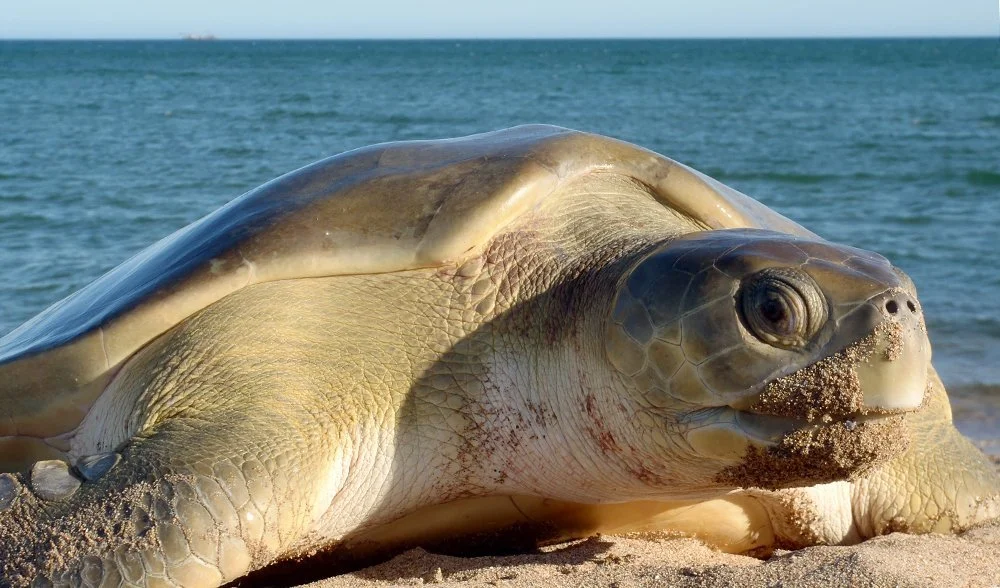
Photo from Australian Geographic
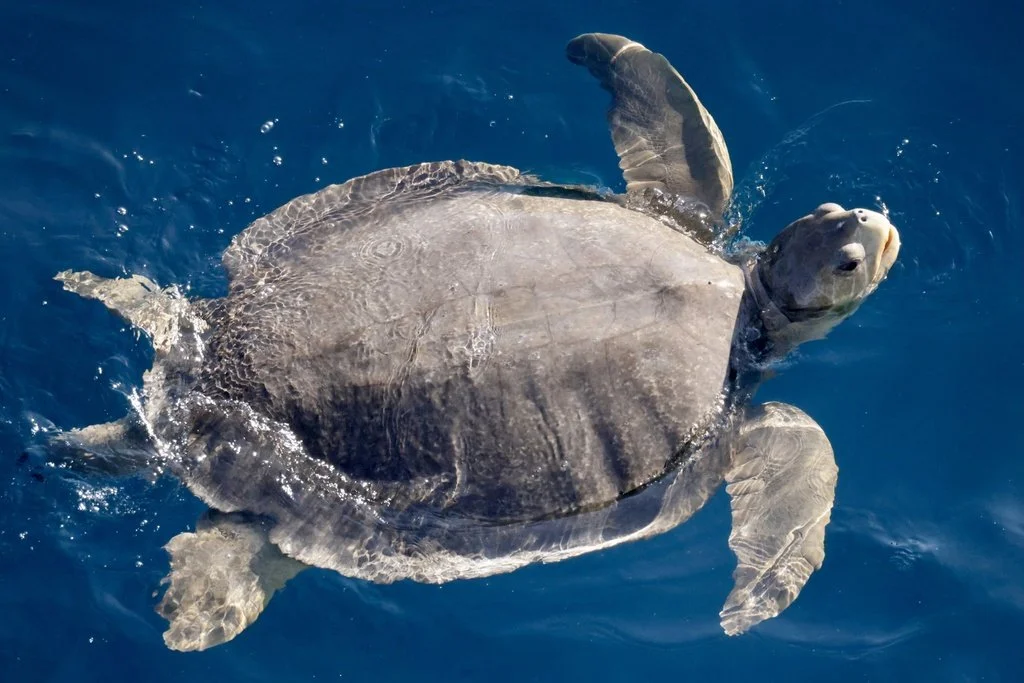
Photo from iNaturalist
If sea turtles had a homebody, it would be the Flatback.
Unlike every other sea turtle species, Flatbacks are found almost exclusively in the waters surrounding Australia. They nest only on Australian beaches and spend their lives on the continental shelf rather than undertaking the vast ocean-crossing migrations seen in other sea turtles.
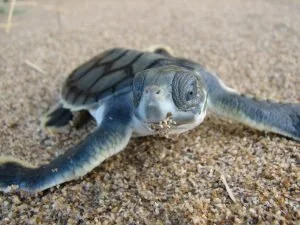
Flatback Hatchling - Photo from Sea Turtle Foundation
Flatbacks get their name from their relatively low, smooth shell, which appears flatter than that of other sea turtle species. Adults typically grow to about 3 feet in length and can live for 50 years or more.
Because they remain in coastal waters for much of their lives, Flatbacks have avoided some of the challenges faced by highly migratory sea turtles. However, they still face threats from coastal development, marine debris, vessel strikes, and habitat disturbance.
One of the most unusual things about Flatbacks is their hatchlings. Compared to other sea turtle species, Flatback hatchlings are surprisingly large when they emerge from their nests. Scientists believe this larger size may help them survive in Australia's coastal waters.
Although few people outside Australia ever encounter a Flatback, they serve as a reminder that every sea turtle species has evolved its own strategy for surviving in the ocean.
Comparing the 7 Sea Turtles of the World
Although they all share a common ancestry and life at sea, the world's seven sea turtle species have evolved in remarkably different ways. Some, like the leatherback, roam entire ocean basins and can dive deeper than any other sea turtle. Others, like the flatback, spend their lives almost entirely in Australian waters. Some specialize in eating jellyfish, while others graze on seagrass, hunt crabs, or feed on reef sponges.
They also face very different conservation challenges. A Hawaiian honu resting on a reef on Maui lives a very different life from a leatherback crossing the Pacific or a Kemp's ridley gathering offshore of the Gulf of Mexico. Yet every species plays an important role in keeping marine ecosystems healthy.

The chart above provides a side-by-side comparison of all seven sea turtle species, including their size, range, diet, nesting behavior, and current conservation status.
Sea Turtle Superpowers
Sea turtles have been swimming through Earth's oceans for more than 100 million years. They survived the extinction that wiped out the dinosaurs, adapted to changing oceans, and continue to migrate across entire ocean basins today.
The more scientists study sea turtles, the more remarkable they become. Take navigation, for example.
A young sea turtle may spend years traveling thousands of miles across the open ocean before returning to the same region where it hatched. Research suggests sea turtles can detect Earth's magnetic field, using it as a kind of natural map and compass. In some cases, females return to nest on the very same beaches where they began their lives decades earlier.
Their shells are just as remarkable. Much like a human fingerprint, every sea turtle's facial scale pattern is unique. Researchers often identify individual turtles simply by photographing the scales around their eyes and comparing them to existing records. No two are exactly alike.
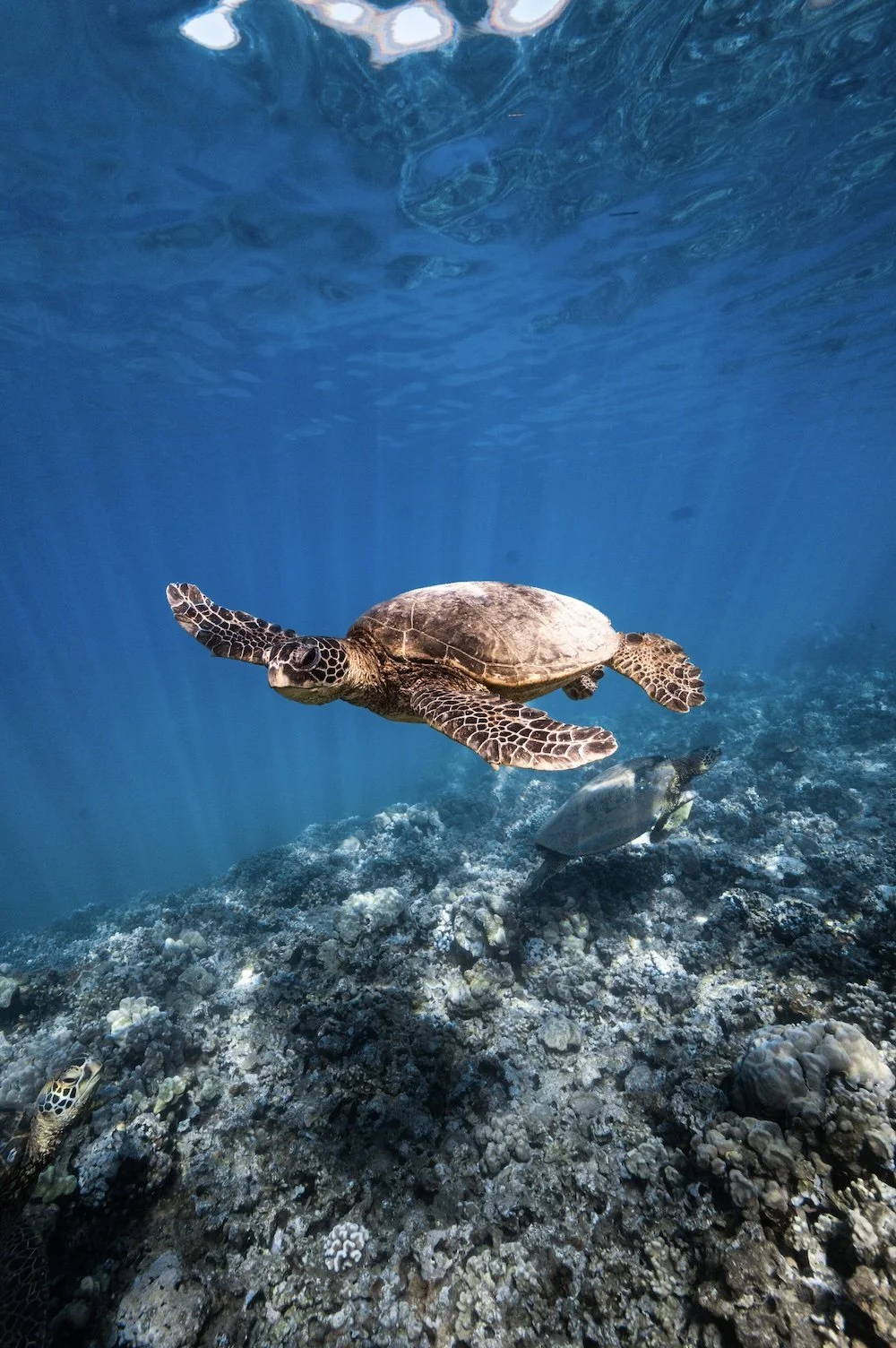
Photo from Trilogy Excursions | Taken by Island Dream Productions
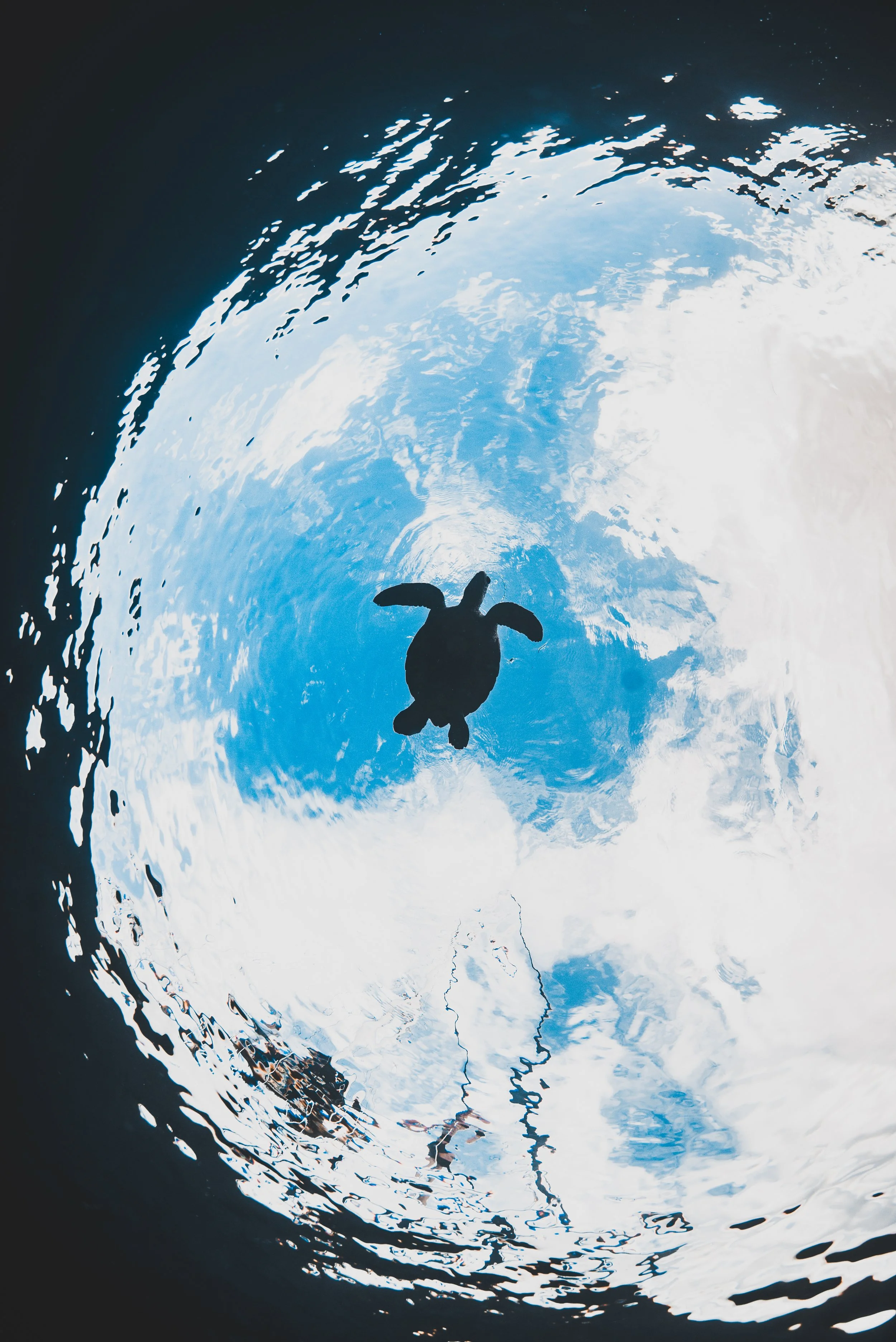
Photo from Trilogy Excursions | Taken by Island Dream Productions
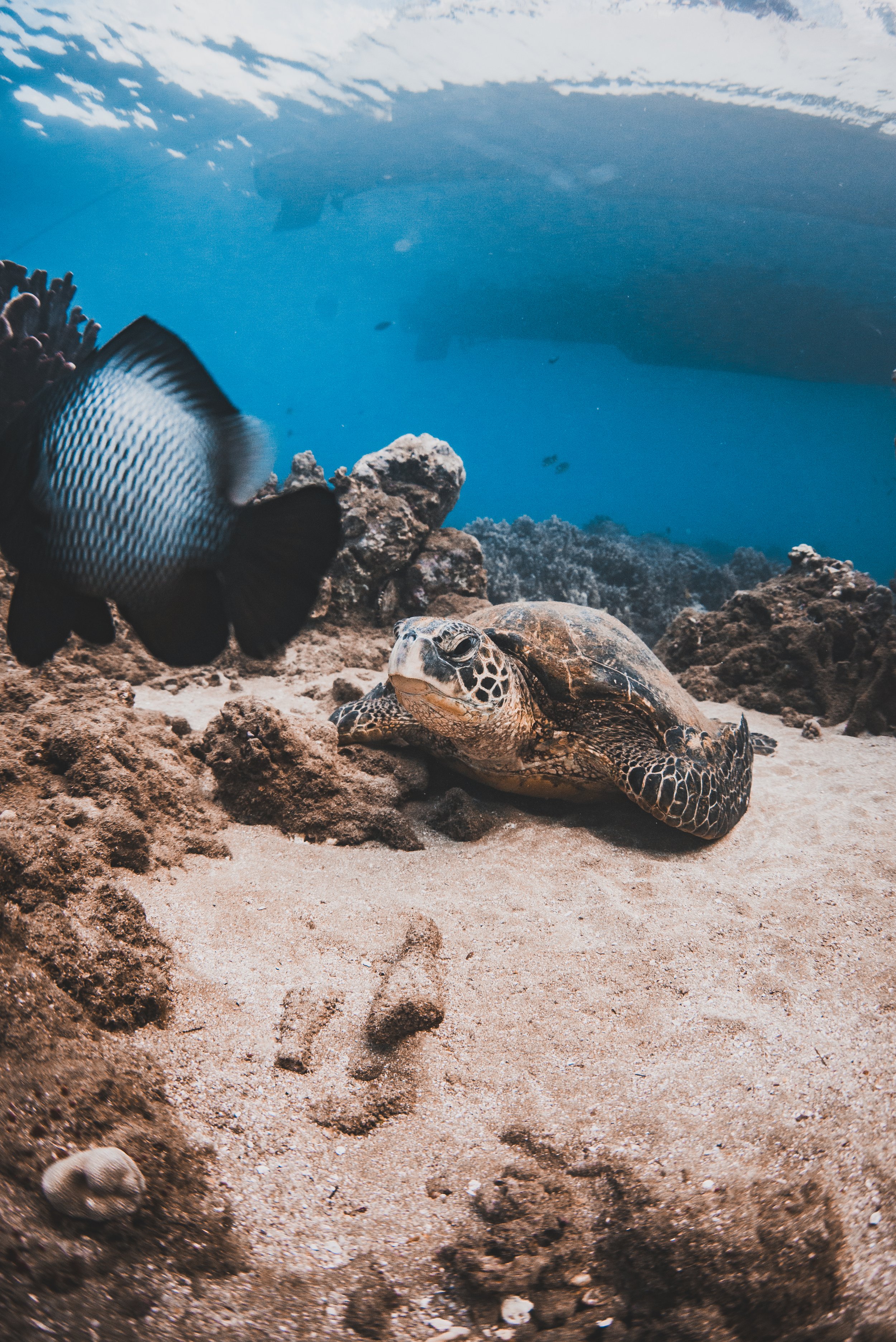
Photo from Trilogy Excursions | Taken by Island Dream Productions
Sea turtles are also built for life underwater. Depending on their activity level, they can hold their breath for hours at a time while resting. Some species sleep beneath reef ledges or tucked into rocky crevices, surfacing only occasionally for air.
Then there are the record-breakers.
Leatherback sea turtles have been recorded diving deeper than 3,900 feet (1,200 meters), making them the deepest-diving sea turtle on Earth. Despite being reptiles, they routinely dive deeper than many marine mammals.
Even something as simple as a sea turtle's sex is extraordinary.
Unlike humans, where sex is determined genetically, sea turtle sex is influenced by temperature during incubation. In general, warmer sand tends to produce more females, while cooler sand produces more males. Scientists are closely studying how rising global temperatures may affect future sea turtle populations.
Perhaps most impressive of all is their longevity. Exactly how old a sea turtle can become remains one of the ocean's unanswered questions.
Scientists know that many sea turtles live for decades, and some may survive for more than a century. Because these animals spend most of their lives at sea, the oldest sea turtle ever to swim the oceans may have already lived far longer than we realize.
In many ways, that's fitting. Sea turtles are among the oldest living lineages on Earth, with ancestors that have inhabited the oceans for more than 100 million years. They have outlasted changing continents, shifting climates, and even the dinosaurs themselves. The turtles we see today are living reminders of a much older ocean.
From Egg to Ocean
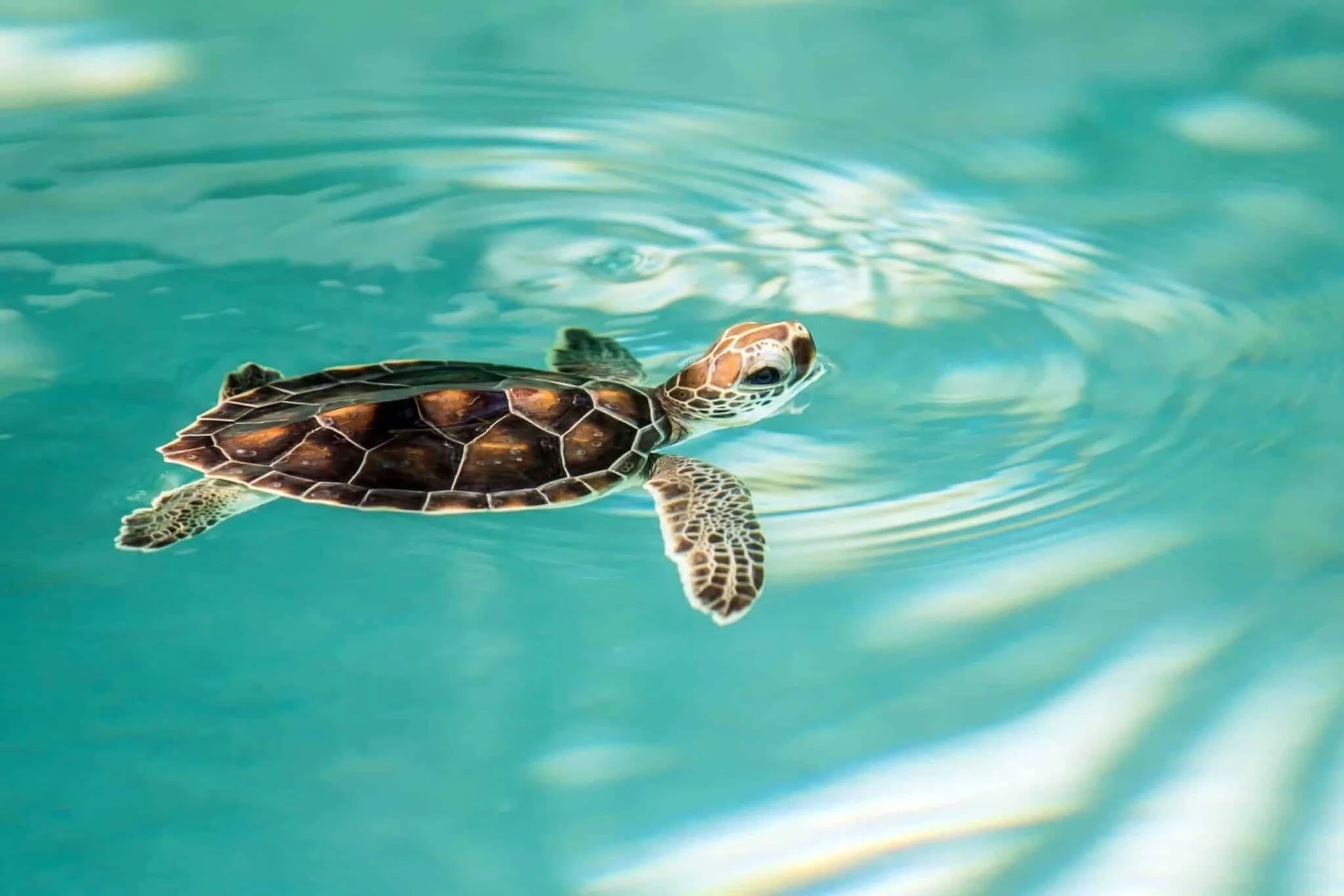
Photo from Maui Ocean Center
Every sea turtle begins life the same way: buried beneath the sand.
After mating offshore, a female sea turtle returns to a nesting beach-- usually the one she hatched on-- and uses her rear flippers to dig a chamber in the sand. Depending on the species, she may lay anywhere from about 50 to more than 150 eggs before carefully covering the nest and returning to the sea.
For the next several weeks, the future of those hatchlings depends on something surprisingly simple: temperature.
Unlike humans and most mammals, sea turtles do not have genetically determined sex. Instead, the temperature of the nest helps determine whether hatchlings develop as males or females. In general, warmer sand produces more females, while cooler sand produces more males.
When the hatchlings are finally ready, they emerge together. This synchronized escape is no accident. By leaving the nest as a group—often under the cover of darkness—the hatchlings improve their chances of survival during the most dangerous journey of their lives.
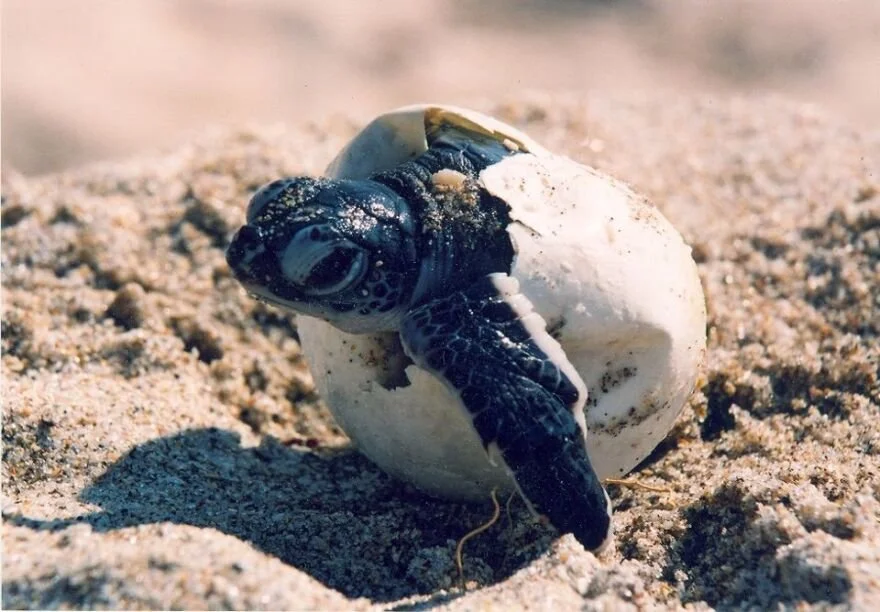
Photo from WUSF
Because the moment they leave the nest, everything wants to eat them. Crabs wait near the shoreline. Seabirds patrol overhead. Fish gather just offshore. For a hatchling no bigger than the palm of your hand, the ocean can feel like an obstacle course filled with predators. The odds are staggering.
Scientists often estimate that only about one in every thousand sea turtle hatchlings survives long enough to reach adulthood. For some populations, the odds may be even lower.
Those few survivors enter what scientists sometimes call the "lost years"—a period of life that remained largely mysterious until recent decades. Young turtles disappear into the open ocean, drifting with currents and growing far from the beaches where they hatched.
Years later, and sometimes decades later, the survivors return. A female that survives the gauntlet of predators, storms, changing oceans, and human impacts may one day return to nest on the same stretch of coastline where her own journey began.
From a nest buried in the sand to a migration spanning thousands of miles, the life of a sea turtle is one of the most improbable success stories in nature.
Every adult turtle you see resting on a reef or gliding through clear blue water has already beaten extraordinary odds simply to be there.
Sea Turtles and Their Ocean Partners
When most people picture a sea turtle, they imagine a solitary traveler gliding through the open ocean.
@sailtrilogy Have you ever seen a Honu cleaning station? It’s where sea turtles come to rest while small reef fish gently remove algae and parasites from their shells and skin. These spots are essential for a turtles health— and they return to the same ones again and again. When a Honu is here, it’s vulnerable, conserving energy, and letting the reef do its work. That’s why giving space matters. No chasing, no blocking, no touching. The best encounters happen when we slow down and let the ocean unfold on its own terms🤍🌊 #sailtrilogy #honu #reef #snorkeling #seaturtle ♬ Vienna - Gretta Ray
In reality, sea turtles are connected to a surprising number of other animals throughout their lives.
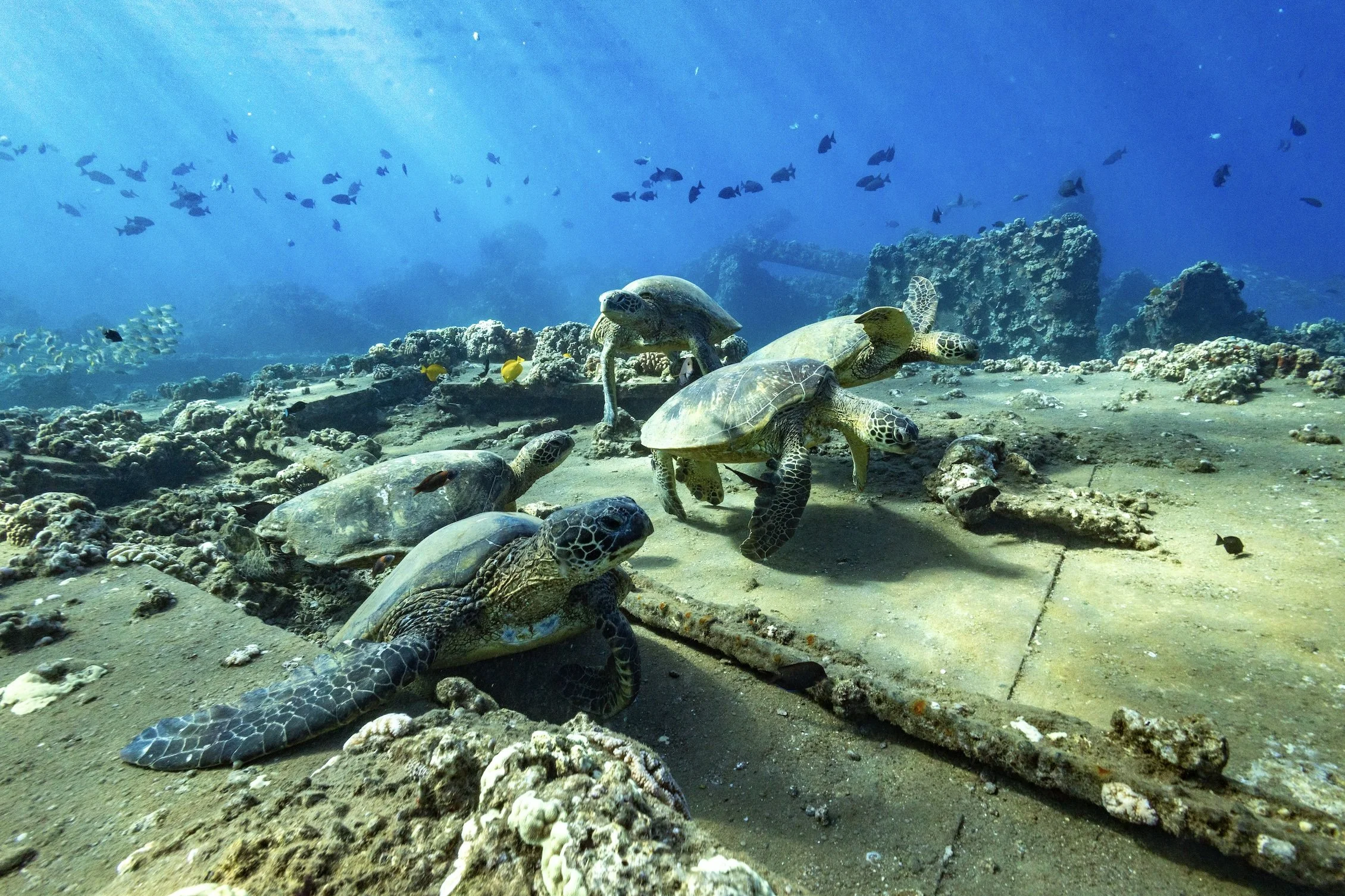
One of the most fascinating examples can be found on coral reefs at underwater cleaning stations. Here, sea turtles will sometimes pause almost motionless while small reef fish pick algae, parasites, and dead skin from their shells, flippers, and skin. Wrasses, surgeonfish, butterflyfish, and angelfish have all been observed participating in these interactions.
The fish get an easy meal. The turtle gets a free cleaning. Both benefit.
Sea turtles also have their own entourage. Many carry remoras, sometimes called suckerfish, which attach themselves to the turtle's shell using a specialized suction disc. The remoras gain transportation and feeding opportunities while hitching a ride across the reef or open ocean.
Even feeding turtles can unintentionally help other species. As green sea turtles graze on algae or seagrass, they stir up small organisms hidden among the vegetation. Nearby fish often follow behind, taking advantage of the unexpected buffet left in the turtle's wake.
For animals often described as solitary, sea turtles are also surprisingly social—or at least more social than many people realize.
Scientists generally consider sea turtles to be solitary animals, but they regularly gather in the same places. Multiple turtles may share feeding grounds, rest on the same reefs, visit the same cleaning stations, or congregate near important nesting beaches. Divers frequently observe several turtles resting near one another beneath reef ledges or swimming through the same areas without conflict.
@sailtrilogy Tag your person🐢✨ #honu #turtles #hawaii #maui #usinanotheruniverse ♬ Oceanic Flow - Ilmarinen Symphony
Do they have friends?
The honest answer is that we don't know.
Sea turtles do not appear to form lifelong social bonds like dolphins or whales. However, research over the past few decades has revealed that reptiles are far more complex than once believed. Sea turtles can learn, remember, navigate across entire oceans, and alter their behavior based on past experiences. While scientists cannot know exactly what a turtle feels, the old idea that reptiles are simply instinct-driven machines is becoming increasingly outdated.
Perhaps the most remarkable relationship of all is the one between mother and hatchling.
A female sea turtle may spend decades crossing oceans before returning to the beach where she hatched. There, she lays her eggs, carefully covers the nest, and returns to the sea.
She will never meet her offspring.
Months later, the hatchlings emerge and begin their journey entirely on their own. The mother never teaches them where to swim. She never shows them where to feed. She never returns to check on them.
And yet, somehow, many years later, some of those survivors will return to the very same coastline and continue the cycle.
For animals that spend much of their lives alone, sea turtles are connected to an extraordinary web of relationships—with fish, reefs, beaches, ocean currents, and future generations they will never meet.
The Real Threats Facing Sea Turtles Today
Honu Cleaning Station on Maui (Taken on the Discover West Maui or Turtle Reef Snorkel tours)
Sea turtles have survived for more than 100 million years.
They survived shifting continents, changing oceans, and the extinction event that ended the age of the dinosaurs.
Many of the greatest threats they face today, however, have appeared within just the last few generations.
Fishing Gear and Bycatch
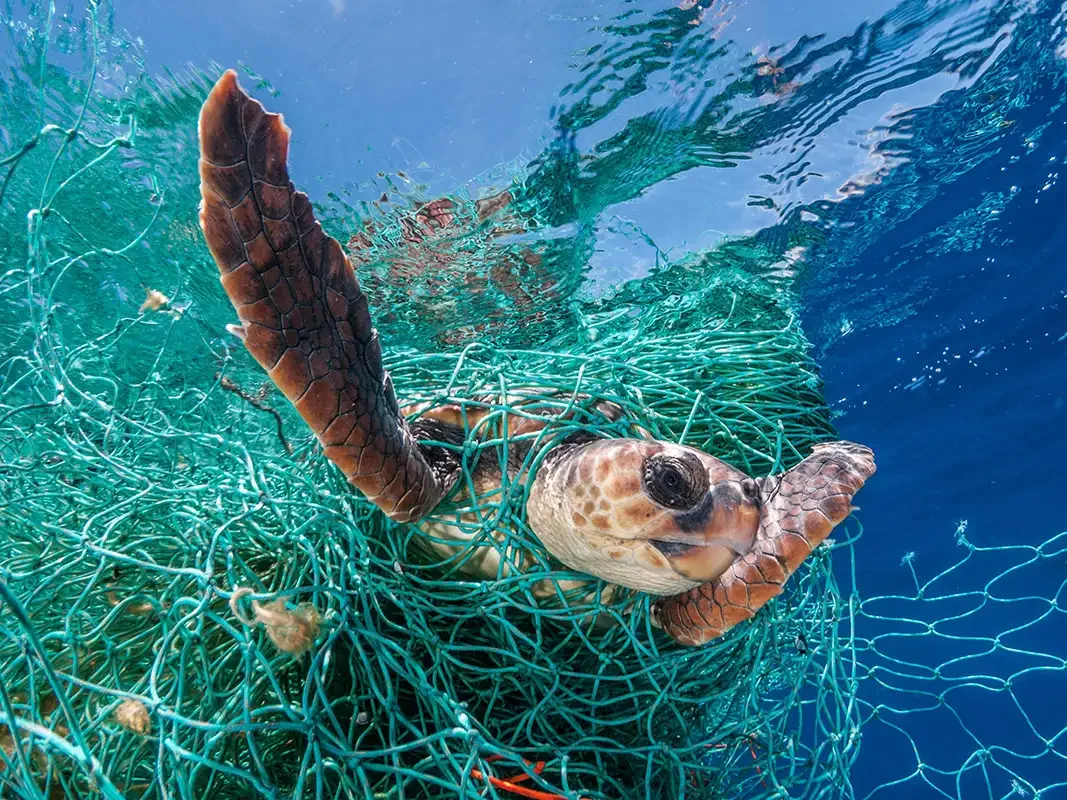
Photo From New Scientist
Globally, one of the most significant threats to sea turtles is accidental capture in fishing gear, a problem known as bycatch.
Longlines, gillnets, trawl nets, and other fishing equipment are designed to catch fish, not turtles. Yet every year, countless sea turtles become entangled or hooked while feeding, migrating, or surfacing to breathe.
For highly migratory species such as loggerheads and leatherbacks, a single journey may carry them through the waters of multiple countries and fisheries, increasing their exposure to risk.
Vanishing Nesting Beaches
Every sea turtle begins life on a beach.
As coastlines become increasingly developed, many nesting habitats are disappearing or becoming more difficult to access. Seawalls, beachfront construction, erosion, and habitat loss can reduce the amount of suitable nesting habitat available to future generations.
For species that return to the same beaches decade after decade, the loss of nesting habitat can have long-term consequences.
The Problem with Artificial Light
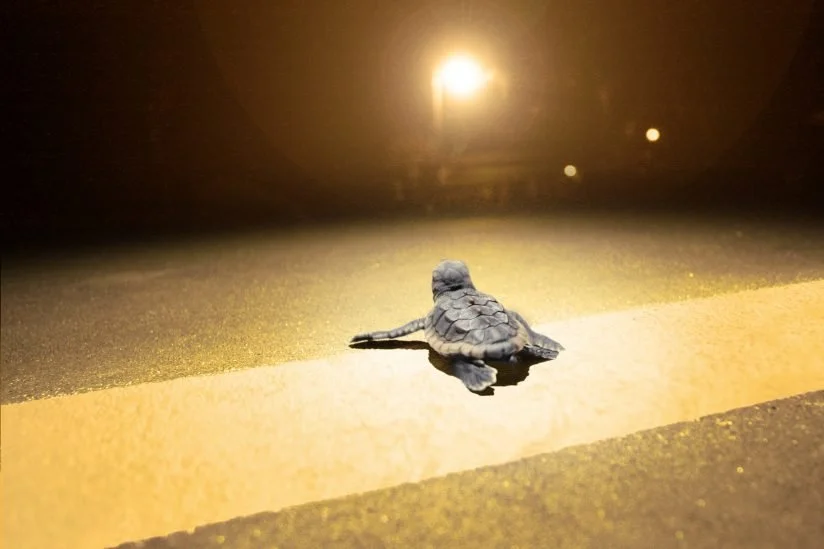
A baby sea turtle mistaking an artificial light as the moon | Photo From DarkSky International
One of the most surprising threats facing sea turtles is light.
For millions of years, hatchlings emerging from their nests used the moon and natural light reflected off the ocean to find their way to the water.
Today, beachfront homes, hotels, roads, and urban development can create competing sources of light that confuse hatchlings. Instead of crawling toward the ocean, some crawl inland, where exhaustion, dehydration, vehicles, or predators await.
A single porch light may seem insignificant to us. To a hatchling emerging for the first and only time, it can mean life or death.
Vessel Strikes
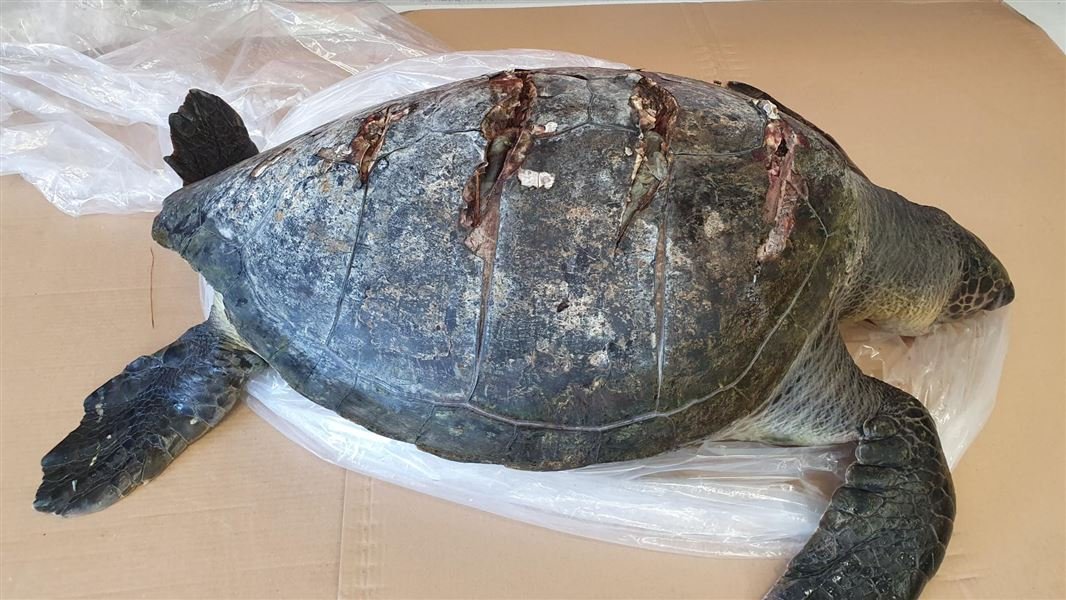
A photo depicting a sea turtle hit by a boat | Photo from Department of Conservation
As sea turtle populations recover in some areas, another challenge has become more common.
Sea turtles must regularly surface to breathe. In busy coastal waters, that can bring them into contact with boats and propellers. Vessel strikes can cause severe injuries and remain an increasing concern in many parts of the world.
Ghost Gear
Not all fishing gear stays where it is intended.
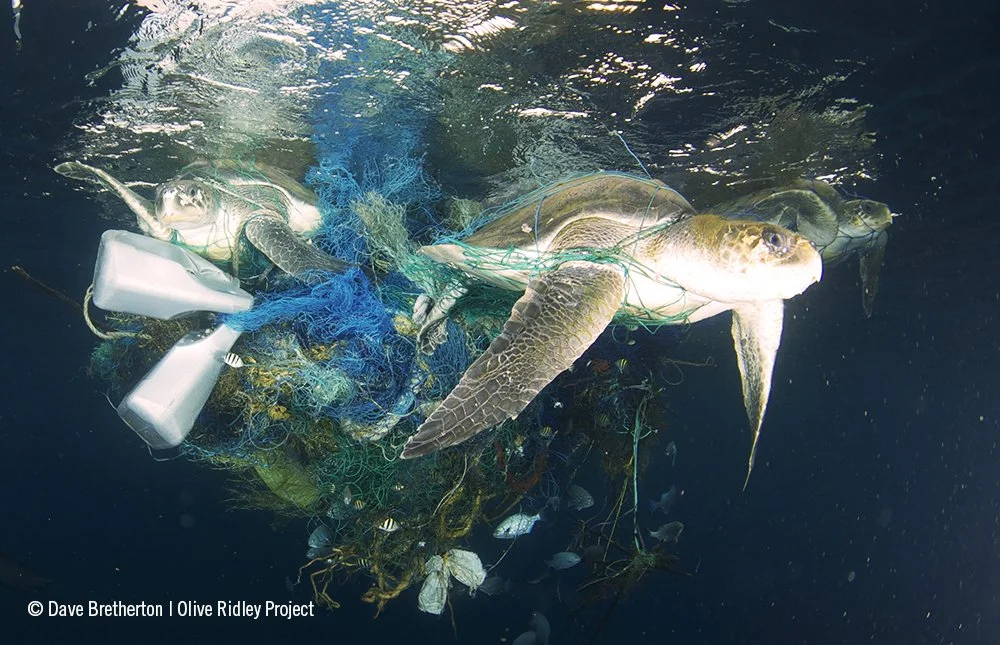
Photo shows Olive Ridley Sea Turtles Stuck in Ghost Nets | Photo from Mission Blue (These Sea Turtles were rescued by Mission Blue)
Lost or abandoned nets, fishing lines, and traps—often called ghost gear—can continue trapping marine life for years after they are discarded. Sea turtles can become entangled while feeding or migrating, sometimes with fatal consequences.
Because ghost gear drifts with currents, it can affect turtles far from where it originally entered the ocean.
Climate Change
Climate change presents a unique challenge because it affects nearly every stage of a sea turtle's life cycle.
Rising sea levels can reduce nesting habitat. Stronger storms can erode beaches. Changes in ocean conditions can affect food availability and migration patterns.
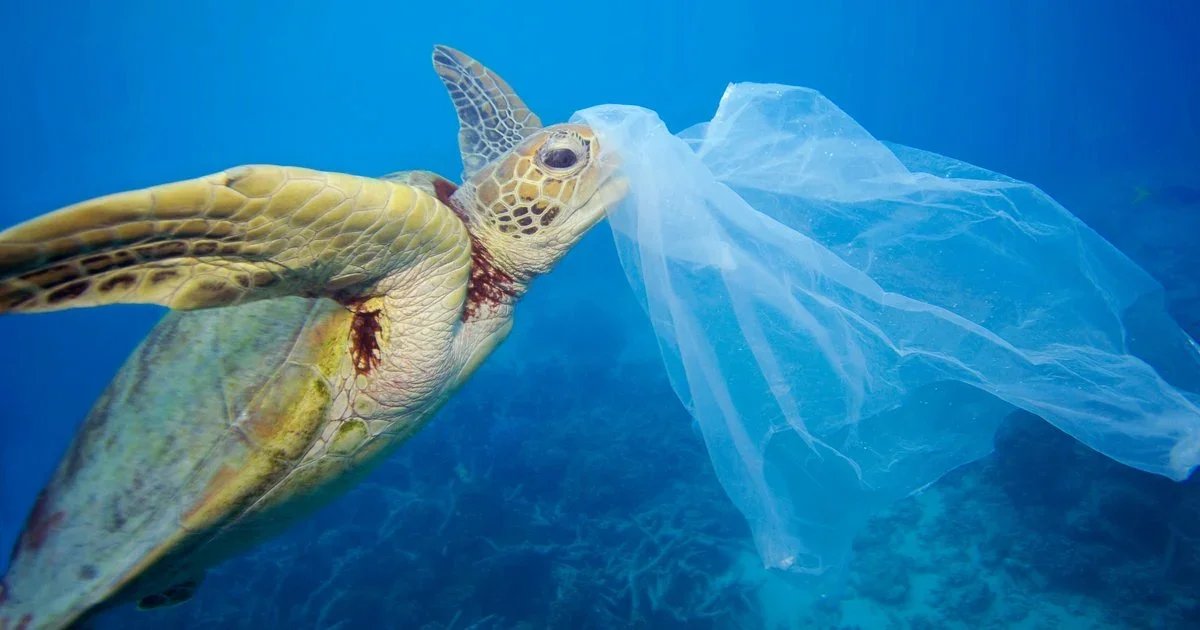
A Sea Turtle mistaking plastic for a jellyfish | Photo from World Wildlife Fund
Scientists are also closely monitoring nest temperatures. Because temperature influences whether hatchlings develop as males or females, warming beaches have the potential to alter sex ratios in some populations.
It's Bigger Than Plastic Straws
For many people, sea turtle conservation has become synonymous with plastic straws.
While reducing unnecessary plastic waste is important, the reality is far more complex.
Sea turtles encounter many forms of marine debris, including plastic bags, discarded fishing gear, rope, packaging materials, and countless other items that can be mistaken for food or cause entanglement.
The straw became a symbol.
The challenge facing sea turtles is much larger than any single product.
The Good News: Conservation Works
Despite these challenges, sea turtles also provide some of the most encouraging conservation stories in the ocean.
Hawaiian green sea turtles, or honu, have rebounded significantly since legal protections were established decades ago. Kemp's ridley sea turtles recovered from historic population lows that once raised fears the species might disappear altogether. Around the world, protected nesting beaches, improved fishery practices, Turtle Excluder Devices (TEDs), marine protected areas, and community-led conservation efforts have helped many turtle populations stabilize or grow.
But recovery does not mean the work is finished. A species can show remarkable improvement and still require protection. A nesting beach can recover and still need stewardship. A population can grow and still face new challenges.
The story of sea turtle conservation is not a story of victory. It is a story of responsibility.
The reason many sea turtle populations are doing better today is because people chose to act—and continued acting for decades. The lesson is simple:
When we give nature a chance, it often responds. But it only works if we keep showing up.
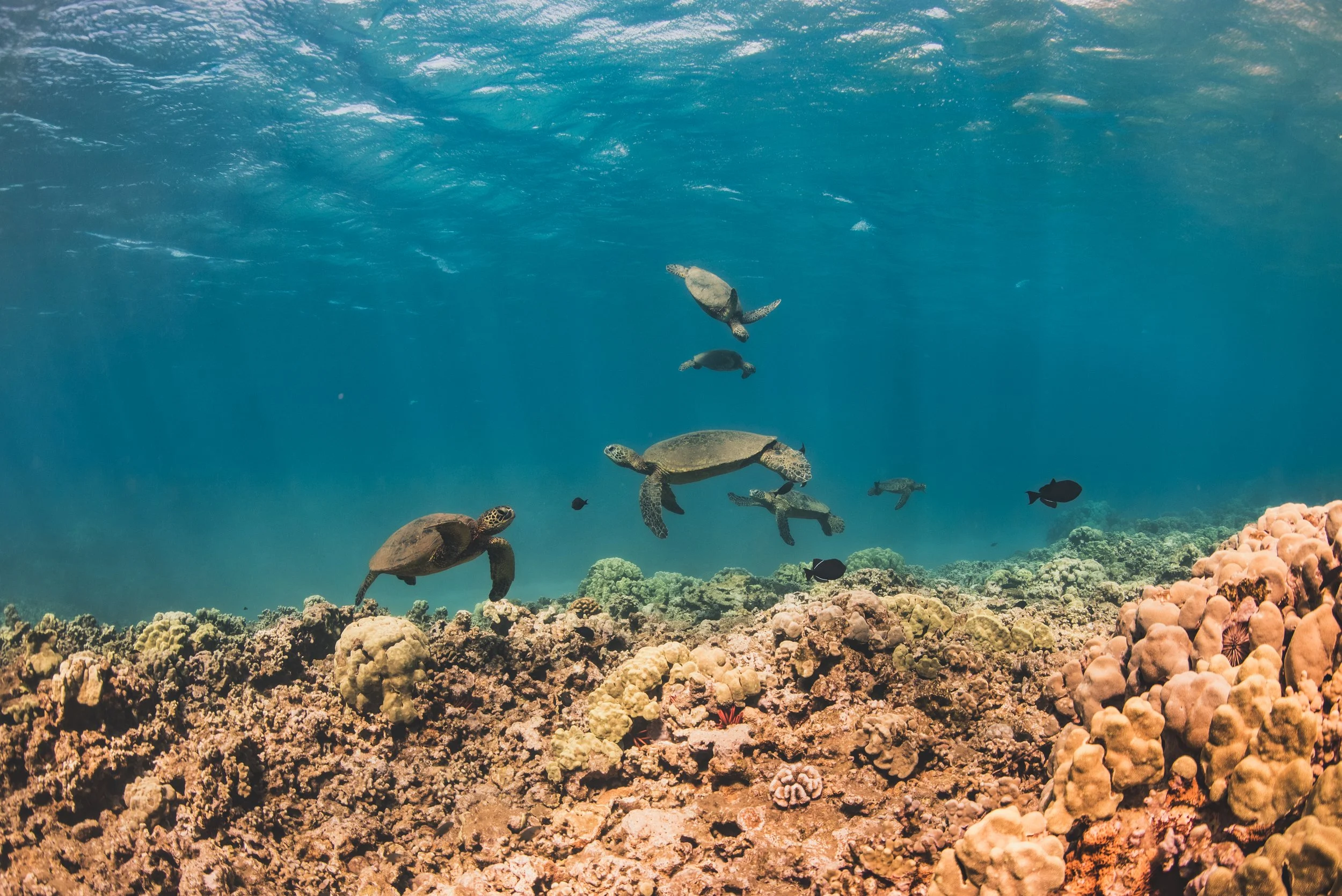
Photo from Trilogy Excursions | Taken by Island Dream Productions
How You Can Help Sea Turtles
The challenges facing sea turtles can feel overwhelming, especially when many of the biggest threats occur far from where most of us live.
The good news is that conservation is often the result of thousands of small actions adding up over time.
If you'd like to help sea turtles, here are a few meaningful ways to make a difference:
Reduce single-use plastics. While plastic straws became the symbol of sea turtle conservation, reducing unnecessary plastic consumption overall can help prevent marine debris from entering the ocean in the first place.
Participate in beach cleanups. Removing trash from beaches and shorelines helps protect nesting habitat and prevents debris from washing out to sea.
Practice responsible wildlife viewing. Whether you're on Maui or anywhere else in the world, give sea turtles space. Never touch, chase, feed, ride, or intentionally approach them.
Choose sustainable seafood. Supporting fisheries that reduce bycatch and use responsible fishing practices can help lessen one of the largest threats facing sea turtles globally.
Reduce artificial lighting near nesting beaches. If you live near or visit coastal nesting areas, minimizing beachfront lighting can help hatchlings safely find the ocean.
Support organizations doing the work. Many sea turtle conservation successes are the result of decades of research, habitat protection, rescue efforts, and community stewardship.
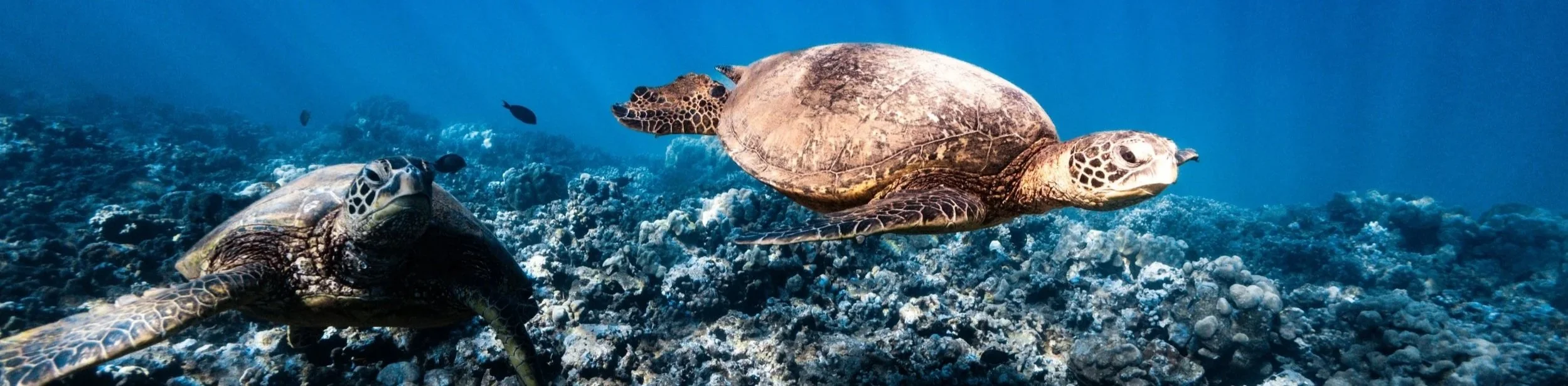
Photo from Trilogy Excursions | Taken by Island Dream Productions
Organizations making a difference include:
You don't need to be a marine biologist to help sea turtles.
Sometimes helping starts with something as simple as picking up a piece of trash, giving a resting turtle space, supporting conservation work, or sharing what you've learned with someone else.
After all, every adult sea turtle alive today is proof that small chances can lead to extraordinary outcomes.
What Sea Turtles Can Teach Us
All animals are teachers, if we are willing to pay attention.
Nature is constantly offering lessons in adaptation, resilience, patience, and balance. Sea turtles are no different.
@sailtrilogy Have you heard of the turtle theory?🐢 #sailtrilogy #honu #turtletheory #livingslowly #patience ♬ original sound - Legend Diving 🔱
Over the course of this article, we've learned that sea turtles can take decades to reach adulthood. We've learned that only a tiny fraction of hatchlings survive long enough to reproduce. We've learned that some cross entire oceans before returning to the very beaches where they began their lives.
By human standards, it would be difficult to imagine a slower path to success. And yet, it works. A sea turtle does not rush across the Pacific. It does not force the current. It does not arrive all at once.
It simply keeps moving.
Perhaps that is why sea turtles have become symbols of patience in so many cultures around the world. They remind us that meaningful journeys often take time, and that progress is not always measured by speed.
They also teach resilience.
Every adult sea turtle alive today has overcome extraordinary odds. Long before it became a powerful ocean traveler, it was a hatchling no larger than your hand, racing toward the water with predators waiting at every turn. Against all odds, it survived. Not because it was the biggest, fastest, or strongest animal in the ocean. Because it endured.
Perhaps the most remarkable lesson, however, is one of connection.
A sea turtle's life is tied to beaches it may not see for decades, ocean currents it cannot control, reefs that provide food and shelter, and future generations it will never meet. Its survival depends on relationships—both visible and invisible.
In many ways, the same is true for us. The more we learn about sea turtles, the more they remind us that life is not simply about reaching a destination. It is about persistence, adaptation, and understanding that we are part of something much larger than ourselves. Maybe that is why people have loved sea turtles for thousands of years. Not because we see a turtle in ourselves. Because sometimes, we see ourselves in the turtle.
Honu in Hawaiian Culture
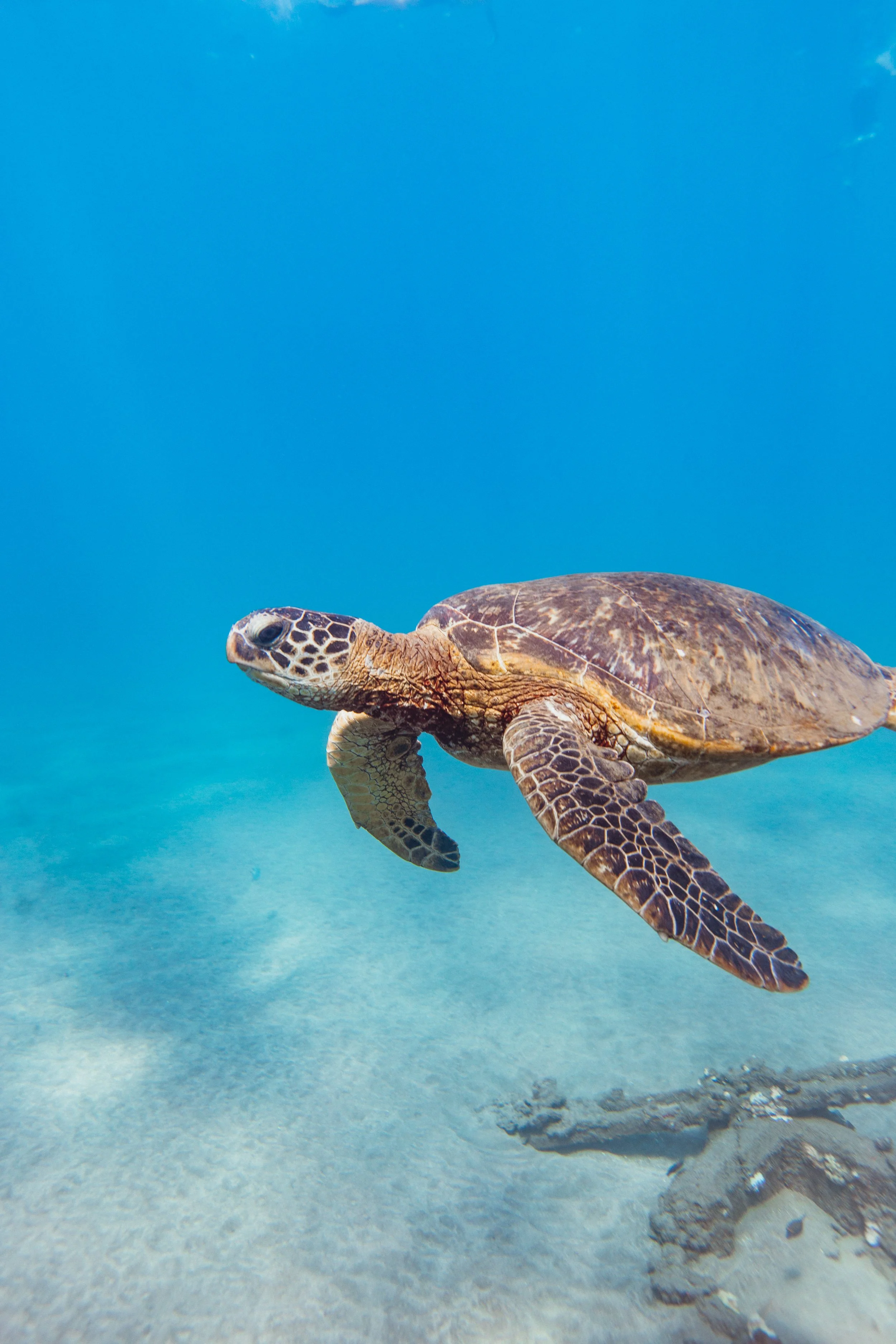
Photo from Trilogy Excursions | Taken by Island Dream Productions
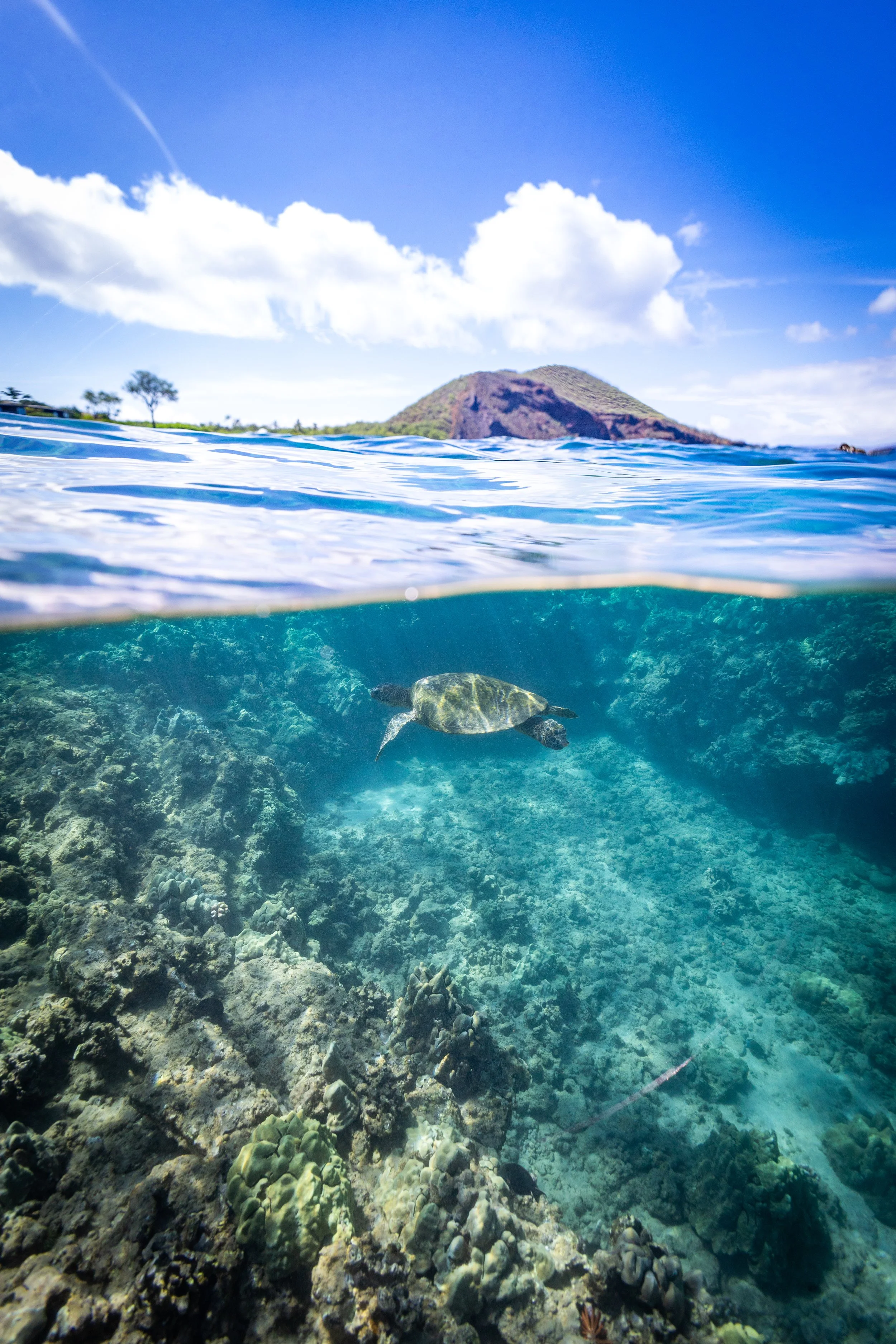
Photo from Trilogy Excursions | Taken by Island Dream Productions
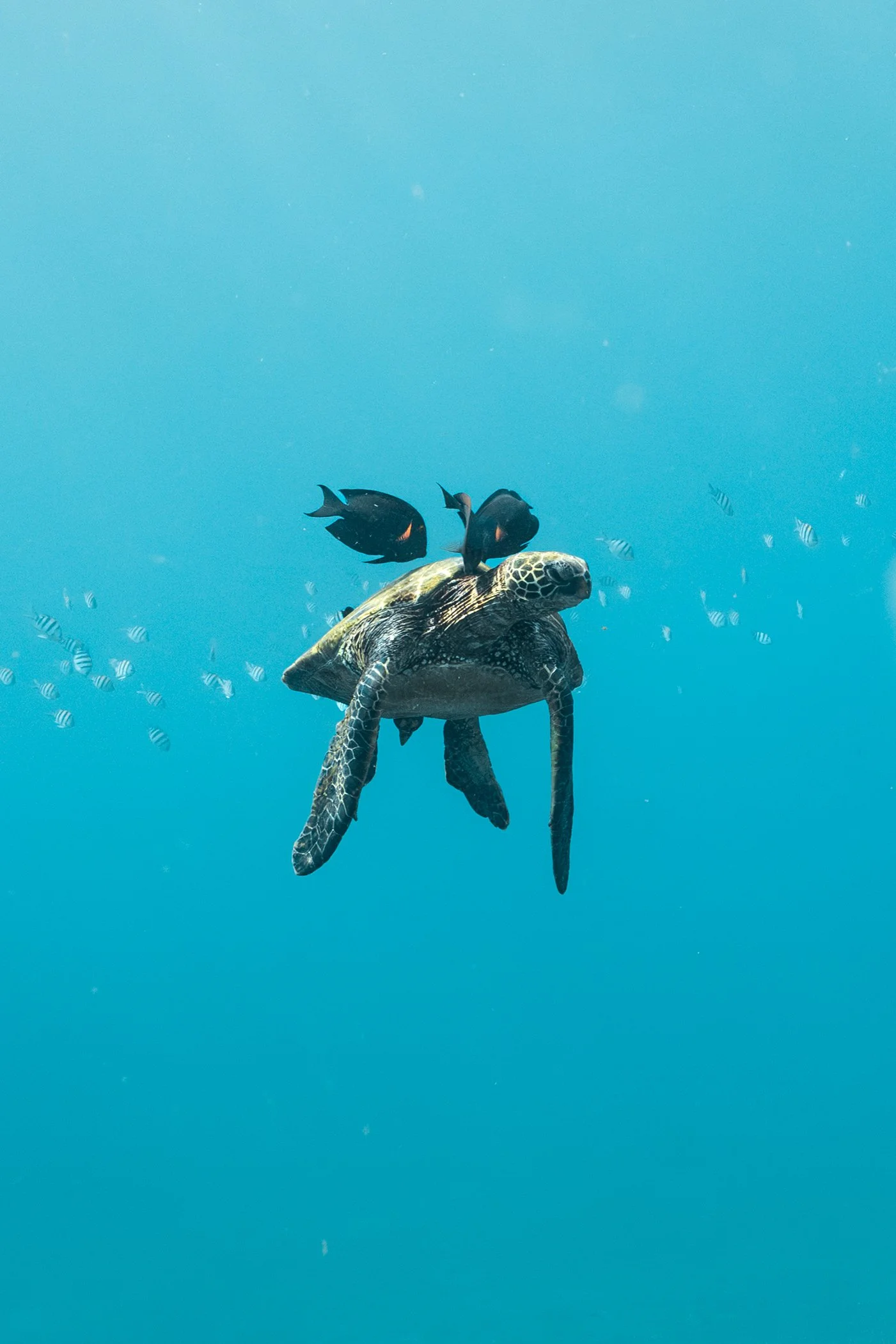
Photo from Trilogy Excursions | Taken by Island Dream Productions
Long before sea turtles became the subject of scientific studies, conservation programs, or wildlife photography, honu held an important place in Hawaiian culture.
The honu appears in the Kumulipo, the Hawaiian creation chant, where both honu and honuʻea (hawksbill sea turtles) are recognized as part of the interconnected web of life. Their presence in one of Hawaiʻi's most important cultural and genealogical traditions reflects a relationship that stretches back generations.
For some Hawaiian families, the honu is regarded as an ʻaumākua—a family ancestor or guardian spirit that continues to guide and protect descendants. While not every family shares the same ʻaumākua, the honu remains one of the most widely recognized and respected examples.
More broadly, honu have long been associated with navigation, endurance, and safe passage across the ocean.
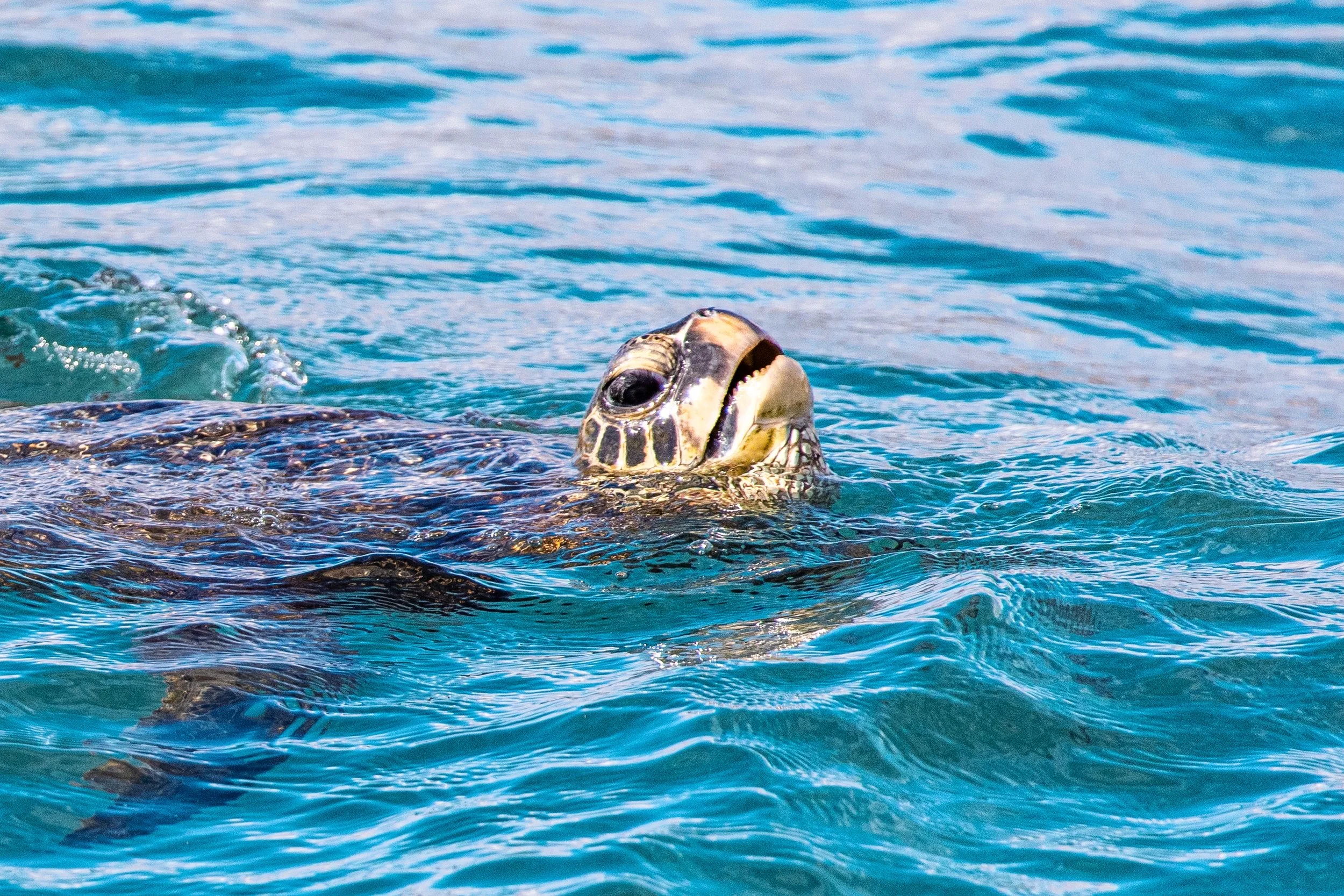
Photo from Trilogy Excursions | Taken by Island Dream Productions
For generations, Hawaiians traveled vast distances across the Pacific using careful observation of stars, winds, currents, waves, birds, and other natural signs. Honu, too, are remarkable navigators. They cross immense stretches of ocean and somehow find their way home again. In many ways, the turtle reflects something deeply Hawaiian: a relationship with the sea built not on conquering nature, but on understanding it.
The honu also serves as a reminder of interconnectedness. In Hawaiian thought, people are not separate from the natural world. The health of the land (ʻāina), the ocean (kai), and the community are inseparable. Honu are part of that living system, connecting reefs, coastlines, and generations through their long migrations and life cycles.
Today, honu remain one of the most beloved animals throughout the Hawaiian Islands. Not only because they are beautiful or charismatic, but because they represent something larger than themselves—a connection to ancestry, place, and the enduring relationship between people and the ocean.
That relationship continues through mālama kai, the responsibility to care for and protect the waters that sustain us all.
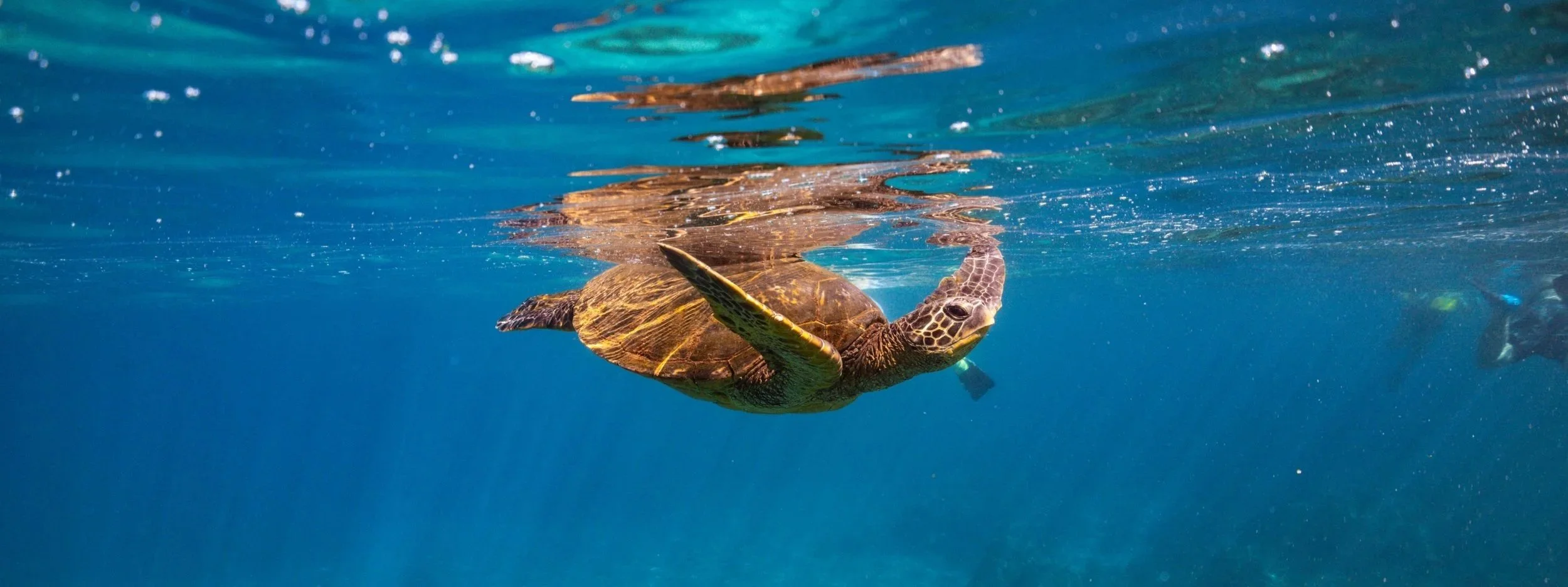
Photo from Trilogy Excursions | Taken by Island Dream Productions
Today, that relationship is reflected not only in cultural traditions, but also in the laws that protect honu throughout Hawaiʻi.
All sea turtles in Hawaiʻi are protected under both state and federal law. Hawaiian green sea turtles are protected under Hawaiʻi Revised Statutes Chapter 195D, Hawaiʻi Administrative Rules 13-124, and the federal Endangered Species Act. These protections make it illegal to harm, harass, capture, feed, or otherwise disturb sea turtles.
For visitors, this means giving honu 10 feet of space to behave naturally. Whether a turtle is feeding on a reef, swimming through the water, or resting on a beach, the best encounters are the ones that happen on the turtle's terms.
In many ways, these protections reflect the same principle at the heart of mālama kai: respect. Not ownership. Not control. Respect.
The goal is not simply to preserve a species. It is to ensure that future generations can continue to share in a relationship that has existed in Hawaiʻi for centuries.
Seeing Honu on Maui
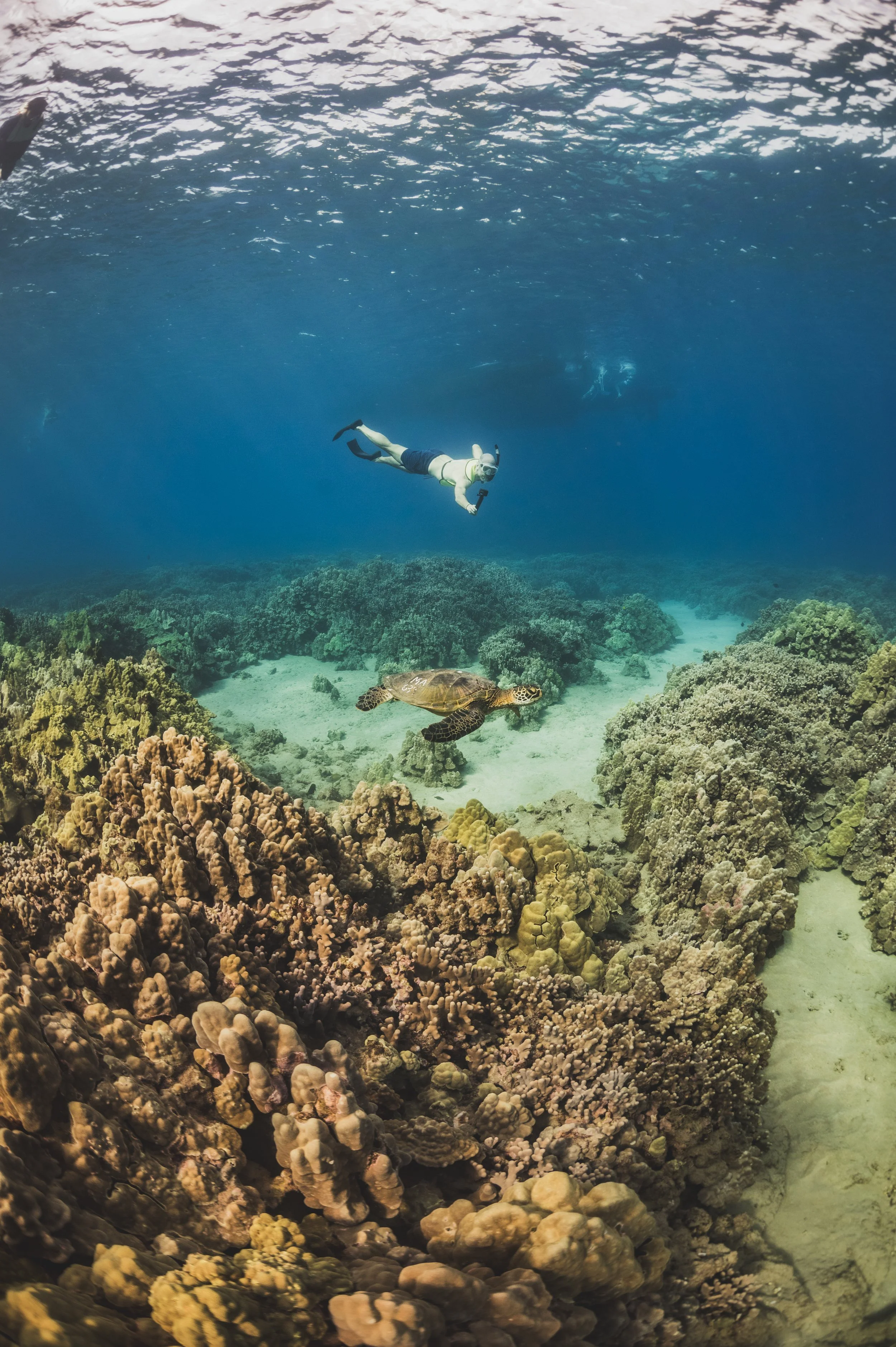
Photo from Trilogy Excursions | Taken by Island Dream Productions
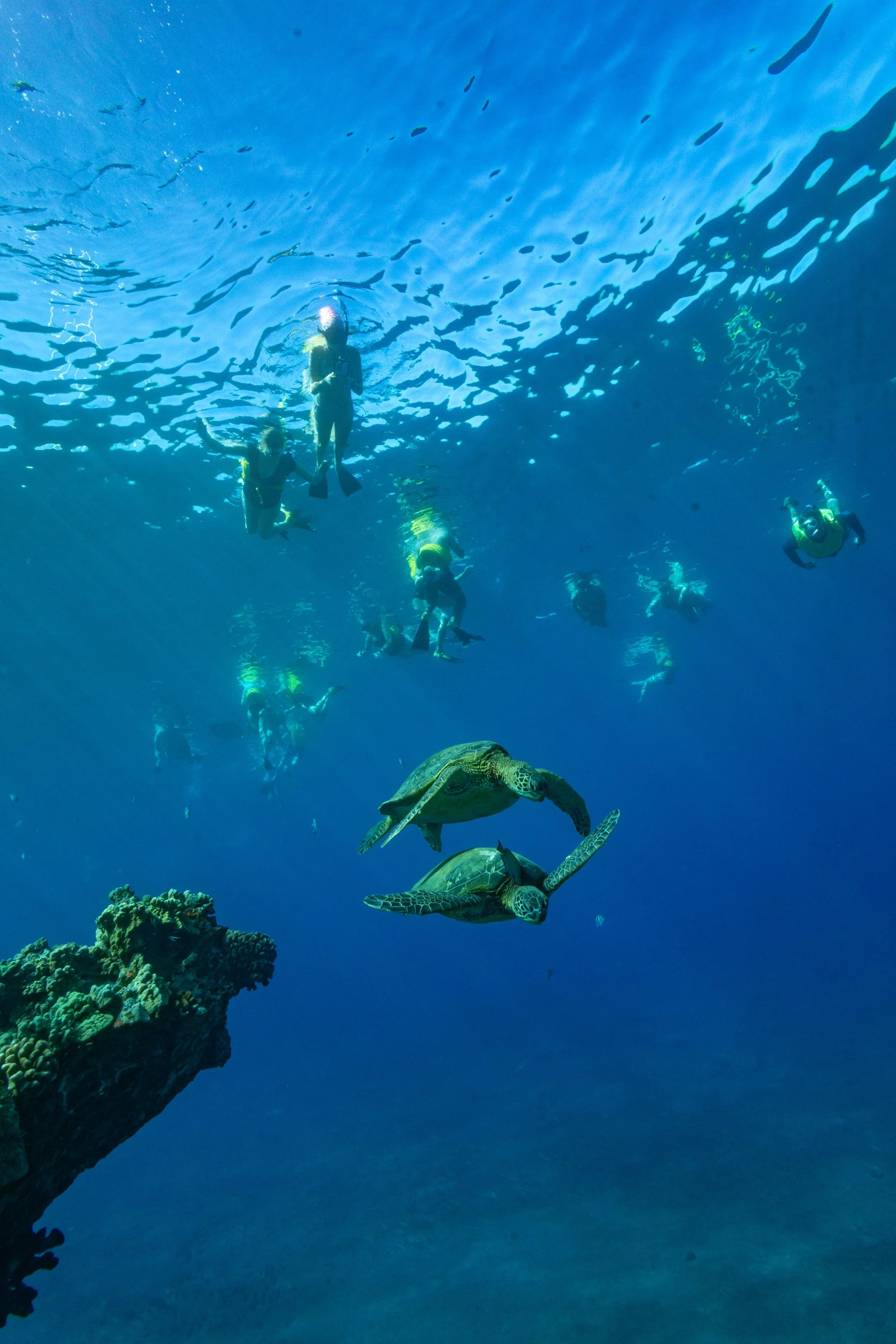
Photo from Trilogy Excursions | Taken by Island Dream Productions
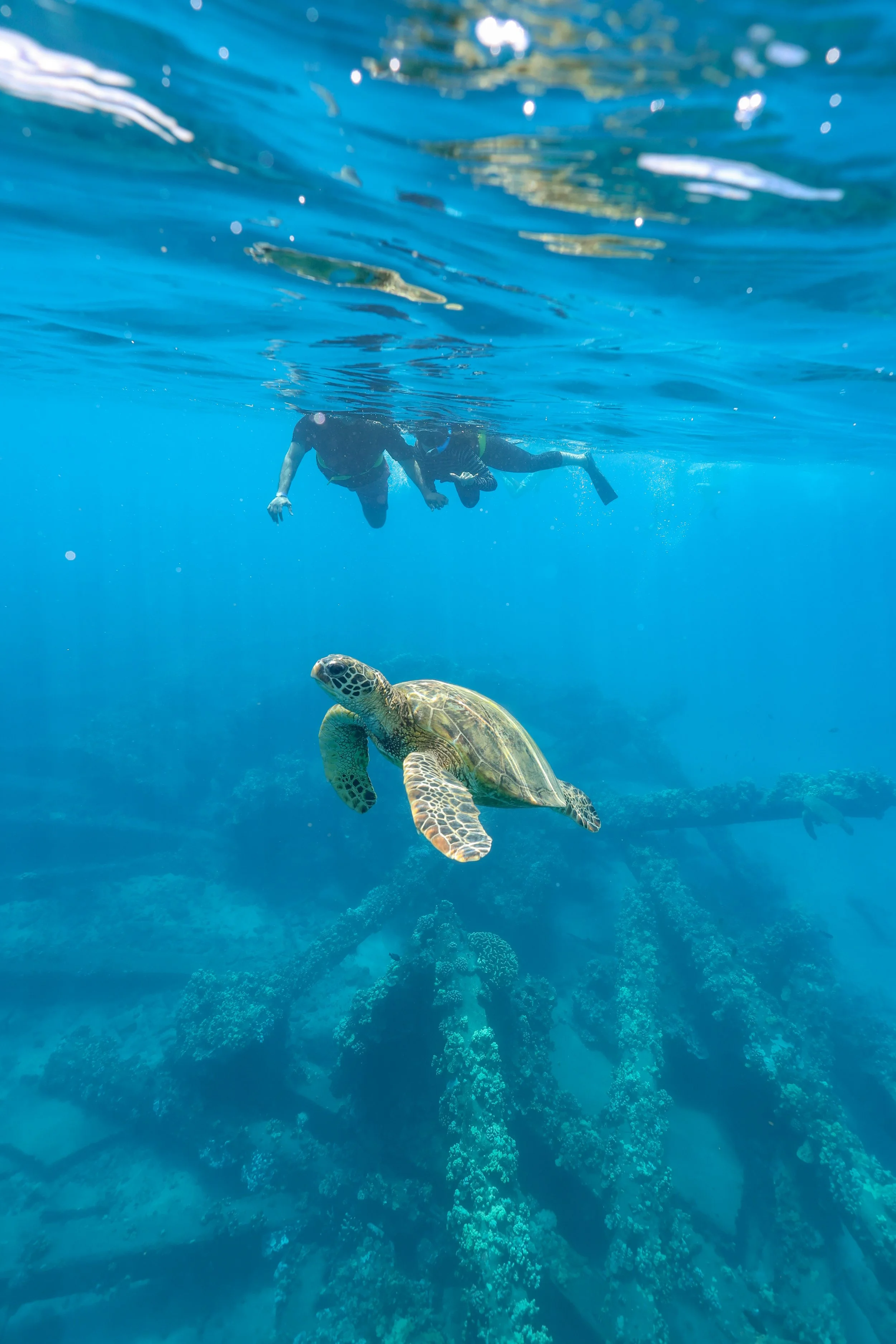
Photo from Trilogy Excursions | Taken by Island Dream Productions
After learning about sea turtles around the world, many visitors leave with the same thought:
"I hope I get to see one."
On Maui, there are few wildlife encounters as memorable as watching a honu glide effortlessly over a reef or rest quietly beneath a coral ledge. For many guests, it becomes one of the moments they remember long after their vacation ends.
Of course, wildlife sightings are never guaranteed. Honu are wild animals, and every encounter happens on their terms. That's exactly how it should be.
That said, Maui is one of the best places in the world to observe Hawaiian green sea turtles in their natural habitat. Healthy reef systems throughout West Maui support resident honu populations, making turtle sightings a common part of many snorkeling adventures. Guests joining Trilogy's snorkeling excursions frequently encounter honu on tours such as:
While no responsible operator can promise a turtle sighting, these reef systems provide excellent habitat, many different honu cleaning stations, and sightings are often a highlight of the day.
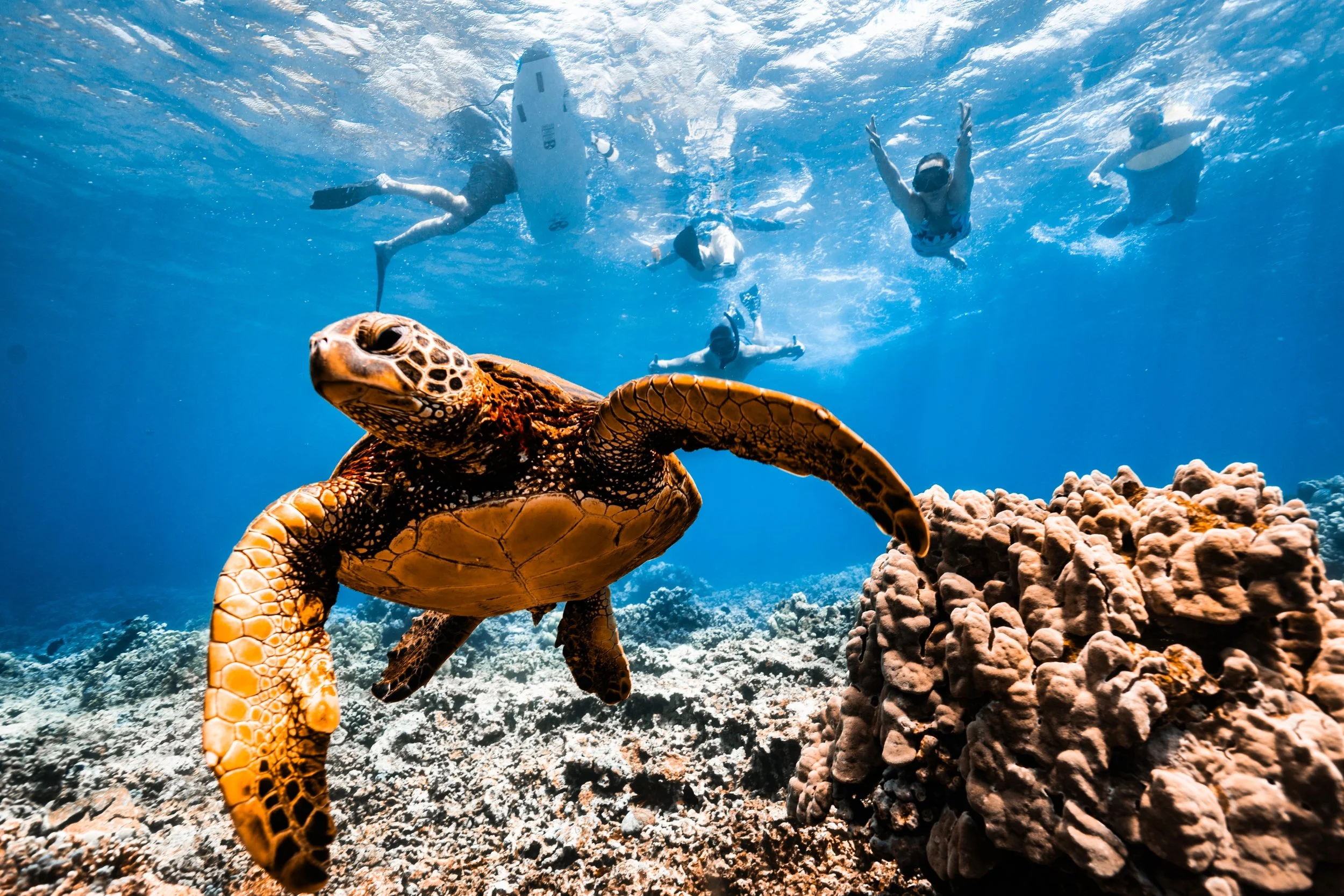
Photo from Trilogy Excursions | Taken by Island Dream Productions
For those who want to give back to the ocean that sea turtles call home, Trilogy's Blue ʻĀina sail offers a different kind of experience.
Unlike a traditional wildlife-focused excursion, Blue ʻĀina is centered on stewardship and mālama kai. Guests participate in meaningful conservation efforts that help support healthier marine ecosystems for turtles, reefs, fish, and countless other species.
You may see a honu during a Blue ʻĀina sail. You may not. The purpose of the experience is something deeper. It is an opportunity to leave the ocean a little better than you found it. And while picking up marine debris or participating in conservation work may not feel as exciting as spotting a sea turtle, those actions help protect the habitats that sea turtles depend on every day.
Whether you encounter a honu while snorkeling on Maui or simply leave with a greater appreciation for these remarkable animals, every act of respect, stewardship, and curiosity helps ensure that future generations will have the opportunity to experience them too.