The Role of Weather in Whale Season
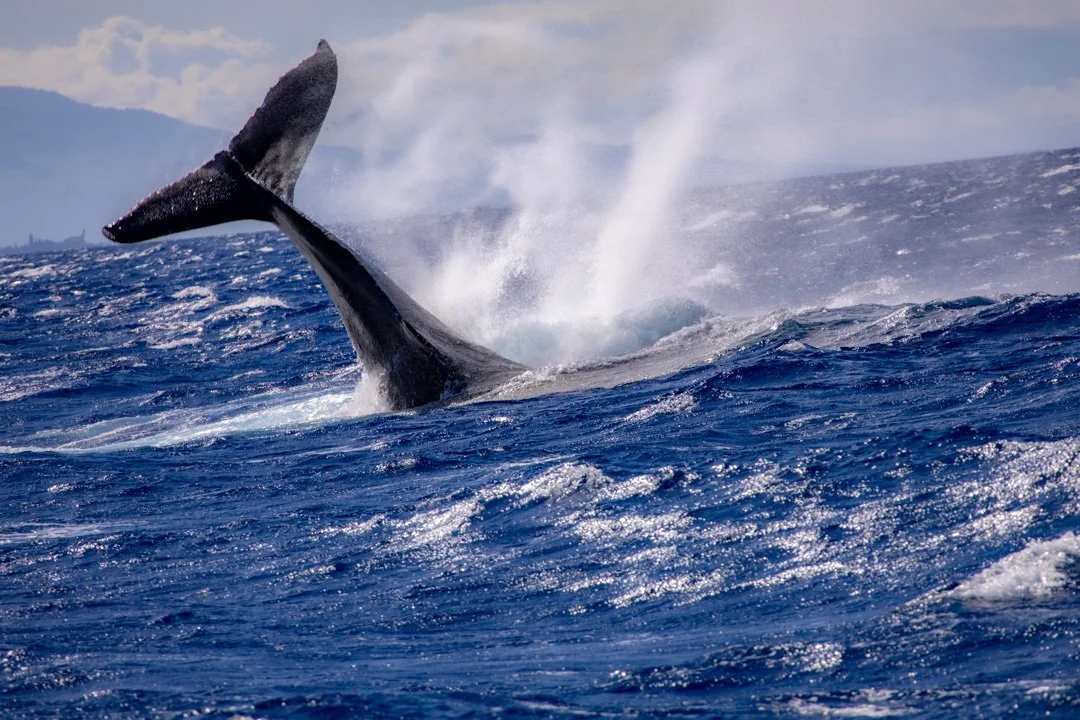
On Maui, whale season doesn’t unfold on a stage — it unfolds on the open ocean. And just like the whales themselves, the weather plays an active role in shaping every day on the water.
From wind and swell to cloud cover and visibility, weather influences not only what guests experience on a whale watch, but how humpback whales move, rest, and interact in Maui’s winter waters. Understanding that connection helps explain why no two days feel the same — and why captains spend so much time reading the ocean before ever leaving the dock.
🐋🤍
🐋🤍
Wind: More Than Just a Breeze
Trade winds are a familiar part of life in Hawaiʻi, and during whale season they help shape surface conditions across the ʻAuʻau Channel — but they don’t slow the whales down.
Humpback whales are active in Maui waters regardless of wind conditions. What changes isn’t whether whales are present, but how they move and how we experience them from the surface.
On lighter-wind days, the ocean surface is smoother, which can make it easier to spot blows, backs, and subtle movements. Whales may linger near the surface, and guests often notice calm, steady behavior.
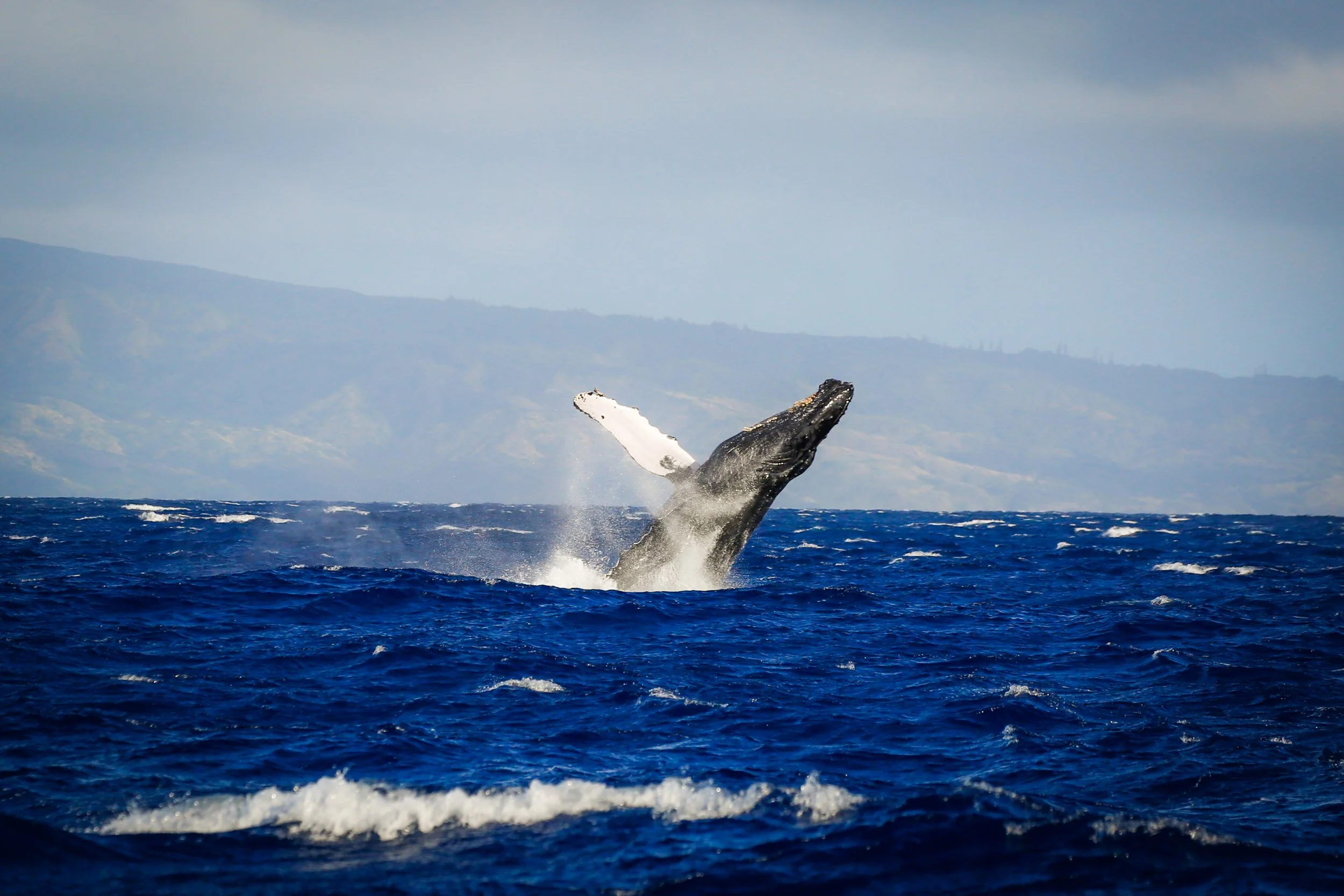
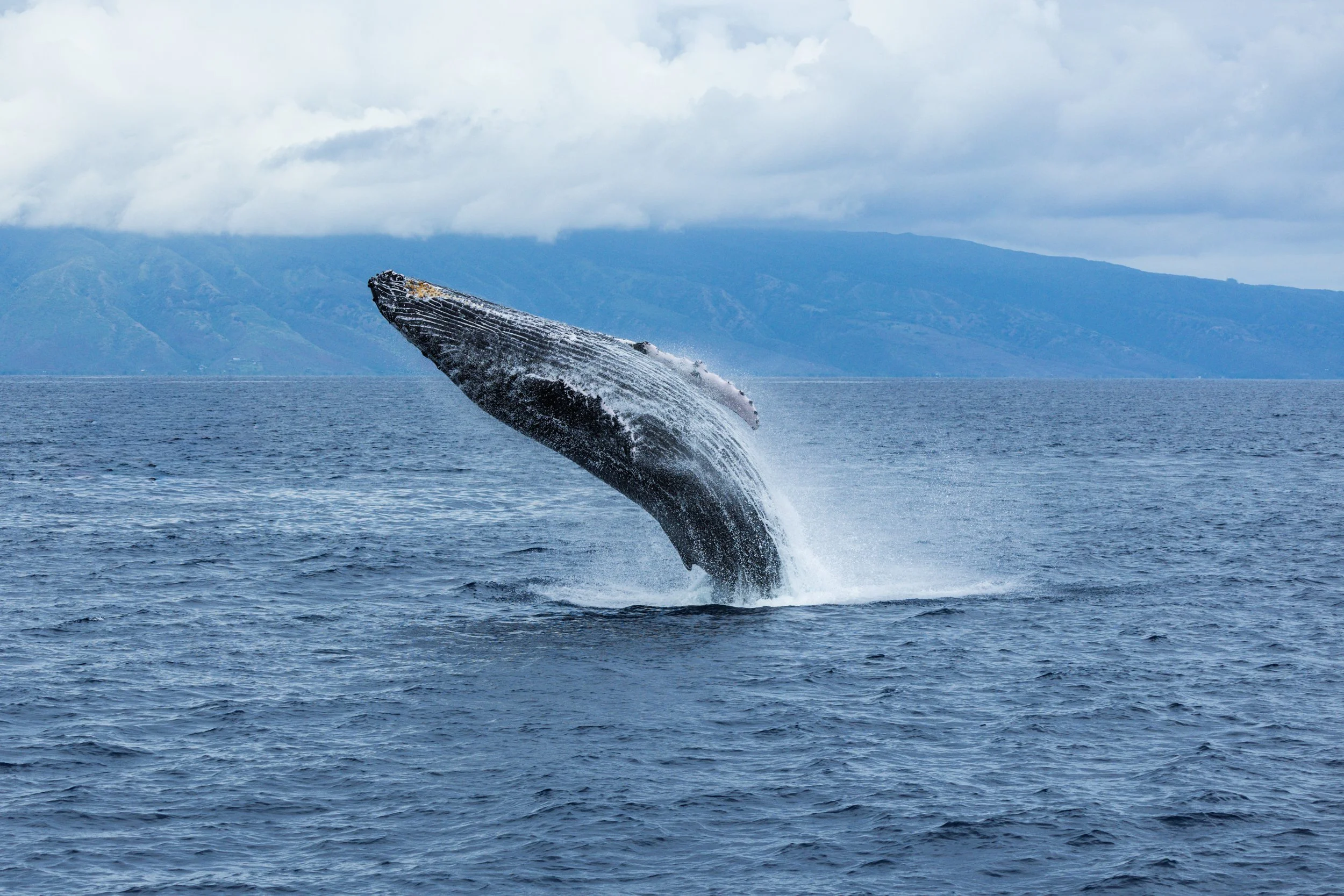
Breach on a Windy Day
When winds pick up, whales don’t disappear. They may surface less frequently or travel more purposefully, often choosing areas where the islands provide shelter. But when they do surface in windier conditions, whales tend to make themselves known — with powerful blows, dramatic breaches, fluke slaps, or strong directional travel that’s easy to spot even in textured water.
From a Trilogy sail, these days often feel dynamic and alive — a reminder of just how well whales are adapted to moving through a changing ocean.
Swell and Water Movement
Ocean swell affects the feel of the day, but not whale presence.
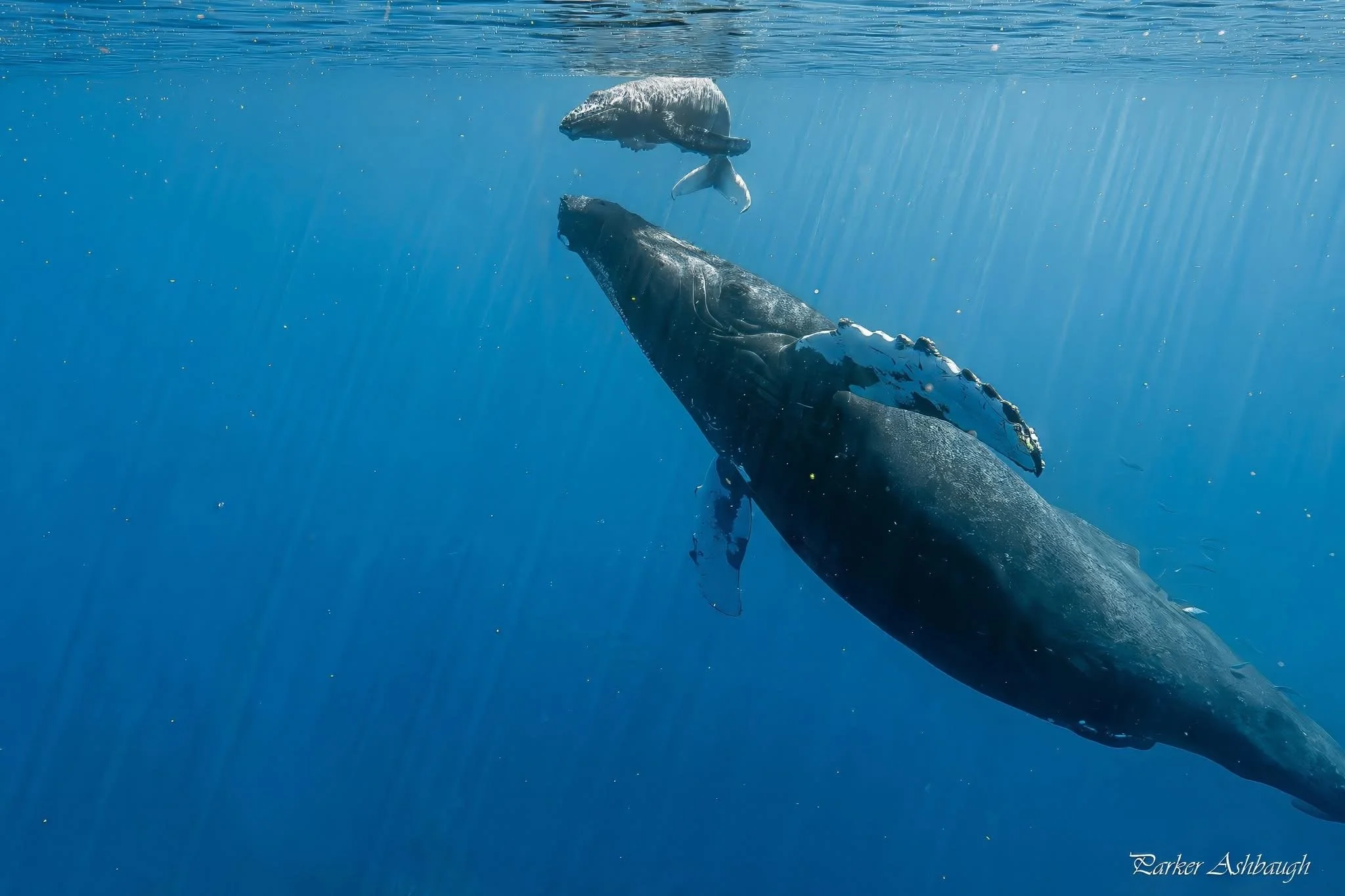
Larger swells are a normal part of the Pacific and don’t deter humpback whales from using Maui’s waters. In fact, mother-and-calf pairs often respond by staying within more protected areas of the ʻAuʻau Channel — one of the reasons this region functions so well as a nursery.
Whales adjust their swimming patterns to move efficiently through swell, and guests may notice longer dives or more purposeful surfacing. From the boat, the experience becomes more immersive — feeling the rise and fall of the ocean while watching whales do what they’ve done for millions of years.
Cloud Cover and Light
Clouds don’t mean quieter whale days — they simply change the way the ocean looks.
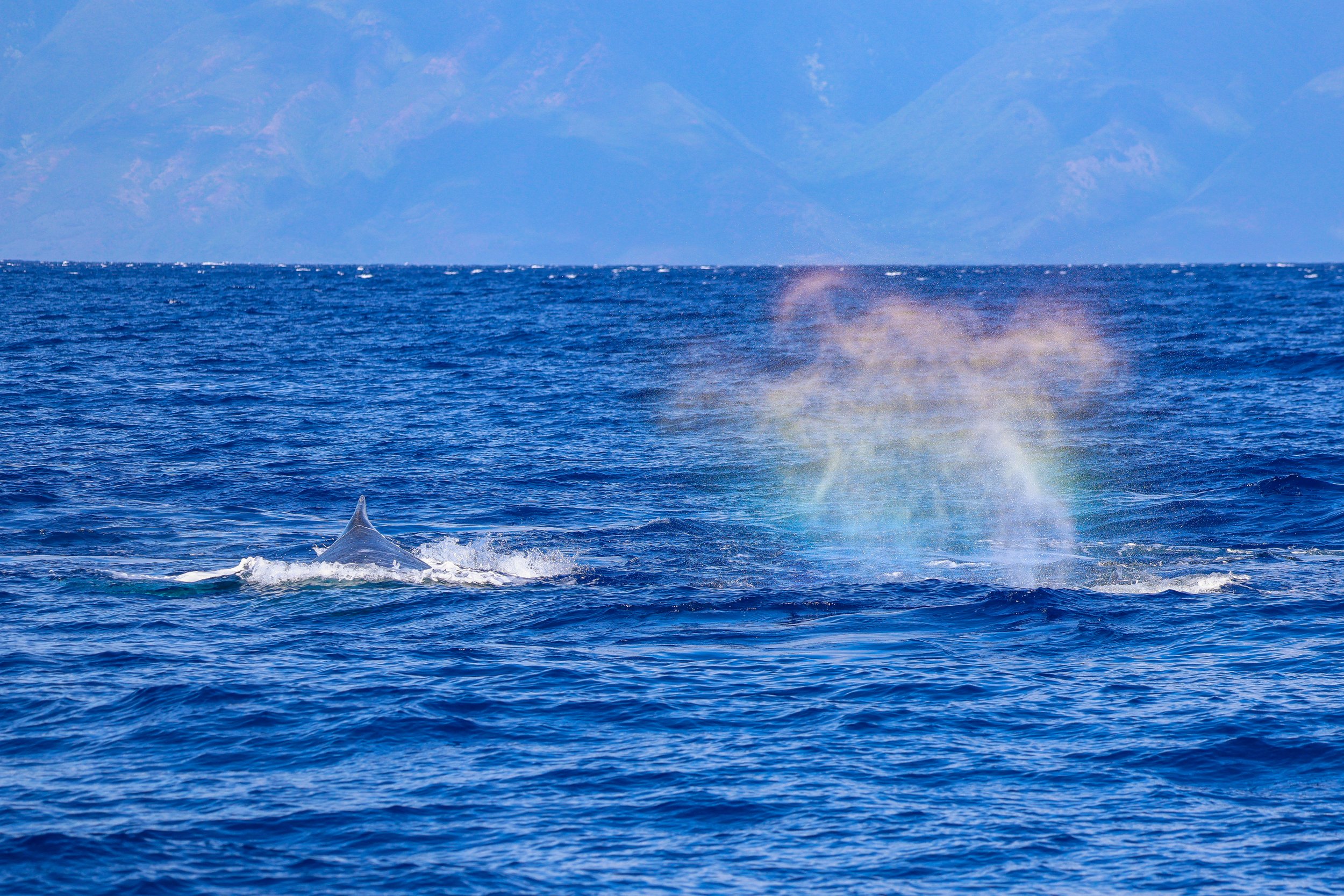
Overcast conditions can actually make whale blows easier to see against the horizon, while softer light reduces glare on the water. Early morning and late afternoon light often highlights the texture of the sea — the curve of a back, the lift of a fluke, the mist of a breath.
Every light condition offers something different, and whales remain active throughout them all.
How Whales Respond to Weather
Humpback whales are highly adaptable animals. Wind, swell, and changing light don’t stop them from resting, nursing calves, socializing, or communicating — they simply influence how those behaviors show up at the surface.
Some days bring subtle moments. Other days bring big, unmistakable displays of power. Both are authentic expressions of whale life in Maui waters.
Understanding this helps shift expectations: quieter days aren’t empty days, and energetic days aren’t planned — they’re gifts shaped by the ocean.
Why There’s No “Perfect” Whale Watch Weather
It’s natural to imagine calm seas and clear skies when planning a whale watch. But in reality, whale season isn’t about waiting for perfect conditions — it’s about stepping into whatever the ocean offers that day.
Whales are here in Maui waters throughout the season, moving, singing, nurturing calves, and traveling through the ʻAuʻau Channel in all kinds of conditions. Some of the most unforgettable encounters happen on days that look imperfect on paper — when the ocean has texture, the air has movement, and the experience feels unmistakably real.
Weather doesn’t take away from whale watching. It gives each sail its own character.