Whale Songs Explained — What Are They Really Saying?
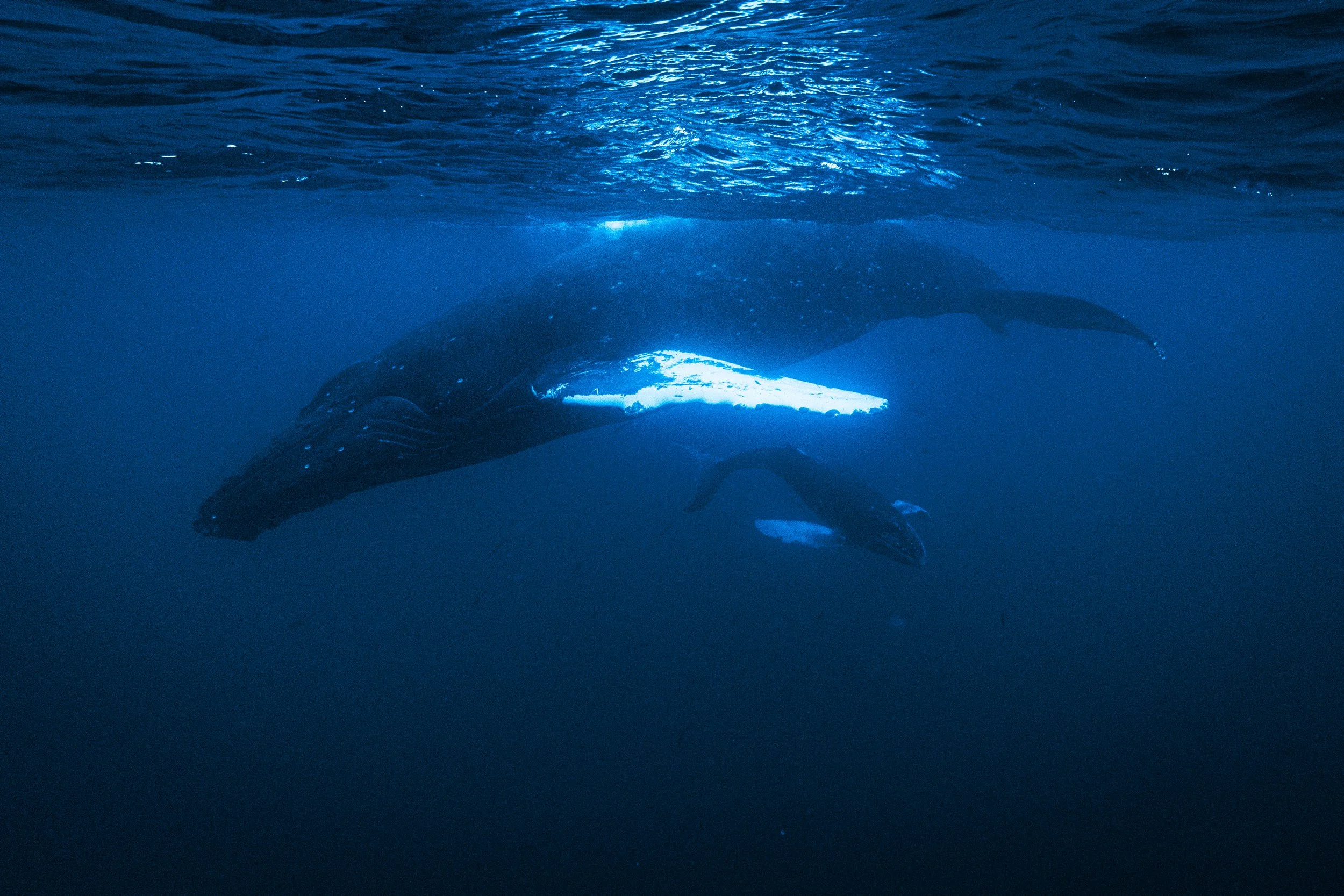
Some of the most unforgettable moments on a Trilogy whale watch don’t happen at the surface — they happen beneath your feet, carried through the water as haunting, melodic sound.
Humpback whale songs are one of the ocean’s great mysteries: structured, evolving, and profoundly evocative. Guests often ask if the whales are “talking to each other,” and while scientists don’t have definitive answers yet, there’s plenty of fascinating research that sheds light on what these songs are — and what they might be doing.
Who Sings — and Why We Think They Do
Only male humpback whales produce the long, structured songs that scientists call “whale song.” Females and calves do make sounds — grunts and calls — but the complex sequences we hear as “song” are uniquely male and most common in breeding areas like Hawaiʻi.
Whale Trust’s research backs up what decades of acoustic studies have shown: singers are almost always males and often perform alone or in small groups, sometimes switching roles or stopping when another male approaches.
Scientists believe these songs are closely tied to breeding behavior — likely serving as a form of long-range communication during mating season. Some research suggests songs could help males advertise fitness, establish social associations, or coordinate with other singers.
What Whale Songs Sound Like
Humpback whale songs are remarkably complex. They can last anywhere from 10 to 30 minutes and are made up of a series of repeated themes — structured patterns of moans, groans, whistles, and pulses that shift gradually over time.
What’s especially fascinating is how songs evolve during a season. All the singing males in a given ocean basin tend to sing the same version of a song at any one time. As the season progresses, a few phrases drop out and new ones are added — a kind of group composition that whales seem to share and learn from one another.
This phenomenon — called cultural transmission — means that whale songs change from year to year, much like dialects and popular music, and they do so across large stretches of ocean where whales mix between breeding grounds.
Why Songs Matter in Maui’s Waters
The way sound travels underwater is shaped by water temperature, depth, and ocean floor topography. The warm, relatively shallow waters around Maui — including the ʻAuʻau Channel — provide an excellent acoustic environment for these low-frequency whale songs.
When a male sings here, his song doesn’t just stay near the surface — it radiates through the water column, creating a three-dimensional soundscape that can reach far beyond what we see from the boat.
That’s why guests sometimes hear singing during a whale watch even when no whales are visible at the surface. The song is still very much part of the same winter story — it’s just happening under the sea.
Listening With Respect
Because sound plays such an important role in humpback whale life, how we behave around whales — especially singing whales — matters.
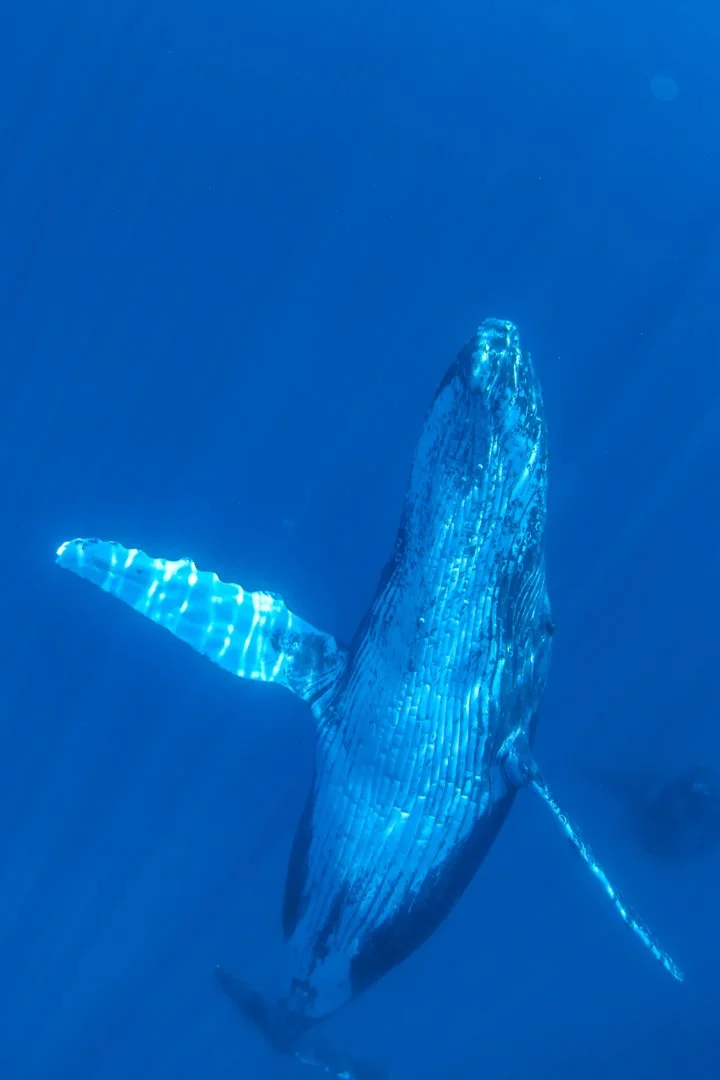
At Trilogy, our approach to whale watching is guided by NOAA’s whale-watching guidelines, which are designed to protect whales during Hawaiʻi’s breeding and calving season. That means maintaining proper distances, avoiding sudden changes in speed or direction, and allowing whales to choose how close they want to come. When conditions allow, we also reduce engine use and move under sail — not just for the experience, but to help keep the underwater soundscape as natural as possible.
Sound travels far underwater, and excessive vessel noise can interfere with whale communication. Slowing down, and giving whales space helps ensure these waters remain a place where whales can sing, nurse, and rest without unnecessary disturbance.
On many of our whale watches, guests also have the opportunity to listen to whale songs in real time using hydrophones lowered gently into the water. Hearing a humpback sing — knowing the sound is coming from somewhere beneath the boat — adds a powerful layer of understanding to the experience.
While we listen, a whale naturalist onboard helps explain what you’re hearing: who is singing, how songs are structured, and why Maui’s waters play such an important role in this behavior. It’s a chance to connect firsthand with the science, without losing sight of the fact that we’re guests in the whales’ winter home.
A Song With No Simple Translation
@sailtrilogy Listen to these Humpbacks sing🐋🤍🎶 This mom and calf are swimming peacefully by while a male is just below, singing to them🥹 Trilogy adheres to @noaa DOLPHIN SMART Guidelines: All photos and videos were taken while viewing from a responsible distance. The whales in these photos and videos approached the boat while the engines were in neutral or off. #sailtrilogy #whalewatching #maui #underwater #whalesongs ♬ original sound - sailtrilogy
Even with decades of study, the exact meaning of humpback whale songs remains a mystery. Scientists know who sings, how songs are structured, and how they change over time — but the deeper “what they are saying” is still being unraveled.
As one researcher put it, whale songs may be less like words with defined meaning and more like patterned, evolving expressions that help whales navigate social and reproductive lives underwater.
For guests on the water, that mystery is part of the magic: a reminder that the ocean has its own languages, rhythms, and stories — many of which we’re still learning to listen to.