Whale Calves 101: How Mothers Raise Their Young in Maui
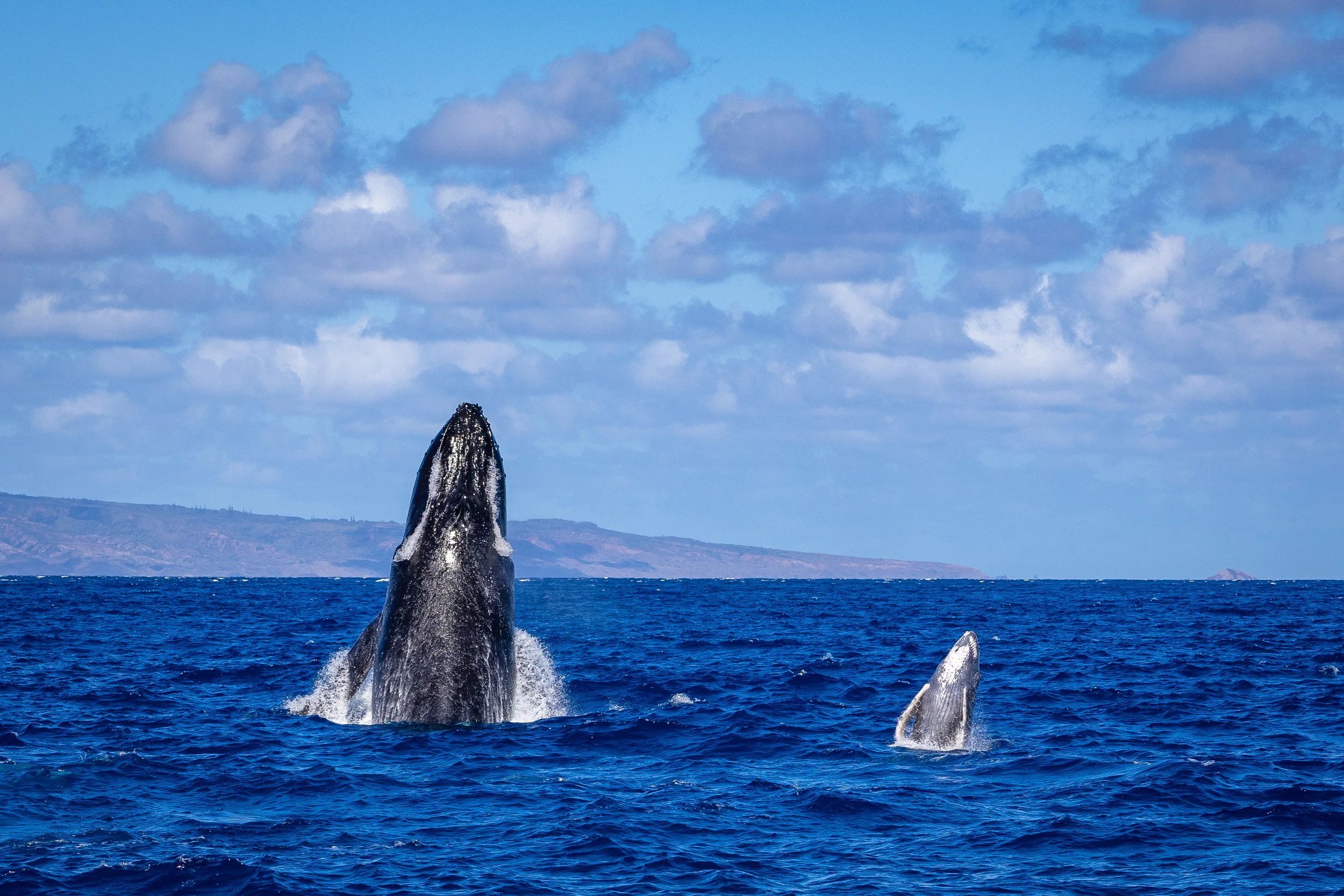
Few sights on the water stop people in their tracks quite like a humpback whale calf surfacing beside its mother. The size difference alone is striking — a newborn already as long as a small boat, staying close to a parent that outweighs it many times over.
During Maui’s whale season, the waters around the island — especially the ʻAuʻau Channel — become a place where these calves take their very first breaths, learn how to move through the ocean, and prepare for a journey that will eventually carry them thousands of miles across the Pacific.
Here’s what’s really happening when you spot a mom-and-calf pair from the deck.
🐋
〰️
🐋 〰️
How Big Are Whale Calves at Birth?
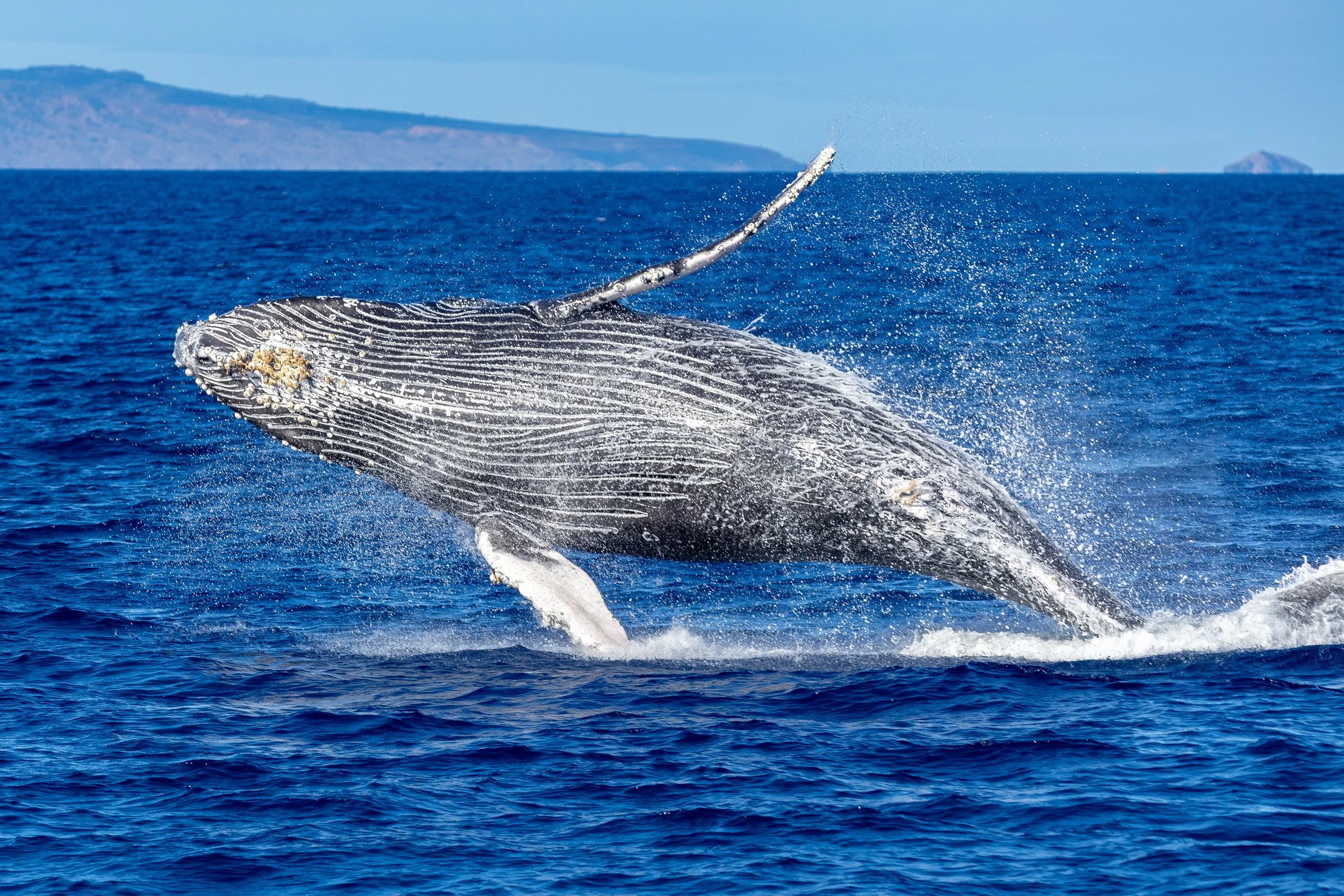
Humpback whale calves are born impressively large. At birth, they measure roughly 13–16 feet long and can weigh around one ton. Despite that size, they’re still very much newborns — dependent on their mothers for warmth, nourishment, and protection.
Calves are born tail-first, an important adaptation that reduces the risk of drowning during birth. Within minutes, the mother guides her calf to the surface for its first breath — a moment that often happens quietly, unseen beneath the surface.
Why Calves Stay So Close to Mom
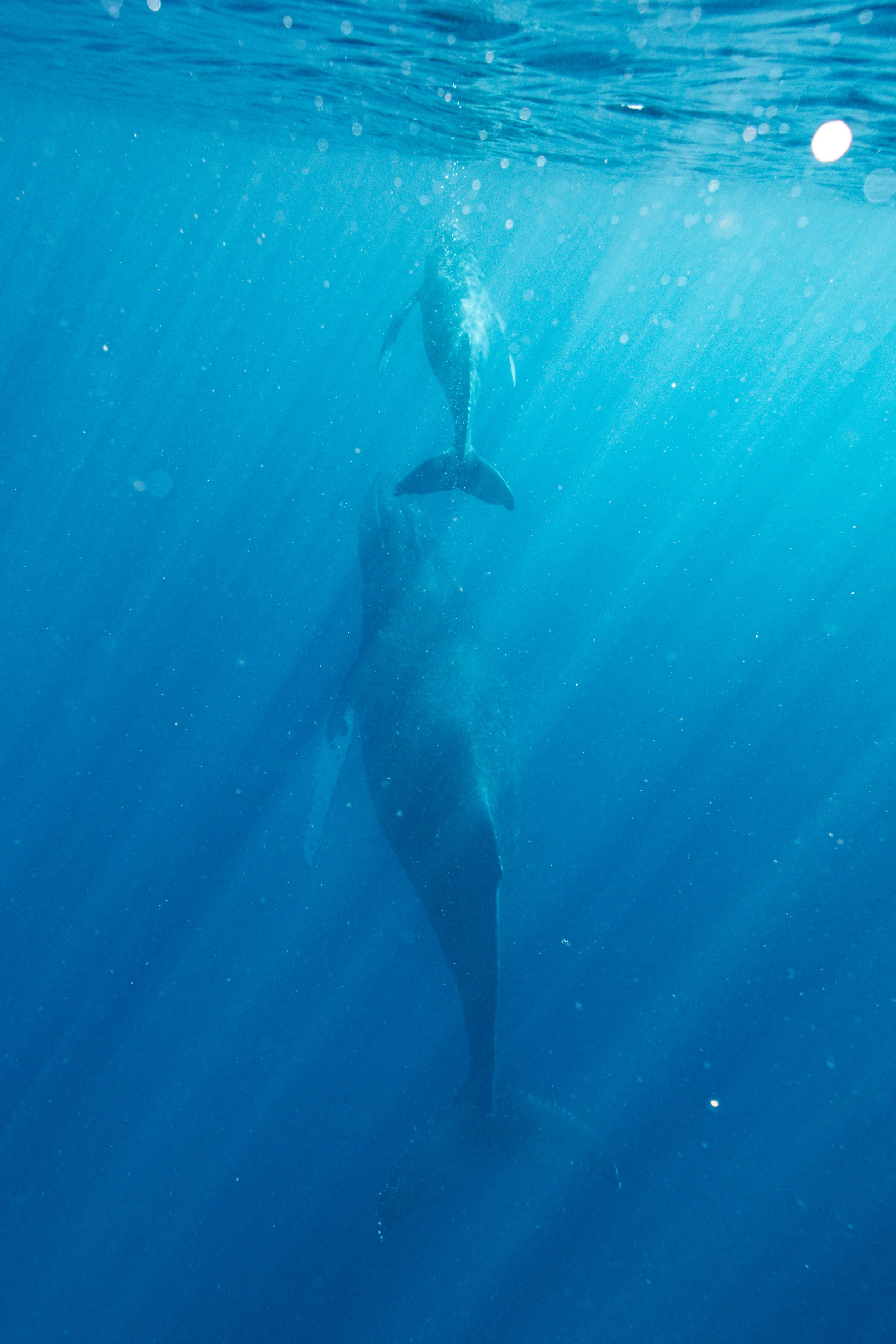
In their early weeks, calves rely on a behavior known as “drafting.” By swimming in the pressure wave created by their mother’s movement, calves conserve energy and keep up more easily.
You’ll often see:
Calves surfacing just after their mothers
Short, shallow dives followed by quick returns to the surface
A mother positioning herself between her calf and other whales or vessels
This constant awareness is part of motherhood in the open ocean. The calf may be large, but it’s still learning how to breathe efficiently, dive safely, and move with purpose.
Nursing in the Open Ocean
Humpback whale milk is among the richest of any mammal, containing a very high fat content. This allows calves to grow rapidly in a short amount of time. It’s estimated that calves can gain up to 100 pounds a day during their first months of life.
Nursing happens underwater. The mother releases milk, and the calf uses its tongue to help draw it in. Because the ʻAuʻau Channel is relatively calm and protected, mothers can nurse without needing to fight heavy swell or strong currents — another reason these waters are so important.
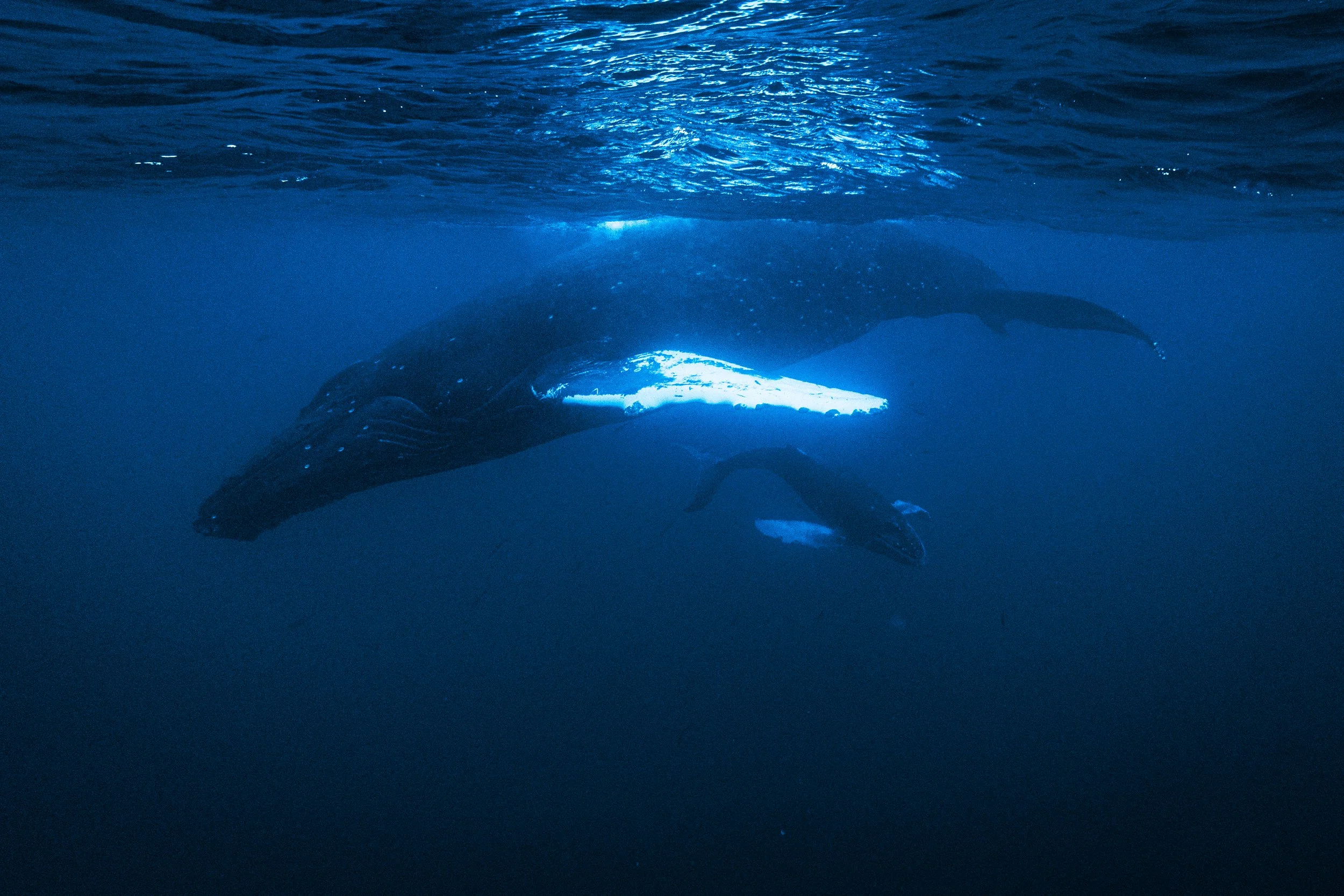
From above, guests might notice calves staying especially close to their mothers’ sides or bellies. That closeness isn’t just affection — it’s survival.
Rest Is Part of Growing
Whale calves tire easily. Growth takes energy, and even in warm water, movement adds up.
That’s why you’ll sometimes see mom-and-calf pairs moving slowly or resting near the surface. Whales don’t sleep deeply the way humans do, but they do enter restful states that allow them to conserve energy while remaining aware of their surroundings.
These quieter moments — steady blows, calm swimming, close contact — are just as meaningful as dramatic surface activity.
What Guests Might Notice From the Boat
When you spot a mom-and-calf pair during a Trilogy whale watch, you might notice:
Two blows surfacing close together
A smaller, less forceful spout beside a larger one
The calf surfacing more frequently than its mother
Gentle positioning, with the mother subtly guiding movement
Every pair is different, and behavior can change from moment to moment.
🐋
〰️
🐋 〰️
Practice Makes Progress
Much of what guests interpret as “play” is actually practice.
Calves spend their days:
Testing their pectoral fins
Rolling and twisting at the surface
Attempting small breaches or tail slaps
These movements help calves build muscle strength, coordination, and control — all skills they’ll need for the long migration north when whale season ends.
Mothers are often nearby but not intervening, allowing calves to learn through repetition while staying within reach if needed.
Why Maui Matters So Much for Calves
The weeks calves spend in Maui waters shape their chances of survival. Here, they grow stronger, more coordinated, and more capable before beginning the long migration to colder feeding grounds.
By the time they leave Hawaiʻi, calves will be significantly larger, more confident swimmers — and better prepared for the open ocean.
That’s why encounters with whale calves feel especially powerful. You’re not just seeing a young whale — you’re witnessing the very beginning of a life shaped by migration, memory, and the sea.