Responsible Whale Watching: What It Means (and Why It Matters)
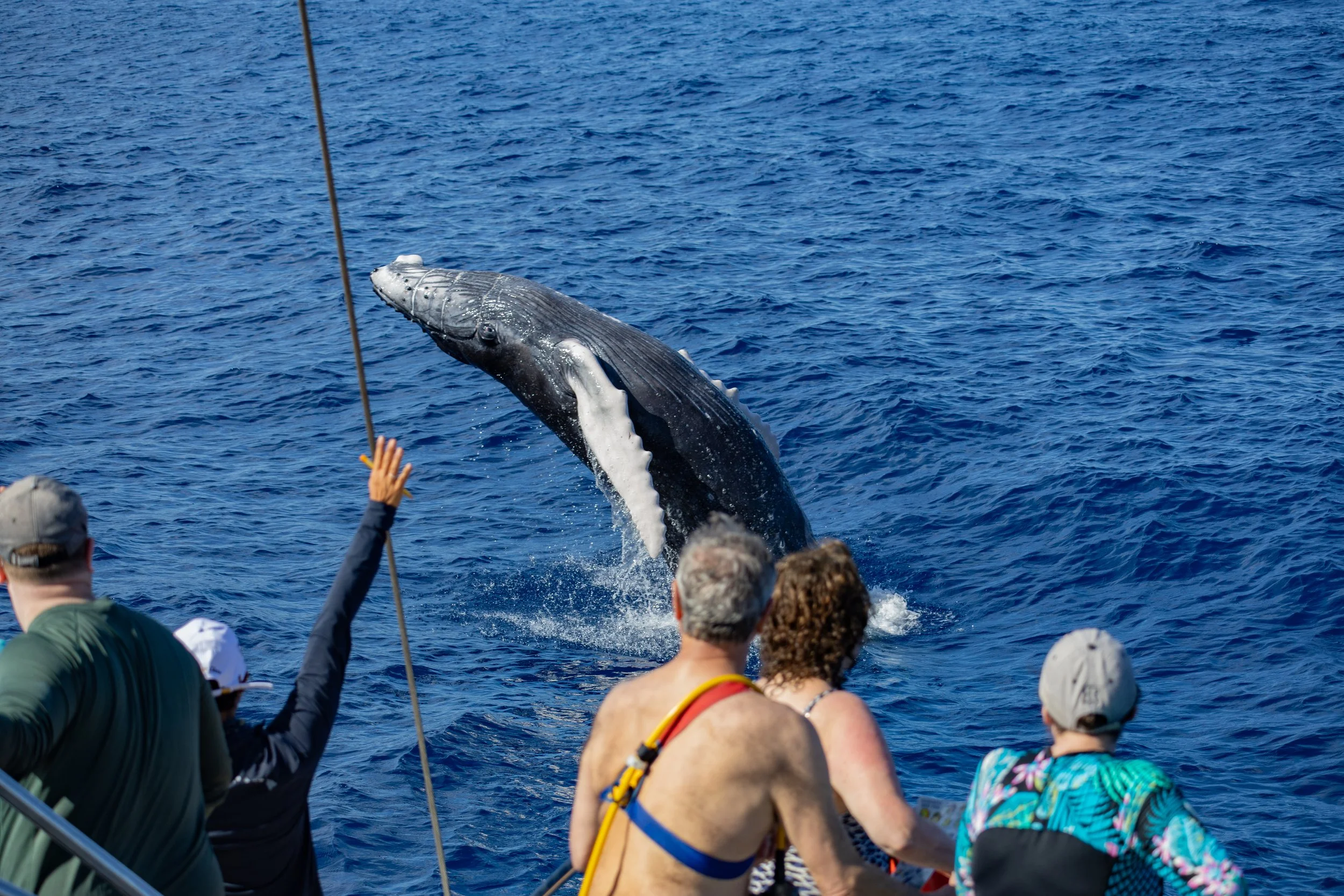
Whale watching on Maui is unforgettable. Seeing a humpback surface nearby, watching a calf stay close to its mother, or listening to whale song beneath the boat can feel almost unreal.
But moments like these don’t happen by accident. They depend on care, patience, and a shared understanding that these waters are not an attraction — they are a home.
Responsible whale watching is what makes it possible to witness whales in a way that protects them and preserves the experience for everyone who comes after.
Whales Choose the Interaction — Not Us
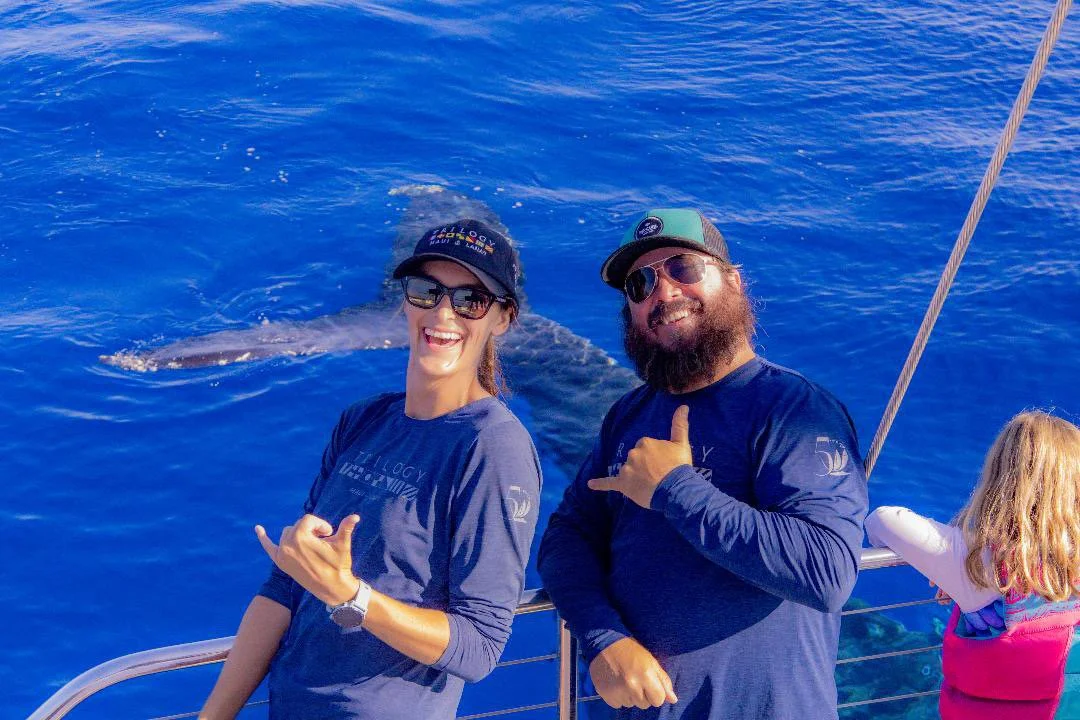
One of the most important principles of responsible whale watching is simple: whales decide how close they come.
Humpback whales in Maui are here to rest, give birth, nurse calves, and communicate. When boats rush, crowd, or pressure whales to surface or display certain behaviors, it disrupts those essential activities.
Responsible operators give whales space, move predictably, and allow encounters to unfold naturally. Sometimes that means a whale approaches the boat on its own. Other times, it means appreciating whales from a distance — knowing that respectful observation is still a meaningful experience.
Following NOAA Guidelines on the Water
In Hawaiʻi, humpback whales are protected under federal law, and NOAA whale-watching guidelines exist to safeguard whales during their most vulnerable season.
At Trilogy, our whale watches are guided by these NOAA recommendations, which include:
Maintaining required distances from whales
Avoiding sudden changes in speed or direction
Never positioning vessels in a way that blocks a whale’s path
Giving extra space to mothers and calves
These guidelines aren’t about limiting experiences — they’re about ensuring whales can behave naturally, without stress or disruption.
When Whales Choose to Come Closer: Understanding “Friendly Whales”
Every once in a while, something remarkable happens on the water.
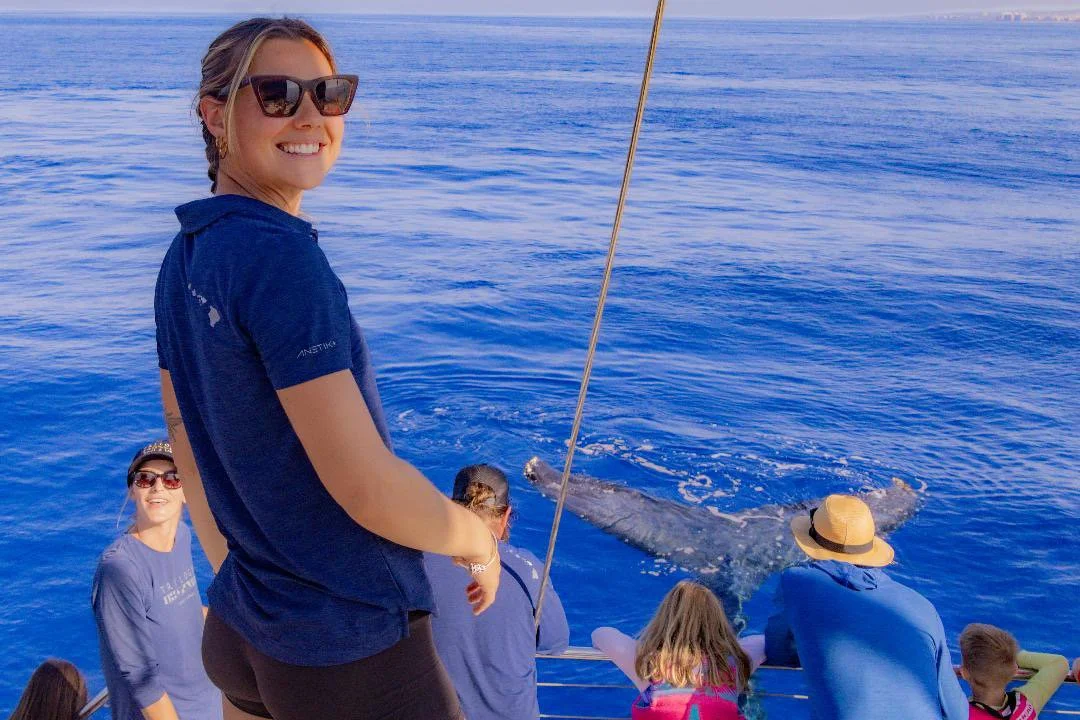
Capt. Amanda encountering a “friendly whale”
A humpback whale — or sometimes a small group — changes course and begins moving toward the boat. These are often referred to as “friendly whales.” And while the name sounds playful, the behavior behind it is something we approach with deep respect.
In these moments, Trilogy’s engines are turned off. We remain still. We don’t pursue, reposition, or invite the interaction. Instead, we wait — allowing the whale to make every decision about distance and duration.
When a whale chooses to approach on its own terms, it’s an entirely different kind of encounter.
Curiosity Goes Both Ways
Humpback whales are intelligent, social animals. Just as we’re curious about them, there are times when they appear curious about us.
A whale may pass slowly alongside the boat, roll gently, or surface nearby — not because it’s been chased or crowded, but because it has chosen to investigate. These moments tend to feel calm and unhurried, marked by long looks, slow movements, and an unmistakable sense of awareness.
It’s important to understand: these encounters only happen when whales feel unthreatened. They are the result of patience, quiet presence, and respect — not expectation.
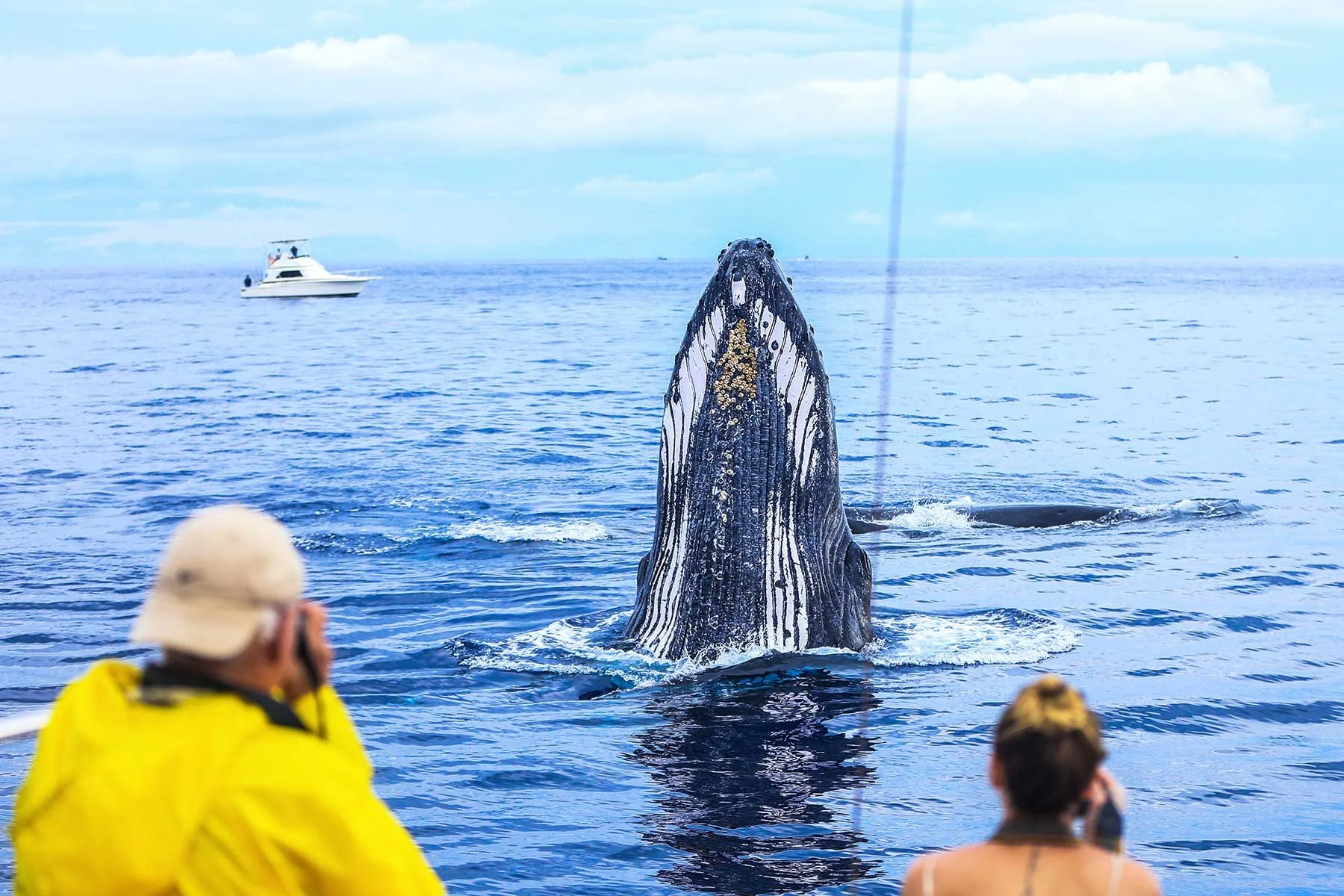
Why Stillness Matters
Turning off the engines does more than reduce noise. It signals neutrality.
Without vibration or forward motion, the boat becomes part of the environment rather than an intrusion. This stillness allows whales to approach without pressure, knowing they can leave at any moment.
Sound travels far underwater, and excessive vessel noise can interfere with whale communication — especially during a season when singing plays an important role.
That’s why slowing down matters. When conditions allow, sailing rather than motoring reduces noise and creates a calmer presence in the water. Moving patiently also allows crew to read whale behavior more clearly — noticing subtle cues that tell us whether a whale is resting, traveling, or interacting.
These are often the encounters guests remember most — not because of spectacle, but because of proximity paired with peace. Being close to a whale that has chosen to be there creates a sense of mutual respect that words rarely capture.
A Privilege, Not a Promise
Not every whale watch includes a friendly whale encounter — and it shouldn’t. These moments can’t be scheduled or guaranteed, and they never define the value of a sail.
But when they do happen, they’re reminders of why responsible whale watching matters. They show us what’s possible when whales are given space, autonomy, and trust.
At Trilogy, we never measure success by how close whales come. We measure it by how naturally they behave — and by the quiet moments when curiosity flows both ways.
Respecting Mothers and Calves
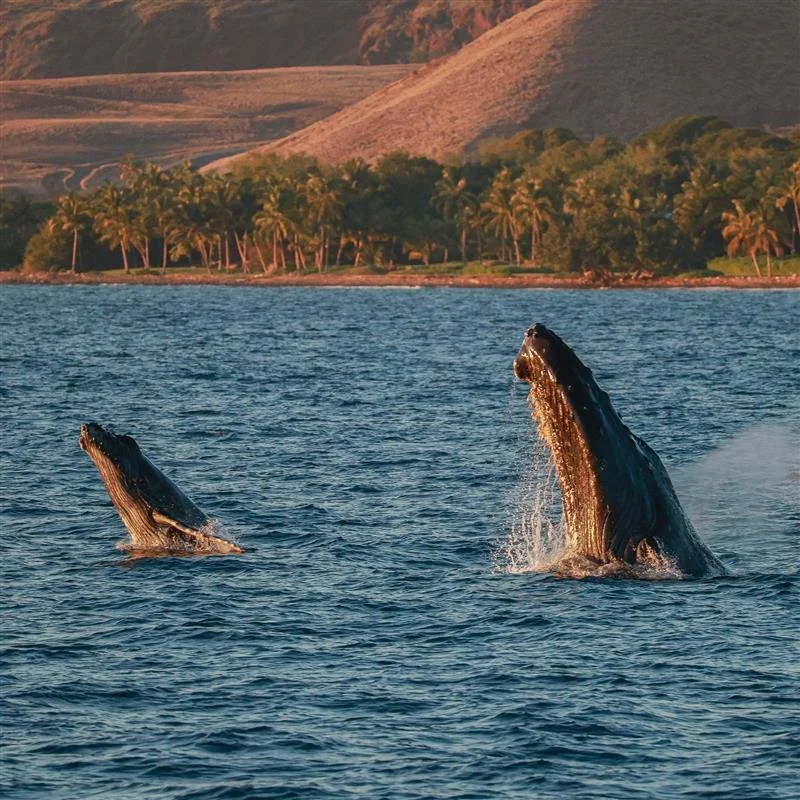
Mother-and-calf pairs deserve special care. Calves are still learning how to swim, breathe, and conserve energy, and mothers are balancing protection with recovery after migration and birth.
Crowding these pairs or lingering too long can cause mothers to move away or expend unnecessary energy. Giving them space allows calves to rest, nurse, and practice growing strong — exactly why Maui’s waters matter so much.
Seeing a calm mom-and-calf pair moving naturally is a privilege — one that exists because of respectful choices on the water.
🐋
〰️
🐋 〰️
What Responsible Whale Watching Looks Like Onboard
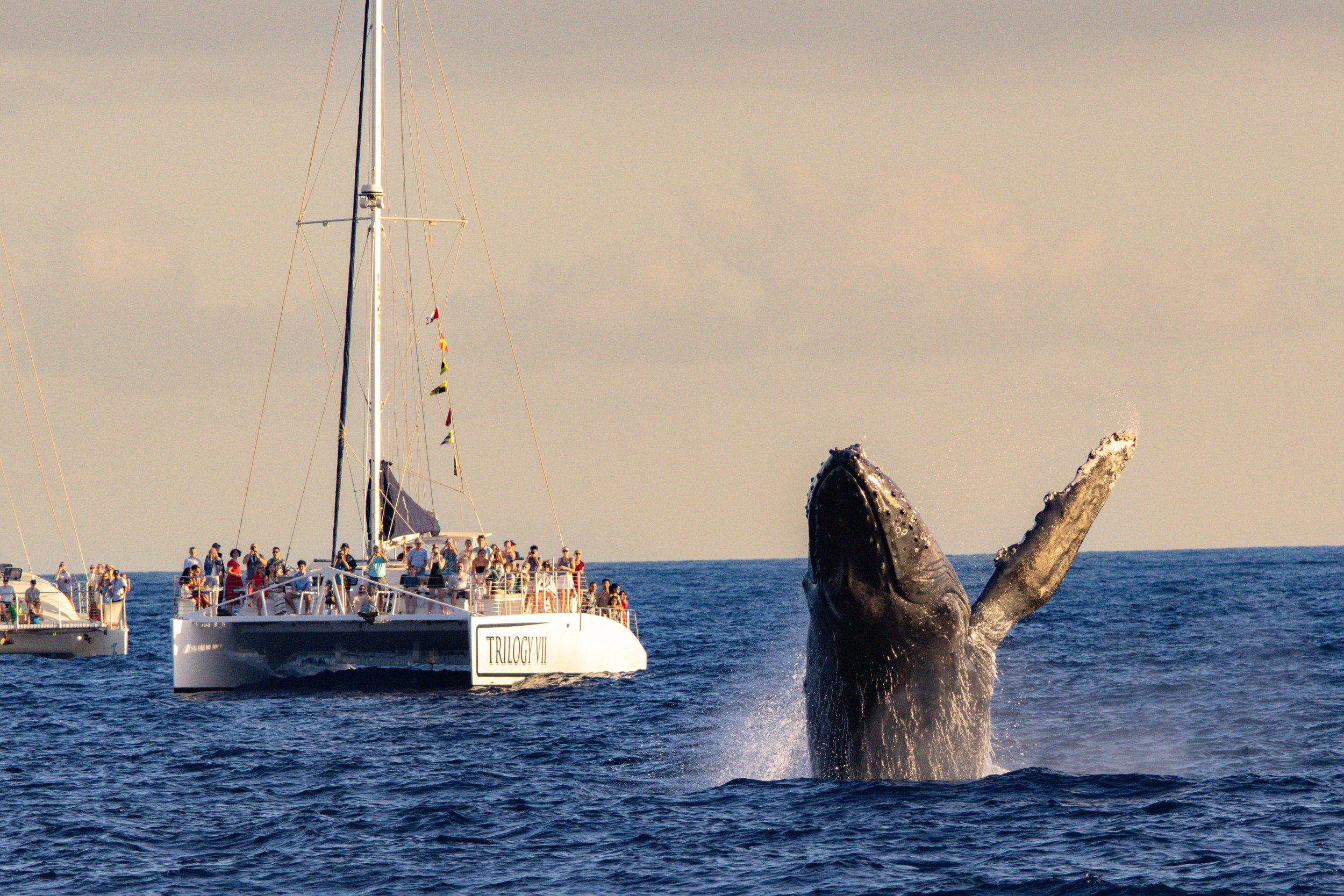
For guests, responsible whale watching might mean:
Letting moments unfold without rushing
Appreciating subtle behaviors, not just big splashes
Trusting the crew to read conditions and whale behavior
Onboard, it also means learning why certain decisions are made — why we slow down, why we wait, why we don’t chase.
Understanding the “why” deepens the experience and turns a sighting into a connection.
Protecting the Experience for the Future
Whale watching in Maui is special because whales continue to return here year after year. That trust — in these waters, in this habitat — has been built over generations.
Responsible whale watching ensures that future families, first-time visitors, and longtime locals will still be able to experience humpbacks behaving naturally in Maui’s winter home.
At Trilogy, we see ourselves as caretakers of that legacy. Every choice we make on the water reflects respect for the whales, the ocean, and the experience we’re here to share.