Rooted on Maui: How Trilogy Builds Community On and Beyond the Water
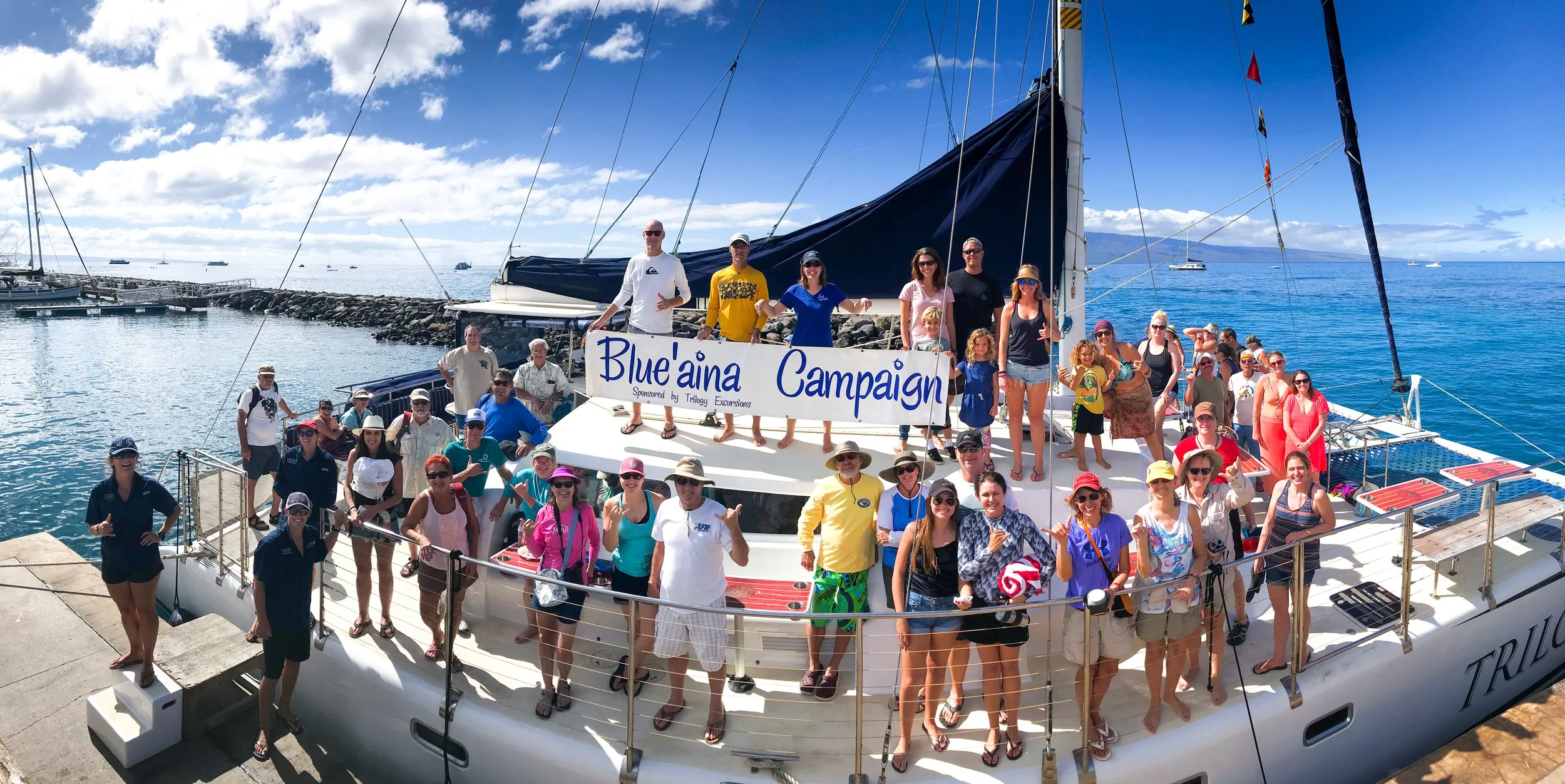
Since the inception of Trilogy Excursions over 50 years ago, community and sustainability have always been at the core of our operations. Sustainable business practices provide a guiding light for how we serve our community while running a business. Healthy reefs depend on healthy watersheds. Thriving communities depend on shared responsibility. And meaningful visitor experiences depend on authentic connection.
Over the years, Captain and co-founder Jim Coon has led us in the direction of operating with sustainability in mind. His long legacy of environmental advocacy is central to how we operate today. From converting to biodiesel to advocating for off shore waste disposal, Capt. Coon has always been a leader within the industry for utilizing best practices when it comes to how we can operate more in line with the Earth.
Today, Jim’s son and co-owner Capt. Riley Coon serves Trilogy as the Director of Sustainability, continuing a family legacy of fostering a sustainable future for not just Trilogy and the boating industry, but for generations to come.
Below are the primary ways we invest in Maui Nui — through youth programs, crew engagement, marine research & education, nonprofit partnerships, and long-term stewardship initiatives.
Youth Programs: Investing in the Next Generation
Koholā for keiki
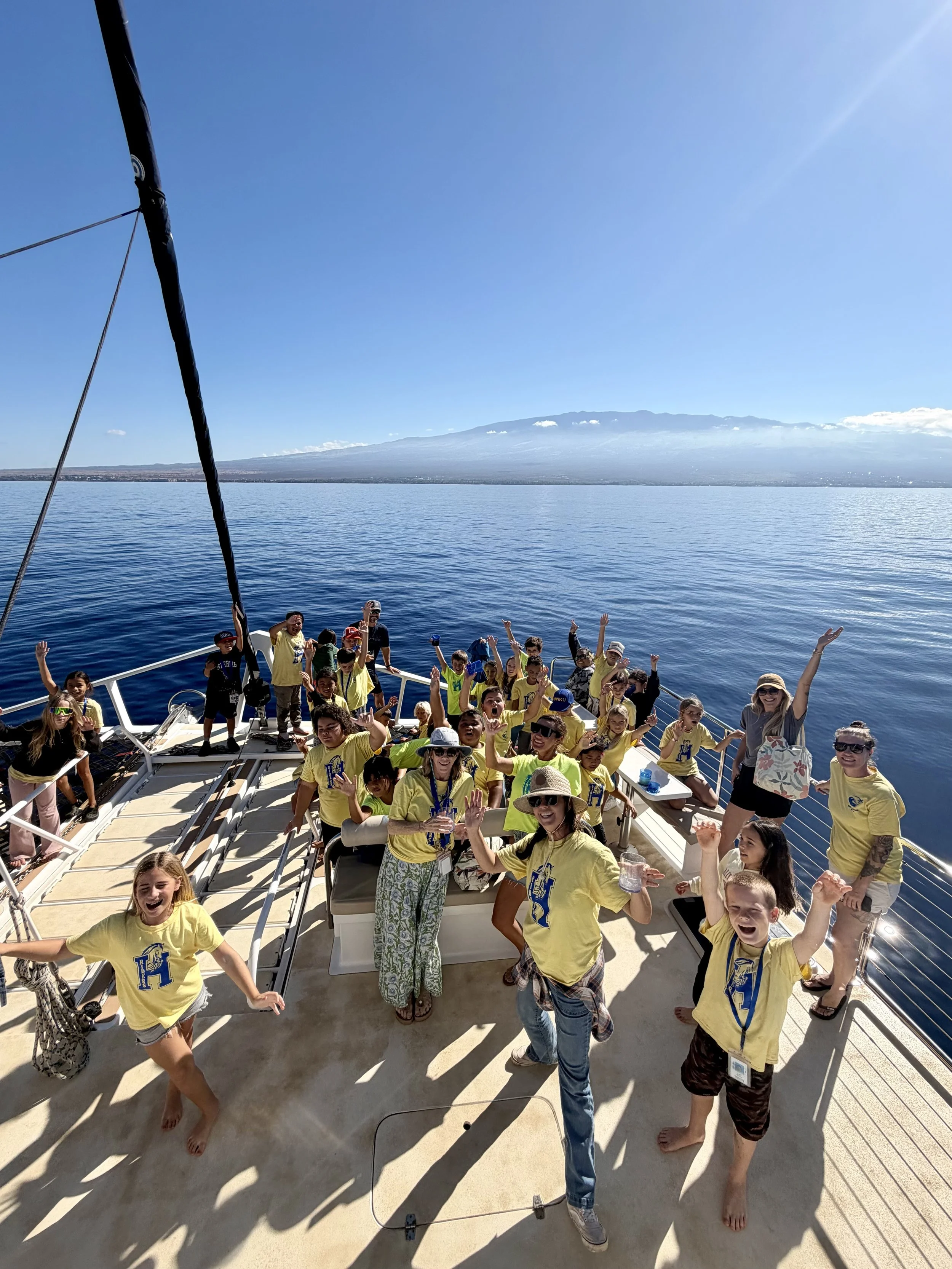
2026: Haiku Elementary on a Keiki Whale Watch
@sailtrilogy Kicking off the 2026 Koholā for Keiki Whale Watch program with a bang! 🩵🐋 Yesterday Haiku School came out with us and boy, did they score! Lifelong memories in the making! We can see it through their smiles, and hear it through their laughs. This program is truly one of our favorite ways to spread Aloha in our community. Last year, we achieved our goal of bringing out 500+ students, and we are hoping to hit this milestone again this season. 🎉 This program is more than just another fun day on the water — it’s an educational opportunity for students outside of the classroom to learn more about the gentle giants who migrate to our warm waters each winter to have their young. For the majority of kids, this is their very first time on a boat. The opportunity to see Maui from an off shore perspective along with abundant marine life, including our Hawaiian humpbacks, is so special for them and for us to be a part of. With some of the younger student groups, parents get to come out too, adding more depth to the connection this program provides for families and schools to come together. We work with various nonprofits and schools to make this program happen each season. Mahalo to all! Looking forward to another successful Koholā for Keiki Whale Watch Program in 2026! Trilogy adheres to @noaa DOLPHIN SMART Guidelines: All photos and videos were taken while viewing from a responsible distance. The whales in these photos and videos approached the boat while the engines were in neutral or off. #sailtrilogy #keikiwhalewatch #kohola #kohola4keiki ♬ sidewalks and skeletons goth - Trendformusic🤍🇲🇺
Each year, we aim to host 500 Maui keiki (children) and their ʻohana (families) on whale watch charters. Many of the students who join us have never been on a boat before.
Recently, we welcomed third graders from Haʻikū Elementary and second graders from Kamehameha Schools Maui. For many, it was their first time seeing a humpback whale in person — not in a book or on a screen, but rising from the water just offshore.
During these sails, students have the opportunity to listen through a hydrophone (an underwater microphone) to hear humpback whale song beneath the surface. Experiencing that sound in real time often becomes the moment everything connects.
These outings are about more than sightseeing. They are about access and awareness — helping Maui’s youth build a relationship with the ocean that surrounds them.
We see this as part of our kuleana (responsibility and privilege). When keiki understand the ocean, they are more likely to care for it. And when they care for it, they help ensure its health for the future.
Watching a child light up at the sound of whale song is a reminder of why this work matters.
Molokaʻi Keiki Bike Giveaway – Supporting Access Beyond the Shoreline
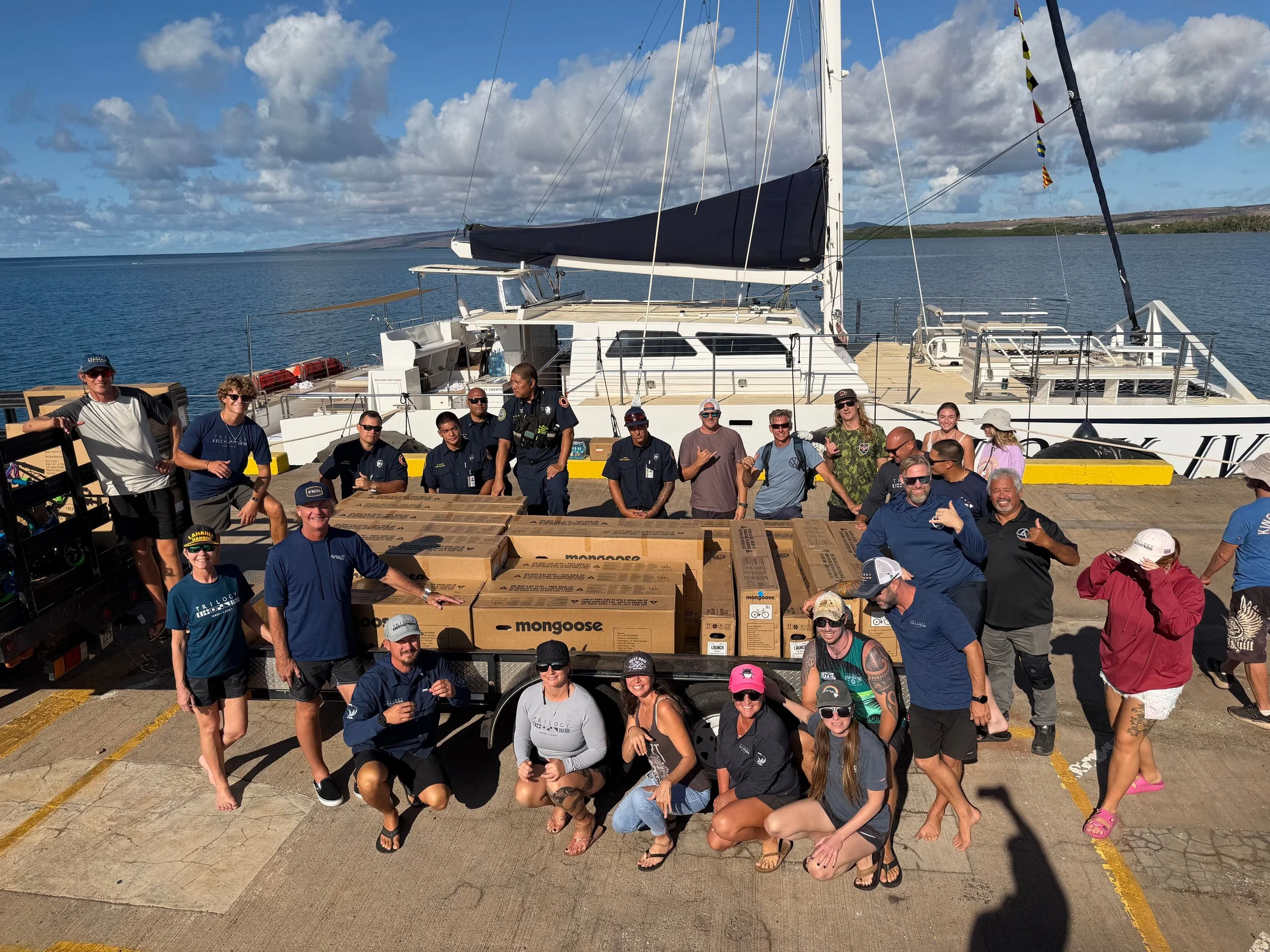
In partnership with Krank Cycles, we participate in a keiki (children’s) bike giveaway on Molokaʻi — ensuring local youth had access to reliable transportation and the simple joy of riding their own bike. Molokaʻi is part of Maui Nui (the greater island region that includes Maui, Lānaʻi, Molokaʻi, and Kahoʻolawe), and its tight-knit community reflects the values of mālama ʻāina (caring for the land) and mutual support in everyday life. For many families, transportation access can directly impact a child’s ability to get to school, activities, and community spaces safely.
Working alongside Krank Cycles, bikes were distributed directly to local keiki and their ʻohana (families). What stood out most was not just the bikes themselves, but the community presence — neighbors showing up for neighbors.
While our work often centers on the ocean, supporting youth in practical, tangible ways is just as important. Stewardship is not limited to reef restoration or marine education. It also means investing in the well-being and opportunity of the next generation across all of Maui Nui.
Moments like these remind us that giving back can take many forms — sometimes it’s conservation work, and sometimes it’s simply helping a child ride forward with confidence. To read more about this giveaway, click here.
Engaging our crew & Guests in service
Community work at Trilogy is not outsourced. It is lived. We operate as ʻohana — and that extends to how we serve.
Our team regularly volunteers with:
Kīpuka Olowalu – restoring loʻi kalo and native ecosystems
Kahoʻolawe Island Reserve Commission (KIRC) – ʻāina restoration and marine debris removal
Maui Cultural Lands, assisting in ʻāina restoration projects
Hawaiʻi Land Trust at Waiheʻe Coastal Dunes and Wetlands Refuge, helping restore an inland fishpond and remove invasive species
Skyline Conservation Initiative, planting native species in areas of Haleakalā impacted by invasive eucalyptus
Kahoʻolawe Island Reserve Commission (KIRC) – ʻāina restoration and marine debris removal
Kahoʻolawe is the smallest of the main Hawaiian Islands and was used for military training for decades before being returned to the State of Hawaiʻi for restoration and cultural renewal. Today, access to the island is carefully managed, and restoration work focuses on healing the ʻāina (land) through replanting, erosion control, and removal of invasive species and marine debris.
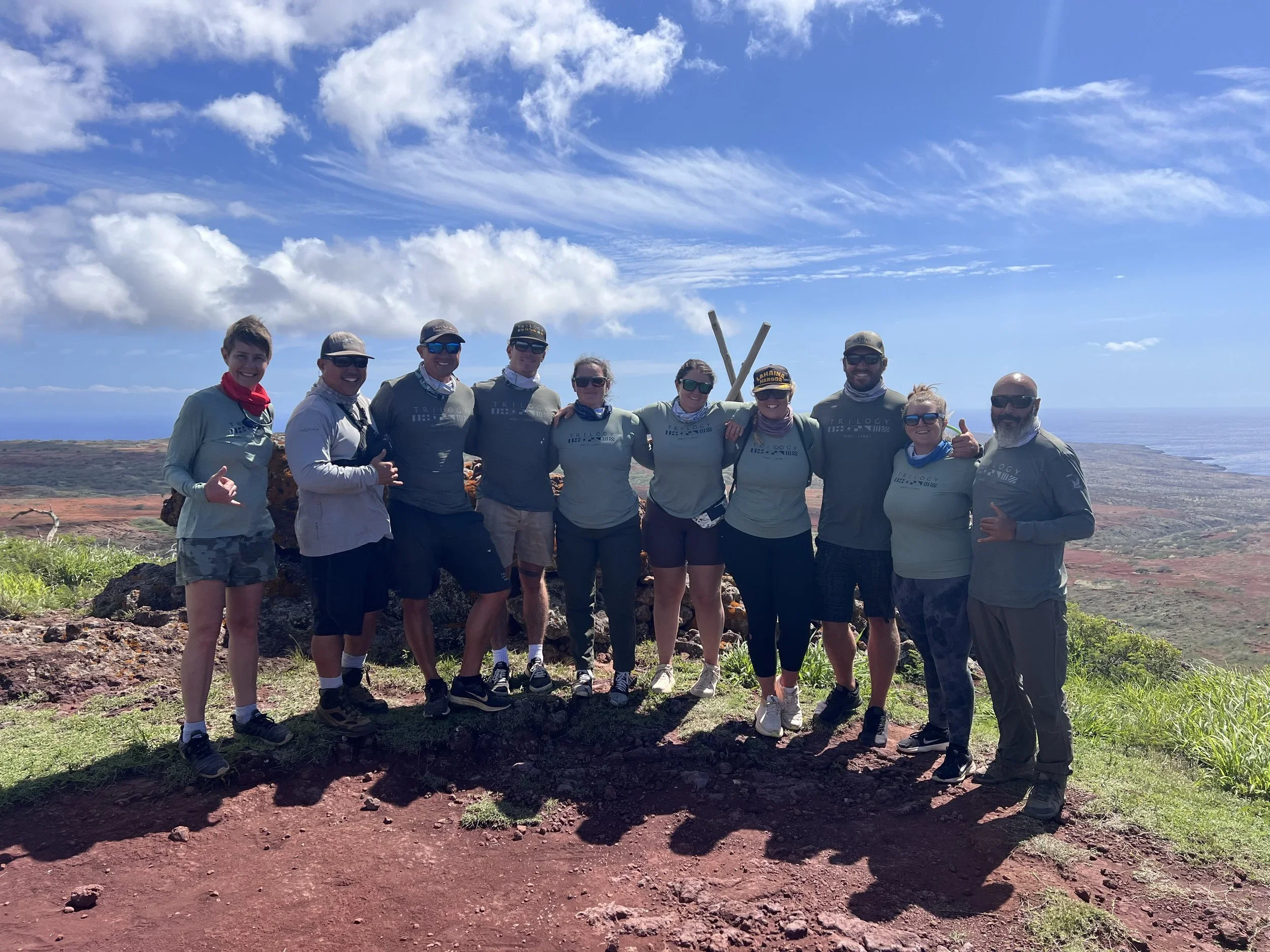
We have sent multiple Trilogy teams to assist with these ʻāina restoration projects. Participating in this work is more than volunteerism — it is kuleana (a deeply rooted responsibility and privilege). For many on our crew, stepping onto Kahoʻolawe is emotional. It represents both the history of the island and the ongoing commitment to its healing.
In one shoreline effort, Trilogy crew helped remove five tons of marine debris from Kanapou Bay. We have also provided vessel support when partner boats experienced mechanical issues, ensuring that restoration teams and cultural practitioners could continue accessing the island safely.
Being invited into this work is something we do not take lightly. It is a privilege to contribute, even in small ways, to the long-term restoration of Kahoʻolawe. To read more on Trilogyʻs work with Kahoʻolawe, click here.
Blue ʻĀina: Turning Ocean Time Into Community Support
Blue ʻĀina is our way of keeping stewardship active, not symbolic.
What began as organized reef cleanups has grown into a broader community support program that connects our guests, crew, and local nonprofits in tangible ways. The idea is simple: if we benefit from the ocean, we reinvest in the places and people who care for it.
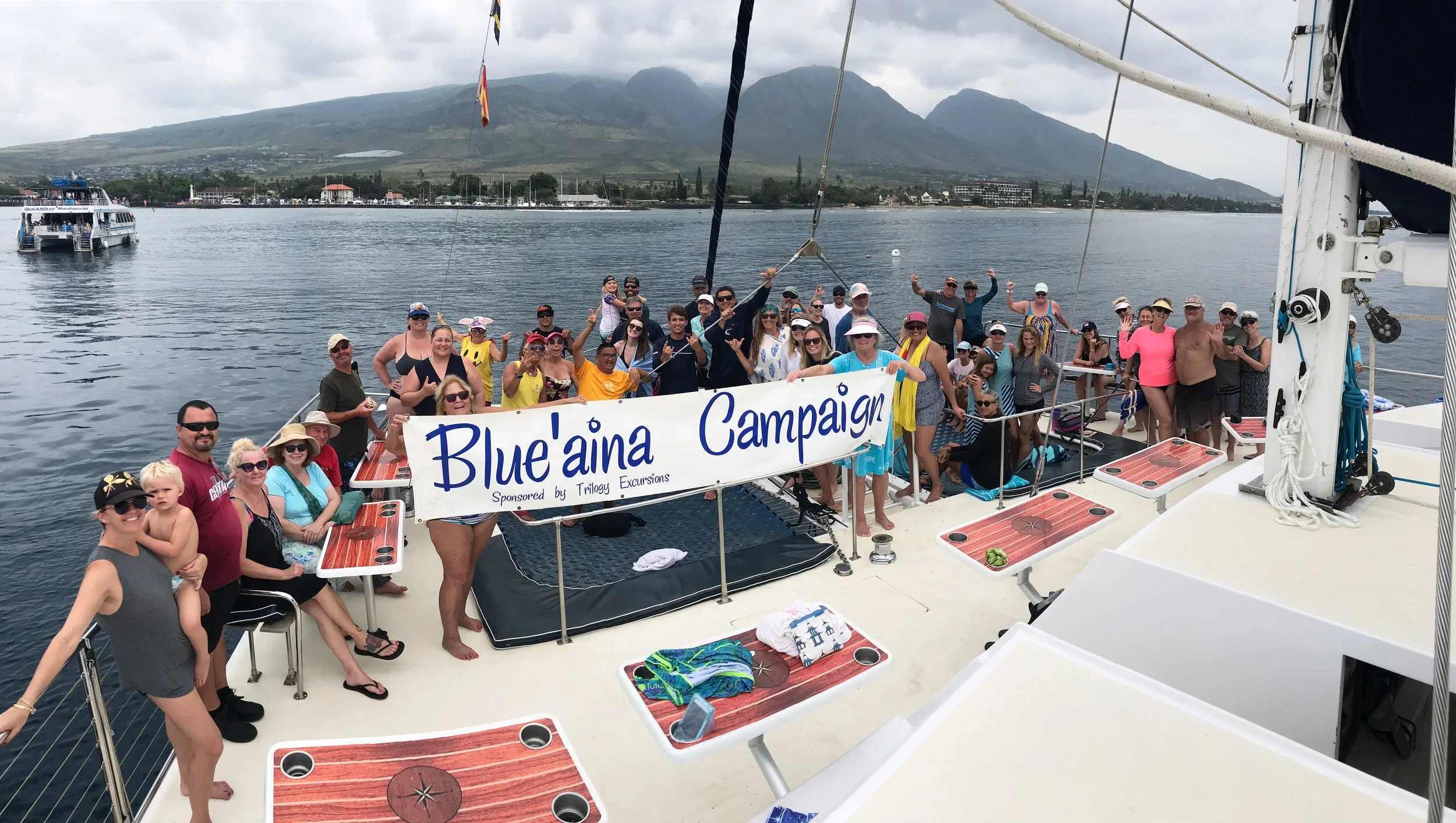
Through Blue ʻĀina, we coordinate volunteer efforts and raise funds for organizations working across Maui. Recent beneficiaries include Mālama Kula, Boys & Girls Club of Maui, Maui Nui Marine Resource Council, Mālama Kai Foundation, Lahaina Restoration Foundation, and others focused on environmental protection, cultural preservation, and community resilience.
Some support comes through organized reef cleanups. Some comes through direct financial contributions. Some comes through mobilizing our network when help is needed.
After the Lahaina fires, community response reminded all of us how interconnected Maui truly is. Programs like Blue ʻĀina allow us to act quickly and collectively when our neighbors need support.
This initiative is not a one-time event. It’s ongoing. It reflects a belief that tourism can and should contribute to the health of the place it operates in.
For us, Blue ʻĀina is about balance. If we spend our days sharing Maui’s coastline with guests, we also spend time caring for it — and supporting those doing the long-term work on land and in the water. It’s another way we try to live out mālama kai and mālama ʻāina in practice.
Community support does not stop at the water’s edge.
Supporting Marine Research & Education
Sailing with Whale Trust for Flip & Friends
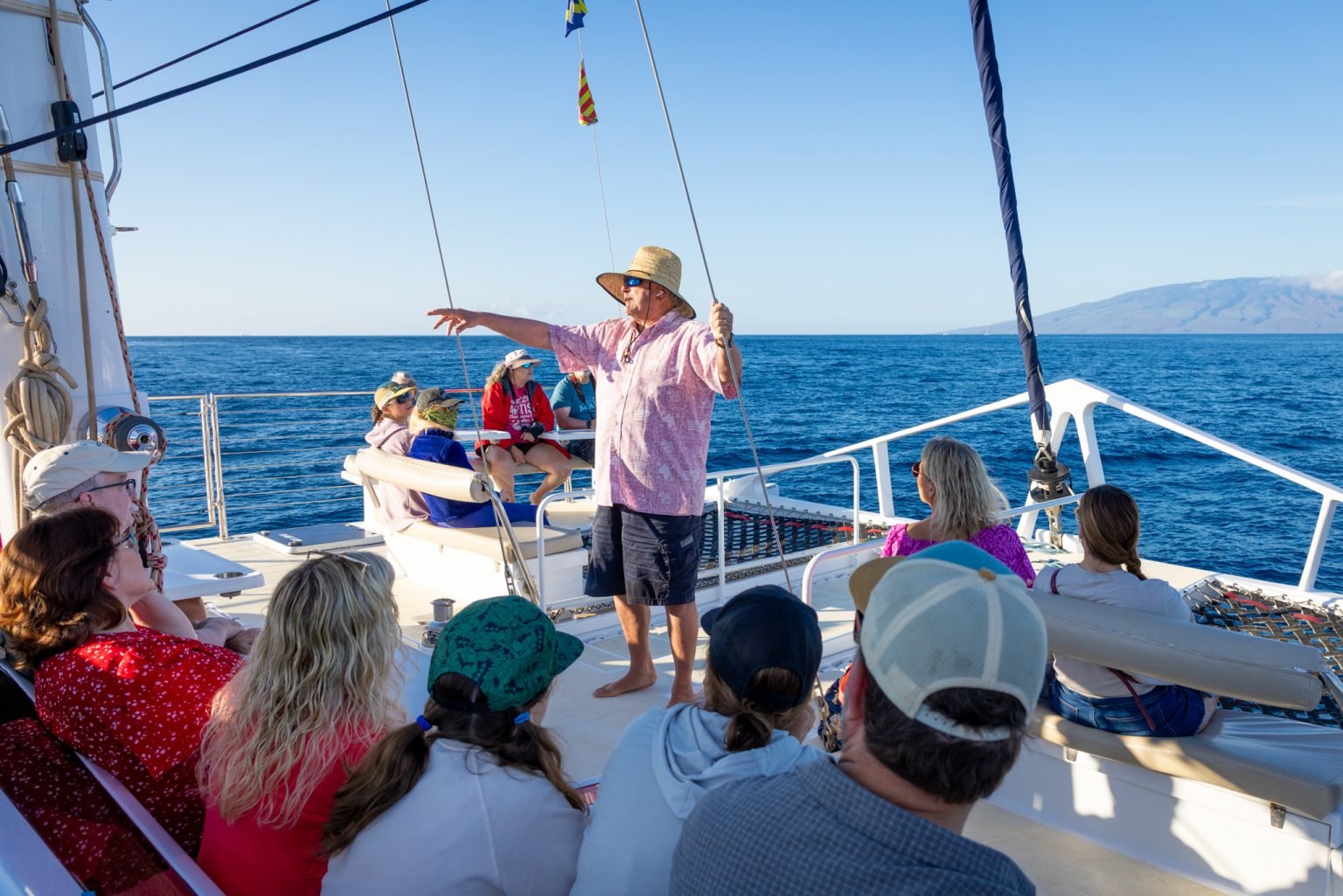
Most recently, we had the honor of sailing with Whale Trust for their Flip & Friends event — a program designed to connect our community more deeply to humpback whales through science and storytelling.
Flip Nicklin — co-founder of Trilogy and a lifelong whale photographer and advocate — joined us on board alongside fellow ocean conservationists, researchers, and longtime Whale Trust supporters. The gathering brought together people who have spent decades studying, protecting, and documenting North Pacific humpback whales.
@sailtrilogy Every winter, humpback whales return to the waters of Maui Nui. For more than two decades, Whale Trust has been studying these animals — from behavior and acoustics to long-term population monitoring — helping expand what we understand about humpback whales in Hawaiʻi and beyond. During their annual Whale Tales events, researchers, educators, and community members gather to share knowledge and support continued research. We were honored to host Whale Trust and their supporters on the water again this year. We’ve proudly participated in Whale Tales for over a decade, because meaningful time on the ocean should also support the ocean. If you value science-based conservation and education, consider donating to Whale Trust to help fund ongoing research and outreach. And for organizations, leadership teams, or foundations looking to host a gathering with intention — private charters with Trilogy create space for connection in a setting that matters. 🔗 Donate to Whale Trust (@whaletrust ♬ Sogni ancora - Piero Piccioni
Rather than a formal program on land, this event unfolded the way it felt most appropriate — on the water.
We sailed along the West Maui coastline during peak humpback season, observing whales in their winter breeding and calving grounds. Flip shared reflections from his years documenting humpbacks across the Pacific, offering perspective on how our understanding of whale behavior has evolved over time. Hearing those stories while actively watching breaches, tail slaps, and competitive groups nearby created a powerful full-circle moment.
This wasn’t a spectacle. It was a quiet reminder of why we care.
Trilogy has long supported the Hawaiian Islands Humpback Whale National Marine Sanctuary and responsible whale watching practices . Events like Flip & Friends reinforce that our connection to whales isn’t seasonal or transactional. It’s personal.
Whale Trust is a Maui-based nonprofit dedicated to whale research and education, working to advance understanding of humpback whale behavior and communication. Supporting organizations like Whale Trust helps ensure that the same whales we watch each winter are protected through sound science and community awareness.
When are honored to be able to participate in events like this. We believe education builds respect, and respect protects wildlife.
Maui Ocean Center Marine Institute (MOCMI)
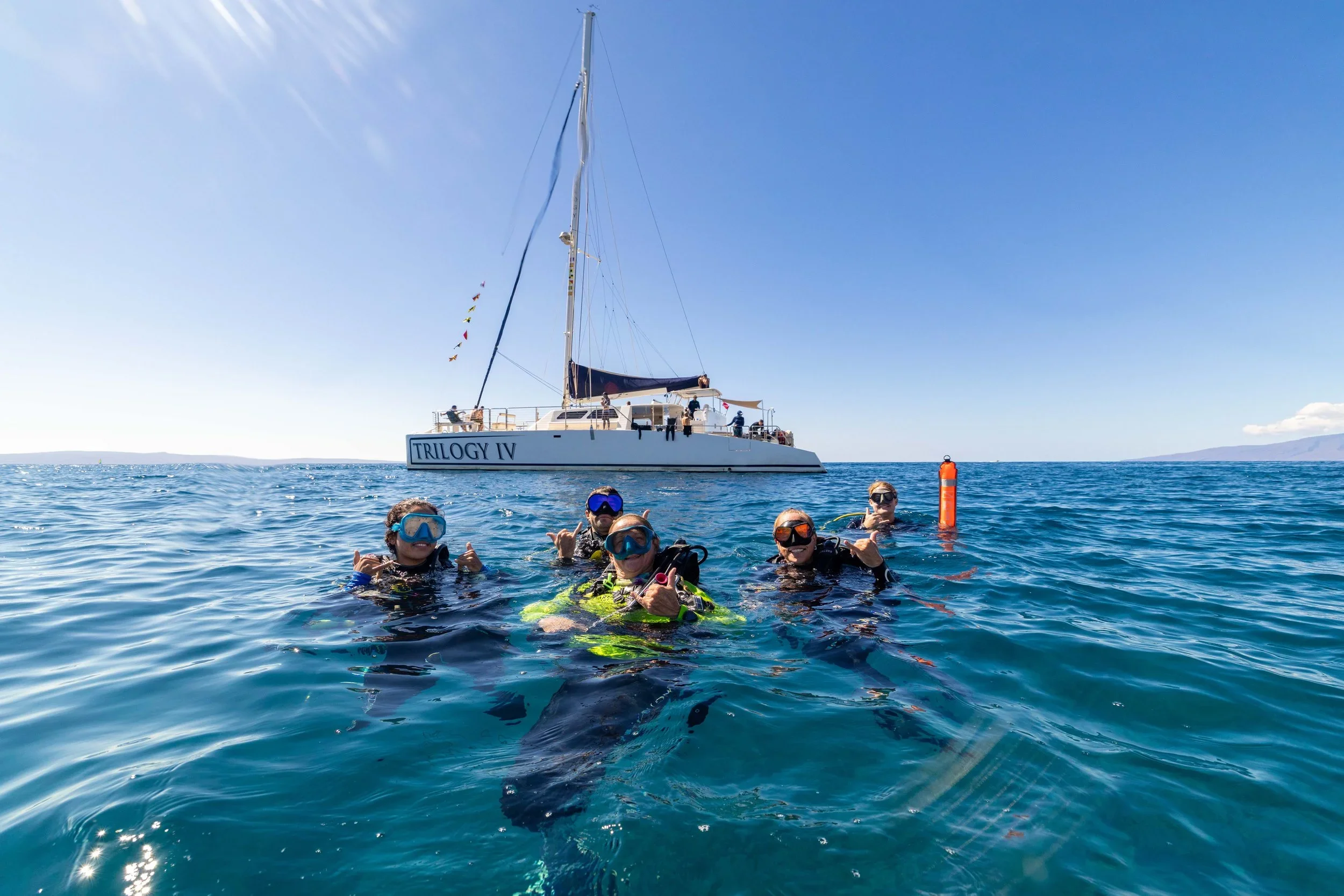
Photo By: Nahoia Kai Productions
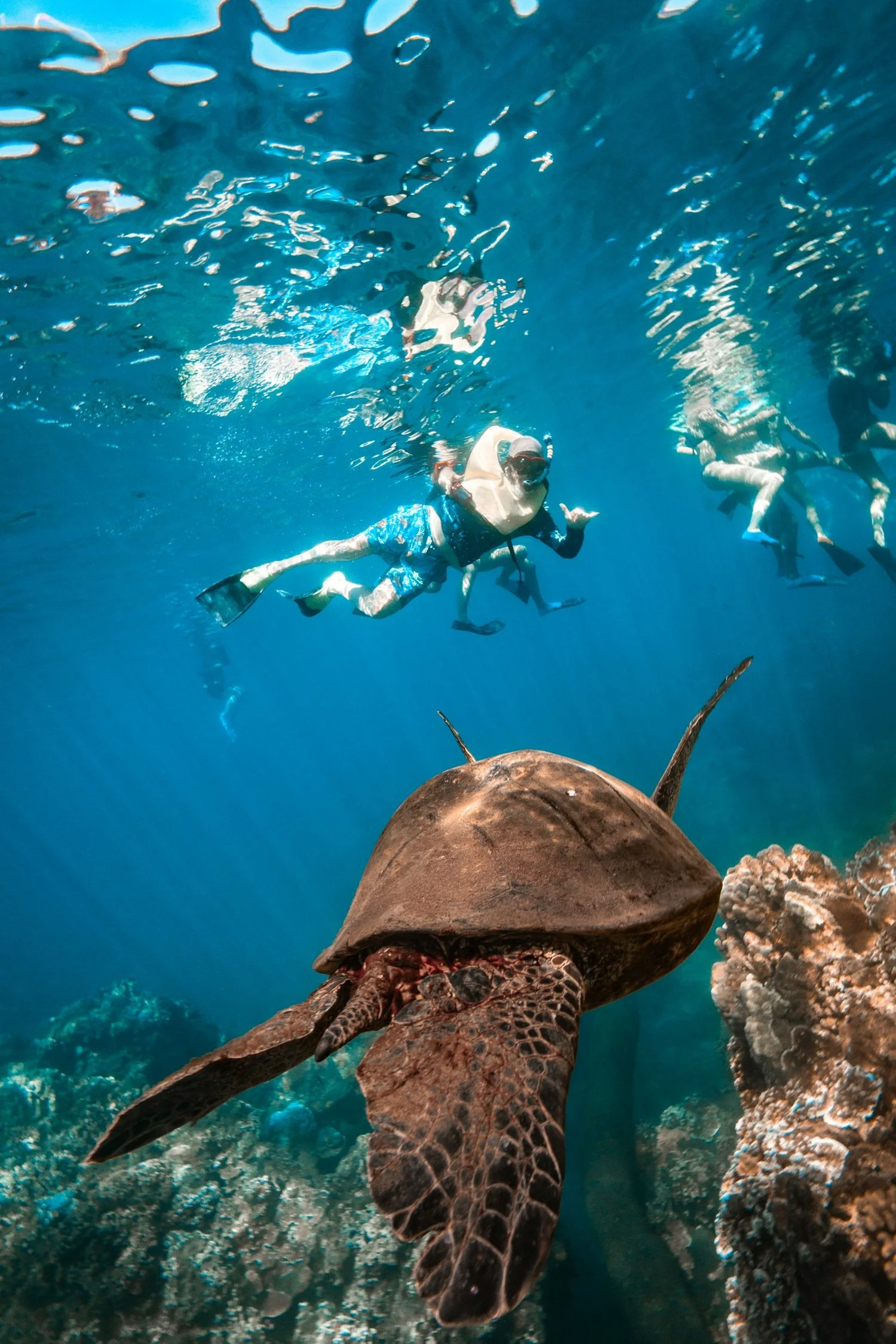
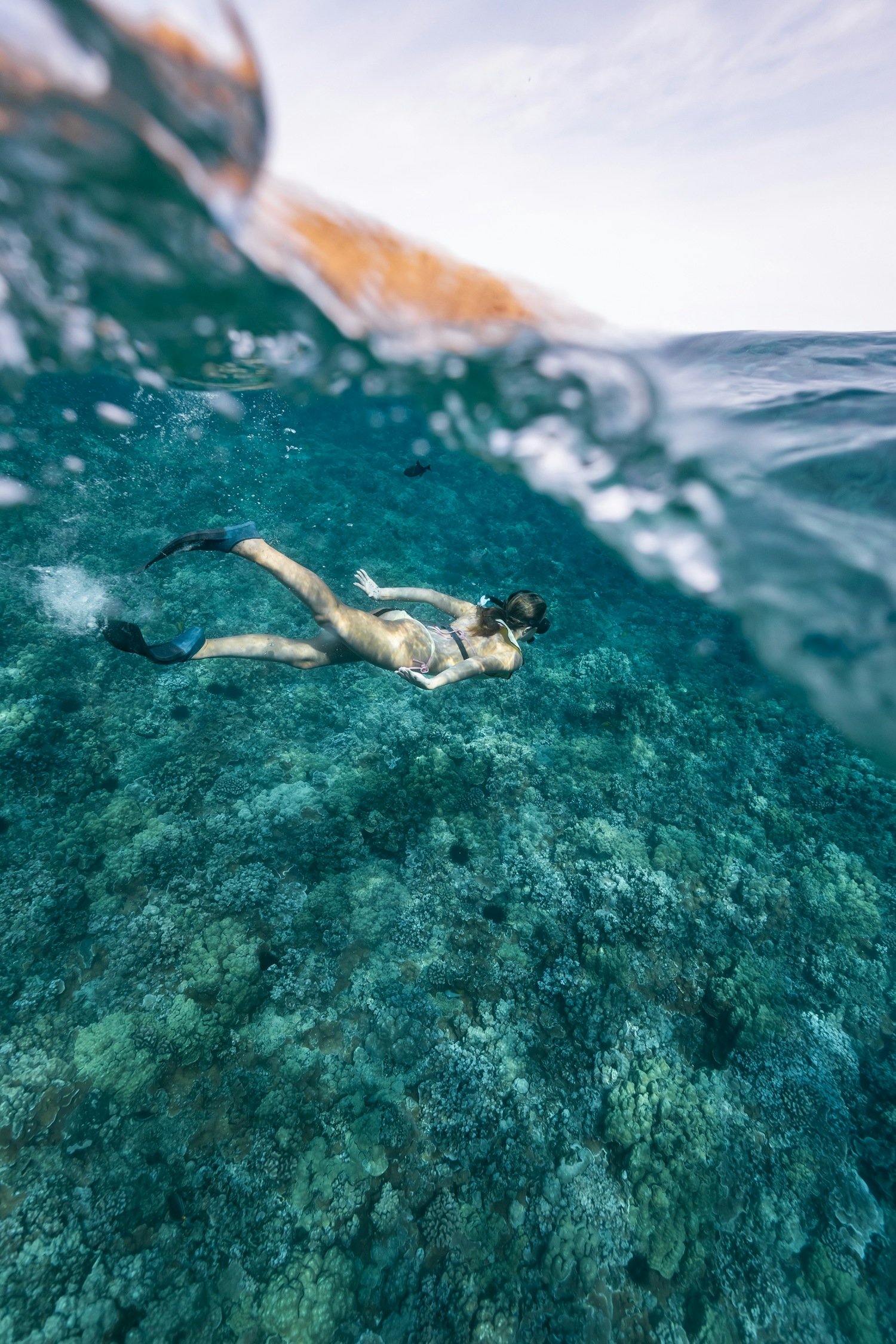
Coral reefs are the foundation of the ecosystems we visit on our snorkel sails. In Hawaiian, the word for coral is ʻākoʻakoʻa (coral polyps), the living animals that build reef structures over time. Healthy reefs provide habitat for fish, protect shorelines from wave energy, and support cultural and subsistence practices throughout Hawaiʻi.

Photo By: Nahoia Kai Productions
In partnership with the Maui Ocean Center Marine Institute (MOCMI), our crew has assisted in coral restoration efforts at Olowalu, often referred to as Maui’s “Mother Reef.” Olowalu’s reef system is one of the most ecologically significant on Maui, supporting a wide range of marine species and serving as an important nursery habitat.
In December, we transported volunteer crew to witness and support the outplanting of more than 2,000 coral starts onto Olowalu Reef. These coral fragments are carefully cultivated in nurseries before being returned to the reef to strengthen and expand existing colonies.
We also provide ongoing vessel access to Honolua Bay, allowing restoration teams to continue monitoring coral growth and survivorship. Supporting this work is one way we practice mālama kai (to care for and protect the ocean) in real time.
Reef restoration is long-term work. Growth happens slowly, measured in inches and years rather than headlines. We are grateful to play a supporting role in that process. To read more about our work with MOCMI, click here.
@sailtrilogy Did you know coral reefs support nearly 25% of all marine life? 🐠 On our last Blue ‘Aina sail we partnered with the Maui Ocean Center Marine Institute to put plant coral and remove marine debris at Olowalu— our mother reef, a vital nursery that supports reefs all across the entirety of Maui. 👉 Want to help protect our ocean? Support local conservation, wear reef-safe sunscreen, reduce single-use plastics, pick up any trash you may see floating around, and join us in mālama i ke kai. 💙🌊 @mocmarineinstitute #SailTrilogy #SaveTheReef #Olowalu #OceanConservation #Coral ♬ Green Onions - Booker T. & The MG's
Reducing Our Impact
West Maui Green Cycle – 100% Food Waste Composting
In November, we launched a 100% food waste composting program in partnership with West Maui Green Cycle.
All uneaten food and compostable service products from our tours are now diverted from the landfill. We estimate that approximately 75,000 pounds of food waste per year will be transformed into compost, helping restore soils and replant vegetation in Lahaina.
Closing that loop matters. What feeds our guests can now help feed the ʻāina.
Mālama Kai Foundation – Protecting Reefs Statewide
For decades, Trilogy has supported the Mālama Kai Foundation’s Day-Use Mooring Buoy Program, which provides safe, reliable moorings for boaters throughout Hawaiʻi.
A day-use mooring buoy is a permanently installed anchor system secured to the ocean floor that allows boats to tie up without dropping a traditional anchor. This matters because anchors can break coral, damage reef structure, and scar the seafloor if not set properly.
The program has prevented an estimated 90,000 anchor drops per year across the state . Nearly all of our snorkel tours utilize these moorings, resulting in zero anchor damage from our operations.
Supporting this program aligns directly with how we operate on the water. Reef protection isn’t separate from our business — it’s embedded in it.
We are proud to financially support the program, and to serve in leadership roles that help ensure its continued success for boaters across Hawaiʻi.
Protecting coral reefs often happens quietly. Mooring buoys are not something most guests notice, but their impact is significant. They represent the kind of behind-the-scenes stewardship that keeps Hawaiʻi’s reef ecosystems intact for future generations.
Cultural & Historical Stewardship
Lahaina Restoration Foundation
Lahaina has always held deep cultural and historic significance on Maui. Preserving its moʻolelo (stories, histories, and traditions passed through generations) is work that requires long-term commitment and care.
Riley Coon — Trilogy captain and member of the Coon family — serves on the board of the Lahaina Restoration Foundation (LRF). As a family-owned business, this involvement reflects our personal investment in the preservation of Lahaina’s historic sites and cultural identity.
Before the fires, our crew regularly participated in walking tours led by LRF’s cultural staff. These experiences helped deepen our understanding of Lahaina’s layered history — from its time as a capital of the Hawaiian Kingdom, through the whaling era, the plantation period, and into present-day Maui.
The foundation has carried its preservation mission forward for more than six decades, stewarding historic structures and places that represent multiple chapters of Lahaina’s past. Riley also serves on the benefit lūʻau committee, helping raise critical funds each year to keep this work moving forward.
After the 2023 fires, the responsibility of preservation became even more profound. Supporting LRF today means helping protect what remains, restore what can be rebuilt, and ensure that Lahaina’s cultural identity continues for future generations.
We deeply miss those educational walks through town. They grounded our crew in place and reminded us that stewardship includes honoring history alongside protecting the ocean.
ʻAha Pūnana Leo – Learning through place
Last year, we hosted more than 150 participants from ʻAha Pūnana Leo for educational sails to Lānaʻi.
ʻAha Pūnana Leo is a Hawaiian language immersion organization dedicated to revitalizing ʻŌlelo Hawaiʻi (the Hawaiian language). Bringing students, families, and educators onto the water created an opportunity to learn in a setting deeply connected to history and geography.
On board, Lānaʻi kupuna (respected elder) and cultural practitioner Uncle Sol Kahoʻohalahala shared moʻolelo (stories and histories passed down through generations) connected to the island’s western pali (sea cliffs), including Kaunolū Bay, Kahikili’s Leap, Moku Noio, and Kuamālapau Harbor.
As we sailed across the ʻAuʻau Channel, participants learned about the ahupuaʻa (traditional Hawaiian land division that runs from mountain to sea) of Lānaʻi and how each region supported sustainable life through careful resource management.
Experiencing these places from the ocean offers perspective that cannot be replicated on land. The cliffs, currents, and coastlines become part of the lesson.
Hosting sails like this is not about tourism. It is about access, language, and connection — ensuring that cultural knowledge continues to live through practice and place.
About Trilogy excursions
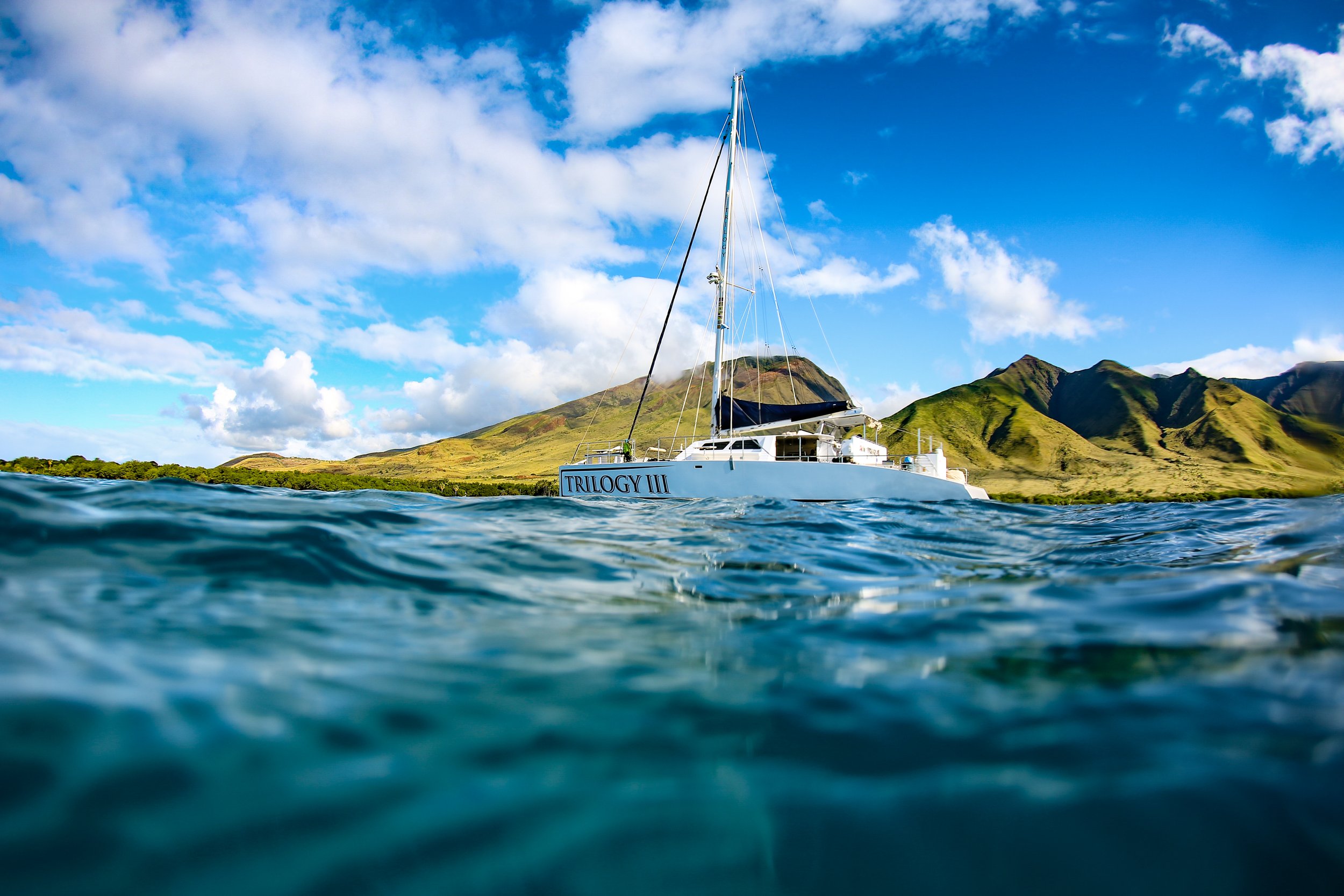
Trilogy Excursions was founded on July 5, 1973, by the Coon family and remains Maui’s first family-owned sailing company. More than fifty years later, we are still family operated, with multiple generations involved in daily operations on the water and behind the scenes.
From the beginning, our focus has been simple: create meaningful ocean experiences while operating with integrity and care. Safety, service, and environmental responsibility have guided how we build our vessels, train our crew, design our menus, and choose our partnerships.
As stewards and sailors, we believe tourism on Maui should contribute to the place it operates within. That belief has shaped our long-standing involvement in reef protection, marine conservation, cultural education, and community restoration efforts across Maui Nui (the greater island region including Maui, Lānaʻi, Molokaʻi, and Kahoʻolawe).
Many of our captains and crew were born and raised on Maui. Others have chosen to make it home. Together, we operate as ʻohana (extended family), grounded in ho‘okipa (the Hawaiian value of hospitality) and pono (acting with integrity and balance).
Every sail is an opportunity to share the ocean responsibly. Every partnership is an opportunity to give back.
For Maui, Now and for Generations to Come
Community involvement isn’t something we schedule between sails. It’s woven into how we operate, how we make decisions, and how we raise the next generation within our company.
When we volunteer in a loʻi (traditional irrigated taro terrace), support coral restoration, host keiki on whale watches, or partner with organizations protecting historic Lahaina, we are investing in the place our families call home.
The ocean has given Trilogy a livelihood for more than fifty years. It has also given us perspective. Every day on the water is a reminder that Maui’s health — culturally, environmentally, and socially — is interconnected. Healthy reefs depend on healthy watersheds. Strong communities depend on shared responsibility. Tourism, when done thoughtfully, can contribute rather than extract.
We don’t see community work as separate from our business. It is part of the same current.
There will always be more to learn, more to restore, more to support. We are committed to continuing that work quietly and consistently. Not because it earns attention, but because it is the right way to operate on an island that has given so much to us.
Maui is home. Showing up for it — on the water and beyond — is something we intend to do for generations to come.